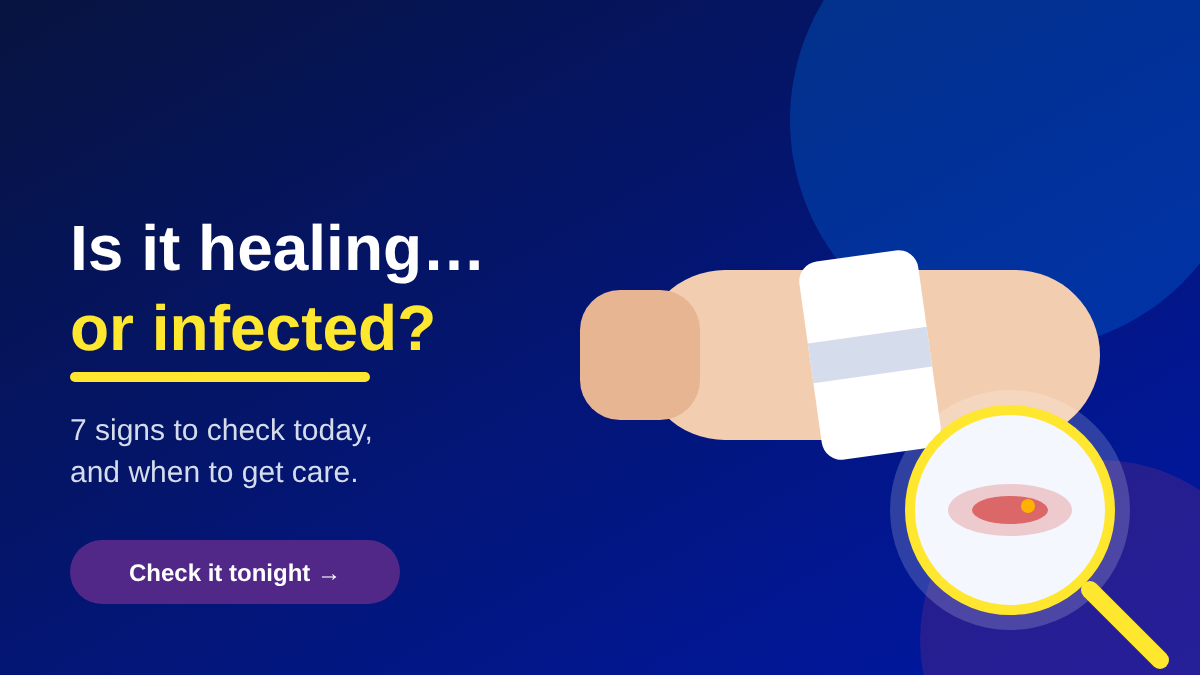
It’s 11 p.m. The cut on your hand looked fine yesterday. Tonight it’s puffy, a little hot, and it throbs every time you move your fingers. Normal healing? Or something worse?
Here’s how to tell if a wound is infected. Look for redness that spreads past the edges. Watch for pain that gets worse instead of easing, swelling and warmth, cloudy or yellow-green drainage, a bad smell, red streaks, or a fever. One of these deserves a closer look. Two or more together usually means infection, and it’s time to act.
Infected or just healing? The quick difference
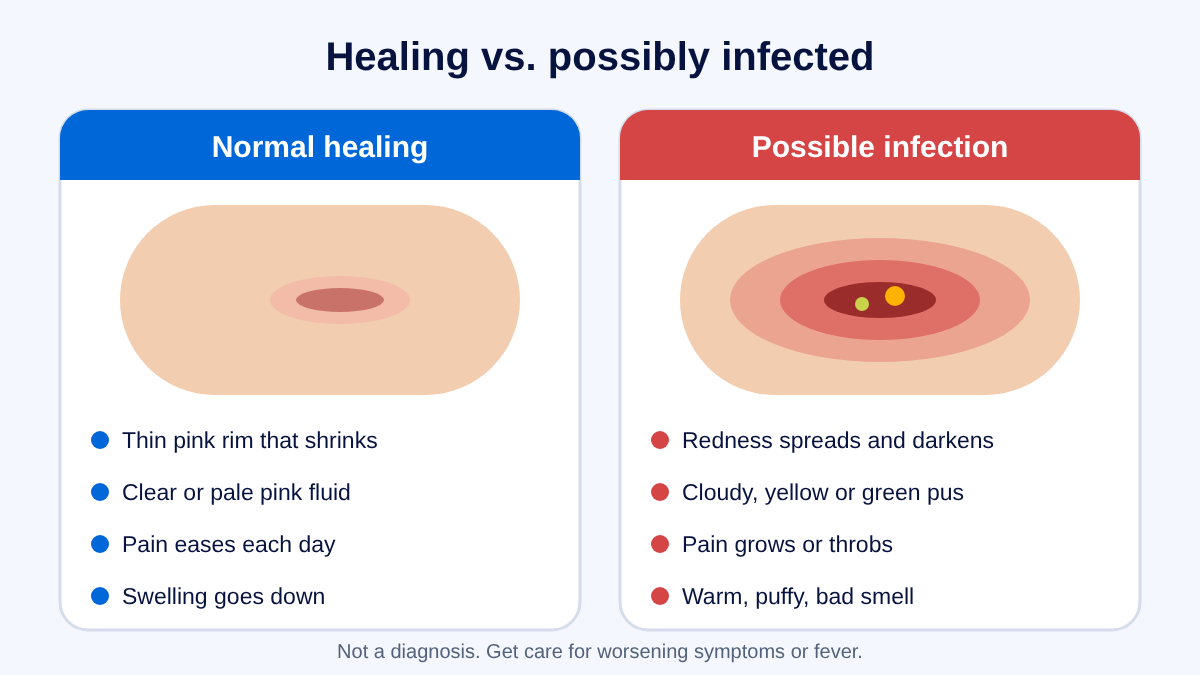
Every wound looks a little angry at first. Your body sends blood and white cells to the area. That causes some redness, swelling and tenderness. That’s inflammation, and it’s a normal part of healing. The trick is direction. A healing wound gets calmer each day. An infected one gets louder.
| What you see | Normal healing | Possible infection |
|---|---|---|
| Redness | Thin pink rim that shrinks | Spreads outward, darkens |
| Pain | Eases day by day | Grows, throbs or comes back |
| Swelling | Goes down | Puffy, tight, warm |
| Fluid | Little, clear or pale pink | Cloudy, yellow, green or thick |
| Smell | None | Unpleasant |
| How you feel | Fine | Achy, feverish, tired |
On brown and Black skin, redness can be harder to see, according to the NHS. Trust warmth, swelling and pain instead.
Early signs of a wound infection
These wound infection symptoms usually show up first. Catch them here and treatment is simpler.
Redness that keeps growing
A thin pink rim is fine. Mild inflammation can tint the edges for a day or two. Redness that creeps outward day after day isn’t. Draw a line around the edge with a pen, then check again in a few hours. If the color has crossed the line, that’s your answer. Mayo Clinic lists spreading color change among the signs to get care.
Pain and swelling that get worse
Soreness should fade. Symptoms that move the other way are a warning. When pain climbs, or a wound that felt better starts throbbing again, pay attention. Add swelling and heat and the case for a wound infection gets stronger. The NHS describes infected skin as sore and warm, with some puffiness.
Drainage, pus and odor
Healing wounds weep a little clear or pale pink fluid. Pus is the classic sign of trouble. Cloudy, yellow, green or gray drainage, anything thick, and any foul smell all point toward bacteria, as Banner Health explains.
Red flags: the wound infection may be spreading
Some signs mean the problem has left the wound itself.
Red streaks and fever
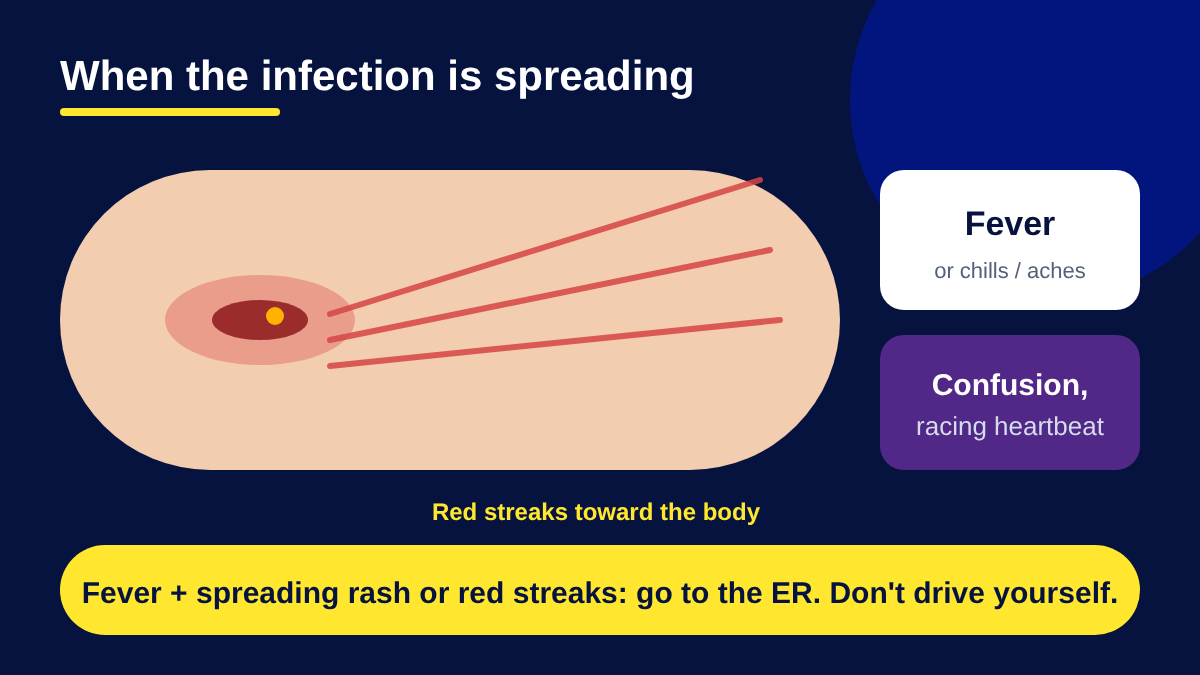
Lines running outward from the wound, like red streaks pointing toward your body, mean the infection is moving through the skin. A fever, or feeling achy and weak alongside a painful, growing rash, raises the stakes, Healthline notes.
Cellulitis and sepsis
Cellulitis is a bacterial skin infection that makes the area sore and warm, and the skin swells. Left alone, it can reach deeper tissue and even the blood. Early antibiotics can stop that, the NHS says. Sepsis is the body’s extreme reaction to infection. The CDC lists confusion, clammy or sweaty skin, extreme pain, a racing heartbeat and shortness of breath as warning signs. Sepsis is an emergency.
How soon does a wound infection show up?
Often within 24 to 48 hours, though some take several days. A surgical wound infection can appear days or even weeks later, per Banner Health. So a wound that looked fine on day one still needs a daily look.
Who needs to be extra careful?
Some wounds and some people deserve a lower threshold for getting help.
Bites and puncture wounds
Deep, dirty or rusty-object punctures and animal bites should be checked. So should bites on the hand, face or over a joint, even when they look minor.
Diabetes and slow-healing wounds
With diabetes, nerve damage can dull pain, so a wound infection may be present with little discomfort. A weak immune system slows healing too, and so does poor circulation. Check feet and legs every day.
What to do right now
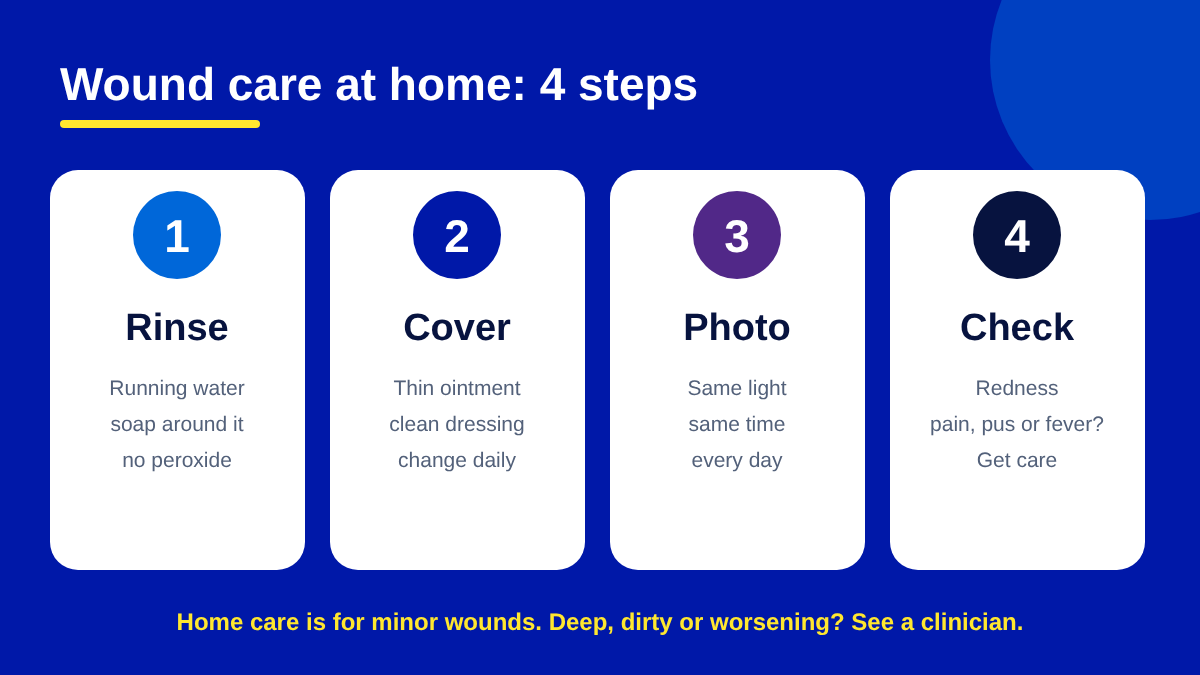
Here’s how to tell if a wound is infected as it develops: look at it at the same time each day, in the same light. Then follow these steps.
- Wash your hands, then rinse the wound under running water. Wash around it with soap, but keep soap out of the wound itself. Skip hydrogen peroxide and iodine, which can irritate it.
- Apply a thin layer of antibiotic ointment or petroleum jelly, then cover with a clean dressing. Change the dressing daily, or sooner if it’s wet or dirty.
- Snap a photo each day, in the same light, so you can compare today’s wound with yesterday’s.
- Check your tetanus shot. The CDC says a dirty or major wound calls for a booster if your last dose was over five years ago. For clean, minor wounds the gap is ten years.
Don’t squeeze pus. Don’t pick at scabs either.
When to see a doctor or go to the ER
Get same-day care for spreading redness, pus, pain that keeps rising, a deep or dirty wound, or a wound that isn’t healing.
Call 911 or go to the ER for a fever with a growing, painful rash, red streaks with feeling unwell, confusion, a fast heartbeat or fast breathing, or fainting. Don’t drive yourself.
Not sure it’s urgent? Ask a clinician tonight
Maybe it’s 2 a.m. and the urgent care is closed. Swell’s licensed clinicians offer 24/7 non-emergency care, and you can start with the free screening. Tell them what the wound looks like, how long ago it happened and what has changed. A clinician will explain whether it can be handled online or needs an in-person exam. See how Swell works.
Virtual care isn’t emergency care, and prescriptions aren’t guaranteed. If the wound is spreading and you feel unwell, skip the app and go to the ER.
Questions people ask about infected wounds
Can an infected wound heal on its own?
A very mild one sometimes does, but it’s a gamble. Bacteria can keep multiplying, and the infection can spread to deeper skin. If symptoms haven’t improved within a day or two of careful home care, or they get worse at any point, have a clinician look at it. Antibiotics are often needed.
What color is infected wound drainage?
Cloudy, yellow, green or gray fluid, especially if it’s thick or smells bad, suggests infection. Normal healing fluid is small in amount and clear or pale pink. Any pus is worth a call to a clinician, even when the rest of the wound looks calm.
Is redness around a wound normal?
A thin pink rim is normal. Redness that spreads, darkens or feels hot is not. Inflammation fades as healing progresses, so redness that grows after the first couple of days is a reason to get the wound checked.
Do I need a tetanus shot for an infected wound?
Maybe. Tetanus risk depends on how dirty the wound was and when your last dose was. The CDC points to a five-year window for dirty or major wounds and ten years for clean, minor ones. If you’re unsure of your date, ask a clinician or pharmacist.
Trusted references
Public-health, research, and medical-society resources related to this guide.