Your lab portal flagged one line in red: MCV, 104. No note. Just a number and an “H.”
Short version: a high MCV means your red blood cells are bigger than average. It isn’t a diagnosis on its own. It’s a clue. The usual explanations, like alcohol use, low vitamin B12 or folate, and certain medications, are easy to find and often fixable.
What does high MCV mean, in plain terms?
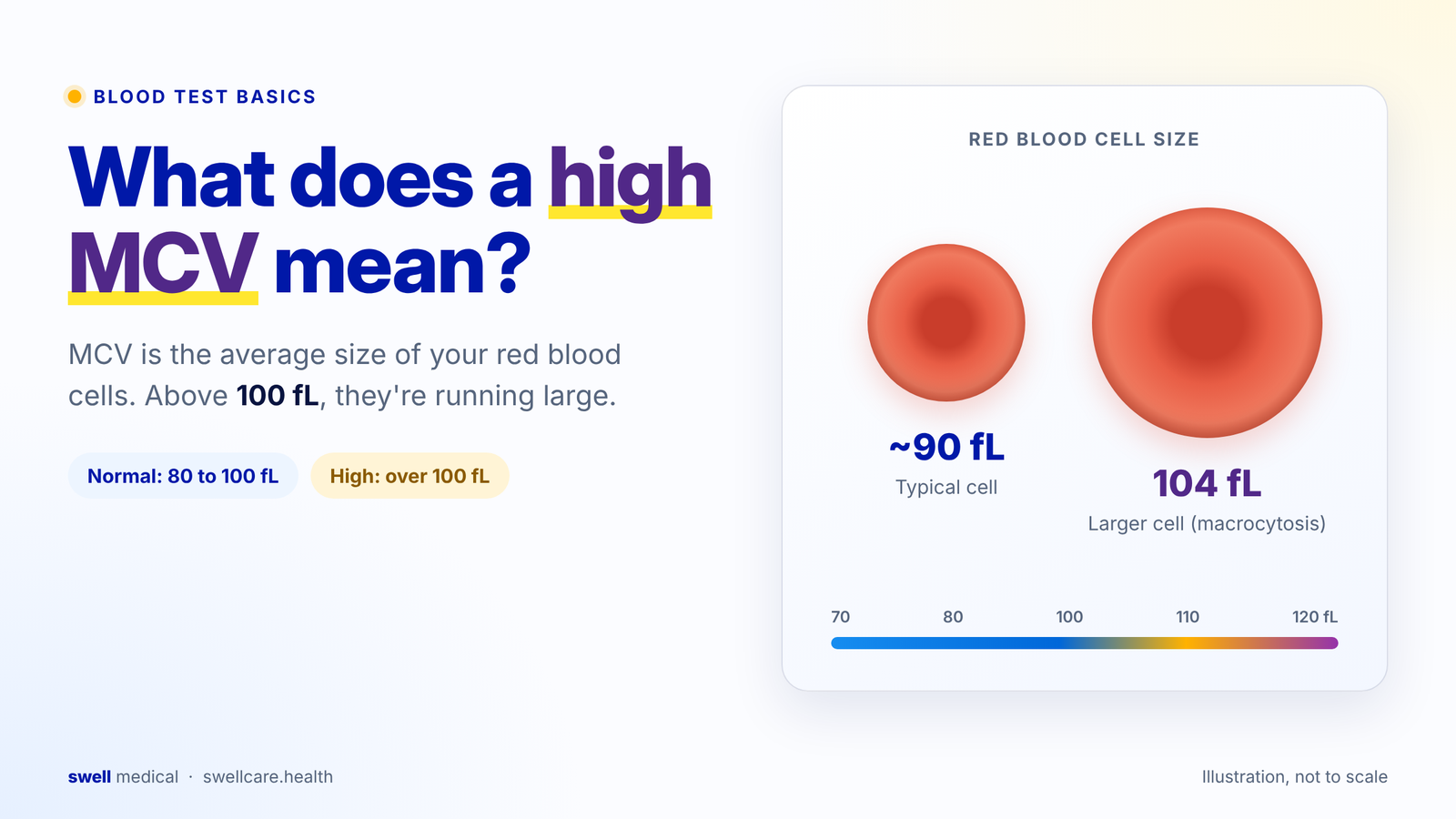
MCV stands for mean corpuscular volume. It’s the average size of the red blood cells in your blood sample, and it comes back automatically as part of a complete blood count (CBC). Red blood cells carry oxygen to every tissue, so their size shows how well your marrow is building them.
So, what does high MCV mean in practice? Your cells are running large, a pattern called macrocytosis. The StatPearls review from the National Library of Medicine puts the normal range at 80 to 100 femtoliters (fL). Anything above 100 counts as high.
It’s common. Roughly 3% of the general population has an MCV over 100, according to a review in American Family Physician.
Reading your number: normal, borderline and high MCV
Labs vary, so check the reference range on your own blood test report. As a rough guide:
| Your MCV (fL) | What it usually suggests |
|---|---|
| Under 80 | Small, microcytic cells (microcytosis), often from iron deficiency anemia, thalassemia or lead poisoning. |
| 80 to 100 | Normal-sized cells, where most healthy adults land. |
| 100 to 110 | Mildly high. Alcohol, medications and early vitamin shortfalls are the usual suspects. |
| Over 110 | Clearly high. Low vitamin B12 or folate moves higher on the list. |
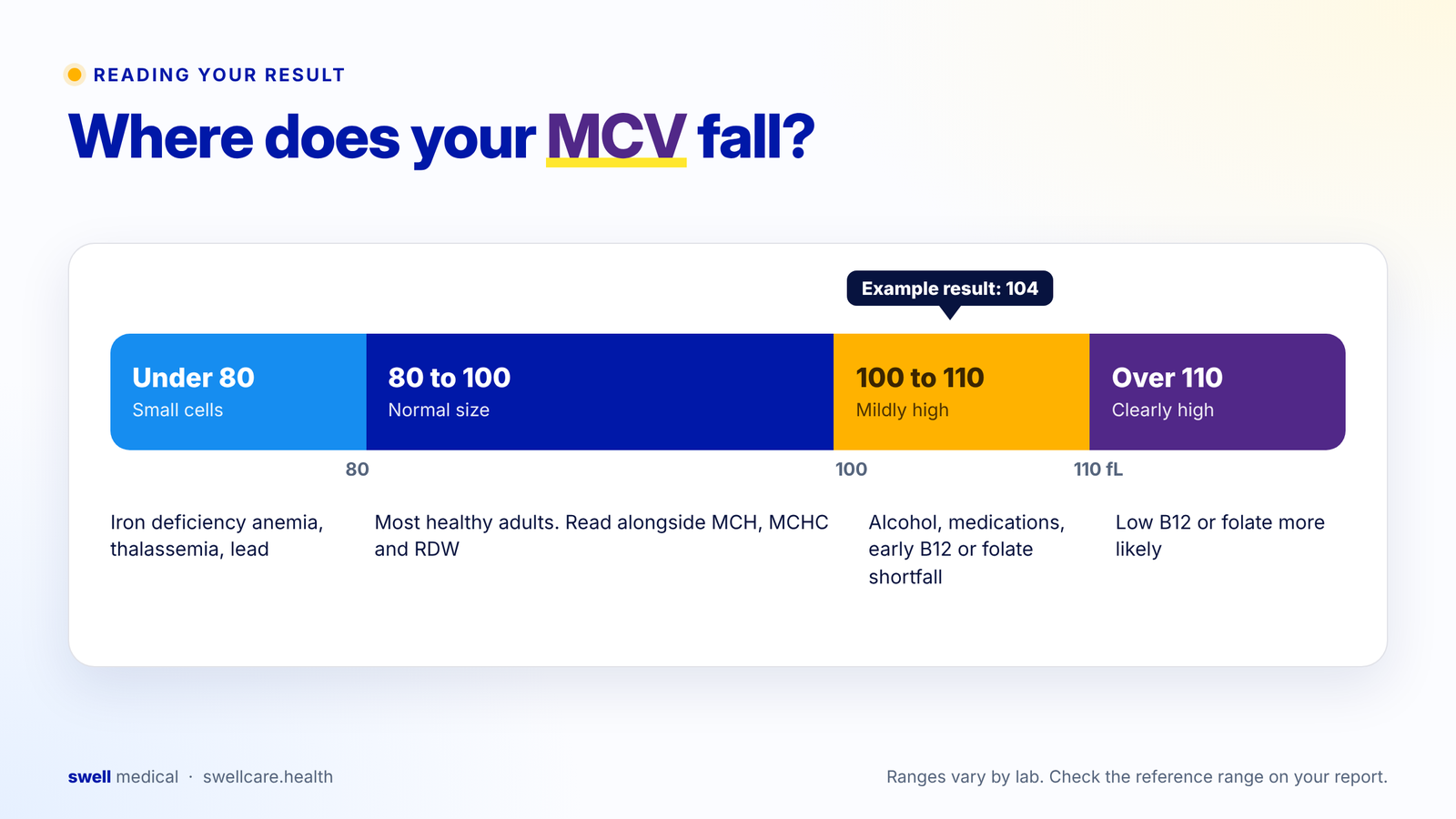
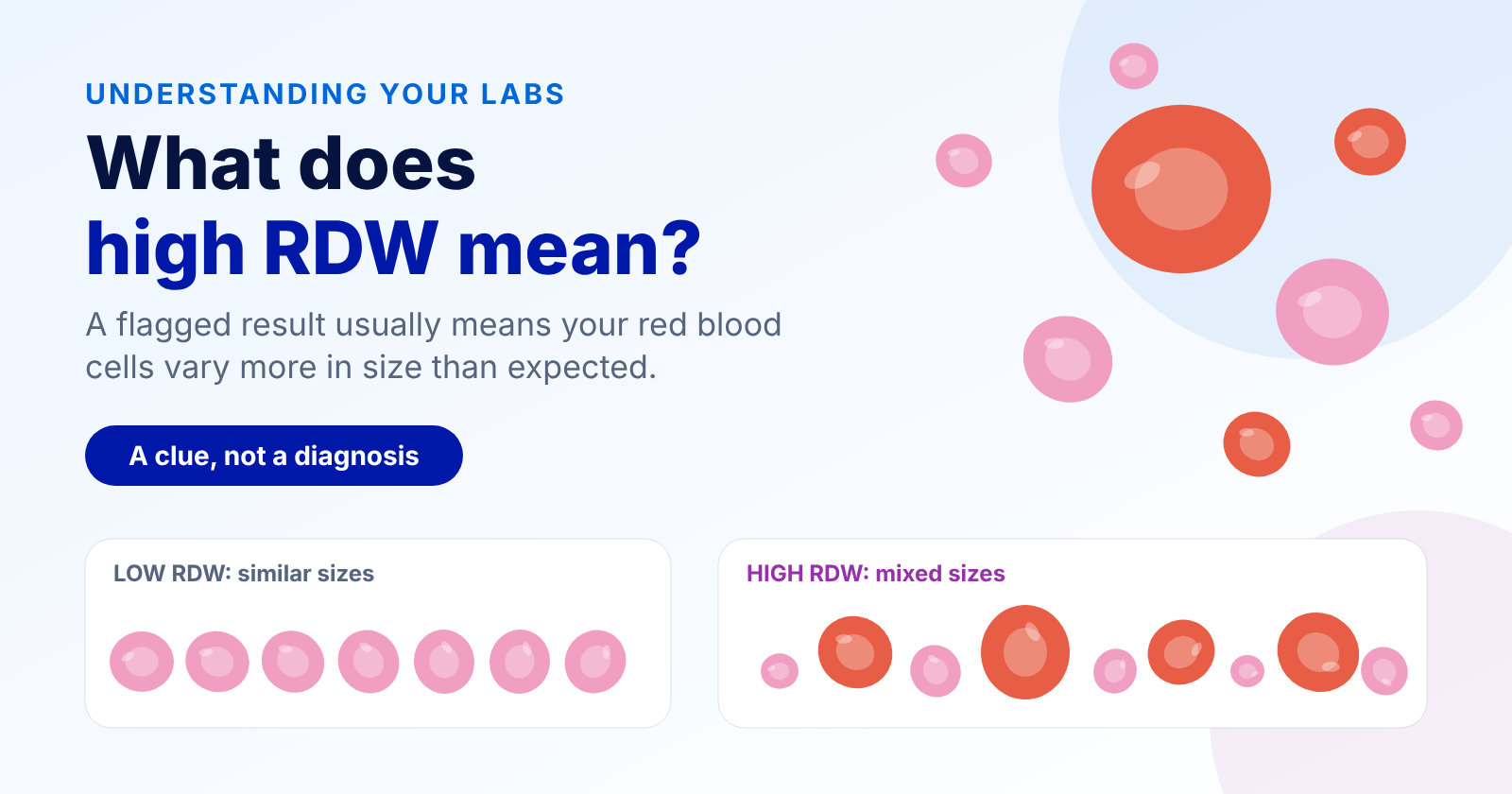
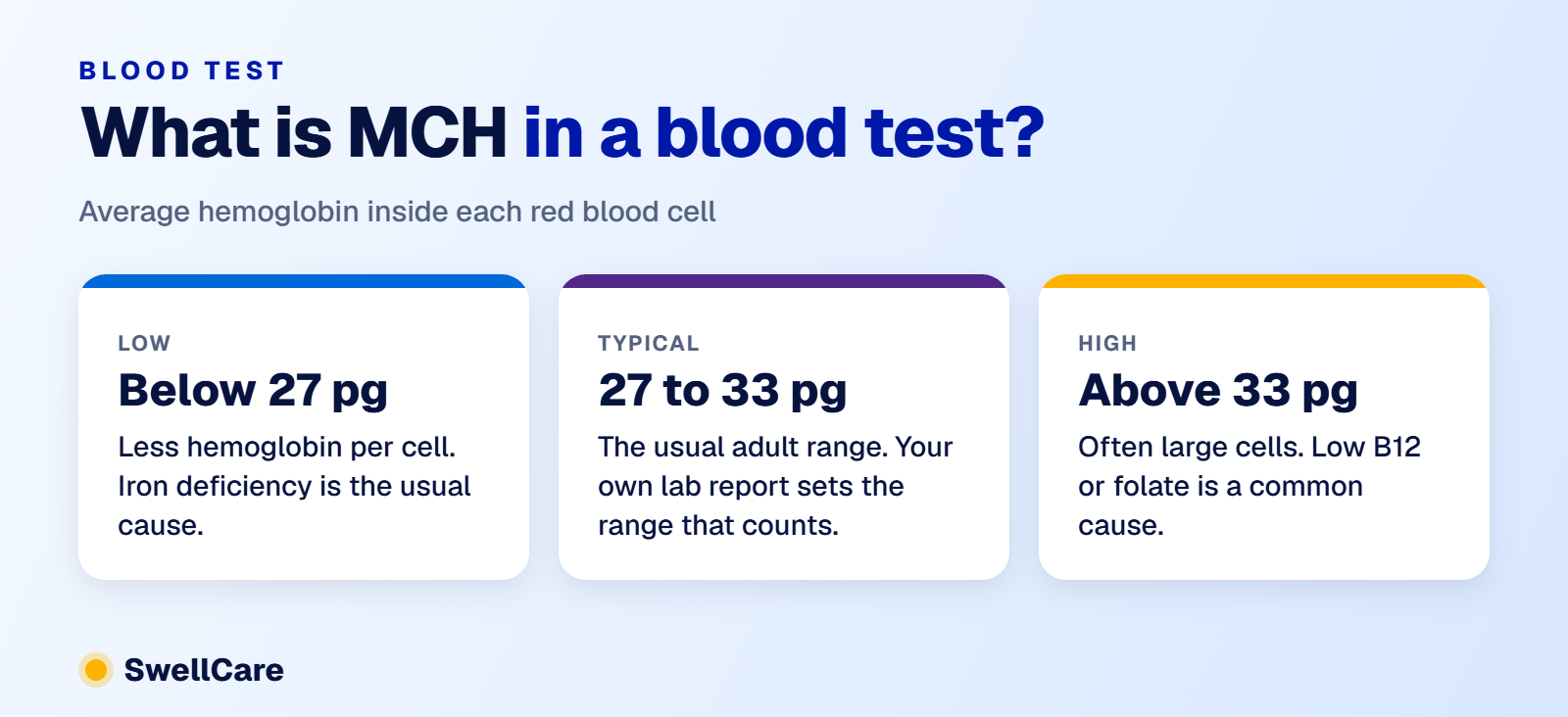
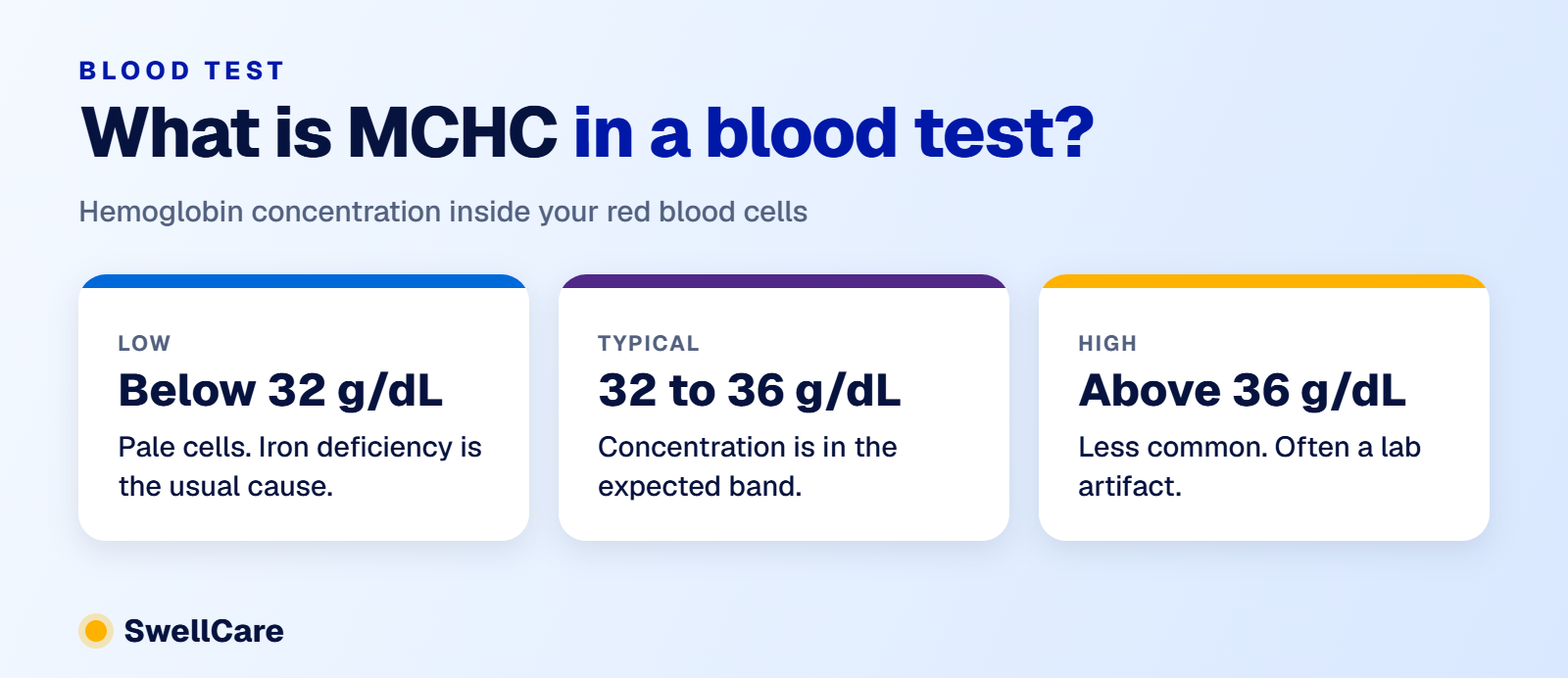
MCV is never read alone. Your report lists other red blood cell indices next to it, and RDW is worth checking first. MCH (mean corpuscular hemoglobin) is how much hemoglobin sits in each cell. MCHC is how concentrated it is. RDW, the red cell distribution width, shows how much your red blood cells vary in size. A wide RDW next to a big MCV hints that something changed recently, or that two problems overlap.
The most common causes of a high MCV
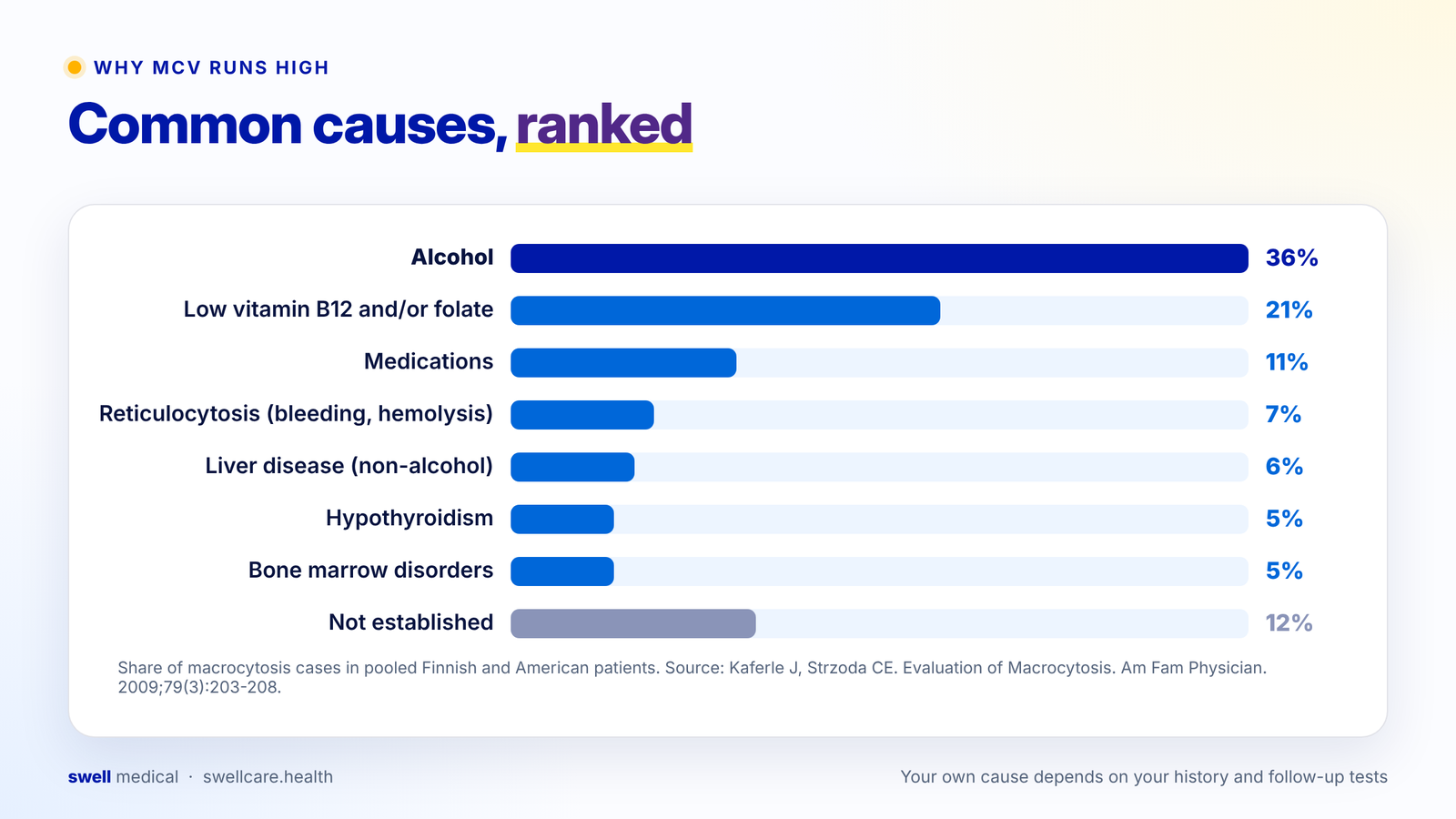
Most guides list causes as if they were equally likely. They aren’t. In the studies pulled together by American Family Physician, alcohol led, followed by vitamin shortfalls and medications.
Alcohol, even if you don’t think you drink much
Regular drinking is the single most frequent reason for large red cells in adults. Alcohol is toxic to the marrow cells that make red blood cells, so they come out large and round. The bump is usually modest, often under 110. Be honest with your clinician about regular drinking, even if it feels moderate to you.
Low vitamin B12 or folate
Your marrow needs both vitamins to divide cells properly. Without enough, cells grow but can’t split, and they end up oversized. Doctors call this a macrocytic, or megaloblastic, change. People at higher risk of low vitamin B12, per the NIH Office of Dietary Supplements, include adults over 50, vegans, people who’ve had weight-loss or stomach surgery, people with Crohn’s or other inflammatory bowel disease, and anyone on metformin or acid reducers for a long time. Pernicious anemia, one of the autoimmune diseases, blocks B12 absorption. Folate deficiency tends to follow a poor diet, heavy drinking or malabsorption.
Medications
Some drugs enlarge red cells directly, while others work by lowering folate or B12. Methotrexate and hydroxyurea are two well-known examples, and the FAQ below lists more. Don’t stop any of them over one lab value.
Liver, thyroid and less common causes
Liver disease changes red cell membranes and makes them larger. An underactive thyroid (hypothyroidism) matters more in older adults. After bleeding or hemolysis, a wave of young cells lifts the average, and a reticulocyte count picks that up. Bone marrow conditions explain only a small share.
High MCV with normal hemoglobin: does it matter?
Yes, it still deserves a look. You can have big red blood cells without being anemic. Anemia means low hemoglobin (under 13 g/dL in men and 12 g/dL in women, by the WHO cutoff), and many people with a high MCV sit well above that.
This is exactly when B12 problems hide. Only about 10% of people with B12 deficiency are anemic, according to AAFP. So a normal hemoglobin isn’t a reason to ignore an MCV of 103. If it does progress to macrocytic anemia, you’ll usually feel it.
Symptoms that can come with a high MCV
Often there are none. When symptoms show up, they come from the cause, not from cell size itself. Fatigue is the one people mention most.
- Fatigue, weakness or shortness of breath, if anemia means less oxygen is reaching your tissues
- Pale skin or a racing heartbeat as your heart works harder to move oxygen
- Numbness or tingling in the hands and feet, poor balance or memory changes (classic for low B12)
- A sore, smooth tongue
- Easy bruising or frequent infections, which point toward the marrow
Tingling matters most. The Merck Manual notes that nerve damage from long-standing B12 deficiency can become permanent.
Is a high MCV a sign of cancer?
Rarely. Myelodysplastic syndromes, a group of marrow disorders, can raise mean corpuscular volume, and so can some cancer treatments. But in the AAFP data, marrow conditions made up only about 5% of cases. Doctors look harder when nothing simpler fits, or other counts are also off.
What tests come next
A single MCV blood test result rarely gives the answer by itself. A sensible follow-up looks like this, and several can share one blood test draw.
- Repeat the CBC with a reticulocyte count and a blood smear, where a technician looks at your cells under a microscope.
- Vitamin B12 and folate levels. If B12 is borderline, add methylmalonic acid and homocysteine.
- A liver panel and thyroid test (TSH).
- Iron studies, to rule out iron deficiency. Iron deficiency anemia can coexist with low B12 and pull the average back toward normal, hiding both.
- A referral to hematology if everything comes back clean and the number keeps climbing.
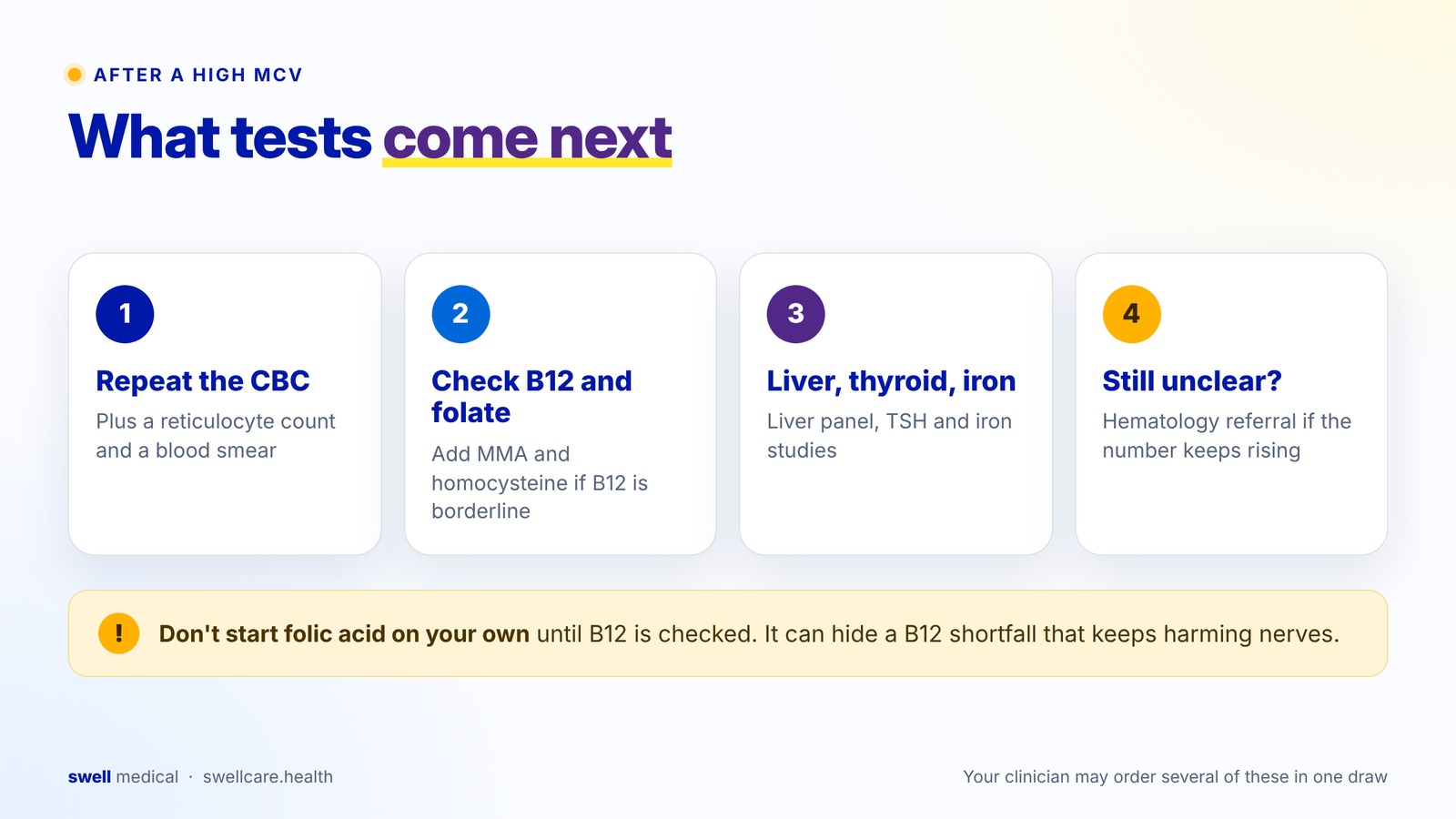
One rule: no folic acid before B12 is checked. Folic acid can correct the anemia while a B12 shortfall keeps quietly damaging nerves.
Getting your MCV back to normal
Usually, it’s possible. Treat the cause and new, normal-sized red blood cells replace the old ones. Each lives about four months, so it takes time. After someone stops drinking, MCV tends to settle over roughly 2 to 4 months, as The Blood Project describes. B12 can be replaced with pills or shots, and AAFP reports oral B12 works about as well as injections. Hypothyroidism improves with thyroid hormone. A recheck in a few months confirms you’re on track.
When to see a doctor quickly
Don’t wait for a routine visit if a high MCV comes with:
- Numbness, tingling, trouble walking or new confusion
- Chest pain, fainting or serious shortness of breath (call 911)
- Black stools, vomiting blood or heavy bleeding
- Low platelets or white blood cells on the same complete blood count
Get your MCV result explained by a Swell clinician
A flagged number at 11 p.m. is stressful. You don’t have to sit with it for weeks.
With Swell Medical’s Labs + follow-up, a licensed clinician reviews your results, narrows down the cause and tells you what to do next. That might mean the right follow-up tests, a medication check or a B12 plan. Care is available 24/7. See how it works and get a clear answer.
Questions people ask about high MCV
Should I worry about high MCV?
Not right away, but don’t ignore it. Most results trace back to something common and treatable, like alcohol use, folate deficiency, low B12 or a medication. The worry signs are nerve symptoms, a number that keeps rising, or other abnormal counts on the same CBC. Those need a prompt visit.
Can a high MCV be reversed?
In most cases, yes. Once the cause is treated, your marrow makes normal-sized cells again. Because red blood cells live around 120 days, the average drops slowly. Expect a repeat CBC two to four months after treatment starts.
What medications cause high MCV?
Common culprits include methotrexate, hydroxyurea, many chemotherapy drugs, valproic acid, phenytoin, some HIV drugs such as zidovudine, and trimethoprim-sulfamethoxazole. Metformin and long-term acid reducers can lower B12 over time. Tell the clinician reading your results about anything you take.
Is an MCV of 101 or 102 bad?
It’s just over the line, not alarming. A mild bump is often linked to drinking, a medication or an early vitamin shortfall, and MCV creeps up slightly with age. A recheck and a B12 blood test are still worth it if you’re over 50 or vegan.
What if my mean corpuscular hemoglobin is high too?
Usually that’s expected. Bigger cells hold more pigment, so that number tends to rise along with mean corpuscular volume while the concentration figure stays steady. The pairing points back to the same causes, so the next steps don’t change.
Trusted references
Public-health, research, and medical-society resources related to this guide.