It’s 9 p.m. Dinner’s done, and that familiar burn is climbing up behind your breastbone. Again.
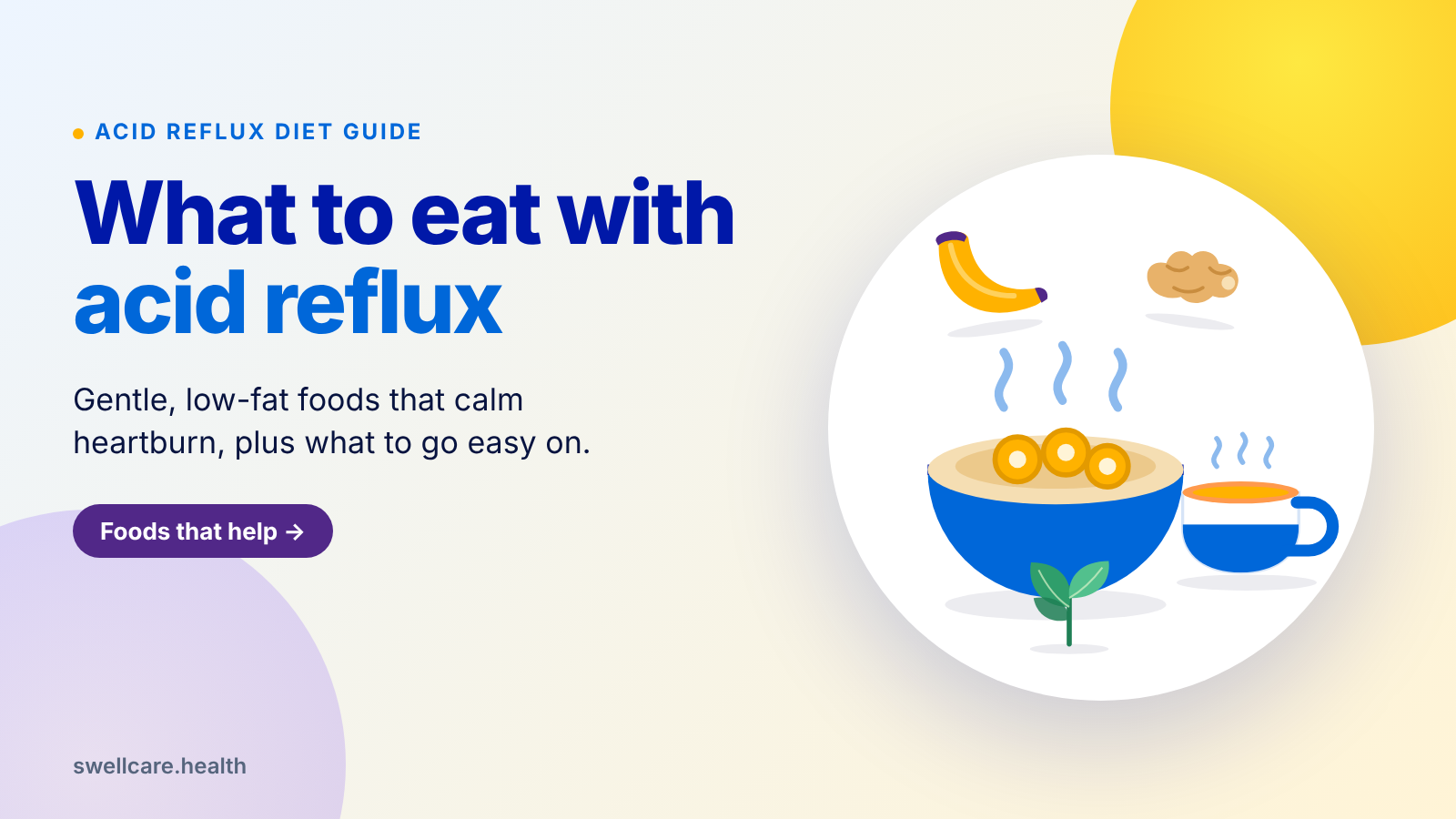
If you’re wondering what to eat with acid reflux, here’s the quick answer: oatmeal, bananas, melon, ginger, green vegetables, lean protein and anything baked or grilled instead of fried. Those foods tend to settle in your stomach quietly and stay out of your esophagus.
The rest of this guide covers GERD basics, a sample day of meals, the foods worth going easy on, and the point where food stops being the problem and a doctor should take over.
Why what you eat changes how reflux feels
Acid reflux starts at a small ring of muscle called the lower esophageal sphincter, or LES. It works like a one-way door between your stomach and your esophagus. When the door relaxes at the wrong time, or a heavy meal pushes up the pressure inside your stomach, stomach acid slips upward and you feel heartburn.
Do that often enough and it has a name: gastroesophageal reflux disease, or GERD. Typical GERD symptoms include heartburn, a sour taste and a cough that won’t quit. The National Institute of Diabetes and Digestive and Kidney Diseases estimates that about 20% of people in the U.S. have GERD, so if this sounds like your evenings, you’re in very large company.
Foods act on that system in a few different ways. Some relax the LES, the lower esophageal sphincter. Some irritate an esophagus that’s already sore. Others sit in the stomach for hours, which keeps the pressure high and the stomach acid close to the door.
Here’s the part most lists of foods skip. The evidence behind specific trigger foods is thinner than the internet suggests. One clinician review in MDedge calls the case for strict food elimination weak, and people often overdo it. The better plan is to learn which foods bother you personally.
Foods that help with acid reflux
You don’t need a special menu or a diet with a name. You need foods that are gentle, low in fat and easy to digest, cooked in ways that don’t add grease. Think of it as a reflux-friendly diet built from ordinary groceries. These are the foods clinicians point people to most often, and they ease heartburn for many people.
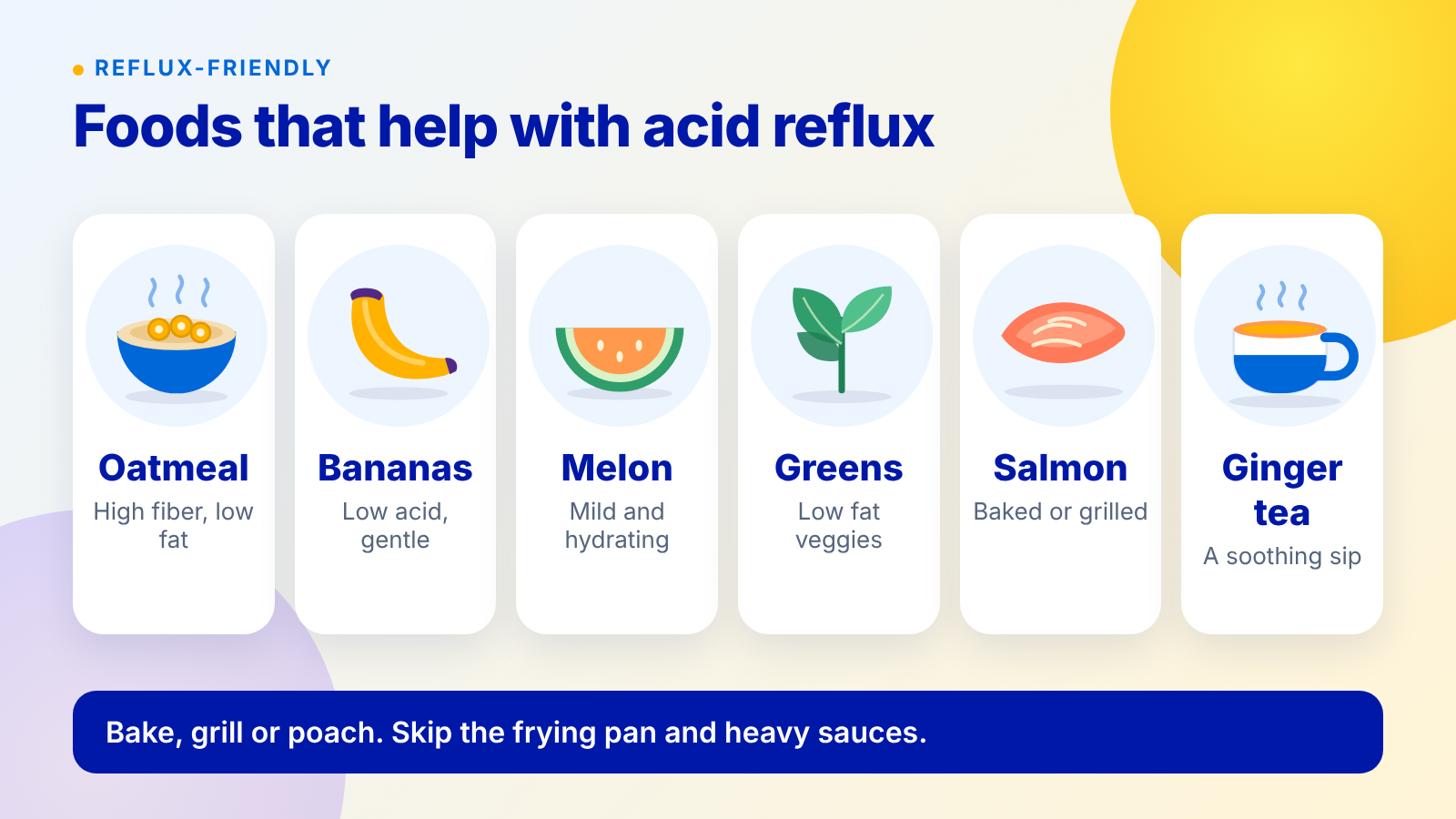
Oatmeal and other whole grains
Oatmeal is the classic for a reason. It’s a high-fiber breakfast that soaks up stomach acid and keeps you full without a load of fat. That fiber helps in other ways too, since high-fiber foods make meals feel more filling so you eat less at once. Harvard Health also lists whole-grain bread and brown rice as good sources of complex carbohydrates. Whole grains are an easy swap for white bread and fried sides, and plain rice or baked potatoes make a calm base for dinner.
Bananas, melon and other non-citrus fruit
Bananas and melons, along with apples and pears, are less acidic than oranges or grapefruit, which is why they show up on nearly every list of what to eat with acid reflux. Eat them ripe. If a fruit makes you wince, skip it, whatever the list says.
Vegetables, raw or roasted
Green beans, broccoli, asparagus, leafy greens and cucumber are low in fat and easy on the stomach. Vegetables also add fiber and bulk, so build half your plate from them. Roast them with a little olive oil instead of butter. Fresh tomatoes sometimes sit fine even when tomato sauce doesn’t, so test them gently.
Lean protein and egg whites
Skinless chicken or turkey and fish are better choices than fatty cuts. Cook them baked, grilled, broiled or poached, then season with fresh herbs instead of hot spices. Egg whites are a safe breakfast. Yolks carry most of the fat, so they’re the part to watch.
Healthy fats in small amounts
Avocado and nuts, along with salmon, give you unsaturated fats, which are friendlier than fried food. Keep portions modest, though. Even healthy fats slow digestion, and a big handful of nuts at 10 p.m. can undo a good day.
What to drink with acid reflux
What’s in your glass matters as much as what’s on your plate, especially at night.
Ginger and herbal tea
Ginger has a long reputation for settling a queasy stomach, and many people find a mug of ginger tea soothing after dinner. The research on ginger for reflux itself is limited, so think of it as a comfort, not a cure. Chamomile and other caffeine-free herbal tea work the same way. Skip peppermint tea, tempting as it is after a heavy meal. Peppermint is on the NIDDK list of common triggers because it can relax the LES.
Water, milk and plant milks
Plain water is the safest drink there is. A few sips can help rinse acid out of the esophagus. Low-fat milk and low-fat yogurt can feel soothing for some people, while full-fat dairy brings back the fat problem. Oat and almond milk are easy swaps if dairy bothers you.
Foods to go easy on
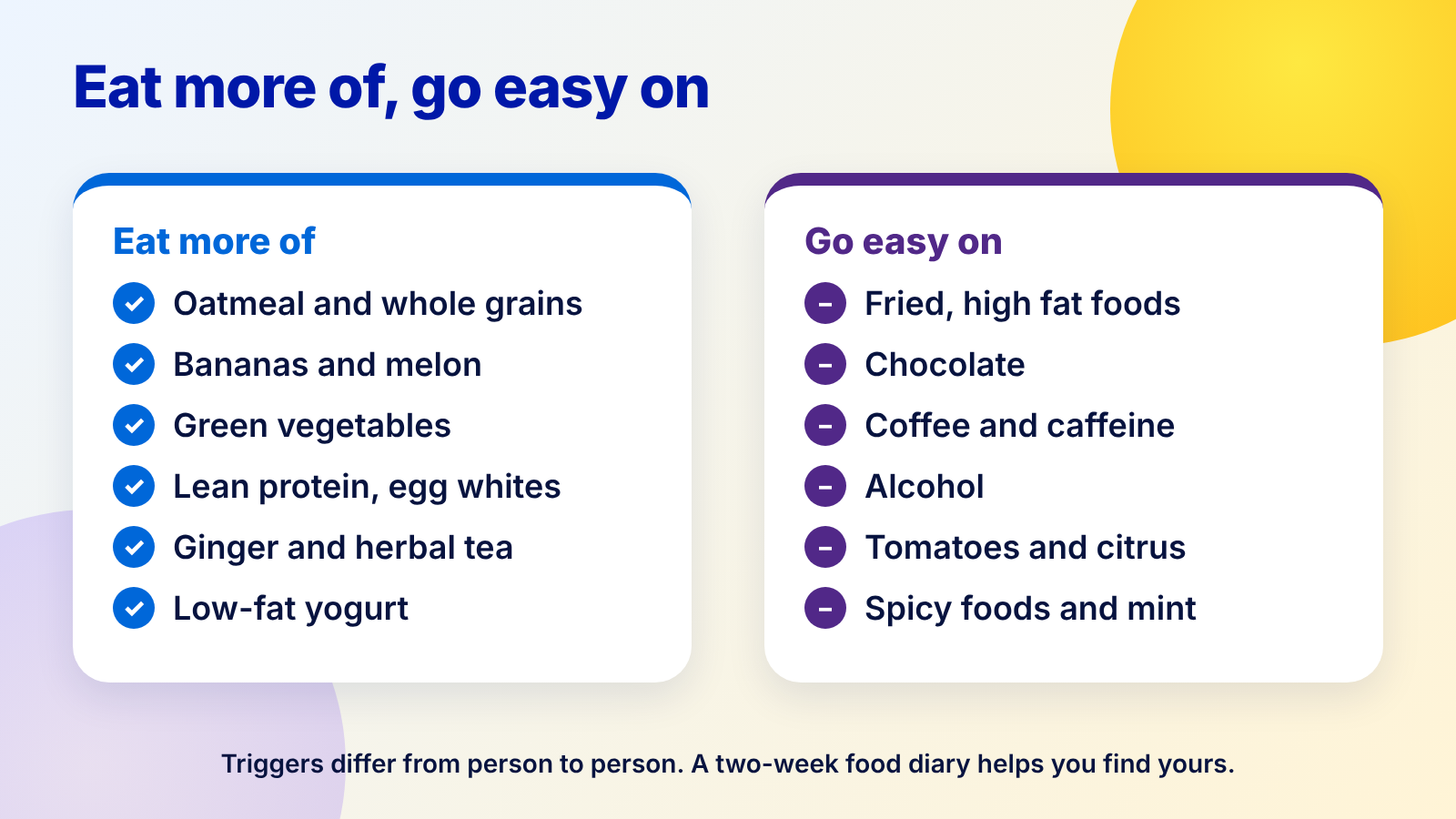
NIDDK says certain foods and drinks make symptoms worse for some people. The usual suspects are acidic foods like citrus and tomatoes, plus alcohol, chocolate, coffee and other caffeine. High fat foods, mint and spicy foods make the list too. Notice the phrase “for some people.” You probably don’t need to ban every one of these foods, and a single high fat meal or a glass of wine on a good week is rarely the end of the world.
| Food or drink | Why it may bother you | Easier swap |
|---|---|---|
| Fried and high fat foods | Slow stomach emptying, more pressure | Baked or grilled versions |
| Chocolate | May relax the LES | A banana or a few berries |
| Coffee and caffeine | A common trigger | Herbal tea or half-caf |
| Alcohol | Relaxes the LES, irritates the esophagus | Cucumber slices over ice |
| Tomatoes and citrus | Acidic, can sting | Roasted peppers, melon |
| Spicy foods | Irritate the lining of the esophagus | Fresh herbs |
| Carbonated drinks | Gas pushes acid up | Plain flat drinks |
Smoking belongs on this list too. It’s not a food, but it weakens the LES, and quitting often helps more than any single menu change. Heavily caffeinated and carbonated drinks deserve a second look as well.
Try this: keep a simple food diary for two weeks. Write down what you ate, when, and how your symptoms felt an hour later. Patterns show up faster than you’d think, and you may find that only a couple of those trigger foods actually bother you. Bring the diary to your doctor if symptoms linger.
A day of eating with acid reflux
Here’s what a gentle day might look like. Adjust it to your own triggers.
| Meal | Idea |
|---|---|
| Breakfast | Oatmeal with sliced banana and a spoon of almond butter |
| Lunch | Grilled chicken, brown rice and steamed green beans |
| Snack | Low-fat yogurt or a few melon cubes |
| Dinner | Baked salmon with roasted vegetables, a small baked potato and a green salad dressed with a little olive oil |
| Evening | Ginger tea |
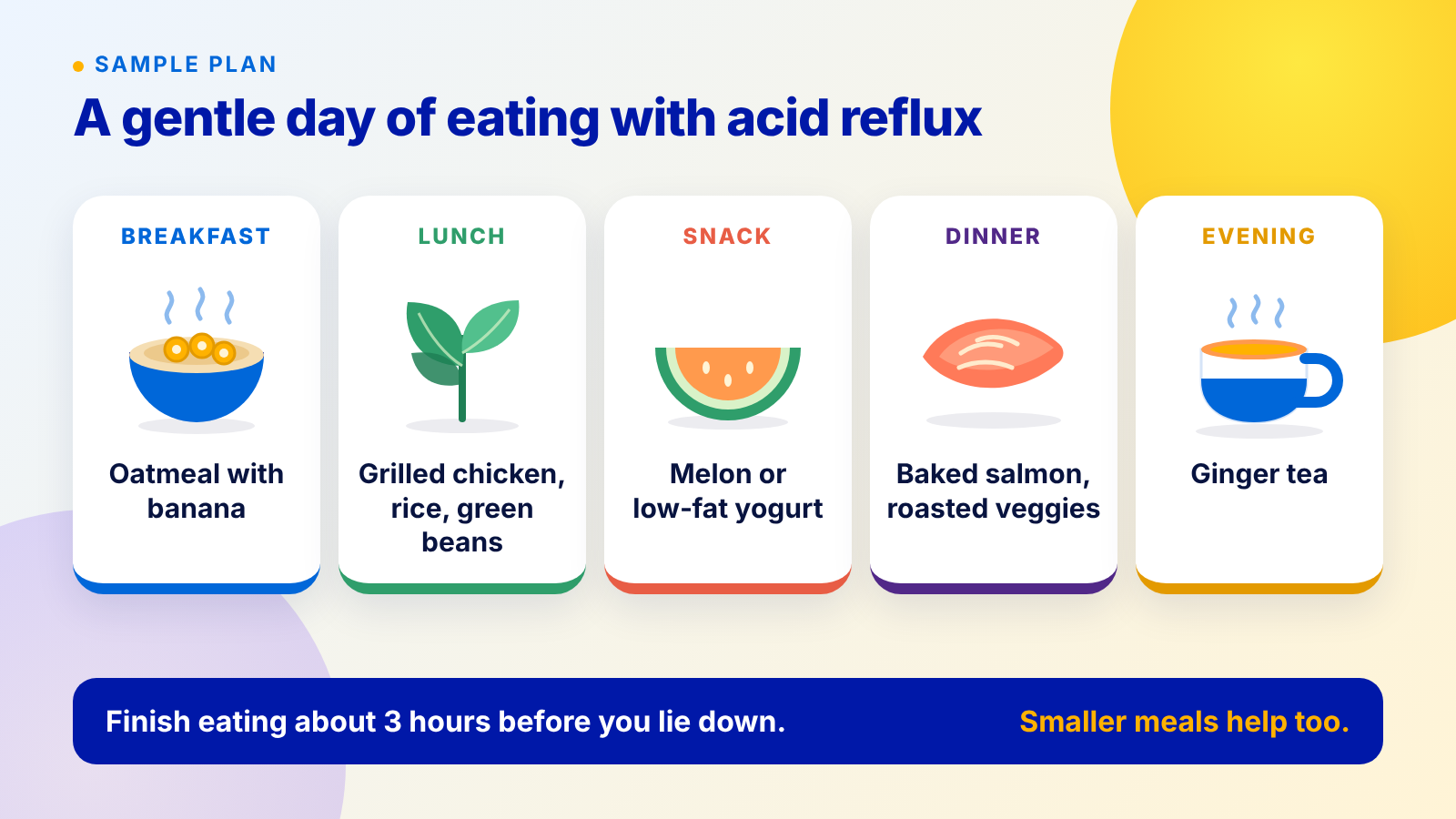
The timing matters as much as the menu. NIDDK suggests finishing meals at least 3 hours before you lie down if your symptoms strike at night. Smaller, more frequent meals also keep stomach pressure lower, and staying upright after eating helps gravity do its job. Big dinners are the usual culprit, so move your largest meals earlier in the day.
A few other habits help. Harvard Health notes that sleeping on your left side tends to cause less reflux than your right. If you’re overweight, losing weight is the change clinicians lean on most, because extra weight adds pressure on the stomach. For nighttime symptoms, raise the head of the bed with blocks or a wedge from the waist up. Stacking extra pillows only bends your middle.
Plant-forward eating has some support too. In one chart review of patients with reflux that reached the throat, 99 people who followed a mostly plant-based Mediterranean-style diet with alkaline water improved about as well as 85 people on acid-blocking medications. It was a small retrospective study, so treat it as a hint, not proof.
When to see a doctor about acid reflux
Food changes work best for mild, occasional acid reflux. Once it turns into GERD, they’re rarely enough alone. Antacids may still be part of the plan, and a doctor can tell you which medications are safe for you. If you’ve been reaching for antacids more than you’d like, tell your doctor.
Call 911 for chest pain, pressure that spreads to your arm or jaw, or shortness of breath. Heartburn and a heart problem can feel alike, and you shouldn’t guess.
Get checked if you have heartburn most weeks, trouble swallowing, vomiting, unexplained weight loss, or symptoms that keep coming back despite the diet changes above. Those are signs your esophagus may need a closer look.
Swell’s clinicians can talk through your symptoms any time of day, and you can start with non-emergency care online. Not sure how it works? Here’s how a visit goes.
Questions people ask about what to eat with acid reflux
Does water help acid reflux?
Yes, plain water is a safe choice. Sipping it with meals can help rinse acid out of the esophagus, and it’s far kinder than coffee, soda or alcohol. Avoid gulping large amounts at once, since a very full stomach can push acid upward.
Are eggs good for acid reflux?
Egg whites usually are. They’re lean protein with almost no fat. Yolks are higher in fat, which can slow digestion and make symptoms worse in some people. Boil, poach or scramble without butter, and see how your body responds.
Does milk help with acid reflux?
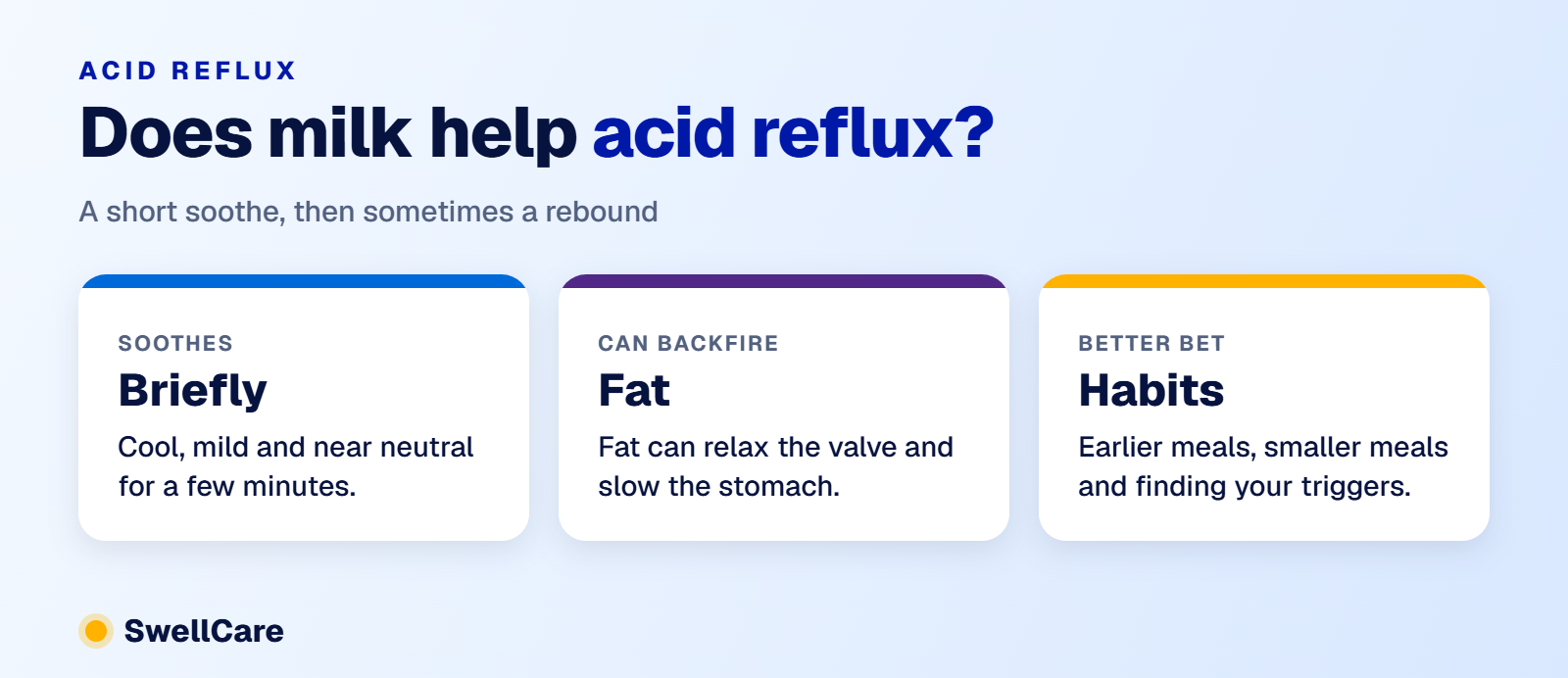
Sometimes, briefly. Low-fat milk may feel soothing, but whole milk adds fat that can trigger symptoms later. If dairy bothers your stomach, oat or almond milk is a reasonable swap.
Is yogurt good for acid reflux?
Low-fat or plain yogurt is a common choice and many people tolerate it well. Skip the sugary, full-fat versions. Add banana or melon instead of citrus-based toppings.
Can I drink coffee if I have acid reflux?
It depends on you. Caffeine is a known trigger for many people, but others tolerate a small cup after food. Try cutting back for two weeks, then add it back and watch your symptoms.
What food helps acid reflux go away fast?
No food switches reflux off. A banana, a few sips of water or ginger tea may help you feel better, and standing upright helps more than lying down. If the burn keeps returning, a doctor can check whether it’s GERD and look for the cause.
Trusted references
Public-health, research, and medical-society resources related to this guide.
- NIDDK: Acid reflux (GER) and GERD in adults, definition and facts
- NIDDK: Acid reflux (GER) and GERD in adults, eating, diet and nutrition
- MDedge: Treating GERD, lifestyle modifications vs medication
- Harvard Health: GERD diet, foods to avoid to reduce acid reflux
- EurekAlert: Mediterranean-style diet and reflux (news release)