It’s 2 a.m. Your jaw is throbbing, the gum behind your last molar feels like a bruise, and the dental office won’t open for hours.
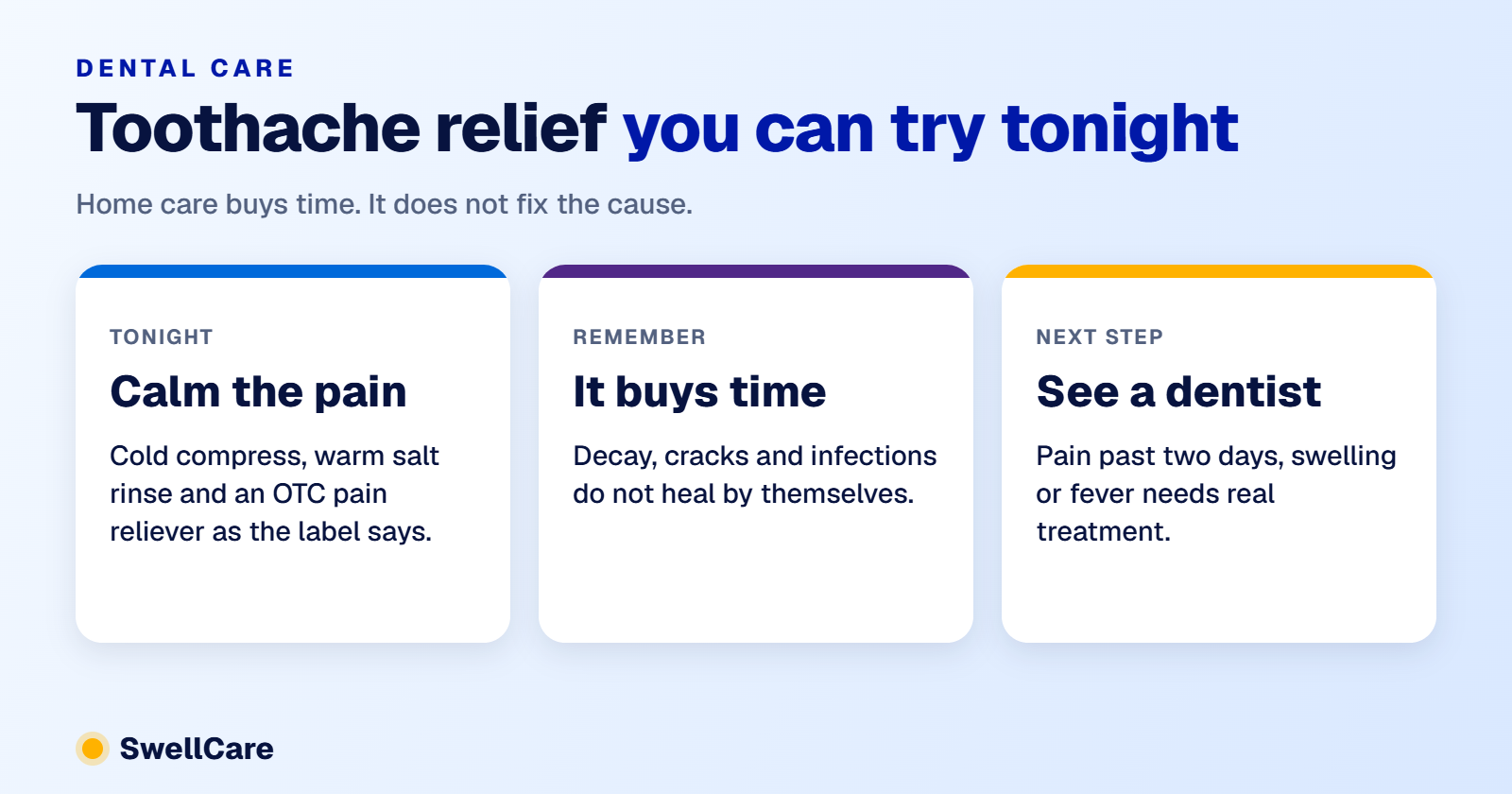
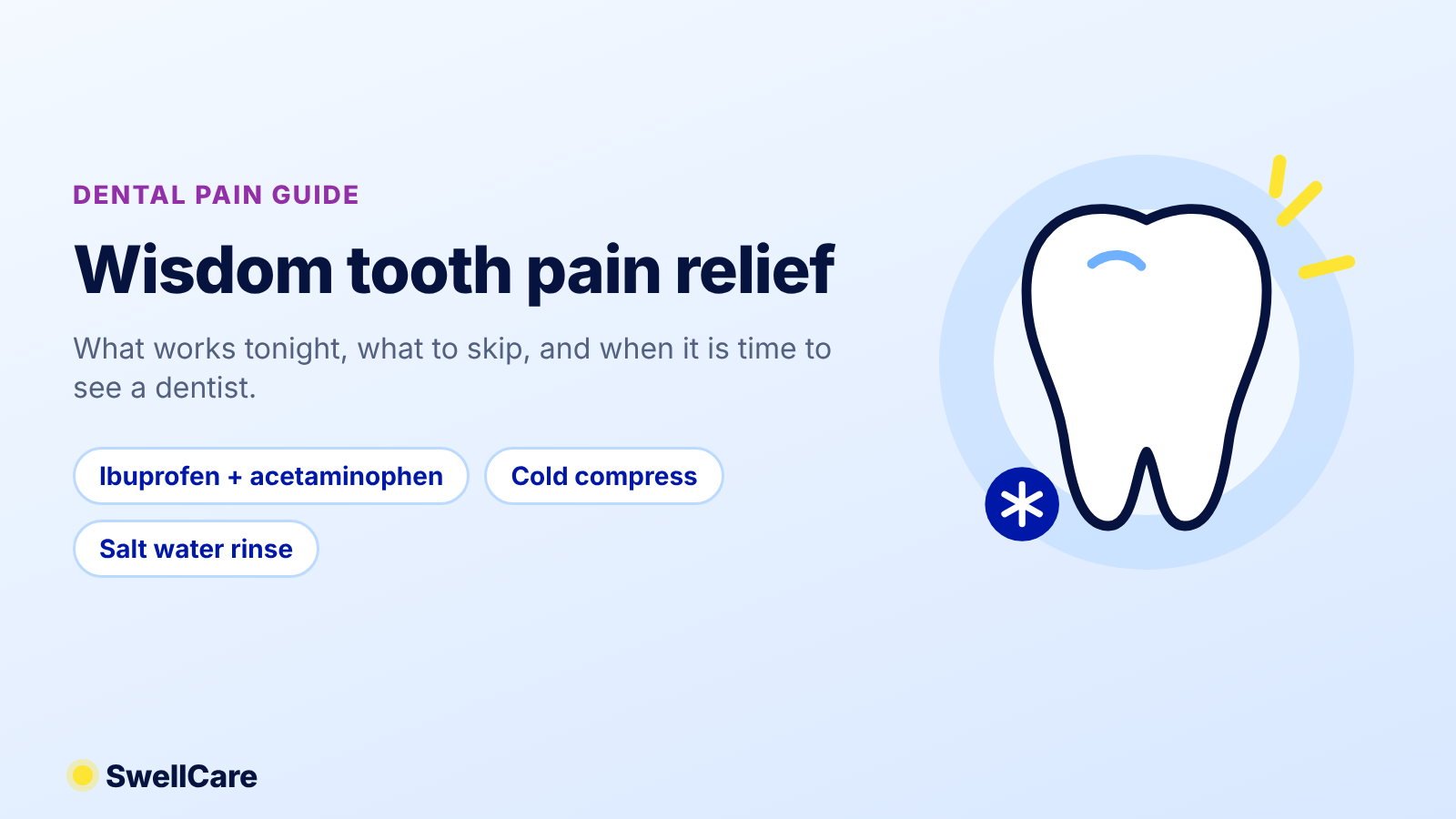
Here’s the short answer. For wisdom tooth pain relief tonight, the best-supported move is ibuprofen with acetaminophen, a cold compress on the outside of your cheek, and a warm salt water rinse. That trio settles most flare-ups enough to sleep.
It doesn’t fix the cause. Only a dentist can do that. For tooth pain in general, see our guide to toothache relief.
This guide explains why wisdom teeth cause so much pain, what helps, what to skip, and the signs that mean waiting is a bad idea.
Why your wisdom tooth hurts so much
Wisdom teeth, or third molars, usually come in between about ages 17 and 21, according to the American Dental Association. They’re the last teeth to arrive, so they get whatever space is left. Many jaws don’t have the room. So the wisdom teeth grow in crooked, stay buried, or break through only halfway.
Pain follows, often with red, puffy gums that bleed when you brush.
A partly erupted tooth and the gum flap
When only part of the tooth shows, a gum flap can cover the rest. Food and bacteria slip underneath, and bacteria thrive in that warm, hidden pocket. Inflammation builds, as the ADA notes. The gums swell, the spot turns tender, and your jaw may feel stiff. The ADA describes bacteria entering the gum around a partly erupted tooth and causing infection, pain, swelling and jaw stiffness. Dentists call this pericoronitis. It likes to flare, quiet down, then flare again.
Impacted wisdom teeth
Impacted wisdom teeth are trapped in the jaw or under the gums. An impacted tooth can sit quietly for years. Others trap food and bacteria, crowd the molar next door or form a cyst that can damage nearby roots and bone. Inflammation in the gums around an impacted tooth is a common trigger for pain.
Pain, swelling and a stiff jaw are signals to get checked, not to tough out.
Wisdom tooth pain relief you can start tonight
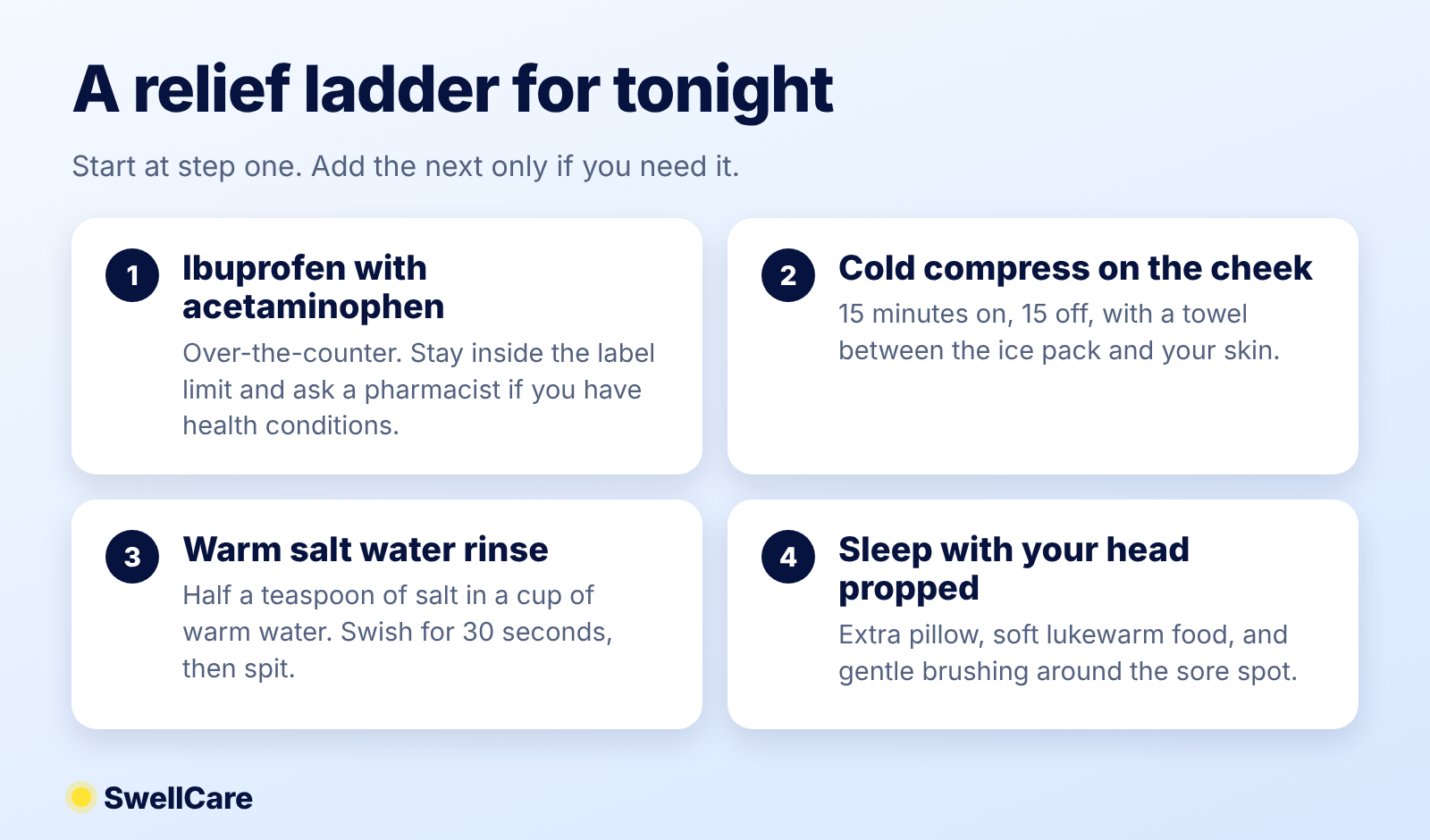
Think of this as a ladder. Start on the bottom rung, add the next if you need it, and stop climbing the moment you spot a red flag from the emergency section below.
Over-the-counter pain relief that works best
Ibuprofen is the workhorse because it calms inflammation as well as pain. A 2018 review in the Journal of the American Dental Association found that NSAIDs, alone or with acetaminophen, eased acute dental pain better than opioids. For adults, the winning pairing was 400 mg of ibuprofen with 1,000 mg of acetaminophen. Both are over-the-counter drugs. A newer randomized trial of 1,800 people having wisdom teeth removed pointed the same way.
Stay inside the label’s daily limit. Skip NSAIDs if you have kidney or stomach problems, take blood thinners or are pregnant. A pharmacist can tell you which over-the-counter medication fits your health history in about two minutes.
Cold compress and ice pack
Wrap an ice pack in a thin towel. Hold it against the outside of your cheek, over the sore spot, for 15 minutes, then take 15 off. Repeat. A cold compress dulls the throb and cuts swelling and inflammation. Never press ice straight onto your gums or skin.
Salt water rinse
Stir about half a teaspoon of salt into a cup of warm water. Swish the salt water gently for 30 seconds, aiming at the back of the gum, then spit it out. Repeat after meals and before bed. The FDA itself lists a dilute salt water rinse as an alternative for adult mouth pain. A salt water rinse won’t cure an infection. It does flush out trapped food and bacteria, and the salt water can ease inflammation in irritated gums.
Numbing gel and the benzocaine warning
Numbing gel with benzocaine deadens the gums for a short while. Use a small dab, no more than four times a day. It’s a quick fix, and the pain comes back. The FDA has warned that benzocaine can trigger methemoglobinemia, a rare blood condition that cuts the oxygen your blood carries. Pale or blue lips, shortness of breath, a racing heart or confusion mean you need medical help right away. Adults with asthma or heart disease, and smokers, face higher risk. And never use it for teething in children under two.
Clove oil and other home remedies
Clove oil is the most popular of the home remedies online. Some people find a drop on a cotton ball takes the edge off. The evidence is thin, and undiluted oil can burn your gums, so dilute the clove oil and keep it off the skin. A cooled peppermint tea bag makes a gentle compress.
None of these replaces a dentist.
Getting through the night
Wisdom teeth pain tends to spike after dark. Prop your head on an extra pillow, because lying flat sends blood to your jaw and the throb gets louder. Eat soft, lukewarm food and skip anything hard, sticky or hot. Finish with one more warm salt water rinse before bed, and keep a cold compress ready by the bed. Keep brushing, gently, along the gums near the sore spot, because oral hygiene matters more now, not less.
Mistakes that make wisdom tooth pain worse
Don’t pop, cut or poke a gum flap or swollen gums yourself. Aspirin tucked against the gum burns the tissue. Heat on a swollen cheek backfires, because a cold compress is the better call. Don’t gamble on a fever. Doubling up past the label’s limit adds risk, not relief.
When wisdom tooth pain is a dental emergency
Go now: the red flags
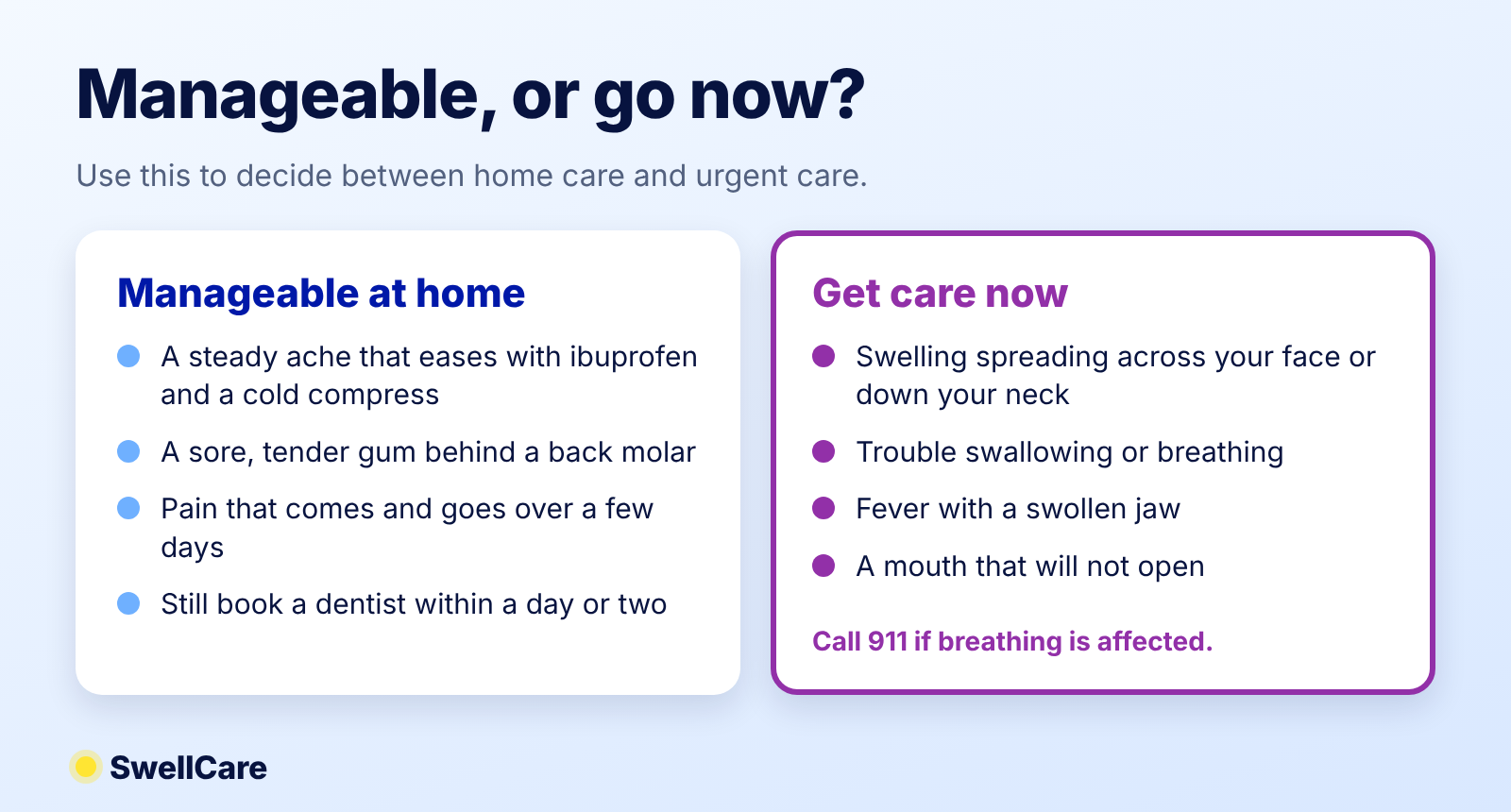
Head to urgent care or an emergency room if you have swelling spreading across your face or down your neck, trouble swallowing or breathing, a fever with a swollen jaw, or a jaw that won’t open. Call 911 if breathing is affected. These can point to an infection that’s moving, and it won’t wait for office hours.
What happens at the dental office
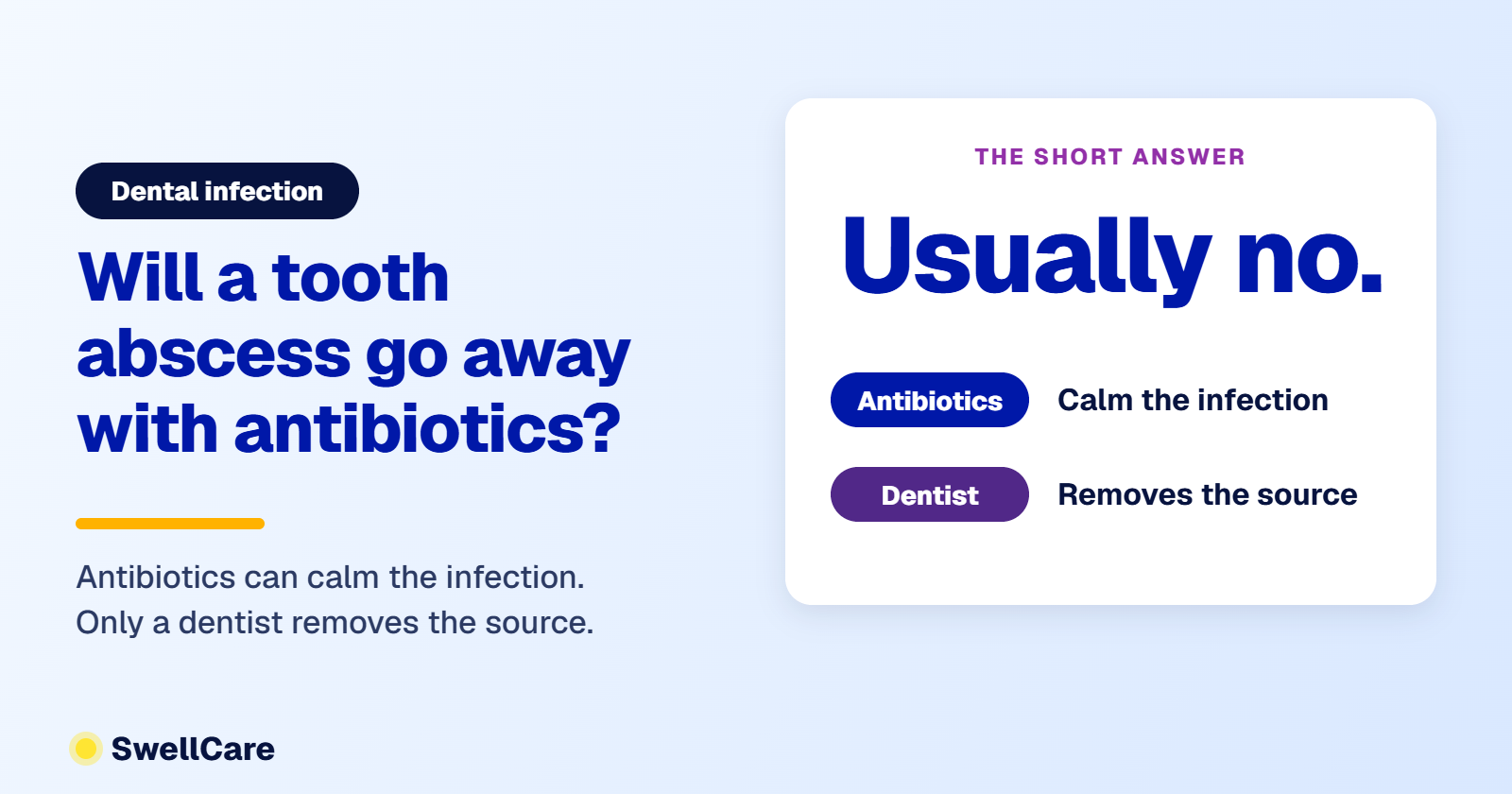
The exam starts with a look at your wisdom teeth and an X-ray. Depending on what shows up, the team may clean under the gum flap, prescribe antibiotics for infection or recommend an extraction. If an abscess is involved, here’s whether a tooth abscess goes away with antibiotics. The ADA lists pain, infection, cysts, damage to neighboring teeth and gum disease as common reasons for removal. Ask the dental office about same-day appointments when you call. Many offices hold slots for pain.
Where Swell fits in
Swell is a clinician-led virtual care service, open 24/7. A chat or video visit can’t pull a tooth, and we’ll say so plainly. What it can do is help you judge how urgent your symptoms are, which pain medicine is safe for you, and when to head in person if your wisdom teeth flare at night. See how Swell handles toothache.
The first screening chat is free, and a clinician will tell you whether an online visit can help. A completed consultation is $45 total, with no membership. See how it works or go straight to urgent care. This isn’t emergency care, so call 911 if swelling affects your breathing.
Questions people ask about wisdom tooth pain relief
How long does wisdom tooth pain last?
It depends on the cause. Wisdom teeth that are breaking through can ache on and off for weeks. Pain from a spreading problem usually keeps building until it’s treated. If the pain lasts more than a couple of days or keeps coming back, book a dentist. After an extraction, pain should improve steadily, and worsening pain means you should call your surgeon.
What is the fastest way to stop wisdom teeth from hurting?
Take an over-the-counter pain reliever your pharmacist okays for you. NSAIDs also cut inflammation. Hold a cold compress on your cheek, then rinse with warm salt water. That combination works faster and more reliably than herbal options. It’s a bridge to treatment, not a cure.
Can I take ibuprofen and acetaminophen together?
Most healthy adults can, and research on wisdom teeth pain supports the pairing. The studied adult doses were 400 mg and 1,000 mg, respectively. Follow the label limits, and check with a pharmacist first if you have liver, kidney or stomach problems, take blood thinners or are pregnant.
Is wisdom tooth pain an emergency?
Usually not on its own. It becomes an emergency when you have facial or neck swelling, trouble swallowing or breathing, fever, or a mouth that won’t open. Those signs call for urgent care or the ER. Steady wisdom teeth pain without them still deserves an appointment within a day or two.
Do wisdom teeth have to come out if they hurt?
Not always, and many wisdom teeth never cause trouble. The ADA says a dentist decides after an exam and X-ray. Removal is common when there’s repeated infection, an impacted tooth, a cyst, damage to the next tooth or decay that can’t be restored. Some people keep their wisdom teeth with careful flossing and regular checkups.
Trusted references
Public-health, research, and medical-society resources related to this guide.