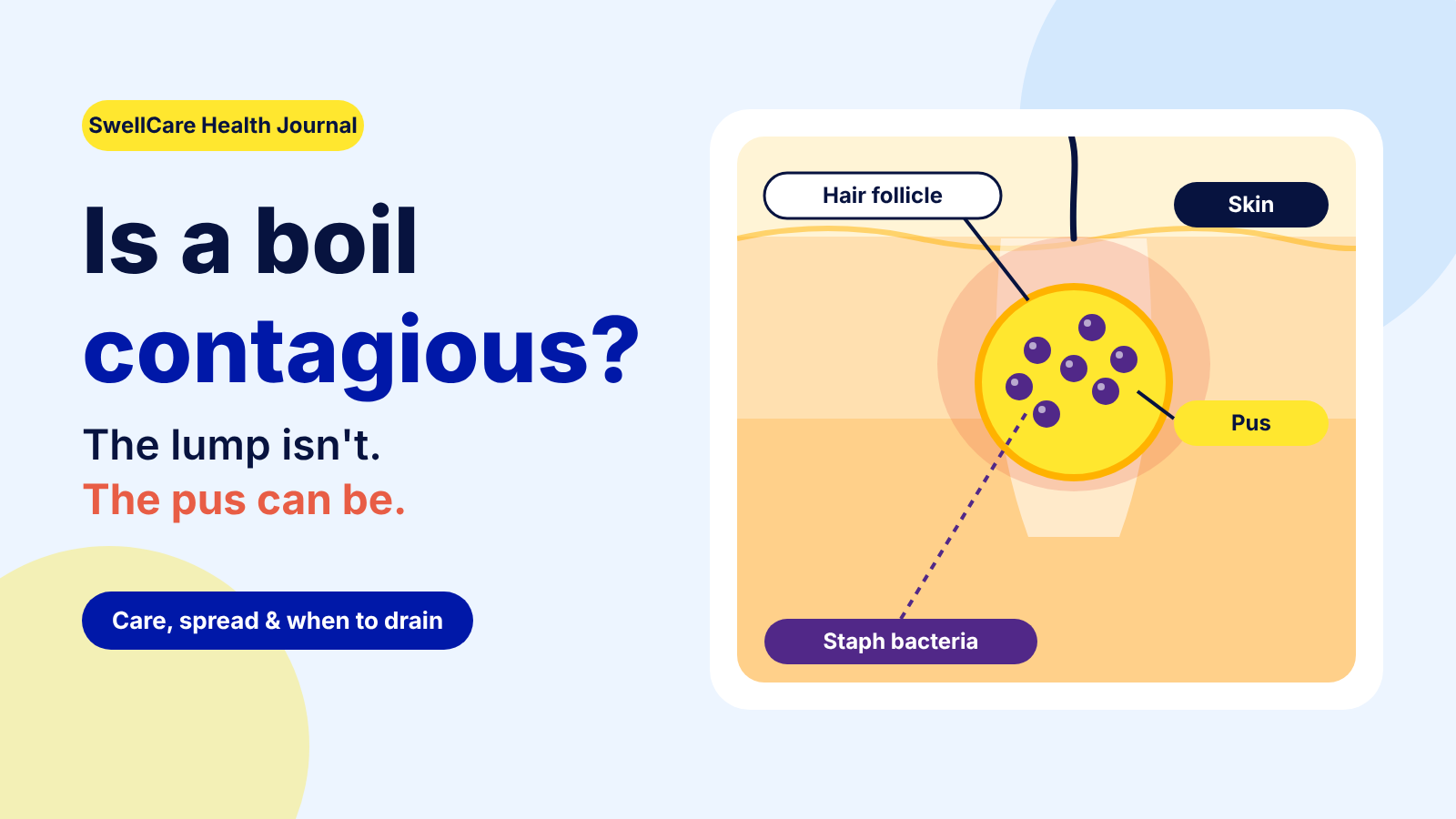
You’ve found a tender, red lump that’s getting bigger by the hour. Now you’re wondering whether to keep your distance from your kids, your partner or the gym locker room. So, is a boil contagious? The lump itself isn’t. The staph bacteria inside it can be, and that’s the part worth managing.
Is a boil contagious? The short answer
A boil is a skin infection. It starts when bacteria get into a hair follicle and the infection spreads to the tissue around it. Most of the time the culprit is Staphylococcus aureus, a staph bacteria that sits harmlessly on the skin or inside the nose of about 30% of people. Usually it behaves. Then a nick from shaving, an ingrown hair or a scratch gives it a way in, especially if your immune system is run down.
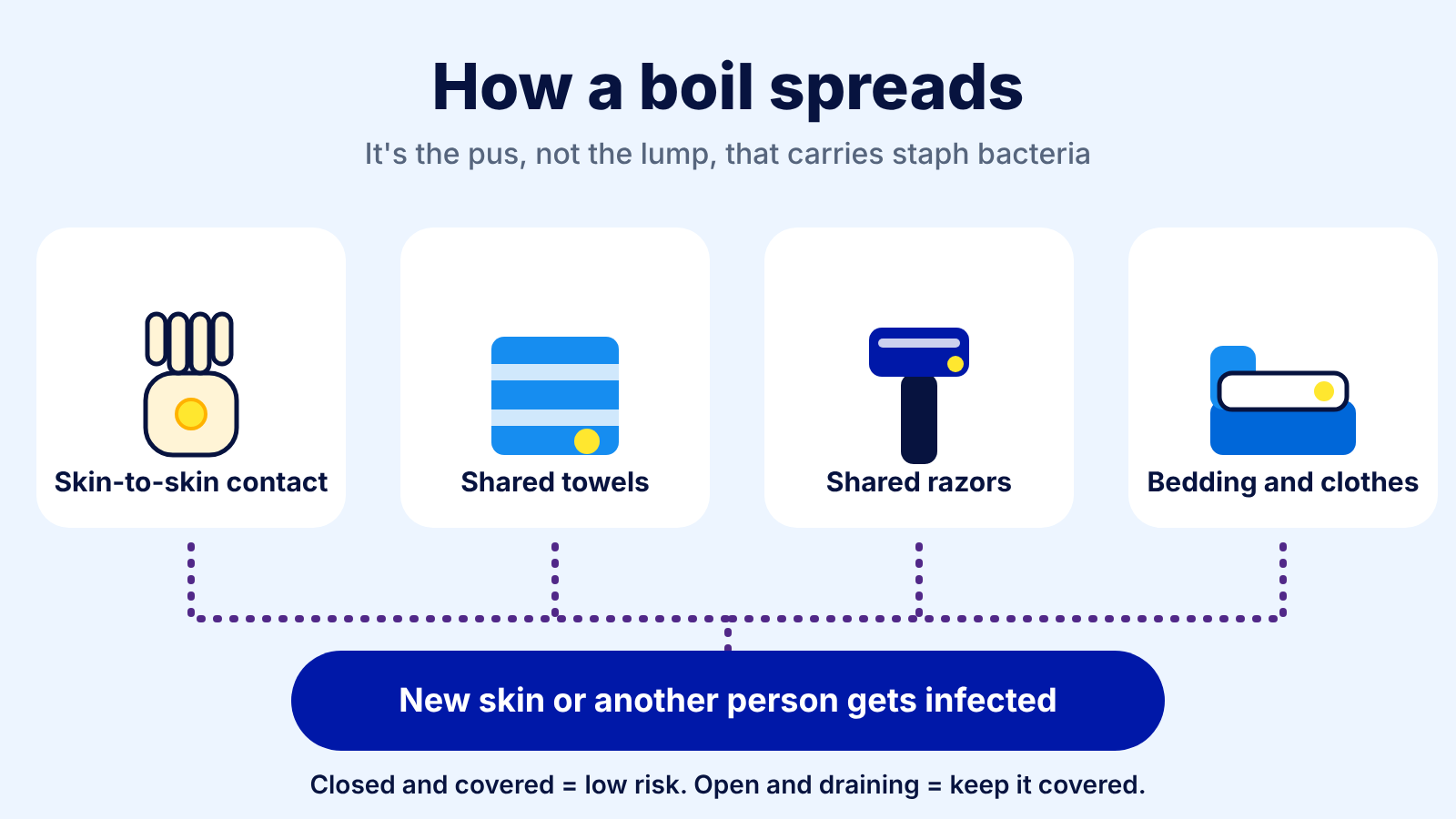
You can’t “catch a boil” the way you catch a cold. What you can pass along is the bacteria in the pus. Skin-to-skin contact with a draining boil, or sharing a towel, razor or washcloth with someone who has one, can spread the infection to another person. It can also spread to a new spot on your own skin.
That’s why a boil that’s closed and covered is a low risk. One that’s leaking is a different story.
How long is a boil contagious (and should you stay home)?
Think of it this way: you’re a risk to others for as long as the boil is open, weeping or draining pus. Once it has drained, closed up and the skin is intact again, the infection has nowhere to travel and the risk drops off sharply.
How long does that take? MedlinePlus says most boils open and drain within about two weeks, while the American Academy of Dermatology says most heal on their own in one to three weeks.
Do you need to stay home? Not automatically. A small boil that’s covered with a clean bandage that stays dry can wait while you go about your day. Sit it out, and call your doctor, if pus is soaking through the bandage, the boil is somewhere you can’t cover (like your hands), or you work around food, patients or young children. Skip contact sports and shared gym equipment while it’s draining, so the bacteria can’t spread.
Is it really a boil? Boil vs. pimple, cyst and carbuncle
Plenty of lumps get called boils. Knowing which one you’ve got changes what you do next.
The classic symptoms are easy to spot. A boil usually begins as a tender, pinkish-red bump, and over a few days it gets firm, fills with fluid and can grow from the size of a pea to the size of a golf ball, often with a white or yellow center. The pain builds as pus collects, then eases once it drains. Some people feel tired or feverish first, and itching can come before the lump. Other symptoms follow the same pattern: redness, swelling, then pain. Common spots are the face, neck, armpits, buttocks and thighs.
A pimple is smaller and shallower, while a boil sits deeper in the hair follicle. A cyst is a slow, painless sac under the skin that isn’t an infection until it gets inflamed. A carbuncle is a cluster of boils joined under the skin, and it often brings a fever.
One more pattern to watch. If boil-like lumps keep coming back in the armpits, groin, buttocks or under the breasts, the AAD notes you may have hidradenitis suppurativa, which a dermatologist can diagnose and treat. That calls for a different treatment plan, not another round of home care.
How to care for a boil at home without making it worse
Home treatment for a boil comes down to heat, cleanliness and patience. Here’s the routine that dermatologists recommend:
- Wash your hands before and after you touch the area.
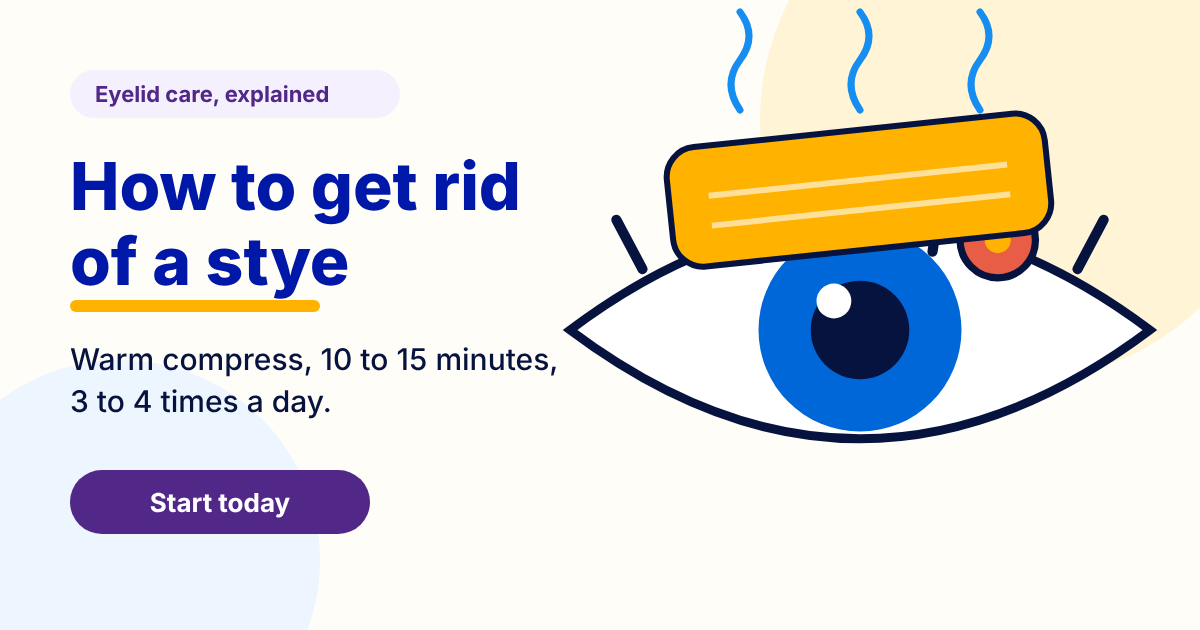
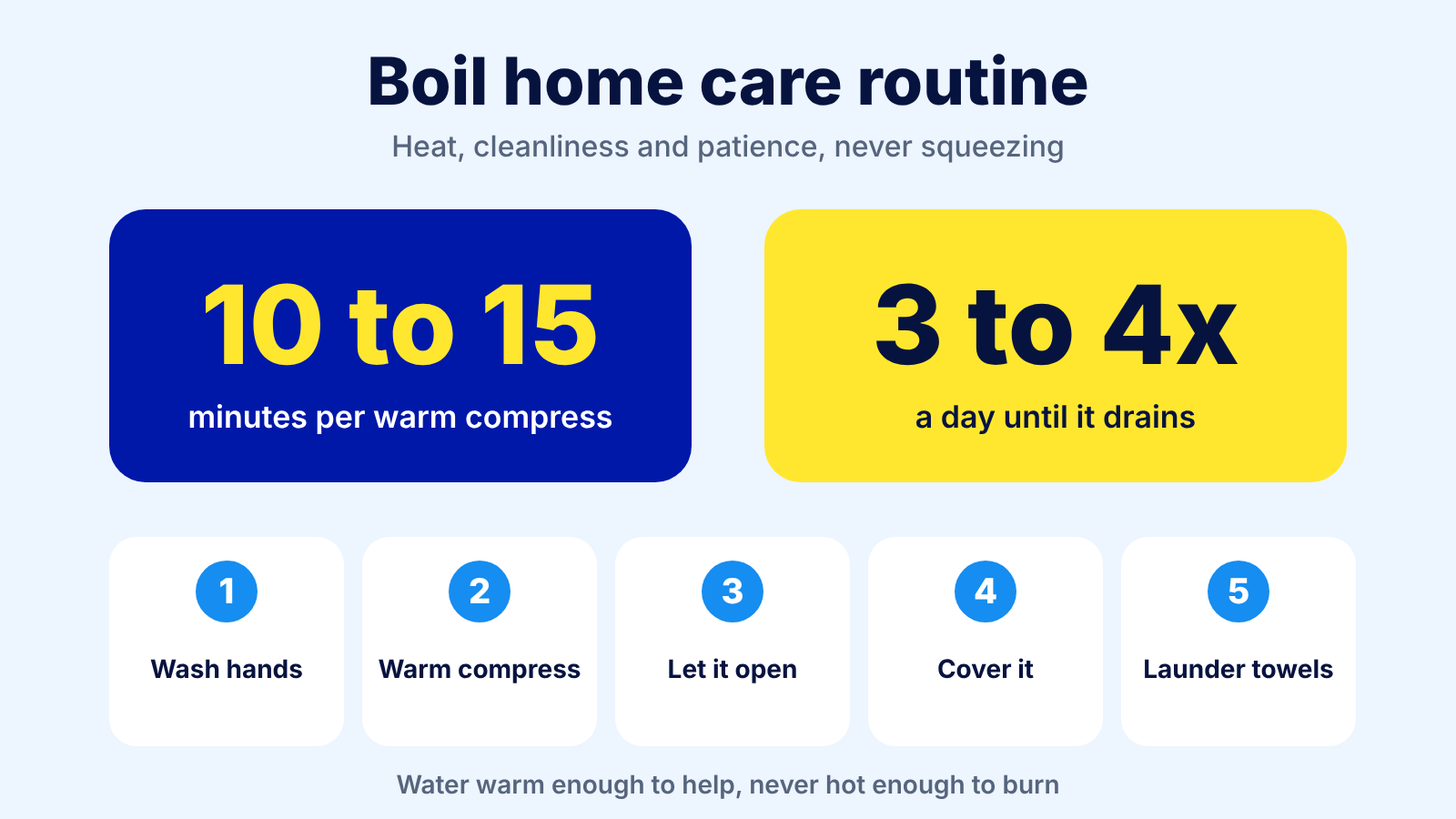
- Apply a warm compress. Soak a clean washcloth in warm water (not hot enough to burn), wring it out and hold it on the boil for 10 to 15 minutes. Repeat three to four times a day until the boil drains and heals.
- Let it open on its own. The warmth helps the boil come to a head and drain.
- Cover it once it opens. Use a sterile bandage or gauze and change it often, especially when it gets damp.
- Wash everything it touches. Launder towels, washcloths, clothes and sheets in hot water, and seal used dressings in a bag before they go in the trash.
- Take ibuprofen or acetaminophen for pain, following the package directions.
Never squeeze, pop or cut a boil open yourself. It’s tempting. Don’t. Squeezing can push bacteria deeper, spread the infection and leave a scar.
When to get a boil drained
Small boils often drain by themselves. Deep or large ones may need a clinician to open them, and sometimes that takes a minor procedure. Treatment depends on how deep the infection goes. If a boil needs to be drained, let a professional do it. They can numb the area, make a small opening, let the pus out and clear the infection cleanly. That’s very different from jabbing it with a pin at home.
See a doctor if your boil:
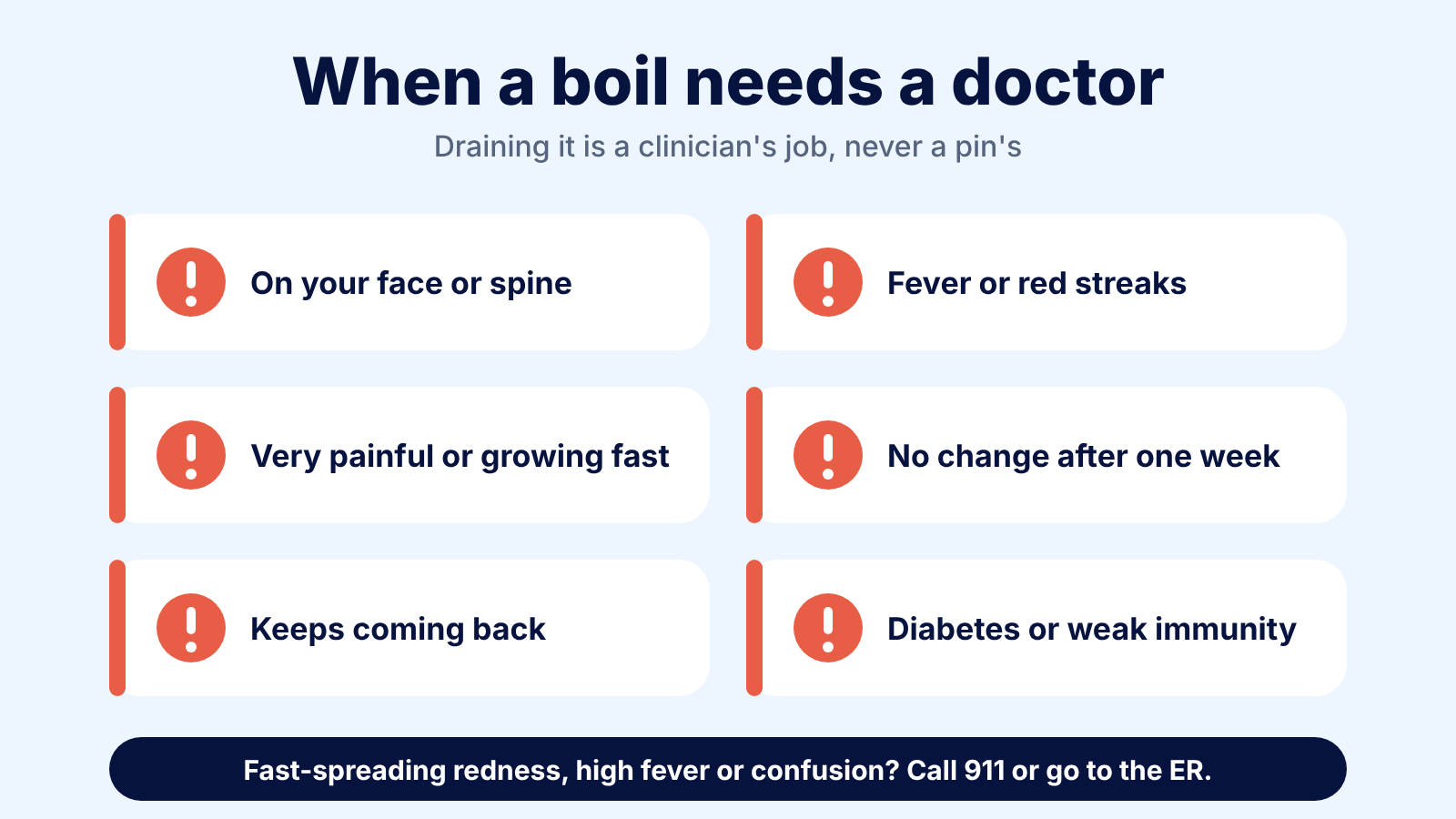
- is on your face or spine
- comes with a fever, red streaks or a large pocket of fluid
- is very painful or keeps getting bigger
- hasn’t improved after a week of home care
- comes back after it heals
If you have diabetes or a weakened immune system, a skin infection can turn serious faster, so don’t wait out a week of home care.
Antibiotic treatment is usually saved for a severe or recurring infection, when a clinician may prescribe an antibiotic by mouth or by injection. Antibacterial soaps and creams don’t do much once a boil has formed.
Get emergency help if the redness spreads fast, you have a high fever, or you feel confused or very unwell. Rare but serious complications, including sepsis, can follow a skin infection, as the Mayo Clinic explains.
How to keep a boil from spreading at home
A few habits protect everyone around you from the bacteria. The CDC’s guidance on staph and MRSA is simple:
- Wash your hands often, especially after touching the boil or changing its dressing.
- Don’t share towels, washcloths or razors.
- Keep the boil covered until the skin has healed over.
- Clean surfaces that touch bare skin or an open boil, using a product that works against MRSA.
- Throw away used bandages and tape in the regular trash.
The same Staphylococcus aureus bacteria can cause cellulitis, a deeper skin infection, if a draining boil isn’t kept clean. Good hygiene won’t stop every boil, but it keeps one from becoming three.
Not sure what to do next? Talk to a clinician
If you can’t tell whether your boil needs a drain or a doctor’s visit, a quick look from a clinician can save you days of guessing about treatment. SwellCare offers video and chat visits for everyday skin concerns, with a free screening first.
SwellCare isn’t emergency care. If you have severe symptoms, call 911.
Questions people ask about boils
Should I stay home if I have a boil?
Only if it’s draining through a bandage, can’t be covered, or you work with food, patients or young children. A small, covered boil usually doesn’t keep you home. Wash your hands, keep the dressing clean and avoid sharing towels. When in doubt, ask your doctor about work or school rules.
Why would a person get boils?
Staph bacteria slip in through a cut, scrape, insect bite or ingrown hair and infect a hair follicle, and the infection spreads outward. You’re more likely to get one if you have diabetes, eczema or a weakened immune system, or if you’re in close contact with someone who has a staph infection. Poor hygiene and skin friction add to the risk.
Can you catch a boil from a toilet seat?
It’s unlikely. Staph bacteria need a way into broken skin, and sitting on an intact surface rarely gives them one. Washing your hands afterward is smart anyway. Direct contact with pus, or sharing towels and razors, is a far more realistic way for the bacteria to spread.
What gets rid of a boil quickly?
Nothing makes a boil vanish overnight, because it has to drain to heal. Warm compresses, three to four times a day, speed that along. If it’s large, deep or on your face, treatment by a doctor is the fastest safe route. Creams and soaps won’t do much against the infection.
Can a boil go away on its own?
Yes. Small boils often drain by themselves within a couple of weeks. Keep applying warm compresses, keep the area clean and covered, and don’t squeeze it. If it hasn’t improved after a week, see a doctor.
Trusted references
Public-health, research, and medical-society resources related to this guide.