You’ve been coughing for four days. Now your kid has started too. So is bronchitis contagious, or did you both just pick up something else?
Here’s the blunt answer. Acute bronchitis, the kind most people get, is usually caused by a virus, and that virus can spread. The inflamed airways don’t jump from person to person. The germ behind them does. Chronic bronchitis, the long-term kind tied to smoke and COPD, doesn’t spread at all.
Keep reading and you’ll know how long you’re a risk to others, when it’s fine to go back to work, and which signs mean it’s time to talk to a clinician.
So, is bronchitis contagious?
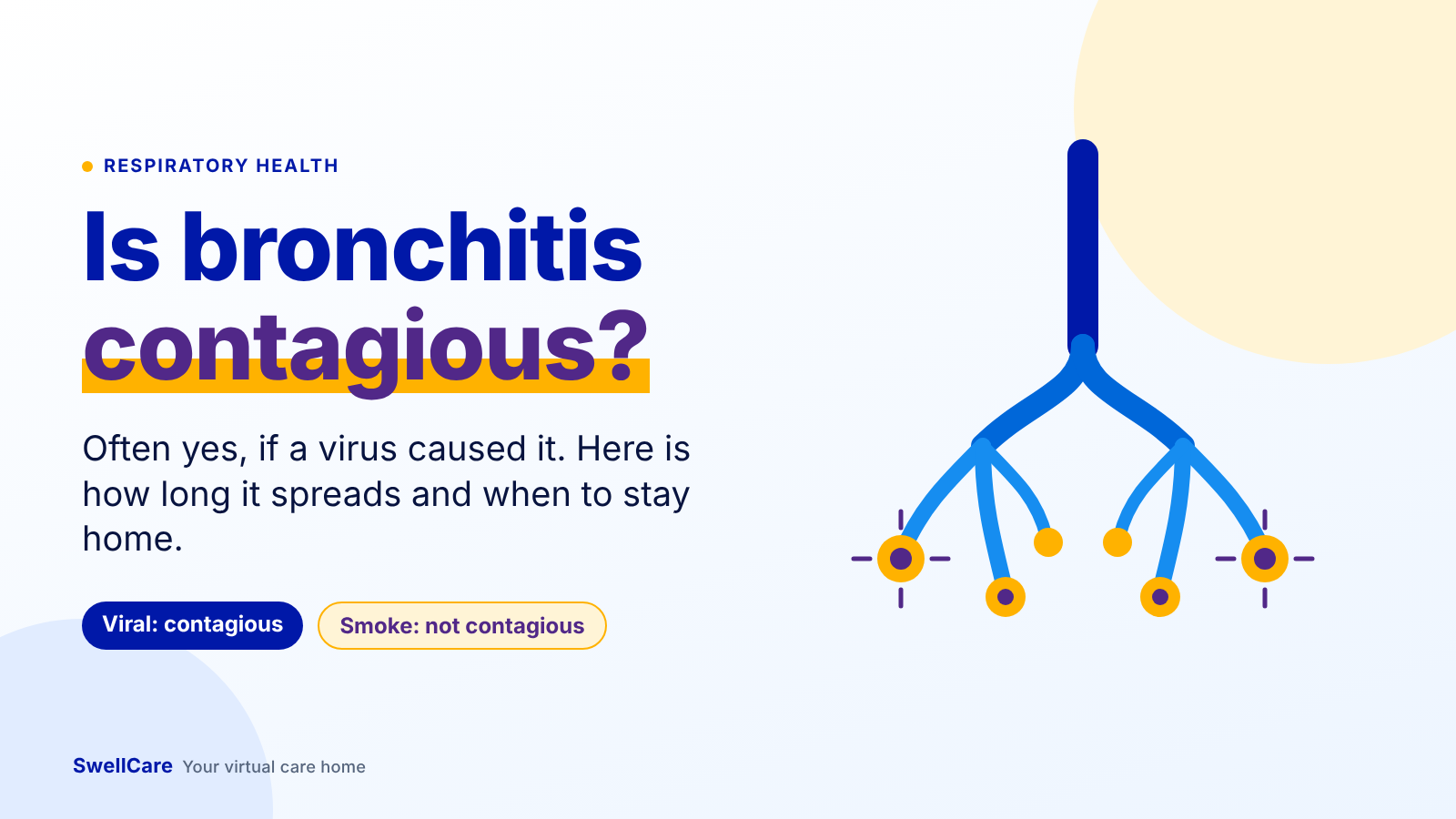
Often, yes. When a virus caused your acute bronchitis, you can pass that virus along, usually for a few days up to about a week. The CDC calls this illness a chest cold, and that’s a useful way to picture it.
Acute bronchitis means the airways that carry air into your lungs are swollen and irritated. That inflammation sparks extra mucus. Your body clears it with a cough, and the cough can outlast the infection itself.
Along with it, expect fatigue, a sore throat and mild body aches. Healthy lungs usually shrug it off.
Here’s the part most pages skip. You can’t catch “bronchitis” the way you catch a label. What spreads is the germ, or less often the bacteria, that set it off. The person beside you might end up with a cold, the flu or COVID-19 while you’re the one stuck with the bronchitis. Same germ, different result.
How bronchitis spreads from person to person
The viruses behind bronchitis travel the way any cold or flu does. You cough or sneeze, and tiny droplets carry the virus into the air. Someone nearby breathes them in. Or you cough into your hand, touch a doorknob, and the next person touches it and then rubs their eyes, nose or mouth.
The usual suspects are cold viruses, the flu, RSV and COVID-19, according to the National Heart, Lung, and Blood Institute. Smoke, dust and fumes can cause inflammation in your airways too, but that isn’t an infection. There’s nothing to pass along.
Close, indoor contact is where it moves fastest. Offices in winter. Classrooms. A crowded waiting room. People often assume a cough alone means they’re safe to be around everyone. If an irritant caused it, you may be. If a virus did, you aren’t.
How long is bronchitis contagious?
No single number fits everyone, which is why you’ll find five different answers online. The honest range depends on what caused your bronchitis.
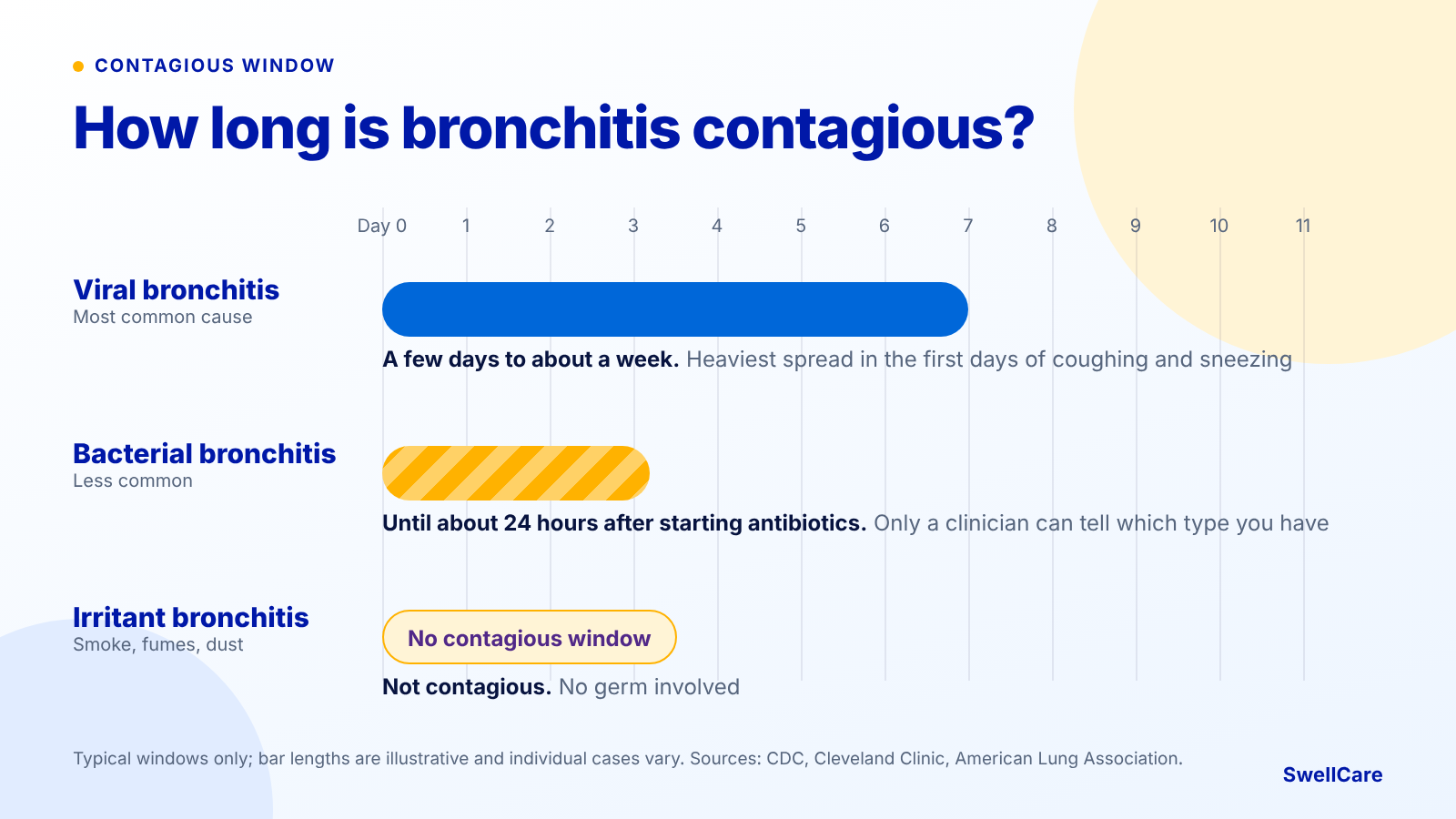
Viral bronchitis
Most acute bronchitis is viral. You’re typically contagious for a few days to about a week, according to Cleveland Clinic, and the first days of heavy coughing and sneezing are the riskiest. You spread the most while symptoms are at their worst. A fever is a decent clue that you’re still spreading the virus. A sensible rule of thumb: wait until it’s gone, without fever reducers, before you mix with people again.
Bacterial bronchitis
This one’s less common. If bacteria are the cause, the contagious window usually closes about a day after you start antibiotics. Only a clinician can tell which type you have. Antibiotics don’t touch a viral infection, which is why the CDC says they usually aren’t needed for a chest cold. They’re generally kept for bacterial problems like pneumonia or whooping cough, and treatment with them only makes sense after a clinician has ruled out a virus.
Irritant bronchitis
Cigarettes, chemical fumes, heavy dust. These irritate the lungs and trigger inflammation without any germ involved. Not contagious, and treatment starts with avoiding the trigger.
| Cause | Contagious? | Typical window |
|---|---|---|
| Virus (most cases) | Yes | A few days to about a week |
| Bacteria | Yes, until treated | About a day after starting antibiotics |
| Smoke or irritants | No | Not applicable |
| Chronic bronchitis | No | Not applicable |
Acute vs. chronic bronchitis: which one can you catch?
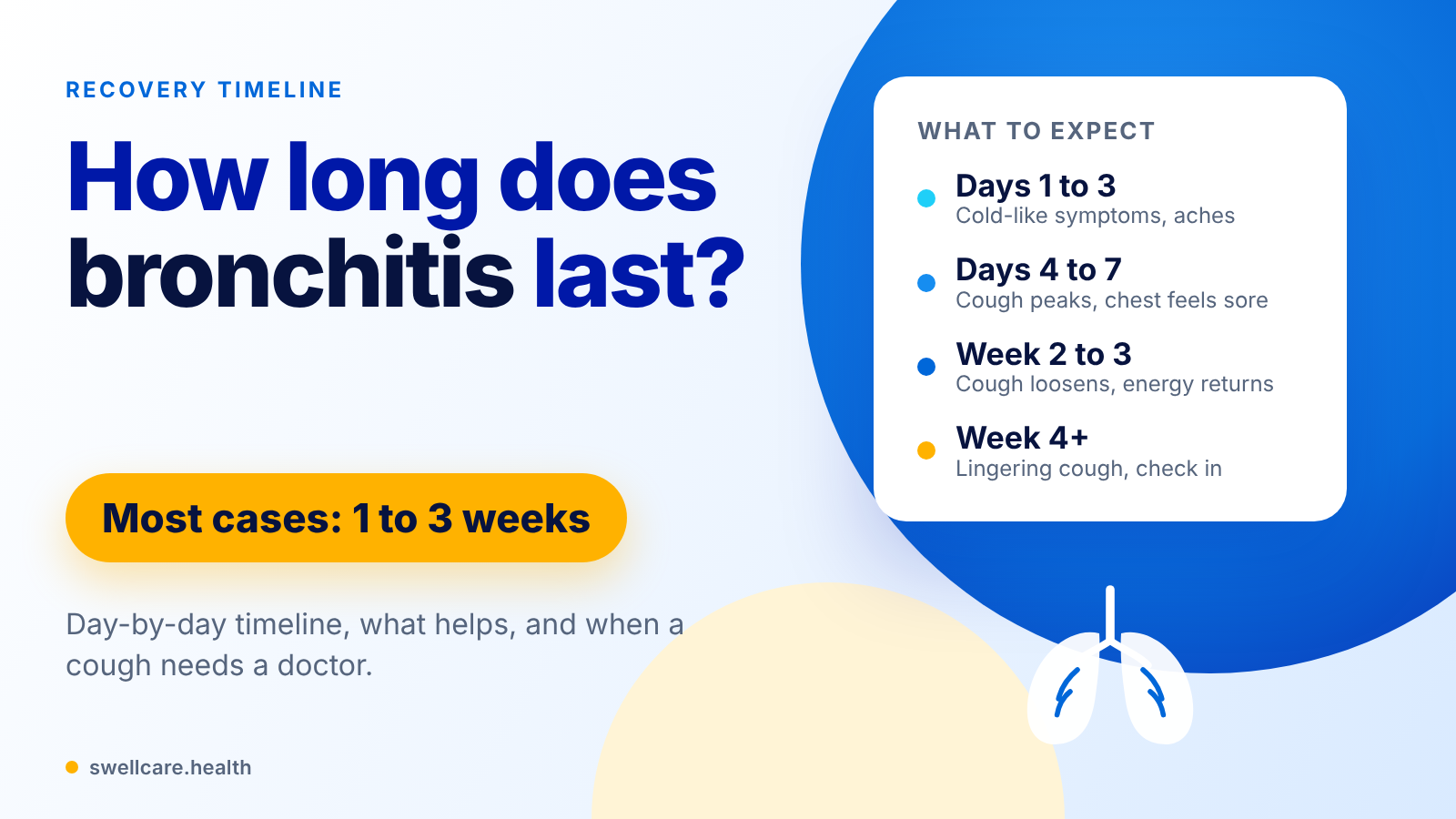
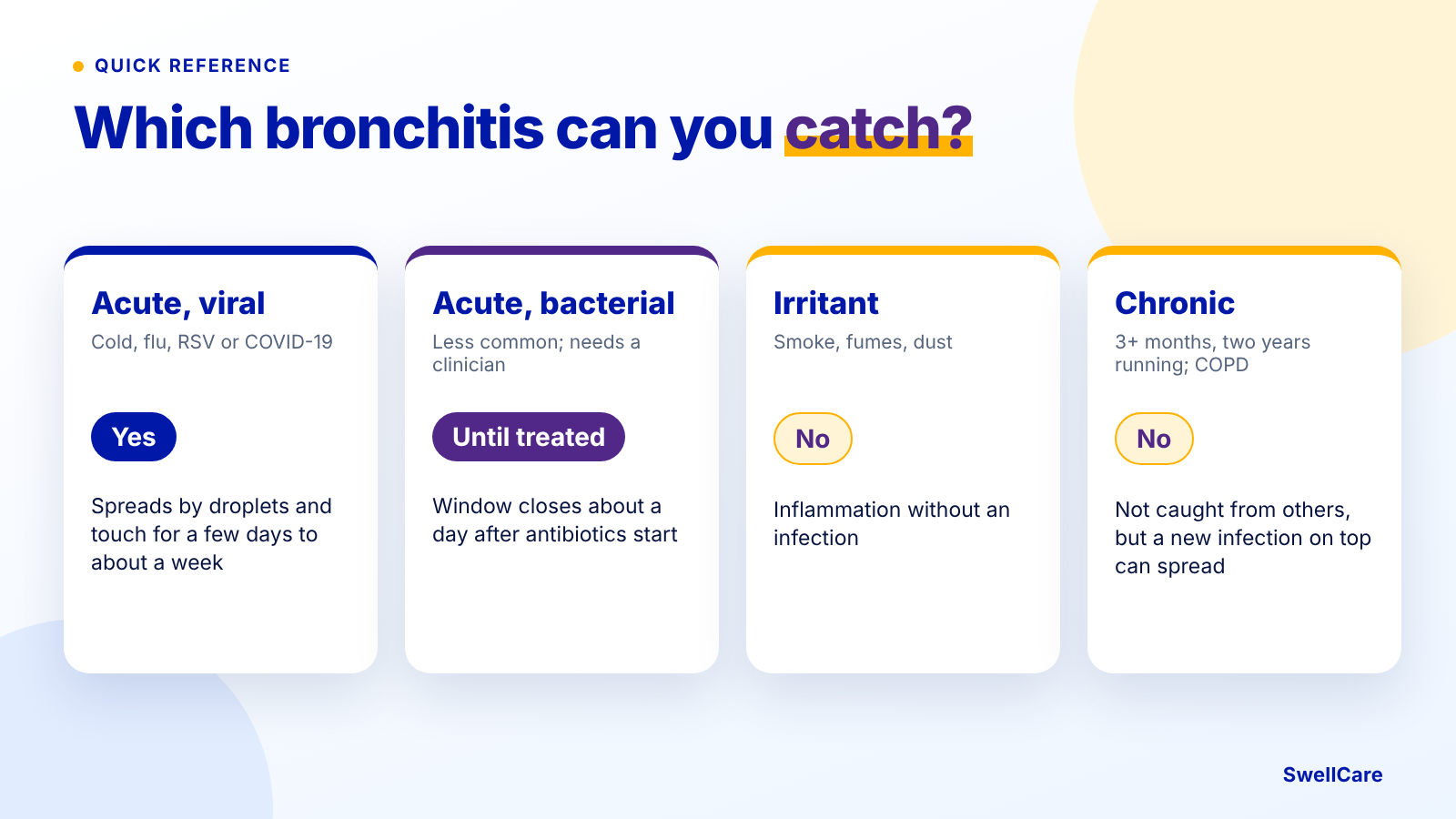
Only acute bronchitis. It’s short-term, and the symptoms usually clear up in two to three weeks, though the cough can linger. The CDC puts the line at three weeks. If symptoms last longer, get checked.
Chronic bronchitis is a different animal. It means a cough with mucus for at least three months, coming back for at least two years in a row. It’s a form of COPD, long-term inflammation of the airways, and it’s most often driven by smoking, secondhand smoke or long exposure to fumes and dust. A rattly cough, wheezing and mucus are typical. Nobody catches it from a coworker.
There’s one wrinkle. If you have chronic bronchitis, asthma or another lung condition, a cold virus can still land on top of it. That infection can spread, it can hit you harder because your lungs have less reserve, and it can sometimes lead to pneumonia. Yearly flu shots and other recommended vaccines matter even more if you have a lung condition.
Should you stay home with bronchitis?
Yes, while acute bronchitis has you coughing and wiped out. Here’s where we land. Stay home while you have a fever, a hard cough, or the kind of fatigue that makes sitting upright feel like work. You’ll recover faster, and you won’t hand the virus to everyone on your floor.
Go back when the fever has been gone for a day without medicine and the cough is easing. You don’t have to wait for it to vanish. A leftover tickle with no other symptoms isn’t a reason to hide for three weeks.
Can’t stay home? Wear a mask around others, cough into your elbow, keep your distance in shared rooms and wash your hands a lot. Imperfect, but it helps.
How to protect the people around you
Small habits cut the spread of acute bronchitis more than people expect:
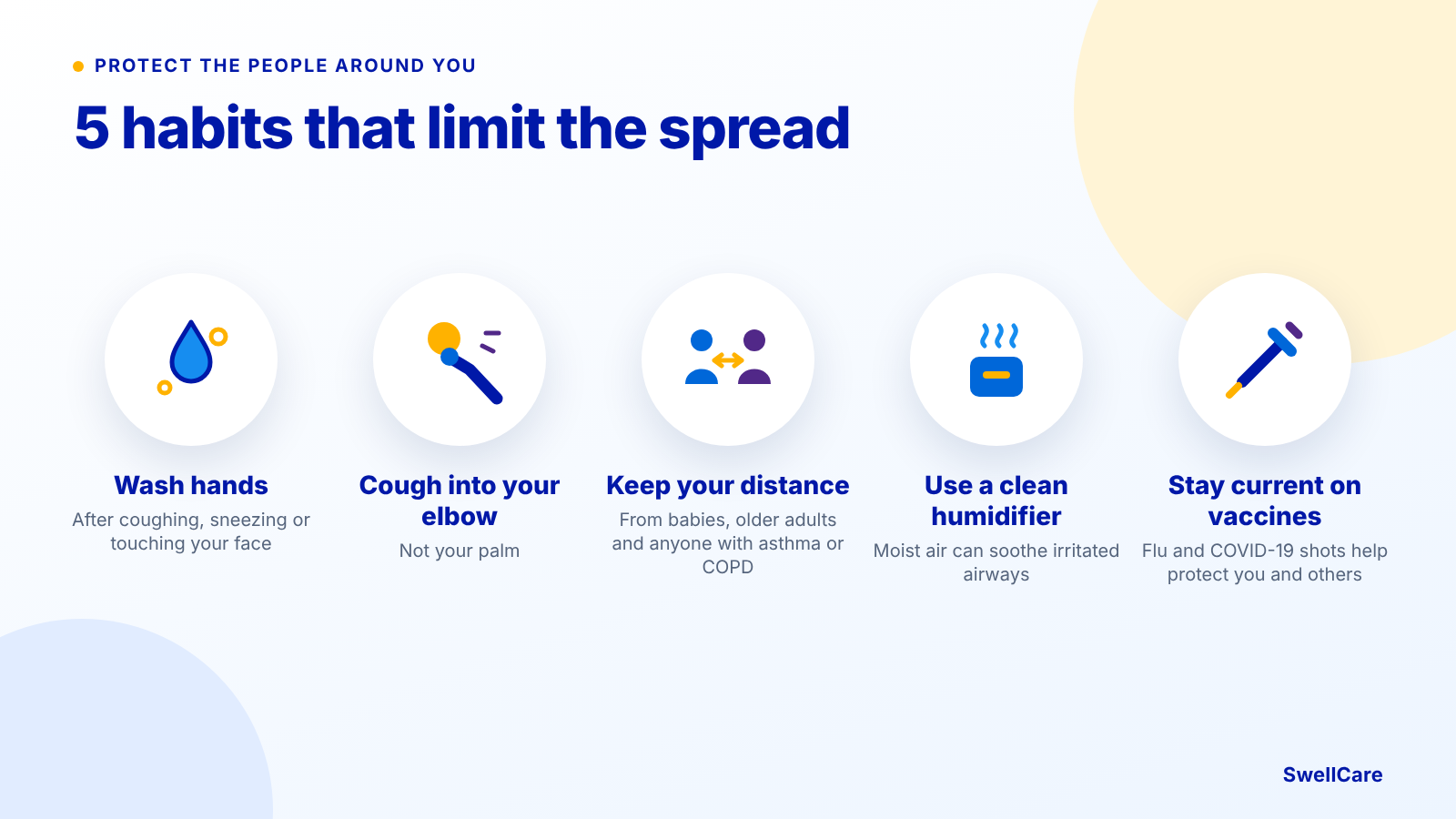
- Wash your hands after coughing, sneezing or touching your face, and clean shared surfaces like door handles and keyboards.
- Cough into your elbow, not your palm.
- Keep your distance from higher-risk people. Babies, older adults and anyone with asthma or COPD have lungs that can get seriously ill from the same virus that gives you mild symptoms.
- Run a clean humidifier or take a steamy shower. Moist air can calm inflammation in irritated airways. Clean the machine often so it doesn’t grow mold.
- Stay current on vaccines. Flu and COVID-19 shots lower your odds of catching or passing on two common triggers.
When it’s more than bronchitis
Most acute bronchitis gets better with rest and fluids, and that’s the whole treatment. A few cases don’t. Bronchitis can sometimes turn into pneumonia, an infection of the lungs that needs different care, especially in people with weak immune systems or lung disease.
According to the CDC, see a healthcare professional if you have:
- A fever lasting more than five days, or one of 104°F or higher
- Bloody mucus
- Shortness of breath or trouble breathing
- Symptoms lasting more than three weeks
- Bronchitis that keeps coming back
Pneumonia tends to bring a temperature of 100.4°F or higher, fast breathing and a racing heart. Shortness of breath that worsens over a day or two needs prompt attention. Wheezing and chest tightness can mean asthma or another lung problem rather than a simple chest cold. If you can’t catch your breath, skip telehealth. Call 911 or head to the nearest emergency room.
Get your cough checked from home
Not sure whether your acute bronchitis is a virus, bacteria or something that needs a chest X-ray? You don’t have to guess, and you don’t have to sit in a waiting room spreading it around.
SwellCare connects you with a licensed clinician by secure chat or video, day or night, in all 50 states and DC. The screening is free, and the consultation after it costs $45. Medications and labs are billed separately. A clinician can review your symptoms, tell you whether treatment makes sense and send you to in-person care if they suspect pneumonia or another problem that needs hands-on treatment. A video visit can’t replace a stethoscope, and we’ll say so when you need one.
Start your free screening at SwellCare
Questions people ask about bronchitis
Do I need to stay away from people if I have bronchitis?
If a virus caused your acute bronchitis, yes, at least for the first several days. Keep your distance from babies, older adults and anyone with a lung condition. If an irritant caused it, or you have chronic bronchitis, you aren’t spreading anything. A clinician can help you work out which one you have.
Should I stay home from work if I have bronchitis?
Yes, while you’re running a temperature or feel wiped out. Return once you’ve been fever-free for a day and your cough is improving. If you must work, wear a mask, wash your hands often and keep your distance from coworkers.
How to get rid of bronchitis fast?
There’s no shortcut and no treatment that cures a virus, but you can ease it. Rest, drink fluids, use a clean humidifier and try honey if you’re over one year old. Skip cough medicine for kids under six. Stay away from tobacco. The symptoms of acute bronchitis fade for most people within two to three weeks.
Trusted references
Public-health, research, and medical-society resources related to this guide.