You’ve had that burning feeling for a couple of days. Now there’s a deep ache high on one side of your back, and you’re shivering under a blanket even though you feel hot. Stop and read this.
Here’s the short answer on how to tell if you have a kidney infection. Look for a fever or chills together with pain in your back, side or groin, plus urinary changes like burning, urgency or cloudy urine. Nausea often tags along, and your kidneys may feel tender when pressed. A simple bladder infection rarely brings one on. A kidney infection usually does.
It can also move fast. Cleveland Clinic notes that kidney infection symptoms can appear abruptly, and the infection is far easier to treat early than late. Below, you’ll find the signs, how they differ from a UTI, and the point where waiting stops being safe.
The signs of a kidney infection, in the order most people notice them
Kidney infection symptoms rarely show up one at a time. Most people notice a cluster, and the cluster is what gives it away.
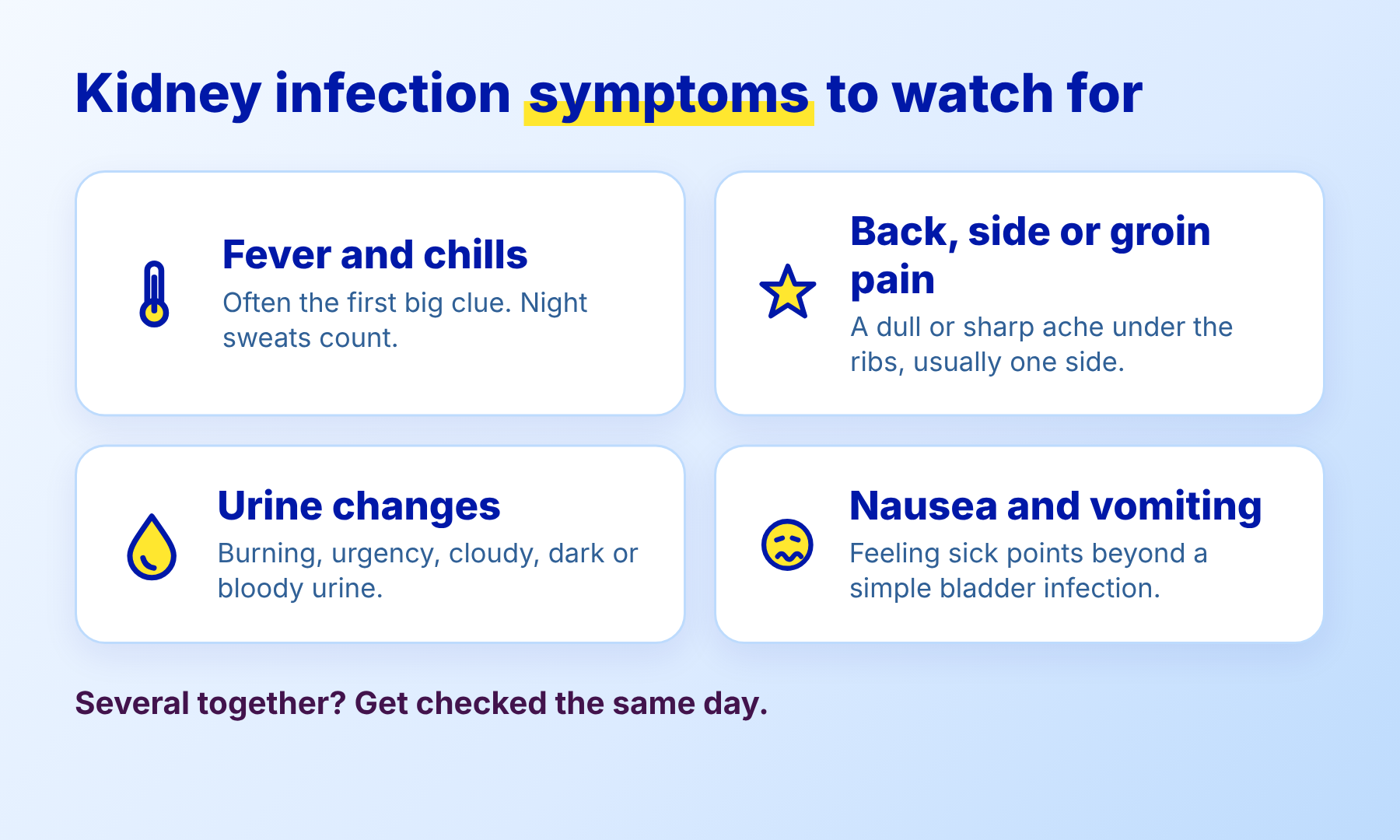
Fever and chills
A high temperature is the loudest clue. The National Institute of Diabetes and Digestive and Kidney Diseases (NIDDK) lists it with chills among the main signs. You might feel cold and shaky first, then flushed. Sweating through your clothes at night counts too.
Pain in your back, side or groin
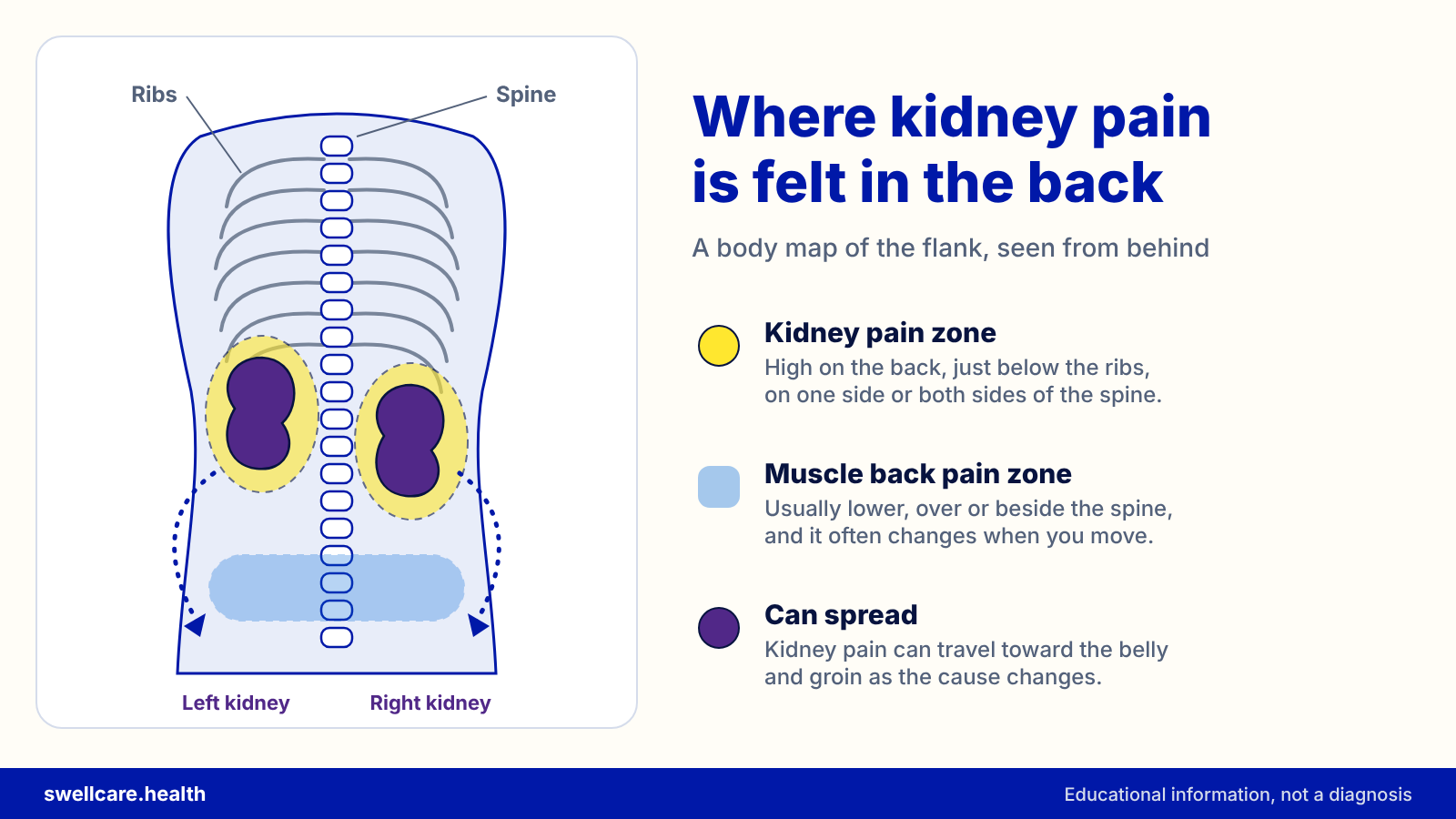
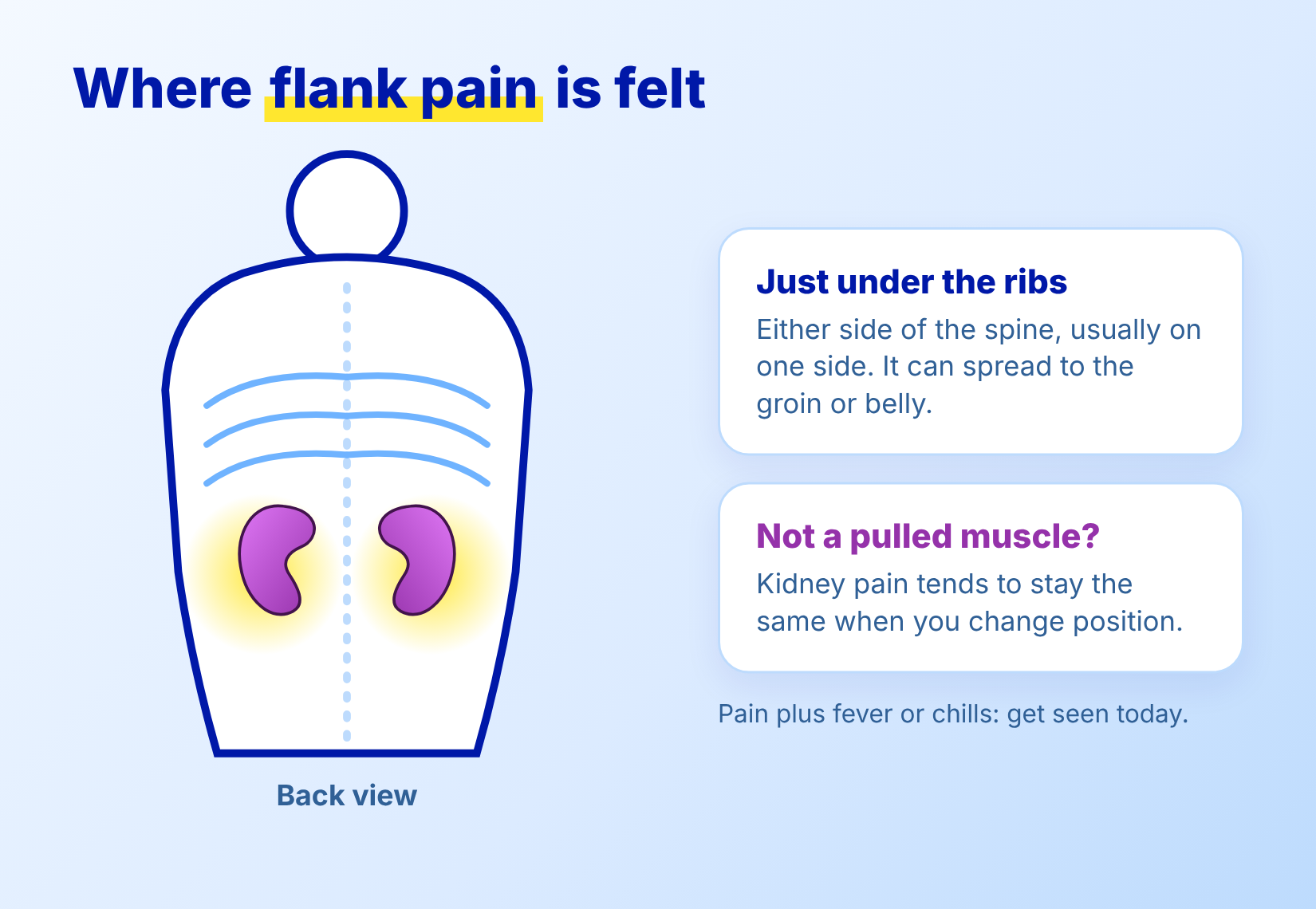
This is flank pain, a form of back pain: a dull or sharp ache under the ribs, usually on one side, sometimes spreading toward the groin or belly. Muscle strain tends to hurt more with certain movements. Kidney pain often doesn’t care how you sit or stretch.
Changes when you pee
Burning, a constant urge to go and passing only a little each time are classic. Look at the toilet bowl, too. Urine that’s cloudy, dark, foul-smelling or tinged with blood needs attention. Blood in urine is never something to shrug off.
Nausea and vomiting
Feeling sick to your stomach, or actually vomiting, points away from a plain bladder problem. Mayo Clinic lists nausea and vomiting alongside back pain and pus or blood in the urine.
Signs in children and older adults
Not everyone reads the textbook. Children under 2 may have nothing but a high fever, and babies may feed poorly. Older adults can show confusion or slurred speech instead of pain, according to the Urology Care Foundation. If someone you love is suddenly “not themselves” and running hot, think infection.
Kidney infection vs. UTI: how to tell the difference
A kidney infection is a urinary tract infection that has climbed from the bladder up to one or both kidneys. It starts in the urinary tract, so the two overlap. The difference is how sick you feel.
| Feature | Bladder infection (lower UTI) | Kidney infection |
|---|---|---|
| Where it hurts | Lower belly, pelvic pressure | Back, side or groin |
| High temperature | Not typical | Common |
| Nausea or vomiting | Rare | Common |
| How it starts | Builds over a day or two | Can hit suddenly |
| Urine | Burning, urgency, cloudy | Same, plus sometimes blood |
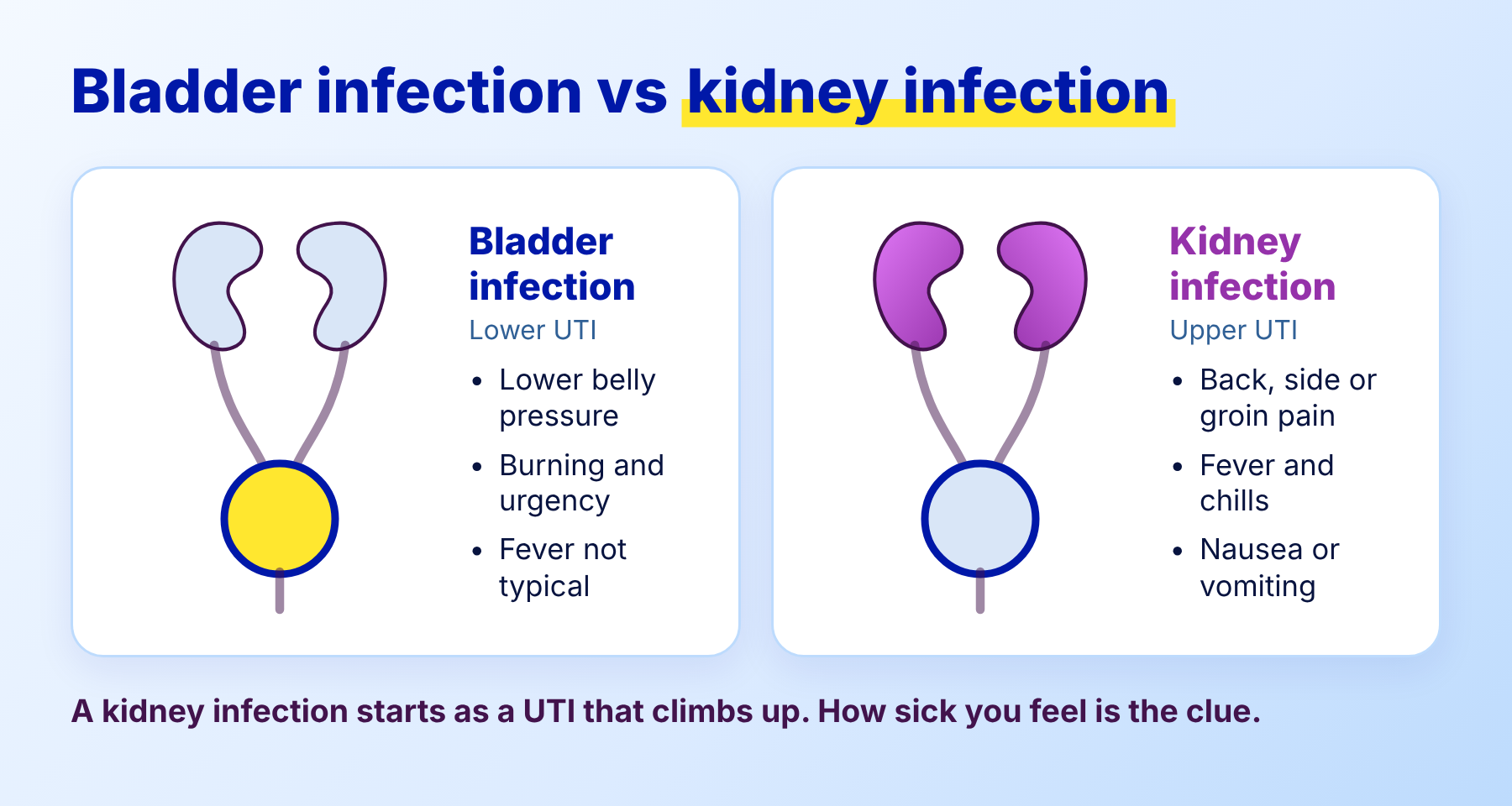
Here’s the rule I’d give a friend. UTI symptoms plus a high temperature or flank pain mean you’ve probably moved past the bladder. And if you’re being treated for a UTI and still feel awful after two or three days, Mayo Clinic says to tell your provider. Visible blood in urine means call the same day.
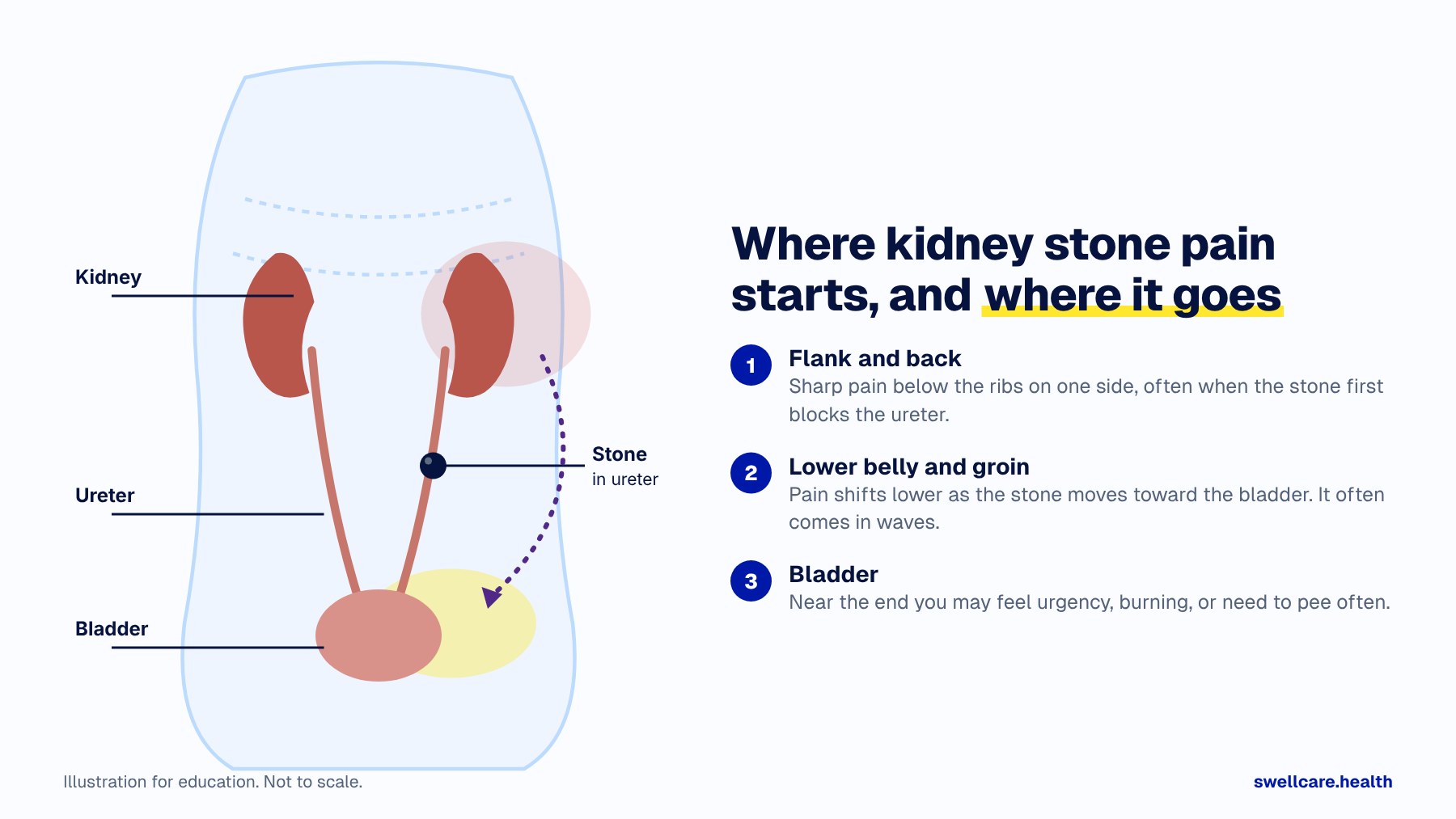
Other things can mimic it. Kidney stones, a strained back muscle and other abdominal problems cause similar pain. Only a urine test sorts them out.
Why kidney infections happen and who is more likely to get one
Most start as a bladder infection. Bacteria from the bowel enter the urethra, travel up the urinary tract to the bladder, and if nobody stops them, climb the ureters to the kidneys. Less often, bacteria arrive through the blood.
Some people are simply more exposed. A shorter urethra makes women more likely to get one, and pregnancy raises the odds. Anything that blocks urine flow helps bacteria settle in, including kidney stones and an enlarged prostate. Diabetes or a weakened immune system makes it harder to fight off. A urinary catheter or stent gives bacteria a ready path. Nerve damage near the bladder can even hide the warning signs.
You can lower your odds. To prevent a urinary tract infection from reaching your kidneys, drink plenty of water, urinate when you feel the urge instead of holding it, urinate soon after sex, and wipe front to back. Treat any UTI early. A kidney infection is often a bladder infection that was ignored.
What happens if you wait it out
Waiting is the gamble people regret. A kidney infection that goes untreated can scar the kidneys, which over time can lead to chronic kidney disease, high blood pressure and kidney failure. The bacteria can also spill into the bloodstream and cause sepsis, a life-threatening reaction. In pregnancy, an untreated infection raises the chance of a low-birth-weight baby.
None of that is common when people get treatment promptly. That’s the point. Pyelonephritis, the medical name for a kidney infection, responds well to the right antibiotics when it’s caught early.
How a clinician confirms a kidney infection and treats it
Tests that confirm it
Your symptoms and a physical exam come first, and your healthcare provider may ask about recent UTIs. Then a urinalysis checks your urine for white blood cells and bacteria. A urine culture grows the bacteria over a few days so your clinician can match the antibiotic to the germ. If you’re thinking about how to tell if you have a kidney infection for sure, this is the test that settles it. Blood tests may follow. Imaging, such as an ultrasound or CT scan, isn’t needed for every case, but a CT scan can reveal a blockage like a stone.
Antibiotics and what to expect
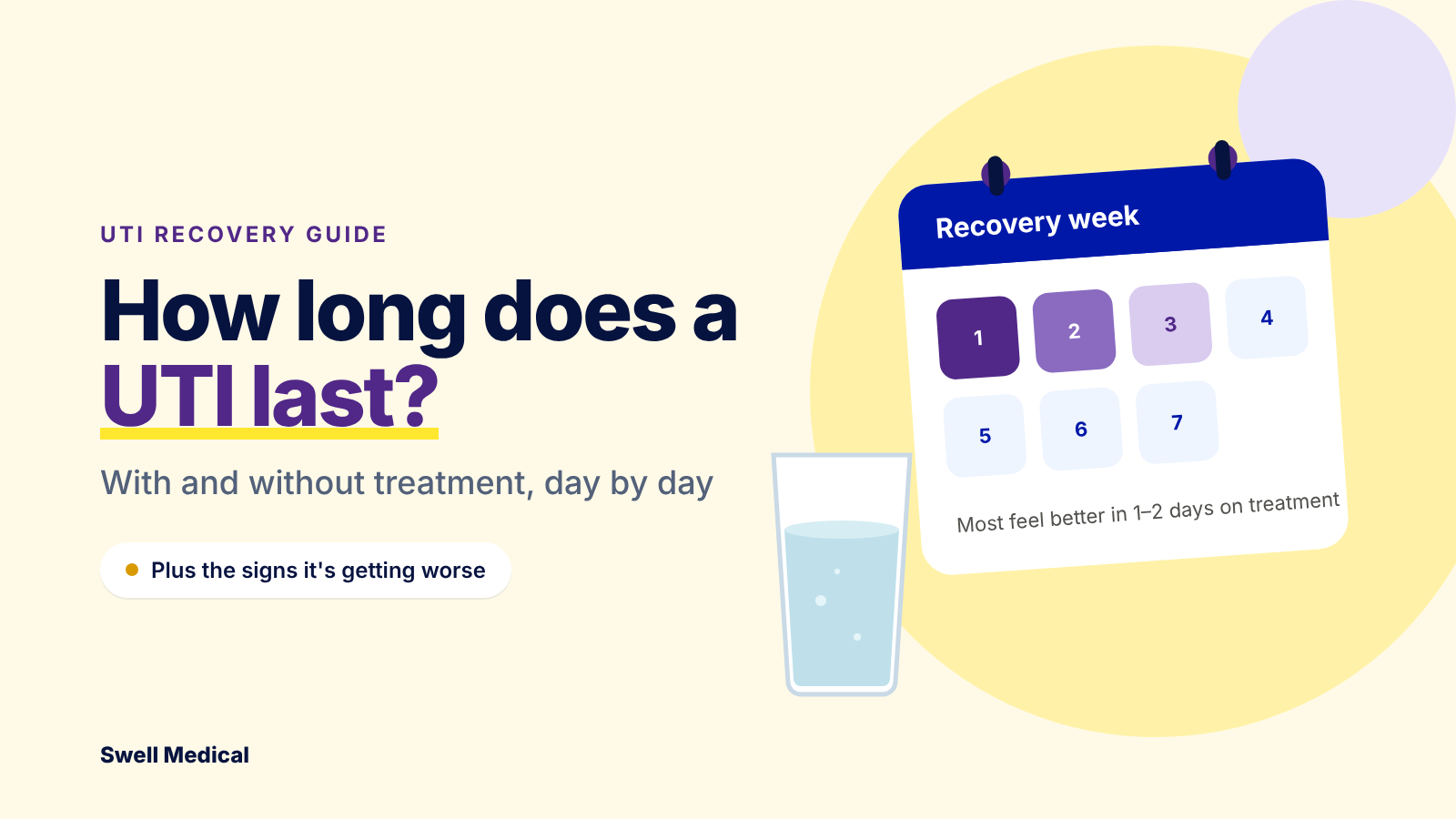
Antibiotics are the core of treatment, and they work. Mild cases are often treated with pills at home. A severe infection, vomiting that won’t stop, or a weak immune system may mean a hospital stay and IV antibiotics. Courses commonly run one to two weeks, and Cleveland Clinic and Urology Care Foundation both describe treatment of two weeks or more for some people. Most people feel better within two to three days. Finish every dose anyway, and call your healthcare provider if you’re still unwell after that. Stopping early is how infections come back.
What helps while you recover
Rest. Drink water steadily, since dehydration slows recovery. Ask your clinician which pain reliever is safe for you, because some are hard on the kidneys. Fluids support recovery, but they won’t clear a kidney infection alone.
When a kidney infection is an emergency
Call 911 or go to the ER if you have a high temperature with confusion, rapid breathing or a racing heart, severe pain, shortness of breath, very little urine, or you can’t keep fluids down. These can signal sepsis. The same goes for a fever in an infant, or for symptoms with a fever during pregnancy.
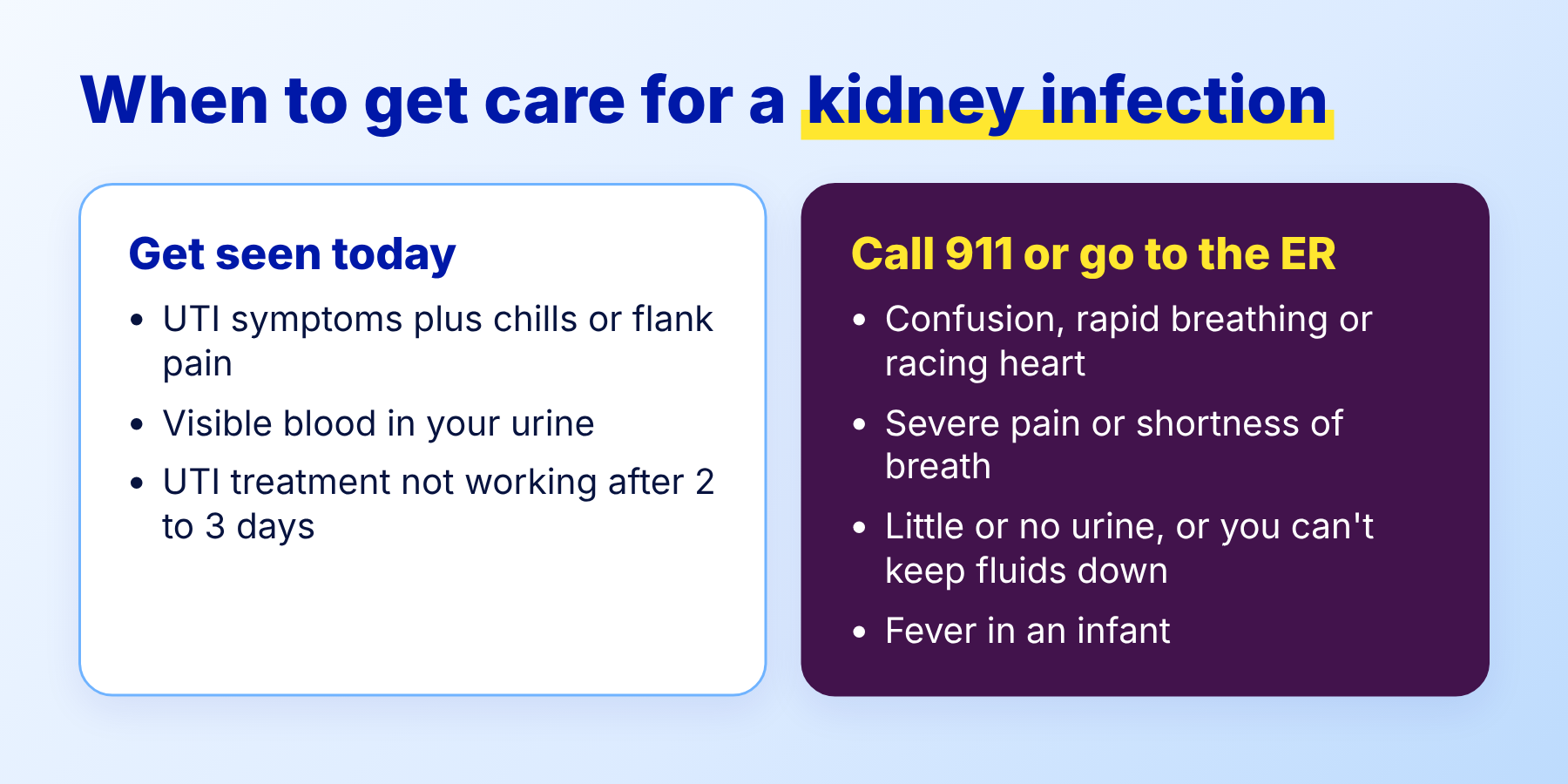
Not that bad but not right? If you have UTI symptoms with chills or flank pain, get seen the same day. Don’t wait for it to become an emergency.
Get your symptoms looked at today
You don’t need to sit in a waiting room feeling terrible to find out what’s going on. At SwellCare, a licensed clinician is available by virtual care day or night. Tell us what you’re feeling, and we’ll review it, explain what’s most likely, order labs when appropriate, and tell you plainly if you need to be seen in person or head to the ER.
A kidney infection is confirmed with a urine test, and some people will need an exam. We’ll say so. If you’re not sure, start with a free screening at SwellCare. Facing an emergency? Call 911. For more plain-spoken guides, browse the SwellCare Health Journal.

Questions people ask about kidney infections
What are the 5 warning signs of a kidney infection?
Fever with chills, pain in the back, side or groin, burning or frequent urination, cloudy, dark or bloody urine, and nausea or vomiting. You don’t need all five. A high temperature plus back pain is enough reason to get checked the same day, because these kidney infection symptoms can worsen quickly.
Will a kidney infection go away by itself?
Unlikely, and it isn’t worth betting on. Bacteria in the kidneys generally need antibiotics. Left alone, a kidney infection can damage the kidneys or reach the bloodstream. Even if you feel a little better, get tested and treated so the kidney infection doesn’t linger or return.
What can be mistaken for a kidney infection?
Kidney stones, a pulled back muscle and a plain bladder infection are the usual lookalikes. Stones can also cause a kidney infection by blocking urine flow through the urinary tract. A urinalysis and a clinician’s exam separate them, which is why guessing at home is risky.
What helps flush out a kidney infection?
Water helps your kidneys and bladder, so keep sipping through the day. Still, fluids alone won’t cure it. Antibiotics do the clearing. Think of fluids as support while the medicine works, and take the full course even when you start feeling like yourself again.
How long does a kidney infection last?
Many people feel better two to three days after starting antibiotics. Treatment itself commonly lasts one to two weeks, sometimes longer, and tougher infections can take several weeks to resolve. Your clinician sets the timeline, so follow it exactly.
Trusted references
Public-health, research, and medical-society resources related to this guide.