It’s late. You’ve been to the bathroom four times in an hour, and every trip burns. Your first thought is probably the one most people have: maybe this will pass by morning.
So, can a UTI go away on its own? Sometimes. A mild bladder infection in an otherwise healthy person can clear without antibiotics. The catch is that you can’t tell on day one whether yours will, and when one doesn’t, it can climb to the kidneys. Here’s how to size up your own situation, what actually helps while you wait, and when waiting stops being a smart bet.
Can a UTI go away on its own? What the research shows
A urinary tract infection starts when bacteria, usually E. coli from the bowel, enter the urethra and multiply in the urinary tract. Most UTIs settle in the bladder, which is why doctors often call them bladder infections. The NIDDK says a bacterial bladder infection is usually treated with antibiotics.
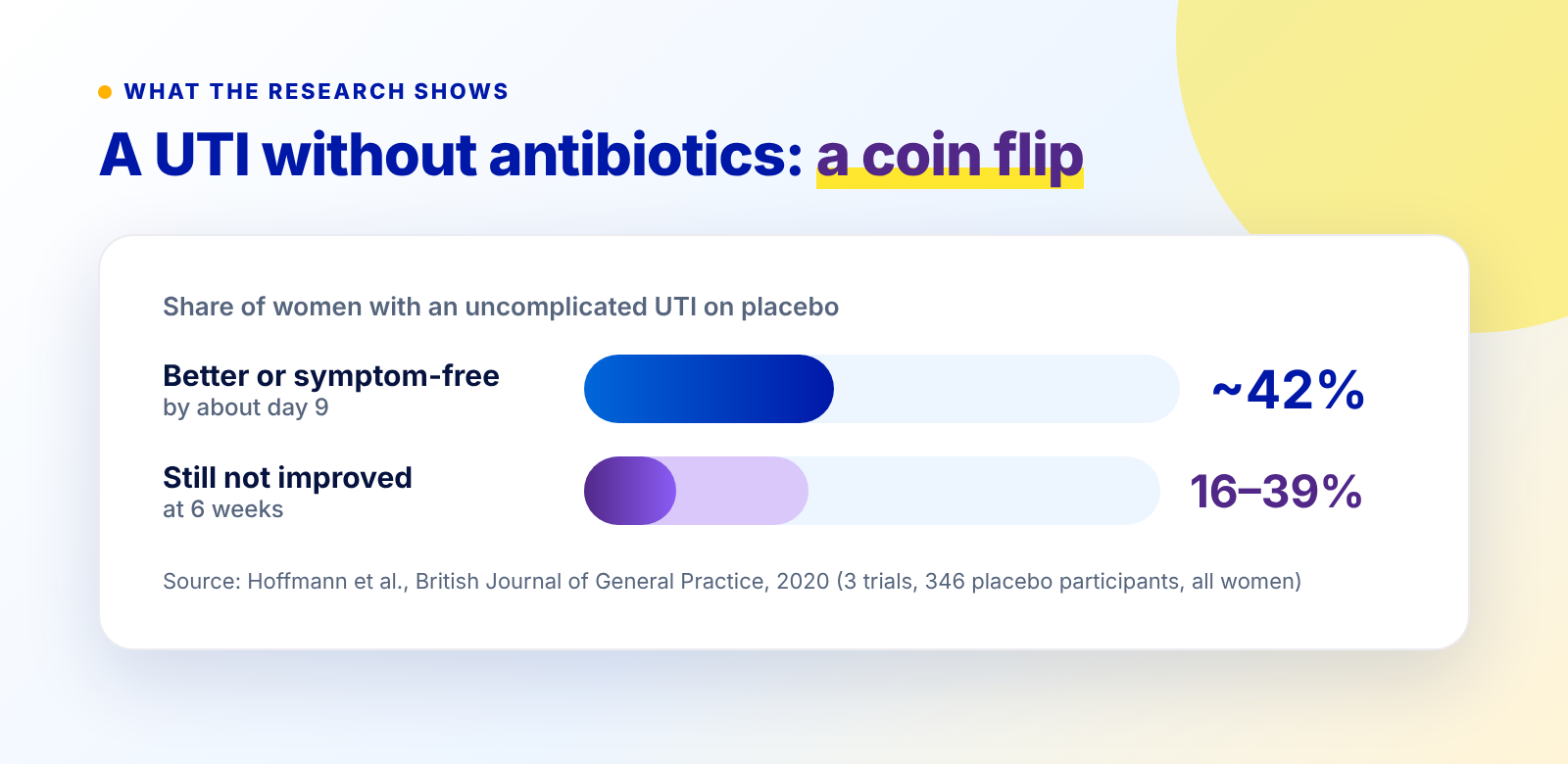
But what if you don’t take them? A 2020 systematic review in the British Journal of General Practice pooled three trials of women with an uncomplicated UTI who received a placebo. About 42% were better or symptom-free by roughly day nine. Between 16% and 39% still hadn’t improved at six weeks, and about a third ended up needing antibiotics when things got worse.
Read that again. Even in the best case, it’s closer to a coin flip than a sure thing.
A German trial published in the BMJ tells a similar story. Among 494 women, those given ibuprofen first avoided antibiotics about two thirds of the time. They also felt worse for longer, and five developed a kidney infection compared with one in the antibiotic group. The authors didn’t recommend the ibuprofen-first approach for everyone.
Signs your UTI is getting better, and signs it isn’t
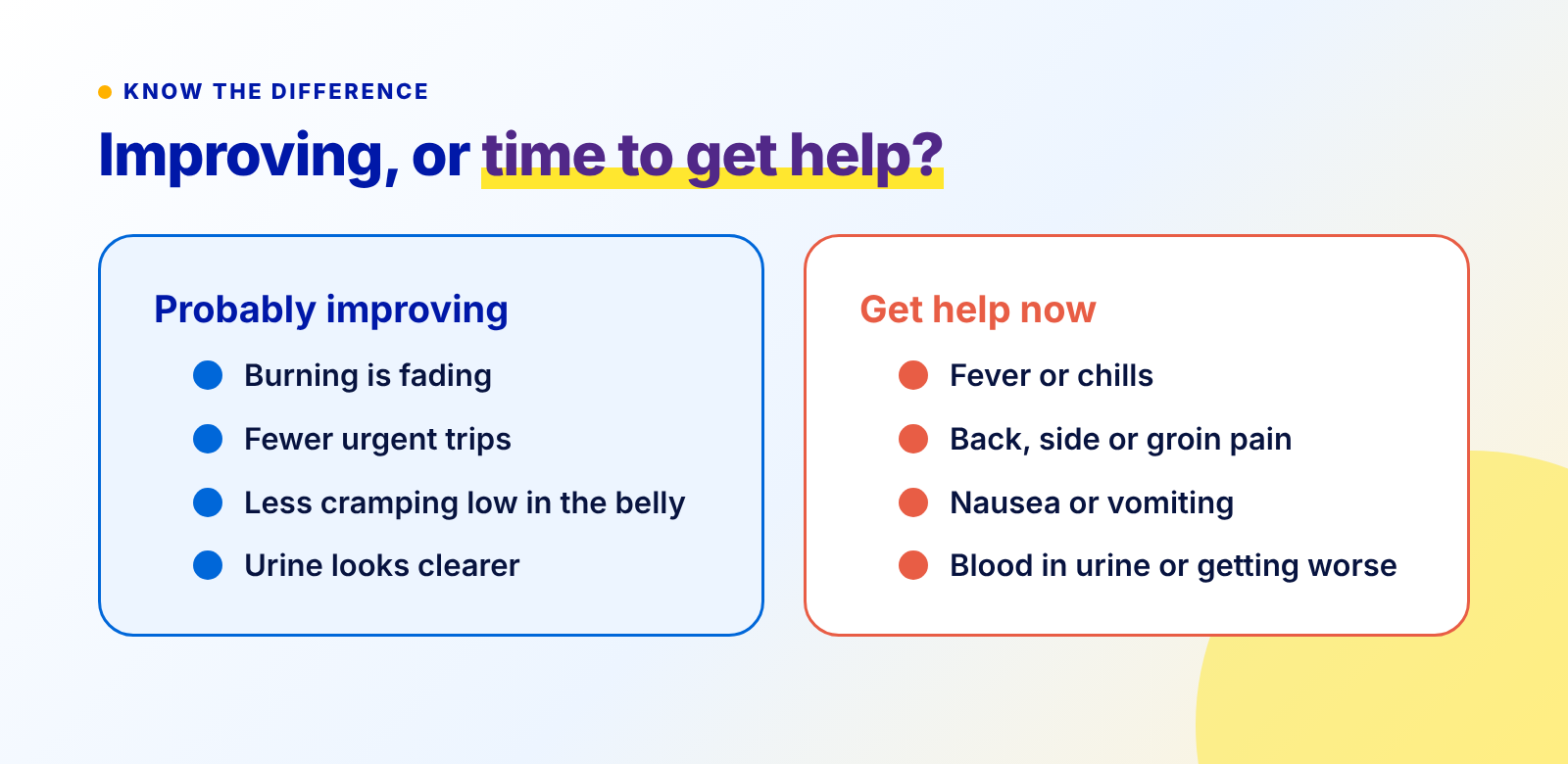
A UTI that’s resolving tends to feel a little less intense each day. The burning eases, bathroom trips space out, and your urine looks clearer. Most of the improvement in that review came in the first nine days, so one rough afternoon doesn’t mean much either way.
What matters is the direction. Here’s the quick check we’d give a friend:
| Probably improving | Get help now |
|---|---|
| Burning with urination is fading | Fever or chills |
| Fewer sudden, urgent trips | Pain in your back, side or groin |
| Less cramping low in the belly | Nausea or vomiting |
| Urine looks clearer | Blood in your urine, or symptoms getting worse |
If symptoms haven’t budged after a couple of days, treat that as a no. That’s our rule of thumb, not a trial result, but it keeps people out of trouble.
What happens when an untreated UTI doesn’t clear
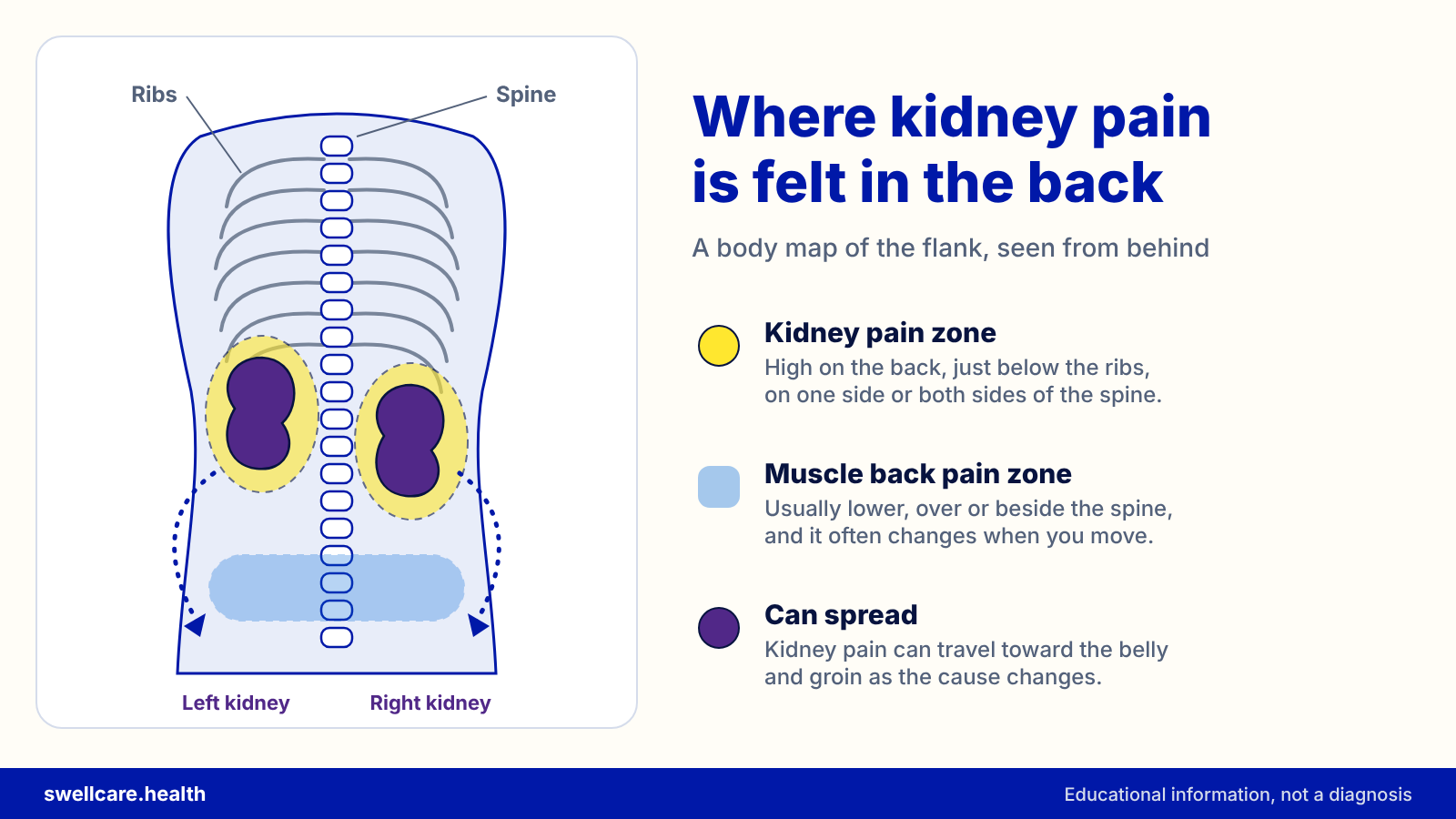
Bacteria that aren’t cleared can travel up to one or both kidneys. A kidney infection usually brings fever with chills, nausea or vomiting, and pain in the back, side or groin. MedlinePlus lists kidney damage, scarring and sepsis as possible complications, and a kidney infection can take a week or longer to resolve even with treatment.
Complications are uncommon in healthy women with an uncomplicated UTI. They aren’t impossible, and nothing tells you in advance which untreated UTI will be the unlucky one. A kidney infection also starts out looking like a plain urinary tract infection.
Compare that with treated infections. MedlinePlus notes that bladder symptoms usually improve within 24 to 48 hours of starting antibiotics, versus the nine days or more of waiting.
Who shouldn’t wait it out
For some people, watchful waiting is a poor trade. Skip it if you’re pregnant, have diabetes, have a weakened immune system, use a urinary catheter, or deal with recurrent UTIs. If you’re pregnant, call your doctor at the first sign of burning. Men should get checked too. Their infections often need a longer antibiotic course, 7 to 14 days compared with 1 to 5 for many women, because bacteria can reach the prostate.
Older adults deserve extra care. Sometimes the only sign of a UTI is sudden confusion, with none of the burning at all. After menopause, lower estrogen raises the risk, and a clinician may suggest vaginal estrogen to cut down on recurrent UTIs.
What helps at home while you decide
Home care eases symptoms. It doesn’t prove the infection is gone.
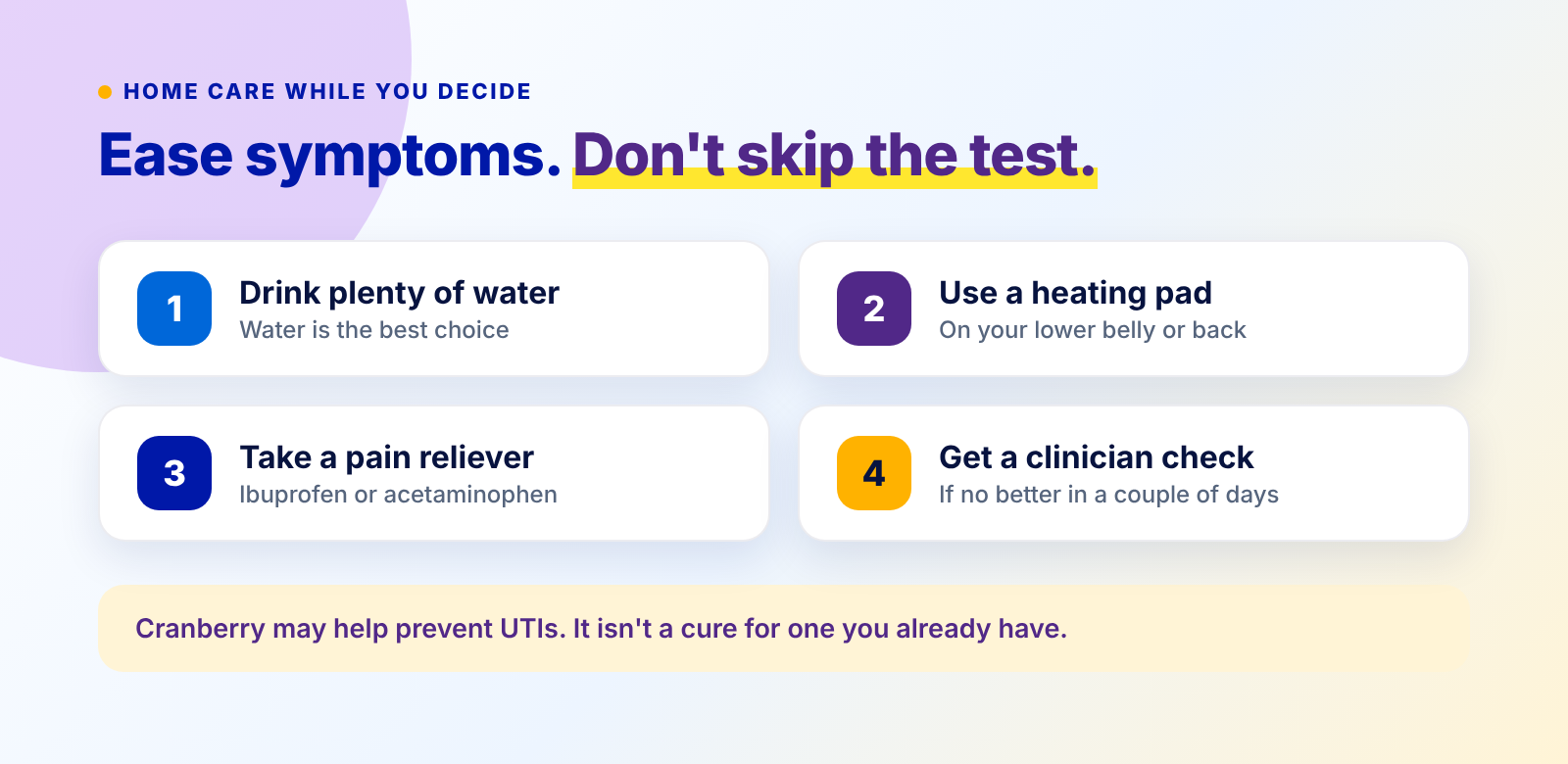
Water comes first. The NIDDK says drinking plenty of fluids, with water the best choice, helps you stay hydrated and recover. If you have heart or kidney disease, ask a clinician how much is right for you. A heating pad on your lower belly or back can take the edge off the cramping, and ibuprofen or acetaminophen can ease the pain.
Cranberry gets a lot of attention. The 2023 Cochrane review suggests cranberry products may help some people prevent UTIs. It studied prevention, though, not treatment of an infection you already have. D-mannose and probiotics come with big promises and thinner evidence. None of them replaces a urine test or proper treatment.
When to see a doctor
See a clinician the same day if you have fever, chills, back or side pain, vomiting, or blood in your urine. Do the same if you’re pregnant, have diabetes, are a man, or your symptoms return soon after finishing treatment. Go to the ER for severe pain, a high fever with shaking, or sudden confusion.
Otherwise, don’t sit on it for a week. Your doctor or an online clinician can sort out whether it’s a UTI at all. A urinalysis and urine culture are the main tests, and the NIDDK points out that antibiotics may not be needed when symptoms and results don’t confirm a bacterial infection. If you are prescribed antibiotics, finish the whole course even after you feel better. Stopping early can feed antibiotic resistance.
Get your UTI symptoms checked online with Swell
You shouldn’t have to choose between guessing and sitting in a waiting room at midnight. Swell Medical’s 24/7 virtual urgent care lists UTI symptoms among the concerns its clinicians review. You start with a free screening and describe what’s going on. A licensed clinician reviews your symptoms and history by chat or video, then explains what can be handled online and what needs an exam in person.
A completed consultation is $45 with no membership. Medication and lab costs are separate. Antibiotics are used only when medically appropriate, and prescriptions are never guaranteed. See how it works, or start your free screening today.
Swell isn’t emergency care. For severe symptoms, call 911 or go to the nearest ER. This article is general information, not medical advice.
Questions people ask about a UTI going away on its own
How long does a UTI heal without antibiotics?
There’s no firm number. In the pooled trial data, most of the improvement came within about nine days, and roughly four in ten women were better by then. Others stayed sick for weeks or needed antibiotics later. Treated infections usually turn the corner in a day or two.
Will a UTI flush itself out?
Drinking water helps your body clear bacteria and eases symptoms, but it won’t reliably cure an established infection. Think of fluids as support, not treatment. If burning and urgency continue past a couple of days, get a urine test.
What does a minor UTI feel like?
Typically a burning feeling when you urinate, a frequent or sudden need to go with only a little coming out, and discomfort low in the belly. Urine may look cloudy or smell strong. A fever points to something more than minor.
How long can a UTI last if untreated?
It can drag on for weeks, as the six-week data show, and it may spread to the kidneys along the way. Fever, chills, vomiting or back and side pain mean the infection has probably moved, so get care the same day.
Trusted references
Public-health, research, and medical-society resources related to this guide.