Most uninsured people pay between $100 and $250 for a basic visit. Some pay $40. A few get a bill for $500 before anyone has taken a blood sample.
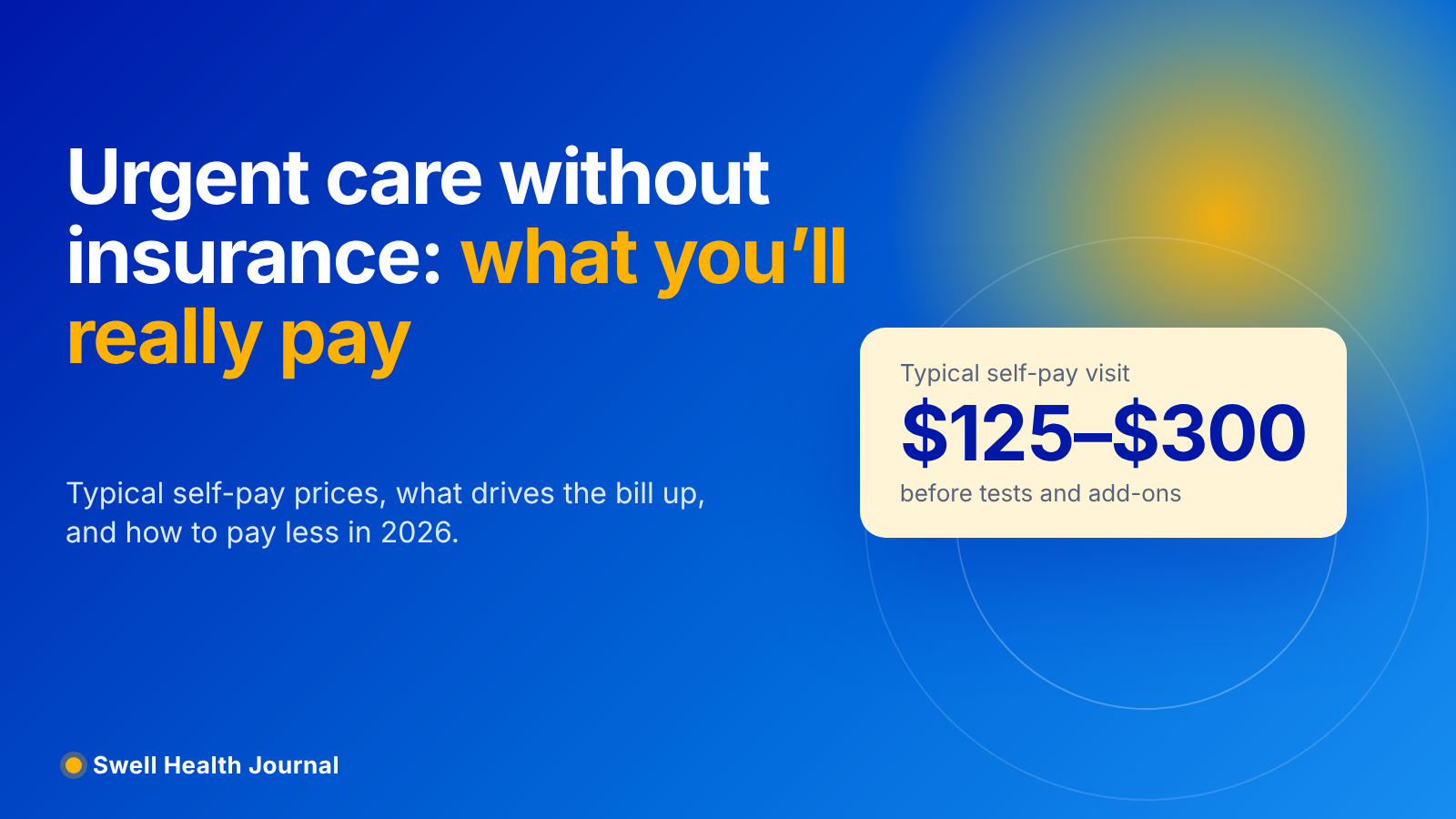
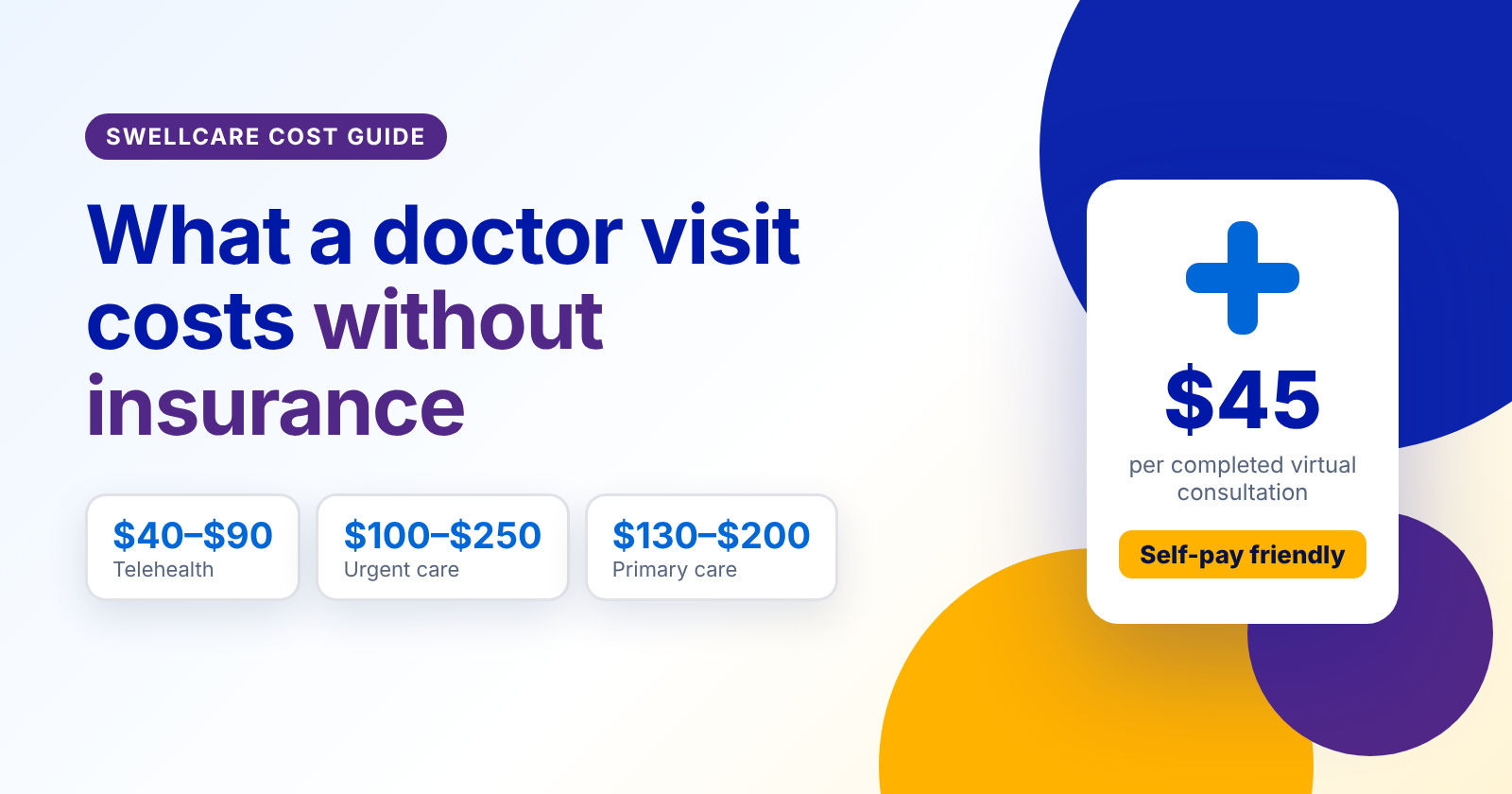
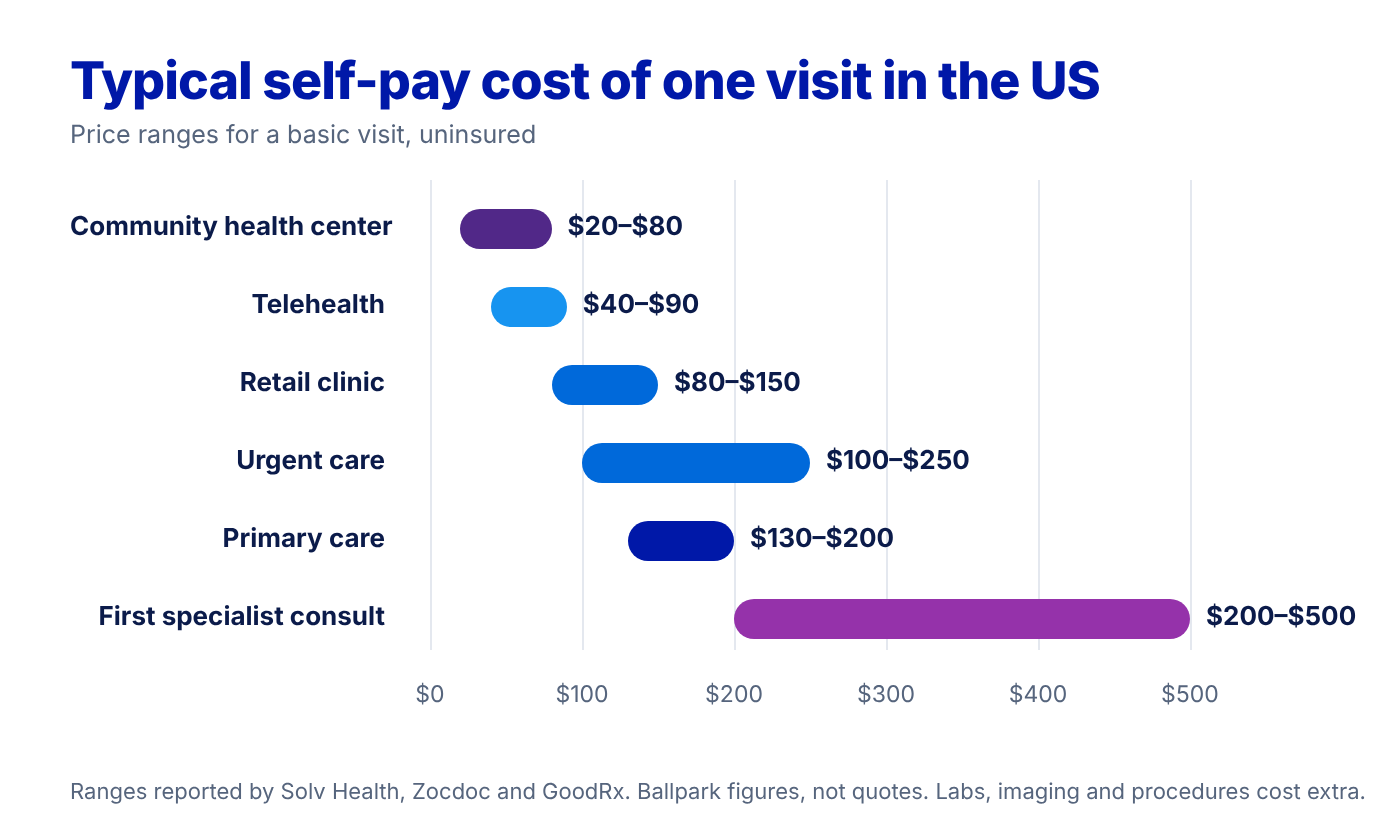
So, how much is a doctor visit without insurance? For a routine primary care visit, plan on $130 to $200 in most of the US. Urgent care usually lands between $100 and $250, and a telehealth visit can cost as little as $40. That’s the sticker price, though. Without insurance there’s no copay and no negotiated rate, so the cost you’re quoted is the cost you pay, and what you actually owe depends on what happens after you sit down. This guide shows the real ranges, where the surprises hide, and the cheapest ways to get seen.
How much is a doctor visit without insurance?
Costs swing by city, clinic type and who’s behind the front desk. The ranges below come from Solv Health, Zocdoc and GoodRx, which draw on published studies and clinic price data. Treat them as ballpark cost figures, not quotes.
| Type of care | Typical self-pay cost |
|---|---|
| Primary care office visit | $130 to $200 |
| Urgent care | $100 to $250 |
| Retail or walk-in clinic | $80 to $150 |
| Telehealth visit | $40 to $90 |
| First specialist consult | $200 to $500 |
| Community health center (sliding scale) | $20 to $80 |
| Direct primary care membership | $50 to $100 per month |
Primary care
Primary care is the visit most people mean when they search. Expect $130 to $200, and expect the higher end if you’re a new patient. Your clinician may also refer you to a specialist, and that first consult runs $200 to $500 on its own. One 2024 survey cited by Zocdoc put the average at $171. Preventive care, like an annual physical, is priced the same way, though vaccines and screenings get billed on top.
Urgent care and retail clinics
Urgent care costs about what a primary care office visit does, sometimes less. A walk-in clinic can run $80 to $150. You’re paying for speed: no appointment, and a same-day answer for a sore throat, a sprain or a rash.
Telehealth
Telehealth is the cheapest way in. Self-pay virtual visits run roughly $40 to $90, and you skip the drive and the waiting room. A clinician can even send a prescription to your pharmacy. The trade-off is simple. Nobody can listen to your lungs or draw blood over video.
What the base price usually leaves out
The number on a clinic’s website covers the conversation with the clinician. It rarely covers anything else.
Lab tests, imaging and procedures are billed separately, and each can add real money. Common blood work runs about $29 to $99 per test, according to Zocdoc, and an X-ray or ultrasound can add hundreds of dollars. Even minor procedures get their own line, and imaging does too. A referral to a specialist starts yet another bill. A new patient appointment costs more than a follow-up because it takes longer, so ask what a return visit costs before you commit.
Why uninsured patients can pay more
Clinics set a list price, then insurance companies negotiate it down. If you’re self-pay, you may be quoted the list price, which can be higher than what an insurance plan would pay for the same office visit. You carry the whole out-of-pocket cost, and nobody bargained for you. It isn’t fair, and it’s common.
So say it plainly: “I don’t have insurance. What’s your cash-pay rate?” Ask what discounts exist, too. Many providers offer a prompt-pay discount, often 20% to 40%, when you pay at the time of service. Solv reports that range without a source, so use it as a starting point for your ask, not a promise.
Where to find the cheapest care
You’ve got more options than the first clinic Google shows you.
Community health centers
A federally qualified health center (FQHC) charges on a sliding scale tied to income and family size. Under HRSA rules, a health center can’t deny care because you can’t pay. Patients at or below the federal poverty guideline get the biggest discount, and the discount fades out above 200% of it. Fees often run $20 to $80, and routine services like preventive care usually fall under the same scale. Search for an FQHC near you with HRSA’s Find a Health Center tool.
Direct primary care
It’s a flat monthly membership, often $50 to $100, for unlimited visits with one doctor. It suits people who expect to need care regularly. It isn’t insurance, so it won’t cover a hospital stay.
Flat-fee virtual visits
A flat-fee virtual clinic posts one fee up front, before the visit even starts. No copay math, no surprise out-of-pocket total for the visit itself. You pay for what you use and walk away.
Your right to a good faith estimate
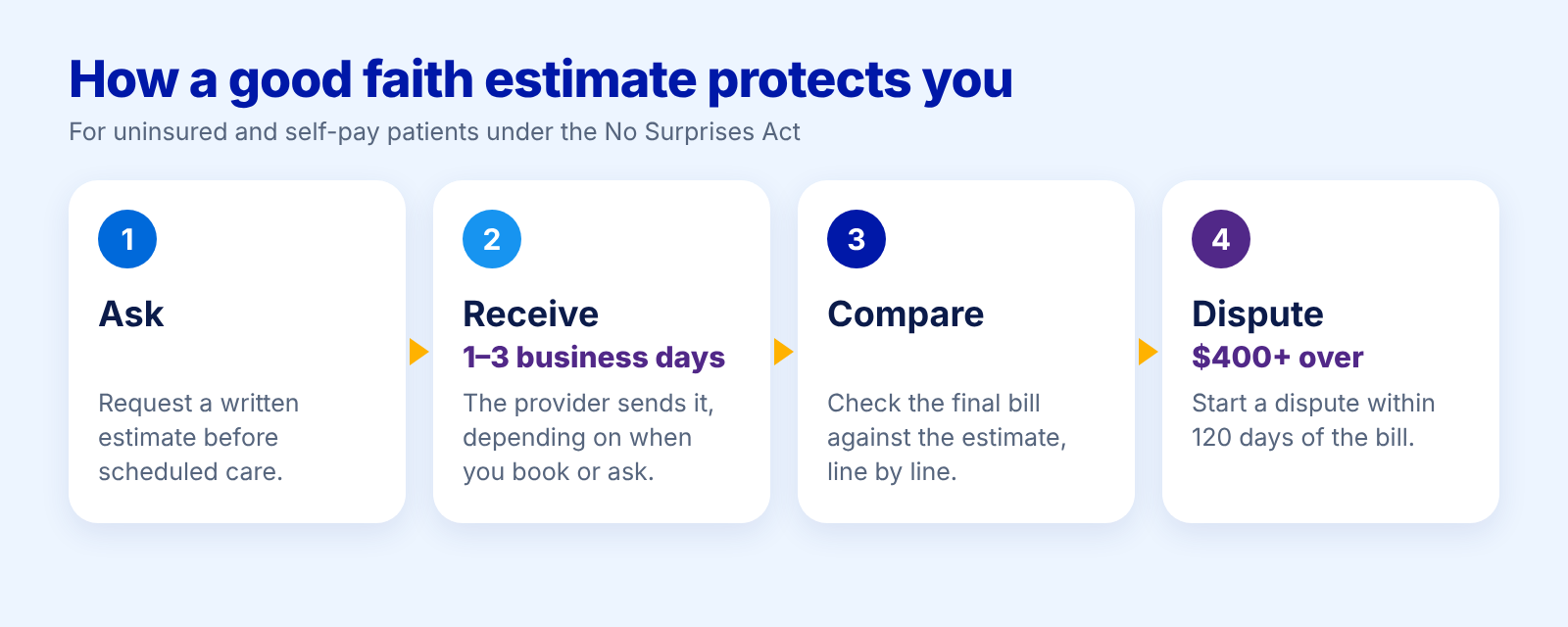
Under the No Surprises Act, uninsured and self-pay patients can ask a provider for a written good faith estimate before scheduled care. Per CMS, the provider has one to three business days to send it, depending on when you schedule or ask.
If the final bill lands $400 or more above that estimate, you can start a payment dispute within 120 days of the bill. Keep the estimate. It’s your bargaining chip.
How to lower the bill
Small moves cut the cost of care without insurance. Try these in order:
- Ask for the self-pay price, including any new patient fee, before you book.
- Ask for a discount for paying up front.
- Request an itemized bill and check every line.
- Ask your clinician for a generic prescription when one exists.
- Ask whether imaging, a lab test or a procedure will change your treatment today. If not, it can wait.
When the emergency room is the right call
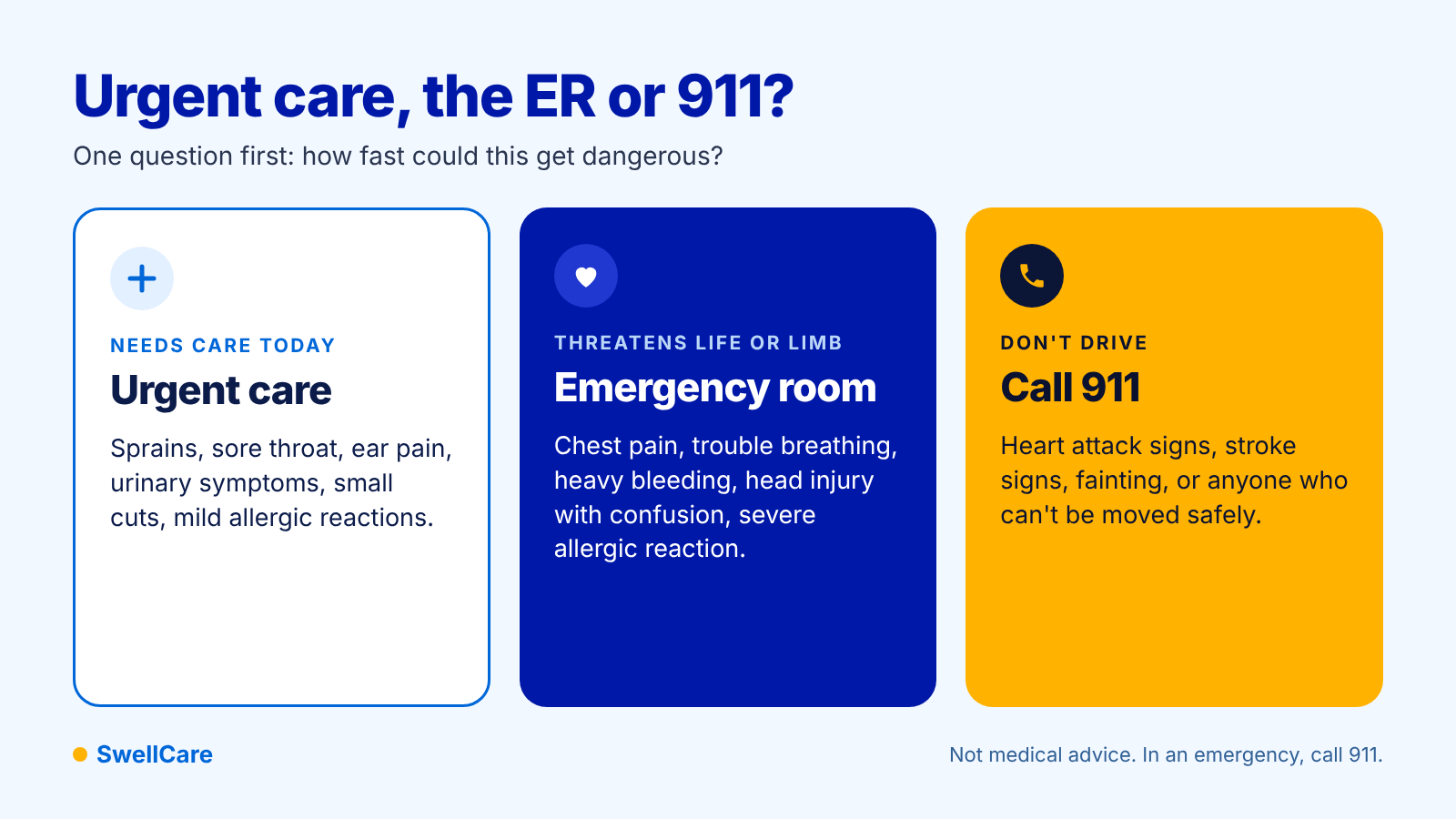
Chest pain, trouble breathing, stroke signs, heavy bleeding, a serious head injury: go to the emergency room or call 911. Federal law requires ERs to screen and stabilize you whether or not you have insurance.
Just know the cost. Zocdoc cites an average uninsured ER visit of $2,715 in 2025. For a minor problem, urgent care or virtual care costs a fraction of that.
See a clinician today for $45
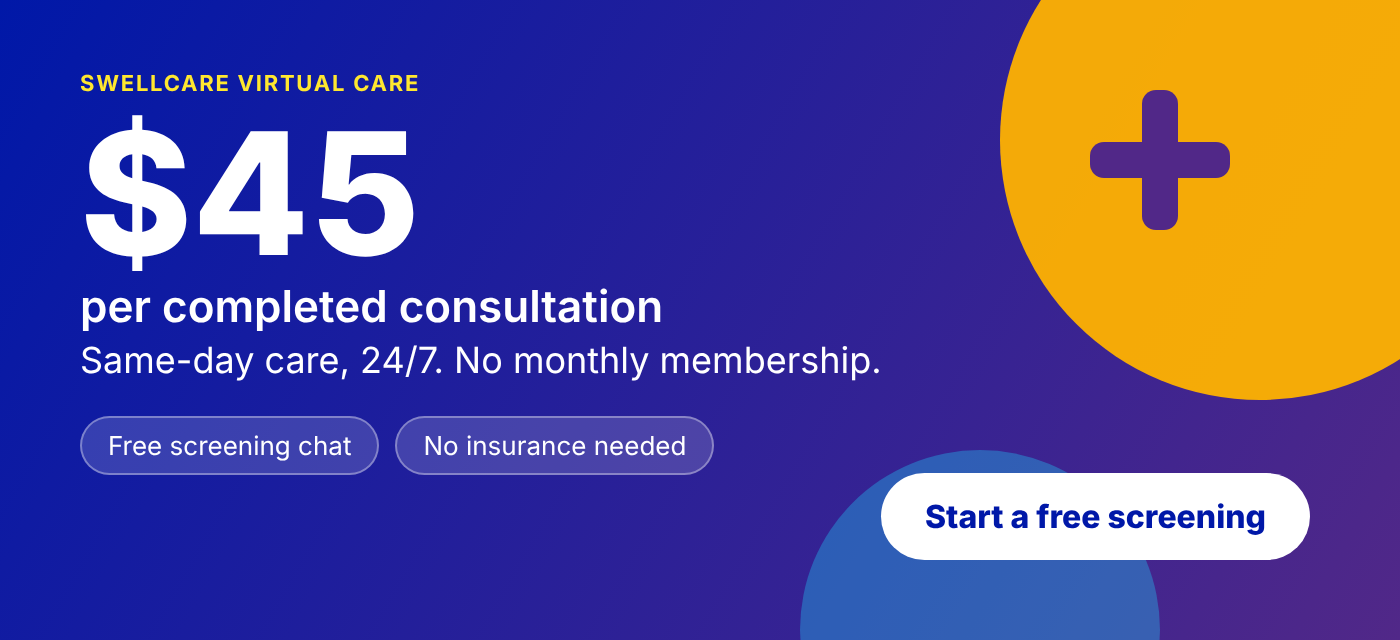
Need care now for something that isn’t an emergency? SwellCare offers cash-pay virtual care around the clock. The screening chat is free, and a completed consultation costs $45. Medication and labs are priced separately, there’s no monthly membership, and you don’t need insurance to use it.
A clinician can treat many common problems, refill stable medications and order routine lab tests. If what you describe needs an in-person exam or the ER, we’ll tell you straight and point you there. Start a free screening.
Questions people ask about uninsured doctor visits
Can I see a doctor without insurance?
Yes. Any clinic can see you as a self-pay patient, even without insurance, and community health centers must serve you regardless of ability to pay. Ask for the cash-pay rate first, then book. Virtual visits and urgent care tend to be the fastest options.
What is the cheapest way to see a doctor without insurance?
A sliding-scale health center ($20 to $80) or a flat-fee virtual visit ($40 to $90) usually costs least. A membership clinic is cheap per visit if you go often. Compare the full cost, including labs, before you book.
Can I negotiate the price of a doctor’s visit?
Often, yes, even without insurance. Ask for the self-pay rate, a prompt-pay discount and an itemized bill, and ask which discounts apply. If you were given a good faith estimate and the final bill is $400 or more above it, you can dispute the charge through the federal process.
Can I get a prescription without insurance?
Yes. A clinician can prescribe whatever you need during a visit. Ask for a generic version, since the medication itself is priced separately from the visit and generics usually cost far less than brand names.
Is telehealth cheaper than in-person care?
Usually. Self-pay telehealth runs about $40 to $90 against $130 to $200 for an in-person primary care office visit. It can’t replace a physical exam, a specialist or an emergency room, but it handles many everyday problems well.
Can I still sign up for insurance coverage?
Possibly. Open enrollment for 2027 health insurance plans runs November 1, 2026 to January 15, 2027 in most states, according to HealthInsurance.org. A few state exchanges use different dates, so check yours.
Trusted references
Public-health, research, and medical-society resources related to this guide.
- Solv Health · How much does a doctor’s visit cost without insurance? ↗
- Zocdoc · How much is a primary care visit without insurance? ↗
- GoodRx · How much does telehealth cost? ↗
- HRSA · Sliding fee discount program ↗
- CMS · Understanding the good faith estimate and dispute resolution process ↗
- HealthInsurance.org · ACA open enrollment ↗