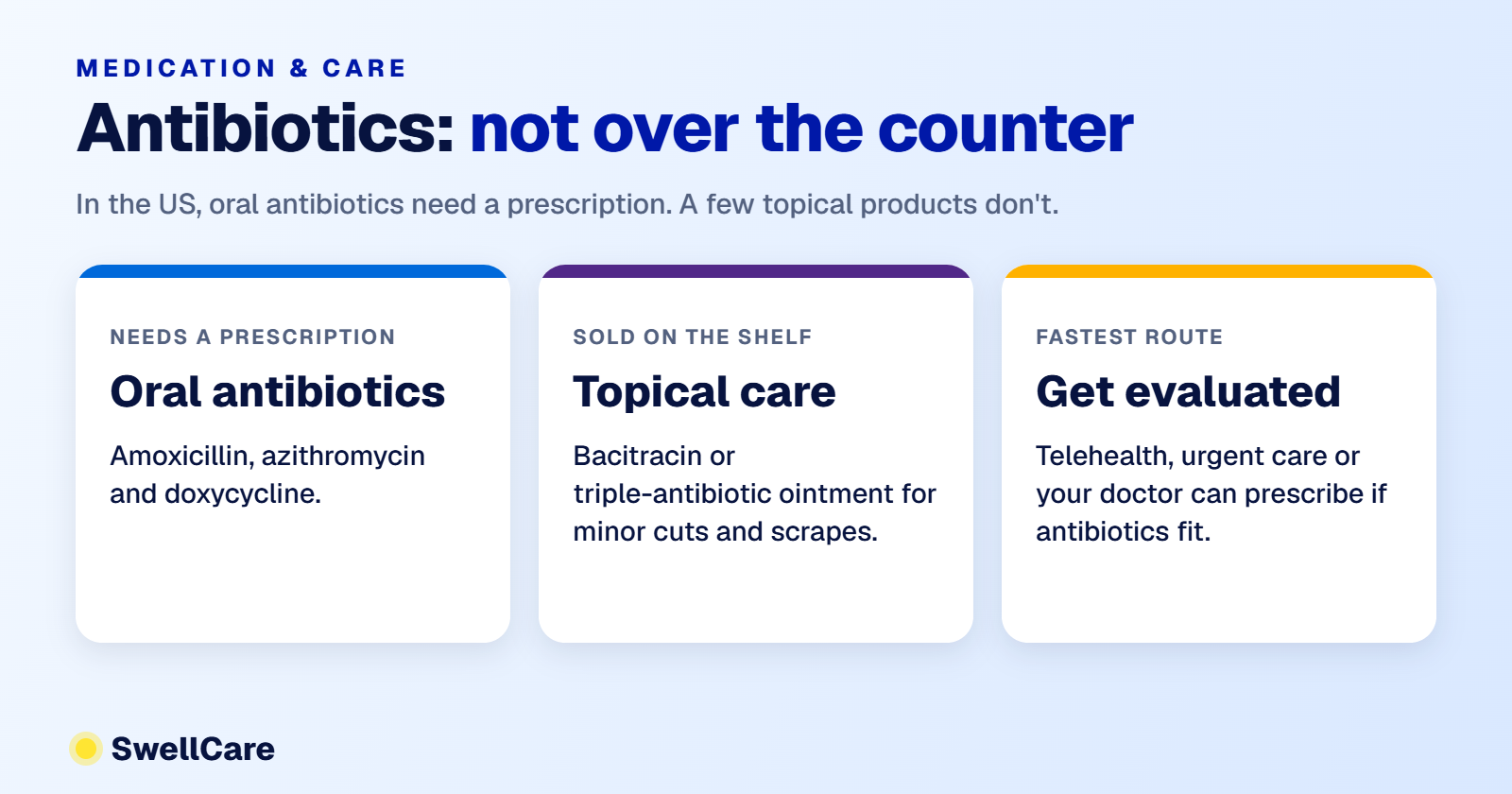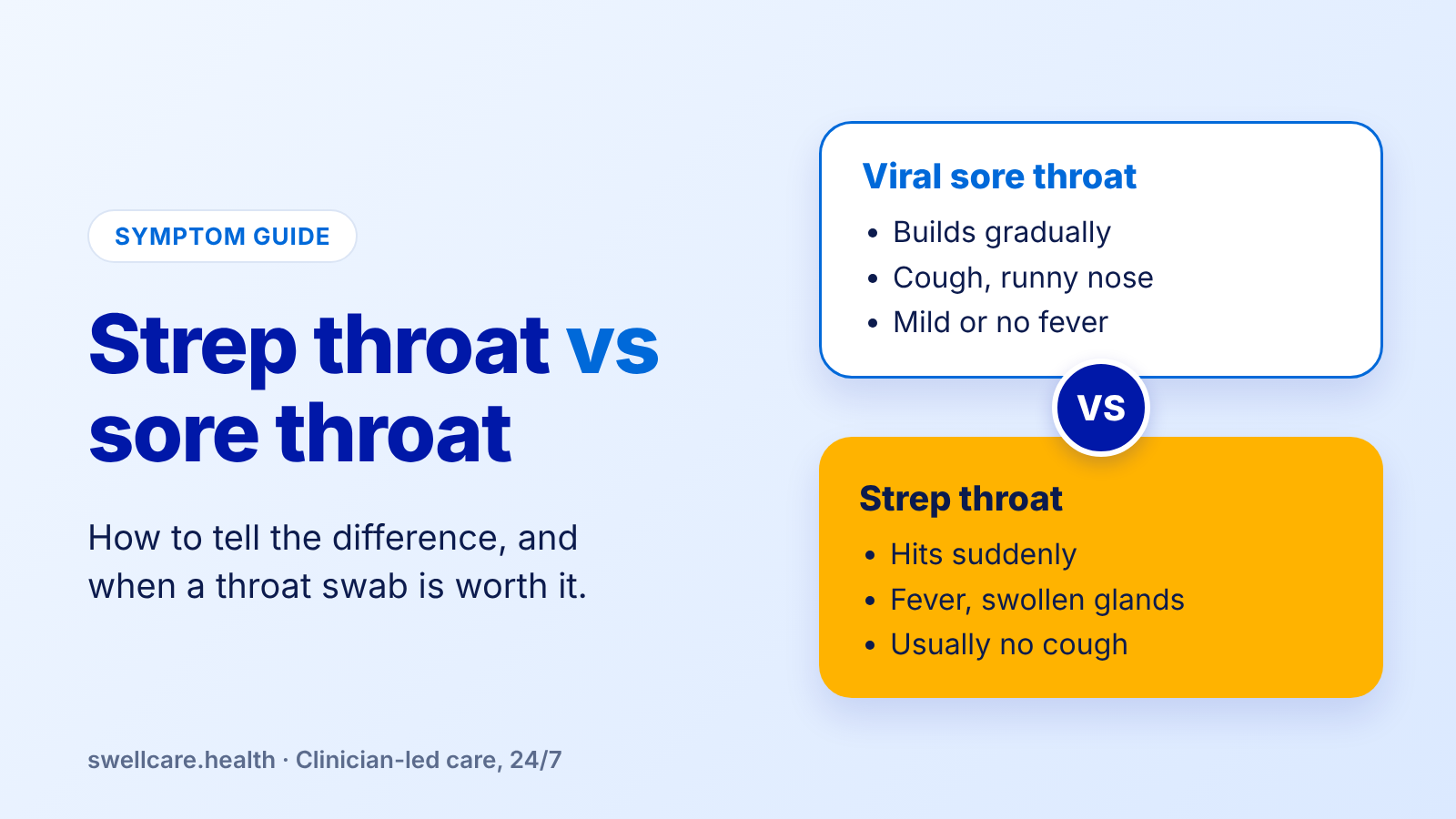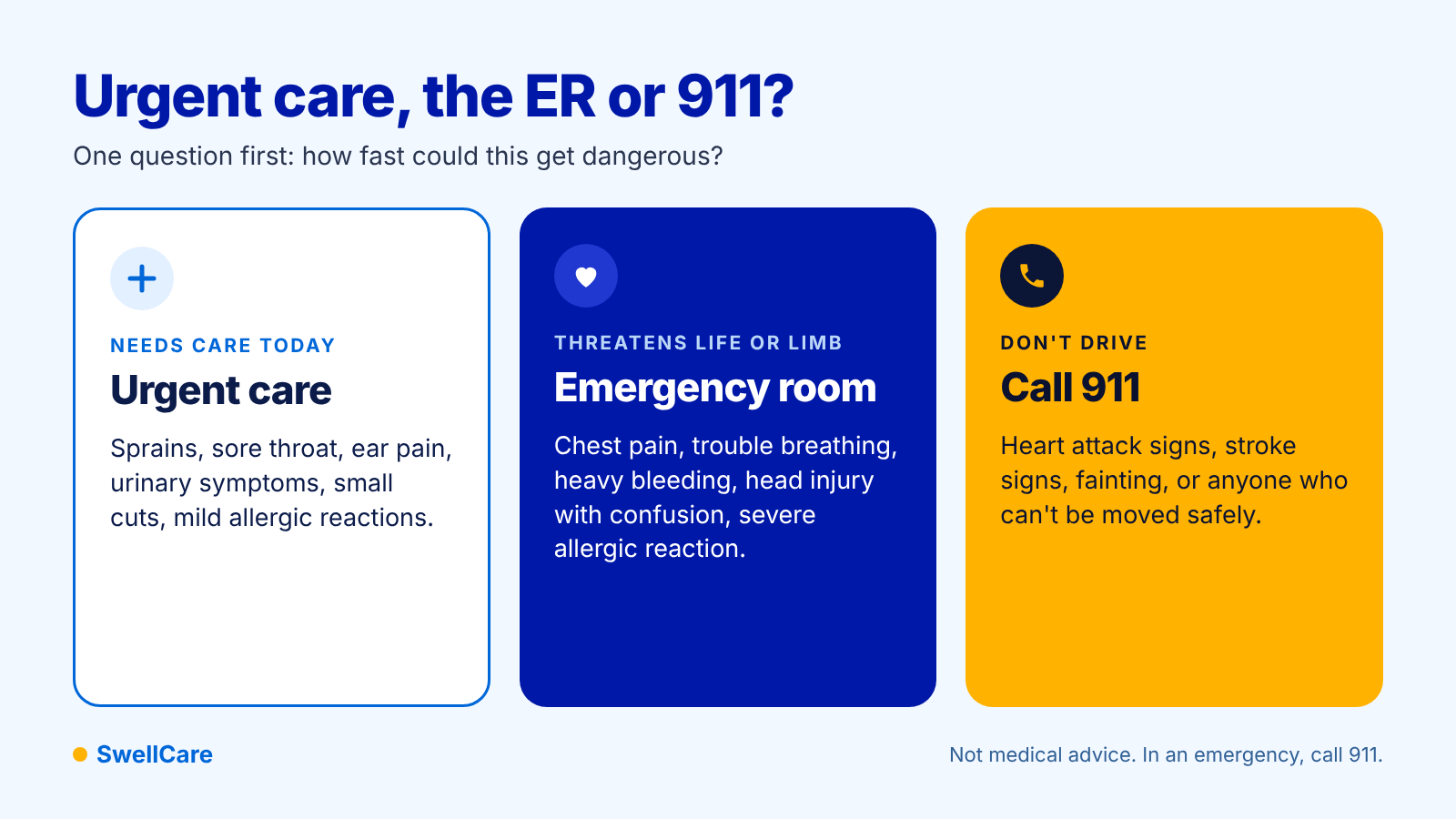
You’ve got a sore throat that’s day four, a cut that looks angrier than it did yesterday, or a kid who’s been sick all weekend. Someone tells you garlic will fix it. A forum swears by oregano oil. So you search: what is the strongest natural antibiotic?
Here’s the blunt answer. Nothing you can buy off a shelf matches a prescription antibiotic for a real bacterial infection. Among natural options, medical-grade honey has the best track record, but only on skin injuries. Garlic and berberine look impressive in the lab and far less impressive in people. Keep reading and you’ll see which claims hold up, which don’t, and how to decide what to do next.
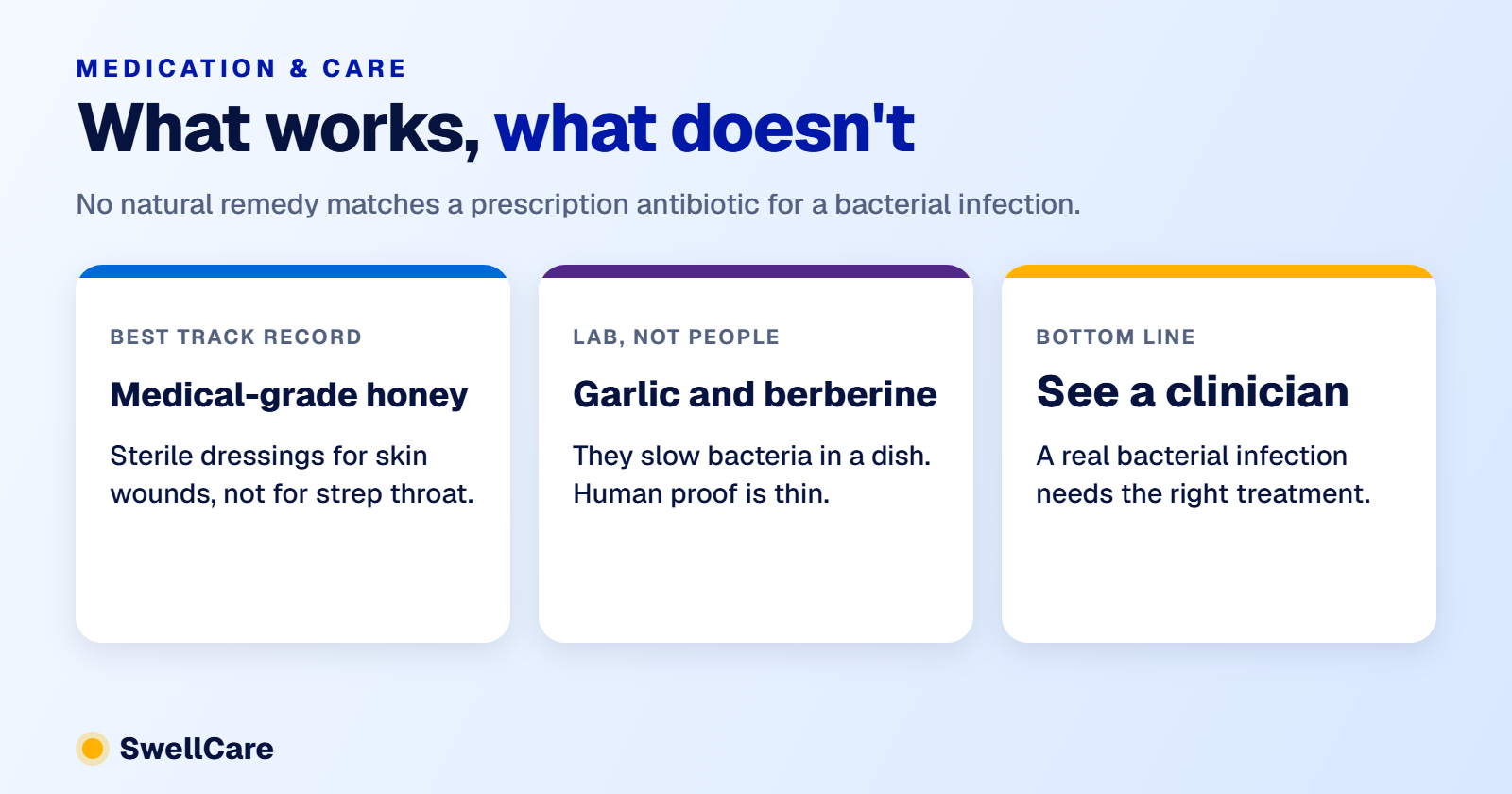
So, what is the strongest natural antibiotic?
If you want a single name, it’s honey, specifically the medical-grade kind sold as a sterile dressing. That isn’t the jar in your pantry. It’s standardized and sterilized for use on skin.
A 2025 review of 167 articles linked honey-based dressings with better healing in chronic and burn injuries, fewer infections and shorter hospital stays. The same review admits the evidence is mixed. Some trials found faster healing. Others found no significant difference from conventional dressings.
That’s the honest ceiling for natural antibiotics: useful in a few narrow jobs, unproven for most of what people use them for.
Garlic comes second in popularity, thanks to a compound called allicin. Berberine, a plant alkaloid found in goldenseal and barberry, comes third. Both can slow bacteria in a petri dish, and both are what researchers call antimicrobial compounds. Neither has been shown to cure an infection in your body the way amoxicillin or doxycycline can.
How natural antibiotics differ from prescription antibiotics
Strictly speaking, most of what gets called a natural antibiotic is a natural antimicrobial. It can slow or damage microbes, but nobody has developed, dosed and tested it the way a drug is tested.
Three differences matter.
Dose. A prescription antibiotic delivers a measured amount, for a set number of days, chosen for a specific bacterium. A garlic clove or a berberine capsule delivers whatever happens to be in it. Supplements aren’t evaluated by the FDA the way drugs are, so strength and purity vary from bottle to bottle, and side effects aren’t always listed.
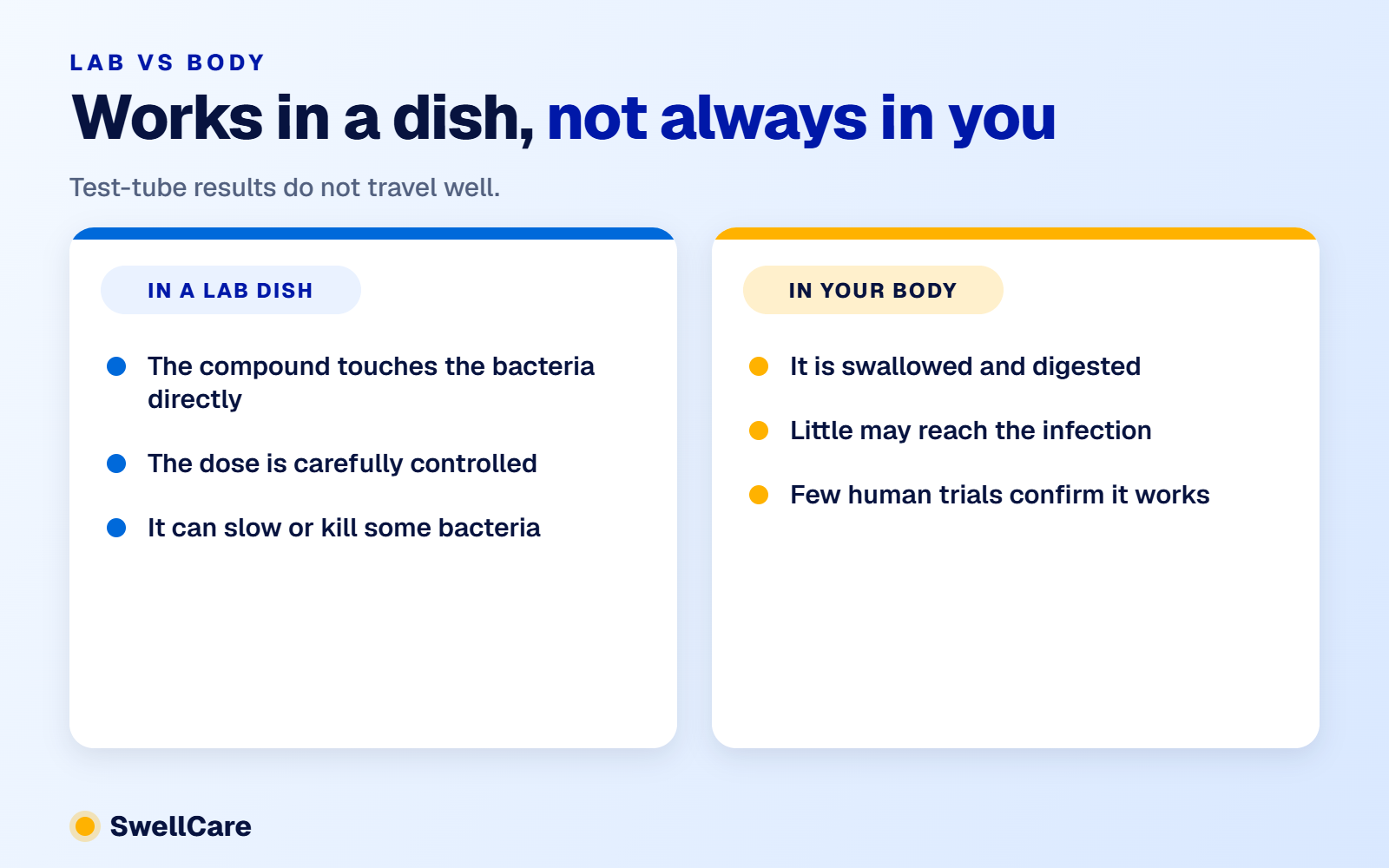
Where it works. Test-tube results don’t travel well. A compound that kills bacteria in a dish may never reach the infection at a useful level once it’s swallowed and digested.
Proof. Prescription antibiotics have been through large human trials. Most natural options haven’t, and the research that exists is often small, short or done on isolated cells. Bacteria can also build resistance to anything used carelessly.
Natural antibiotics with real evidence behind them
Medical-grade honey
It fights bacteria in several ways at once. It’s very sugary, which pulls water out of microbes. It’s acidic. And it makes small amounts of hydrogen peroxide, while manuka also carries a compound called methylglyoxal that adds antibacterial punch. It’s mildly anti-inflammatory too, which may help irritated skin settle.
On skin, that combination is genuinely useful. Medical-grade dressings are used for burns and ulcers, though the evidence is still debated.
The limits are real, though. It’s for the skin, not for a strep throat. And never give honey to a child under 12 months, because it can cause infant botulism.
Garlic
Crush a clove and an enzyme converts a compound inside it into allicin, the sulfur molecule behind the smell and most of the antibacterial research. In the dish, it can inhibit a range of bacteria.
Then you look at people, and the picture thins out fast. The National Center for Complementary and Integrative Health (NCCIH) says very little research exists on garlic supplements for cold and flu season. A 2022 review turned up only two studies hinting at a benefit, and both were small and weak.
Garlic isn’t harmless either. Raw cloves on the skin can cause severe irritation and even chemical burns. Supplements may raise bleeding risk, so tell your healthcare provider if you take them, especially before surgery or if you use anticoagulants or aspirin. Amounts above what’s in food may not be safe during pregnancy or breastfeeding.
Berberine
This yellow plant compound has a long list of test-tube results. A 2025 review found it can disrupt bacterial cell division, damage cell walls and interfere with DNA and protein production.
Look closer at the numbers, though. Against MRSA, the concentration needed to actually kill the bacteria was reported to be 25 times higher than the concentration that merely slows it. And after a 500 mg oral dose in people, blood levels were tiny, around 1 to 2 nanograms per milliliter a day later. Poor absorption is a big reason it does better in a dish than in a person. That matters.
The authors of that review state that no plant-derived active compound has yet passed clinical trials. The closest human data come from trials where berberine was used alongside conventional antibiotics for *H. pylori*, which hints that it may someday be a helper, not a replacement for real drugs.
Popular picks that don’t hold up
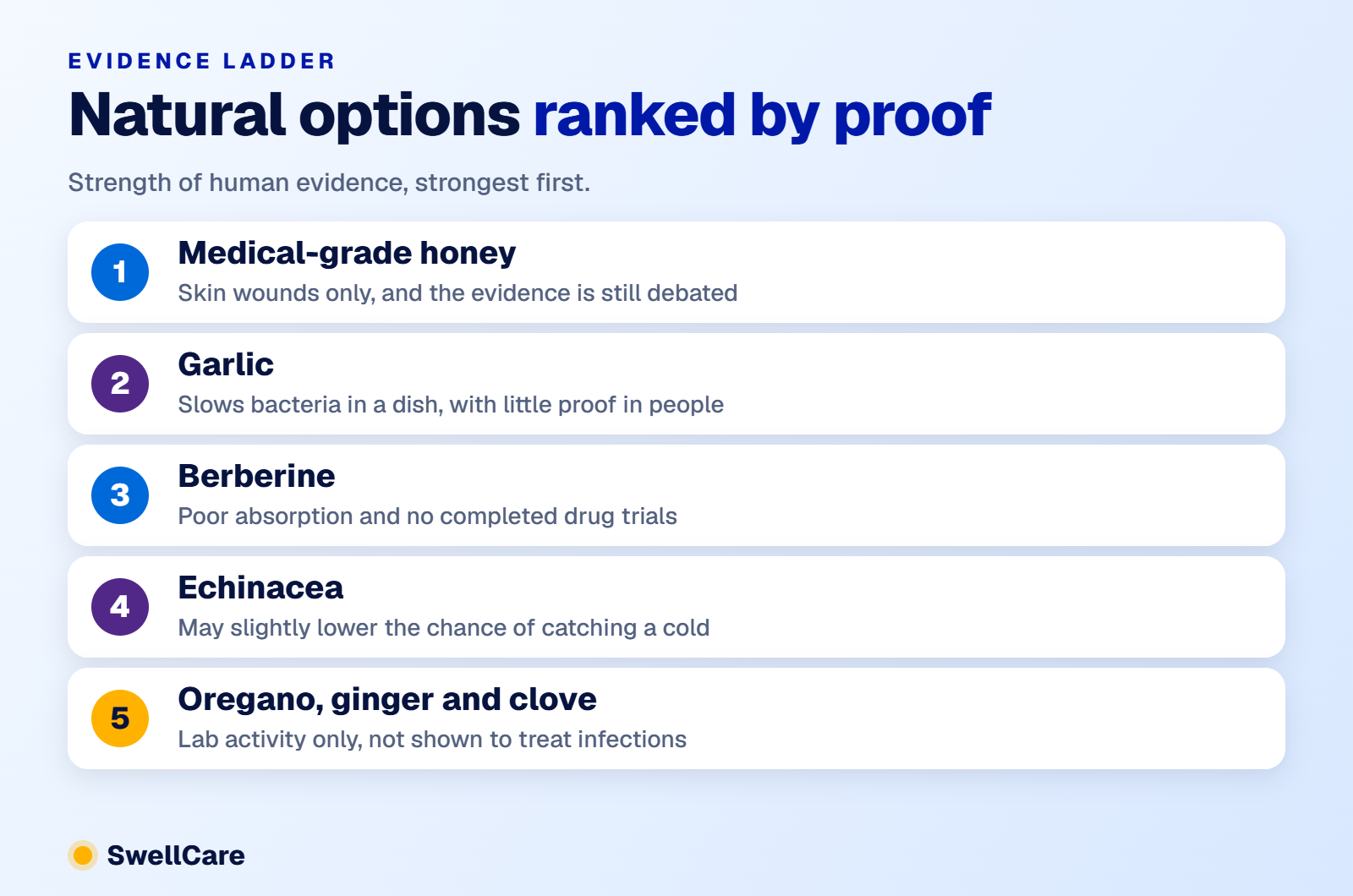
Hype and proof don’t always travel together. Some of the most-hyped remedies have the least behind them. Oregano oil, ginger and clove all show up on every list, yet none has solid proof for treating an infection. They show some activity in lab studies, but lab activity isn’t the same as curing an infection.
| Remedy | What the evidence shows | Where it stops |
|---|---|---|
| Medical-grade honey | Better wound healing in several studies | Skin only; evidence still debated |
| Garlic | Slows bacteria in test tubes | Little human proof; bleeding risk |
| Berberine | Broad activity in test tubes | Poor absorption; no completed drug trials |
| Oregano oil | Carvacrol is active against germs in a dish | Little human evidence; stomach upset with heavy use |
| Echinacea | May slightly lower the chance of a cold | Unclear if it shortens one; allergies possible |
| Ginger, clove | Mild activity in a dish | Not shown to treat infections |
Oregano is a good example. Natural antimicrobials can’t tell the bacteria making you sick from the ones keeping you well, so heavy, long-term use may upset the stomach and the gut. Oregano, ginger and clove all carry that kind of side effect risk when overused.
Echinacea has been studied more than most. NCCIH says it may slightly reduce your chances of catching a cold, but it’s unclear whether it shortens one. Side effects are mostly digestive, but allergic reactions do happen and can be severe, and products vary, so results for one don’t carry over to another.
Why the right treatment matters more than the “strongest” one
Choosing a remedy is the easy part. Choosing correctly is harder.
A cold, most sore throats and many sinus infections are viral, and no antibiotic touches a virus. A strep throat, a urinary tract infection or an infected wound is bacterial, and waiting on a herb can let it spread. Telling the two apart is the whole game.
It’s also why a clinician sometimes says you don’t need an antibiotic at all. The CDC estimates that at least 28% of antibiotics prescribed in outpatient settings are unnecessary, based on 2010 to 2015 data. Taking an antibiotic you don’t need gives bacteria a chance to adapt, which is how antibiotic resistance builds.
That adaptation has a price. CDC’s 2026 threats report estimates that the resistant bacteria and fungi it covers cause 9.7 million infections and 50,800 deaths a year in the US, though CDC warns the figures can’t be compared directly with earlier reports because its methods changed. Fewer unneeded antibiotics, and the right one at the right time, slows antibiotic resistance. Drug-resistant germs don’t care how natural your remedy was.
Your immune system does most of the heavy lifting in minor illness, and rest and fluids often do more than any supplement. The goal isn’t to avoid antibiotics at all costs. It’s to use them when they’ll work.
How to use natural remedies safely
If you want to try something gentle while you recover, a few ground rules keep it from backfiring.
Tell your healthcare provider about everything you take, including supplements, and ask your healthcare provider before starting anything new. Garlic and some herbs interact with blood thinners and other medicines, and some products aren’t safe in pregnancy or for children. Natural doesn’t mean free of side effects.
Don’t swap a natural remedy for a prescription you’ve been given. If you’re already on an antibiotic, ask your doctor or pharmacist before adding anything, since interactions are possible.
Buy from brands that test their products, and don’t exceed label doses. More isn’t better. Research on many of these products is still thin, so treat any claim that sounds too good as a warning.
Honey is a common home remedy for coughs in older children, though it isn’t a treatment for infection. Just not for babies under one.
When to see a doctor
Natural remedies are fine for comfort. They’re a poor plan for an infection that’s getting worse, and a doctor can sort out which one you have.
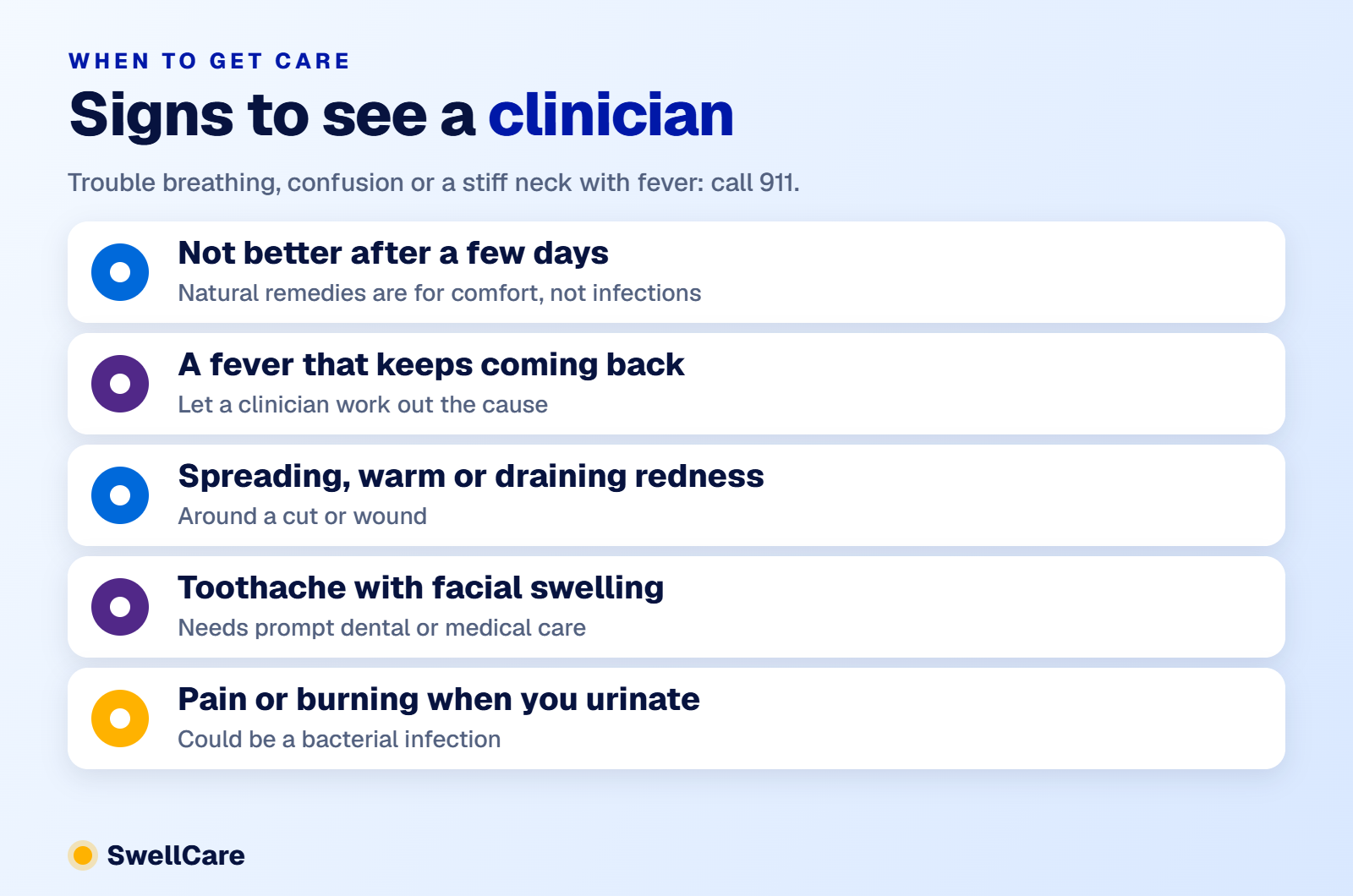
See a doctor if symptoms haven’t improved after a few days, if you have a fever that keeps coming back, or if redness around a cut or wound is spreading, warm or draining pus. The same goes for a toothache with facial swelling, pain or burning when you urinate, or a sore throat so bad you can’t swallow.
Skip the wait and call 911, or go to an emergency room, for trouble breathing, confusion, a stiff neck with fever, or a rapidly spreading rash. Virtual care isn’t for emergencies.
Talk to a clinician today
You don’t have to guess. If you’re not sure whether what you’ve got is viral, bacterial or something that needs in-person care, SwellCare offers clinician-led, non-emergency urgent care around the clock by video or chat.
You tell the clinician what’s going on, they review it, and you get a clear answer about what can be handled online and what can’t. Based on our site today, you start with a free screening, then a $45 consultation if you go ahead, and medication and lab costs are separate. A clinician can say whether a prescription makes sense or whether you’re better off with rest. Prescriptions are never guaranteed.
Start your care and get a real plan before you spend another night on home remedies.
Questions people ask about natural antibiotics
What is the strongest natural antibiotic?
Medical-grade honey, such as manuka honey, has the best clinical evidence, but only for wounds. Garlic and berberine show strong lab activity yet little proof in people. No natural option is strong enough to replace a prescription antibiotic for a true bacterial infection.
Does garlic work as an antibiotic?
It can slow bacteria in test-tube studies. NCCIH says research on it for colds and flu is limited and weak. It’s fine as food, but raw cloves can burn skin and supplements can raise bleeding risk.
Is manuka honey a real antibiotic?
It acts like an antibacterial on skin injuries, using sugar, acidity, hydrogen peroxide and methylglyoxal. It isn’t a drug you swallow to treat internal infections. Use sterile medical-grade products on skin, not a jar from the pantry, and never give honey to infants under 12 months.
Can natural antibiotics replace prescription antibiotics?
No. Natural products aren’t dosed or tested like drugs, and most lack large human trials. For strep, urinary tract infections and infected wounds, delay can let the infection spread. A clinician can tell you whether you need an antibiotic at all.
Are natural antibiotics safe during pregnancy or for kids?
Not automatically. NCCIH says garlic amounts above those in food may not be safe during pregnancy or breastfeeding. Check with a healthcare provider or doctor before giving any herb or supplement to a child, and never give honey to infants under one.
Can I take natural antibiotics with prescription medicine?
Ask first. Some herbs interact with anticoagulants, aspirin and other medicines, and adding something to an antibiotic course can cause problems. Tell your healthcare provider or pharmacist about every supplement you take.
Trusted references
Public-health, research, and medical-society resources related to this guide.