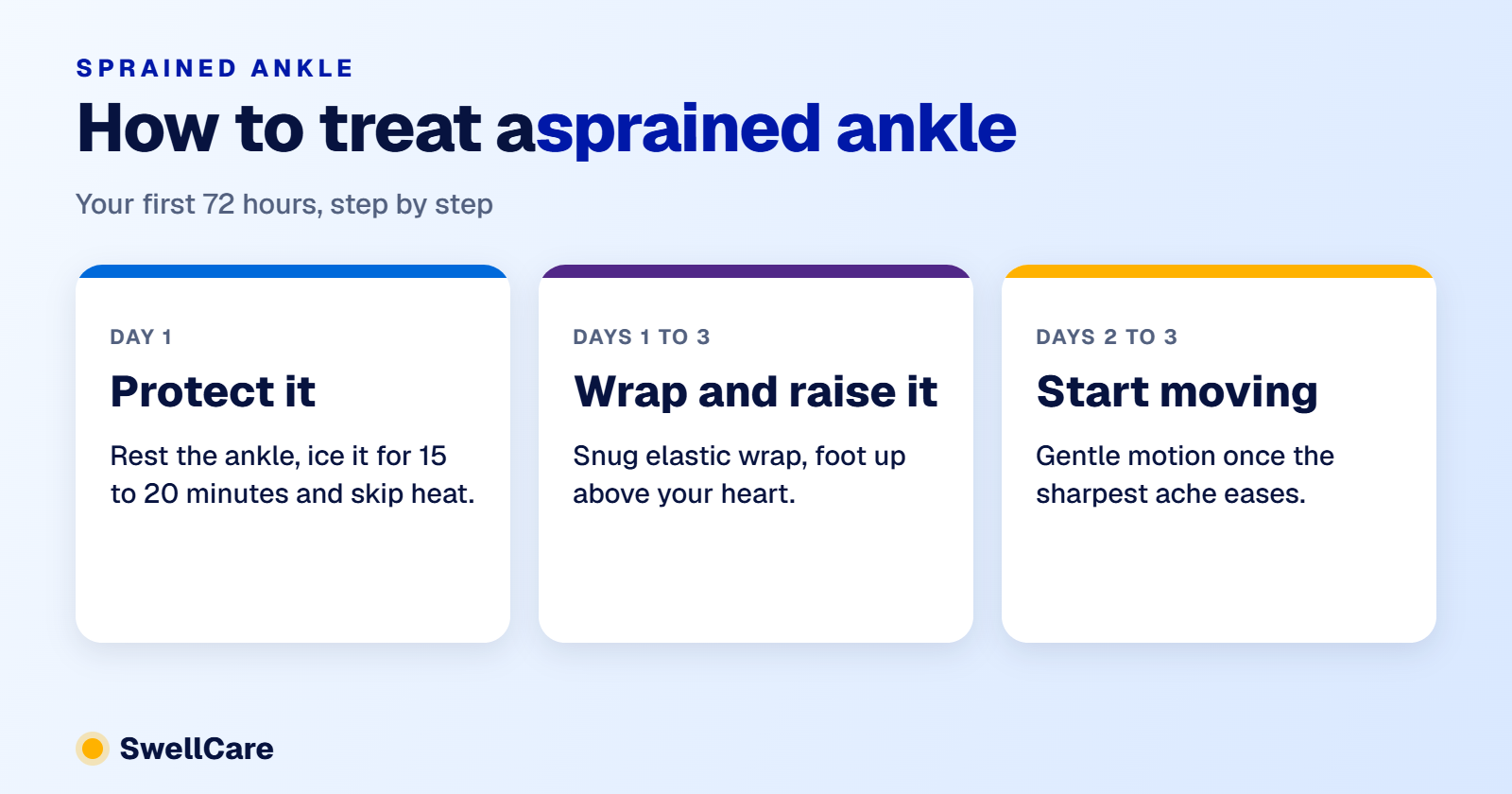
You stepped off a curb, or landed wrong during a pickup game, and your foot rolled. Now the outside of your ankle throbs and you’re wondering if you can walk it off. Don’t. Here’s how to treat a sprained ankle in the first three days: protect it, ice it, wrap it and raise it, then start moving it gently once the sharpest ache eases.
Most ankle sprains heal at home. A few don’t, and this guide shows you how to tell the difference. An ankle sprain means the ligaments that hold the joint steady have been stretched or torn, and good early treatment often shortens recovery by weeks.
Is it a sprain or something worse?
Ligaments are tough bands that connect one bone to another. In a typical ankle sprain, the foot rolls inward and the ankle ligaments on the outer side take the hit. Clinicians grade each ankle sprain by how much of the injury those ligaments absorbed, as the American Academy of Orthopaedic Surgeons explains.
| Grade | What happened | What you’ll notice |
|---|---|---|
| Grade 1 | Ligaments stretched | Mild swelling and tenderness. You can usually walk. |
| Grade 2 | Partial tear | More swelling and bruising. Walking hurts, with slight instability. |
| Grade 3 | Complete tear | Heavy swelling and bruising. Bearing weight is hard, with marked instability. |
The bigger worry is a broken bone, because a severe sprain can look just like a fracture. Clinicians lean on the Ottawa ankle rules, a short checklist built around pain, bone tenderness and whether you can take four steps, to decide who needs X-rays. Harvard Health reports that a review of studies involving more than 15,000 patients found the rules identified fractures more than 95% of the time.
A high ankle sprain, an injury to the ligaments just above the joint, behaves differently, can leave lasting instability and deserves an in-person exam. Not every ankle sprain needs an X-ray, but every severe sprain needs an exam.
How to treat a sprained ankle at home, step by step
Clinicians often call the basics RICE: rest, ice, compression and elevation. This early treatment still forms the backbone of ankle sprain care, and the steps below follow it.
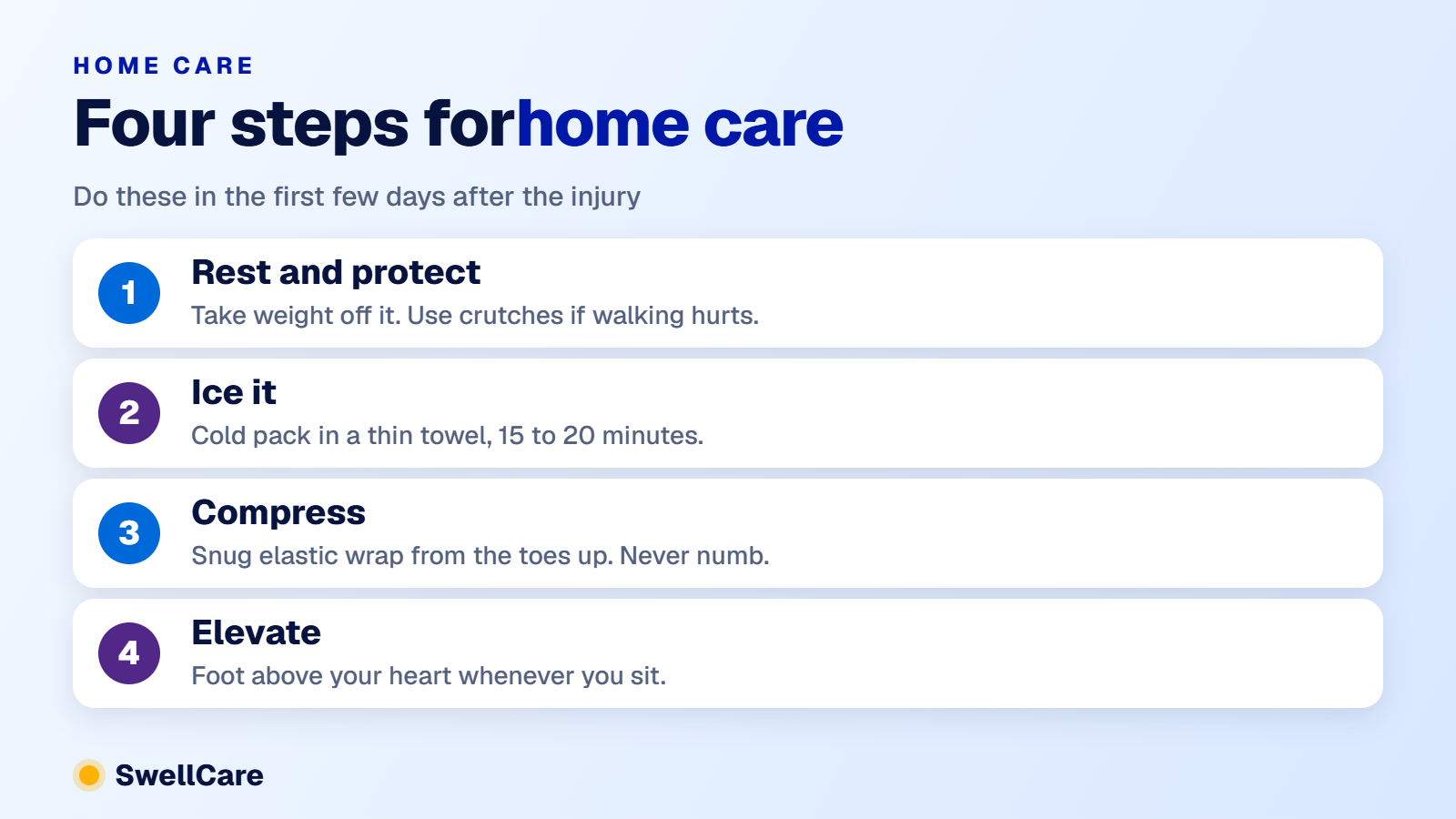
Rest and protect it
Rest the ankle as much as you can for the first day or two, especially if the swelling is bad. Put weight on it only as far as the ache allows. If walking hurts, crutches take the load off.
Ice it the right way
Wrap a cold pack in a thin towel and hold it on the ankle for 15 to 20 minutes, a few times a day. Never put ice straight on skin. Skip heat for the first day, since hot packs and hot showers can make swelling worse.
Compress and elevate
Wrap the ankle in an elastic bandage for compression, starting at the toes and working up past the ankle. Compression should feel snug, never tingly or numb. If your toes turn cold or pale, loosen it. Between wraps, elevation does the rest: lift your foot as high as is comfortable, ideally above your heart. Compression and elevation work together to push fluid away from the joint.
Choose your pain relief
Over-the-counter NSAIDs such as ibuprofen or naproxen ease pain and swelling. If you can’t take ibuprofen or similar drugs, acetaminophen is an option. Check with a doctor or pharmacist first if you have stomach, kidney or heart problems, or take blood thinners. Don’t take them for more than 10 days in a row without talking to a provider, says the Cleveland Clinic.
One caveat. A 2019 editorial in the British Journal of Sports Medicine argued that the evidence behind RICE-style care for sprains is thin, and that anti-inflammatory drugs may get in the way of tissue repair. That debate is still open. If you’re unsure, ask your clinician what fits your injury.
When to start moving your ankle again
Complete rest for weeks is out of date, and it can slow recovery. Studies summarized by Harvard Health show people return to normal activity sooner with functional treatment, meaning a wrap, brace or tape plus early movement, than with a cast. Range of motion exercises can begin within 48 to 72 hours. Early movement helps an ankle sprain heal without lingering stiffness, and it keeps the healing ligaments flexible.
Start sitting down. Trace the alphabet in the air with your big toe, then flex and point your foot. Do these exercises several times a day, easing the ankle through its full range of motion. As soreness settles, add resistance band exercises and calf stretching exercises.
Balance work comes last, and it matters more than most people think. Poor balance is a major risk factor for another ankle sprain. Stand on the injured leg near a counter and hold for 30 seconds. A lace-up ankle brace adds support when you return to sport, and an ankle brace is cheap insurance for the ligaments.
If you’re no better after two to four weeks, ask about physical therapy. A physical therapist can build a rehab plan around your ankle.
How long does a sprained ankle take to heal?
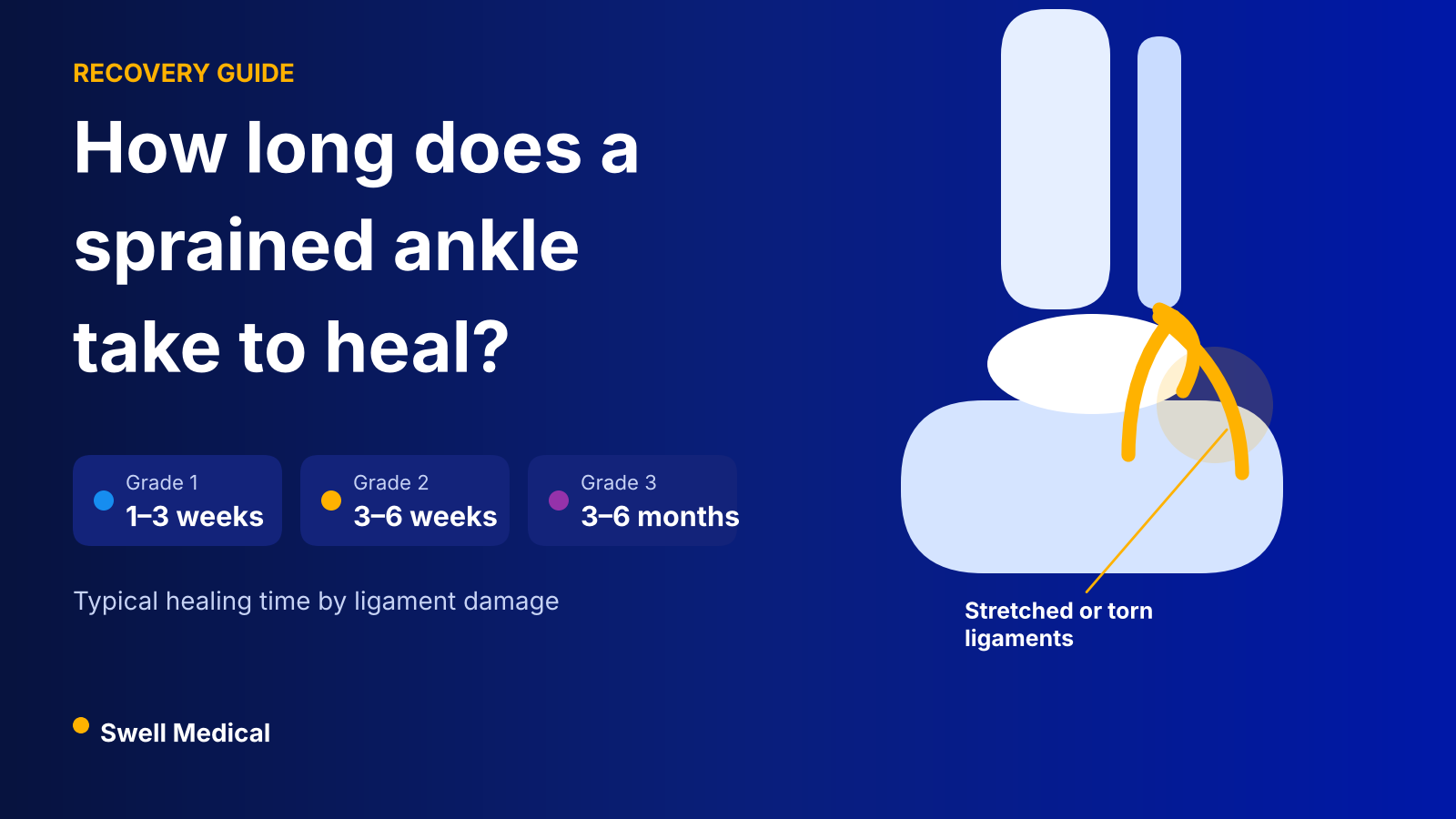
Recovery depends on the grade. Harvard Health puts recovery from a grade 1 sprain at roughly one to three weeks, grade 2 at three to six weeks, and grade 3 at up to several months.
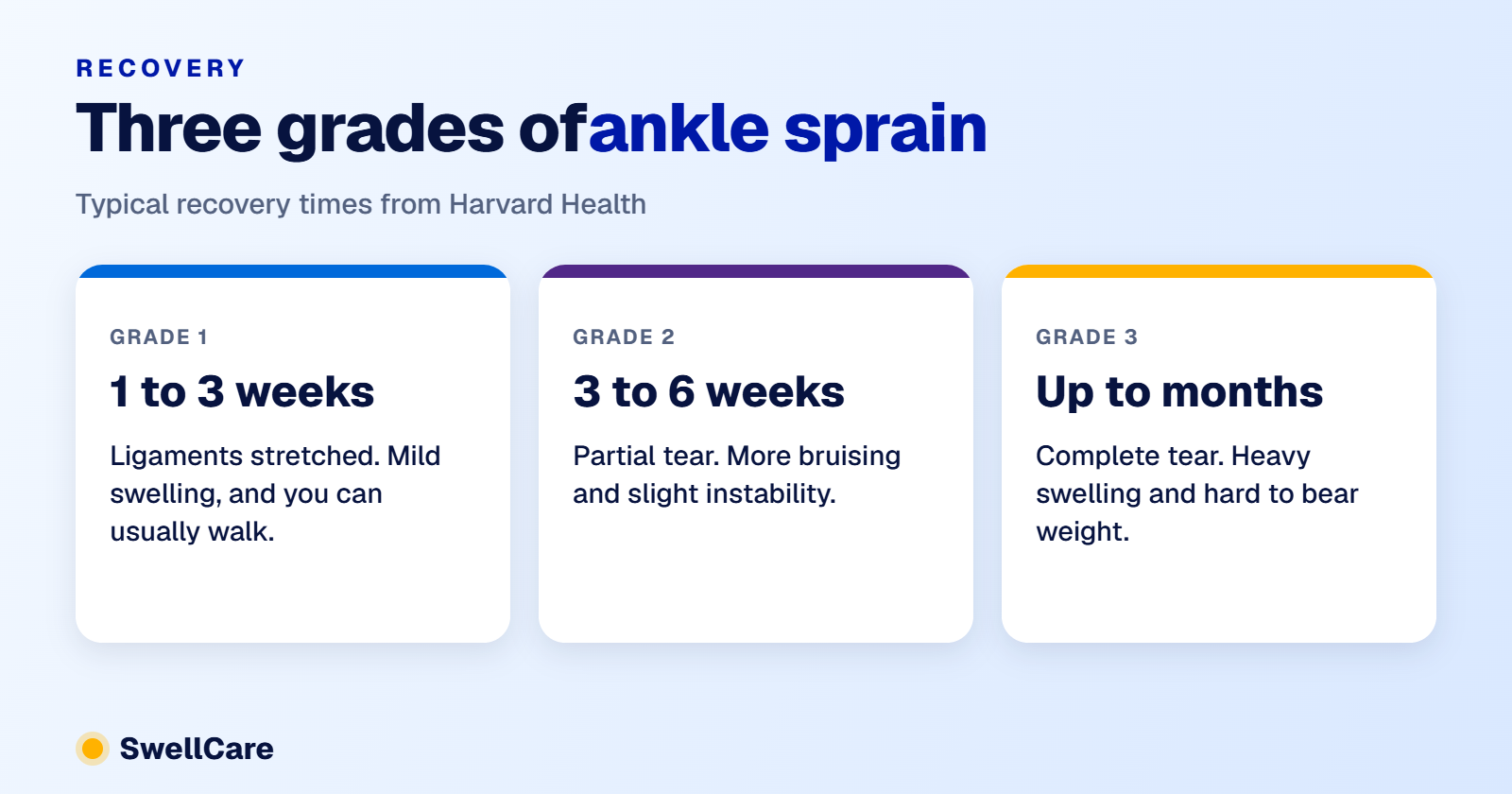
Setbacks are common when people rush recovery. The ligaments can feel fine long before they’re ready for a hard cut or a jump, and a re-injury can add weeks. Get clearance before you return to full activity.
Surgery is uncommon. Doctors consider surgery mainly when the ankle keeps giving way, with chronic instability, after months of proper rehab. Even then, most people try physical therapy first and surgery second.
When to see a doctor
Home treatment suits a mild sprain. Get seen promptly if the injury leaves you unable to put weight on the ankle, if it looks out of shape, if your foot goes numb or changes color, or if swelling and pain are getting worse after a day or two. Pain from an ankle sprain that lingers past four to six weeks also needs a proper look.
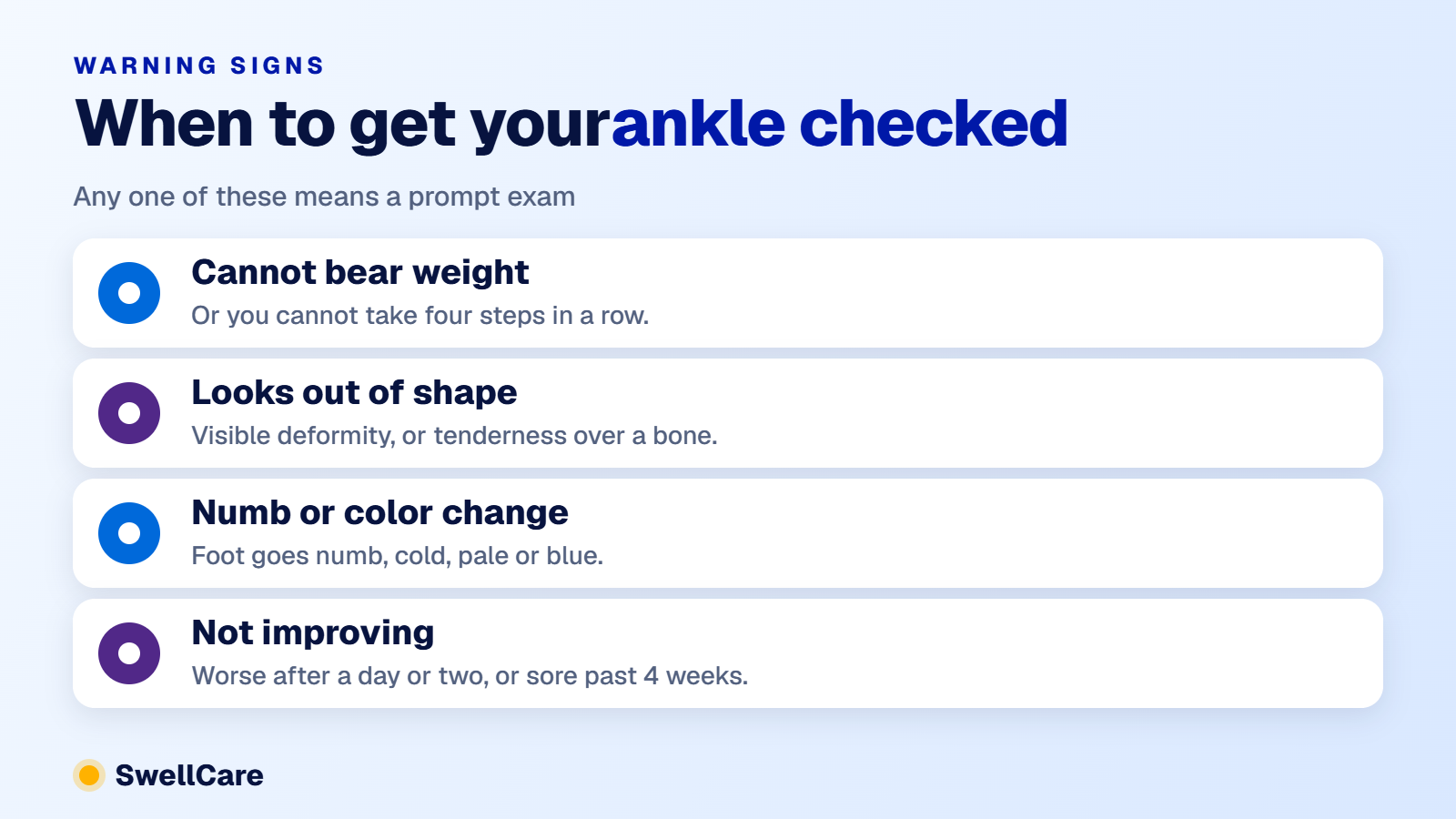
A doctor can examine the ankle, order X-rays if a fracture is possible, and tell you whether it’s a plain sprain or something that needs a boot, a brace, a specialist or, rarely, surgery. Your doctor will also check whether the ligaments are torn and what treatment fits.
Getting your ankle checked without the waiting room
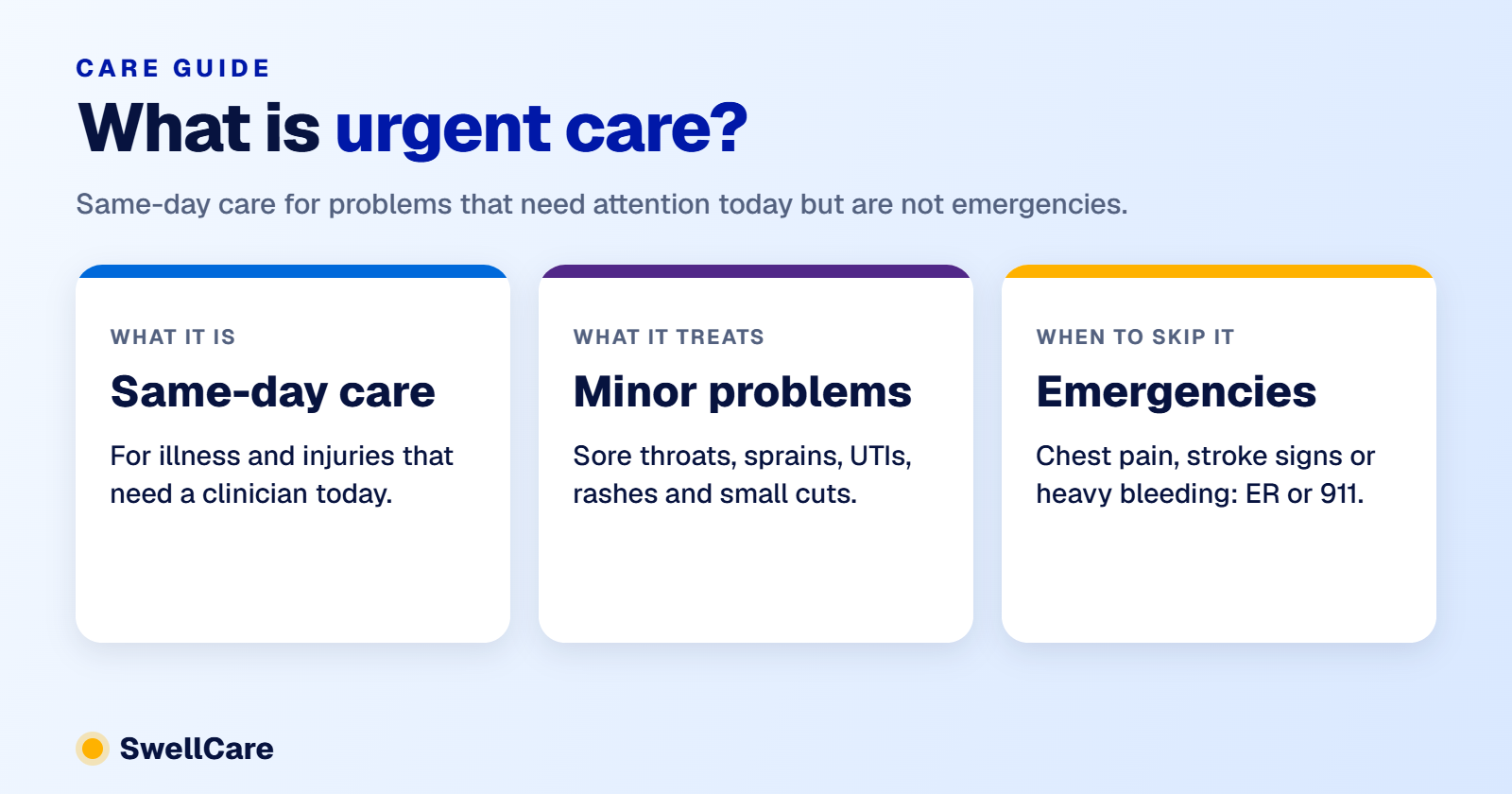
Not sure whether your ankle sprain needs an in-person visit? SwellCare’s online urgent care connects you with a clinician by video or chat, around the clock. They can ask how the injury happened, help you decide whether you need an X-ray, and tell you whether home treatment is enough. A virtual visit can’t take images, so your clinician will point you to in-person imaging if you need it, and prescriptions are never guaranteed. See how it works before you book.
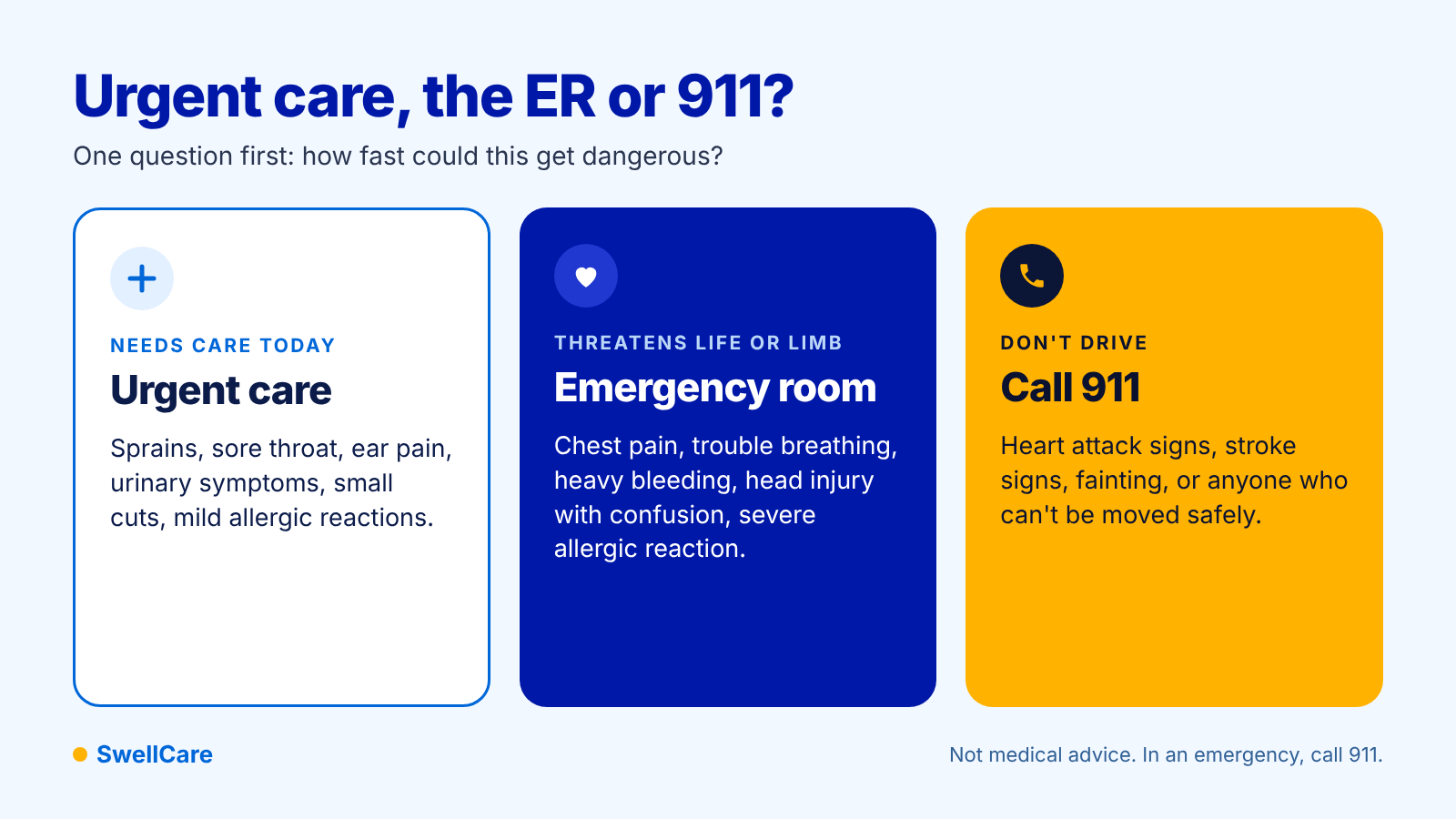
SwellCare isn’t emergency care. If the pain is severe or the foot looks deformed, call 911 or head to an emergency room.
Questions people ask about a sprained ankle
Can you walk on a sprained ankle?
Often, yes, if the sprain is mild and you can put weight on it with only modest pain. Walk as comfort allows, and use crutches if it hurts. If you can’t take four steps, or the ankle gives way, get it examined before you keep walking on it.
Is heat or ice better for a sprained ankle?
Use ice first. Cold helps with swelling and pain in the first few days. Avoid heat for the first 24 hours, because it can increase swelling. Once the swelling is gone and stiffness is the problem, gentle warmth before stretching can feel good.
How do I tell a sprain from a break?
You can’t always tell by looking, since severe sprains and fractures share symptoms. Warning signs for a break include tenderness over a bone, a visible deformity and not being able to bear weight. Only an exam, and sometimes an X-ray, can settle it, so get checked when in doubt.
What’s the fastest way to heal a sprained ankle?
Protect the sprain early, then get it moving. Ice it for the first day or two after any ankle injury, wrap it, and begin gentle motion within a few days. Add strengthening exercises and balance work as pain allows, with physical therapy if progress stalls. That’s the quickest route to full recovery, and rushing back to sport is the surest way to re-injure the ligaments.
Trusted references
Public-health, research, and medical-society resources related to this guide.