
Your ear feels stuffed, sounds are muffled, and the urge to dig into your ear canal with a cotton swab is almost impossible to ignore. Don’t. A cotton swab is the most common way people turn a small wax problem into a bigger one.
Here’s the short answer on how to remove ear wax at home: soften it with a few drops of warm mineral oil or a hydrogen peroxide mix, give it a day or two, then rinse gently with body-temperature water and dry the ear. That works for many people. It does not work for everyone, and a few groups should skip it entirely.
This guide walks you through the safe method, the mistakes that cause real damage, and the signs that mean your ears need a clinician instead of a DIY fix.
How to remove ear wax at home without hurting your ear
Think of it as a three-part job: soften, rinse, dry. You’re not scooping earwax out. You’re helping it loosen so it can leave the ear canal on its own.
The whole thing takes about two to five days of patience and about five minutes of effort a day. Pushing a tool into the ear canal can scrape the skin, shove the plug deeper, or cause an injury you can’t undo, so nothing in the method below goes past the opening of your ear.
Before you start, check the list in the section on who should skip home removal. If any of it applies to you, stop there and book a visit instead.
Why earwax builds up (and why you usually shouldn’t clean it out)
Earwax, or cerumen if you want the medical word, isn’t dirt. Glands in the outer part of your ear canal make it to trap dust, lubricate the skin and fight bacteria. Your ears are also self-cleaning: chewing and jaw movement slowly shift old earwax toward the opening, where it dries and flakes away.
So why does it get stuck? Something gets in the way. Cotton swabs push it back toward the eardrum, and hearing aids and earbuds can block the natural outward drift. Narrow or hairy ear canals hold on to more of it. Some people just make more earwax.
How common is it? The American Academy of Otolaryngology-Head and Neck Surgery Foundation says excess or impacted earwax affects about 1 in 10 children and 1 in 20 adults, and more than a third of older adults (AAO-HNSF).
A clinical review in American Family Physician puts it at roughly 12 million people in the US dealing with wax-related problems every year (AAFP).
Genes matter too. A single variant in the ABCC11 gene decides whether you have the wet, sticky kind or the dry, flaky kind (PubMed). Neither type is a hygiene issue.
Here’s the practical point. If you have no symptoms, you don’t need to remove ear wax at all. The AAFP review says treatment isn’t routine for people without symptoms whose ears can be examined, and that waiting is reasonable because earwax can clear on its own.
Signs earwax is blocking your ear
Earwax only needs removing when it causes trouble. That trouble tends to show up in a few ways:
- Muffled hearing or temporary hearing loss in one ear
- A feeling of fullness or pressure
- Ringing or buzzing (tinnitus)
- Mild earache or itching
- Dizziness, which can happen when a blockage presses deep in the canal
- A cough that won’t quit, which wax can trigger in some people
- A hearing aid that suddenly sounds off
Now the other side. Sharp pain, bleeding, drainage or a bad smell are not typical earwax symptoms. The AAO-HNSF says those need a medical evaluation, because something other than simple blockage may be going on.
How to remove ear wax at home, step by step
You’ll need warm mineral oil or a 50/50 mix of hydrogen peroxide and room-temperature water, a clean dropper, a towel, and a rubber bulb ear syringe if the shower alone doesn’t do it. Kaiser Permanente’s care instructions describe this exact sequence for people whose clinician has said home care is fine (Kaiser Permanente).
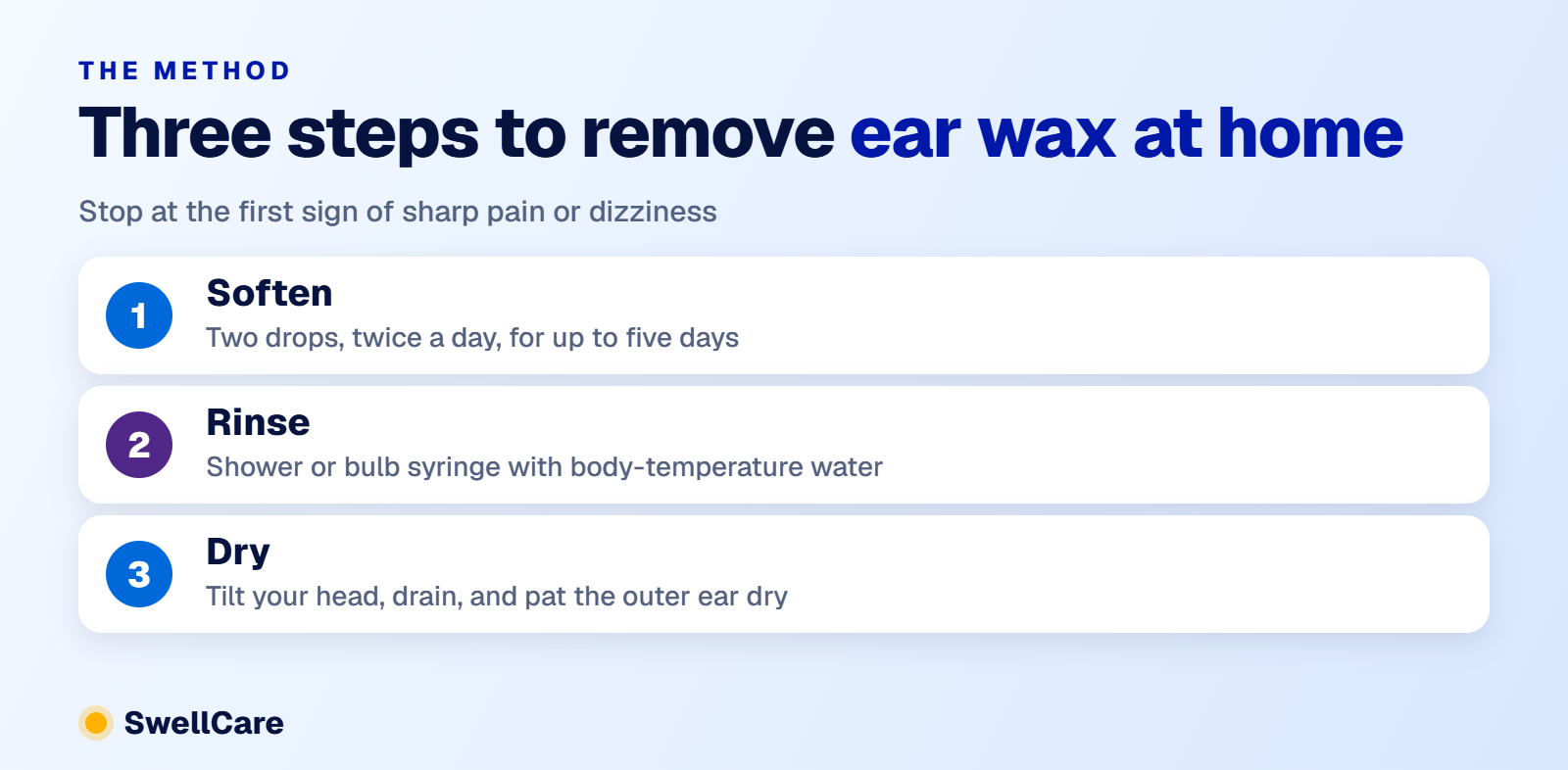
Step 1: Soften the wax
Warm your chosen liquid to body temperature by holding the bottle in your hands for a couple of minutes. Cold or hot liquid in the ear canal can set off sudden dizziness.
Lie on your side with the blocked ear up. Put two drops into the ear canal. Stay there for about five minutes so the liquid reaches the plug, then sit up and let any excess run onto a towel.
Repeat twice a day for up to five days. If you’re not better by then, more drops won’t help.
Mayo Clinic lists mineral oil, olive oil and saline as softening options a clinician may recommend (Mayo Clinic). Over-the-counter drops, including carbamide peroxide products, also work, and plain hydrogen peroxide mixed half and half with water is the budget option. Either can irritate the ear canal and the skin around the drum, so follow the label to the letter.
Step 2: Rinse gently with body-temperature water
After a day or two of softening, a warm shower often does the job. Let water run toward the ear canal, tilt your head so it drains out, and stop. No jets, no high pressure.
Still stuck? Fill the rubber bulb syringe with body-temperature water, tilt your head, pull the outer ear gently up and back to straighten the ear canal, and squeeze the bulb with a soft, steady pressure. Let the water drain out. Tap-warm is fine; just avoid anything you’d call hot or cool.
Irrigation has real risks. The AAFP review lists pain, skin injury and an outer ear infection (acute otitis externa) as the adverse effects, which is why you go slowly and stop at the first sign of pain.
Step 3: Dry the ear and stop if anything feels wrong
Tilt your head to the other side and let the last of the water leave. Pat the outer ear dry with a towel.
Stop right away and call a clinician if you feel sharp pain, sudden dizziness, a new ringing or notice blood or pus. Those aren’t normal parts of the process.
A fair warning: tightly packed earwax often doesn’t move after one round. If symptoms haven’t improved after a week of home care, Kaiser Permanente’s guidance is to call your doctor, and it notes that a plug this tight usually needs a clinician to remove it.
What not to put in your ear
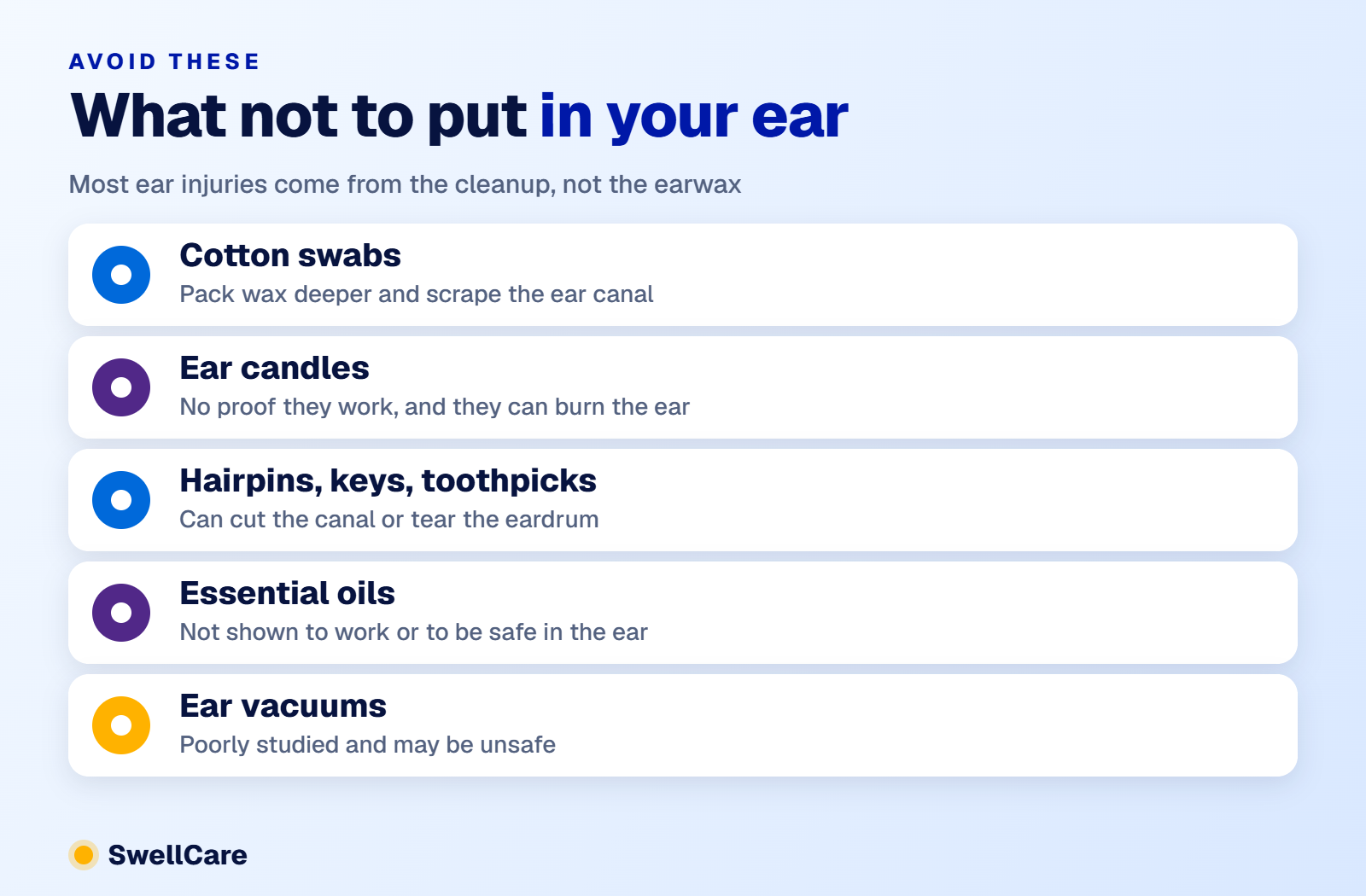
Most ear injuries from earwax come from the cleanup, not the earwax. Here’s the short list and why each one fails.
| Don’t use | What can go wrong |
|---|---|
| Cotton swabs | Pack earwax deeper, scrape the ear canal, and can lead to deeper injury |
| Ear candles | No proof they remove earwax, and they can burn the ear or injure deeper structures |
| Hairpins, keys, toothpicks, paper clips | Cuts in the ear canal, a hole in the eardrum, even displaced hearing bones |
| Essential oils (tea tree, garlic) | Not shown to work or to be safe in the ear |
| Over-the-counter ear vacuums | Poorly studied and may not work or may be unsafe |
The AAO-HNSF is blunt about cotton swabs and sharp objects: they usually push earwax deeper, and the damage can be temporary or permanent. It also says there’s no evidence ear candles remove impacted earwax. The FDA agrees, calling ear candling ineffective and risky.
One more habit worth dropping: over-cleaning. Scrubbing the ear canal every day can irritate the skin and invite bacteria and infection.
Who should skip home ear wax removal
Home removal is for healthy adult ears with an open, comfortable ear canal. Skip the drops and the syringe and see a clinician first if any of these apply:
- You have an ear infection, ear pain or drainage. Mayo Clinic says not to use ear drops in an infected ear unless a clinician recommends them.
- You know or suspect you have a hole in your eardrum, or you’ve had ear tubes or ear surgery.
- You have a narrow ear canal or bony growths in the ear canal. The AAFP review says these affect how earwax is managed.
- Your symptoms came on after a loud noise, a head injury or a sudden drop in hearing.
- The person with the blockage is a young child, or someone who can’t tell you what they feel.
Kids deserve their own note. A child’s ear canal is smaller and a young child can’t always tell you what hurts, so call the pediatrician instead of experimenting. For a toddler who’s pulling at an ear, that call comes first.
When to see a doctor for ear wax
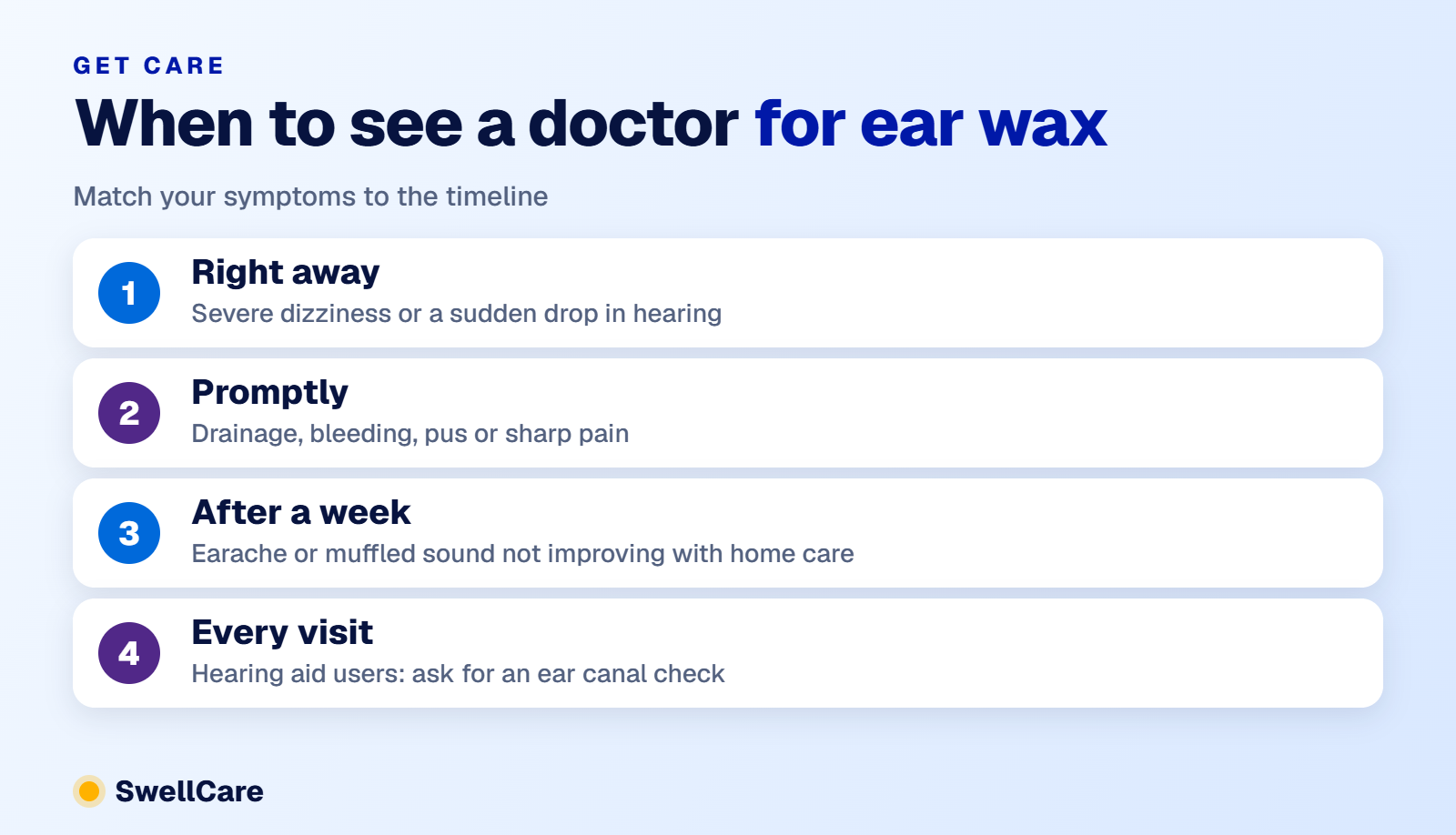
A clinician is the safest route when home care fails, and often the first stop for people who get repeat blockages. Call your doctor if earache or muffled sound hasn’t improved after a week of home treatment. Get care promptly for drainage, bleeding or pus, and right away for severe dizziness.
Here’s what the visit looks like. The clinician looks into your ear canal with an otoscope, a lighted magnifier, then removes it with a small curved tool called a curet, with gentle suction, or by flushing with warm water or saline. Your chart may call it impacted cerumen. They can also tell you whether earwax was the real problem.
If you wear hearing aids, ask for an ear canal check at routine visits. The AAFP guidance says people with hearing aids should have their ears looked at for earwax at every visit, because blockage changes how the devices sound and work.
Prone to buildup? Mayo Clinic says repeat buildup may call for a checkup once or twice a year for cleaning, so ask your doctor.
How to keep wax from building up again
Prevention is mostly about leaving things alone. Keep cotton swabs for the outer ear only, never the ear canal, and wipe with a damp cloth. Clean hearing aids and earbuds regularly so your ears stay clear. If you’re a repeat offender, a clinician-guided routine with occasional softening drops can help.
Skip the daily ear-cleaning ritual. Your ears are built to look after themselves.
Get ear symptoms checked with SwellCare
Not sure whether it’s earwax, an infection or something else? That’s a good time to talk to a clinician before you put anything in your ear canal.
SwellCare’s urgent care team can talk through your symptoms, help you tell a simple earwax blockage from signs of infection, and point you to the right next step. Be clear on the limit: earwax removal itself needs hands-on tools, so if it comes to that, we’ll tell you to see someone in person rather than guess. You can see the conditions we cover and read how it works before you start. Prescriptions are never guaranteed, and SwellCare is not for emergencies.
Questions people ask about ear wax removal
How does Debrox work?
Debrox is a brand of carbamide peroxide ear drops. Carbamide peroxide breaks down into hydrogen peroxide and urea, and the effect is to soften hardened earwax so it can loosen and drain. Mayo Clinic notes these drops can irritate the eardrum and ear canal, so follow the directions and don’t use them if you suspect an infection or a hole in the drum.
What are the risks of ear wax removal?
The main ones are pain, skin injury in the ear canal and outer ear infection, according to the AAFP review. Picking at the ear with sharp objects adds the risk of a torn tympanic membrane and permanent damage. Gentle softening drops carry the lowest risk when your eardrum is intact.
Is olive oil safe for ear wax removal?
For most people with an intact eardrum, yes. Mayo Clinic lists olive oil and mineral oil among home softening options. Use body-temperature oil, two drops at a time, and skip it if you have ear pain, drainage or a possible hole in the drum.
Is ear wax buildup genetic?
Partly. Your earwax type, wet or dry, is set by a variant in the ABCC11 gene. Wet earwax tends to be stickier, though that’s a general pattern and not a rule. Anatomy and habits like using cotton swabs or wearing hearing aids matter just as much.
How long does it take for ear wax drops to work?
Plan on two to five days. Kaiser Permanente’s guidance is two drops twice a day for up to five days. If pain or muffled sound is still there after a week of home care, call your doctor rather than extending the routine.
Can I use a hair dryer to dry my ears?
A towel is the safer choice, and it’s usually enough. If you’d rather use a dryer, keep it on its lowest and coolest setting and hold it at arm’s length, never close to the ear.
Trusted references
Public-health, research, and medical-society resources related to this guide.