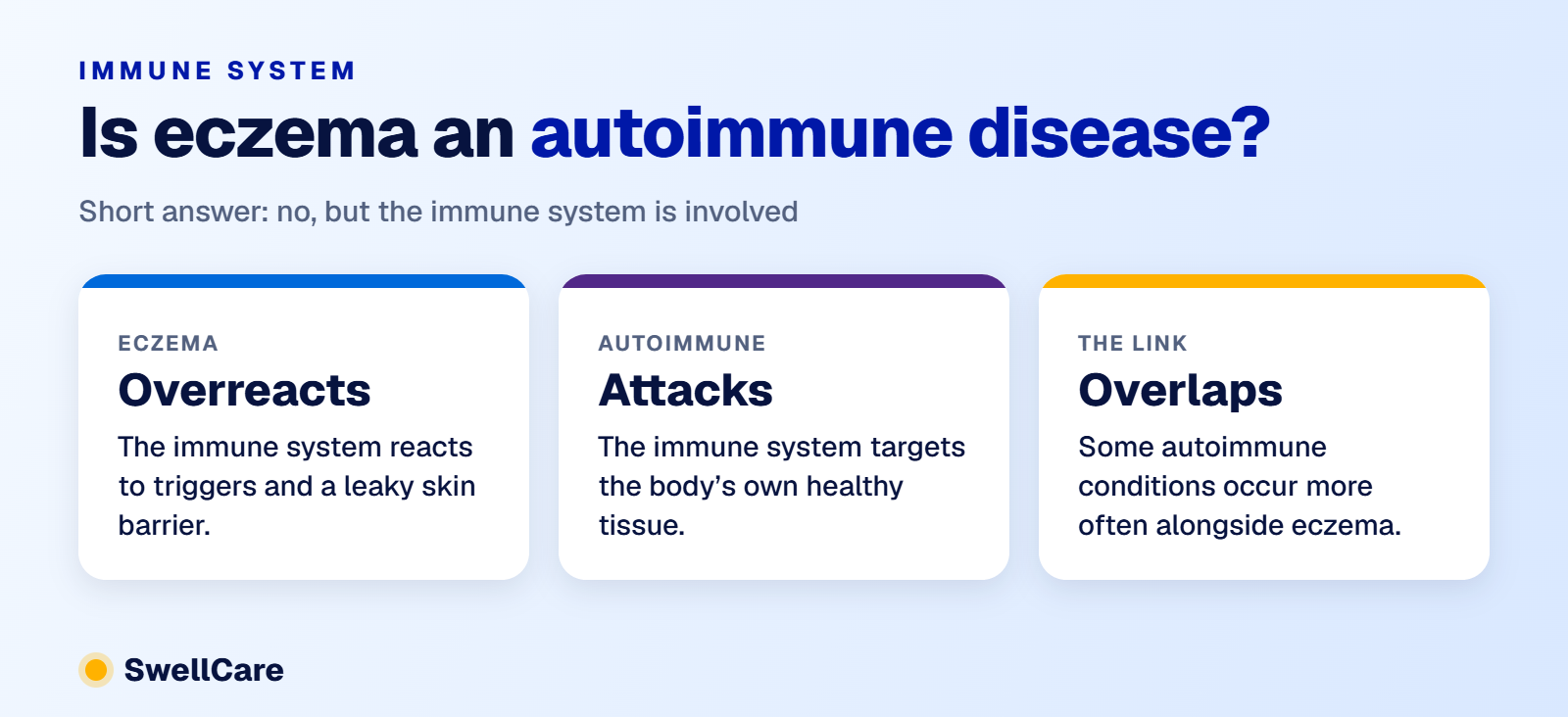
Short answer: no. Eczema isn’t classified as an autoimmune disease. But your immune system is deeply involved, and that’s exactly why the question keeps coming up.
Maybe a doctor said “immune” in the same breath as “rash.” Maybe a late-night search sent you down a rabbit hole. Either way, the confusion makes sense. So, is eczema an autoimmune disease? Not in the textbook sense. Eczema is an inflammatory skin condition, and most of it comes from an overactive, allergic-type immune response that leaves skin dry and red, with an itch you can’t ignore. Below you’ll find the clear version with sourced numbers, plus what to do when your symptoms won’t settle.
Is eczema an autoimmune disease? The short answer
Eczema is an umbrella word for several inflammatory skin conditions. Symptoms vary, but the classic ones are dry skin and intense itch, along with rough red patches. It often shows up alongside asthma or hay fever. The most common type is atopic dermatitis. The American Academy of Dermatology says it affects about 1 in 10 Americans, and up to 1 in 5 children under 18. That’s a lot of itchy skin.
The National Eczema Association says eczema doesn’t qualify as an autoimmune disorder, even though plenty of people assume it does. The reason is simple. In an autoimmune disease, the immune system turns on the body’s own healthy tissue. In atopic dermatitis, the immune system overreacts to things it should ignore, such as irritants or allergens, and a leaky skin barrier makes that reaction worse.
Same player, different mistake. That’s why doctors keep eczema and autoimmune conditions in separate categories.
How eczema differs from an autoimmune disease
Both involve inflammation, and both can run for years. But a true autoimmune disease works differently from the start.
| Eczema (atopic dermatitis) | Autoimmune disease | |
|---|---|---|
| What the immune system does | Overreacts to triggers, with allergic-type signals | Attacks the body’s own healthy cells |
| Where it shows up | Mostly the skin | Varies: joints, gut, thyroid, skin, nerves |
| Barrier | Weakened, often by gene changes | Usually intact at the start |
| Typical symptoms | Dry skin, itch, red patches | Fatigue, joint pain, organ-specific problems |
| Typical examples | Atopic dermatitis, contact dermatitis | Lupus, rheumatoid arthritis, type 1 diabetes |
| Main goal of care | Repair the barrier, calm the immune response | Dial down the immune attack |
If you want one test to remember, ask what the immune system is aiming at. With eczema, it’s reacting to outside triggers. With autoimmune disease, it’s aiming at you.
Why so many people think eczema is autoimmune
Fair question, because the science isn’t tidy. Three separate findings feed the confusion, and each one deserves a closer look.
First, eczema is clearly immune-driven. A 2014 study led by researchers at Mount Sinai showed that the drug dupilumab, which blocks two immune signals, IL-4 and IL-13, reversed skin abnormalities within four weeks and improved symptoms compared with placebo. That’s type 2 inflammation at work, and it’s why newer biologic drugs exist.
Second, some people with severe, long-running eczema carry IgE autoantibodies, which are antibodies aimed at the skin’s own proteins. A 2020 review in Clinical and Translational Allergy says these may help keep the disease going. It doesn’t conclude that atopic dermatitis is autoimmune, and it treats their clinical meaning as still unclear.
The third reason: eczema and autoimmune disease turn up together more often than chance would predict.
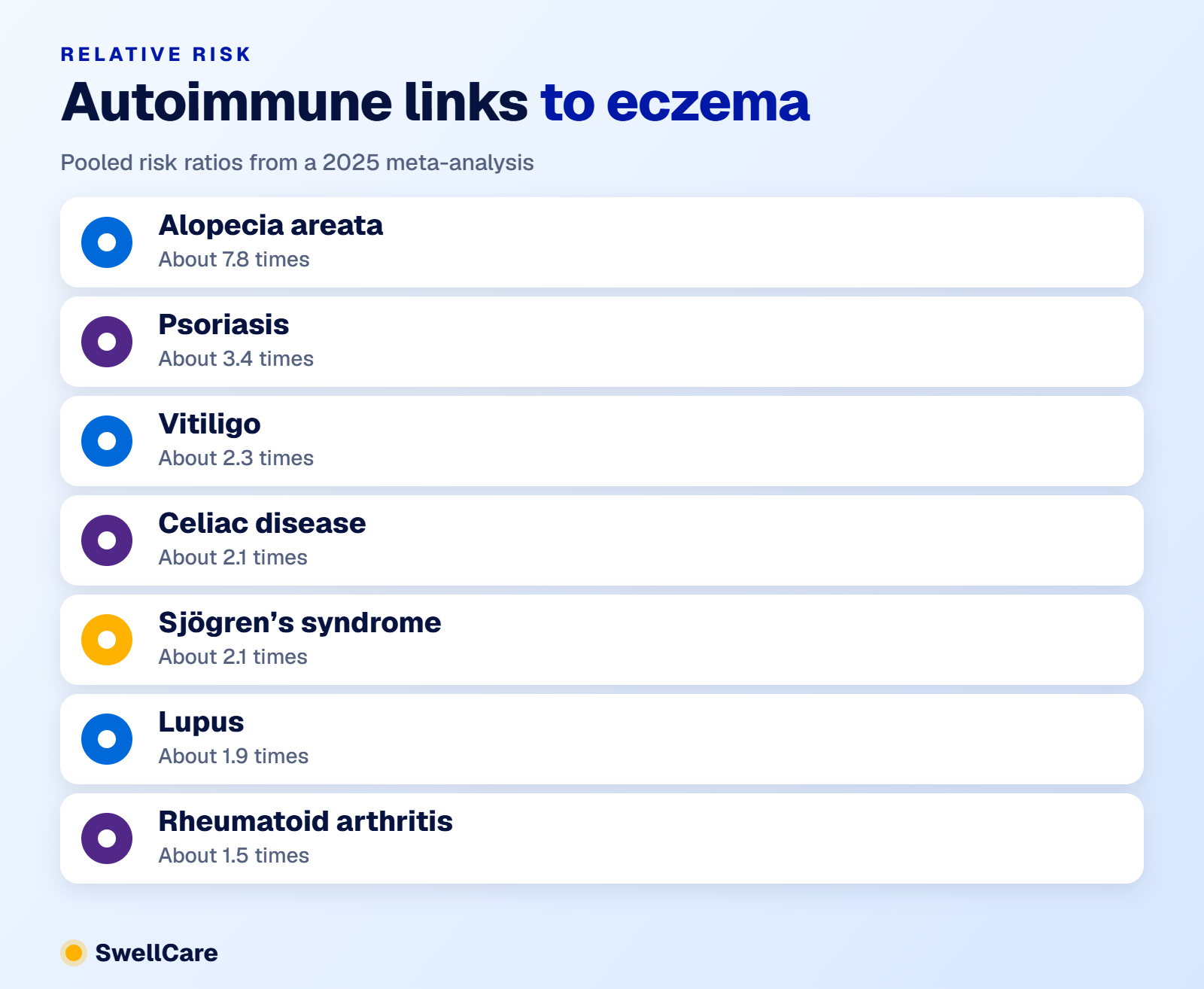
Autoimmune conditions that can show up alongside eczema
A 2025 meta-analysis of 26 studies in Frontiers in Immunology found higher rates of several autoimmune conditions in people with atopic dermatitis. Alopecia areata showed the strongest link, followed by psoriasis, vitiligo, celiac disease and Sjögren’s syndrome. Rheumatoid arthritis and lupus were also elevated, though less sharply.
A UK primary-care study of about 174,000 people with newly diagnosed atopic dermatitis found a 28% higher risk of new autoimmune disease in total, and the risk climbed with severity. Severe eczema carried nearly double the risk.
Here’s the catch. These are associations, not proof that eczema causes them. The meta-analysis authors report very high variation between studies, and shared genes and barrier problems are among the possible explanations. Most people with eczema never develop an autoimmune condition.
Patchy hair loss from alopecia areata and white patches from vitiligo are the signs worth watching for. Some autoimmune conditions also cause rashes that look like eczema, so symptoms alone can’t settle the question.
What actually drives eczema flare-ups
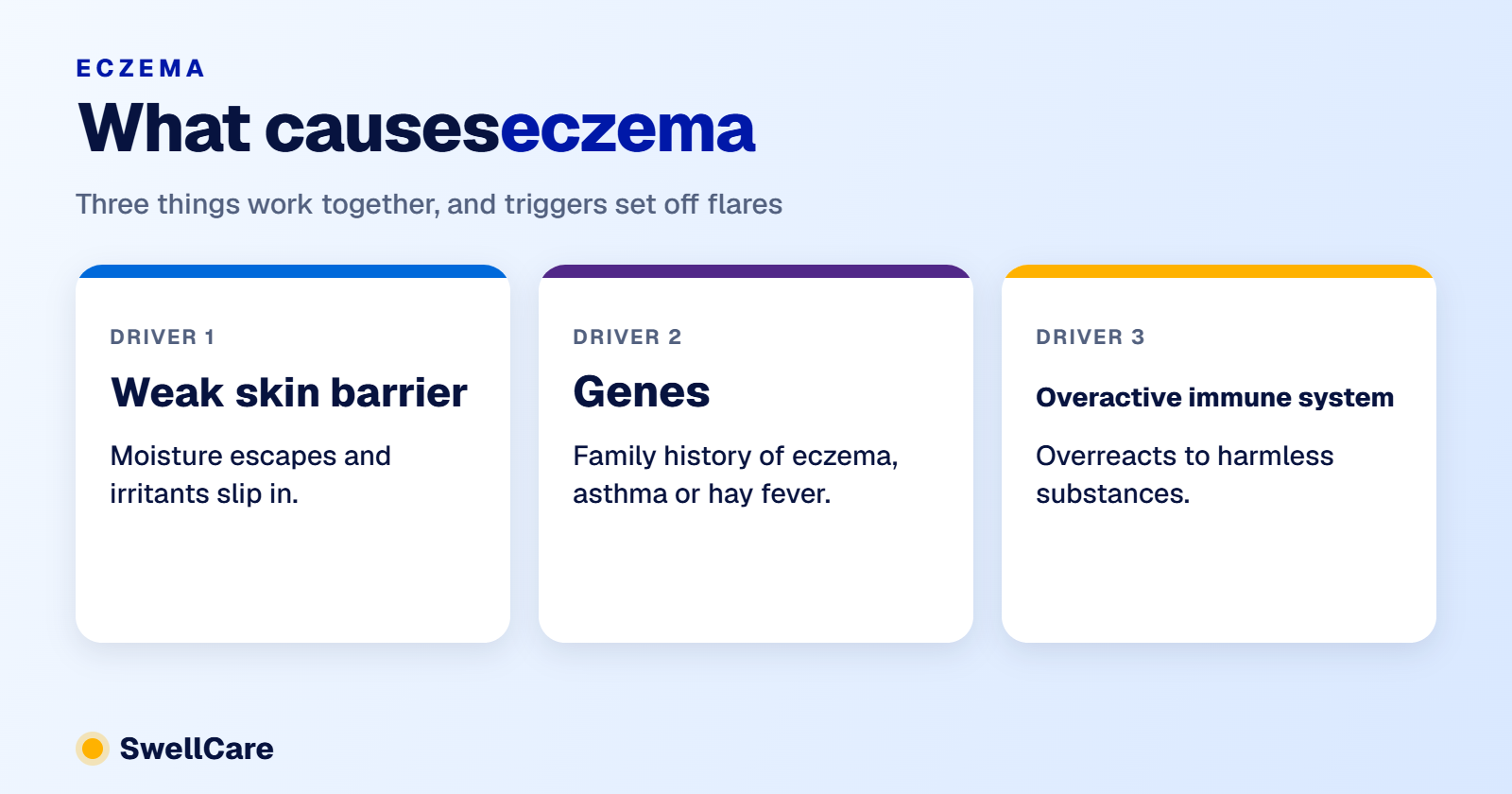
If it isn’t an immune attack on your own tissue, what’s going on? Think of a two-part problem: a skin barrier that leaks, and an immune system that overreacts once irritants get into the skin.
Your skin barrier and your genes
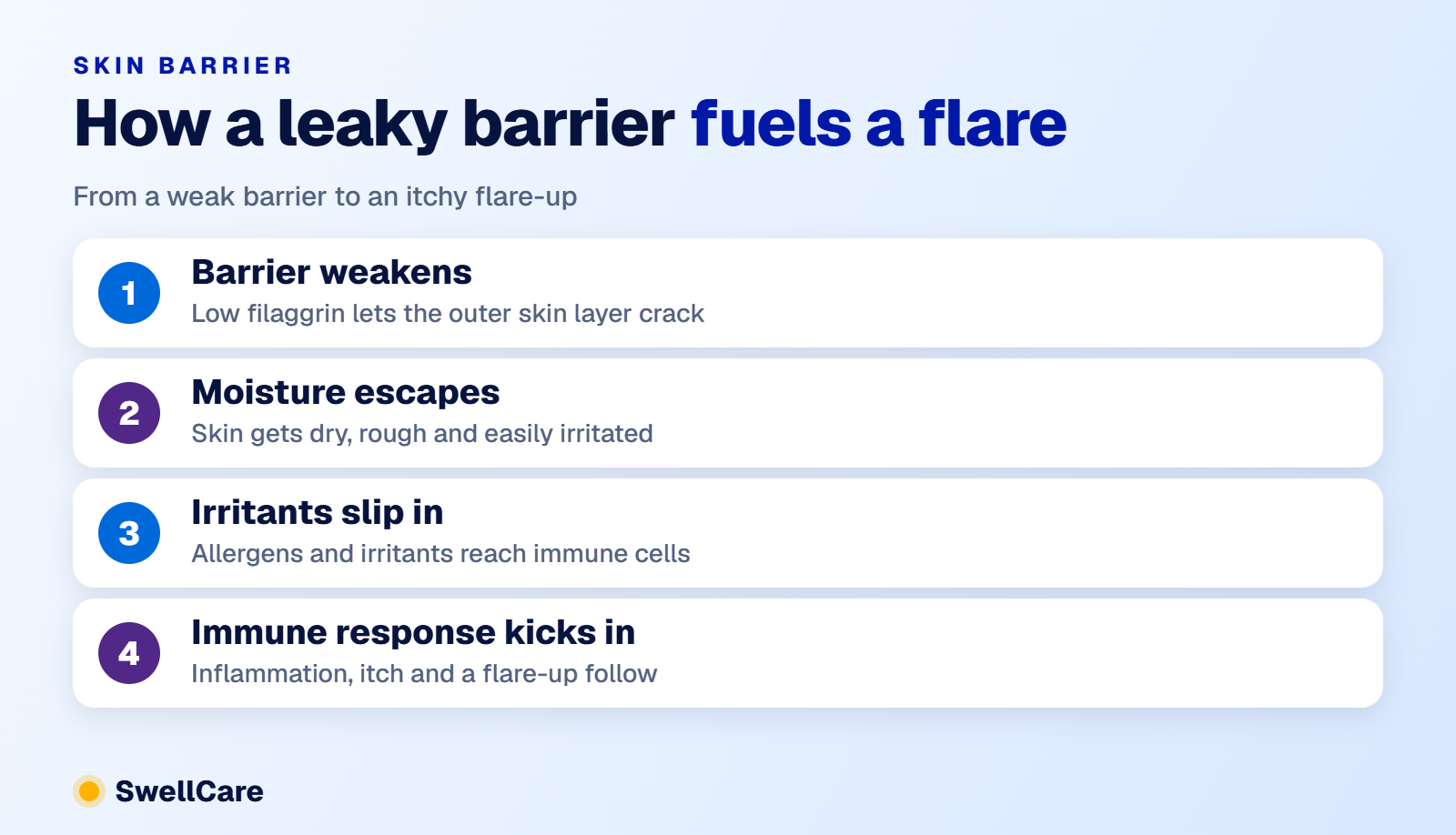
Many people with atopic dermatitis carry a genetic change in the gene for filaggrin, a protein that helps hold the outer skin layer together. Filaggrin changes are among the strongest known genetic risk factors for eczema. When filaggrin runs short, the barrier cracks and moisture escapes, so dry skin follows. Allergens and irritants then slip through, and the immune response kicks in. Genetic risk isn’t destiny, but it loads the dice, especially if asthma or hay fever runs in the family.
Common eczema triggers
Triggers differ from person to person. The usual suspects:
- Irritants such as fragrance-heavy soaps or scratchy wool
- Allergens such as dust mites or pet dander
- Stress and poor sleep, which can make an itchy cycle worse
- Dry air and sweat, plus sudden temperature swings
Contact dermatitis, a related type, flares when skin touches something it reacts to, like nickel. Keeping a short diary of flare-ups for two weeks often reveals patterns you’d otherwise miss. For a deeper look, see our guide on what causes eczema.
What this means for your treatment
Here’s the practical upside of getting the answer right. Eczema isn’t treated like an autoimmune disease, so the plan is different. Eczema is a chronic inflammatory skin condition, so treatment depends on your symptoms and focuses on two jobs: rebuilding the barrier and calming the flare.
Daily moisturizer is the foundation of eczema treatment. A thick cream or ointment applied within minutes of bathing holds in water better than a thin lotion, and a fragrance-free moisturizer keeps dry skin from cracking. For flares, a clinician may add a topical prescription treatment to quiet inflammation. Keep moisturizing between flare-ups, too. Stubborn or widespread cases may call for a dermatologist and, in some people, biologic therapy that blocks the IL-4 and IL-13 signals mentioned earlier.
Avoiding your triggers matters as much as any cream, and stress management helps because stress can feed the itch-scratch cycle. Relief is realistic for many people once the right routine and treatment are in place.
One more thing. If you notice patchy hair loss, white patches of skin, joint pain (a classic sign of rheumatoid arthritis), or digestive symptoms alongside your eczema, mention it. Those can point to a separate autoimmune condition worth checking.
When to see a doctor about eczema
Plenty of eczema can be managed at home, but don’t tough out these symptoms:
- Oozing, honey-colored crusts, or a rash that’s suddenly painful, which can signal infection
- A fever with a spreading rash
- Itch that wrecks your sleep, night after night, for more than a week or two
- No improvement after a couple of weeks of good skincare
- A rash that comes with joint pain, fatigue or hair loss
Severe symptoms, trouble breathing or facial swelling need emergency care, not a screen.
Get a clinician’s read on your eczema with SwellCare
You don’t have to wait weeks for answers. SwellCare’s online urgent care offers clinician-led, non-emergency care by video or chat. A clinician can review your symptoms, explain what can be handled online, and tell you what should happen next, including when to see a dermatologist in person. You can see how it works or browse more guides in the SwellCare Health Journal. Prescriptions are never guaranteed, and SwellCare is not for emergencies.
Questions people ask about eczema and autoimmune disease
Is eczema an autoimmune disease?
No. Eczema, most often atopic dermatitis, is an immune-driven inflammatory skin condition, but it isn’t classified as autoimmune. The immune system overreacts to triggers and a weak skin barrier instead of attacking healthy tissue. People with eczema do face a higher chance of some autoimmune conditions, which is a separate issue.
Is atopic dermatitis the same as an autoimmune disease?
No. Atopic dermatitis is driven mainly by type 2, allergic-type inflammation plus a leaky barrier in the skin. Autoimmune diseases like lupus involve the immune system attacking the body’s own cells. Researchers are still studying autoreactive antibodies in severe atopic dermatitis, so the picture continues to evolve.
Can eczema turn into an autoimmune disease?
Eczema isn’t considered to turn into an autoimmune disease, but the two can occur together. Studies link atopic dermatitis with higher rates of alopecia areata and vitiligo, especially in severe cases. Shared genes and barrier problems are possible explanations. Ask your clinician about screening if you have a family history.
Is eczema contagious?
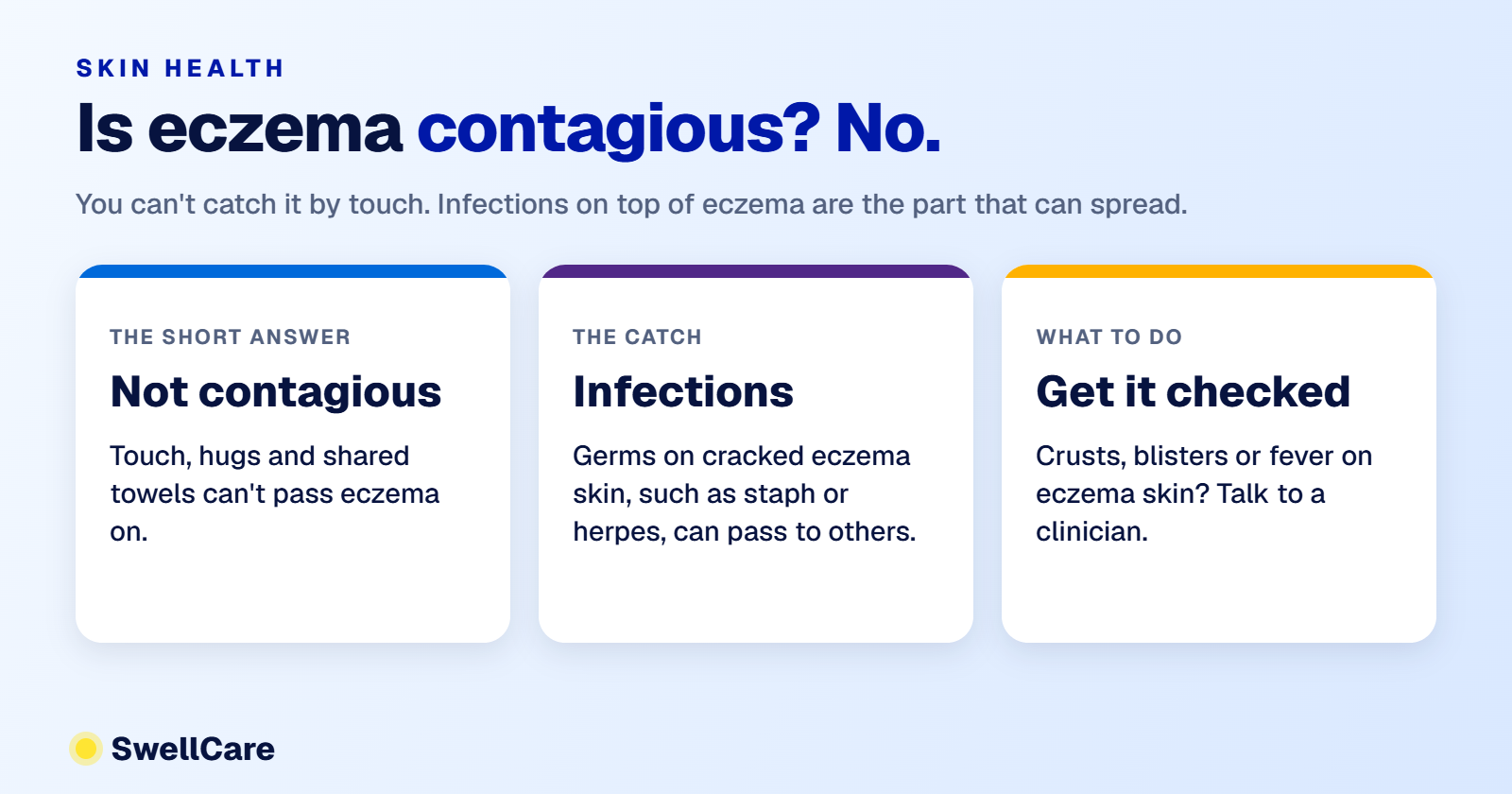
No. You can’t catch eczema from someone else, and you can’t pass it on by touch. Infections can get into broken, scratched skin and spread. That’s one reason oozing, crusted or painful patches deserve a prompt clinical look. Our guide on whether eczema is contagious covers it in more detail.
What is the difference between eczema and psoriasis?
Eczema usually looks red and dry, and it itches intensely, often in elbow and knee creases. Psoriasis tends to form thicker, silvery-scaled plaques and is an autoimmune disease. They can look alike, so a dermatologist or clinician should confirm which one you have before treatment starts.
Trusted references
Public-health, research, and medical-society resources related to this guide.
- American Academy of Dermatology: Eczema statistics ↗
- National Eczema Association: Is eczema an autoimmune disease? ↗
- Mount Sinai: Atopic dermatitis found to be immune-driven (2014) ↗
- Clinical and Translational Allergy: IgE autoantibodies in atopic dermatitis (2020) ↗
- Frontiers in Immunology: Atopic dermatitis and autoimmune disease meta-analysis (2025) ↗
- University of Oxford: Atopic dermatitis and autoimmune disease risk ↗