You woke up with a normal temperature for the first time in a while. You feel almost human. Your inbox, of course, has other plans.
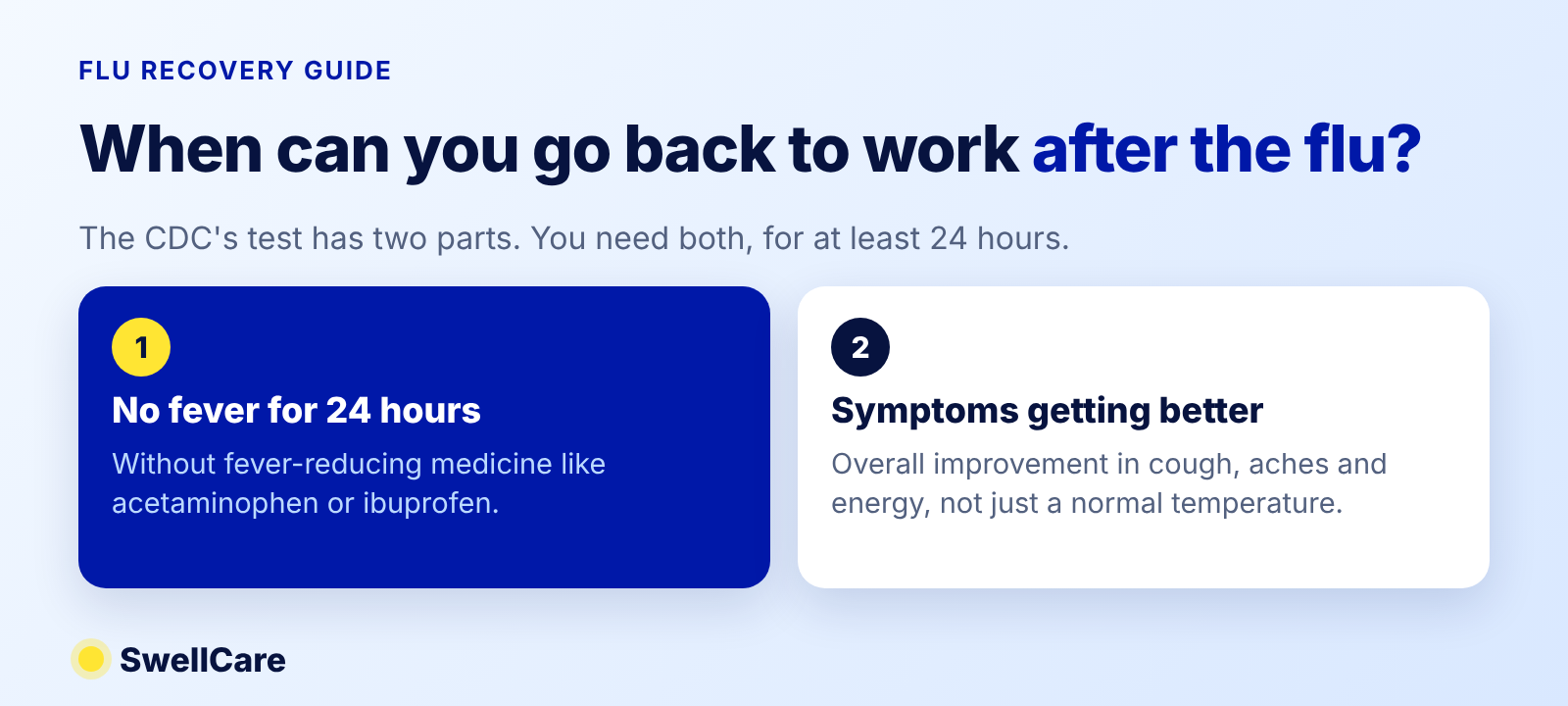
So, when can I go back to work after the flu? The CDC’s guidance is blunt. Stay home until you’ve been fever-free for at least 24 hours without fever-reducing medicine, and your symptoms are getting better overall. You need both. A normal reading alone doesn’t count.
Most people miss in one of two directions. They rush back the morning they finally cool down, still spreading the flu virus and running on fumes. Or they wait for the last cough to vanish and lose time they didn’t need to. Here’s where the line really sits.
When can I go back to work after the flu? The short answer
Think of it as a two-key lock. Key one is time: 24 hours of normal temperatures, and no help from acetaminophen or ibuprofen. Key two is direction. Your cough, body aches and energy should be trending up.
The medicine part matters more than people expect. If you took a pain reliever at 7 a.m. and feel fine at noon, that’s the pill talking. The clock only starts once the drug has worn off and your temperature stays normal alone.
Never had a fever at all? That happens, because not everyone with the flu runs one. Lean on the second key instead. Wait until your symptoms have clearly improved for a full day, then plan your return to work. These keys apply to school too, which helps if you’re also juggling sick children at home. The flu rarely follows a schedule, so go by the keys, not the calendar.
If the fever or the symptoms come back after you’ve returned, stay home again. That’s CDC advice, and it’s good manners too.
How long you stay contagious with the flu
Here’s the catch. A cool forehead doesn’t mean you’ve stopped being contagious.
According to the CDC, the flu virus spreads most easily in the first three days of illness. Healthy adults can pass it on from a day before symptoms start to about five to seven days after they get sick. Young children, who swap germs at school all day, and people with weakened immune systems can stay contagious longer.
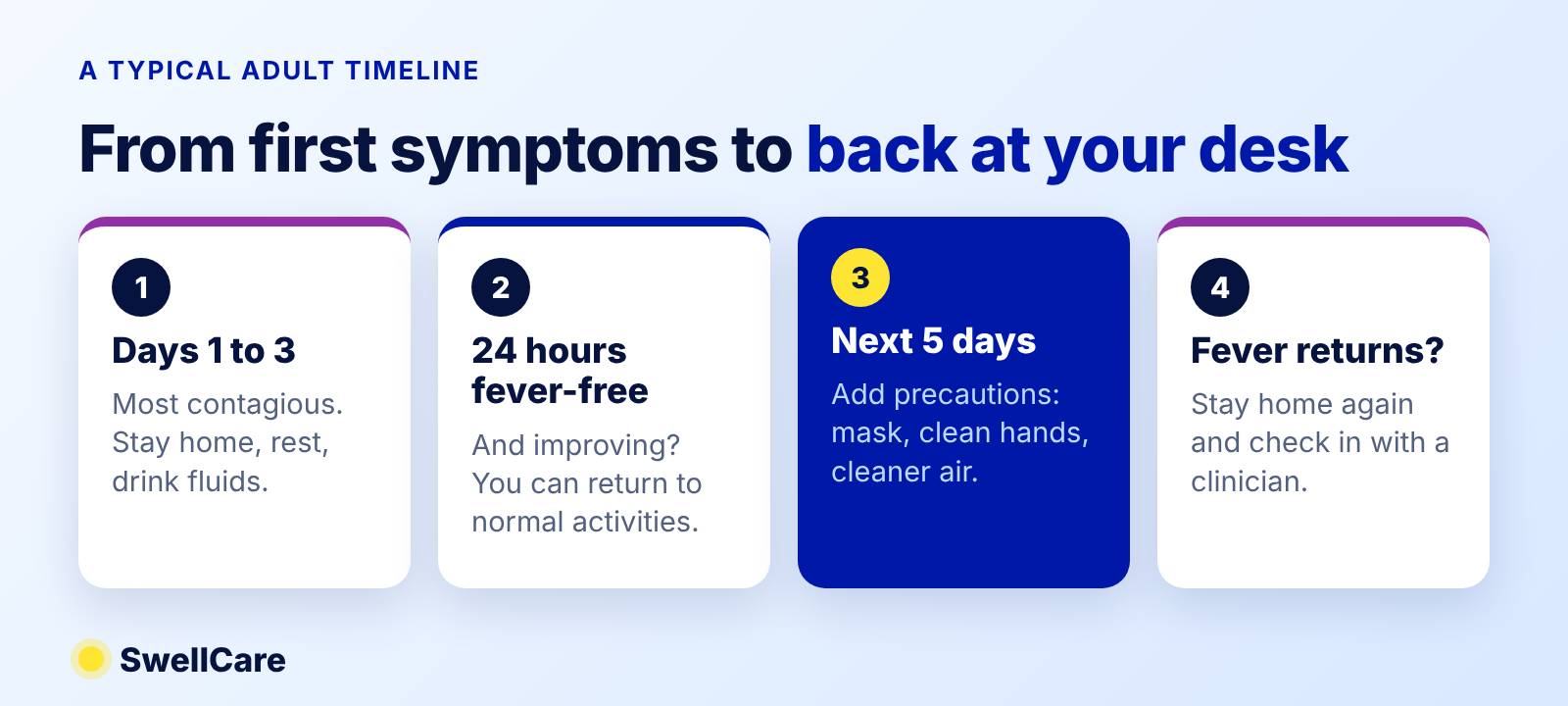
That’s why the CDC pairs the 24-hour rule with a five-day stretch of added precautions once you’re back. You’re past the worst of it, but you could still spread the virus around the workplace to a coworker with asthma, a new baby, or a chemo schedule. Flu can look a lot like COVID-19 at first, and the same return habits help with both.
What a lingering cough and fatigue mean for your first week back
Most people get through this illness in a few days to under two weeks, per the CDC’s symptom guidance. The thermometer usually settles first. Cough and fatigue like to overstay, and recovery isn’t always a straight line. Your body is still clearing the virus, and even a short illness drains the tank.
So how do you judge it? Ask two plain questions. Is the cough easing or getting deeper? Can you get through a morning of work without needing to lie down?
If the answers are “easing” and “yes,” you’re probably fine to go back, even with a tickle left. If you’re still exhausted after a short walk, give yourself another day of rest and plenty of fluids. Hydration is boring, and it works. If body aches are fading and your energy is creeping up, that’s the pattern you want to see.
Pushing too soon has a cost. Recovery stalls when you skip rest, and you may feel worse by Wednesday than you did on Monday.
A safe plan for going back to work
Use this as your checklist on the morning you plan to return. Parents juggling school runs and their children’s own sick days feel this one most.
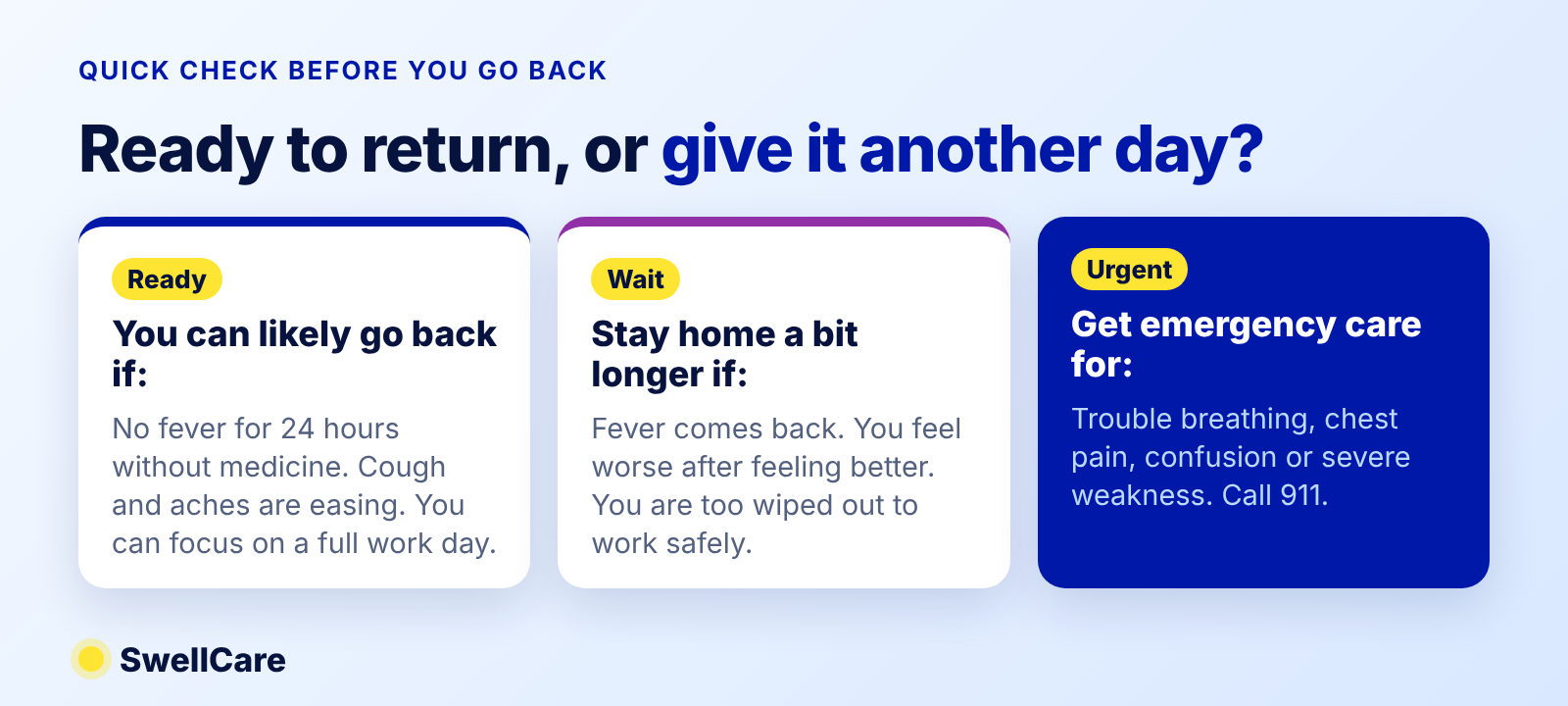
- Check the clock honestly. Twenty-four hours means twenty-four hours, with no fever-reducing medicine in your system.
- Rate your energy. If you can focus for a few hours, you’re close. Keep drinking fluids.
- Tell your employer your plan. Ask whether a remote day or a shorter first day is possible. Many managers say yes.
- Take the added precautions for five days. Wear a well-fitted mask around others, wash hands often, keep up basic hygiene at shared desks, and open a window if you can. Wash your hands after every sneeze so the virus doesn’t follow you into the office.
- Watch for a relapse. A returning fever means you stay home again.
What about a doctor’s note? Some employer policies ask for one, and they differ, so check yours before you head back to the workplace. If you can’t get into an office, a telehealth visit is often the fastest route, and the clinician decides what documentation fits your situation.
When to get care instead of going back
Sometimes the answer isn’t a return date at all. The CDC lists emergency warning signs in adults: trouble breathing, persistent chest pain or pressure, confusion, severe weakness, signs of dehydration like not urinating, and symptoms that improve and then return worse. Those can signal pneumonia or another complication. Call 911 or go to the ER.
You’re at higher risk if you’re 65 or older, pregnant, or living with asthma, diabetes or heart disease. For you, early treatment matters. The CDC says antivirals work best when started within two days of symptoms, so don’t sit on it. Antivirals are prescription-only, so a clinician has to decide if they fit. If your immune system is weakened, call early, or ask about an urgent care visit.
Not sure whether you need an urgent care visit or a few more days of rest at home? And is it flu, COVID-19 or something else? That’s what Swell is built for. A licensed Swell clinician can review what’s going on, tell you what virtual care can and can’t handle, and point you to the right next step, any hour of the day. The screening is free, and a completed consultation is $45. Start with Swell urgent care or see how it works. Swell isn’t emergency care, so for severe symptoms, don’t wait on a screen.
Questions people ask about going back to work after the flu
Can I go to work with the flu if I don’t have a fever?
Not yet, if you’re still ill. The CDC’s test looks at both temperature and direction. If you never ran a fever, stay home until your symptoms have been clearly improving for 24 hours. Feeling worse today than yesterday means you’re not ready.
How many days should you stay home with the flu?
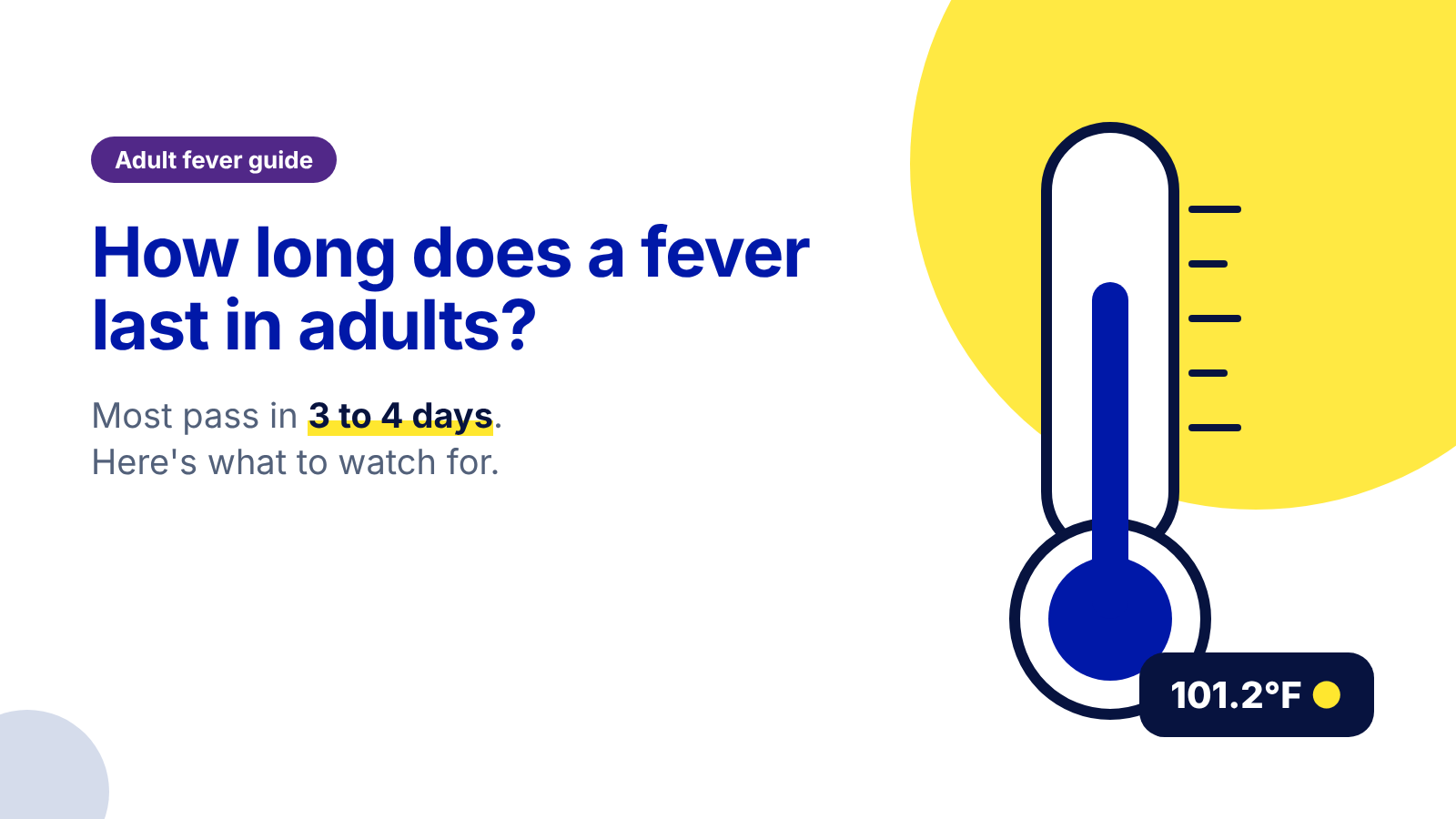
There’s no magic number. Since fever often lasts three to four days, many people stay home around four or five. But the rule runs on the clock and your symptoms, not the calendar. Recovery speed varies, and some people need more time.
Do I need a negative flu test to return to work?
The CDC’s return guidance doesn’t call for one. It goes by temperature and symptoms. Some employers set their own rules, though, so check your policy. If you do test, it’s mainly a way to guide how careful you are around others.
Can you still spread the flu after you feel better?
Yes, it’s possible. That’s the reason for the five-day precaution window. You can spread the virus even once you feel better. A mask helps, and you should wash hands often, especially near anyone at higher risk.
When can my child go back to school after the flu?
The same two-part rule applies to school. Children need 24 hours with no fever, no medicine masking one, and symptoms improving. Kids can stay contagious longer than adults, so keep the precautions going. Check the school’s own policy too, since some set stricter limits for children.
Trusted references
Public-health, research, and medical-society resources related to this guide.