Someone you spent the evening with just texted: they have COVID-19. You feel fine. Mostly. So you dig an old rapid test out of the drawer and wonder if you should swab right now.
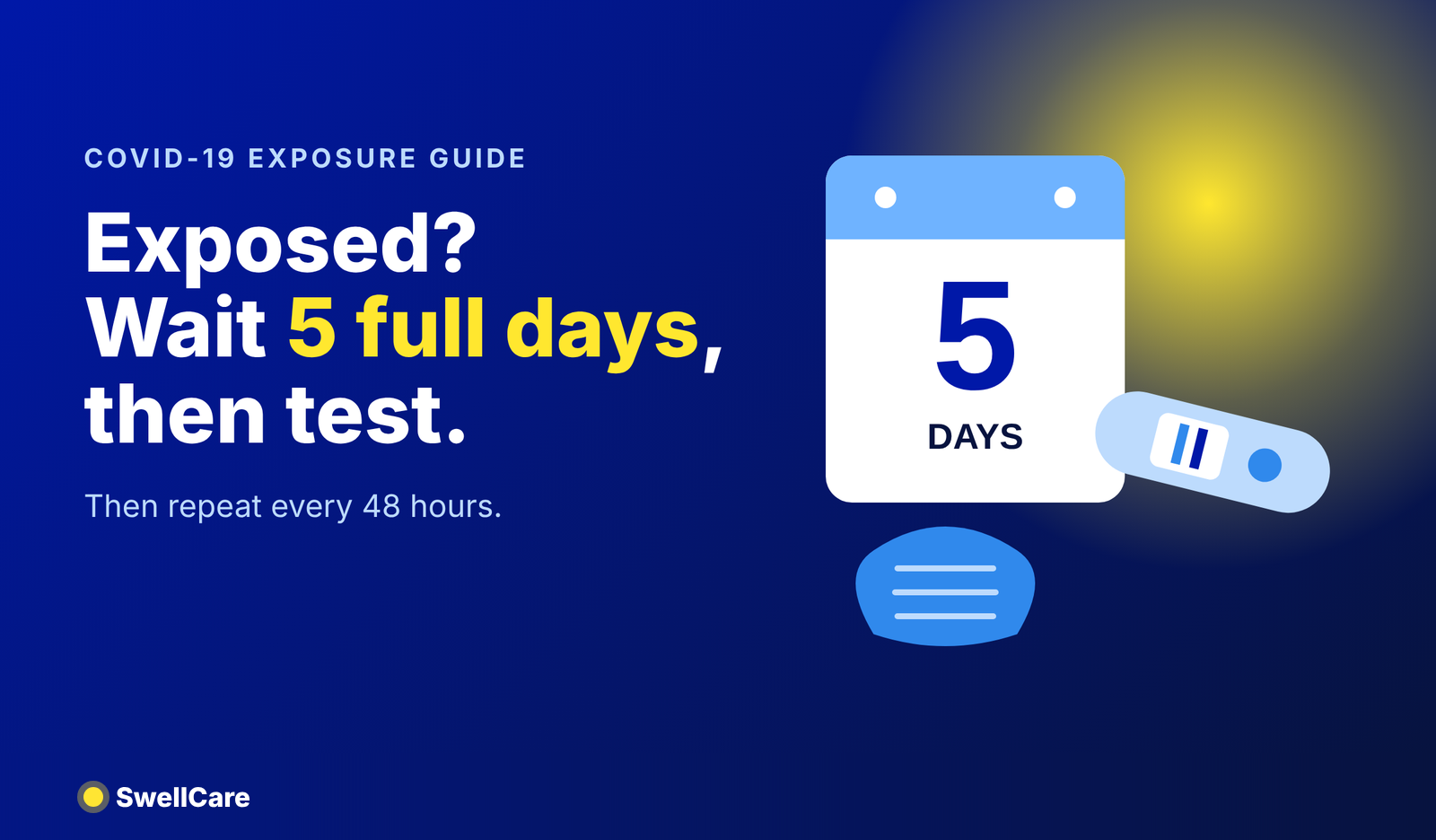
Hold off. If you’re asking how long after COVID exposure should I test, the federal answer is to wait at least 5 full days. Test tonight and a negative result tells you almost nothing, because the virus may not have built up enough to show.
Here’s the schedule, the reasoning behind it, and the point where you should stop swabbing and call a clinician.
So, how long after COVID exposure should I test?
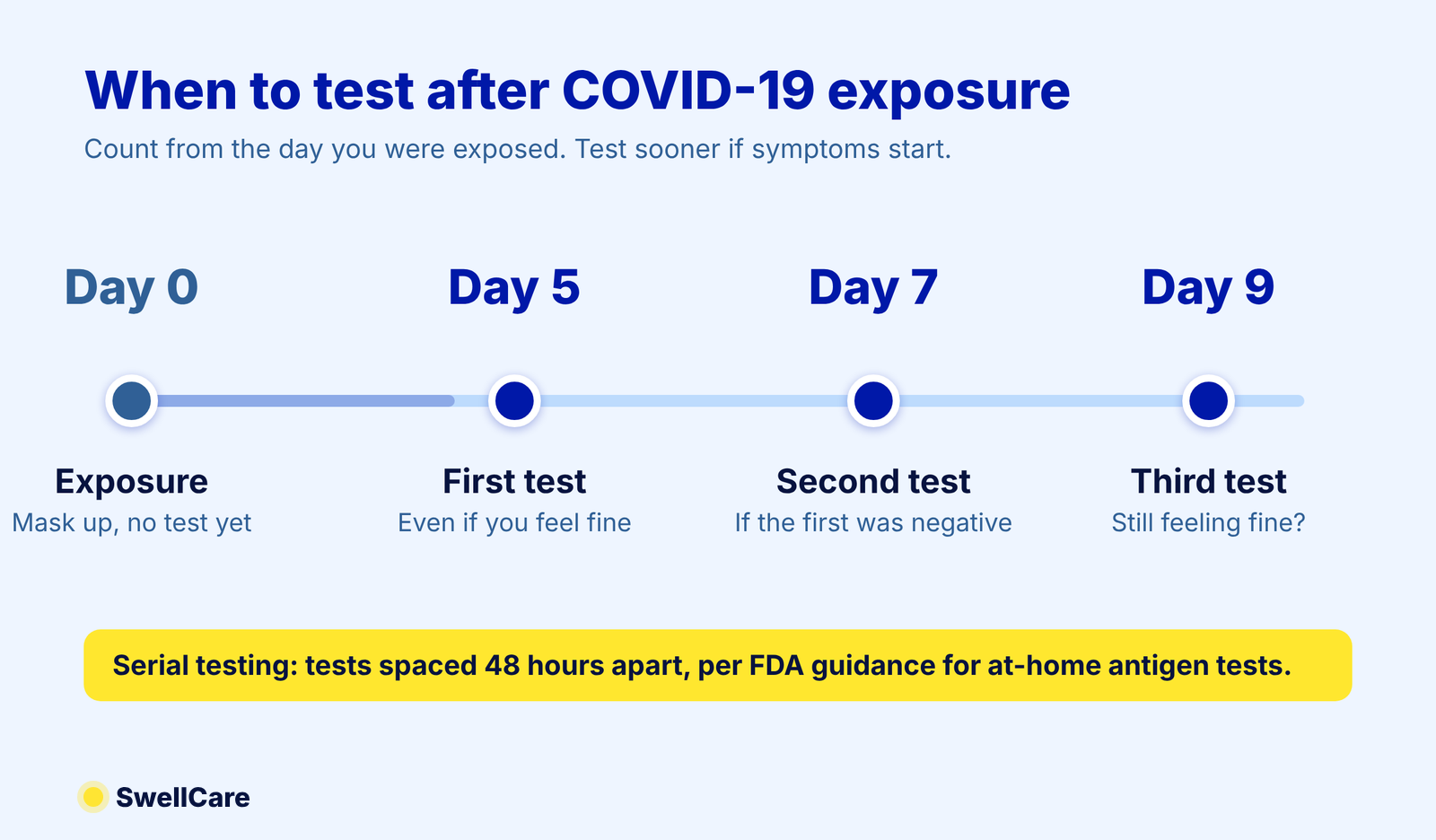
Wait at least 5 full days after your last contact with the person, then take a test. That’s the advice in the FDA’s at-home test FAQ. Day 0 is the day you were exposed. Day 1 is the next morning. Your first test belongs on day 5 or later.
Why not sooner? Blame the incubation period, the gap between catching the virus and having enough of it in your nose to detect. The CDC says symptoms can appear 2 to 14 days after exposure. Early in that incubation period, the virus is still ramping up. A swab can come back negative while you’re already infected with COVID-19. That’s a false negative, and it’s the main reason people get a wrong all-clear.
There’s a second catch. You can spread the virus before you feel anything. Federal health officials note that anyone infected can pass it on, even without symptoms. So “I feel fine” isn’t proof, and neither is one early negative.
Each new variant has shifted the timing a little, which is why guidance leans on a window instead of a single magic day. Treat the incubation period as a range, not a promise.
Your testing timeline, day by day
Count from the day you were exposed. The whole plan runs about nine days. The schedule follows the incubation period, and here’s how it plays out for most people. Write down each test date and its results so you can tell a clinician later.
| When | What to do |
|---|---|
| Days 0 to 4 | Don’t test yet unless you start feeling sick. Wear a mask around others. |
| Day 5 | Take your first COVID-19 test, even if you feel fine. |
| Day 7 | If the first test came back clear, test again. |
| Day 9 | Still feeling fine and still clear? Take a third test. |
| Any day you feel sick | Test right away. If it’s negative, test again 48 hours later. |
This pattern is called serial testing, and it’s what the FDA recommends for at-home antigen tests. If you feel fine, that means three tests in total, spaced 48 hours apart. If you feel sick, it’s two. One clear result can’t rule out an infection. Three results in a row make a much stronger case against COVID-19.
A positive on any of your results counts. You don’t need to confirm it before acting. Treat it as COVID-19.
Sounds like a lot of swabs? It is. It also beats missing an infection and passing it to someone who can’t shrug it off.
Rapid test or PCR: which one fits you?
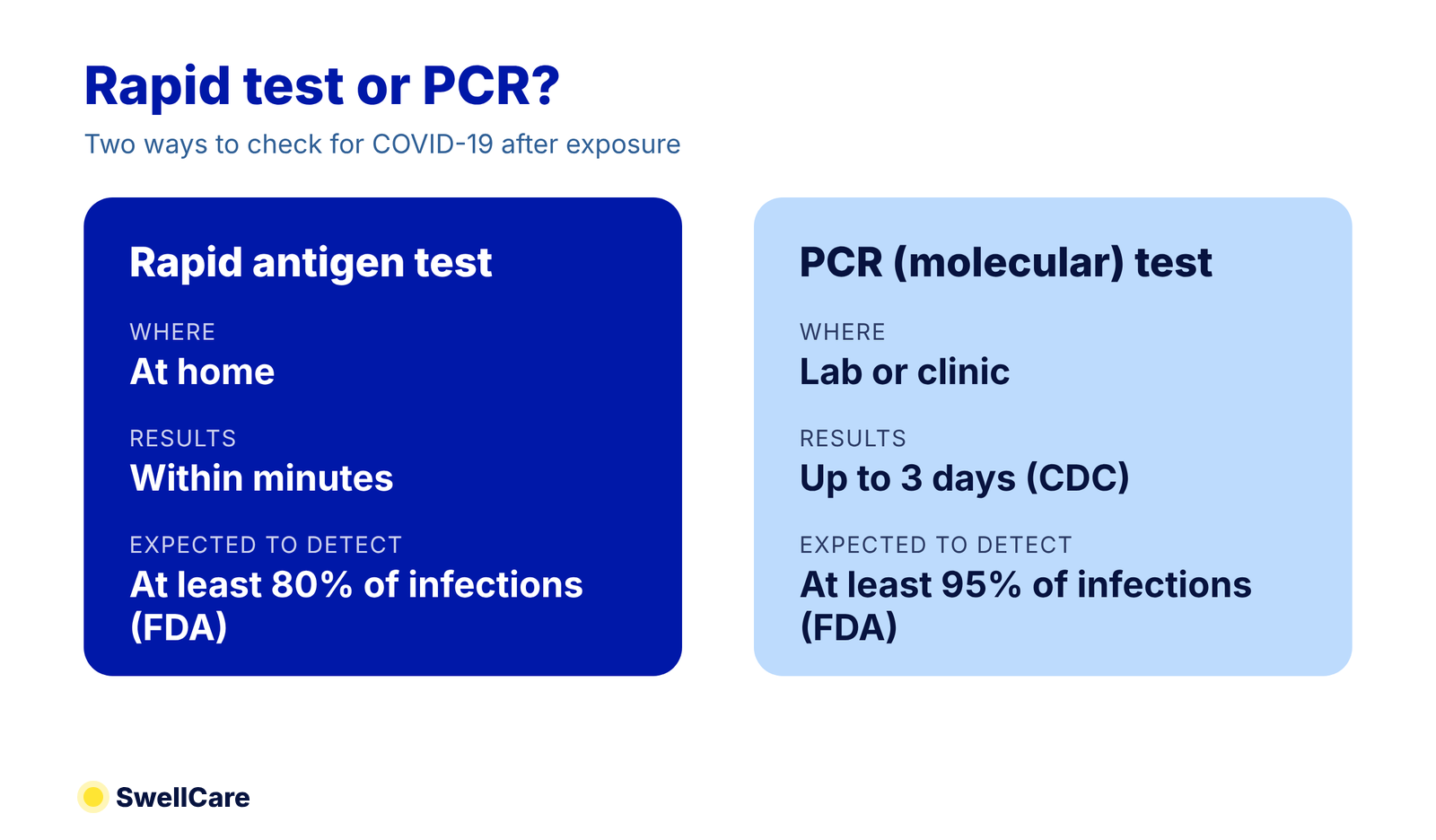
A rapid test is an antigen test you can take at home, and it gives results within minutes. It works best when there’s plenty of virus to catch, which is exactly why timing matters. The FDA’s performance bar for authorized tests is roughly at least 80% detection for antigen tests and at least 95% for molecular (PCR) tests.
New variants come along, but the logic stays the same: test too early and any test can miss the virus. PCR tests run in a lab. They’re more sensitive, but the CDC notes results can take up to 3 days. Pick PCR if you’re at high risk, if you’ll be around someone vulnerable, or if you keep getting negative rapid results while you feel sick.
A few practical points about any at-home test:
- Check the box for an expiration date and storage instructions before you swab.
- If your kit arrived in freezing or very hot weather, leave it unopened at room temperature for at least 2 hours first.
- Follow the swab steps exactly.
What to do while you wait
The first days after exposure aren’t a free pass, so use those days well. If you were a close contact of someone with COVID-19, act as if you might be carrying the virus.
Wear a well-fitting mask around other people, especially indoors. Keep your distance from anyone who’s older or has a weakened immune system. (If you’re also weighing other bugs, see RSV vs a cold in adults.) You’re still inside the incubation period, so act accordingly. And if symptoms show up, isolate at home and start testing that day instead of waiting for day 5. Federal respiratory virus guidance also says to stay home when you’re sick.
What your results mean
A clear result on day 5 is good news. It isn’t final. Retest on day 7 and day 9, two days apart, because a single negative can miss an early infection.
Feeling sick but getting clear results? Don’t relax. Retest in 48 hours, or ask about a PCR.
A positive means you have COVID-19 for all practical purposes. Stay home, share your results with close contacts, and think about whether you need treatment. How long you stay contagious varies by person and by variant, so follow the current CDC guidance for people who are sick.
Your results are one piece of the picture. How you feel, your health history and your exposure all count too.
When to call a clinician right away
Some people shouldn’t wait for a second test. A fever that drags on is one signal (here’s how long a fever lasts in adults). If you’re at high risk of severe illness, call as soon as symptoms start or as soon as you test positive. The CDC lists older age, a weakened immune system, chronic lung or heart disease, and not being up to date on COVID-19 vaccines among the risk factors.
Timing matters here too. Antiviral treatment has to start early. According to the federal treatment guidance, Paxlovid and molnupiravir must begin within 5 days of symptom onset, and remdesivir within 7 days. Federal guidance also says you don’t need a positive test to start treatment, so waiting for a perfect result can eat into your window.
Call 911 for trouble breathing, persistent chest pain or pressure, new confusion, trouble staying awake, or pale, gray or blue lips, nails or skin.
Get care from a clinician, day or night
Exposed and not sure what to do next? Swell can help you sort it out. It’s clinician-led virtual urgent care, open 24/7. You start with a free screening chat, then talk with a licensed clinician by chat or video. A completed consultation is $45 total.
A clinician can go through your symptoms and risk, and talk through whether testing, home care, treatment or an in-person visit makes sense. A screen isn’t always enough, and Swell isn’t for emergencies. Call 911 for emergency symptoms.
Start with Swell urgent care, see how it works, or browse the Health Journal for more guides.
Questions people ask about COVID exposure testing
Can I test negative right after exposure and still have COVID-19?
Yes. Early in the incubation period there may not be enough virus for a rapid test to detect. That’s why the FDA says to wait at least 5 full days and repeat the test 48 hours later if the first result comes back clear.
How long after exposure do symptoms start?
The incubation period for COVID-19 runs from 2 to 14 days, according to the CDC. Plenty of people get sick within the first few days. If that’s you, test as soon as you feel off.
Do I need to test if I have no symptoms?
If you were exposed and you’ll be near older adults, newborns or anyone with a weakened immune system, yes. People without symptoms can still spread COVID-19, so test on day 5 and follow the serial testing schedule.
Should I take a PCR test after a positive rapid test?
Usually not. A positive antigen result is most likely accurate, and you can act on it. Call a clinician if you’re at high risk of severe COVID-19, because treatment works best when it starts early.
Trusted references
Public-health, research, and medical-society resources related to this guide.