You’ve spent a day or two close to the bathroom. Your stomach is sore, you’re tired, and the thought of food feels risky. So what’s safe after diarrhea? Here’s the short version of what to eat after diarrhea: sip fluids with salt and sugar in them first, then move to plain, soft foods like rice, bananas and toast, then eggs and chicken as your appetite returns. Add everything else back slowly over a few days.
That’s the plan. The rest of this guide explains the why, where the old BRAT diet helps, where it lets you down, and when your symptoms mean it’s time to talk to a clinician.
What to eat after diarrhea: the short answer
Most bouts of diarrhea clear on their own within a couple of days, according to Mayo Clinic. Your gut is irritated, not broken. After diarrhea it wants bland foods and plenty of fluid, and it wants you to go slowly.
The first 24 hours matter less than people think. Diarrhea is your body clearing something out, so you don’t need to fast, and you don’t need to force food either. Eat when your appetite says it’s time.
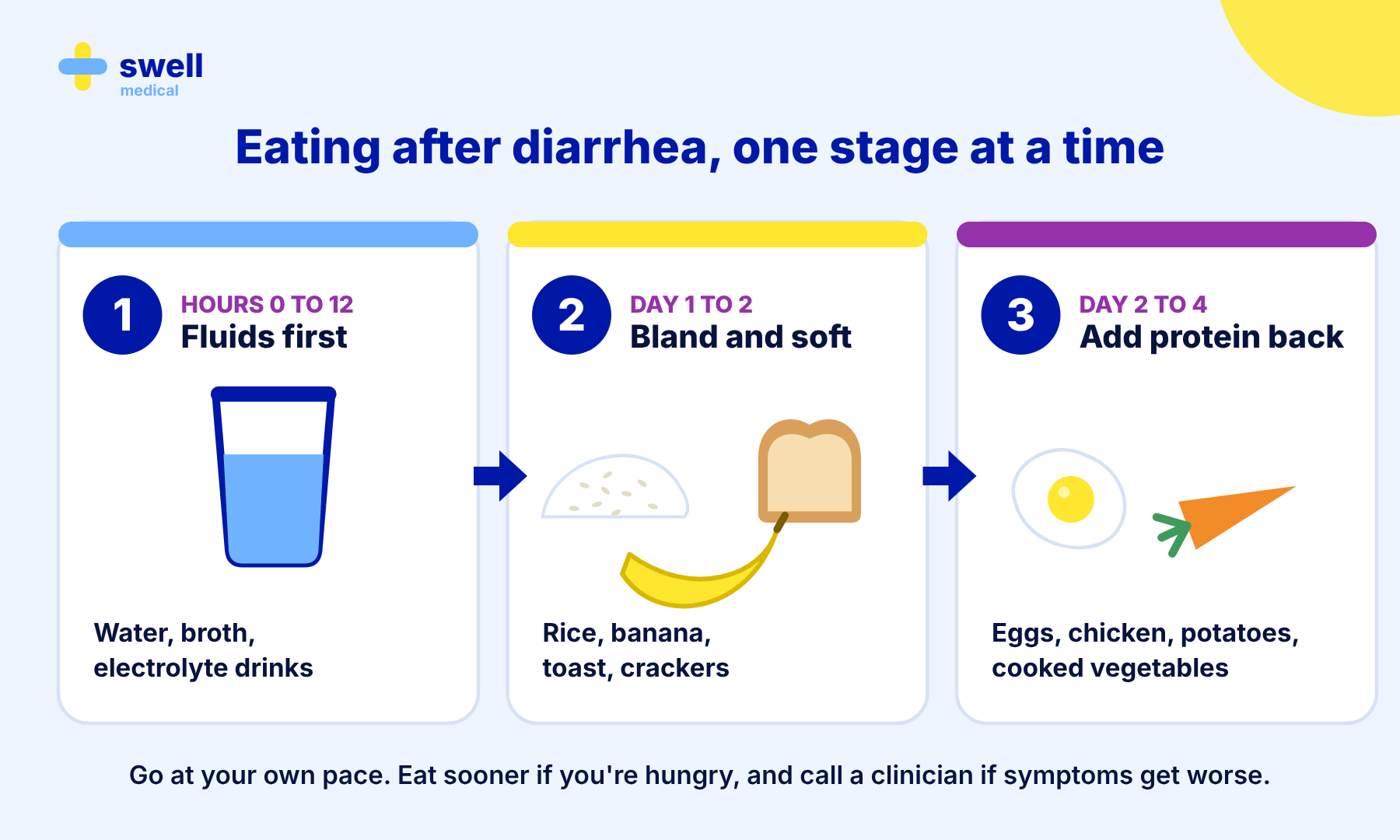
Think in three stages instead of one long list.
| Stage | What to have | Why it helps |
|---|---|---|
| Hours 0 to 12 | Water, broth, electrolyte drinks, small sips | Replaces lost fluid and electrolytes |
| Day 1 to 2 | White rice, bananas, applesauce, toast, crackers, plain noodles | Low fiber, easy to digest |
| Day 2 to 4 | Eggs, chicken, potatoes, oatmeal, cooked vegetables, yogurt | Brings protein and nutrients back |
Don’t treat the table like a prescription for what to eat after diarrhea. If you feel hungry sooner, eat sooner. The NIDDK notes that most people with acute diarrhea can go back to their normal diet once they feel like eating, and that most experts don’t recommend fasting.
Start with fluids before food
Diarrhea drains water and salts, and those salts are your electrolytes. That’s why dehydration is the real risk of diarrhea, and why fluids come first.
Plain water helps, but it doesn’t replace electrolytes. A cup of warm broth or thin soup gives you sodium. Sports drinks, other electrolyte drinks and an oral rehydration solution give you sodium and potassium, plus a little sugar, which helps your body absorb it. Check the label: you want electrolytes, not just flavor. NIDDK says an oral rehydration solution can be bought at a pharmacy or made at home. If you’re older, have diabetes or kidney disease, or have a weak immune system, check with a doctor before using one.
Go slow. Small, steady sips beat a big glass that comes right back up.
Decaf tea, such as ginger or chamomile tea, is fine if you want something warm. Skip regular tea for now.
Skip the apple juice too. Mayo Clinic points out it may make diarrhea worse, and many sweet drinks pull more water into your bowel.
Here’s a quick way to tell if you’re keeping up. Your urine should be pale yellow. Dark urine, a dry mouth and feeling dizzy when you stand are signs of dehydration.
Is the BRAT diet still worth following?
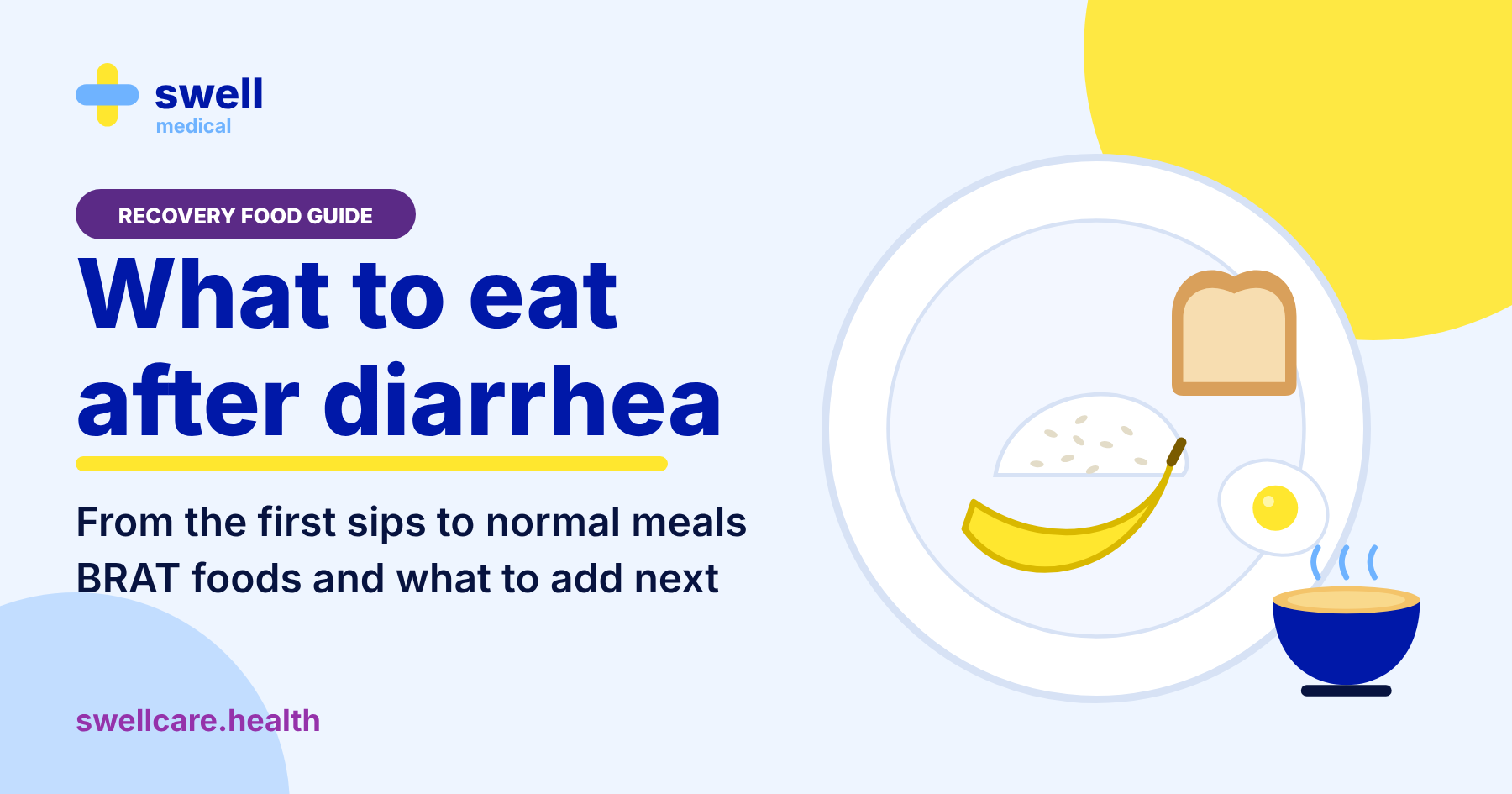
BRAT stands for bananas, rice, applesauce and toast. For decades, it was the standard advice for diarrhea. Today the answer is a qualified yes, as a starting point only.
Doctors disagree a little here. A StatPearls review on diarrhea describes a bland diet like this as well tolerated and likely to ease symptoms. The American Academy of Pediatrics, on its parent site HealthyChildren, goes further the other way and says BRAT is no longer considered useful for kids.
Both views hold some truth.
What BRAT gets right
The BRAT foods are bland and soft, and they’re low in fiber, so they’re easy on an upset stomach. The banana also brings potassium, which you lose with watery stool. White rice and toast are bland, so they rarely set off cramps. They’re quick to eat, even when you’re nauseated.
Applesauce is gentle too, though it’s mostly sugar and water.
Where BRAT falls short
Here’s the problem. The BRAT diet is low in protein and fat, and short on most vitamins. HealthyChildren says it lacks the nutrition a gut needs to recover, and that some pediatricians think it may keep symptoms going longer. Eat only BRAT foods for several days and you’ll feel flat.
Our take: use BRAT as a bridge for a day, not a plan for a week. It’s a soft landing, not the whole runway.
Foods to add after the BRAT diet
As soon as your stool starts to firm up and your appetite returns, widen the plate. Wondering what to eat after diarrhea once the bland stage passes? You can keep things bland, just less beige. Mayo Clinic’s advice is to ease back in with soft, low-fiber foods as your bowel movements settle, and it lists crackers, eggs, rice and chicken.
Eggs, chicken and fish
Protein is what BRAT lacks. Scrambled or boiled eggs are gentle and quick. Plain baked chicken, skinless, works well in broth or on its own. Mild white fish is another easy choice. Bake or steam the fish, and never eat it fried. Skip the butter and the heavy oil.
Potatoes, oatmeal and cooked vegetables
Peeled, boiled or mashed potatoes are one of the most forgiving foods after diarrhea. Plain oatmeal adds soluble fiber, which can help firm up loose stool. Cooked carrots and zucchini are softer on the gut than raw vegetables, so leave the salad for later. Blend them into a thin soup if chewing feels like work.
Vegetables go back in last. Start with well-cooked carrots, squash or green beans, and keep the raw vegetables for the weekend.
Fiber isn’t the enemy forever. Soluble fiber helps. It’s the rough, raw, high-fiber foods like bran and beans, or raw greens that you should hold off on for a few days.
Fruit needs a little care. Peeled, cooked fruit like pears or apples also carries soluble fiber. Hold off on raw fruit with skins, and on dried fruit and prunes. Fruit juice is a trap, because it’s mostly sugar. If you want fruit, eat the fruit.
Yogurt and probiotics
Plain yogurt with live cultures is a reasonable add-in if dairy sits well with you. Here’s the honest bit about probiotics: the evidence is mixed. StatPearls says they can reduce how severe and how long acute diarrhea lasts. NIDDK notes that many doctors and professional societies don’t think the evidence supports them for treating diarrhea. If you like yogurt, have some. If you don’t, you’re not missing a magic fix.
A simple three-day plan for eating after diarrhea
This is a sample plan for the days after diarrhea, not a rule. Adjust it to your appetite.
| Day | Breakfast | Lunch | Dinner | Drinks |
|---|---|---|---|---|
| Day 1 | Banana and plain toast | Warm broth with white rice | Plain noodles in light soup, with crackers | Water, electrolyte drinks, weak tea |
| Day 2 | Oatmeal with cooked pear | Boiled potatoes, a soft egg and a cup of soup | Baked chicken and rice | Broth, electrolyte drinks, decaf tea |
| Day 3 | Scrambled egg and toast | Soup with rice and cooked carrots | Fish, mashed potatoes, cooked vegetables | Decaf tea, plain yogurt if tolerated |
By day four, many people are back to normal meals. If you aren’t, go back one step and give your gut another day.
What to skip for a few days
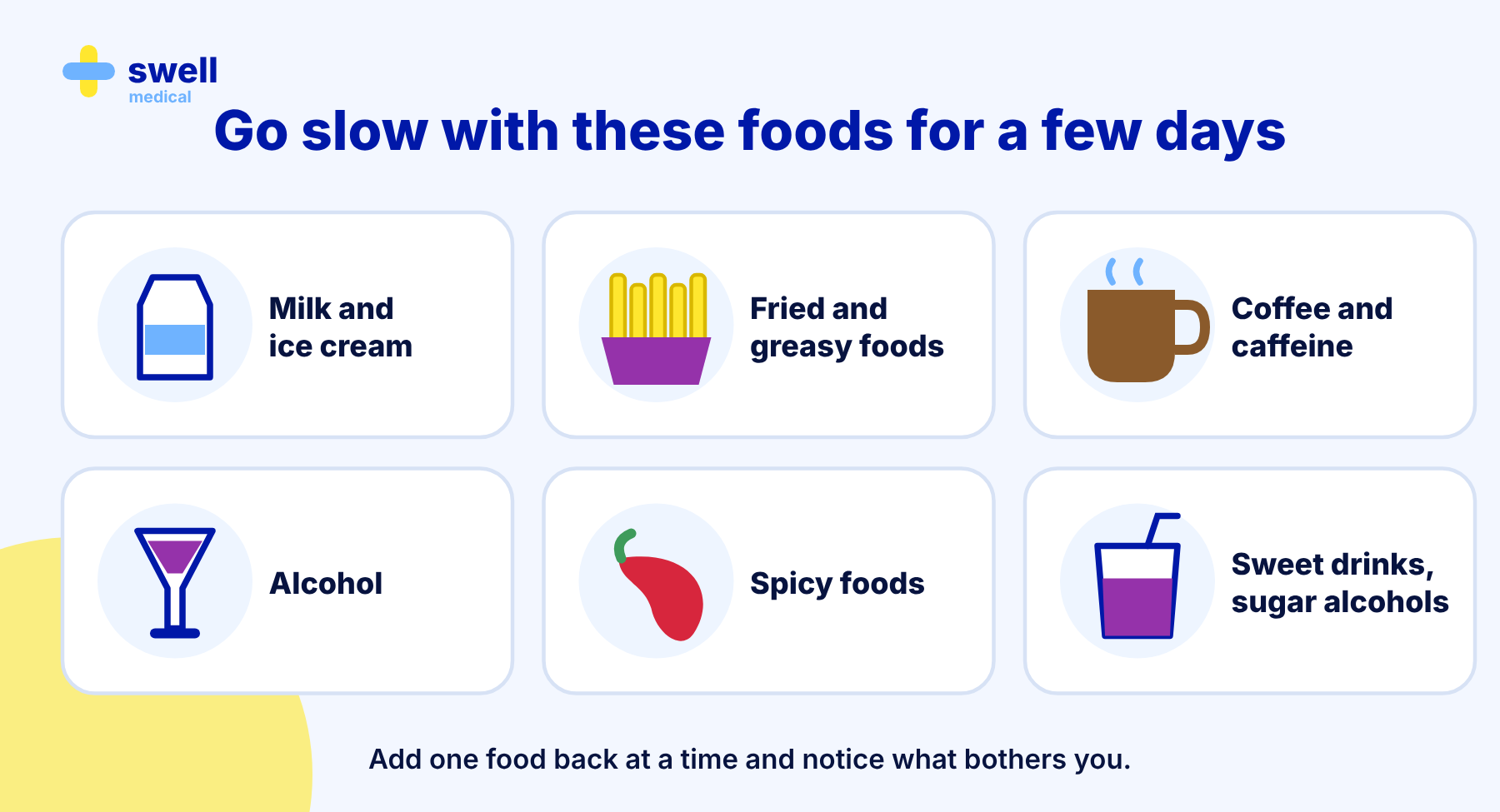
Some foods irritate a bowel that’s still healing from diarrhea. Mayo Clinic’s advice is to hold off for a few days on dairy, fatty foods, high-fiber foods and anything highly seasoned or spicy. NIDDK adds alcohol, caffeine, sugar alcohols and high-sugar foods to that list.
In practice, that means pausing:
- Milk and ice cream, plus soft cheese. Some people have trouble digesting lactose for up to a month or more after a bout, per NIDDK. If milk gives you gas or diarrhea again, wait longer.
- Fried and greasy foods, like fast food, pizza and other greasy takeout.
- Coffee, energy drinks and strong tea. Caffeine speeds your gut up.
- Alcohol, which irritates the lining and dehydrates you.
- Spicy foods, hot sauce and heavy seasoning.
- Sugar-free gum and candy with sugar alcohols, plus sweet drinks and candy.
Nothing here is forever. Add one food back at a time so you can tell what bothers you.
When to see a doctor
Most diarrhea is a nuisance, not an emergency. Some symptoms need a professional, though.
Get care if you notice any of these symptoms:
- Diarrhea that gets worse, or lasts more than 2 days while you’re taking over-the-counter medicine, per NIDDK.
- Blood in your stool, black or tarry bowel movements, or a fever.
- Signs of dehydration, like dizziness, very dark urine, a dry mouth or little urine at all.
- Severe belly pain, or vomiting that keeps fluids from staying down.
- Diarrhea lasting more than about a week. The NHS says to get advice if it goes past 7 days.
Babies and young children need extra caution with diarrhea. Over-the-counter antidiarrheal medicine isn’t recommended for kids under 2, and a child who’s refusing to eat or drink needs a pediatrician. Call 911 for confusion, trouble breathing or blue or gray skin.
Get help from a Swell clinician
Not sure whether what you’re feeling is normal? You don’t have to wait for a clinic to open. Swell is a clinician-led virtual care service that’s available day and night. You can start a free screening chat through Swell urgent care and talk through your diarrhea and fluids, then get advice on what to eat after diarrhea.
Swell isn’t emergency care. If your symptoms are severe, call 911.
Questions people ask about eating after diarrhea
How long should I stick to bland foods after diarrhea?
Usually one to three days. Move on as soon as your stool firms up and your appetite returns. Staying on BRAT foods alone for longer can leave you short on protein and nutrients, so add protein and cooked vegetables early.
Can I drink coffee or milk after diarrhea?
Wait a few days. Caffeine can speed up your gut, and milk contains lactose, which some people struggle to digest for weeks after a bout. Try a small amount of one at a time, and stop if diarrhea comes back.
Are bananas good after diarrhea?
Yes. Bananas are soft, low in fiber and rich in potassium, which you lose in watery stool. Ripe ones are easiest to digest. They’re a good first food, but pair them with protein once you’re hungrier.
Should I take probiotics after diarrhea?
You don’t need to. Research is mixed. Some reviews suggest probiotics shorten acute diarrhea, while others say the evidence is weak. Plain yogurt with live cultures is fine if you tolerate dairy. Ask a clinician before taking supplements if your immune system is weak.
What should kids eat after diarrhea?
Most children can return to a normal, age-appropriate diet quickly, often within 24 hours, according to the American Academy of Pediatrics. Keep up breast milk or formula for babies. Offer small, frequent sips of a fluid with electrolytes, and call a pediatrician if dehydration signs appear.
Trusted references
Public-health, research, and medical-society resources related to this guide.