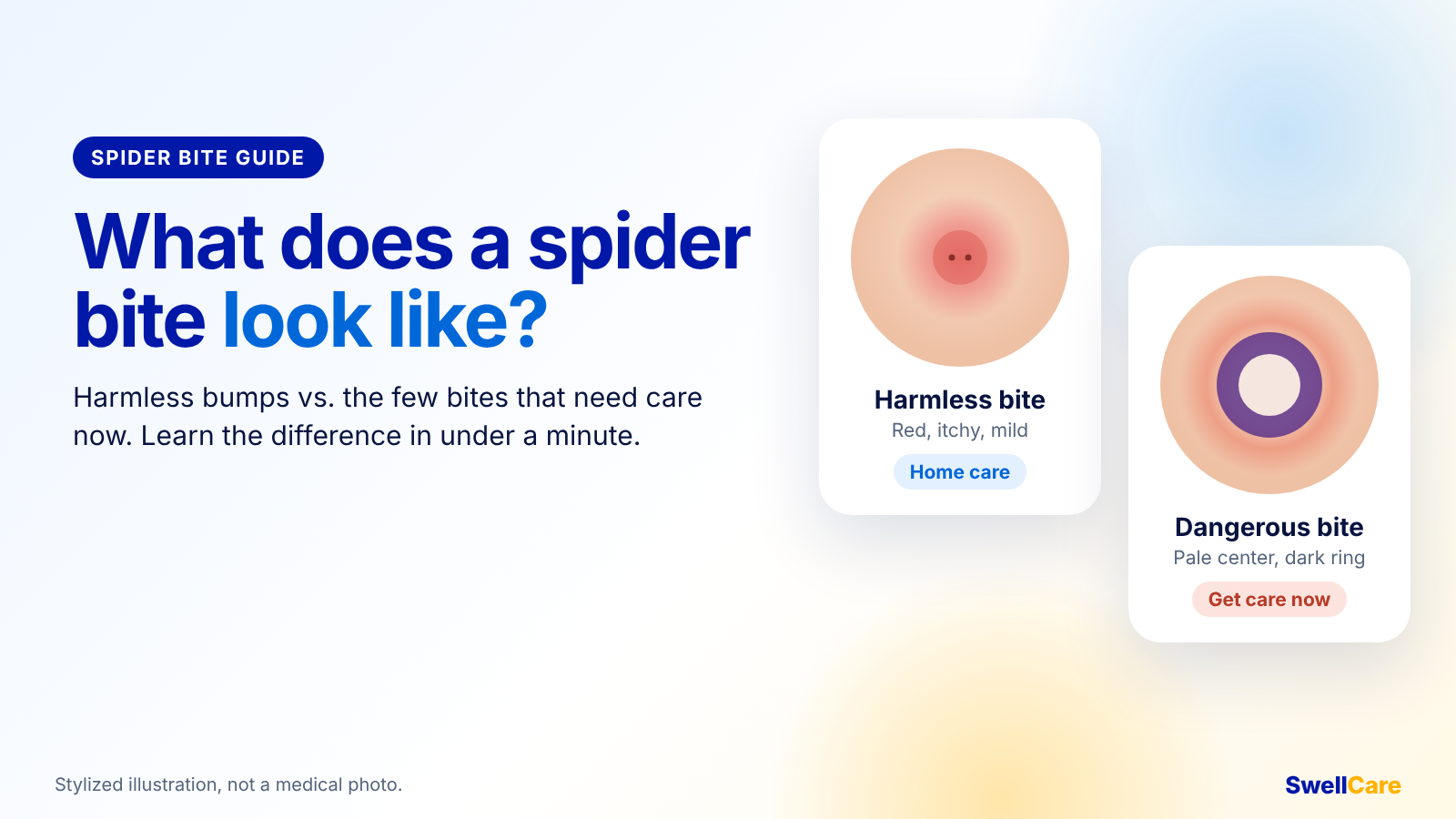
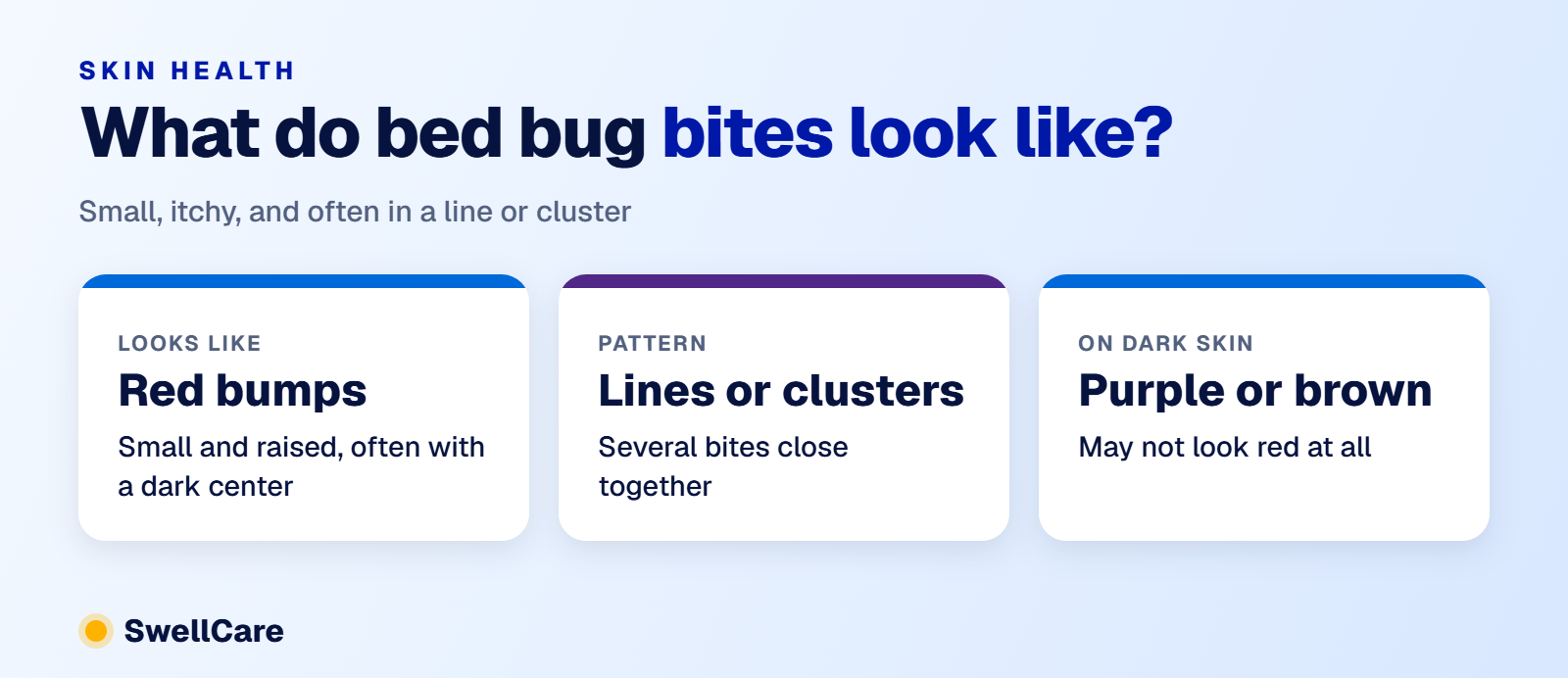
You found a red spot on your calf, or a tick on your kid’s scalp, and now you’re staring at it. So, what does a tick bite look like? Most of the time it’s a small, red bump that looks like a mosquito bite and fades within a day or two. The one worth worrying about looks different: a red patch that keeps growing over several days, sometimes with a clear center. That’s the classic sign of Lyme disease, and it’s treatable when you catch it early.
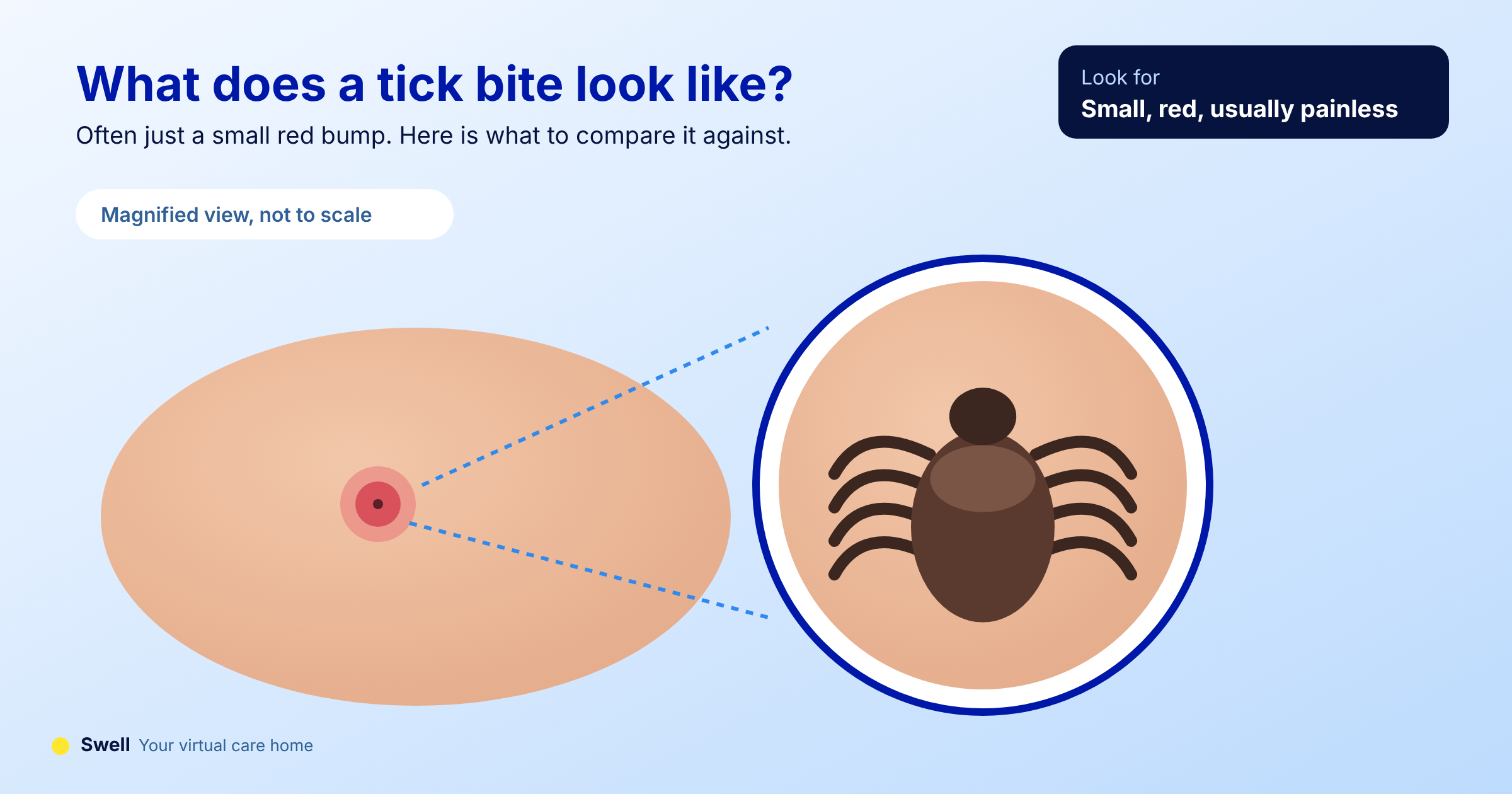
What does a tick bite look like right after it happens?
Often, you won’t see much. A tick’s saliva numbs the spot, so the bite is usually painless, and many people only spot the tick itself. Easy to overlook, that fresh bite site. If a mark shows up, it’s typically a small red or pink bump, sometimes with a tiny dark dot in the middle where the mouthparts went in.
Mild itching or a little swelling on the skin is normal. So is a faint ring of redness the size of a coin. The CDC says a small bump that resembles a mosquito bite is common at the bite site and goes away in one to two days (CDC: signs and symptoms of untreated Lyme disease).
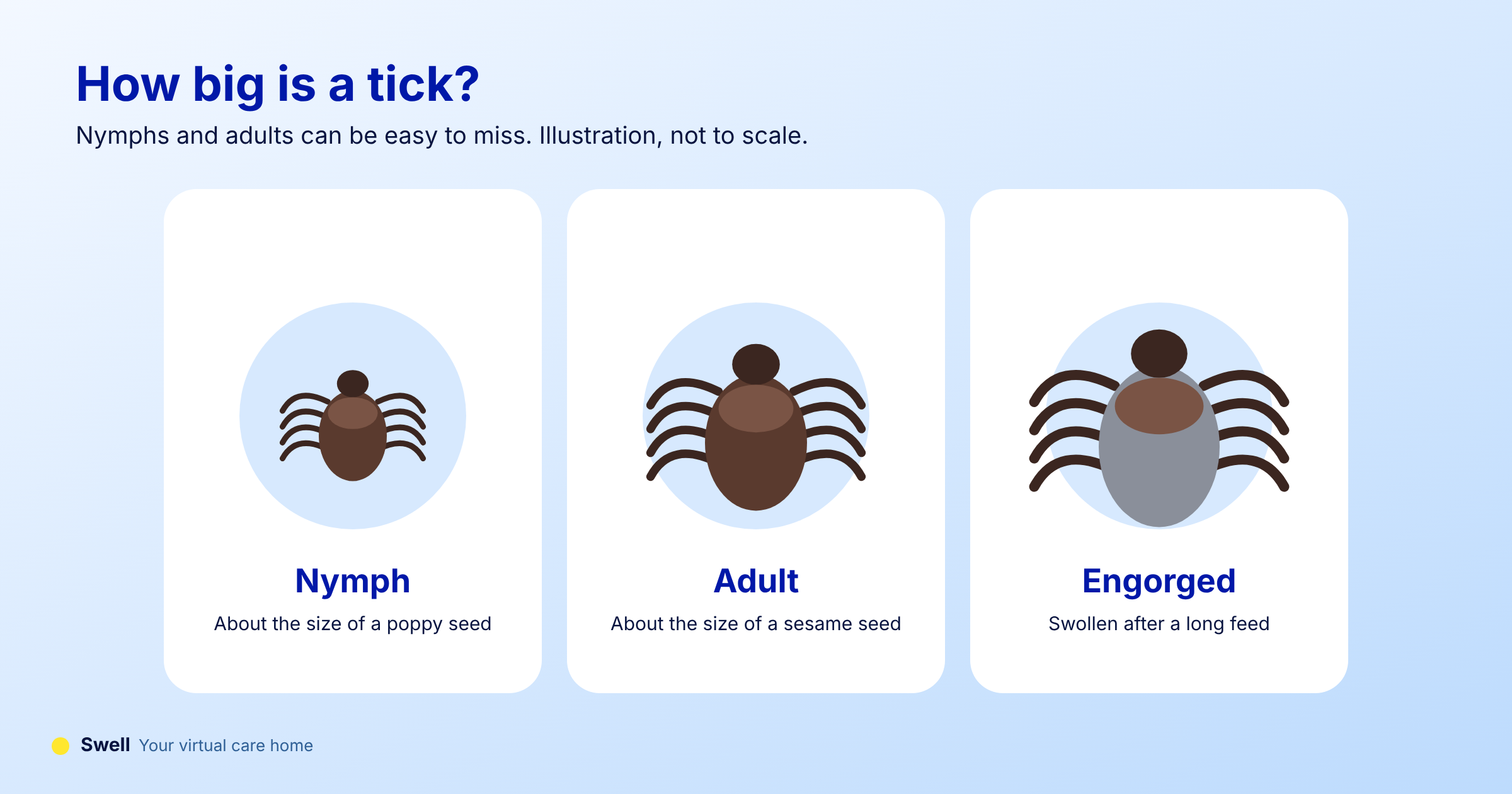
Don’t count on seeing the tick, either. Nymph ticks are about the size of a poppy seed, and adults are closer to a sesame seed. Do a quick tick check of the warm, hidden spots: the scalp, behind the ears, armpits, groin, behind the knees and around the waistband.
How does a normal tick bite differ from a Lyme rash?
Size and change over time tell you more than color does. Normal tick bites stay small and calm down. Lyme rashes, called erythema migrans, spread.
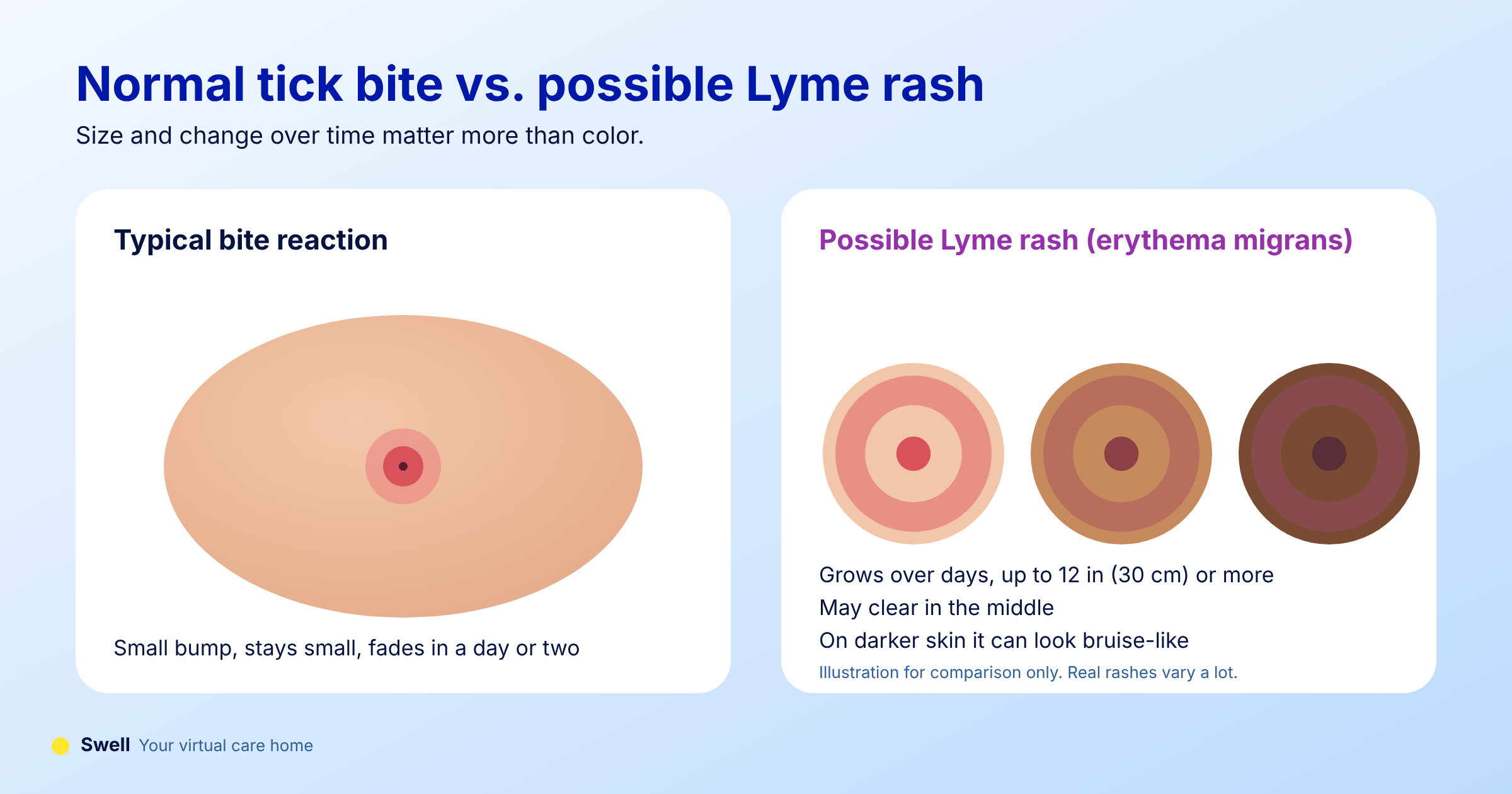
| Normal bite reaction | Possible Lyme rash | |
|---|---|---|
| Starts | Right away or within hours | 3 to 30 days later, around 7 on average |
| Size | Small, often under an inch | Expands over days, up to 12 inches or more |
| Look | Red bump, may itch | Red or purplish patch, sometimes a bull’s-eye rash with a clear center |
| Feel | Mild itch or tenderness | Often warm, rarely itchy or painful |
| Trend | Fades in a day or two | Keeps spreading without treatment |
Roughly 70 to 80 percent of people infected with Lyme disease develop this rash, according to the CDC, and it can show up anywhere on the body. Here’s the catch: it doesn’t always look like a target. Plenty of Lyme rashes are just a solid, expanding patch.
On darker skin, redness is harder to see. The rash may look more like a bruise or a darker, brownish patch, and it’s easier to miss. So judge it by shape and growth, not color. If a mark is getting wider day after day, take a photo each morning so you have proof of the trend.
Other things that can look like a tick bite
So what does a tick bite look like next to everything else that bites or itches? Plenty of skin problems pass for it: mosquito bites, spider bites, hives, ringworm, a skin infection like cellulitis, even a bruise. A tick bite is more likely if you know you were in grass, brush or woods, or if you actually found the tick.
There’s one more look-alike. Southern Tick-Associated Rash Illness, or STARI, causes a rash similar to Lyme but isn’t Lyme disease (CDC). You can’t tell them apart by eye, which is a good reason to have a clinician look at any spreading rash.
What symptoms can follow a tick bite?
The bite itself is rarely the problem. The infection a tick can pass along is. Tick bite symptoms fall into two groups: signs at the bite site, and symptoms in the rest of your body.
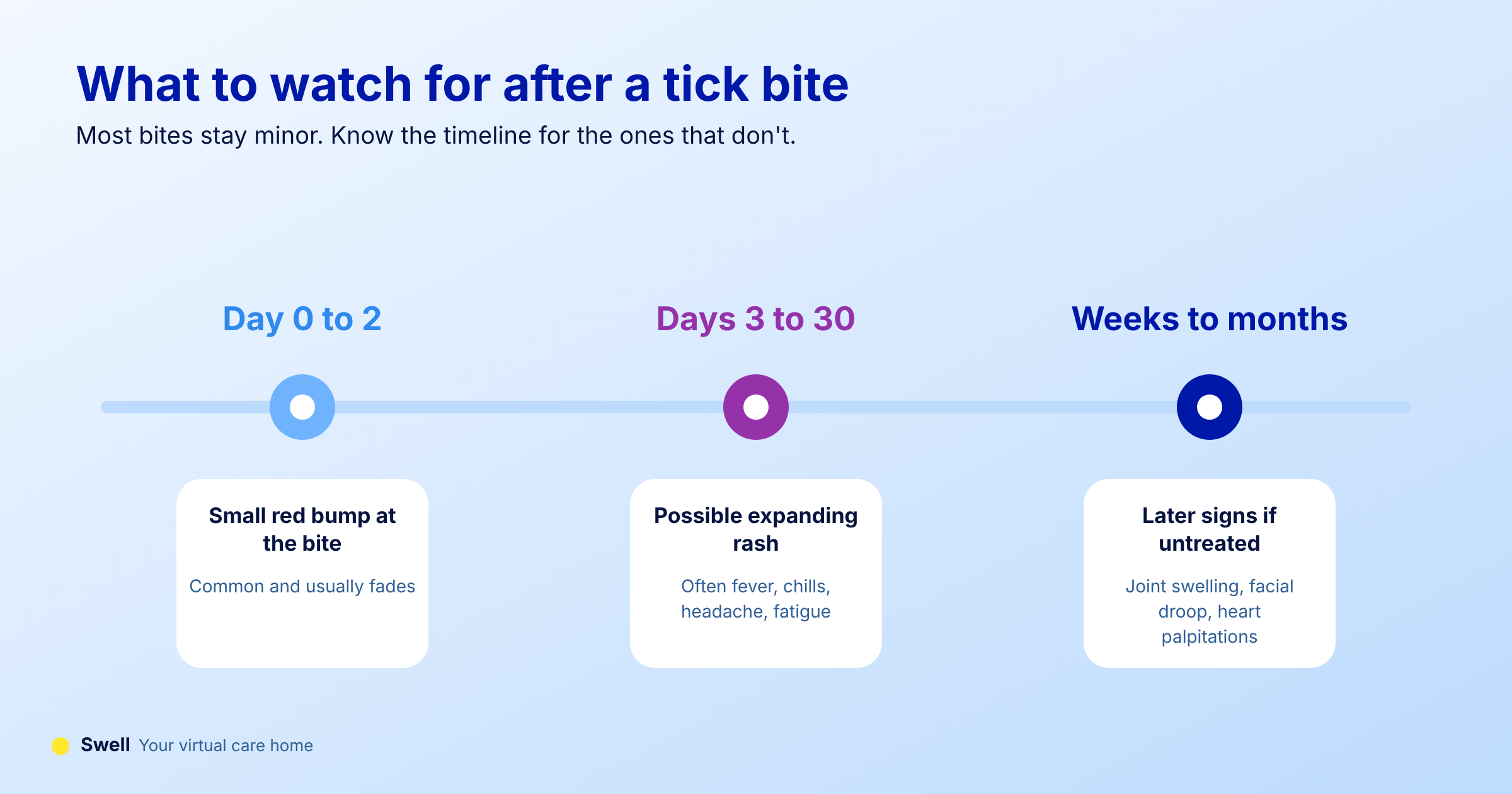
Early Lyme symptoms usually arrive 3 to 30 days after the bite. Think flu-like symptoms: fever, chills, a pounding headache, fatigue, muscle and joint aches, and swollen lymph nodes. These symptoms can show up with or without the rash. If you’ve felt run-down for a week after a hike and brushed it off as a cold, that’s worth a second look.
Left untreated, Lyme disease can spread over weeks to months and cause new symptoms. The CDC lists severe head pain with neck stiffness, more rashes in new spots, facial droop (facial palsy), swollen and painful joints, especially the knees, nerve pain, and heart palpitations or an irregular heartbeat.
Lyme disease isn’t the only worry. Another tick-borne illness, such as Rocky Mountain spotted fever, anaplasmosis or ehrlichiosis, usually starts with fever and body aches within days to a couple of weeks. Any fever after a tick bite, or any flu-like symptoms with no other cause, deserves a call to a clinician, rash or no rash.
Where in the US is Lyme risk highest?
Where you got bitten changes the odds. The blacklegged tick, often called a deer tick, spreads Lyme in the Northeast, mid-Atlantic and north-central states. Along the Pacific Coast, the western blacklegged tick does the same. A blacklegged tick in most of the Southeast is almost never infected, the CDC reports.
Lone star, American dog, Rocky Mountain wood and brown dog ticks can’t transmit Lyme, though they can carry another tick-borne illness. A lone star tick bite can also trigger alpha-gal syndrome, an allergy to red meat. That’s why it helps to snap a photo of the tick before you dispose of it, since the species changes the risk.
Reported numbers are climbing in many places. The CDC receives more than 80,000 Lyme cases a year, and insurance data suggest as many as 476,000 people may be diagnosed and treated annually, though that may be an overestimate (CDC Lyme surveillance).
What should you do if you find a tick on you?
Tick removal can’t wait. Take the tick off now. Don’t wait for an appointment, and don’t reach for petroleum jelly, nail polish or a lit match. The CDC advises against all of those.
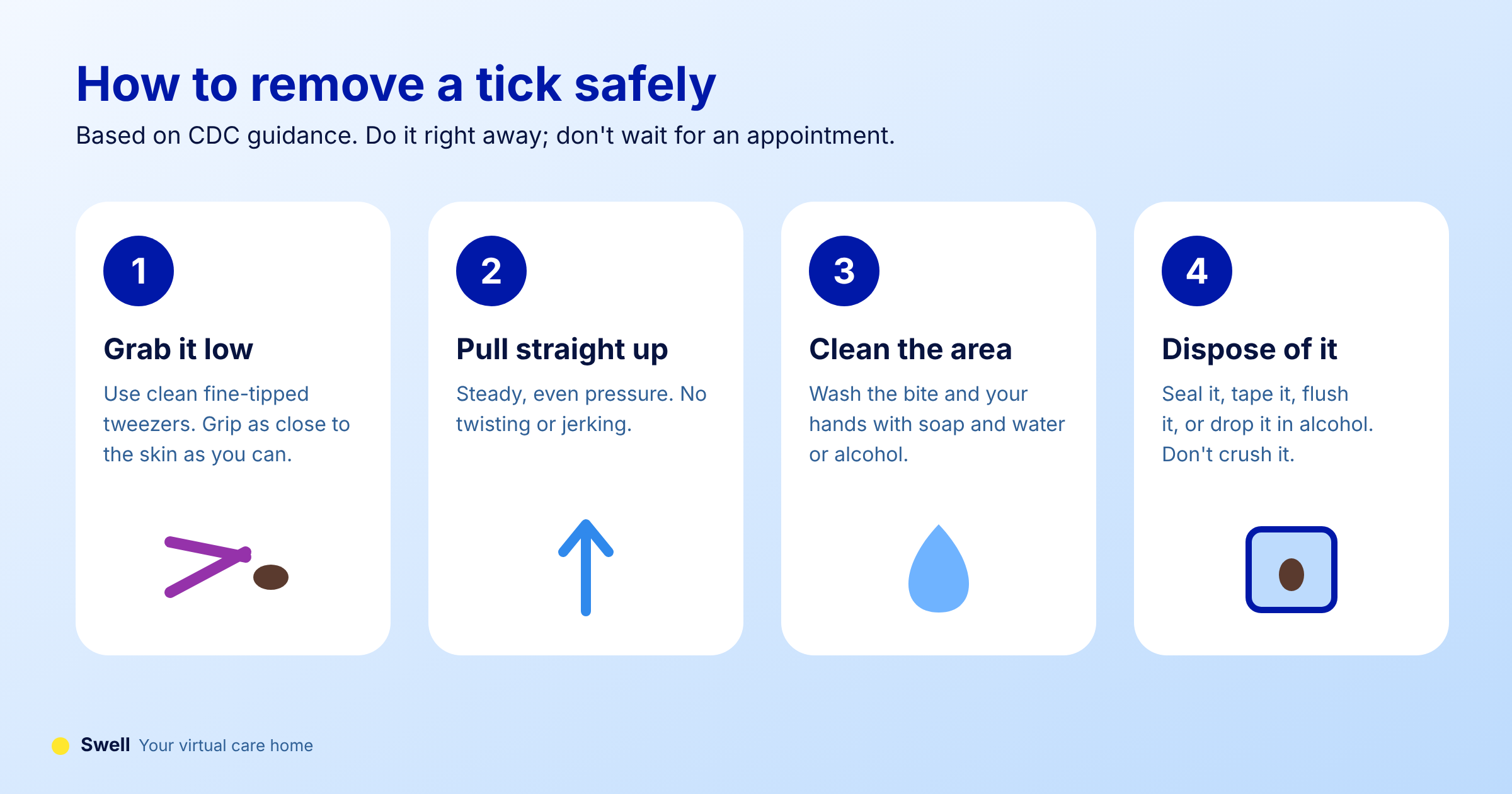
- Grab the tick as close to the skin as you can with clean, fine-tipped tweezers (keep tweezers in your hiking bag and your car, because the best tweezers are the ones you have with you).
- Pull straight up with steady, even pressure. Don’t twist or jerk.
- If the tick’s mouthparts snap off and aren’t easy to grab, leave them. The skin usually pushes them out as it heals.
- Clean the bite and your hands with soap and water or rubbing alcohol.
- Get rid of the live tick, never crushing it: seal it in a container, wrap it in tape, flush it, or drop it in alcohol.
Then do a full tick check on everyone who was outdoors with you, and run dry clothing in a dryer on high for 10 minutes. Don’t bother sending the tick for testing. Both the CDC and the infectious disease guidelines advise against it, because the result doesn’t reliably predict whether you’ll get sick.
Timing matters. In most cases a tick has to stay attached for more than 24 hours before it can pass on the Lyme bacterium, so removing the tick quickly cuts your risk a lot.
How can you prevent tick bites?
Prevention beats removal. Treated clothing, repellent and a nightly tick check do most of the work. Before you head out, treat boots and clothing with permethrin, or buy pre-treated gear. Put an EPA-registered insect repellent with DEET or picaridin on exposed skin. Wear long sleeves and tuck your pants into your socks if you’ll be in tall grass.
Stick to the middle of trails. Ticks wait on leaf litter and brush edges, then climb onto whatever brushes past. When you get home, shower soon after coming indoors, do a head-to-toe tick check, and look at pets, backpacks and jackets too. A tick can hitchhike indoors on all of them.
When should you get a tick bite checked?
Most tick bites need nothing but good tick removal and a few weeks of watching. Get checked if any of these apply to you, since early treatment of an infection works best:
- A rash starts to expand, especially past two inches, or appears anywhere new.
- You develop a fever, chills, fatigue or aching joints within several weeks of the tick bite, or any new symptoms you can’t explain.
- The tick was likely attached for a day or more and you’re in a high-risk region.
- The bite looks infected: spreading redness, warmth, swelling, pus or increasing pain. Skin infections after a bite can happen even without Lyme.
- You can’t tell whether the mark is a bite site at all.
In some cases a clinician can offer a single dose of the antibiotic doxycycline right after a tick bite. The Lyme guidelines support it only when the tick was an identified blacklegged tick, attached for 36 hours or more, in a highly endemic area, with the dose given within 72 hours of removal. If you do get sick later, a short antibiotic course for early Lyme disease usually works well, and the earlier you start, the better. Waiting is what gets people in trouble.
Skip the virtual visit and get emergency medical attention if you have facial droop, a severe headache with a stiff neck, chest pain, fainting or trouble breathing.
Get a clinician’s eyes on it from home
Still wondering what does a tick bite look like on your own skin, or whether that spot is something worse? Swell offers 24/7 clinician-led virtual care by secure chat or video. A consultation is $45 with no membership, and any medication or lab costs are separate (see how it works).
Before you start, have these ready: where the tick bite happened, the date you found the tick, how long the tick may have been attached, and photos of the bite site from day one. That’s the story a clinician needs. Swell isn’t for emergencies, so call 911 if you feel seriously ill.
Tell us what is going on and get a clear next step today.
Questions people ask about tick bites
How do you tell if a bite is from a tick?
Look for a single bump, often painless, in a spot where a tick likes to hide, like the scalp, groin or behind the knee. Mosquito bites tend to appear in clusters and itch right away. If you find an attached tick, you have your answer. If not, think back to time spent in grass or woods.
What does an untreated tick bite look like?
Most untreated bites just fade. Tick bites that carry Lyme disease can grow into a red patch over days to weeks, sometimes with a clear center, and may be followed by a high temperature, chills and fatigue. Later signs include joint swelling and facial droop. Any expanding rash needs a clinician’s look.
What can be mistaken for a tick bite?
Mosquito and spider bites, hives, ringworm, cellulitis and bruises can look like a tick bite. STARI rashes can look just like Lyme. If a mark is spreading, painful or paired with fever, don’t guess. Have it checked.
What are bad signs after a tick bite?
A rash that keeps expanding, fever, chills, severe headache, neck stiffness, new joint pain, facial droop, heart palpitations and spreading redness around the bite are all reasons to seek care. Chest pain or trouble breathing means calling 911.
Do tick bites itch?
Sometimes, a little. Itching right at a tick bite is common and usually mild. A Lyme rash is rarely itchy or painful, so an itch-free expanding patch still counts.
Should I save the tick?
Take a clear photo of the tick, then dispose of the tick. Testing a tick isn’t recommended. Photos help a clinician identify the tick species and judge your risk, and you won’t have a jar of ticks in the fridge.
Trusted references
Public-health, research, and medical-society resources related to this guide.