You wake up with a red bump on your arm and one nagging thought. Did a spider bite me?
So, what does a spider bite look like? Most of the time, like any other bug bite: a small, red, slightly swollen spot that itches or stings. Harmless, and gone in a few days. A few spider bites are different, though, and knowing which is which can spare you a lot of worry. Here’s how to read your skin, what dangerous spider bites look like, and when to get help.
What does a spider bite look like?
A spider bite is smaller and tamer than the internet makes it seem.
The usual bite: a red bump, sometimes two tiny marks
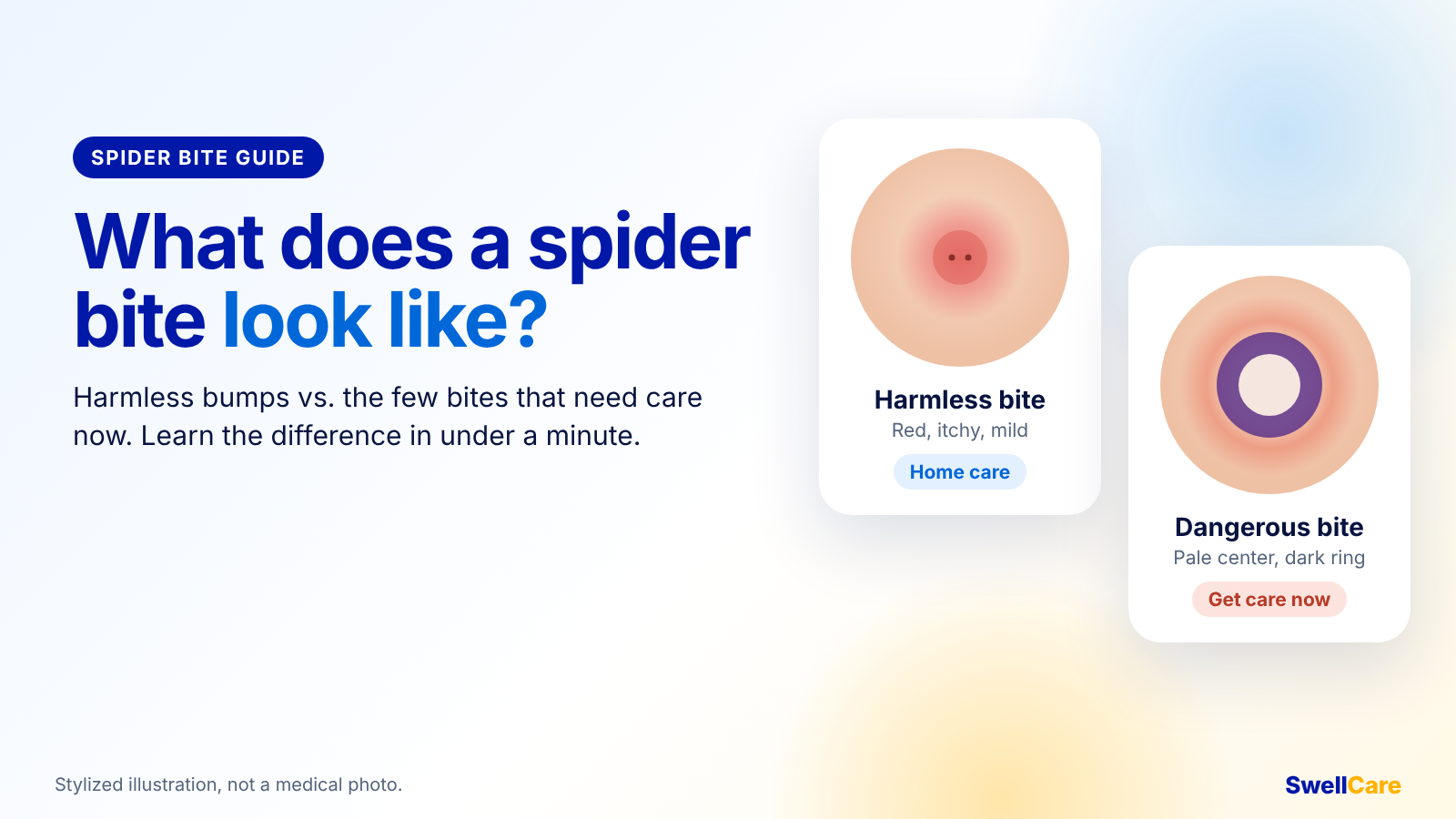
A typical spider bite is a raised red or pink bump with mild swelling. Some people spot two fang marks in the middle, but the fangs on most spiders are too small to leave any trace, and some can’t pierce skin. The spot may feel tender, and the itching can nag for a day. Plenty of people never notice a spider bite at all.
According to Mayo Clinic, a harmless bite rarely brings other symptoms with it. If the redness and swelling of a spider bite fade over a day or two, you’re almost certainly fine.
Most skin sores blamed on spiders are something else
Here’s the awkward truth. Unless you saw the spider bite you, nobody can say for sure that one did, and no test confirms it. Cleveland Clinic notes that most people never see the spider, and plenty of infected skin wounds look the same. Spiders bite far less often than people think. Spider bites that truly harm a person are rare, and fewer than three people a year die from one in the US, mostly children.
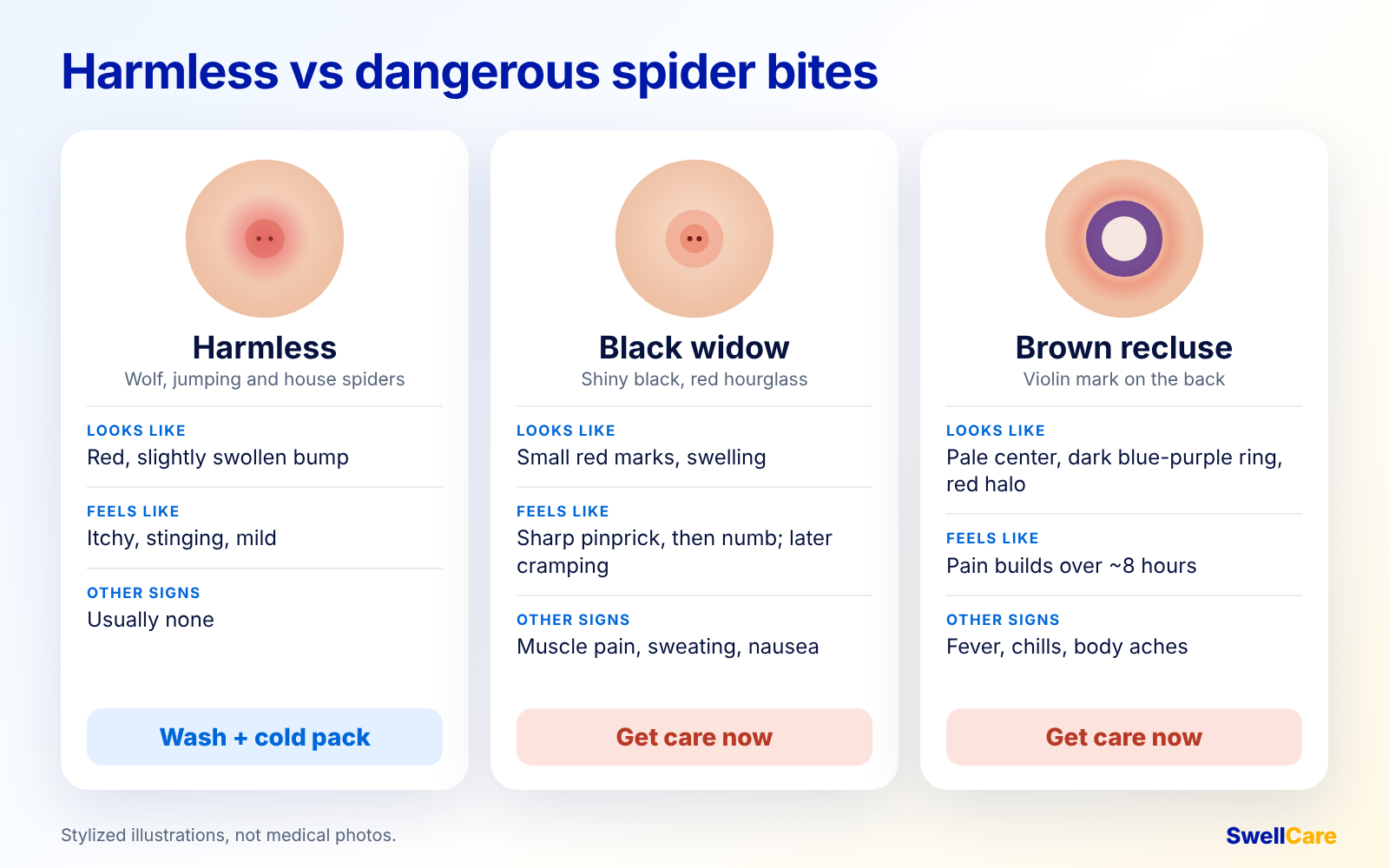
Harmless vs dangerous spider bites at a glance
Only a few venomous species can bite through human skin with venom strong enough to cause real harm. This table shows how the main types differ.
| Harmless (wolf spider, jumping spider, house spiders) | Black widow | Brown recluse | |
|---|---|---|---|
| Looks like | Red, slightly swollen bump | Small red marks with swelling | Pale center turning dark blue or purple, red ring around it |
| Feels like | Itchy, stinging, mild pain | Sharp pinprick, then numbness; later cramping | Pain that builds over about 8 hours |
| Other symptoms | None | Cramping, sweating, nausea | Fever, chills, body aches |
| What to do | Wash, cold pack | Get medical help now | Get medical help now |
What a black widow spider bite looks like
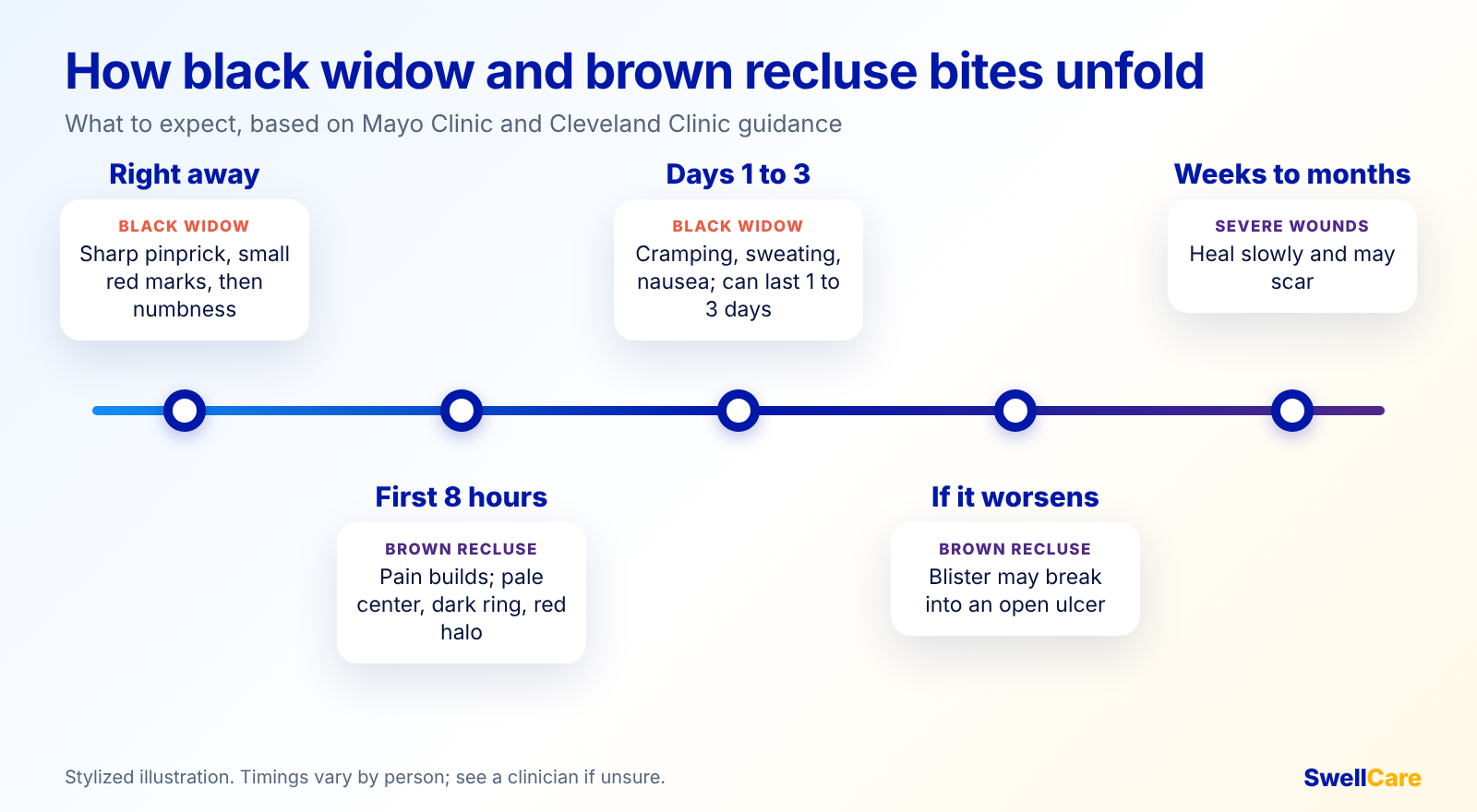
It can start with a sharp, pinprick feeling, then the area goes numb. You’ll see small red marks and some swelling. The clue is what comes next.
Widow spiders live across the US except Alaska, and they favor garages and sheds. Spiders peak in warm months. Their venom acts on the nerves, which is why muscles cramp. From the bite site, pain and redness can creep toward the belly, back or chest. Severe abdominal cramping is common enough that a widow bite has been mistaken for appendicitis, which is why belly pain after a possible bite is never something to shrug off.
Nausea and repeated vomiting are common, and a headache, tremors or sweating can follow. Symptoms can run their course in one to three days. Hospital care is most often needed for children under 16 and adults over 60. Treatment may include antivenom plus muscle relaxers and pain medicine.
What a brown recluse spider bite looks like
This one is sneakier. It may not hurt at all at first. Over the first eight hours the ache tends to build. The bite itself starts out pale in the middle, then darkens to blue or purple with a red halo around it. You might also run a fever, shiver and ache all over.
Recluse spiders are most common in the southern half of the country and like cluttered basements and attics, even the folds of bedding. Brown recluse venom can damage the tissue around the bite. In worse cases the blister breaks and becomes an open ulcer, with the skin around it dying (doctors call this necrotic tissue). The worst ones heal slowly, sometimes over months, and often leave a scar. Treatment focuses on wound care, and an ulcer that won’t heal may need surgery.
Other spiders people worry about
Wolf spiders and jumping spiders do bite, usually only when they’re pinned against your skin, and their fangs are small. Most spiders would rather run. A wolf spider bite can tear the skin a little and cause redness and pain with some swelling, but it rarely needs care. A jumping spider bite is milder still.
Nearly all spiders are venomous. That’s different from dangerous. Even the venomous ones people fear most are rare culprits, and for most species the venom just doesn’t matter to a person.
Is it really a spider bite? Common look-alikes
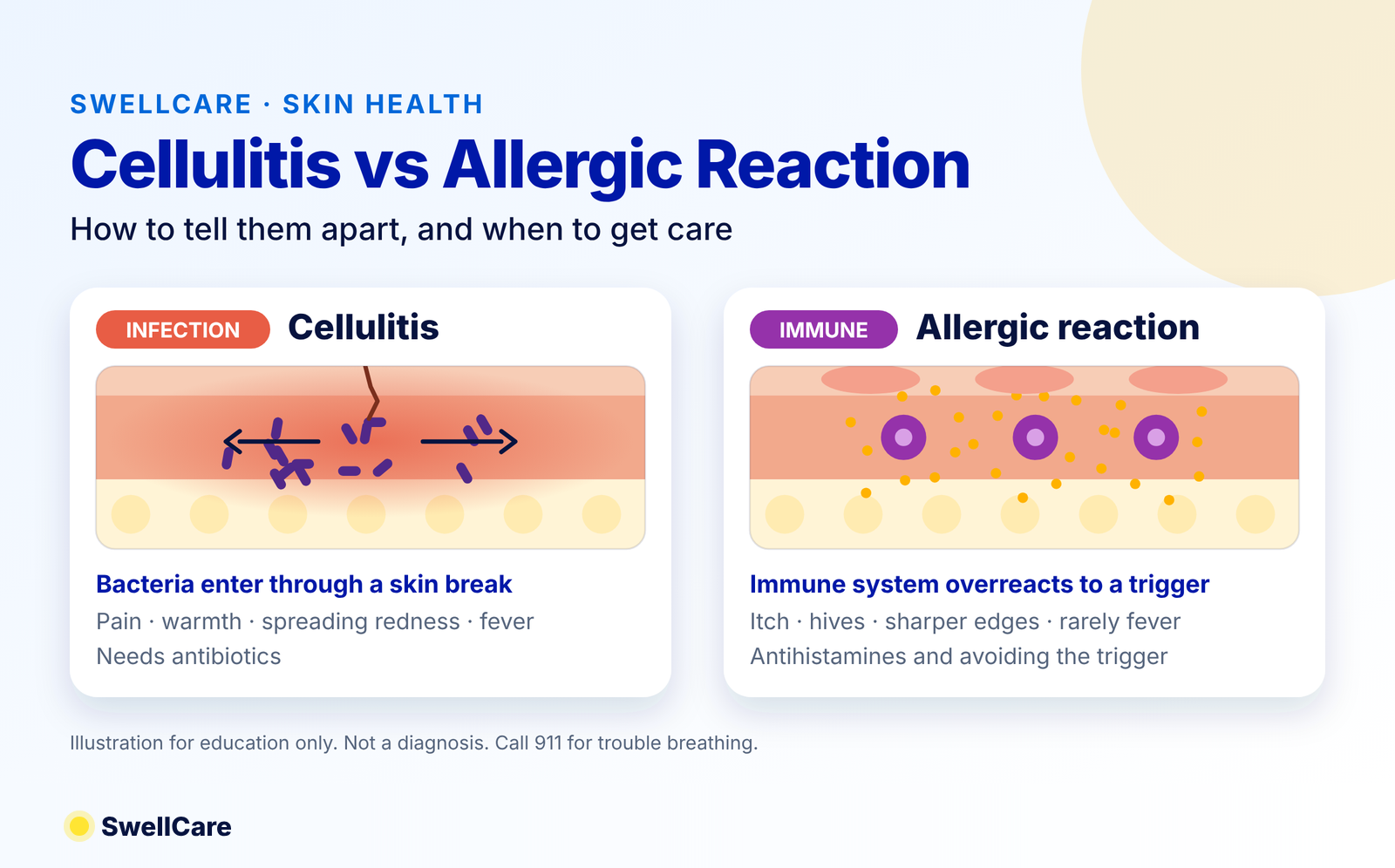
The biggest impostor is MRSA, a skin infection that can start as a red, painful bump with pus and looks just like what people imagine a spider bite to be. A clinician may test fluid from a blister to rule MRSA out. It needs antibiotics, not home treatment.
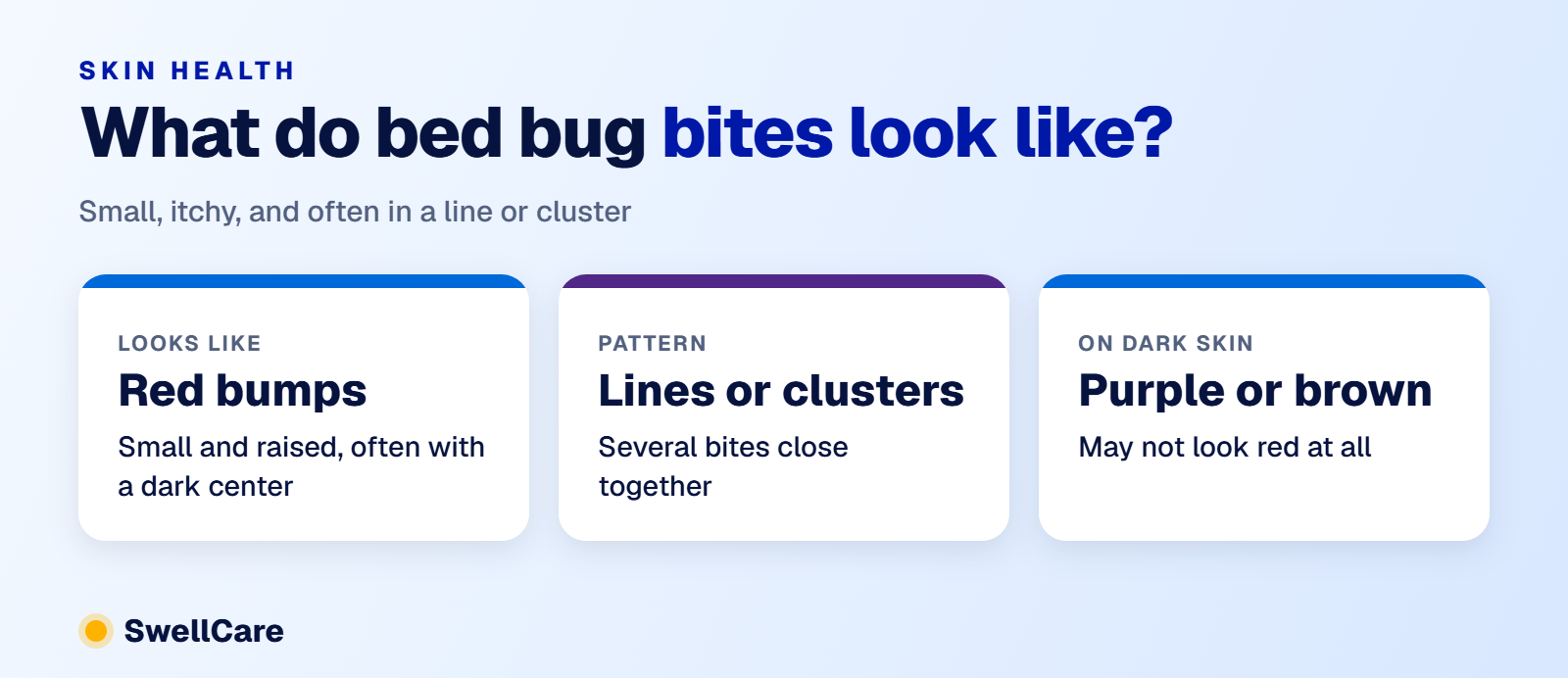
Other usual suspects are mosquito bites, fleas and bedbugs (itching clusters or lines), and shingles, a blistering rash on one side of the body. If you’ve got a rash with no obvious bite mark, think look-alike first.
Signs a spider bite is infected or getting worse
Watch the symptoms of a spider bite over the next day or two. Infection shows up as redness that spreads or red streaks running from the sore. Pus or yellow discharge is a red flag. So are swollen glands, and pain that grows instead of easing. A fever is a warning sign too. Infected bites, including MRSA, often need antibiotics and medical treatment, so don’t wait it out.
How to treat a spider bite at home
For a plain red spider bite, this is usually all the treatment you need:
- Wash the area with soap and water.
- Hold a cold, damp cloth or ice pack on it for 10 to 20 minutes.
- Raise the area if you can, to ease swelling.
- Take an oral antihistamine if it itches, and an over-the-counter painkiller if it hurts.
- Dab on hydrocortisone cream or calamine lotion a few times a day.
Don’t squeeze it or try to suck out spider venom. Ask your doctor whether your tetanus shot is up to date.
When to see a doctor or call Poison Help
If you suspect a black widow or brown recluse spider bit you, get medical care right away. The same goes when you can’t tell what bit you and symptoms keep building. Early treatment helps. Also go for any of these:
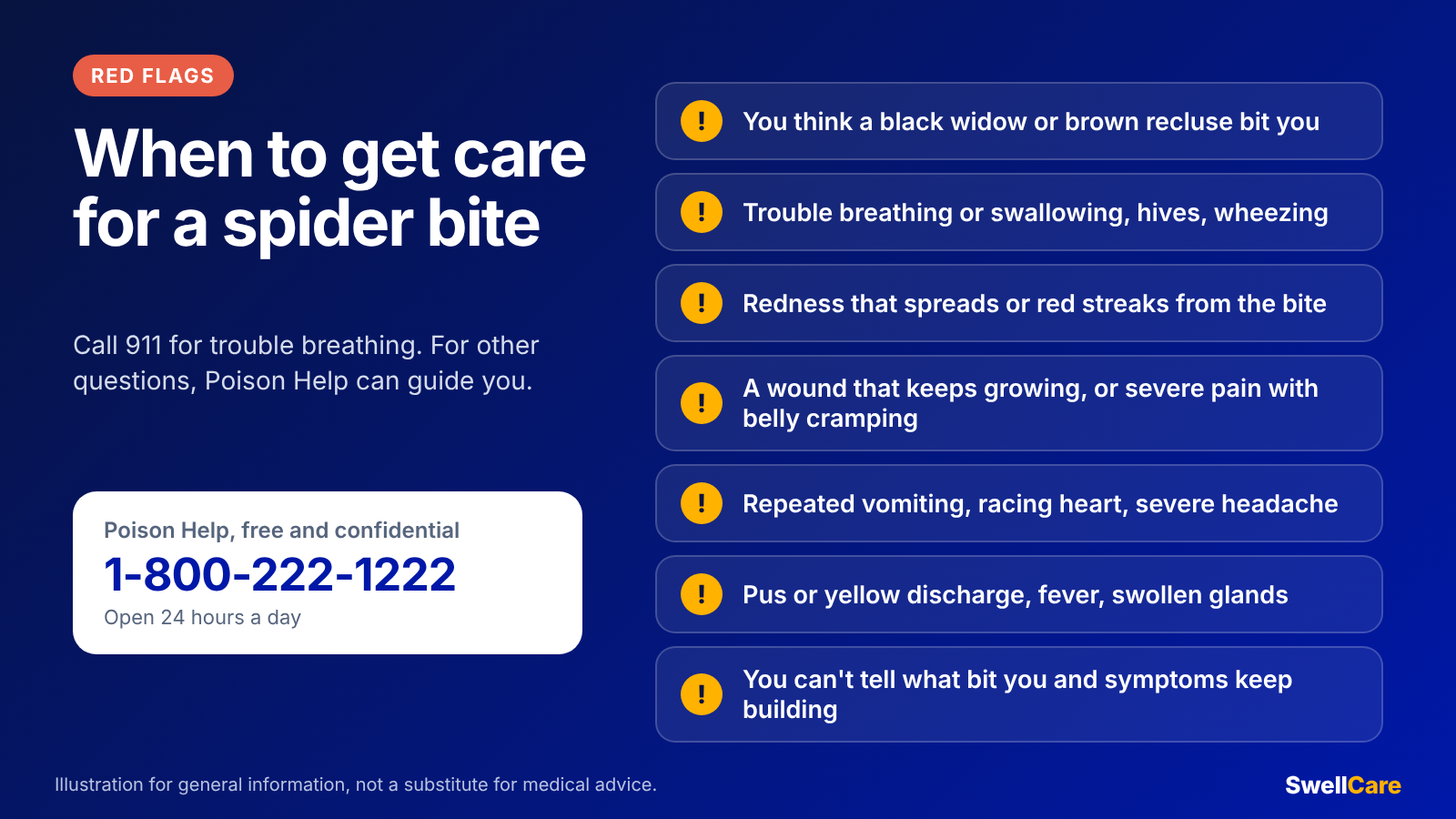
- Hives, wheezing, or any trouble breathing or swallowing (signs of an allergic reaction)
- Redness that spreads, or red streaks leading away from the bite
- A wound that keeps growing, or severe pain with belly cramping
- Repeated vomiting, a racing heart, a severe headache, vision changes or muscle weakness
Call 911 for breathing trouble. For everything else, Poison Help at 1-800-222-1222 is free and confidential, and it’s open 24 hours a day.
Not sure whether it’s worth being seen in person? Swell offers 24/7 clinician-led virtual care by chat or video. Start with Swell urgent care or see how it works. Swell isn’t emergency care, so call 911 for trouble breathing.
Questions people ask about spider bites
What is the first stage of a spider bite?
Usually a small red bump with a sting or itch. Black widow bites can begin with a sharp pinprick and numbness. Brown recluse bites may barely hurt at first, with discomfort building over about eight hours.
How do you know if a spider bit you?
Often you can’t, unless you saw the spider. Fang marks suggest one, but no test confirms it. If you caught the spider, snap a photo. Judge the bite by its symptoms and how it changes.
Will a spider bite go away on its own?
Most spider bites do. Mild bites fade within a few days with washing and a cold pack. Black widow and brown recluse bites need medical care, and any bite that spreads, blisters or worsens deserves a check.
What is mistaken for a spider bite?
MRSA and other skin infections top the list. Mosquito bites come next, then flea and bedbug bites, shingles and allergic skin rashes. Without a seen spider, a doctor judges by appearance and how the sore progresses.
How long after a spider bite do symptoms appear?
Mild redness and itching show up within minutes to hours. Brown recluse pain builds over about eight hours. Black widow symptoms such as cramping and nausea can follow soon after the bite and last one to three days.
Trusted references
Public-health, research, and medical-society resources related to this guide.