You got stung on Saturday. By Monday the spot is bigger and redder, and it feels angrier than it did when it happened. Is that a problem?
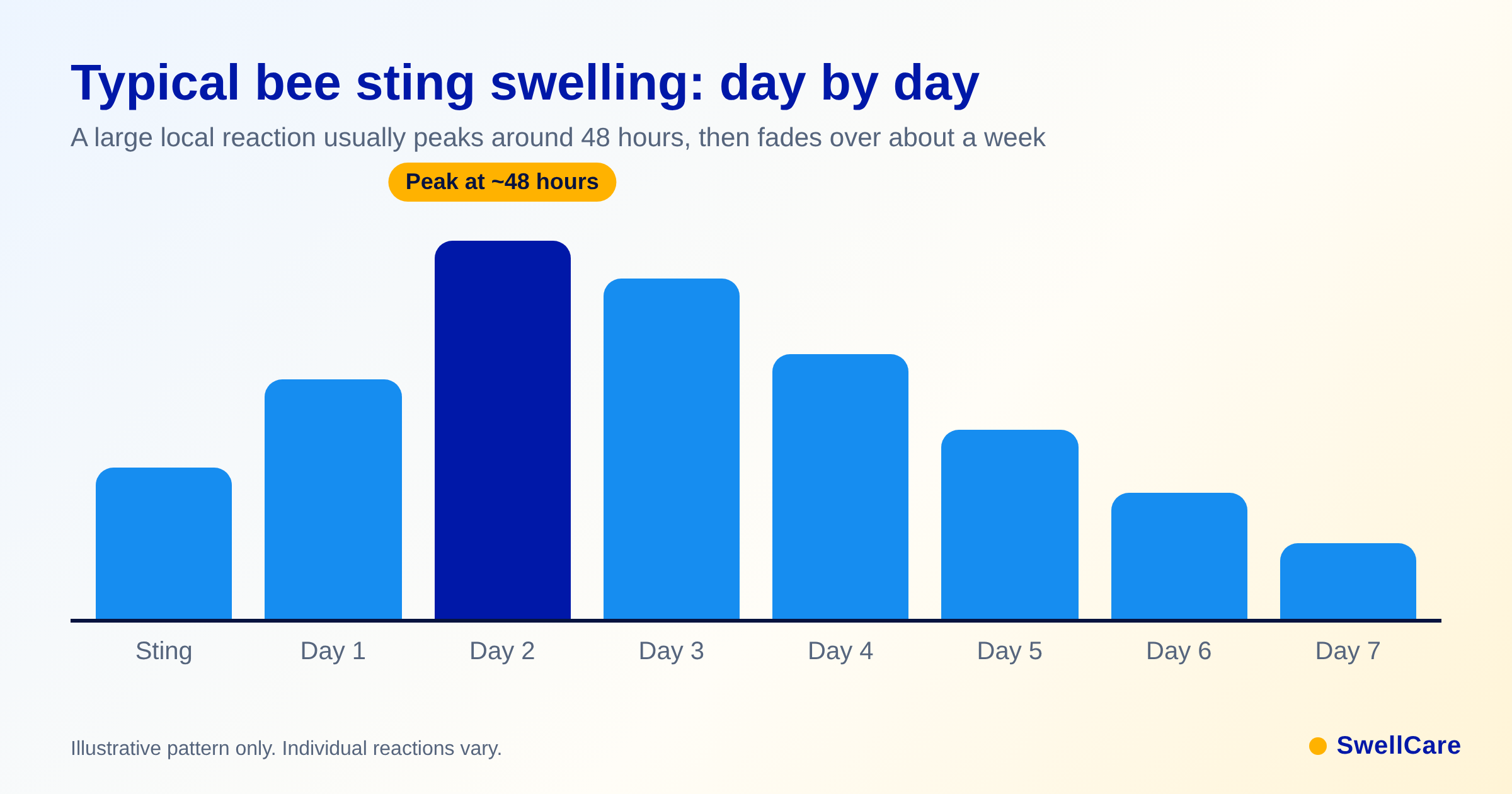
Usually, no. Bee sting swelling 2 days later is a classic pattern, and it most often points to a large local reaction rather than a true allergic reaction. It tends to peak around 48 hours and settle within 7 days. The catch is knowing which symptoms mean “wait it out” and which mean “get seen today.” This guide walks you through both.
Is bee sting swelling 2 days later normal?
For most people, yes. Medical references describe the redness and puffiness after a bee sting as something that usually peaks at about 48 hours and can last around a week. In a big reaction it can even spread across a whole arm or leg, which looks alarming but is still a mild-to-moderate local event for most people.
That surprises people. You expect a bee sting to hurt most right away, then fade. Instead the sting site gets puffier on day two and the itching ramps up.
Here’s the part worth remembering: swelling by itself is not a sign of allergy. The same source says so plainly. A puffy, hot, itchy forearm that started at the sting and stayed near it is a large local reaction. It’s uncomfortable, not dangerous.
Why the swelling grows on day two
Bee venom contains proteins that irritate tissue and switch on your immune system. Even one bee sting delivers enough venom for your body to treat it as an intruder. Your body answers with extra fluid and inflammation, and that takes time to build. Hence the delay. The venom is gone from the stinger within minutes, but your body’s response to it isn’t.
Here’s what a typical timeline looks like:
| When | What you’ll usually see |
|---|---|
| Minutes after the sting | Sharp pain, burning, a small red bump |
| 24 hours | Redness spreading outward, skin warm and tight |
| About 48 hours | Peak size, tenderness, heavy itching |
| Days 3 to 5 | Slow shrinking, bruise-like color, itching |
| Around 7 days | Mostly gone, sometimes a little longer |
Mild stings follow the same curve, just smaller. If yours is following it, you’re probably fine.
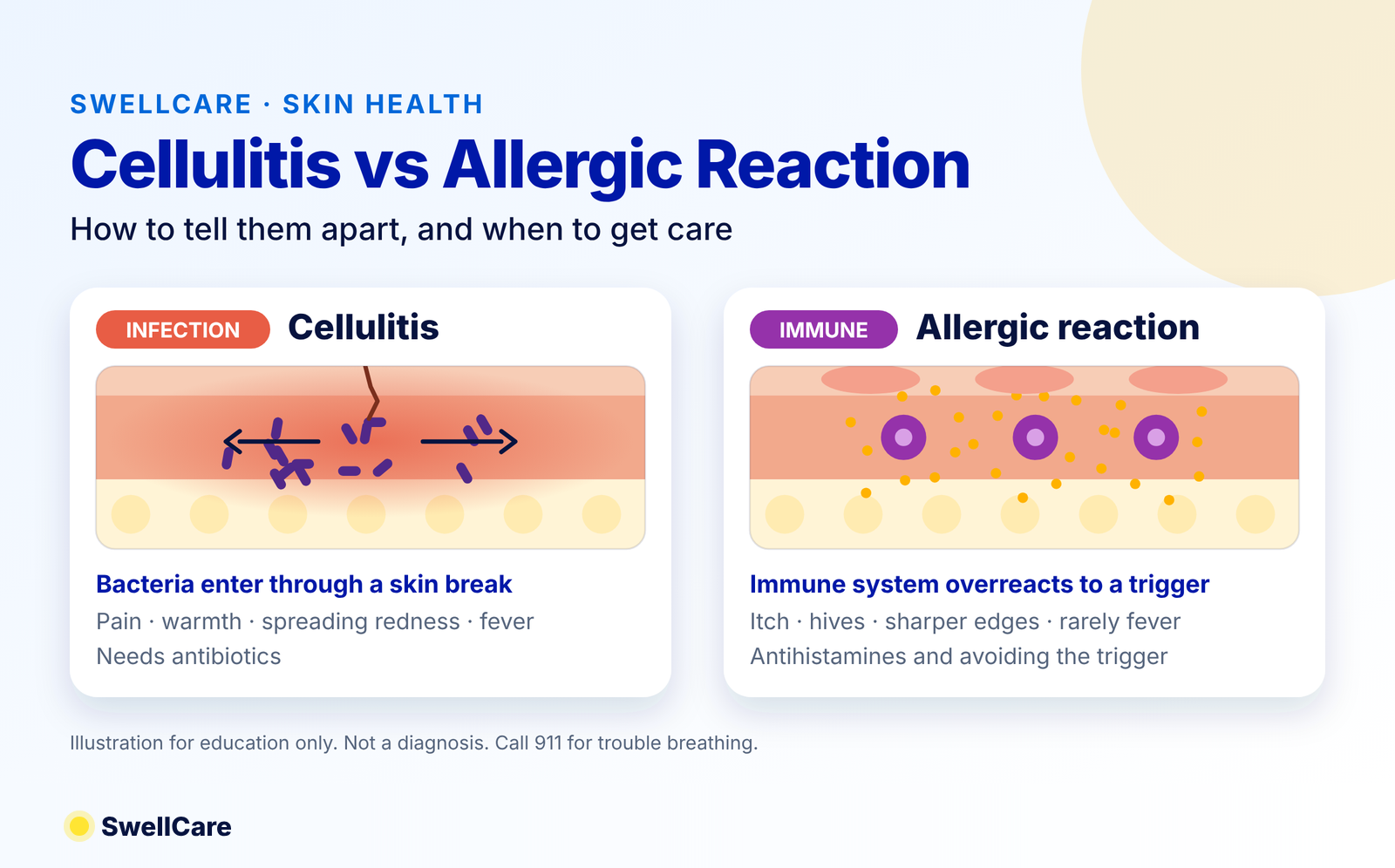
Large local reaction vs allergic reaction vs infection
Three different things can look similar on day two. Telling them apart comes down to timing and symptoms.
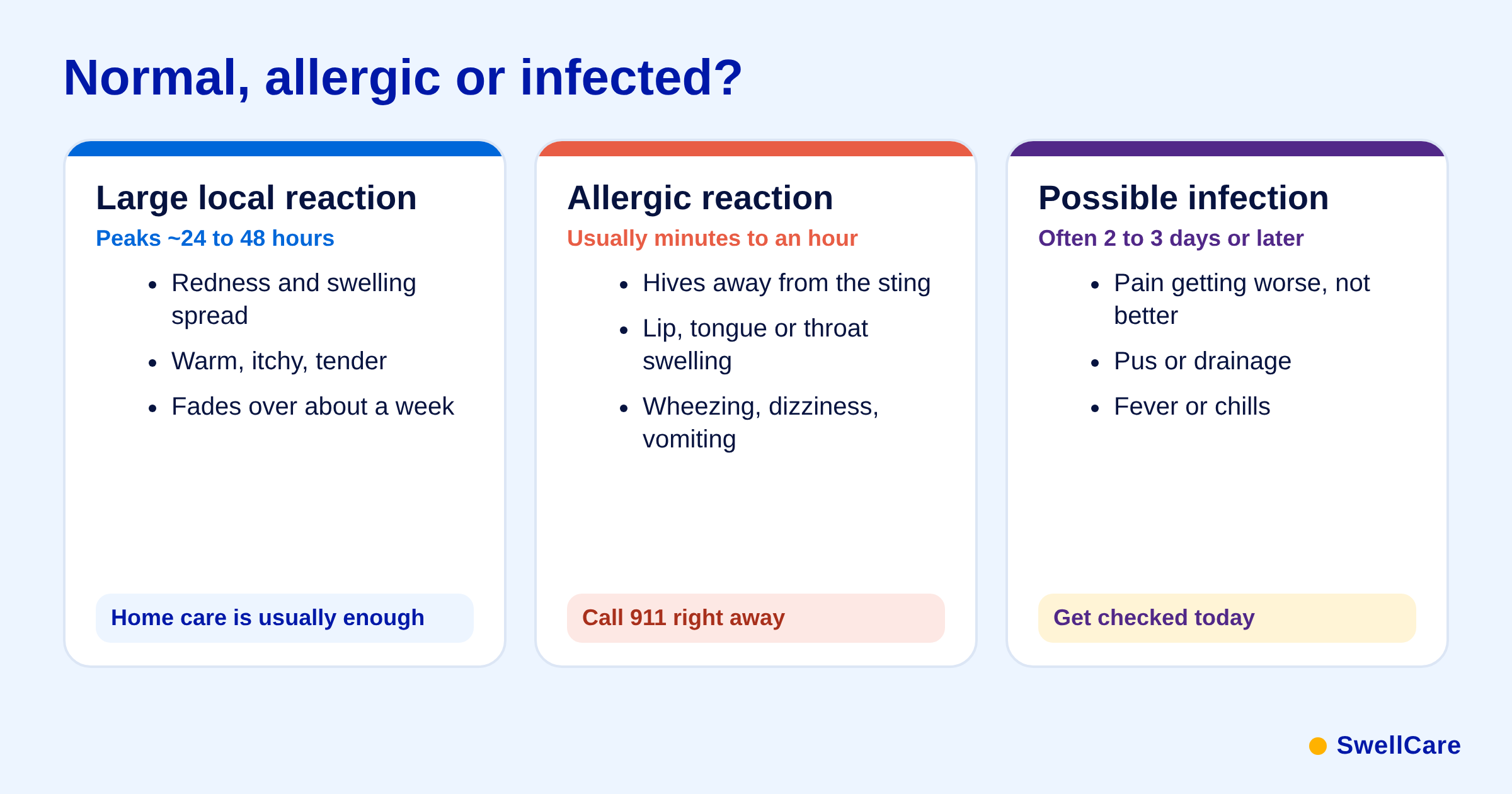
A large local reaction is an overreaction confined to the area around the sting. Think redness, warmth and itching, plus some pain. It’s the usual explanation for bee sting swelling 2 days later.
A true allergic reaction shows up fast, typically within minutes to an hour of the sting. The warning symptoms include hives away from the sting, swelling of the lips, tongue or throat, wheezing, dizziness, a racing heart or vomiting. This is anaphylaxis, and it’s life-threatening. Epinephrine is the first-line treatment, followed by a call to 911. Because anaphylaxis usually starts within minutes to an hour, new puffiness on day two with none of those symptoms is far more likely a local reaction than a severe allergic reaction.
An infection is less common than people fear. Doctors suspect one when redness and swelling begin a day or two after the sting rather than right away, when pain is severe or keeps getting worse, or when fever and chills appear. Healthline notes infection symptoms can show up 2 to 3 days after the sting, including pus and fever, along with pain that keeps climbing. A bee sting rarely gets infected, but when it does, the bacteria usually arrive through scratched skin.
The tricky part is that a severe reaction can mimic one. That’s exactly why a quick look from a doctor helps when you can’t tell.
What to do tonight to calm the swelling
Treat it like a sprain you can’t stop thinking about. These steps ease symptoms rather than speed up the clock, so keep it simple.
- Remove any stinger. If one is still in there, scrape it out with a dull edge, such as a card. Don’t squeeze it.
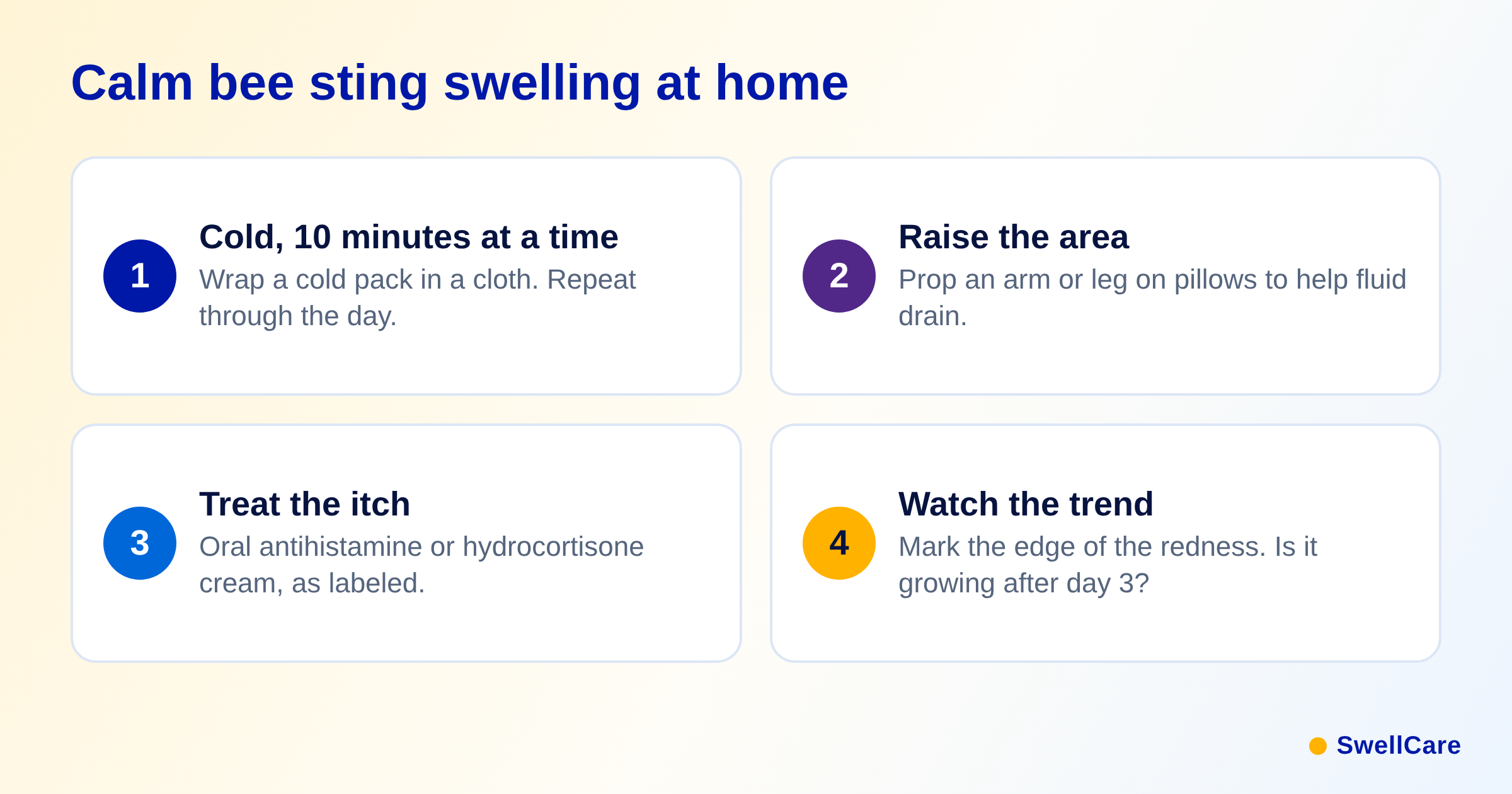
- Use a cold pack. Wrap the cold pack in a cloth and hold it on for about 10 minutes, then take a break. A cold compress made of frozen peas works too.
- Raise the area. Prop a stung hand or foot above heart level when you can.
- Calm the itch. An oral antihistamine or an over-the-counter hydrocortisone cream is the standard approach, as Harvard Health describes.
- Manage the pain. Ibuprofen or another anti-inflammatory can take the edge off if you can safely take it.
Don’t scratch. Broken skin gives bacteria a way in, which is how a harmless reaction can turn into a skin problem.
Mark the edge of the redness with a pen. It sounds silly, but it turns “does it look bigger?” into a yes-or-no answer.
When bee sting swelling means you should get checked
Severe symptoms need emergency care. Call 911 or go to the emergency room if you have trouble breathing, a tight or swollen throat, widespread hives, dizziness or fainting. These are symptoms of a severe, life-threatening allergic reaction. If you carry an epinephrine auto-injector, use it first, then get emergency care even if you feel better.
Get seen by a doctor the same day if any of these apply:
- Pain is getting worse instead of better after day two
- You have a fever or chills
- Pus or drainage appears
- The redness keeps spreading after day three
- The sting was near the eye, mouth or throat
- You’ve had a severe reaction to a bee sting before
- You have a weakened immune system or diabetes
Mild symptoms that are improving by day four can be watched at home. Symptoms that are escalating can’t. If you’ve had a big reaction to bee venom, an allergist can tell you whether you’re at risk of a severe reaction next time. If you carry epinephrine, check its expiration date today.
Get a clinician to look at it today
Waiting and wondering is the worst part of a bee sting that won’t settle. You shouldn’t have to sit in a waiting room to find out whether your arm is normal.
Swell offers 24/7 clinician-led virtual urgent care. You describe your symptoms, show the sting site on video, and a licensed clinician tells you whether it’s a routine reaction or something that needs treatment, such as a steroid or an antibiotic. See how it works and pricing before you start.
Virtual care can’t treat anaphylaxis. If you have breathing trouble or a swollen throat, call 911.
Questions people ask about bee sting swelling
Is it normal for a bee sting to swell after 48 hours?
Yes. This kind of reaction commonly peaks around 48 hours and fades over roughly a week. Puffiness that stays near the sting and feels warm and itchy is expected. See a doctor if pain worsens, fever develops, or the redness keeps spreading after day three.
Will Benadryl reduce swelling from bee stings?
It mainly helps the itching, not the size of the bump. Cold and elevation do more for puffiness, and so does an anti-inflammatory. Benadryl causes drowsiness, so non-sedating antihistamines are an option. Check the label or ask a pharmacist, especially for children, and don’t drive after a sedating one.
What can I expect 2 days after a bee sting?
Expect the biggest, reddest, itchiest version of your body’s response to the venom around the sting site. Symptoms should plateau and then slowly improve over the next several days; a bee sting that is still worsening on day five deserves a call. Hives elsewhere on your body or trouble breathing are not expected and need emergency care for possible anaphylaxis.
How big is too big for bee sting swelling?
There’s no single cutoff. Big local reactions can involve a whole limb. Seattle Children’s guidance is to call a doctor when the area reaches about 4 inches (10 cm) or crosses a joint. What matters more is the direction: if the size and pain are still increasing after day three, or you have a fever, get it checked, and ask whether an allergist visit makes sense. This article is educational and isn’t a substitute for medical advice.
Trusted references
Public-health, research, and medical-society resources related to this guide.