Gently tug your earlobe. If the pain spikes, you’re probably dealing with an outer ear infection. If it doesn’t, but the ear feels full and everything sounds muffled, think middle ear.
That two-second check won’t replace an exam. It does answer the question most people ask at 2 a.m.: which kind of ear infection is this?
Ear infection symptoms in adults often look different from what kids get. Adults catch fewer ear infections, yet when one lands it can hurt more than you’d expect. Here’s how to read the signs, what helps, and when to get seen.
Which ear infection do you have? Start with the tug test
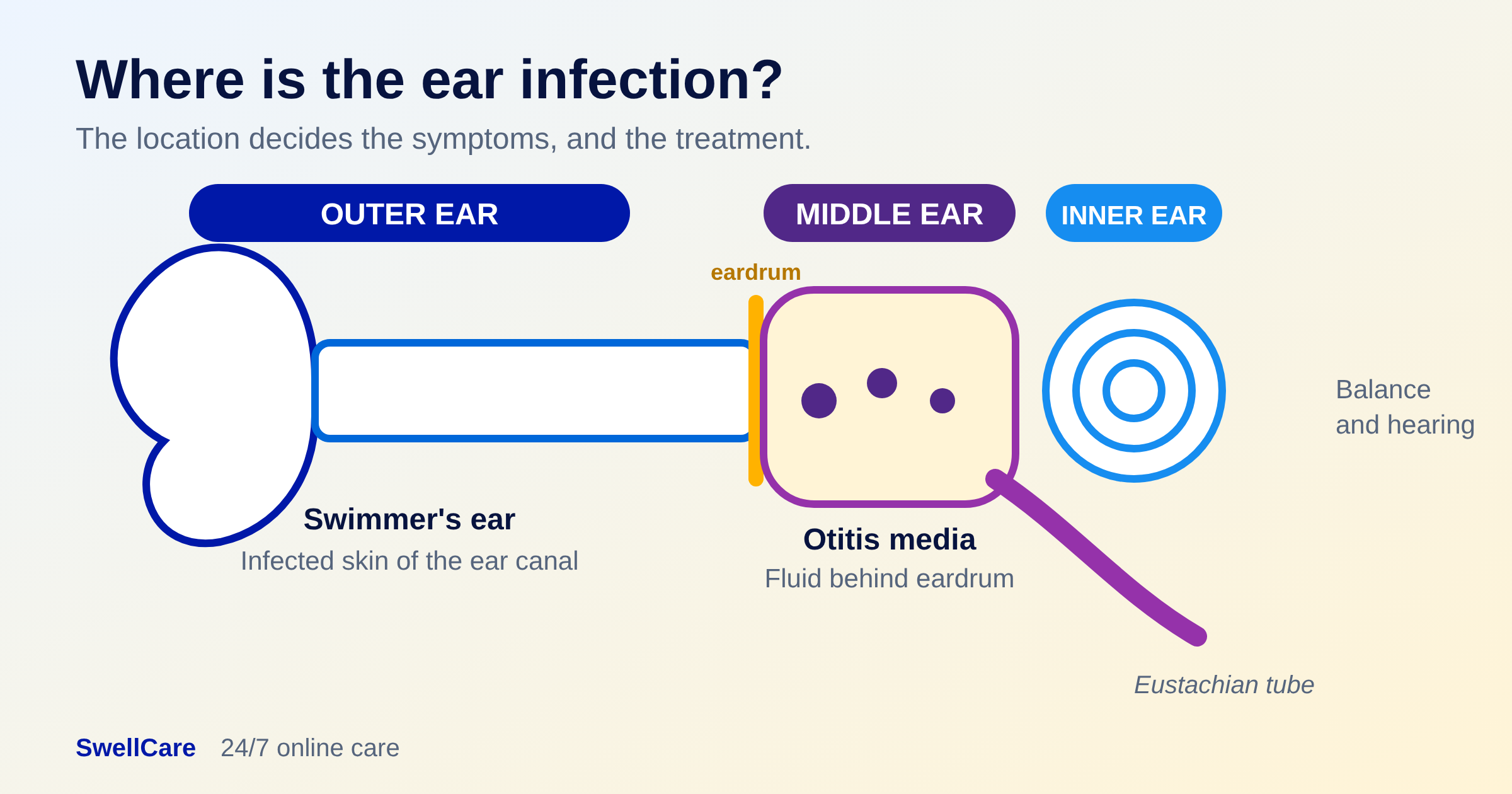
Your ear has three zones. The outer ear is the part you can see plus the ear canal. The middle ear sits behind the eardrum. The inner ear handles hearing and balance. Most ear infection symptoms in adults come from the first two zones.
An outer ear infection, usually called swimmer’s ear, is an infection of the skin lining the canal. A middle ear infection (otitis media) means inflamed, infected fluid trapped behind the eardrum.
To run the tug test, pull the earlobe gently or press the small flap in front of the canal, called the tragus. A jolt of pain when you tug points to the outer ear. No change in pain doesn’t rule it out, so treat it as a clue and not a diagnosis.
Middle ear infection symptoms in adults
Most middle ear infections start after a cold or sinus infection, or when allergies flare up. Swelling blocks the eustachian tube, the narrow channel that drains the middle ear. Fluid builds up behind the eardrum and presses on it. Viral or bacterial germs then multiply in that trapped fluid, which is why the pressure keeps climbing. Flying with a stuffy nose can strain the eustachian tube the same way.
Common symptoms include:
- Deep, dull ear pain or pressure
- A full, stuffed feeling
- Muffled hearing or mild hearing loss
- Fever, nausea and a run-down feeling
- Fluid or discharge from the ear, which can mean the eardrum has torn
Hearing usually returns once the fluid clears, though leftover fluid can muffle things for weeks.
Outer ear infection (swimmer’s ear) symptoms
Swimmer’s ear starts in the ear canal. Water that lingers wears away the protective wax and skin, and bacteria move in. Frequent swimming and long showers can do the same damage, and so can hearing aids and cotton swabs. It isn’t contagious.
The signature sign is pain when you tug the ear or press the tragus. Itching inside the canal is common. So are redness and swelling, plus discharge and a plugged feeling. Swelling can narrow the canal enough to dull your hearing, and some people feel the pain in the jaw.
Middle ear vs outer ear at a glance
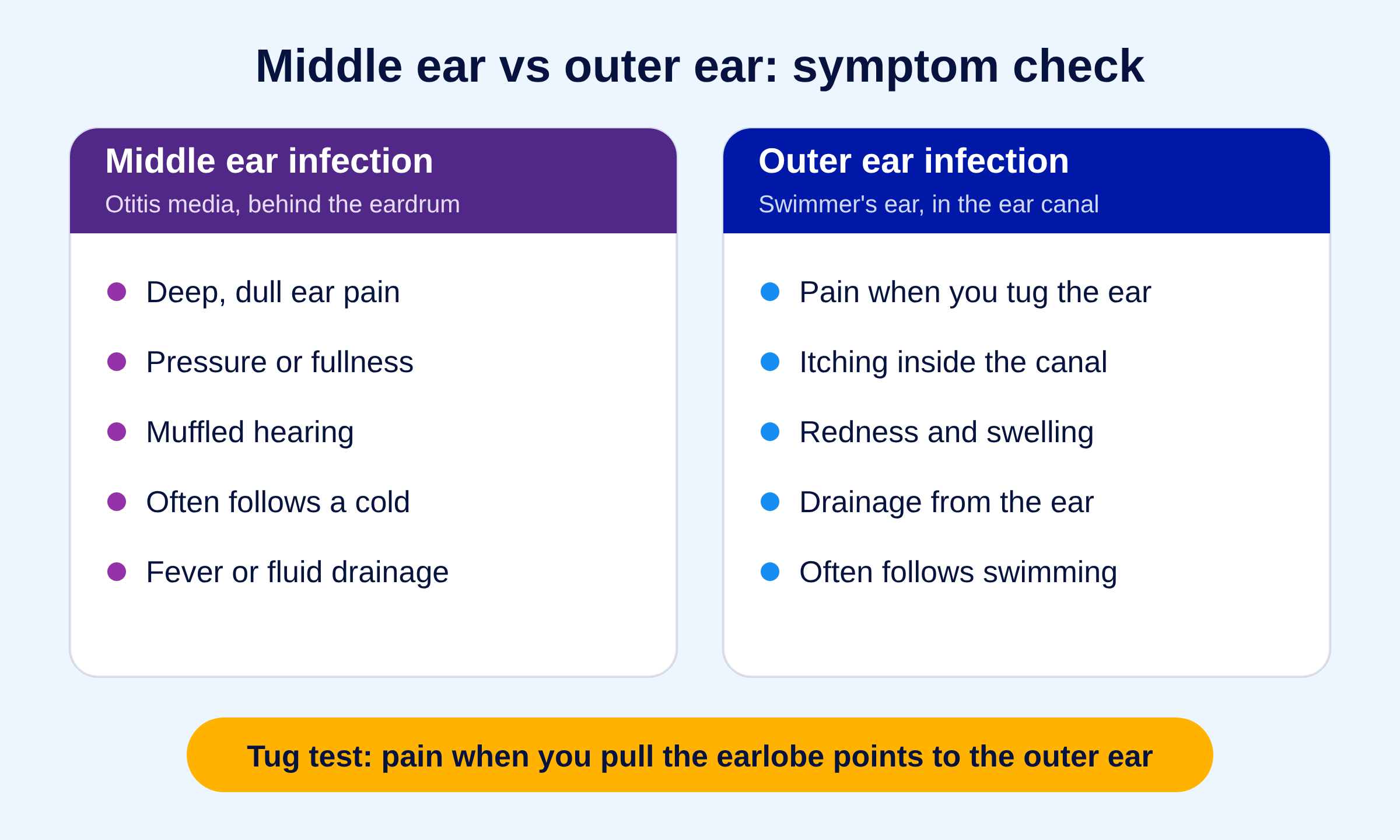
| Middle ear (otitis media) | Outer ear | |
|---|---|---|
| Where | Behind the eardrum | Ear canal |
| Usual trigger | Cold, allergies, sinus infection | Swimming, moisture, cotton swabs |
| Feels like | Deep, dull pressure | Sharp, worse with a tug |
| Hearing | Muffled | Muffled if the canal swells |
| Discharge | Only if the eardrum tears | Common |
Inner ear infection: dizziness is the giveaway
An inner ear infection is rarer, and often viral. Spinning, vertigo and nausea, plus trouble with balance and sometimes hearing loss, point to the inner ear, which sits deeper than the middle ear. It runs your balance system, so dizziness here needs a clinician’s eyes soon.
What helps while you wait to be seen
Treatment depends on the location. For swimmer’s ear, a clinical guideline favors ear drops over antibiotic pills in uncomplicated cases. Keep the canal dry while it heals.
Many middle ear infections settle in a week or two. A clinician may add an antibiotic when symptoms are severe, a fever shows up, or nothing improves after a couple of days.
Meanwhile:
- Take ibuprofen or acetaminophen as the label directs.
- Hold a warm cloth against the ear.
- Skip cotton swabs, and don’t dig for wax.
- Avoid numbing or drying ear drops if you have drainage, ear tubes or a possible eardrum tear, since a hole changes what’s safe.
When to see a doctor about ear pain
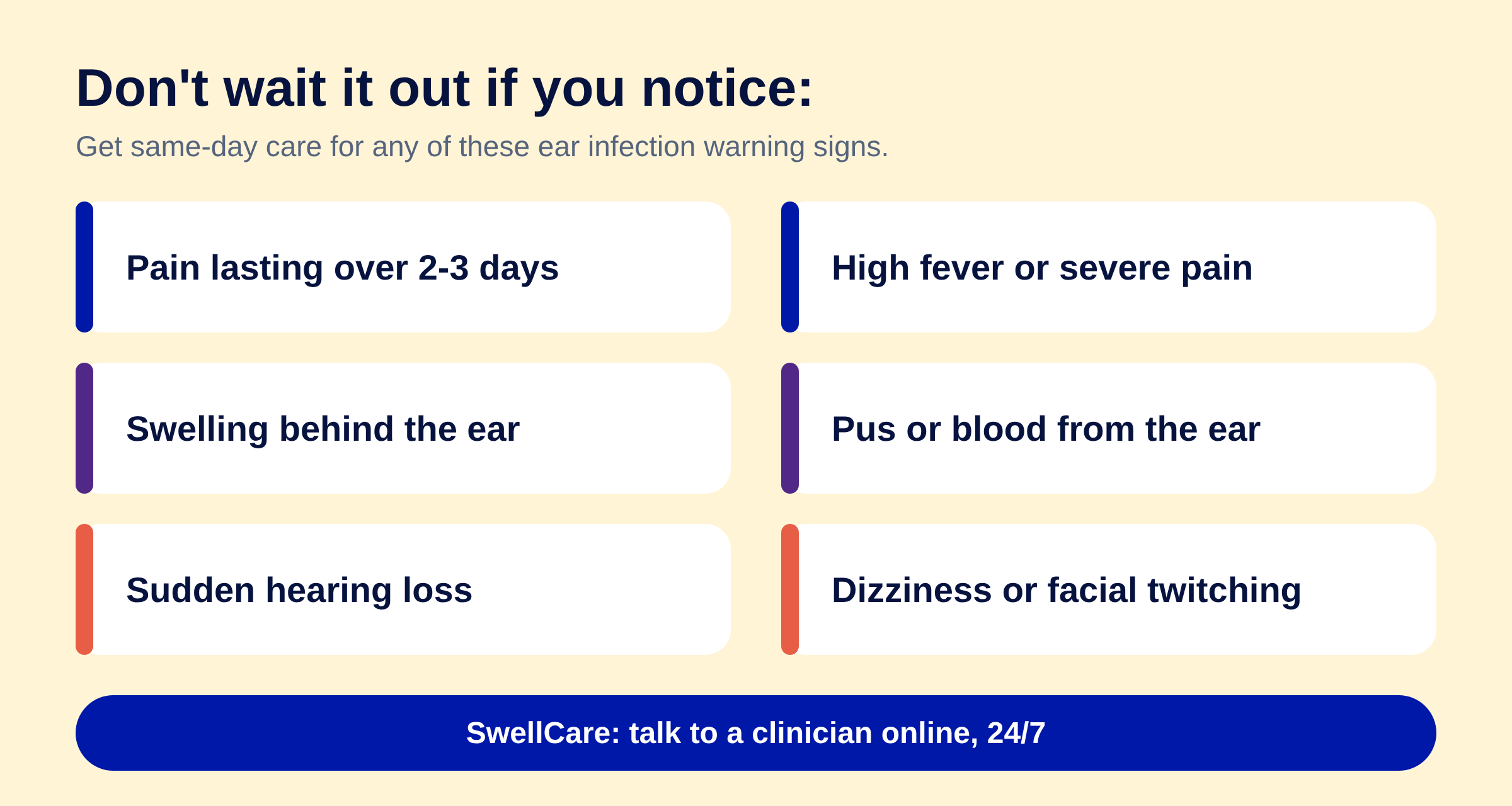
Book a visit if the ache lasts more than two or three days or keeps getting worse. See a doctor the same day for any of these:
- Pus, blood or other drainage from the ear
- Swelling behind the ear
- A high fever or severe pain
- Sudden hearing loss
- Dizziness or facial twitching
One odd one: severe pain that suddenly stops can mean the eardrum has ruptured. Don’t take that as good news. Call a doctor.
Get your ear checked today
Ear pain doesn’t keep office hours. A Swell clinician can talk through your ear infection symptoms, tell you whether it sounds like a middle ear or outer ear problem, prescribe treatment when it’s appropriate, and point you to in-person care if your ear needs a look with an otoscope. Start a visit with Swell any time, day or night.
Questions people ask about adult ear infections
Can an ear infection go away on its own?
Often, yes. Many middle ear infections improve within a week or two without medicine. Swimmer’s ear usually needs drops to clear. If you’re not better in two to three days, or you feel worse, talk to a doctor.
How long do ear infection symptoms last in adults?
Most start to ease within a couple of days of treatment and clear within one to two weeks. Fluid behind the eardrum can linger after the ear infection itself has cleared, so muffled hearing may hang around for weeks.
What could be mistaken for an ear infection?
A sore jaw joint, sinus pressure or a toothache can all cause ear pain. So can impacted earwax and a throat infection. If the ear looks normal on exam, a clinician will look at those next.
Do adults need antibiotics for an ear infection?
Not always. Swimmer’s ear is usually treated with medicated ear drops. Middle ear infections often get a watch-and-wait approach first, with a prescription if symptoms are severe or don’t improve.
Is an adult ear infection contagious?
Bacterial or viral, the infection inside the ear isn’t passed from person to person. The cold that triggered a middle ear infection can spread, though, and so can the habit of sharing earbuds.
Trusted references
Public-health, research, and medical-society resources related to this guide.