Your sinus infection is finally easing up. But one ear still feels like you're underwater, voices sound muffled and every swallow ends in a crackle.
That's fluid buildup in your middle ear. The fix is to clear your nose first, because the ear can only drain once the tube connecting it to the back of your nose opens again. If you're wondering how to get rid of fluid in ear from sinus infection, the short answer is saline rinses, a few days of decongestant if it's safe for you, gentle ear-popping and patience. Most cases settle on their own within weeks. Some take up to three months, and a few need a doctor.
Here's what's going on, what works, what doesn't and when to stop waiting.
Why a sinus infection leaves fluid behind your eardrum
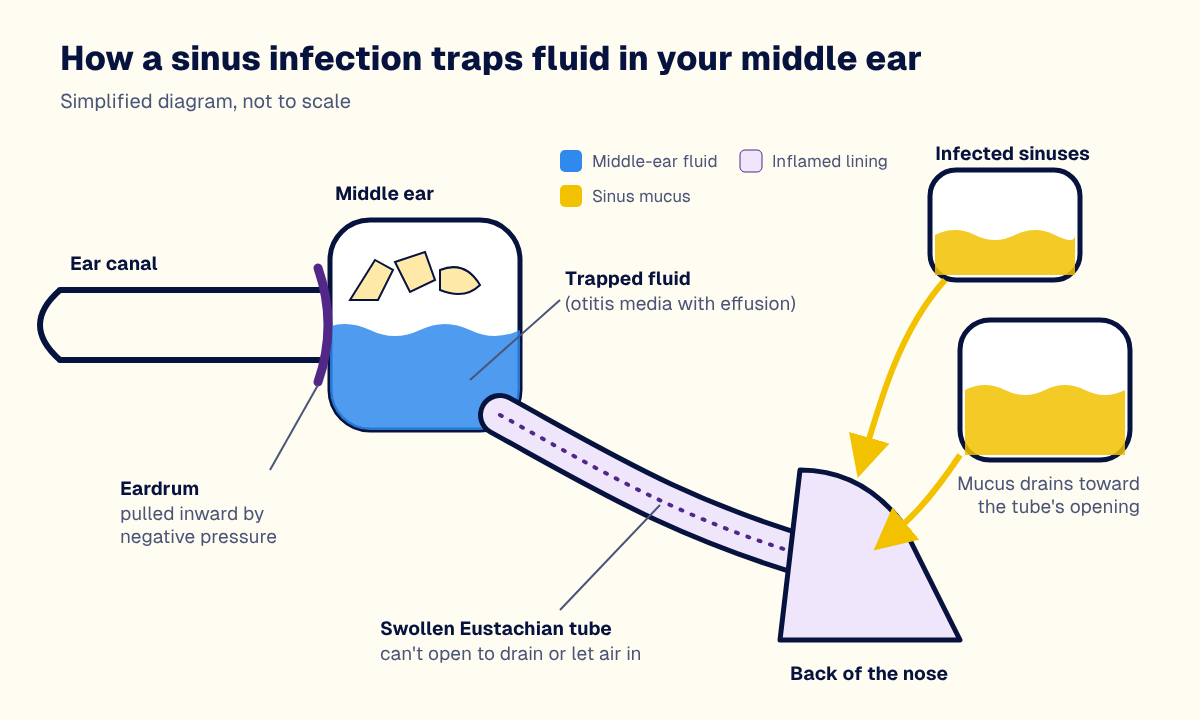
Your middle ear is a small, air-filled pocket between the ear canal and the inner ear. It connects to the back of your nose through a narrow channel called the Eustachian tube. According to Stanford Medicine's ear specialists, the tube opens every time you swallow or yawn, which evens out pressure and lets mucus drain away.
A sinus infection (sinusitis) and the sinus congestion that comes with it throw that system off. Inflammation swells the lining of your nasal passages and sinuses, and the swelling reaches the opening of the Eustachian tube. Thick mucus from the sinuses drains right past it. The tube stays shut, and normal drainage stops.
The air already trapped inside gets absorbed. That creates negative pressure, which pulls the eardrum inward and draws fluid out of the surrounding tissue. Doctors call this otitis media with effusion: fluid buildup without an active infection.
That's why you can still feel blocked after your nose feels better. Sinus pressure fades first. The tube's lining is usually the last thing to calm down.
Signs the fluid is sitting in your middle ear
Fluid buildup in the middle ear tends to feel more annoying than painful. Common signs include:
- a plugged, "underwater" feeling
- muffled hearing, or your own voice sounding oddly loud inside your head, a bit like talking with earplugs in
- popping, clicking or crackling when you swallow or yawn
- a dull ache or pressure, often worse lying down
- light dizziness or feeling a bit off balance
Children often don't complain at all. MedlinePlus notes that children with this kind of fluid usually don't act sick. You might only notice them turning up the TV. That matters, because even temporary hearing loss can slow down a child who's still learning to talk.
Is it fluid or an ear infection?
Trapped fluid can turn into a middle ear infection if bacteria get in. The difference matters, because an infection sometimes needs a prescription while plain fluid almost never does.
| Fluid in the ear (effusion) | Middle ear infection | |
|---|---|---|
| Main feeling | Fullness, muffled sound | Sharp, throbbing pain |
| Fever | Usually none | Common, especially in children |
| Overall | Fine | Unwell |
| Drainage | No | Possible (pus or blood) |
| Prescription needed? | Rarely | Sometimes |
If the pain is sharp, you have a fever or anything leaks out, treat it as a possible infection and get checked.
How to get rid of fluid in ear from sinus infection at home
Home treatment has one goal: shrink the swelling around the Eustachian tube so it can open and drain. Work from your nose outward. Almost everything here is over-the-counter.
1. Rinse your nose with saline
A saline rinse washes mucus and inflammatory debris out of the nasal passages and sinuses. Use a neti pot or squeeze bottle with a saline packet once or twice a day. Lean over the sink, tilt your head and let the saline flow through, breathing through your mouth. Switch nostrils halfway.
The FDA says to use only distilled, sterile or previously boiled water. Boil tap supplies for 3 to 5 minutes, then cool until lukewarm. Unboiled tap isn't safe for nasal irrigation.
2. Use a steroid nasal spray
A steroid nasal spray such as fluticasone calms inflammation in the nasal lining. It's most useful when sinus congestion drags on or allergies are part of the picture. Be realistic, though. A meta-analysis of adults with Eustachian tube dysfunction found no clear benefit for the ear itself. Nasal steroids help the nose. Whether that clears your ear is hit or miss.
3. Take a decongestant for a few days
An over-the-counter decongestant pill (pseudoephedrine, kept behind the pharmacy counter) or spray (oxymetazoline) can ease nasal congestion fast. Keep sprays short. MedlinePlus warns against using oxymetazoline for more than 3 days, because congestion can come back worse. Ask a pharmacist first if you have high blood pressure or heart disease, and don't give decongestants to young children.
4. Pop your ears gently
Swallowing and yawning are your first tools. Each swallow opens the tube for a moment, so chew gum or sip a drink. Next, try the Toynbee maneuver: pinch your nostrils and swallow.
If you still feel blocked once your nose is fairly clear, try a soft Valsalva maneuver. Pinch your nostrils, close your mouth and breathe out gently for a second or two, as if inflating a balloon. Stop if it hurts.
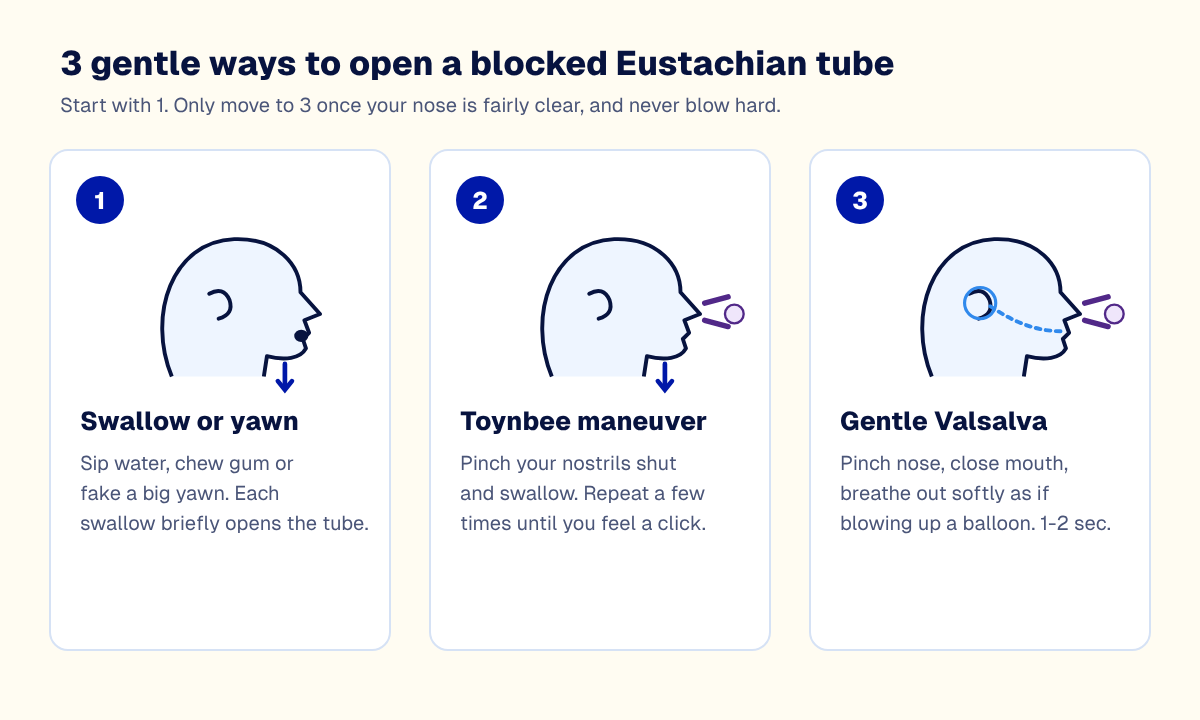
Most guides skip one warning. Stanford's ENT team advises against forcing air up the tube while you still have a cold or runny nose, since it can push infected mucus into the middle ear. Clear the nose first, then pop.
5. Breathe in steam and use a warm compress
Steam from a hot shower or a bowl of hot water (towel over your head, eyes closed) loosens thick mucus in the nose and sinuses. Ten minutes of steam two or three times a day is plenty. A warm, damp washcloth over the side of your face eases the ache and sinus pressure. Neither steam nor heat drains anything directly, but both help the other steps work.
6. Drink water and sleep with your head raised
Plenty of water keeps mucus thin enough to drain. At night, prop yourself up on an extra pillow and sleep with the blocked side facing up. Lying flat slows sinus drainage and makes sinus pressure feel worse by morning.
7. Treat the pain
Over-the-counter ibuprofen or acetaminophen takes the edge off ear pain and sinus pressure while you wait. Follow the label dose.
What not to do when your ear is full of fluid
Some popular fixes waste your time or cause harm.
Skip ear candles. The FDA says there's no valid scientific evidence of any medical benefit, and it has received reports of burns and punctured eardrums.
Don't dig with cotton swabs. The fluid sits deeper than any swab can reach.
Don't blow your nose hard. Clear your nostrils one at a time, gently. Forceful blowing drives mucus toward the tube.
Don't count on antihistamines or antibiotics. For children, the American Academy of Otolaryngology–Head and Neck Surgery recommends against antihistamines, decongestants, steroids and antibiotics for middle ear fluid. In adults, antihistamines help only when allergies drive the swelling. Antibiotics kill bacteria. They don't drain fluid.
Avoid flying or diving if you can. Pressure changes on a blocked ear can hurt a lot.
How long does fluid in the ear last after a sinus infection?
Usually days to a few weeks. Sometimes longer.
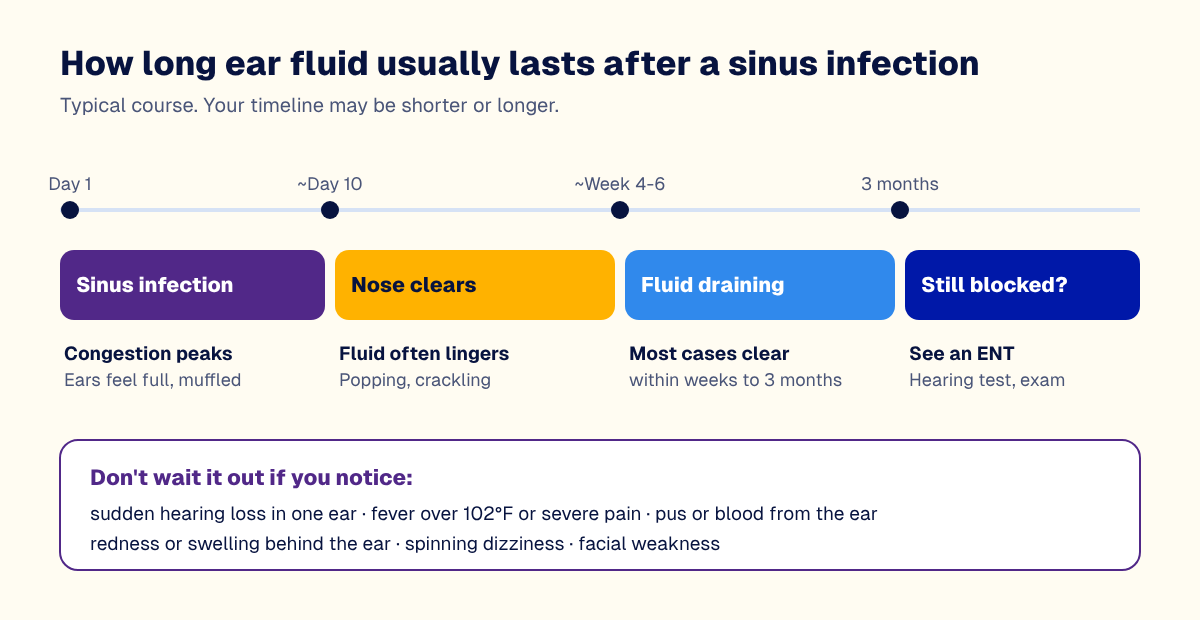
The CDC says most sinus infections get better on their own, and suggests seeing a healthcare professional if sinusitis symptoms last more than 10 days without improving. Ear fullness tends to fade a week or two after your nasal congestion clears.
When fluid lingers, the outlook is still good. A guideline summary in American Family Physician reports that 75 to 90 percent of fluid left after a middle ear infection clears on its own within three months. So doctors often watch and wait. Adults with fluid in only one ear shouldn't wait that long, though. MedlinePlus notes that teens and adults with persistent fluid may need an ENT to examine the back of the nose.
Medical treatment when the fluid won't drain
If home care hasn't worked after a few weeks, an ENT (ear, nose and throat doctor) or other healthcare professional can confirm what's going on. Expect an exam and possibly tympanometry, a quick test of how your ear responds to pressure. A hearing test is common at the three-month mark.
Treatment depends on the cause:
- Prescription medicine if a bacterial sinus or ear infection is still active, or allergy treatment if allergies keep the swelling going.
- Oral steroids, briefly, for some adults.
- Myringotomy, a tiny opening in the eardrum that lets the fluid drain right away.
- Ear tubes (tympanostomy tubes), small vents that keep air flowing for months. They're the most common surgical treatment for long-lasting fluid in children.
- Balloon dilation for adults with chronic Eustachian tube dysfunction. Cleveland Clinic describes it as an FDA-approved, incision-free procedure that takes about 10 to 15 minutes.
When to see a doctor about fluid in your ear
Book an appointment if:
- home treatment hasn't helped and the ear still feels blocked 2 to 3 weeks after your sinus symptoms clear
- your sinus symptoms last more than 10 days or get worse after improving
- a fever lasts more than 3 to 4 days
- your child has fluid with hearing problems or speech delays
- this keeps happening after every cold
Get care the same day for severe ear pain, fever over 102°F, pus or blood draining out, redness or swelling behind the ear, a stiff neck or spinning dizziness. Sudden hearing loss in one ear is an emergency. The NIDCD advises seeing a doctor immediately, because treatment delayed beyond two to four weeks is less likely to help. Don't assume it's "just fluid."
Questions people ask about fluid in the ear after a sinus infection
How do I get fluid out of my ear from an ear infection?
Treat the infection first. A doctor may prescribe medicine if bacteria are involved, and pain relievers help meanwhile. Fluid often stays for a few weeks after the infection clears. Saline rinses, swallowing, yawning and time usually finish the job. Still blocked after three months? Ask about a hearing test.
How long does it take to unclog ears after a sinus infection?
Most people notice their ears clearing within a week or two after the sinusitis settles and the sinus congestion lifts. Lingering fluid can take several weeks, sometimes up to three months. If one ear stays blocked longer, or your hearing drops suddenly, see a doctor instead of waiting.
What dries up middle ear fluid?
Nothing dries it up directly. It drains once the Eustachian tube opens, so the most useful treatment targets nasal swelling. That means nasal irrigation with a neti pot, a short decongestant course if it's safe for you, and nasal steroids when allergies are involved.
What draws fluid out of the ears?
Gravity and a working Eustachian tube. Sleeping with the blocked side up, swallowing often and gentle popping all help the tube open. Warm compresses ease discomfort but don't pull anything out. If it won't drain for months, an ENT can make a small drainage opening or place a tube.
Can I fly with fluid in my ear?
You can, but descent may hurt. Stanford's ENT team suggests timing a decongestant so it peaks in the last hour of the flight. Chew gum as the plane descends, and stay awake for landing so you keep swallowing.
Can fluid in the ear cause dizziness?
Yes. Pressure changes from fluid buildup can make you feel lightheaded or slightly off balance. The fluid isn't in the inner ear, where balance is controlled, so the dizziness is usually mild. True spinning vertigo, especially with hearing loss, needs prompt care.
Trusted references
Public-health, research, and medical-society resources related to this guide.