You pull out a cotton swab after a shower, and it comes back yellow-brown. Gross? Not really. That smear is doing a job.
So, what is earwax? It's a natural, waxy coating your ear canal makes to clean and protect itself. Doctors call it cerumen. For most people, the right amount of earwax removal is none at all: healthy ears push old wax out on their own. The exceptions are real, though. A wax plug can muffle your hearing, make your ear ache or leave you dizzy, and some home fixes cause more harm than the wax ever did.
Here's what it's made of, what its color means and how to handle a blockage safely.
What is earwax, exactly?
It's a blend of secretions and debris that forms in the outer part of your ear canal, the short tunnel that leads to your eardrum. Two kinds of glands make it. Cleveland Clinic explains that sebaceous glands next to tiny hair follicles release an oily substance called sebum, while ceruminous glands (modified sweat glands) add proteins that fight germs.
Mix those secretions with dead skin cells and loose hairs, and you get cerumen. Chemically, it contains keratin, cholesterol, squalene and long-chain fatty acids. That oily, slightly acidic mix is why it feels sticky.
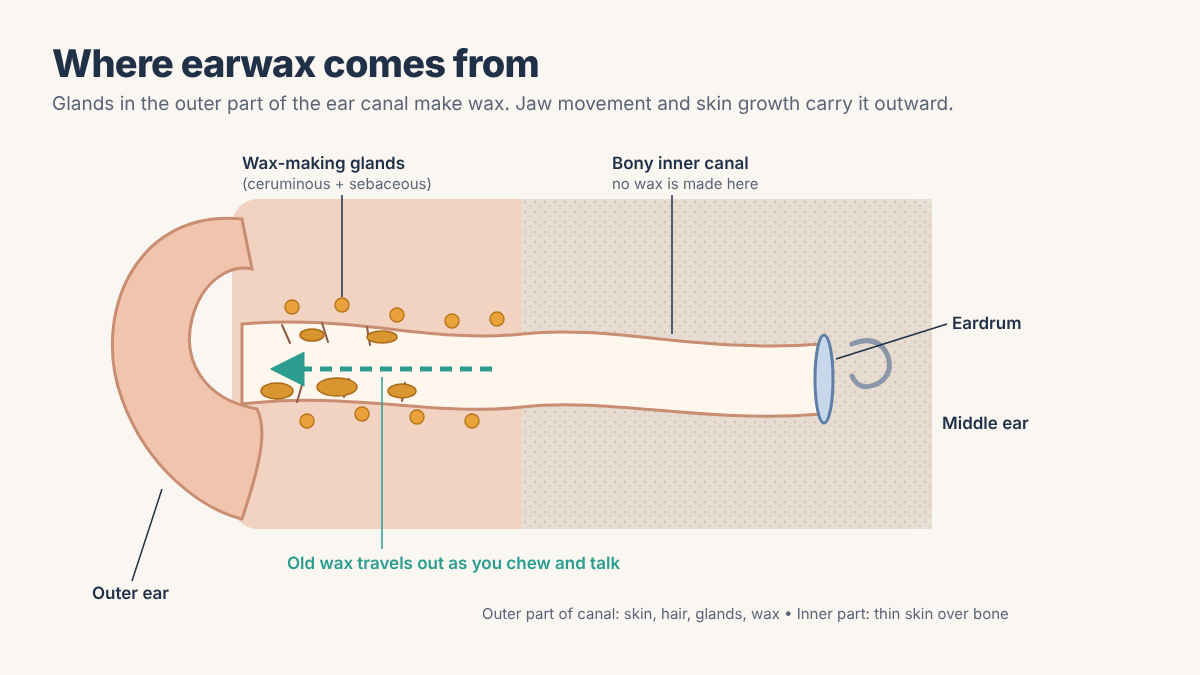
It forms in the outer ear canal and slowly travels outward. None of it is made deep inside.
What earwax does for your ears
Think of ear wax as built-in skin care. It coats the delicate canal skin so it doesn't dry out, crack or itch. It traps dust and insects before they travel deeper into the ear canal. And its antimicrobial proteins make the canal a poor place for bacteria and fungus to grow, which helps prevent infection.
Then there's the clever part. Your ears are self-cleaning. The skin lining the canal grows outward, a bit like a slow conveyor belt, and every time you chew or talk, your jaw nudges old wax toward the opening. Eventually it dries, flakes off or washes away in the shower.
You never have to scoop it out. In most cases, trying to is the problem.
Wet, dry and every color in between
Not everyone's wax looks the same, and that's normal.
Wet vs. dry earwax
Your genes decide your earwax type. A single change in a gene called ABCC11 determines whether earwax is wet or dry. Wet earwax is dominant: it's soft, sticky and yellow to brown, and it's the most common type in people of European and African descent. Dry earwax is flaky and gray or tan. It's most common in people of East Asian descent.
What your earwax color means
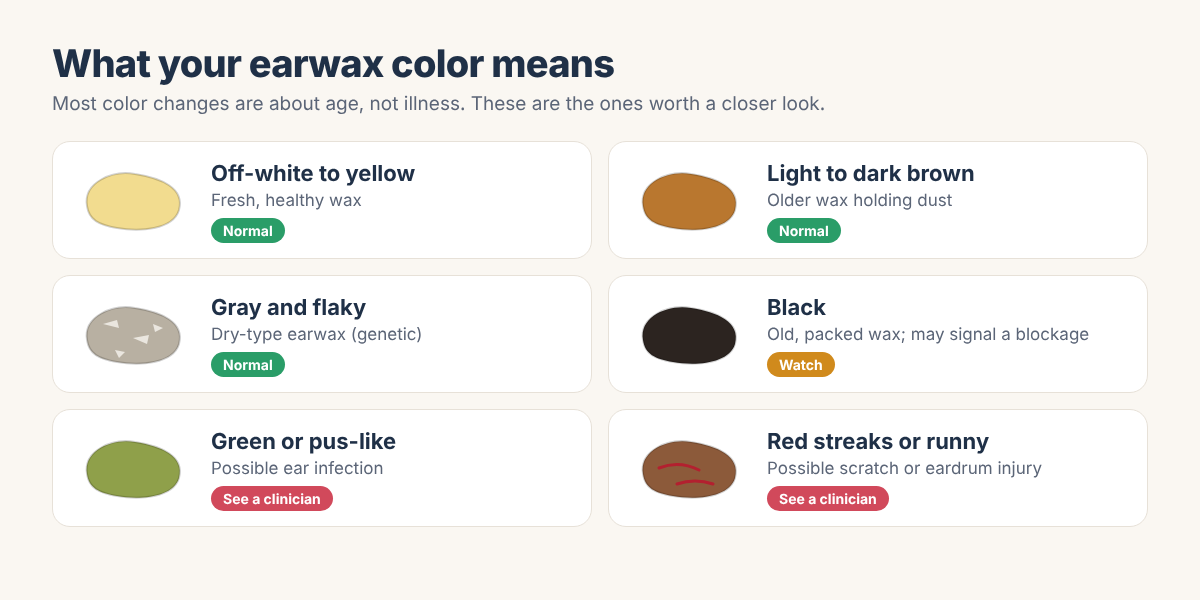
Earwax color mostly tells you its age. Fresh wax is lighter; older wax that has picked up dust is darker. A few colors are worth a closer look.
| Color | What it usually means |
|---|---|
| Off-white, yellow or light orange | Fresh, healthy wax |
| Light to dark brown | Older wax that has collected debris. Normal |
| Gray and flaky | Dry-type earwax. Normal |
| Black | Often old, compacted wax. Can point to a wax blockage |
| Green, or wax with pus | Possible ear infection |
| Brown with red streaks, or runny | Possible scratch in the canal or a ruptured eardrum |
Why some people make too much earwax
Some people simply make more than their ears can move out. Others can't clear it well because of a narrow or curvy canal, extra canal hair, or wax that's naturally hard and dry. When wax piles up and starts causing symptoms, doctors call it cerumen impaction.
It's common. According to the American Academy of Otolaryngology–Head and Neck Surgery, excess or impacted earwax affects about 1 in 10 children and 1 in 20 adults, and more than a third of older adults and people with developmental disabilities. A review in American Family Physician found impaction in up to 57% of nursing home residents.
Habits play a big part too. Cotton swabs push wax deeper, where it packs into a hard wax blockage. Hearing aids and in-ear earbuds block the natural exit, so regular users are more prone to earwax buildup.
Signs of an earwax blockage
A little visible wax at the opening isn't a problem. An earwax blockage usually shows up as:
- A feeling of fullness or plugging in one ear
- Muffled hearing or sudden mild hearing loss
- Earache or pressure
- Ringing or buzzing (tinnitus)
- Itching, odor or a dry cough
- Feeling dizzy or off balance
These symptoms overlap with other ear problems, so wax isn't always the cause. If you're not sure, get your ears checked before you start treating them.
Should you remove earwax?
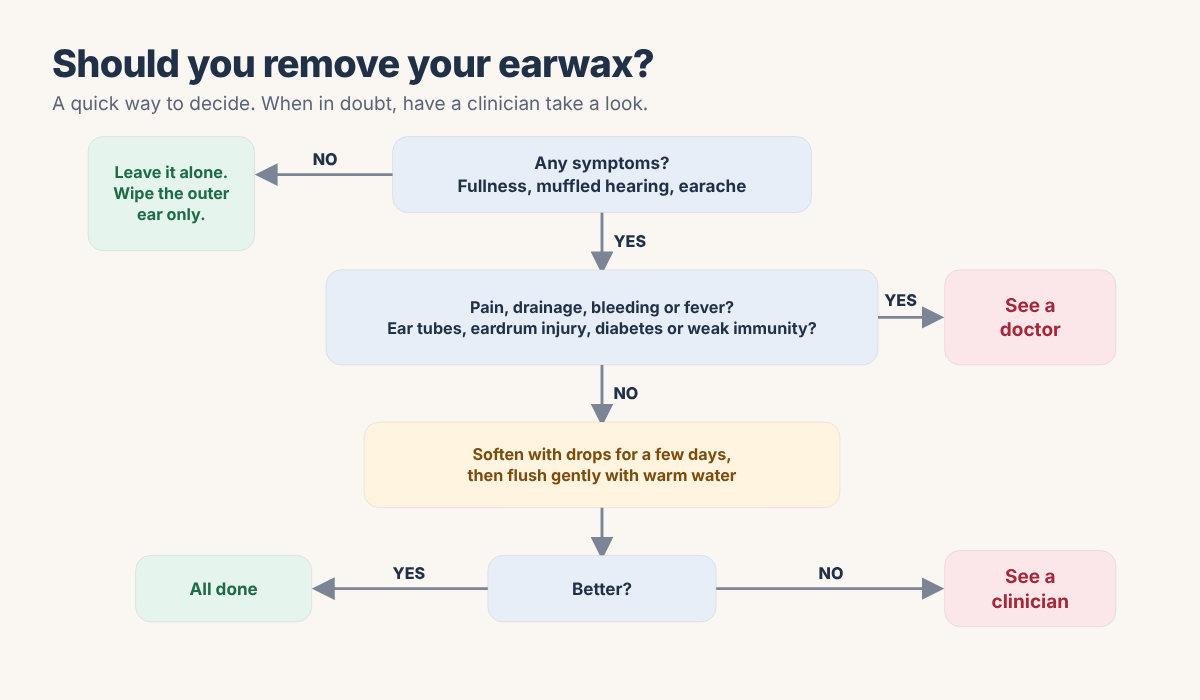
Usually, no. If your ears feel fine and you hear well, leave it alone. Removal only makes sense when wax is causing symptoms or a clinician needs a clear view of the canal.
When to leave it alone
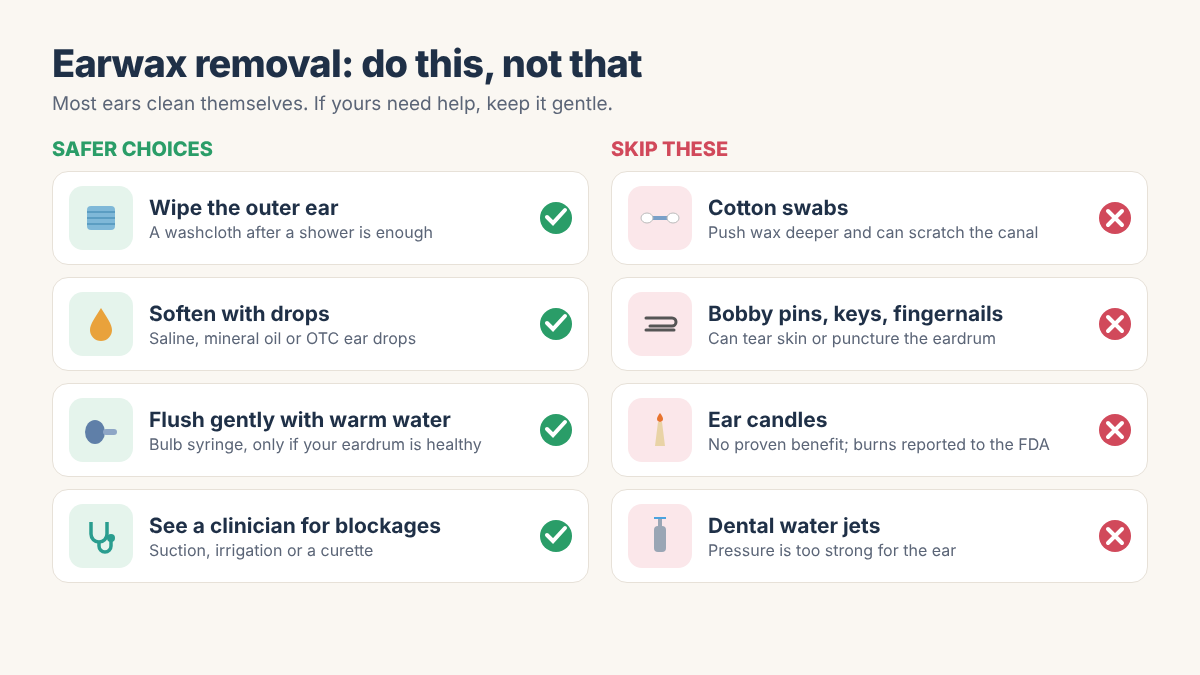
Good hygiene means wiping the outer ear with a washcloth and stopping there. Don't chase wax inside the canal. The ENT academy's patient advice is blunt: don't put anything smaller than your elbow in your ear, and don't over-clean, since that irritates the skin and strips its protective coating.
How to soften and clear earwax at home
If you have mild symptoms, no ear pain and no history of perforation or ear surgery, MedlinePlus suggests softening the wax first. Here's the usual approach:
- Put a few drops of saline, mineral oil, baby oil, glycerin or over-the-counter ear drops into the ear. Follow the package directions, usually for a few days.
- Once the wax is soft, gently flush it (irrigation) with body-temperature water using a bulb syringe, with your head tilted so it drains. Cold water can make you dizzy.
- Dry your ear well, using a hair dryer on its lowest setting if needed.
You don't need anything fancy. Plain water or saline works about as well as pricier drops, according to the AAFP review. Fizzy over-the-counter eardrops are another option, though they can sting a little.
Skip drops and irrigation if you have (or may have) a hole in your eardrum, ear tubes, or past ear surgery. ENT Health also advises people with diabetes or a weakened immune system to see a doctor rather than flush their ears at home. Never use a dental water jet.
What not to put in your ears
Cotton swabs, bobby pins and car keys all push wax deeper. They can also scratch the canal or cause a perforation.
Ear candles are worse. The FDA says there's no valid scientific evidence of any medical benefit from ear candles, and it has received reports of burns, punctured eardrums and ear canals blocked by candle wax that needed surgery to fix. Testing cited by the FDA found ear candles create no measurable pull at all.
How a doctor removes impacted earwax
If ear drops don't work, a clinician can clear a cerumen impaction in a few minutes. Your primary care physician or an otolaryngologist (ear, nose and throat specialist) will look inside with a lighted scope, then choose one of three methods:
- Irrigation: a controlled flush of warm water
- Suction: a tiny vacuum, often guided by a microscope
- Manual removal: a small curved tool called a curette that lifts the wax out
Manual removal and suction are the go-to choices when flushing isn't safe, such as when there's a perforation or ear tubes. It's usually painless. Most people notice their hearing open up right away.
When to see a doctor about earwax
Book an appointment if you have:
- Ear pain, fluid draining from the ear, or bleeding
- A fever along with an earache or fullness
- Hearing loss that comes on suddenly or doesn't improve after a few days of drops
- Vertigo (a spinning feeling) that won't go away
- Diabetes, a weakened immune system, ear tubes or a past eardrum injury
Those signs need a professional look.
Not sure whether your symptoms are wax or something else? Talk to a SwellCare clinician and get it checked rather than guessing. One quick look usually settles it.
Questions people ask about earwax
What is ear wax made of?
Ear wax is mostly sebum, an oil made by glands near hair follicles in the ear canal. It also contains secretions from ceruminous glands, plus dead skin cells, shed hair, keratin, cholesterol, squalene and fatty acids. Together these form a sticky, slightly acidic layer that keeps the canal moist and slows the growth of bacteria and fungus.
What causes earwax buildup?
Some people's glands simply make more wax, or their ear canals are narrow, curvy or hairy, so it can't escape easily and builds into a cerumen impaction. Age makes wax drier and harder. The most common avoidable causes are cotton swabs, which pack wax deeper, and earplugs or earbuds that block the natural exit.
Why does earwax smell?
A faint, slightly musky or sweet smell is normal because earwax is a mix of oils and skin cells. A strong, foul odor, especially with discharge, pain or itching, can signal an ear infection or another problem, and it's worth having a clinician look in your ear.
Can earwax cause dizziness?
Yes. A large wax blockage deep in the ear canal can cause dizziness or a spinning feeling, and so can flushing your ear with water that's too cold. If the spinning doesn't settle once the wax is removed, or it comes with hearing loss or headache, see a doctor to rule out other causes.
How often should you clean your ears?
For most people, never inside the canal. Wipe the outer ear with a washcloth when you bathe and let the ear's self-cleaning process handle the rest. If you wear hearing aids or tend to form blockages, ask your clinician whether regular ear checks make sense for you.
Is hydrogen peroxide safe for earwax?
Diluted 3% hydrogen peroxide, and over-the-counter eardrops that release it, can soften wax and are generally safe for healthy ears. Skip them if your eardrum might be torn. Same goes for ear tubes or an active ear infection. Don't use them for more than a few days in a row without checking with a clinician.
Trusted references
Public-health, research, and medical-society resources related to this guide.