It starts as an itch you can’t reach. By bedtime, it hurts to lie on that side, and when you brush your ear against the pillow, you wince. If that sounds familiar, you’re probably dealing with swimmer’s ear.
Swimmer’s ear symptoms are easy to spot once you know the pattern: itching, then soreness that sharpens when you tug the outer ear, then swelling, drainage and sometimes muffled hearing. The medical name is otitis externa, a bacterial infection or inflammation of the ear canal. This guide walks you through each stage, what you can safely do tonight, and the signs that mean a doctor should look.
What swimmer’s ear symptoms feel like
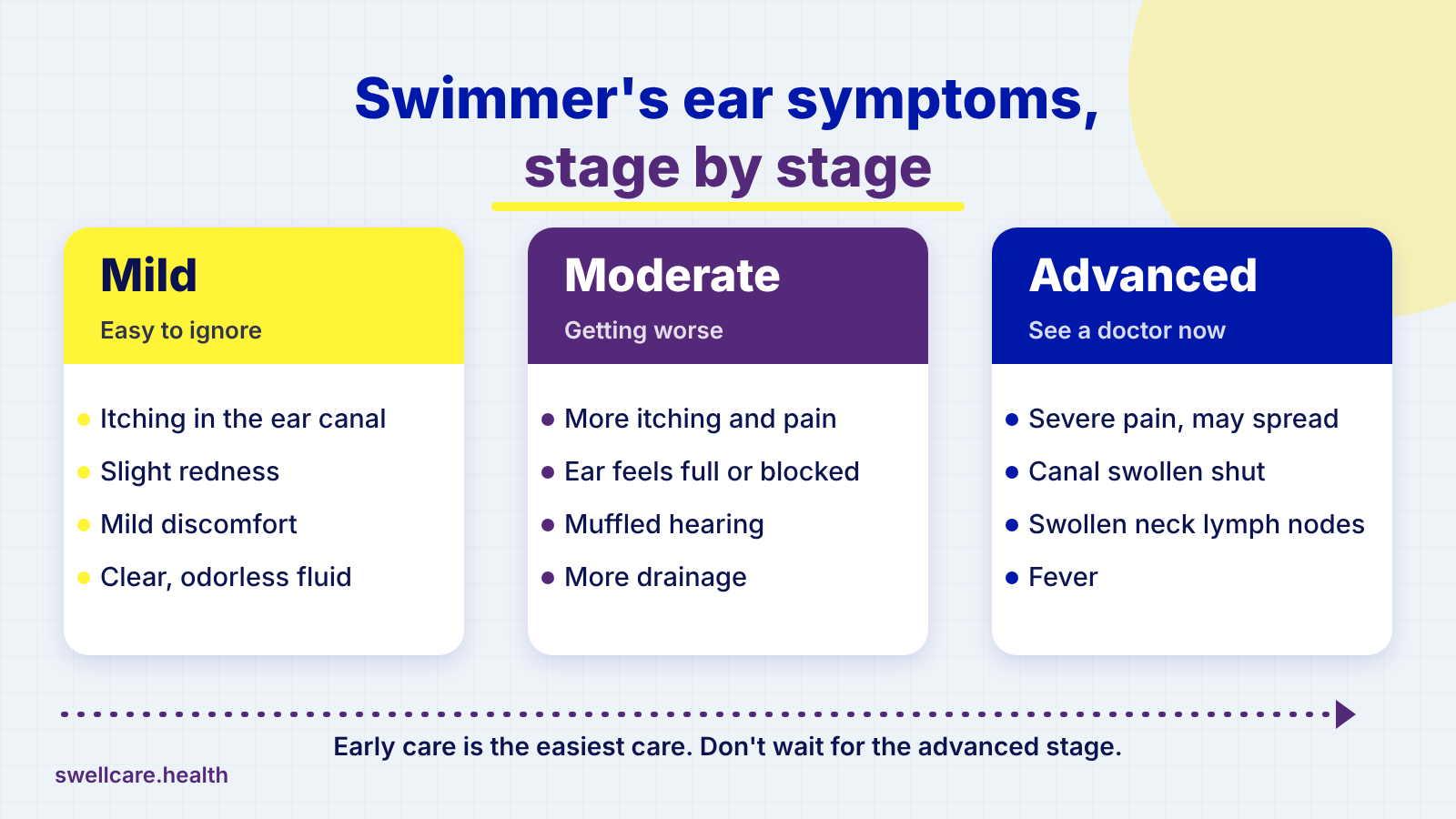
Swimmer’s ear rarely arrives all at once. It builds, and catching it early makes a real difference to your hearing and comfort. Mayo Clinic groups the symptoms into mild, moderate and advanced stages, and that’s a handy way to read your own ear.
Mild symptoms
Think itching inside the ear canal, a little redness and a vague sense of discomfort. You might notice a trickle of clear, odorless fluid. Most people ignore this stage. Don’t. Early on, bacteria are still just settling into damp skin, and it’s the easiest time to stop an infection.
Moderate symptoms
Now the ear pain is real, and the itch gets more intense. The ear can feel full or blocked, and sounds seem muffled because swelling narrows the canal. Some people notice slight hearing loss at this point. Drainage increases. MedlinePlus describes it as yellow or yellow-green, and sometimes foul-smelling.
Advanced symptoms
Severe ear pain can spread to the face, neck or side of the head. The ear canal may close up, the outer ear turns red, and lymph nodes in the neck can get tender. Treatment at this stage can’t wait. Complications are uncommon, but a fever means the infection may be spreading, and that’s your cue to get seen the same day.
Swimmer’s ear or a middle ear infection?
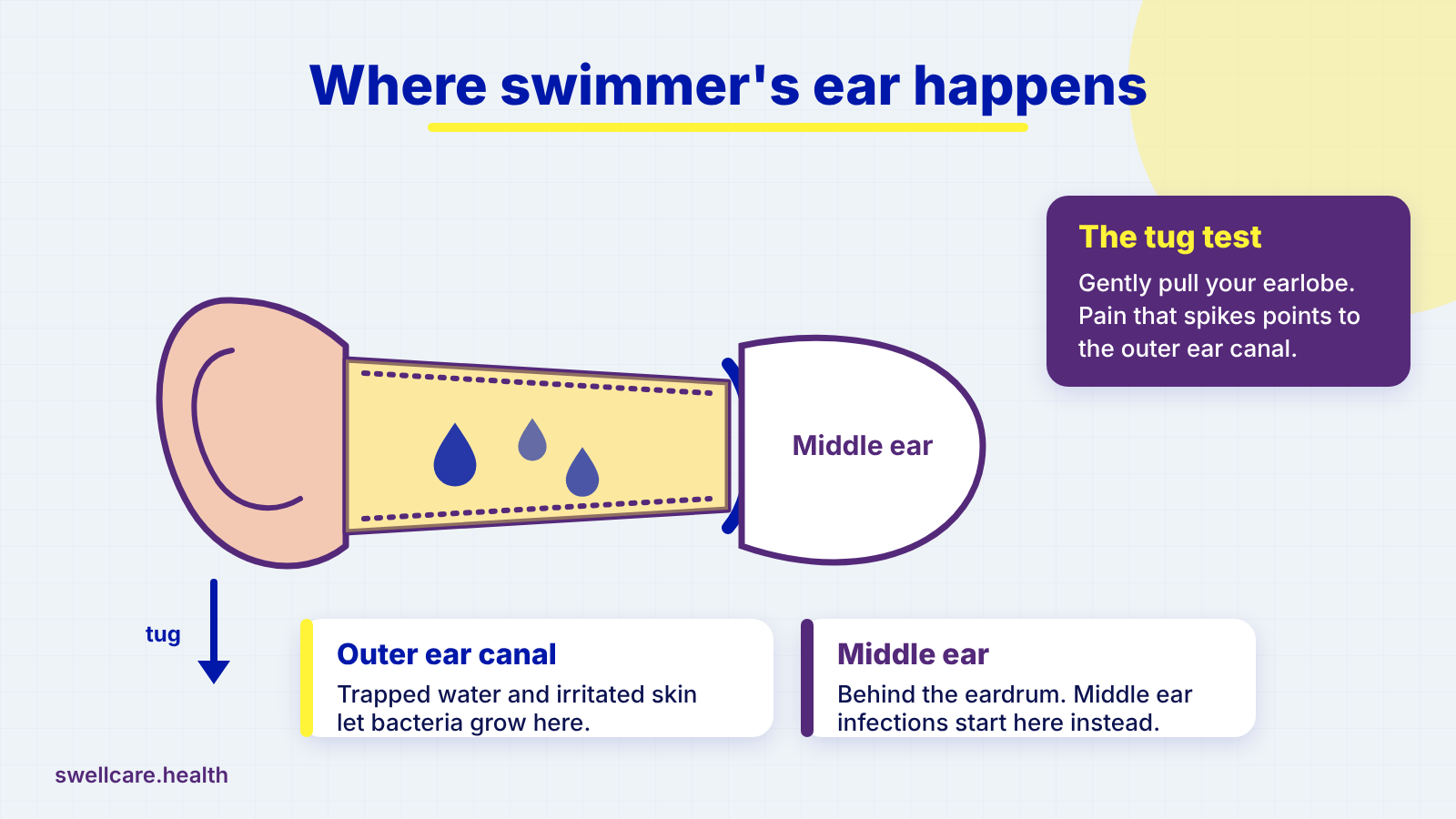
Both hurt, so people mix them up. The giveaway is where it hurts. Swimmer’s ear is an infection of the outer ear, specifically the ear canal. Gently pull on your earlobe. Or press the small flap in front of the ear canal. If that makes the pain spike, an outer ear problem is likely. CDC lists soreness on tugging as a classic sign.
A middle ear infection sits behind the eardrum. It often follows a cold, and tugging usually changes nothing.
| Feature | Swimmer’s ear | Middle ear infection |
|---|---|---|
| Where it hurts | Ear canal, with pain worse when you tug the ear | Deeper inside, tugging rarely matters |
| Common trigger | Trapped water, swabs, earbuds | Cold or sinus infection |
| Drainage | Common, from the canal | Less common unless the eardrum ruptures |
This tug check is a clue, not a diagnosis. If you can’t tell which you have, a clinician can.
What causes swimmer’s ear?
Water that stays in the ear canal is the usual culprit. Moisture softens the skin lining the canal, and bacteria, or occasionally fungi, move in. Swimming in pools or hot tubs is the classic setup. Long showers and humid weather can do it too, so don’t blame the lake.
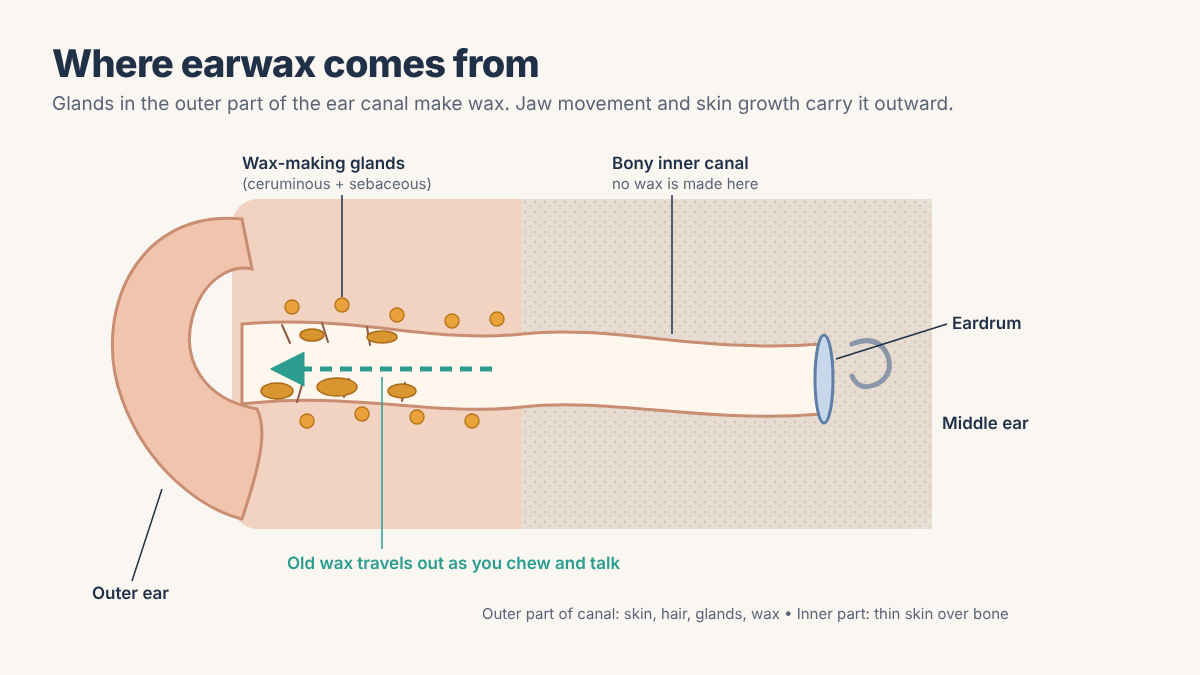
Anything that scratches the skin makes it easier, and swimmer’s ear complications start the same way: a small scrape that gets infected. People often grab a cotton swab to clear earwax, which is exactly the wrong move. Cotton swabs and earbuds can scrape the ear canal, leaving tiny breaks bacteria slip through. Earwax is your friend here. It helps protect the ear canal from bacteria, so digging it out backfires.
It’s a seasonal problem in the United States. A CDC report estimated about 2.4 million health care visits for acute otitis externa in a single year, with roughly 44% of ambulatory visits landing between June and August. Kids aged 5 to 9 had the highest rates. The good news: swimmer’s ear isn’t contagious.
Home care that helps (and what to skip)
You can’t cure a real infection with a kitchen remedy, but you can make tonight bearable while you decide whether to get treatment. Home care eases ear pain. It doesn’t clear bacteria.
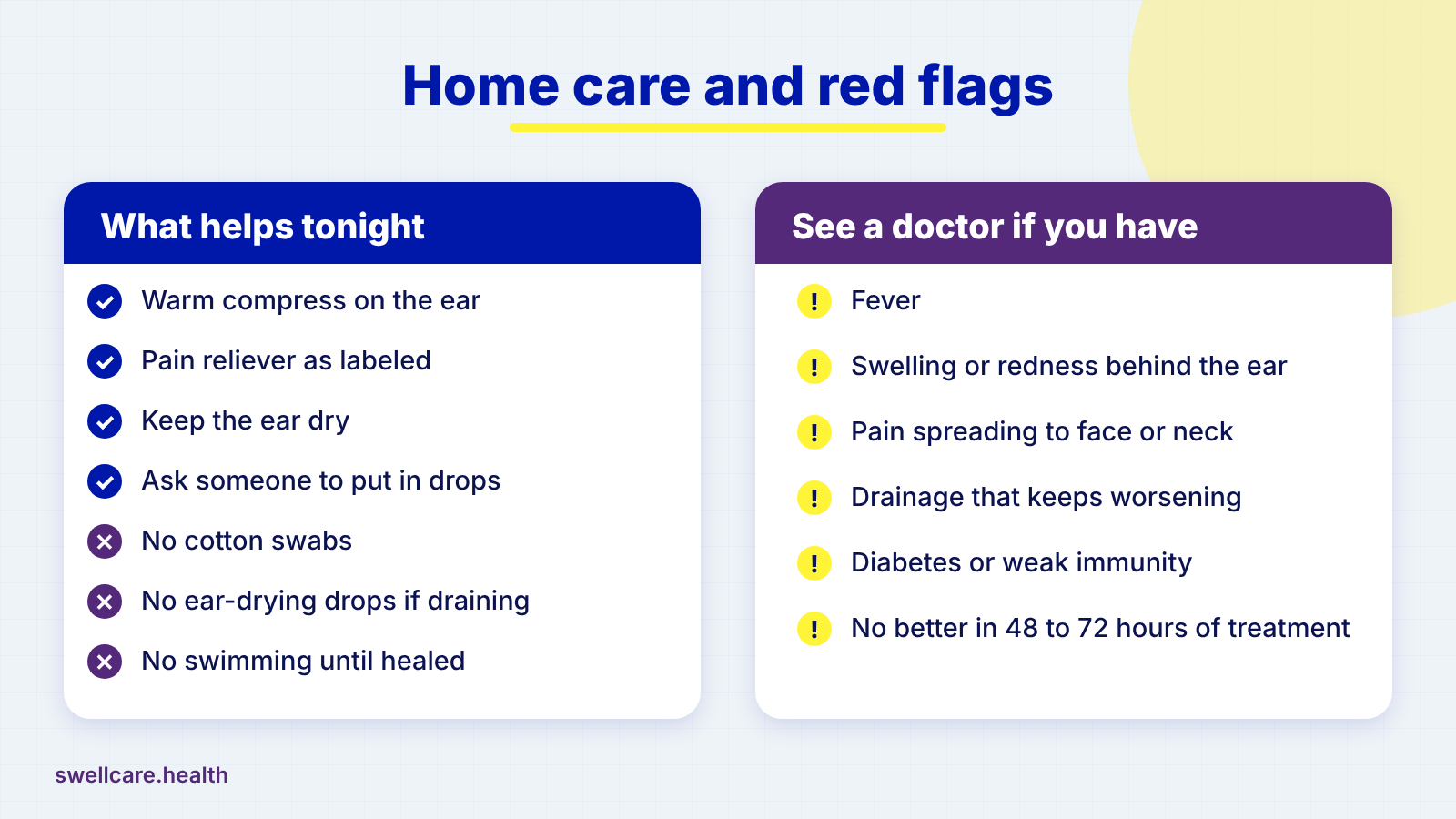
- Ease the ache. A warm compress against the ear can help, and over-the-counter acetaminophen or ibuprofen is a common choice. Check the label, and ask a pharmacist if you take other medicines.
- Keep it dry. Skip swimming until you’re better. Cover the ear with a shower cap when you wash your hair, and dry the skin around the canal gently.
- Hands off. Nothing goes in the ear, and that includes swabs. Leave the earwax alone.
- Skip ear-drying drops. CDC advises against them when you already have swimmer’s ear, drainage, ear tubes or a perforated eardrum.
Antibiotic ear drops need a prescription, and treatment is usually quick once you start. Water or moisture left in the canal slows it down. Guidelines from the American Academy of Otolaryngology-Head and Neck Surgery, summarized by AAFP, put drops first for uncomplicated cases, because they reach the infection at much higher concentrations than pills do.
One practical catch: only about 40% of people who put in their own drops do it correctly in the first three days. Lie on your side, ask someone else to help, and stay put for a few minutes afterward.
When to see a doctor
Get seen if you have ear pain or any drainage, even if it seems minor. Don’t wait it out if things keep getting worse, or if you have a fever, or tenderness and redness on the skin behind the ear.
Some people can’t afford to wait. If you have diabetes, a weakened immune system, or you’re an older adult, the infection can spread to nearby bone and skin. MedlinePlus calls this malignant otitis externa, and it needs intravenous antibiotics. These complications are rare, but call a doctor the same day. Other complications to watch for include a canal that swells shut and hearing loss that doesn’t clear up.
Here’s what a good visit looks like. The clinician looks into the ear canal, cleans out debris if needed, and may place a small wick if the canal is too narrow for the drops to get through. Oral antibiotics are for infections that spread beyond the canal. You should feel better within 48 to 72 hours of starting treatment. If you don’t, go back, because the ear drops may not be reaching the infection.
Not sure whether your ear needs an in-person look? SwellCare’s urgent care clinicians review what you describe at any hour and tell you what can be handled online and what needs an exam. Here’s how it works. For swimming-season tips, browse the Health Journal.
Questions people ask about swimmer’s ear symptoms
How do you know if you have swimmer’s ear?
Look for itching in the ear canal, soreness when you tug your outer ear, redness, puffiness and sometimes drainage or muffled hearing. If swimming or a long shower came first, that raises the odds. Only an exam can confirm it, so see a doctor if drainage shows up.
Is swimmer’s ear contagious?
No. You can’t catch it from someone else. The bacteria involved live on skin and in the environment, and an infection only takes hold when trapped moisture or irritated skin gives them a chance.
How long does swimmer’s ear last?
With the right treatment, most people improve within 48 to 72 hours, and a full course often runs about 10 to 14 days. Finish what you were prescribed even after the ache fades, or it can come back.
Can swimmer’s ear go away on its own?
Very light cases sometimes settle once the ear dries out, but you can’t count on it. If swelling or drainage develops, treat it as an infection and get it checked.
Can I swim with swimmer’s ear?
It’s best to skip swimming until a doctor says your ear canal has healed. Water slows healing, and it can turn a small problem into a stubborn one.
Trusted references
Public-health, research, and medical-society resources related to this guide.