You step off a curb the wrong way. Your ankle rolls, something tugs, and ten minutes later it’s throbbing. Sprain or strain? And does the label even matter?
It does. The sprain vs strain question shapes your treatment, what to watch for, and when a quick visit becomes a real need. Short version: a sprain damages a ligament, the tough band that holds two bones together at a joint. A strain damages a muscle or a tendon, the cord that anchors muscle to bone. The first-aid basics overlap, but the risks don’t. Let’s work out which one you’ve got.
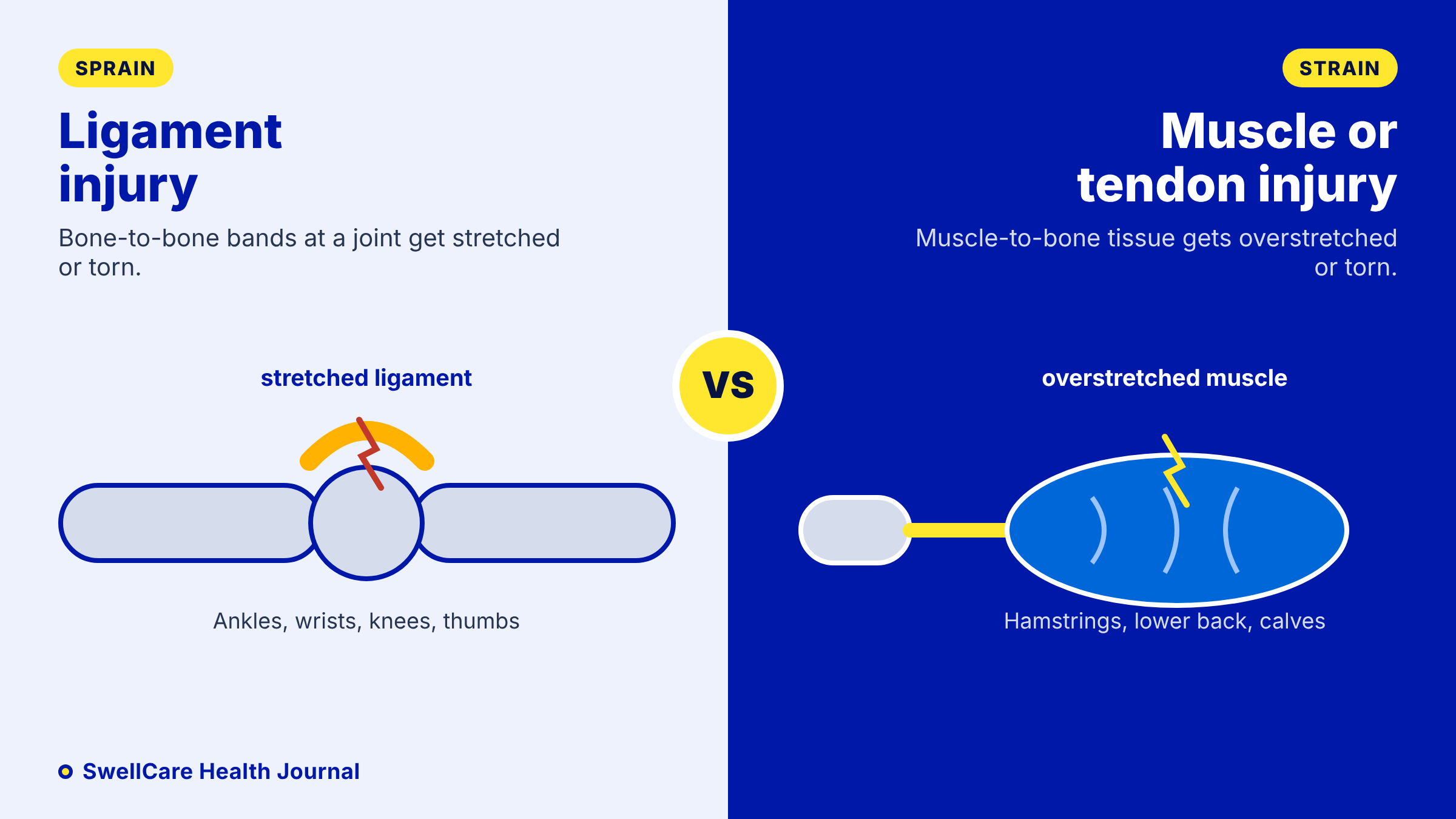
Sprain vs strain at a glance: ligaments versus muscles
A sprain is a stretched or torn ligament, the band of tissue between bones. Because it links bone to bone, a sprain always involves a joint. The ankle is the classic victim, though MedlinePlus points out that wrist sprains are common too, and the NHS adds the knee and thumb.
A strain is a stretched or torn muscle or tendon. Most people call a strain a pulled muscle. Hamstring and lower back strains are the most common.
Here’s an easy rule. Trouble at a joint points to a sprain. Trouble in the belly of a muscle points to a strain.
| Sprain | Strain | |
|---|---|---|
| What’s hurt | Ligament | Muscle or tendon |
| Usual spots | Ankle, knee, wrist, thumb | Hamstring, calf, lower back |
| Common trigger | A twist, a fall, a hard hit | Overstretching, heavy lifting, a sudden sprint |
| Telltale sign | Bruising around the joint | Spasms and weakness |
How to tell a sprain from a strain by the symptoms
Both injuries share early symptoms, which is why people mix them up. A few clues help.
With a sprain, the trouble sits at the joint and flares when you put weight on it. Swelling and bruising come on fast. Some people notice popping at the moment it happens, and the joint may feel wobbly afterward. That wobble is called instability.
Strain symptoms feel like the muscle itself is angry: soreness, cramping, muscle spasms and weakness when you use it. Swelling and bruising can show up too, though often less dramatically.
One wrinkle: you can have both at once. A bad fall can hurt a ligament and the muscles around it. If you can’t tell which, treat it the same way for now and watch how it changes.
Which is worse? Understanding mild, moderate and severe
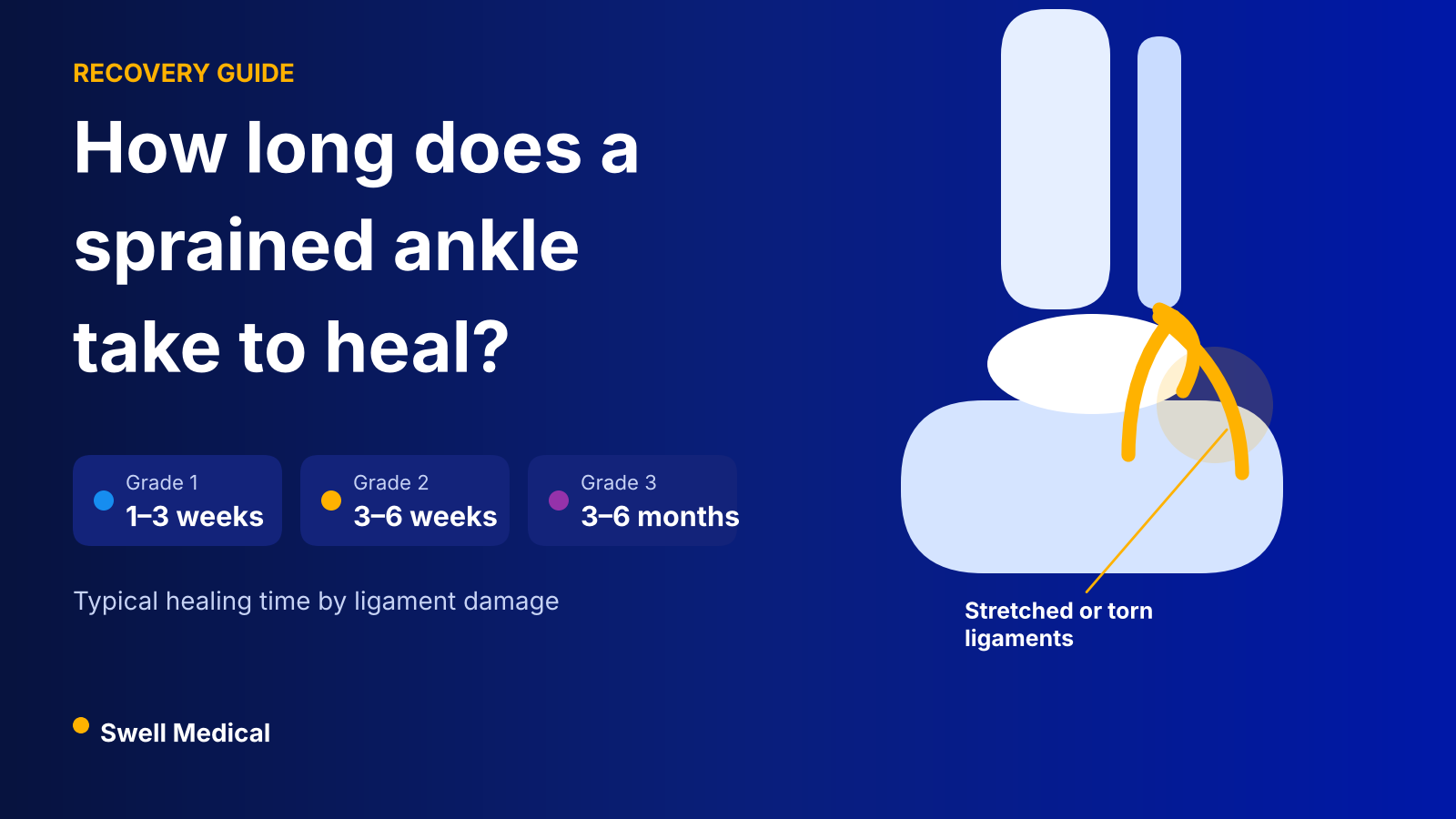
Neither one is automatically worse. Severity decides, and clinicians rate it in three grades, as the American Academy of Orthopaedic Surgeons describes. Grade 1 is a mild stretch with slight fiber damage. Grade 2 is a partial tear, and a joint may feel loose. Grade 3 is a complete tear with real instability.
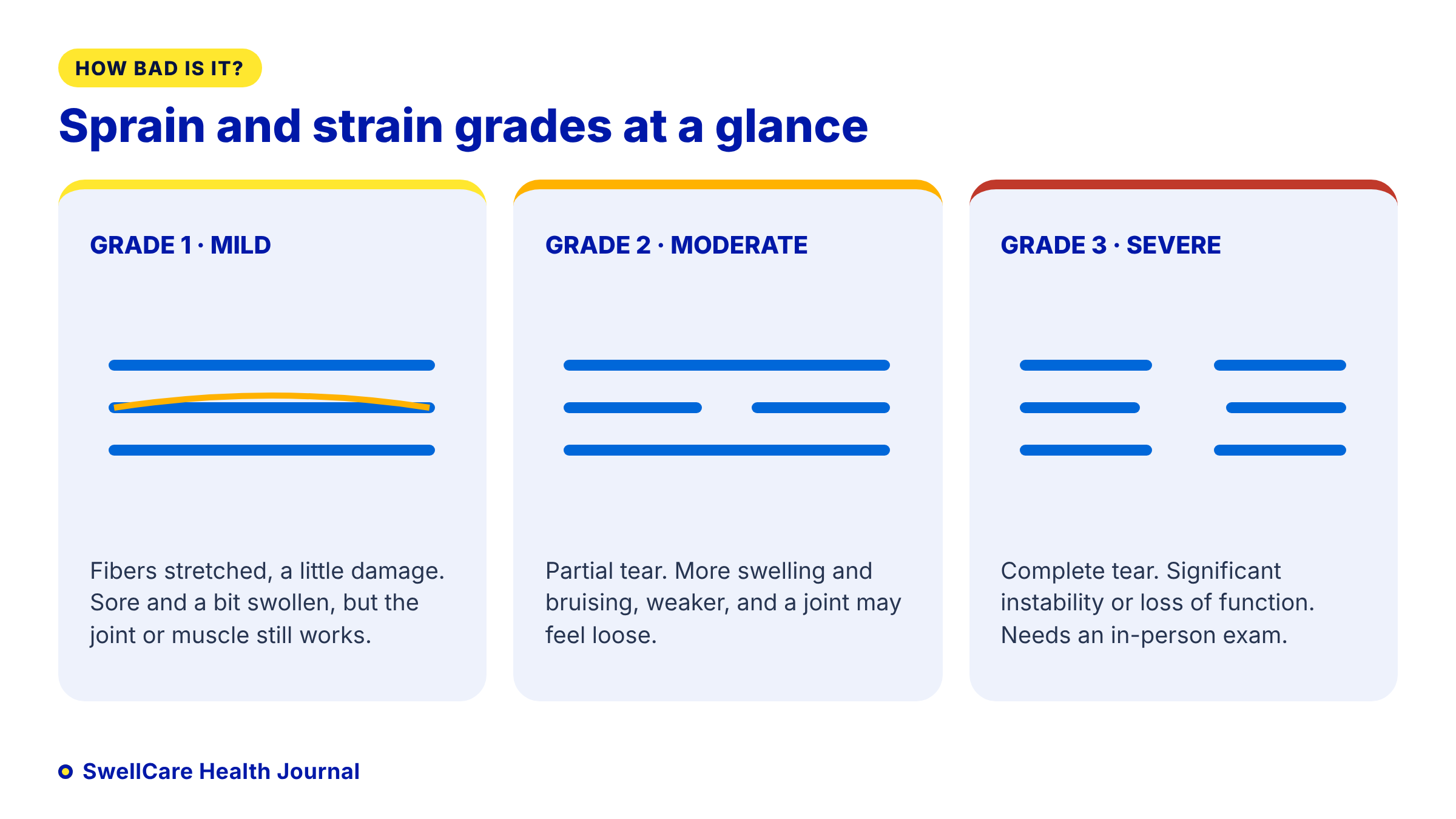
A mild injury might sideline you for a while. A severe one can leave you unable to stand on a hurt knee, and the worst ligament tear sometimes needs surgery. Loss of range of motion, a joint that gives way or marked weakness all point toward the higher grades.
What to do in the first 72 hours
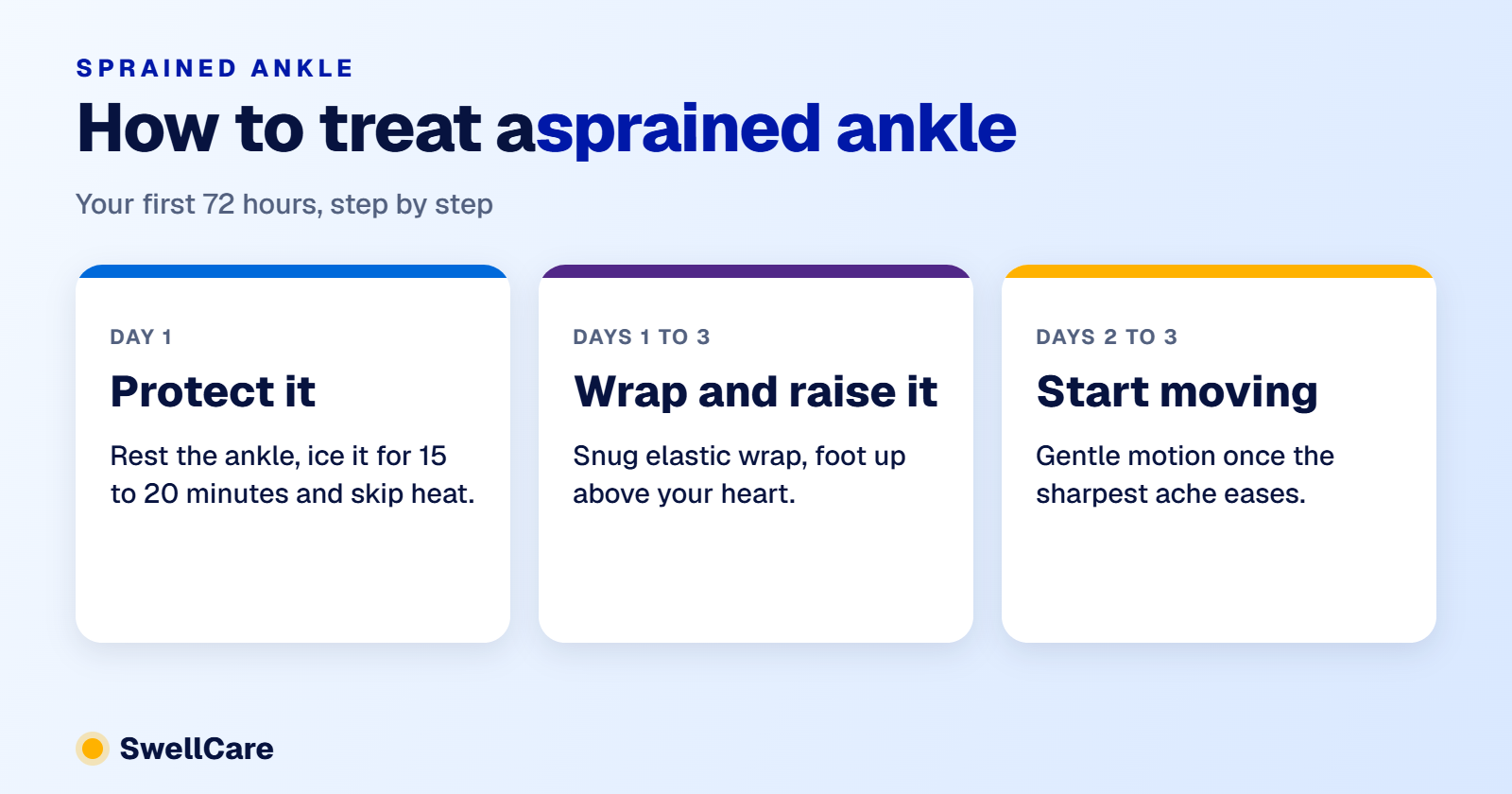
Early treatment for both injuries is nearly identical. The classic plan is RICE: rest, ice, compression and elevation. The NHS uses a version called PRICE, which adds protection, for the first two to three days.
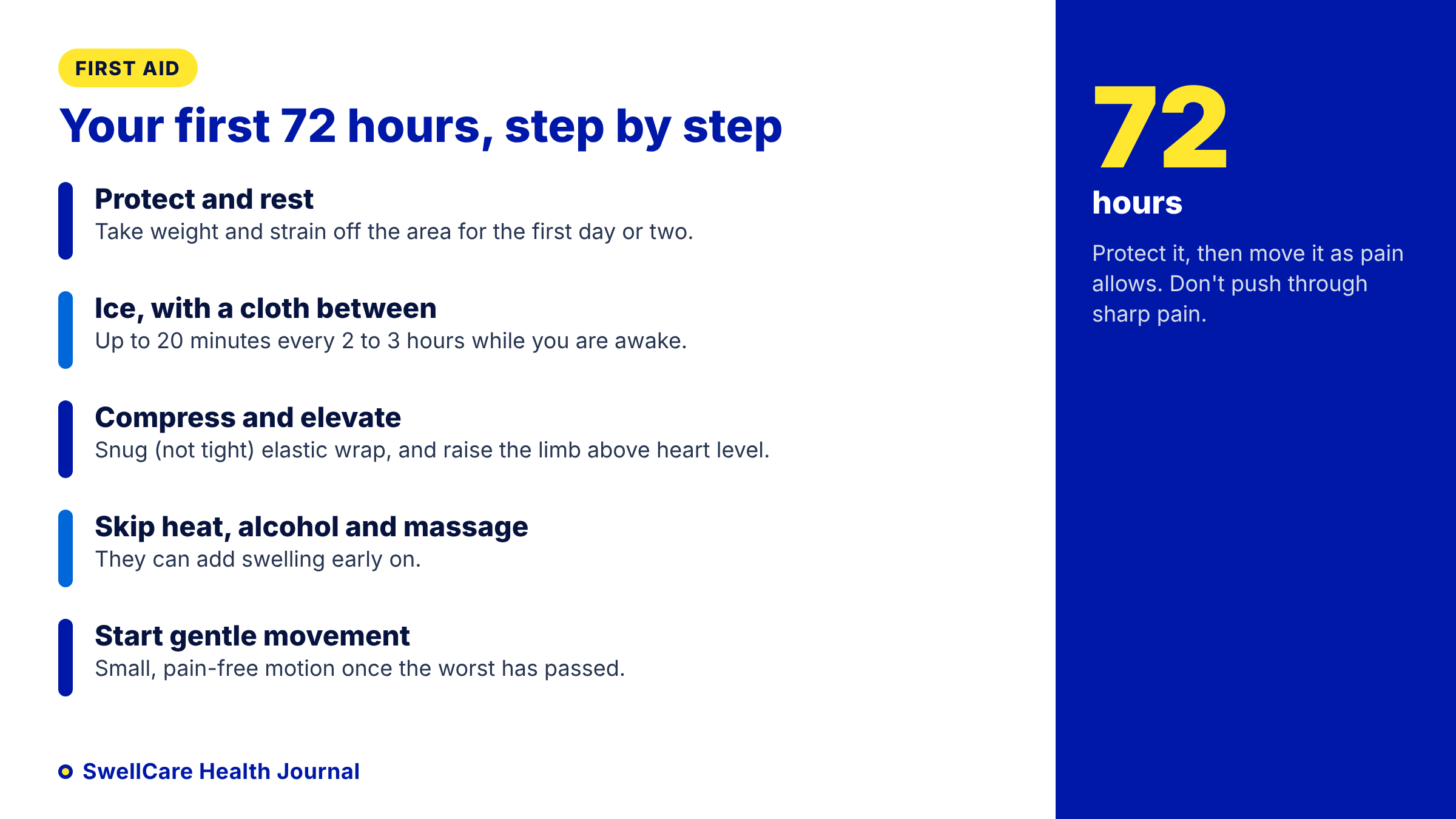
In practice, take weight off the area. Hold ice against it for up to 20 minutes every two to three hours, with a cloth between ice and skin. Add compression with a snug elastic bandage, never tight enough to tingle. Keep it raised above heart level when you can. That’s elevation. Skip heat, alcohol and massage for the first couple of days, since they can add swelling.
For pain relief, the NHS suggests paracetamol (acetaminophen in the US). A 2019 editorial in the British Journal of Sports Medicine proposes “PEACE & LOVE” and questions whether anti-inflammatory drugs belong in routine care, because they may interfere with tissue repair. The debate is live. Our take: start with acetaminophen, use ibuprofen sparingly and only if a doctor or pharmacist says it’s safe for you, and don’t rest so long that the area stiffens.
Treating a sprain
Treatment starts by protecting the area. For a moderate sprained ankle or wrist, a clinician may suggest a brace or walking boot. Once inflammation settles, physical therapy rebuilds balance and strength so the joint doesn’t give way again. Sharp pain when you stand? Don’t push it.
Treating a strain
Rest the muscle or tendon, then ease back. Once sharp pain fades, gentle stretching comes first, followed by strengthening. The usual mistake with a hamstring or lower back strain is sprinting back to sport the moment it feels okay.
How long recovery takes, and what speeds up healing
Recovery varies with severity and the person. The NHS says most sprains and strains improve within about two weeks, yet it advises avoiding strenuous exercise like running for up to eight weeks. Severe injuries can take months.
Healing isn’t a straight line. Gentle movement as soon as pain allows keeps stiffness away and protects range of motion. Gentle stretching and strengthening exercises rebuild what the injury took. Plan recovery around pain, not the calendar, and ask a doctor when you can return to sport. Testing it too early is what slows people down. That’s how re-injury happens, and a second sprain often heals slower than the first.
Warning signs: when to see a doctor
Most mild soft tissue injuries settle at home. Some don’t. Mayo Clinic says to see a doctor if you can’t move or bear weight on the joint, if pain sits directly over the bone, or if the area feels numb. A fracture can masquerade as a sprain.
Diagnosis usually starts with a hands-on exam. Clinicians often use the Ottawa ankle rule to decide on an X-ray: tenderness at certain bony points, or being unable to take four steps, calls for imaging. An X-ray shows bone. If a serious tear is suspected, an MRI shows the soft tissue.
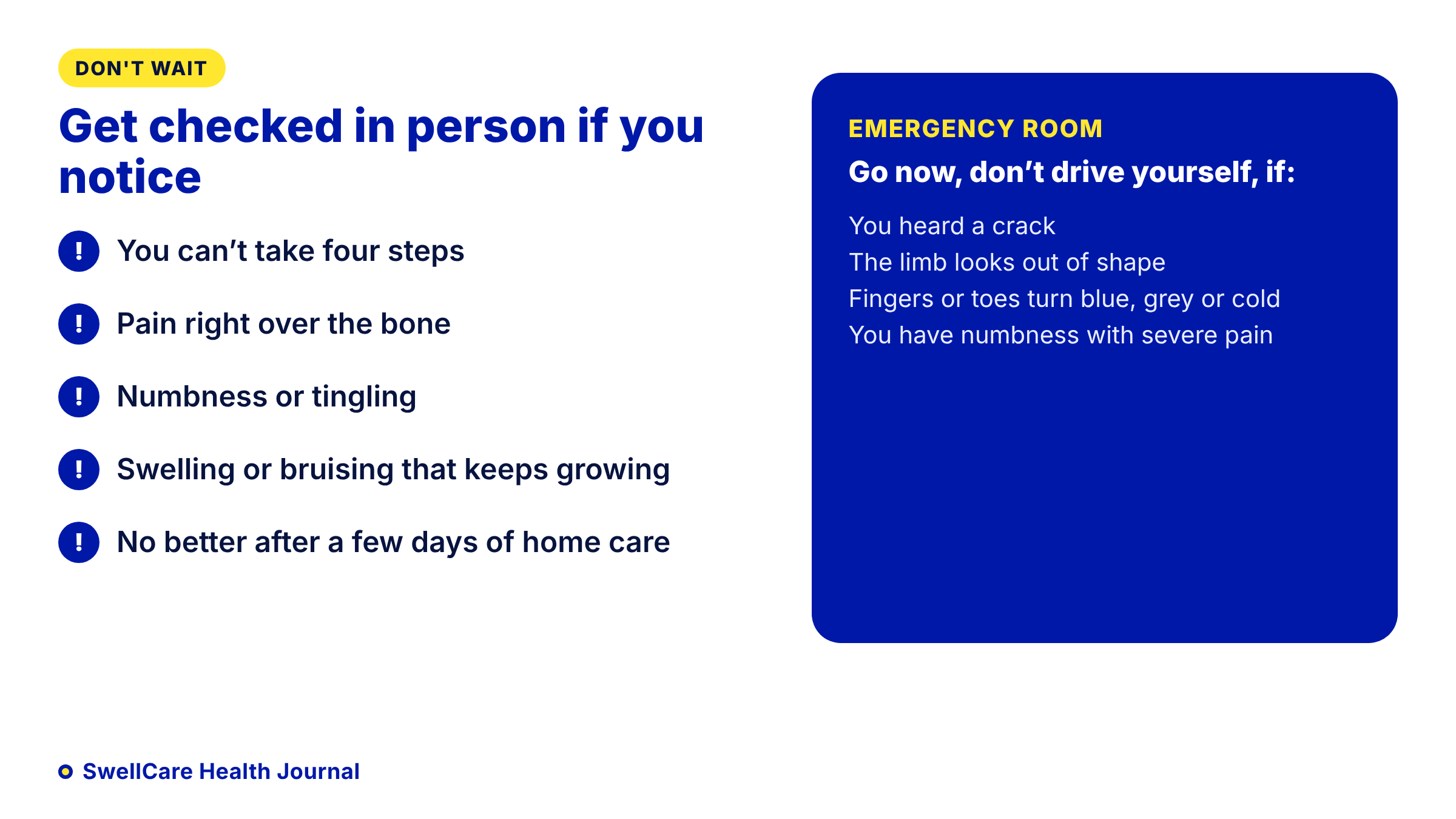
Head to the emergency room if you heard a crack, the limb looks out of shape, you have numbness or tingling, or the skin turns blue, grey or cold. Don’t drive yourself.
Not sure where you land? A video or chat visit with a Swell urgent care clinician can help you sort out a likely sprain or strain, plan pain relief and decide whether you need an in-person exam. Telehealth can’t take images, and a clinician will say so plainly when you need one. You can also browse conditions our urgent care team treats.
Prevention: how to lower your odds of getting hurt again
Prevention starts before the injury. Warm up before you play, and warm up again after a long break. Try stretching gently, holding 10 to 20 seconds and never into pain, as OrthoInfo advises. Strengthening the muscles around a joint that’s been hurt before cuts the odds of re-injury. Wear supportive shoes that fit. Build activity gradually instead of jumping from couch to marathon, because prevention works best when your body has time to adapt.
Questions people ask about sprains and strains
Which is worse, a sprain or a strain?
Neither, by label. Severity matters more than the type. A complete tear is far more serious than a mild stretch of either one. If you can’t bear weight, notice instability or feel numbness, get checked in person.
How can you tell a sprain from a strain?
Look at where the symptoms are. Pain and bruising at a joint like the ankle suggest a sprain. Cramping and spasms in a muscle suggest a strain. A popping sensation at the moment of injury is more common with sprains. If you can’t tell, a doctor can examine it.
Can an X-ray show a sprain?
Not directly. It shows bone, so it’s used to rule out a fracture. Soft tissue damage shows up on an MRI or ultrasound. Many sprains and strains get a diagnosis from the story of the injury and a hands-on exam.
Should I use heat or ice?
Ice first. The NHS advises avoiding heat in the first couple of days because it may increase swelling. Later, some people find gentle warmth eases stiffness before stretching. If heat makes things worse, stop.
Do sprains and strains heal on their own?
Mild ones usually do, with protection, time and gentle movement. Moderate and severe injuries may need a brace, physical therapy or, rarely, surgery. If there’s no improvement after a few days of home care, see a doctor.
Trusted references
Public-health, research, and medical-society resources related to this guide.