It’s 3 a.m. You’re on the bathroom floor, and you’re wondering how long this is going to go on.
Here’s the answer you came for. How long does food poisoning last? Usually a few hours to a few days, and most healthy adults feel human again within 1 to 3 days. Some bacteria can drag this foodborne illness out to a week. The CDC says symptoms can last anywhere from a few hours to several days, depending on the germ behind it. Below, you’ll see what each day normally looks like, what’s holding you back, and the point where it stops being normal.
The short answer: how long does food poisoning last?
Most cases run 24 to 72 hours. A quick bout from a toxin, like the kind some bacteria leave on food, can be over in a day. The usual culprit in outbreaks, a virus, tends to fade in one to three days. Bacterial infections, where the bacteria multiply in your gut, often take four to seven days.
So how long will food poisoning last in your case? That depends on three things: which germ you picked up, how much of it you swallowed, and how well your immune system handles it. You can’t control the first two. You can control how well you hydrate, and that changes how you feel.
Food poisoning timeline: what each day looks like
Here’s the day by day picture for a healthy adult. Treat it as a pattern, not a promise.
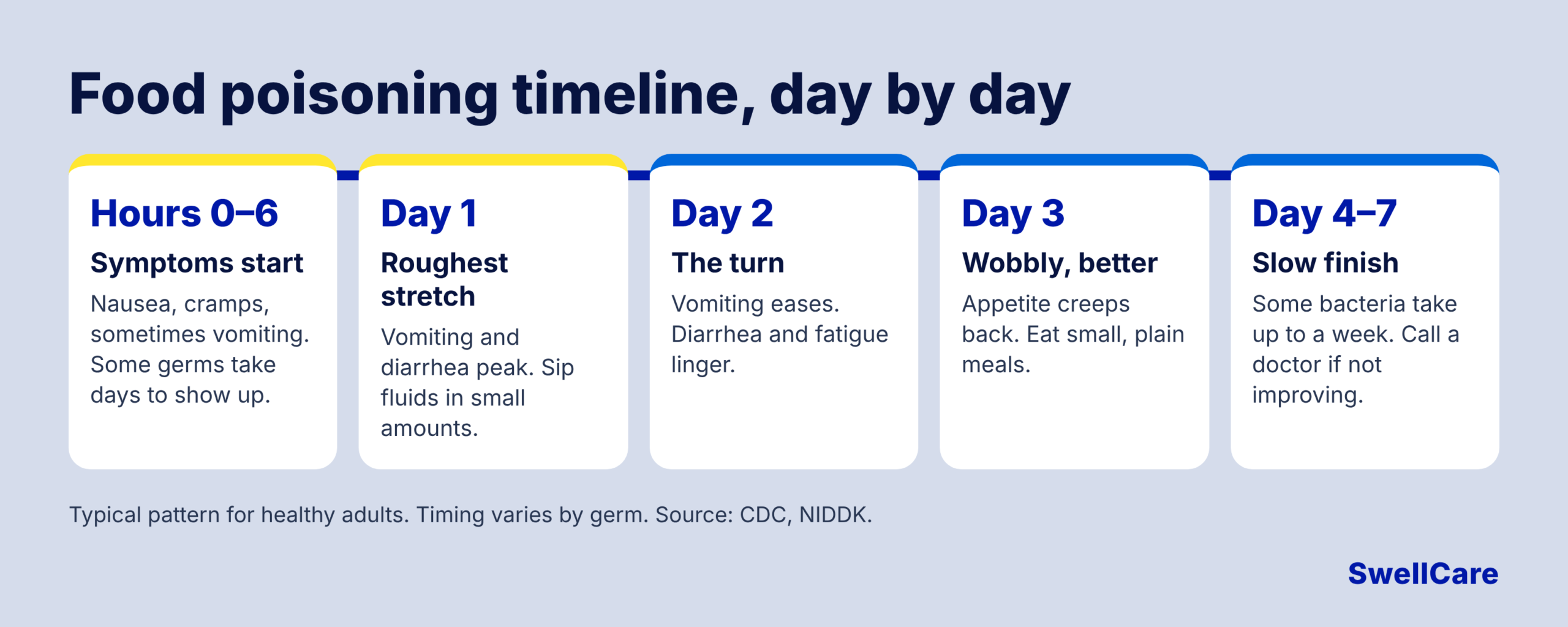
Hours 0 to 6 are when symptoms start
The first sign is usually nausea, then abdominal pain and cramps, then a sudden rush to the toilet. Vomiting can follow. Timing swings widely. Staph toxins can hit within 30 minutes to 8 hours of eating. Norovirus takes 12 to 48 hours, and campylobacter can take two to five days. If you’re sick an hour after a meal, blame the food from that meal. If it’s been three days, look further back.
Day 1 is the roughest stretch
Vomiting and diarrhea peak here, along with cramps, chills and a low fever. Your gut is trying to throw the invader out, and that’s a good sign, if an unpleasant one. Don’t force food, especially while the vomiting continues. Sip fluids in small amounts, a spoonful or two every few minutes, so they stay down. Rest as much as you can.
Day 2 is when it turns
For many people, vomiting eases by day two. Diarrhea sticks around, and the fatigue is real. You may feel hollow and weak. That’s your body, not a relapse.
By day 3 you’re wobbly but better
Appetite creeps back. Your stools start to firm up. Keep meals small and plain, and keep drinking. If the diarrhea hasn’t improved by now, the CDC and NIDDK both say it’s time to call a clinician when it lasts more than three days.
Day 4 to 7 and beyond
Most salmonella infections last 4 to 7 days, and most people with a campylobacter infection are better in about a week. Cyclospora and listeria work on a slower clock, and parasites in general can take longer. Lingering fatigue and loose stools can trail the illness by a few more days. So how long does food poisoning last at the far end? Up to a week for most bacteria, rarely longer. Still sick after a week? That’s not the normal arc, so get checked.
Why your food poisoning may last longer than someone else’s
Two people at the same dinner can have very different weeks with the same food poisoning. The germ is the main reason, which is why “how long does food poisoning last” has no single answer. Here’s what the CDC reports for the common ones:
| Germ | Symptoms usually start | Typical length |
|---|---|---|
| Staph toxin | 30 minutes to 8 hours | Hours to a day |
| C. perfringens | 6 to 24 hours | Under 24 hours |
| Norovirus | 12 to 48 hours | 1 to 3 days |
| Salmonella | 6 hours to 6 days | 4 to 7 days |
| Campylobacter | 2 to 5 days | About a week |
| E. coli (STEC) | 3 to 4 days | Varies; call a doctor if it lasts over 2 days |
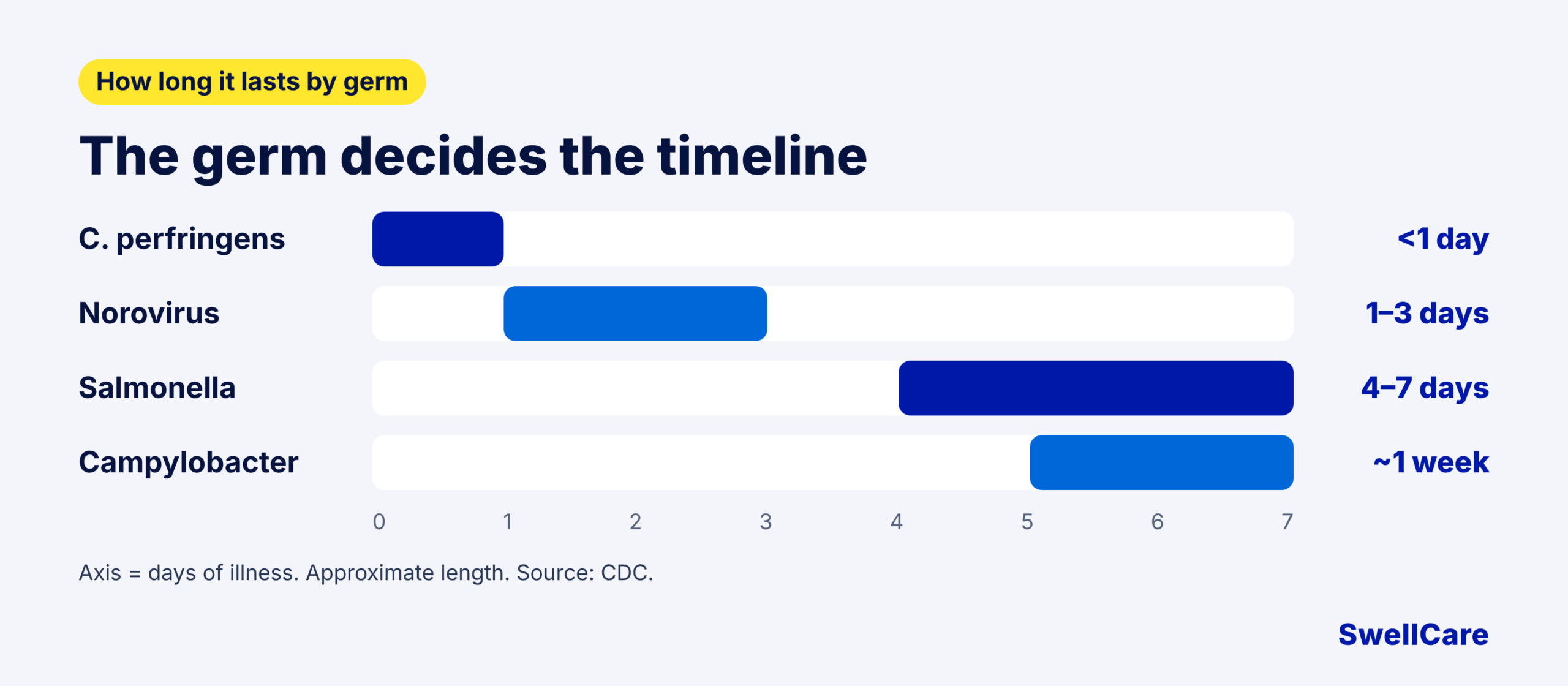
Other things stretch the timeline too. A weak immune system, older age, pregnancy, and dehydration that goes untreated all make recovery slower. Parasites like Giardia can last longer than bacteria or a virus, and some need prescription treatment. Bacteria differ too. Antibiotics don’t help most cases, and a few, such as certain E. coli strains, are a bad fit, so don’t take leftover pills on your own.
And yes, you can be contagious after you feel better. You can shed the virus for days after symptoms stop, so the CDC suggests staying home for 48 hours after the last episode. Handwashing with soap and water matters more than hand sanitizer here.
How to feel better faster
You can’t kill the infection on command. But you can make the stretch shorter and less miserable.
Replace what you’re losing. Dehydration is the most common complication of food poisoning, and it’s what sends people to the ER. Hydration is the whole game. Drink fluids like water and broth, plus oral rehydration solutions such as Pedialyte, in small, frequent sips. Those replace the electrolyte salts you lose. Sports drinks work in a pinch, though they’re sugary. Aim for pale-yellow urine.
Rest. It’s not laziness. Fatigue is part of how the body fights an infection, so cancel the plans and sleep. Rest also keeps you from pushing through the nausea and fever.
Go easy on the medicine. Over-the-counter anti-diarrheal drugs such as loperamide can help some adults with watery diarrhea but aren’t safe if you have a fever or bloody diarrhea, because they can trap the germ in your gut. Bismuth subsalicylate can ease cramps and nausea, yet it’s not for children, and not if you’re allergic to aspirin. When in doubt, ask a clinician.
Don’t fast. More on that next.
What to eat after food poisoning
Don’t force it. Once you’re hungry again, the NIDDK says most people can return to a normal diet gradually, even with some diarrhea left. Start with bland foods like toast, rice, bananas, applesauce or plain crackers. Keep portions small, and sip more fluids between bites. Eat bland foods until your stomach settles. You may have heard of the BRAT diet, but it’s a starting point, not a rule.
Hold off on greasy food, caffeine, alcohol and sugary drinks for a few days. Dairy can be tough on a recovering gut, sometimes for a month or longer, so go easy on milk and ice cream.
When food poisoning is not normal: see a doctor
Most cases are mild. Some aren’t. Seek medical care if you notice any of these:
- Diarrhea that lasts more than three days (more than one day for infants and young children)
- A fever above 102°F
- Bloody diarrhea or black, tarry stools
- Vomiting that keeps you from holding down fluids
- Signs of dehydration: very little urine, dark urine, a dry mouth, dizziness when you stand
- Severe abdominal pain
- Blurry vision, tingling or muscle weakness, which can point to a toxin affecting the nerves. Go to the ER for these.
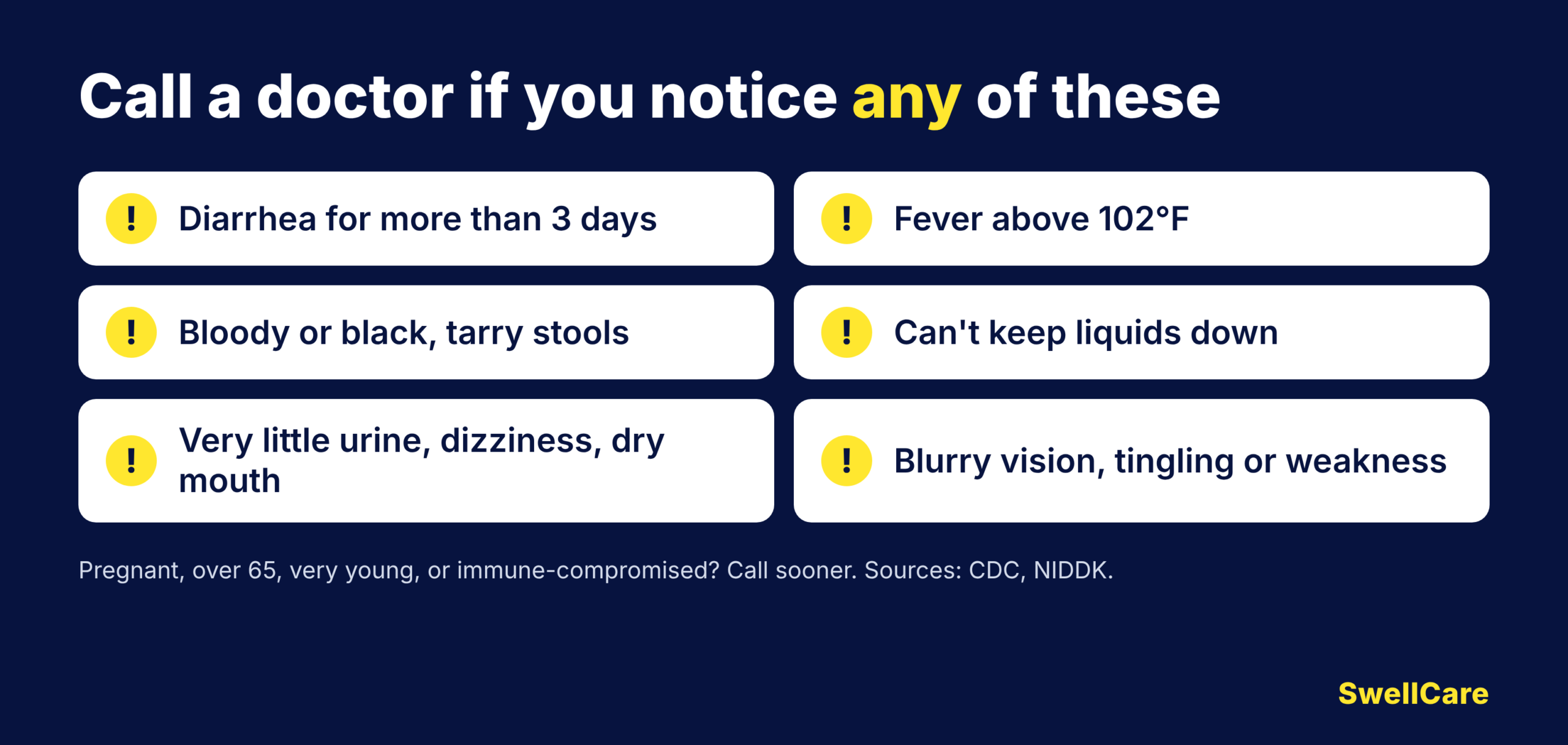
Some people should call sooner. Pregnancy raises the stakes, because listeria, a foodborne illness risk, can cause miscarriage or stillbirth. Severe cramps or fever during pregnancy deserve a call. Older adults, people with weakened immune systems and children are also at higher risk. For babies, dehydration can turn dangerous within a day, so call at the first sign of illness.
If you’re unsure, treat that as your answer. A quick check with a clinician costs far less than a night in the ER, and prompt medical care prevents dehydration from getting worse.
Skip the waiting room: get care from home with Swell
Not sure whether this is ordinary food poisoning or something that needs treatment? Swell’s clinicians can review your symptoms by video or message, help you work out a hydration plan, and tell you whether you need in-person urgent care or a visit to the ER. Start at the urgent care page. It’s a good fit when you’re sick, wiped out and not keen to sit in a waiting room. Take a look at how it works, or browse the conditions Swell treats.
For emergencies, like severe pain, confusion, fainting or blood in your stool, call 911 or go to the nearest ER.
Questions people ask about food poisoning
Can food poisoning last a week?
Yes, though it’s not typical. If you’ve wondered how long does food poisoning last at most, a week is the usual ceiling. Bacterial infections such as salmonella and campylobacter can run 4 to 7 days. If you’re sick beyond three days, or you’re getting worse, see a doctor. A stool test can identify the cause.
Is food poisoning contagious?
The illness itself isn’t passed through the food you ate, but many germs, especially norovirus, spread from person to person through stool, vomit and shared surfaces. Wash your hands often, because viruses cling to surfaces. Clean the bathroom with a bleach-based product, and stay home until 48 hours after symptoms end.
How long does food poisoning last in children?
Children can get sicker faster because they dehydrate quickly. Diarrhea that lasts more than a day, any fever in an infant, or no wet diaper for three hours or more are reasons to call a doctor right away. Keep offering breast milk, formula or an oral rehydration solution.
How do I know if it’s food poisoning or a stomach flu?
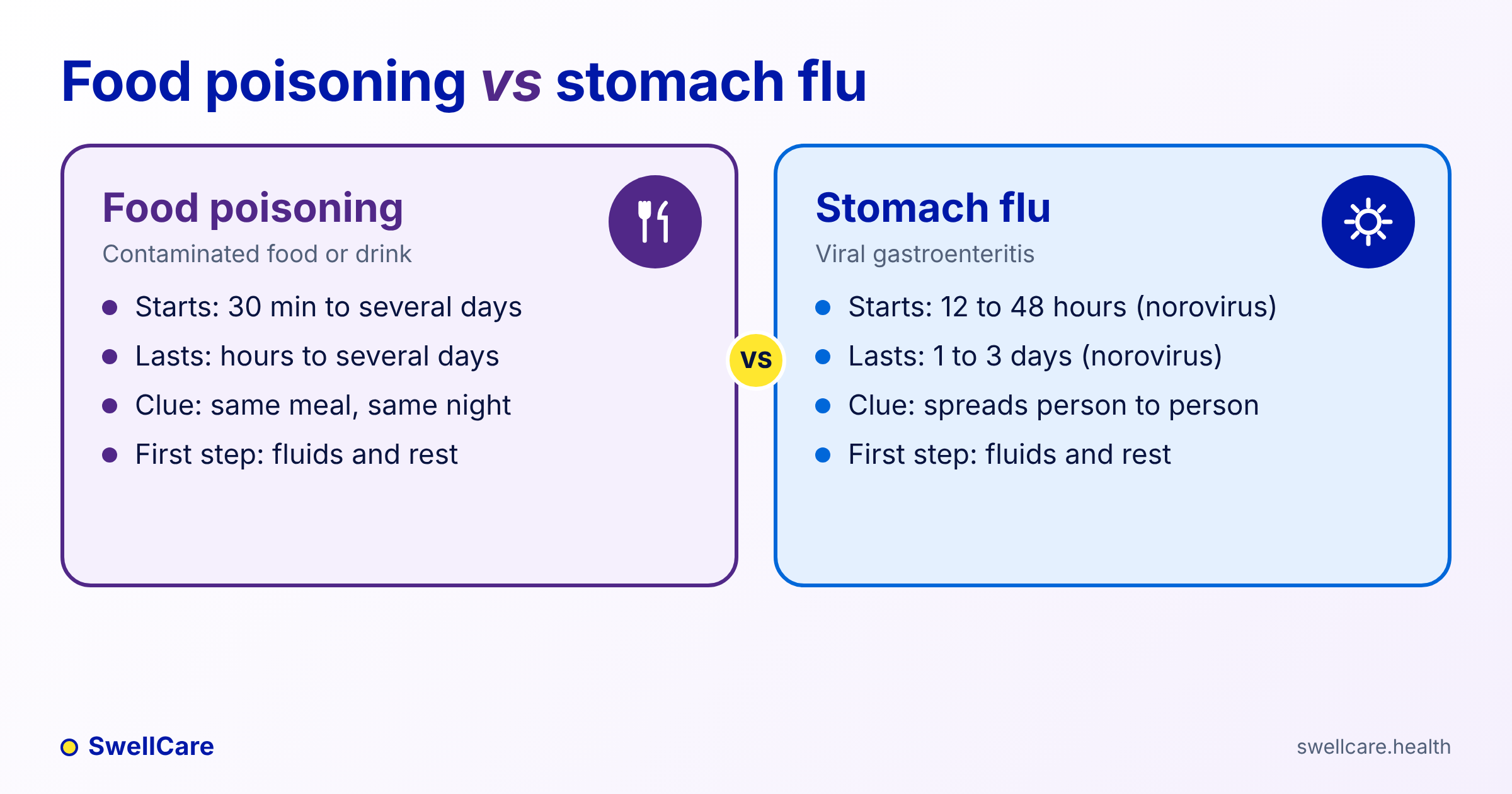
It’s hard to tell, and the treatment is the same. Food poisoning comes from contaminated food, and it often strikes within hours and may hit several people who ate together. The stomach flu is caused by a virus and spreads person to person. The viruses behind it, like norovirus, can cause either.
How long after eating do symptoms start?
Anywhere from 30 minutes to several weeks, depending on the germ. Most common cases start within 6 to 48 hours. Listeria is the outlier, and can take about two weeks to show up.
Trusted references
Public-health, research, and medical-society resources related to this guide.