It’s 2 a.m. Your stomach is cramping, and you’re replaying dinner. Was it the leftover chicken, or the bug your kid brought home from school? Food poisoning vs stomach flu is hard to call in the moment, because both bring vomiting, diarrhea and a miserable night. The clues are timing, who else is sick, and how long it drags on. Here’s how to read the clues. Then we’ll cover tonight’s plan and when a clinician should step in.
Food poisoning vs stomach flu: the quick answer
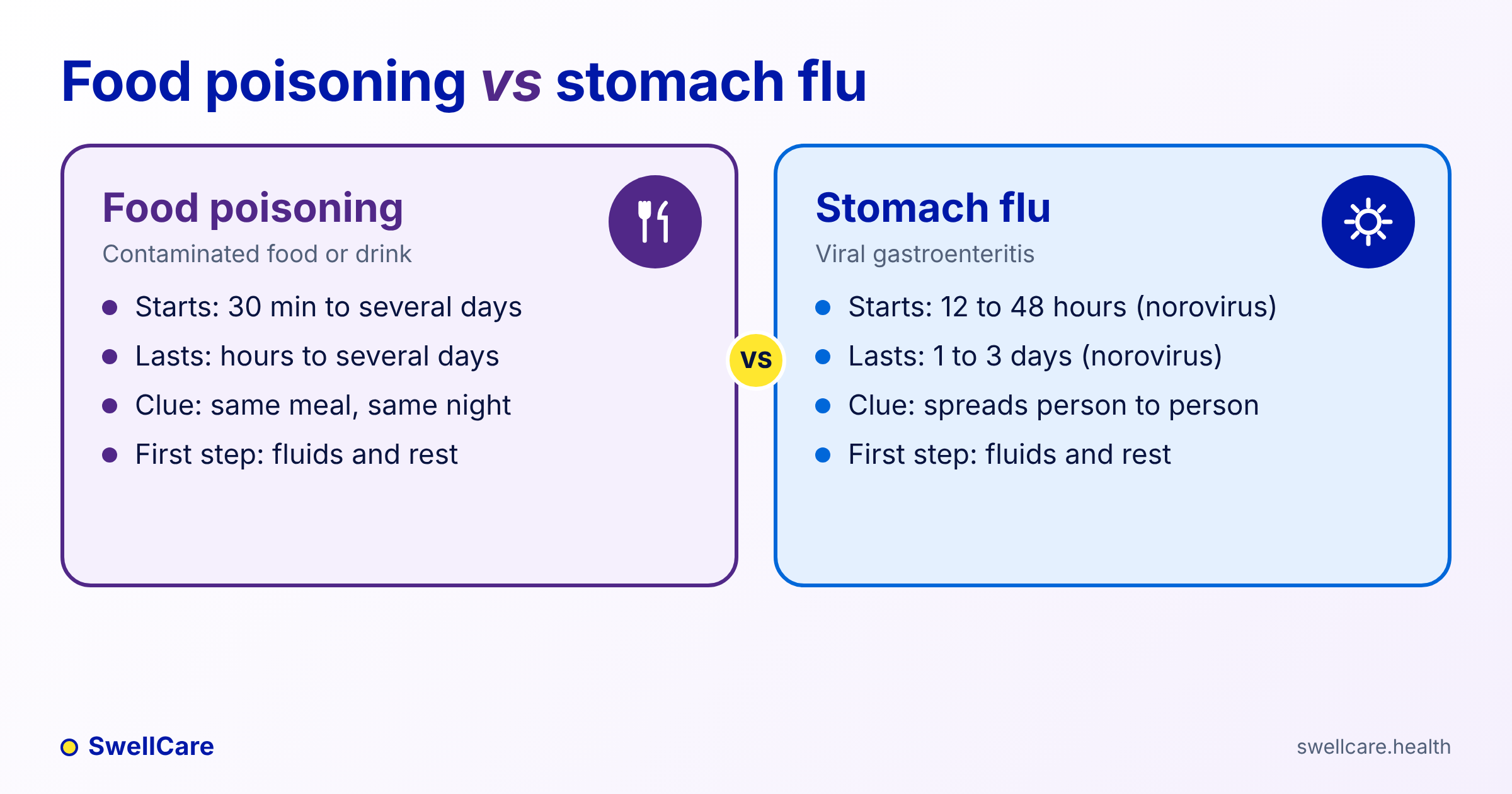
Food poisoning comes from eating or drinking something contaminated with bacteria, toxins, parasites or a virus. The stomach flu is a viral infection of the gut that usually spreads from person to person. Doctors call it viral gastroenteritis, and it has nothing to do with influenza.
Here’s the twist. The same germ can cause both. Norovirus tops the CDC’s list of germs behind food poisoning illnesses, and it’s also the most common cause of viral gastroenteritis.
| Food poisoning | Stomach flu | |
|---|---|---|
| Cause | Contaminated food or drink | A gut virus, often spread by touch |
| Starts | 30 minutes to several days after eating | Usually 12 to 48 hours after exposure |
| Who’s sick | People who ate the same meal | People in close contact |
| Fever | Sometimes | Sometimes |
| Usual length | Hours to several days | 1 to 3 days (typical) |
No single symptom settles it. The pattern of symptoms does.
What is food poisoning?
Food poisoning is a foodborne illness. Something you swallowed carried a germ or a toxin, and your gut reacted. The CDC estimates that 48 million Americans get sick this way every year, with about 128,000 hospitalized.
Bacteria such as Salmonella and Campylobacter cause many cases. Some bacteria, like Staph, make toxins that hit within hours. Parasites such as Cyclospora cause others. Undercooked poultry and unwashed produce are classic setups. So are raw shellfish and food left out too long. Contaminated water counts too, and so does food handled with unwashed hands that turns contaminated on the cutting board. Symptoms depend on the germ.
Speed is the tell. Nausea often comes in waves. Some toxins hit within hours. If everyone who ate the potato salad is sick by midnight, think food poisoning.
What is the stomach flu?
The stomach flu is an infection of the stomach and intestines, almost always viral. One virus causes most adult cases, the same one that tops the food poisoning list. Rotavirus mostly hits infants and young children, as do adenovirus and astrovirus, though adults catch them too.
The name misleads. Influenza viruses don’t cause viral gastroenteritis. The real flu attacks your breathing passages, with cough and sore throat. The stomach flu attacks your gut. Several germs can trigger it, mostly a few common ones.
Many different viruses can cause it, and most cases trace back to a handful. It spreads through contact with an infected person, contaminated surfaces, or food handled by someone who’s sick. One sick kid can take down a whole household in a few days.
Symptoms side by side
Symptoms they share
Diarrhea shows up in both. So do vomiting, nausea and stomach cramps, and a fever or a pounding headache can join in. A headache alone is no clue, and neither is a fever. That overlap in symptoms is why so many people guess wrong.
Clues that point to food poisoning
A sudden start after a specific meal is the biggest clue. Other people who ate it feel sick too, and nobody else in the house does.
Bloody diarrhea or a higher fever can point to a bacterial or parasitic infection rather than a virus. A gut infection like that needs a clinician. Those two signs mean it’s time to call a clinician.
Clues that point to stomach flu
Watery diarrhea, a headache and body aches are common with the stomach flu. Symptoms spread through the household over a few days, not one evening. And you can usually trace it to a sick person, like a classmate or a coworker, instead of a meal.
Timeline: when symptoms start and how long they last
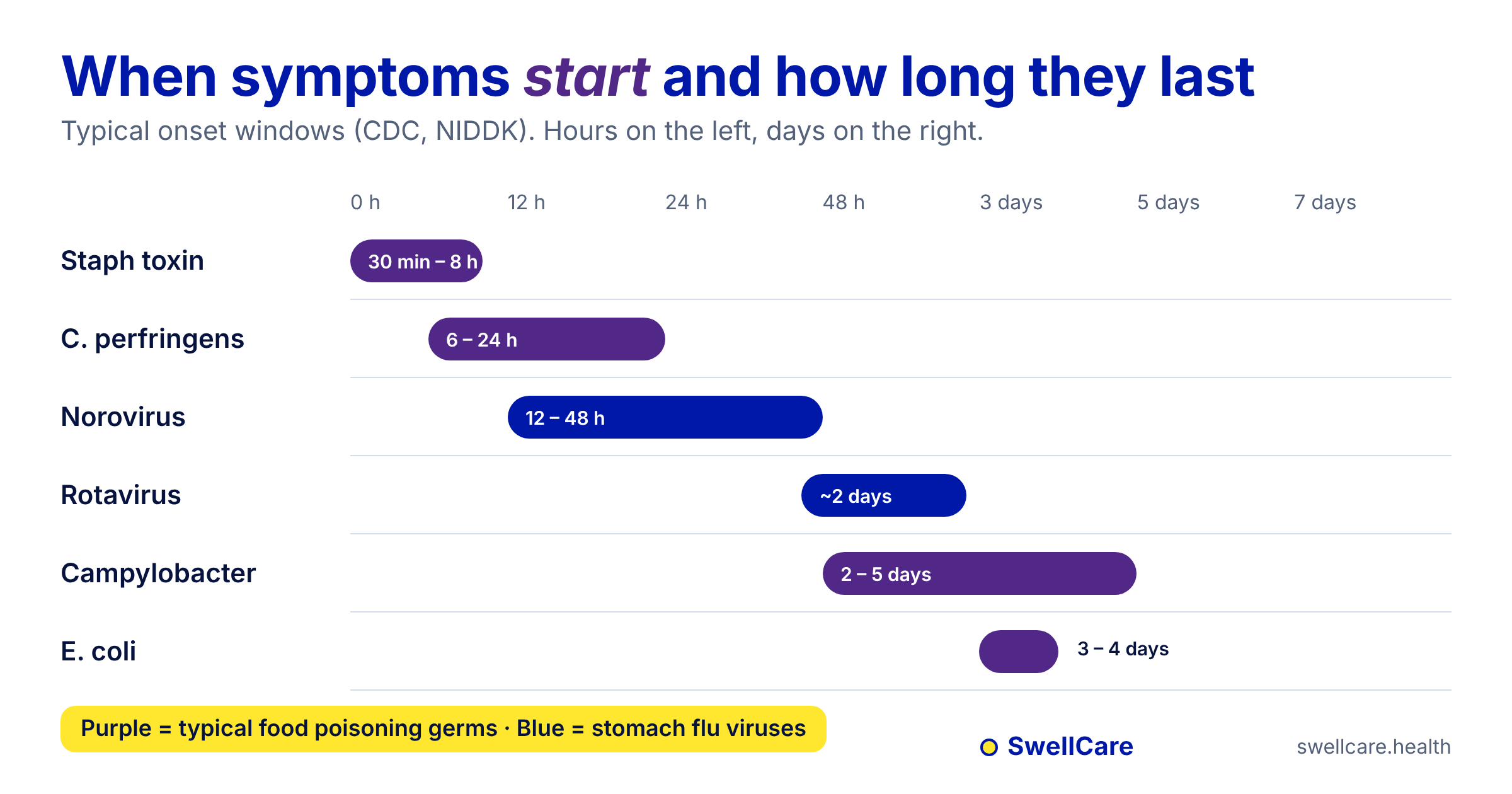
Timing is the most useful tool you have. Note when your symptoms started, then count back to your last meal. The CDC and NIDDK publish onset windows for the common germs:
| Germ | Symptoms usually start |
|---|---|
| Staph toxin | 30 minutes to 8 hours |
| C. perfringens | 6 to 24 hours |
| Norovirus | 12 to 48 hours |
| Salmonella | 6 hours to 6 days |
| Campylobacter | 2 to 5 days |
| E. coli | 3 to 4 days |
| Rotavirus | About 2 days |
Once it starts, norovirus usually clears in 1 to 3 days, with no special treatment. Rotavirus can run 3 to 8 days. Food poisoning ranges from a few hours to several days, depending on the germ.
How long are you contagious?
Stomach flu is contagious. The virus can keep spreading for days after you feel better, and the CDC says some people shed it for two weeks or more. Stay home until 48 hours after symptoms stop. That’s the rule, even if you feel fine.
Food poisoning from spoiled food isn’t passed along that way. But some germs can pass from person to person, so wash your hands either way.
What to do at home right now
Most people recover without treatment. The job is replacing what you’re losing, and treatment stays mostly supportive. A clinician can match treatment to the cause. Rest is part of treatment too. So is patience.
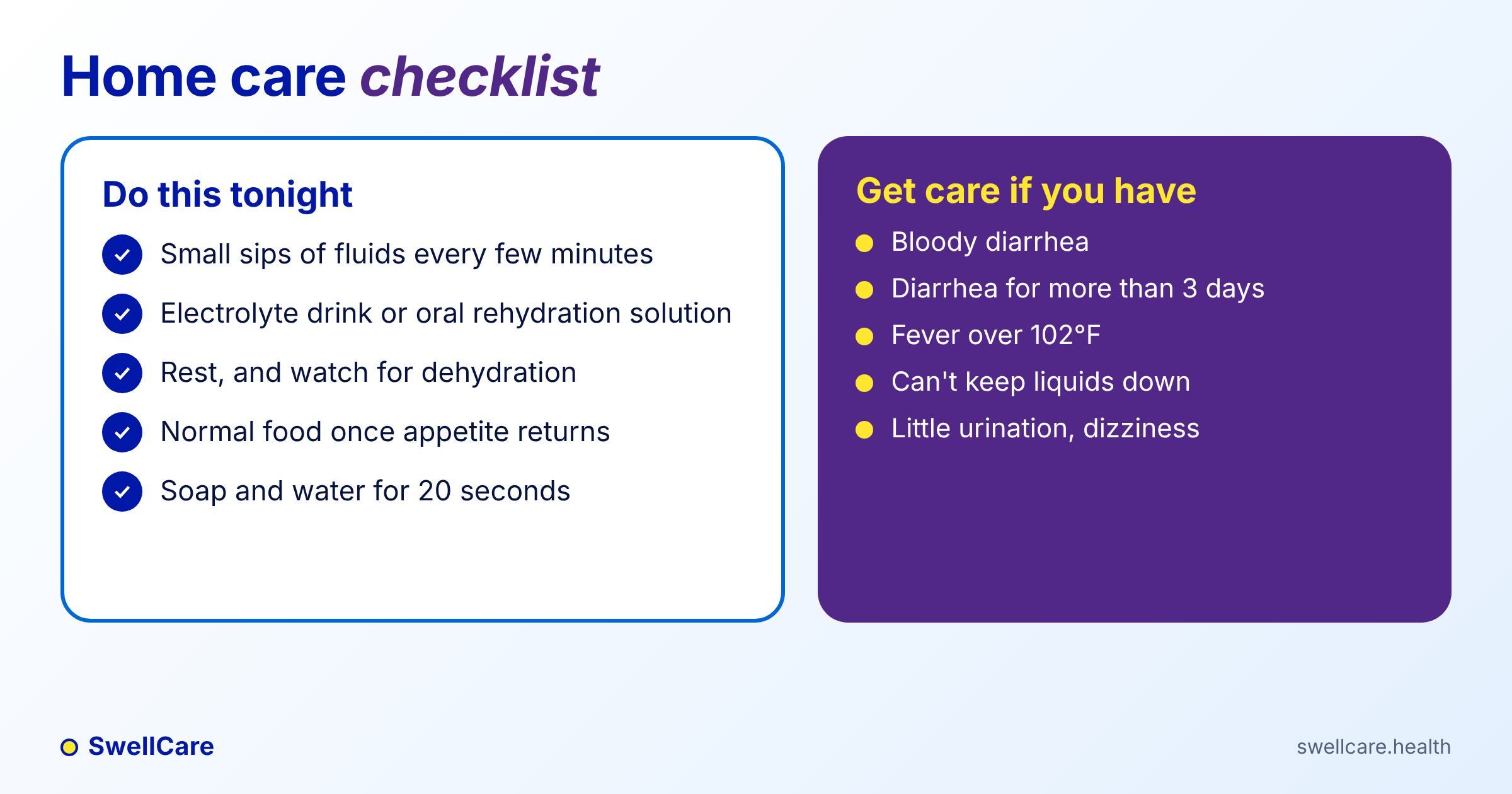
Start with fluids. Take small sips of water, broth or an electrolyte drink every few minutes, even if you’ve vomited. If nausea is bad, slow down. Sips beat gulps, and fluids beat food at first. Sports drinks and saltine crackers help replace lost salts and electrolytes. Oral rehydration drinks add the right mix of electrolytes for kids. For children, use an oral rehydration solution such as Pedialyte, and ask a doctor before giving it to an infant.
When your appetite comes back, go back to normal food. Strict bland diets aren’t needed.
Skip antibiotics unless a clinician prescribes them. They don’t work on a virus. Don’t use antidiarrheal medicine if you have bloody diarrhea or a fever, and don’t give over-the-counter versions like loperamide to young children without a doctor’s okay. Check with a pharmacist before any over-the-counter medicine if you’re unsure.
Rest, and watch for dehydration. Little urination and a dry mouth are early signs, and so is dizziness when you stand. Dark urine and sunken eyes mean it’s getting serious. Severe dehydration can call for IV fluids at a clinic or hospital.
When to see a doctor
Don’t wait it out if any of these symptoms show up. They’re the CDC’s warning signs:
- Bloody diarrhea
- Diarrhea lasting more than 3 days
- A fever over 102°F
- Vomiting so often you can’t keep liquids down
- Dehydration signs like little urination or dizziness
The NIDDK adds six or more loose stools in a day or severe belly pain. Black or tarry stools and confusion count too. Call sooner for infants and older adults, and for anyone pregnant or with a weakened immune system. Some infections need medicine, and only an exam can sort that out. For a baby, no wet diaper in 3 hours is a reason to get medical attention fast. Any of these warrants medical attention, even at night.
How to lower your risk of both
Wash your hands with soap and water for at least 20 seconds, especially after the bathroom and before you cook. A quick rinse isn’t enough. Cook meat and shellfish thoroughly. Rinse produce and refrigerate leftovers quickly. If someone’s sick at home, disinfect the surfaces they touched and wash soiled laundry in hot water.
Get same-day care from Swell
Not sure which one you have, or whether you need to be seen? Swell’s clinicians can talk through your symptoms any time of day, online. A virtual visit can’t run a stool test or replace the ER, so if you’re severely dehydrated or very unwell, go in person. For everything in between, you’ll get a clear next step. See how it works and pricing.
Questions people ask about food poisoning vs stomach flu
Can you have food poisoning and the stomach flu at the same time?
It’s rare, but the two overlap because one germ can cause both. A clinician usually treats them the same way at first: fluids, rest and watching for warning signs.
Do antibiotics help food poisoning or stomach flu?
Not for the stomach flu, since antibiotics don’t work on viruses. For food poisoning, most cases clear on their own. A clinician may prescribe an antibiotic for certain bacterial or parasitic infections.
What should you eat after vomiting?
Start with sips of clear liquid. Once you’ve kept those down, try crackers, rice or toast. Return to your normal diet as your appetite comes back.
Is the stomach flu the same as influenza?
No. Influenza is a respiratory illness caused by the influenza virus. The stomach flu is gastroenteritis, caused mostly by norovirus and rotavirus.
Trusted references
Public-health, research, and medical-society resources related to this guide.