It’s 2 a.m. and your ear is throbbing. Sleep is off the table, and one question keeps looping: how long does an ear infection last?
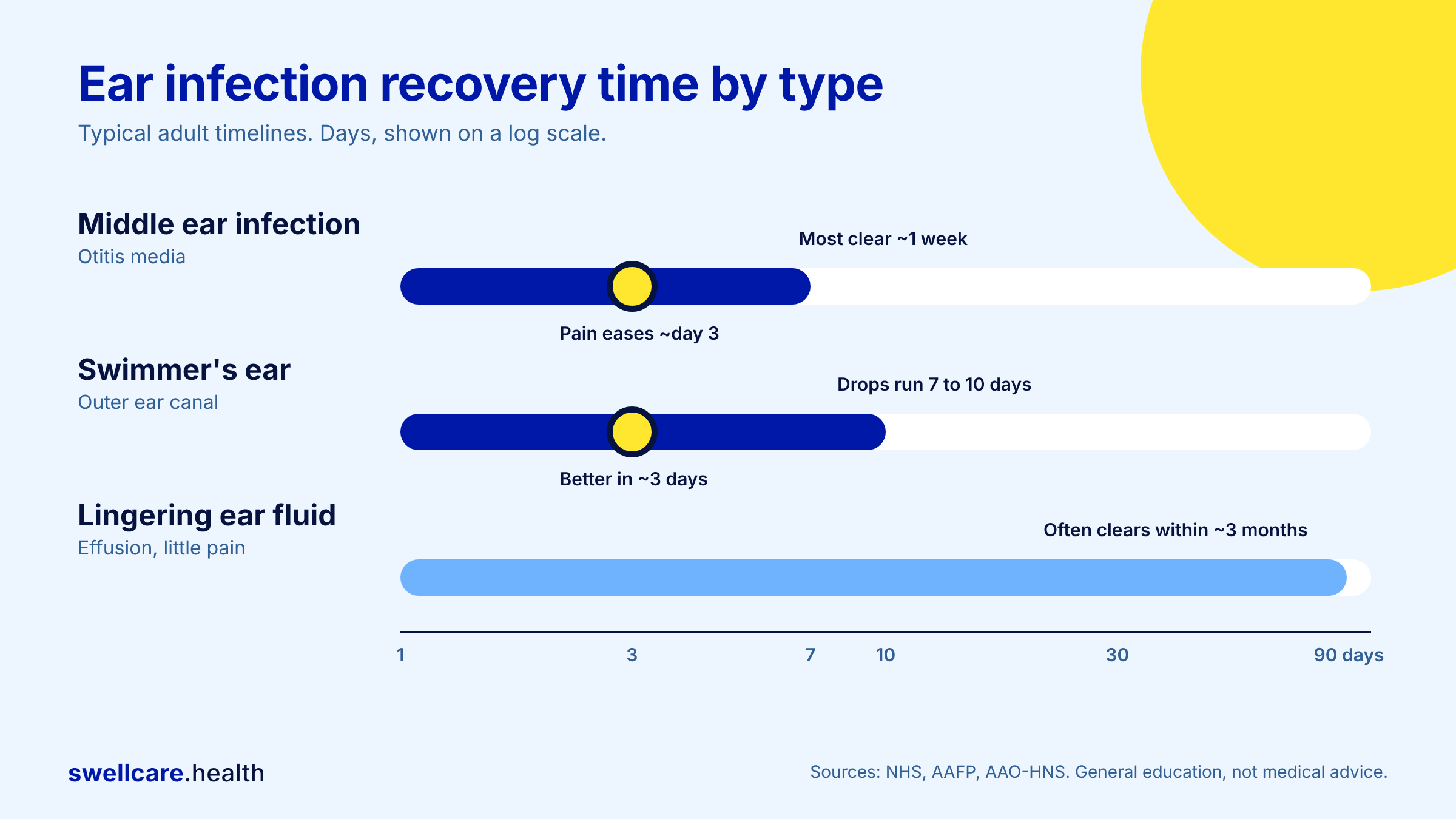
Here’s the blunt answer. Most adult ear infections ease within 3 days and clear within a week to 10 days, according to NHS guidance. But the type of ear infection changes that number a lot. A swimmer’s ear can need a 7 to 10 day course of drops. Fluid behind the eardrum can hang around for weeks, even after the pain is gone.
This guide gives you the real timeline for an ear infection in adults, what recovery feels like day by day, and the signs that mean you shouldn’t wait it out.
How long does an ear infection last? It depends on the type
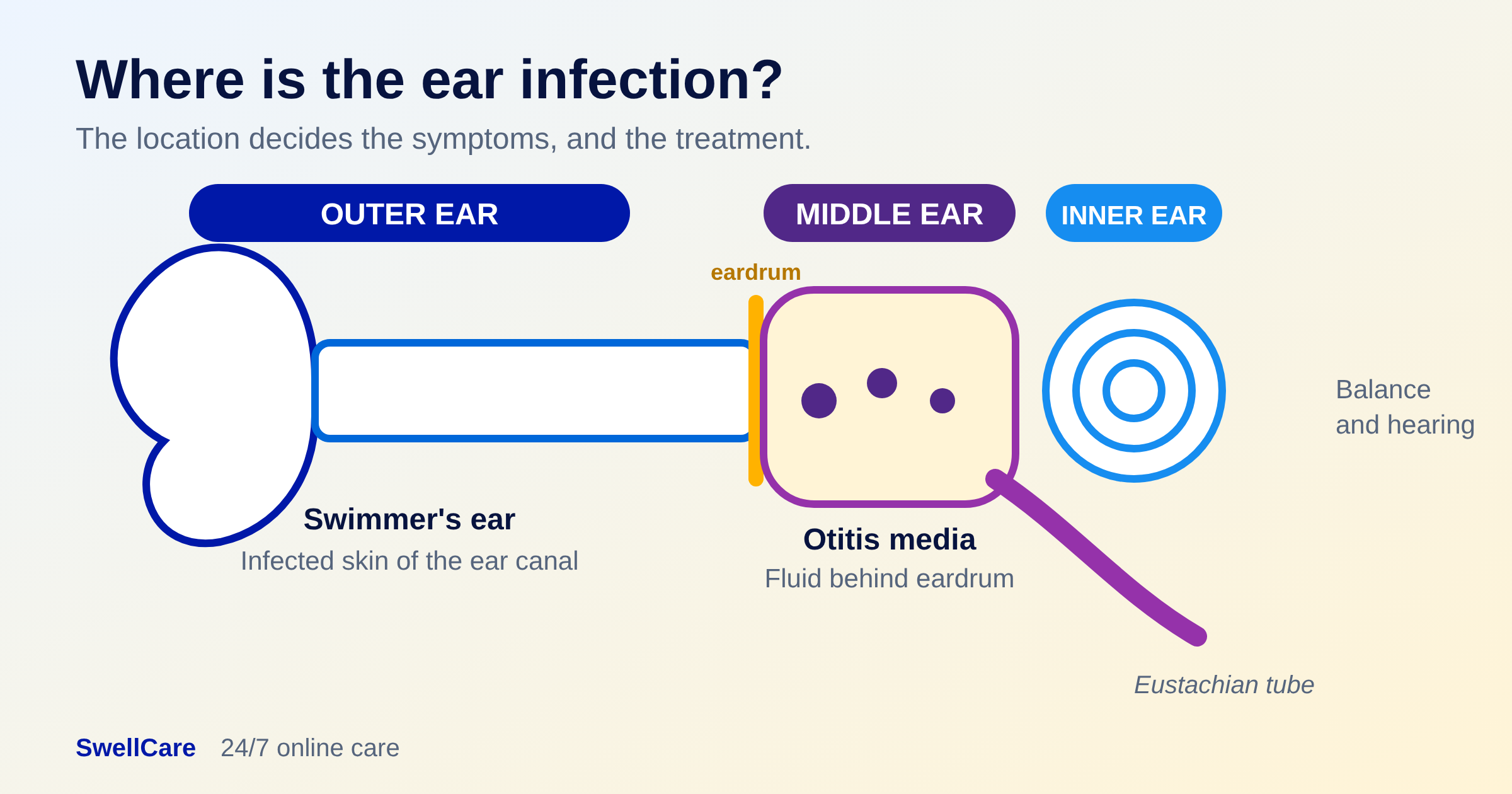
“Ear infection” is a catch-all. Your ear has three parts: the outer ear and ear canal, the middle ear just behind the membrane, and the inner ear. Where the trouble sits decides how long it lasts.
| Type | Where it is | Typical timeline |
|---|---|---|
| Middle ear infection (otitis media) | Behind the membrane | Pain eases in 2 to 3 days; most clear in about a week |
| Swimmer’s ear (otitis externa) | Outer ear canal | Better in about 3 days of drops; drops run 7 to 10 days |
| Fluid that lingers (effusion) | Trapped pocket of ear fluid | Often clears within 3 months |
Middle ear infection
This is the classic one. It starts deeper in the ear, often right after one of the colds that go around each winter. You get ear pain, a full or blocked feeling, and muffled hearing. A fever is possible.
UCSF Health says to call your provider if antibiotics haven’t helped within 48 to 72 hours. The CDC advises care if symptoms last more than 2 to 3 days. Same window, same message: three days is the line.
Swimmer’s ear
Swimmer’s ear is an outer ear infection. Water stays in the ear canal, the skin swells with inflammation, and a bacterial infection takes hold. Tugging the outer ear hurts. Itching and drainage are common. Treatment starts with ear drops.
The American Academy of Family Physicians says ear drops are used for 7 to 10 days, and you should expect to feel better within about 3 days. Keep using the ear drops until symptoms have been better for 3 days. Stopping early is the classic mistake.
Fluid that lingers
Sometimes the viral or bacterial ear infection is gone but ear fluid stays trapped behind the eardrum. Doctors call it otitis media with effusion. Everything sounds underwater. There’s little pain. Most of these episodes clear on their own within about 3 months, though that figure comes mostly from research in children. If the fluid is still there after 3 months, see an ENT doctor. Ear tubes are sometimes discussed for stubborn cases.
Day by day: what recovery usually feels like
Days 1 to 3 are the worst. It peaks, hearing dulls, and you may run a low fever. Rest, a warm cloth on the ear, and an over-the-counter pain reliever help.
By days 4 to 7, the ache usually fades and fever settles. The ear may still feel full.
In week 2, most people feel normal. Mild hearing loss is common during an infection and usually improves once it clears.
Why adults get ear infections, and why yours might drag on
An ear infection in adults is less common than in kids. The reason is plumbing. The eustachian tube connects the ear to the back of your throat, and in adults it’s wider and drains better, as UCSF Health explains. When it works, fluid leaves. When it swells shut, a blocked eustachian tube lets ear fluid build up, and that can turn into an infection. Any inflammation there, from a cold or allergies, can trap fluid.
Colds and allergies
Colds and sinus infections are the usual triggers. Allergies can clog the eustachian tube too, and Mayo Clinic notes ear infections peak in fall and winter. Most colds fade in a week or so, but if you’re still congested, your ear has less chance to drain, so the ear infection lingers. Treatment of the nose matters as much as treatment of the ear.
The NHS notes that decongestants and antihistamines show no proven benefit for an ear infection itself, so don’t expect a pill from the pharmacy aisle to speed things up.
Bacterial or viral
A bacterial ear infection often needs antibiotics, and swimmer’s ear is usually bacterial. A viral ear infection doesn’t need them, and your immune system usually handles it. Antibiotics do nothing against a virus, so taking them “just in case” only adds side effects. You can’t tell which you have by feel alone. A clinician looking at the eardrum can usually make a better call, which is part of why timing matters.
Smoky air, swimming too soon and cotton swabs all slow healing.
Do you need antibiotics? What actually speeds healing
Sources disagree a little here, and that’s fine. UCSF Health calls antibiotics the usual treatment for adult middle ear infections and says to finish the full course. The CDC says the immune system often fights off the infection without them. Severity decides which camp you’re in.
Watchful waiting
For a mild case, a clinician may suggest waiting 2 to 3 days with good pain control before starting antibiotics, or giving you a prescription to fill only if you’re not improving. That’s called watchful waiting. It’s reasonable when you’re otherwise healthy, but it has a clock on it. If day 3 arrives and you’re worse, call.
Ear drops and pain relief
For an outer ear infection, prescription drops are the treatment. Lie on your side with the sore ear up and stay there for a few minutes so the drops reach the ear canal. For ear pain, ibuprofen or acetaminophen, taken as the label directs, plus a warm cloth, does most of the work. Avoid putting anything else in the ear unless a clinician says to.
Is an ear infection contagious?
The ear infection itself isn’t contagious. The colds and viral bugs that caused it often are. Wash your hands and rest at home if you feel unwell.
Signs your ear infection is taking too long
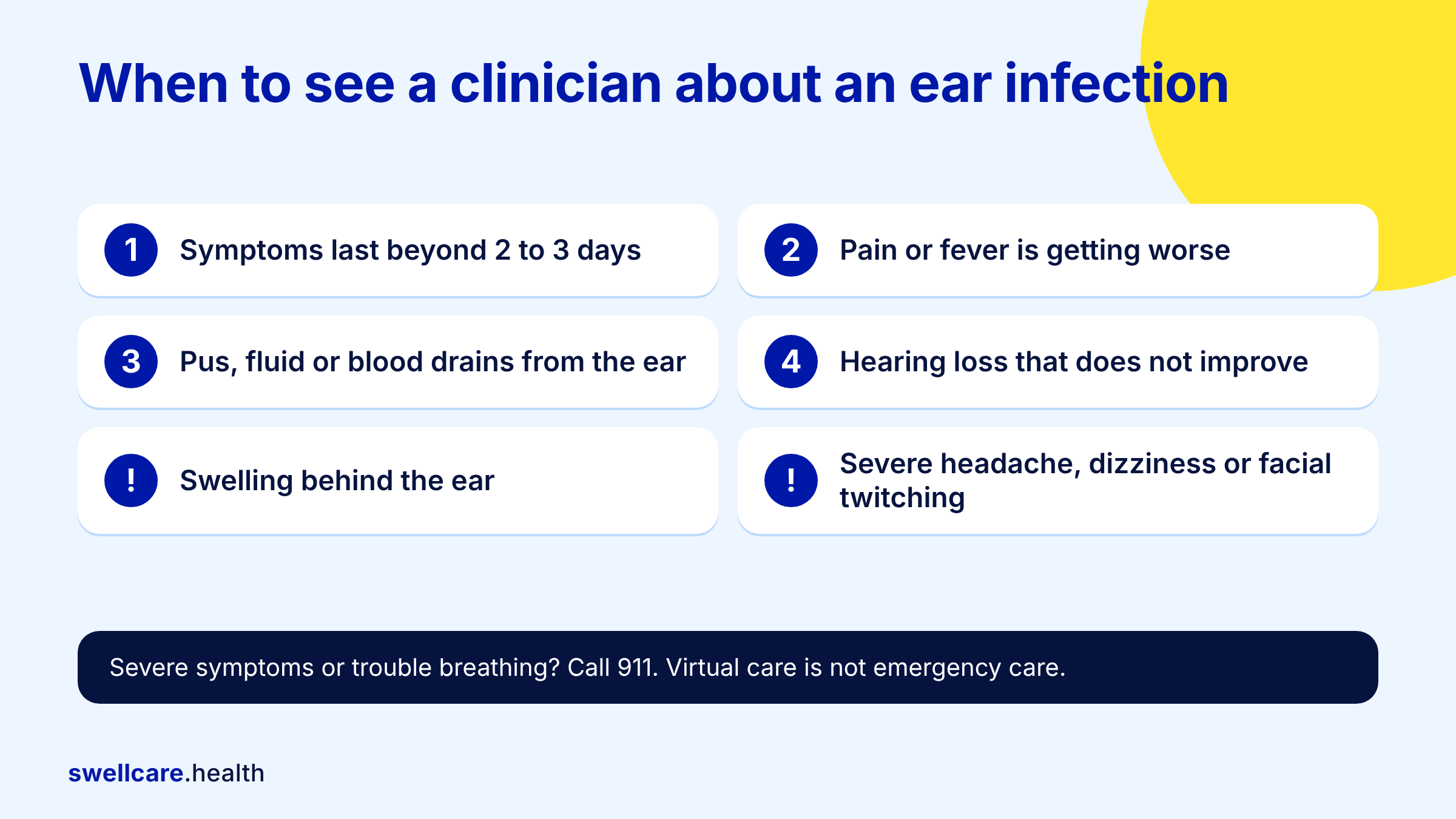
Call a clinician if your symptoms last beyond 2 to 3 days, get worse, or come with high fever. The same goes for pus, fluid or blood draining from the ear, or hearing loss that doesn’t improve.
Get help quickly for swelling behind the ear, a bad headache, dizziness, or facial muscle twitching. Those can point to complications like mastoiditis, an infection of the bone behind the ear. Rare, yes. Still serious.
One more: if severe ear pain suddenly stops and yellow or green fluid appears, the eardrum may have ruptured. Most tears heal on their own, usually within about 72 hours per Mayo Clinic, but have it checked.
Get care today instead of waiting it out
You don’t have to spend three miserable nights guessing. Swell offers clinician-led virtual urgent care for an ear infection or any everyday illness, 24/7. The first screening is free, and a completed consultation is currently $45 with no membership. A clinician can talk through your symptoms, review what’s safe to take, and decide whether you need antibiotics, ear drops or an in-person exam.
To be upfront, a video visit can’t look inside your ear with an otoscope. If that’s what you need, a clinician will say so and point you to in-person care. Prescriptions aren’t guaranteed, and Swell isn’t emergency care. For severe symptoms, call 911.
Start your Swell ear infection screening whenever the ache won’t let up.
Questions people ask about ear infection recovery
What is the quickest way to get rid of an ear infection?
There’s no instant fix, but you can shorten the misery. See a clinician early, use the right treatment for your type, keep discomfort in check, and finish any antibiotics or drops. Most people feel clearly better within 3 days of starting treatment.
What is the last stage of an ear infection?
The last stage is usually recovery: the pain is gone, but the ear may feel full and hearing may stay muffled for days or weeks while leftover ear fluid drains. It’s only a problem if the fullness lasts beyond about 3 months, when an ENT may discuss ear tubes.
How do I know if my ear infection is serious?
Warning signs and symptoms include fever with severe pain, swelling behind the ear, drainage of pus or blood, dizziness, new hearing loss, or symptoms that worsen after 2 to 3 days.
What is mistaken for an ear infection?
Jaw joint problems, a sore throat, earwax buildup and a toothache can all cause ear discomfort. Discomfort that flares when you chew often points away from the ear.
Can an ear infection go away on its own?
Yes, many do, especially a mild viral ear infection, and clinicians sometimes advise watchful waiting for 2 to 3 days. But don’t guess. A bacterial ear infection usually needs antibiotics or ear drops, and treatment shortens the misery.
Trusted references
Public-health, research, and medical-society resources related to this guide.