Tuesday, you spot a round, scaly patch on your kid’s arm. By Friday there’s a second one, and suddenly you’re thinking about the shared towels, the family dog and Saturday’s wrestling meet. So, is ringworm contagious? Yes. This fungal skin infection passes easily through skin contact and shared items, and without treatment you can spread it for as long as the rash is visible.
The good news is that ringworm is common, this infection stays on the surface, and it clears up with the right treatment. Here’s how ringworm spreads, how long it lasts and what to do today.
Is ringworm contagious? Yes, and here’s why
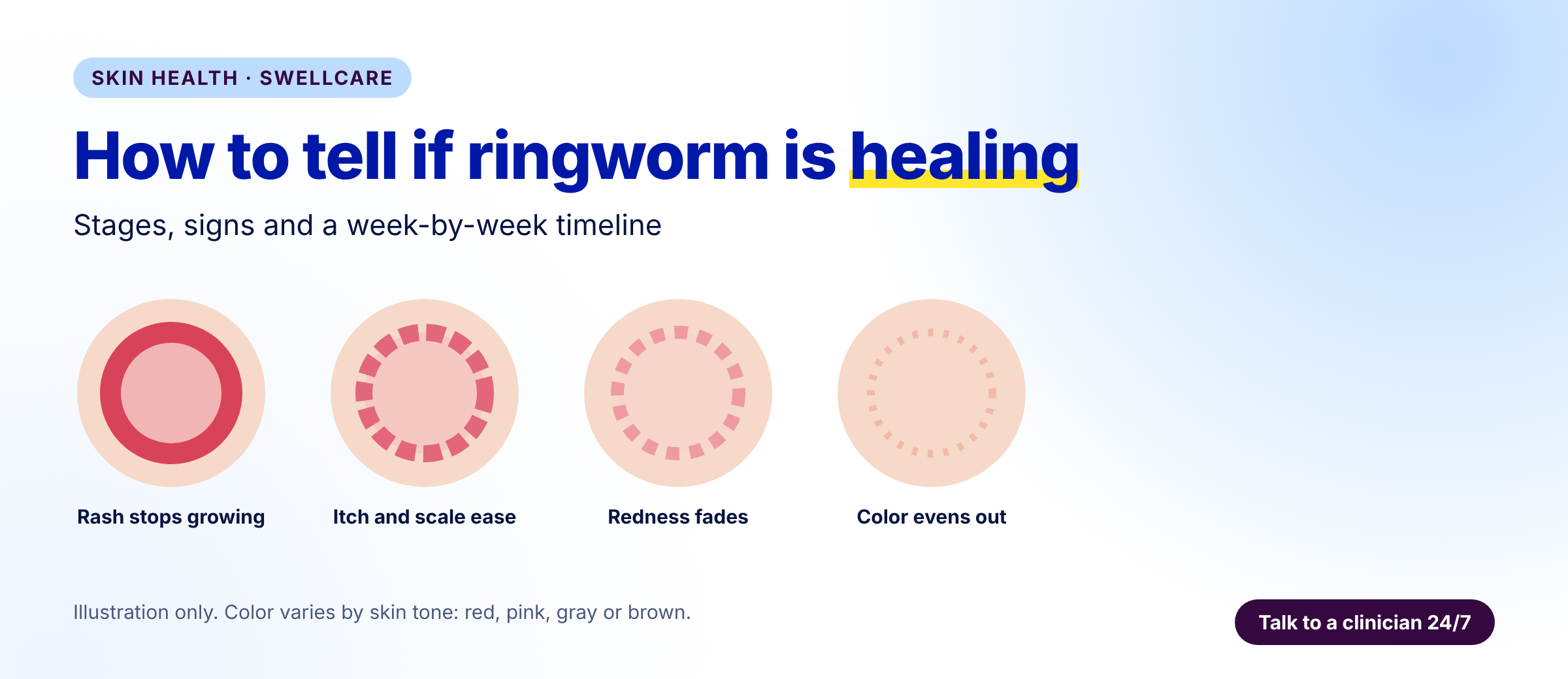
Ringworm isn’t a worm. It’s a fungal infection, caused by fungi that feed on keratin, the protein in your outer skin, hair and nails. The name comes from the itchy, scaly, ring-shaped rash, which looks red on lighter skin and gray or brown on darker skin. Those are the classic symptoms, and the center of the ring often looks clearer than the edge.
Doctors call ringworm tinea, followed by the body part involved. Tinea corporis is ringworm on the body, tinea capitis is a scalp infection, tinea pedis is athlete’s foot and tinea cruris is jock itch. Same fungal family, different address.
The CDC says up to 25% of people worldwide may get ringworm at some point, so you’re far from alone. And it has nothing to do with being “dirty.” Anyone can catch it.
How ringworm spreads
Ringworm spreads two ways: directly, from infected skin or fur, or indirectly, from clothing, bedding and other things an infected person or animal touched, because fungal spores cling to them. Health departments in Colorado and Wisconsin describe the same routes.
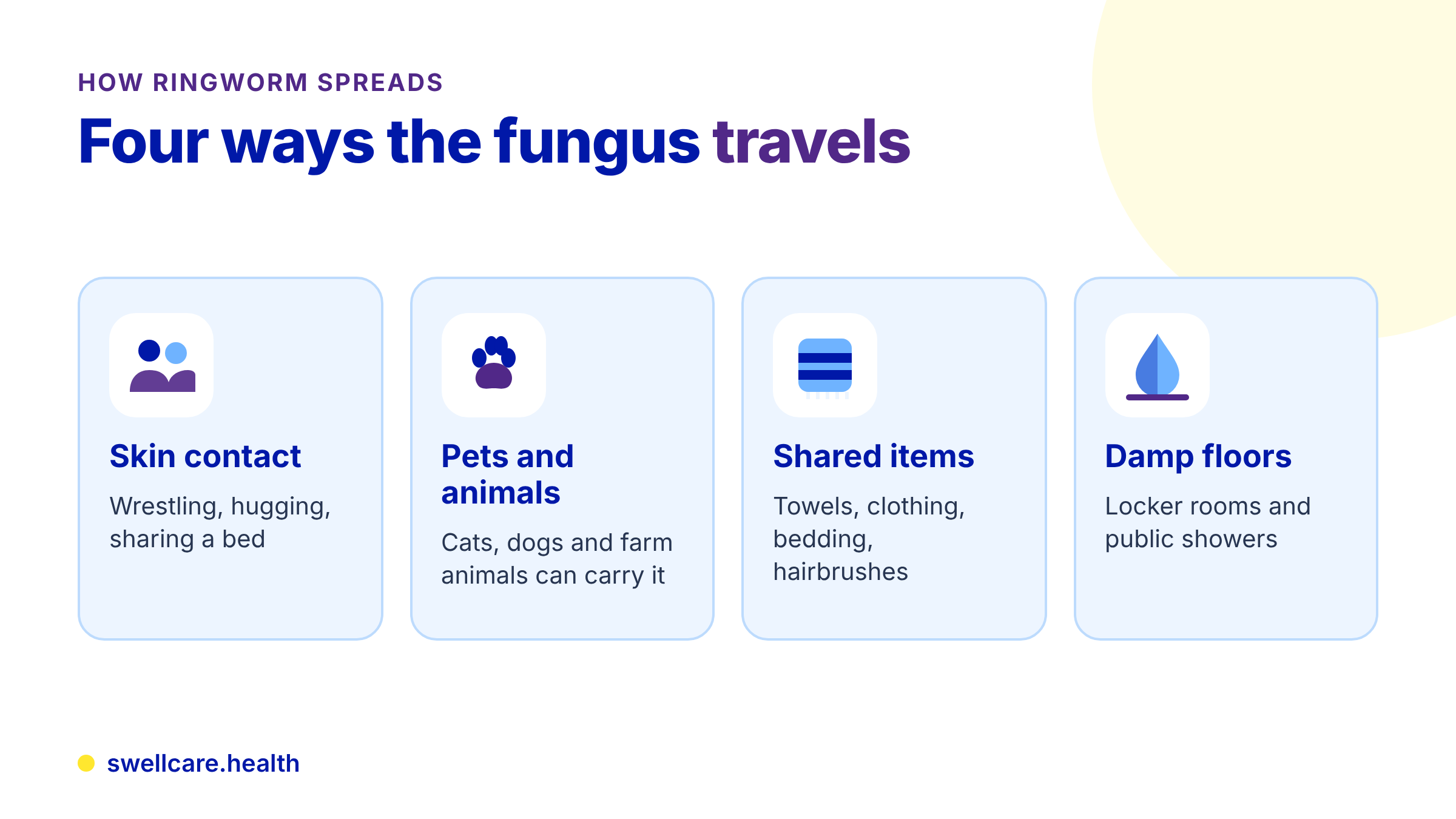
| Route | Common examples | What to watch |
|---|---|---|
| Skin-to-skin contact | Wrestling, hugging, sharing a bed | Fresh patches that spread to arms, neck and face |
| Pets and animals | Cats, dogs | Bald or scaly spots on the animal |
| Shared items | Towels, clothing, bedding, hats, hairbrushes | Anything that sits against bare skin for hours |
| Damp public floors | Locker rooms, public showers | Walking barefoot |
From person to person
Close skin-to-skin contact is the classic route. That includes contact sports, siblings sharing a bed and, according to recent CDC reports on emerging ringworm types, sexual contact. Ringworm can also spread from one part of your own body to another, which is how a foot infection ends up in the groin.
From pets and animals
Cats and dogs get ringworm too, and ringworm can spread between pets and people. The CDC lists close contact with infected animals as a risk factor. Wash your hands after petting an animal with patchy fur or scaly skin, and call your veterinarian if you suspect your pet has it.
How long is ringworm contagious?
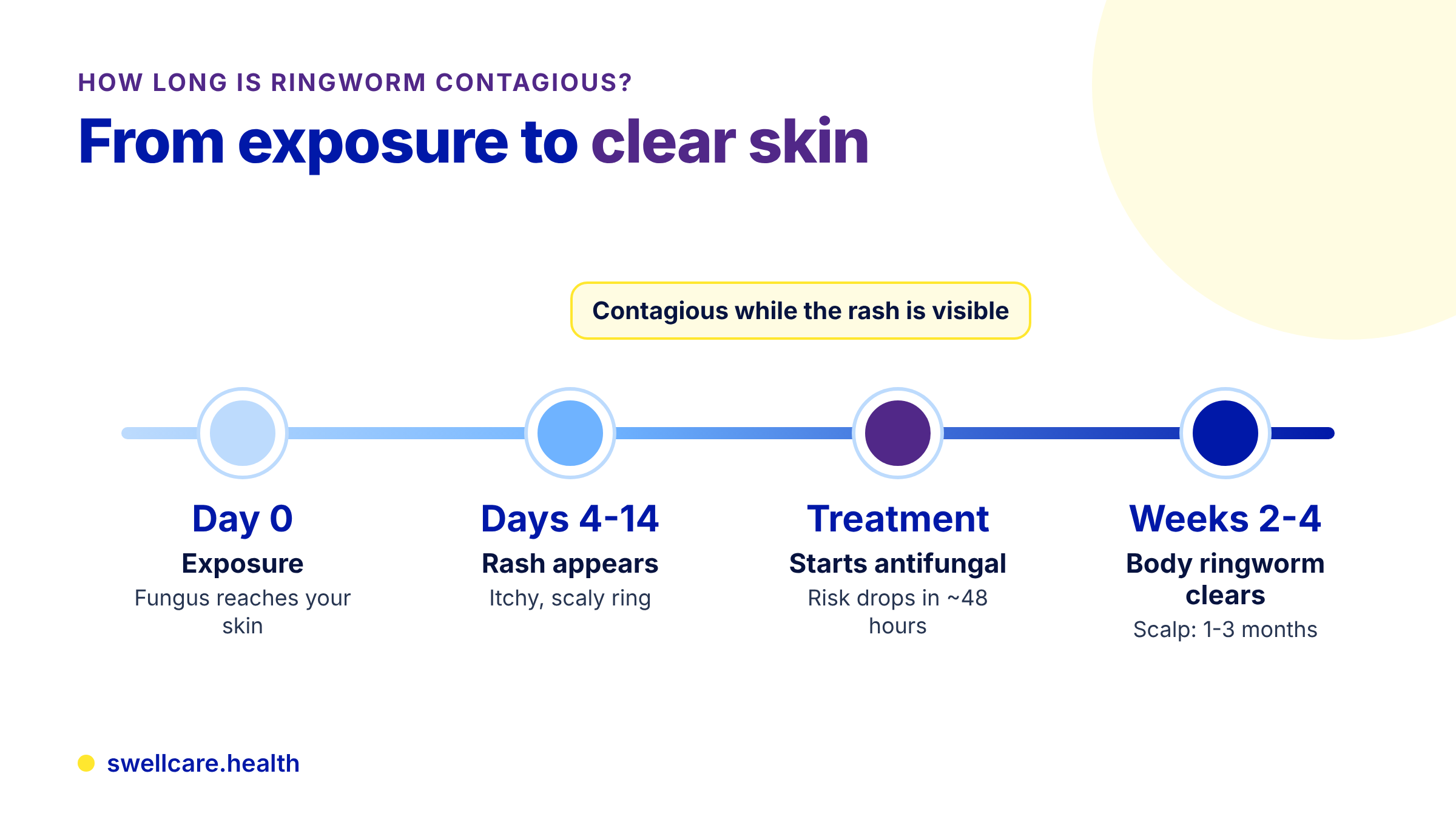
Plain version: you’re contagious for as long as the fungus is alive on your skin. Colorado’s health department says a person can spread the infection while the rash is visible.
Here’s the timeline most people follow:
- Exposure to first symptoms: 4 to 14 days. The CDC calls this the incubation period, so you can carry the fungus for days before symptoms show.
- Rash appears and ringworm treatment starts. Until you begin an antifungal, you can still spread the infection.
- About 48 hours after treatment starts. Many pediatric sources, including those cited by Medical News Today, say the risk that you spread ringworm drops sharply by then.
- Two to four weeks of treatment. Body ringworm usually clears in that window with an antifungal cream, according to Wisconsin’s health department.
- Scalp ringworm: one to three months. It needs oral prescription medication.
Left untreated, ringworm can hang around for months, and it stays contagious the whole time. That’s the main reason not to wait it out.
How to prevent ringworm from spreading at home and school
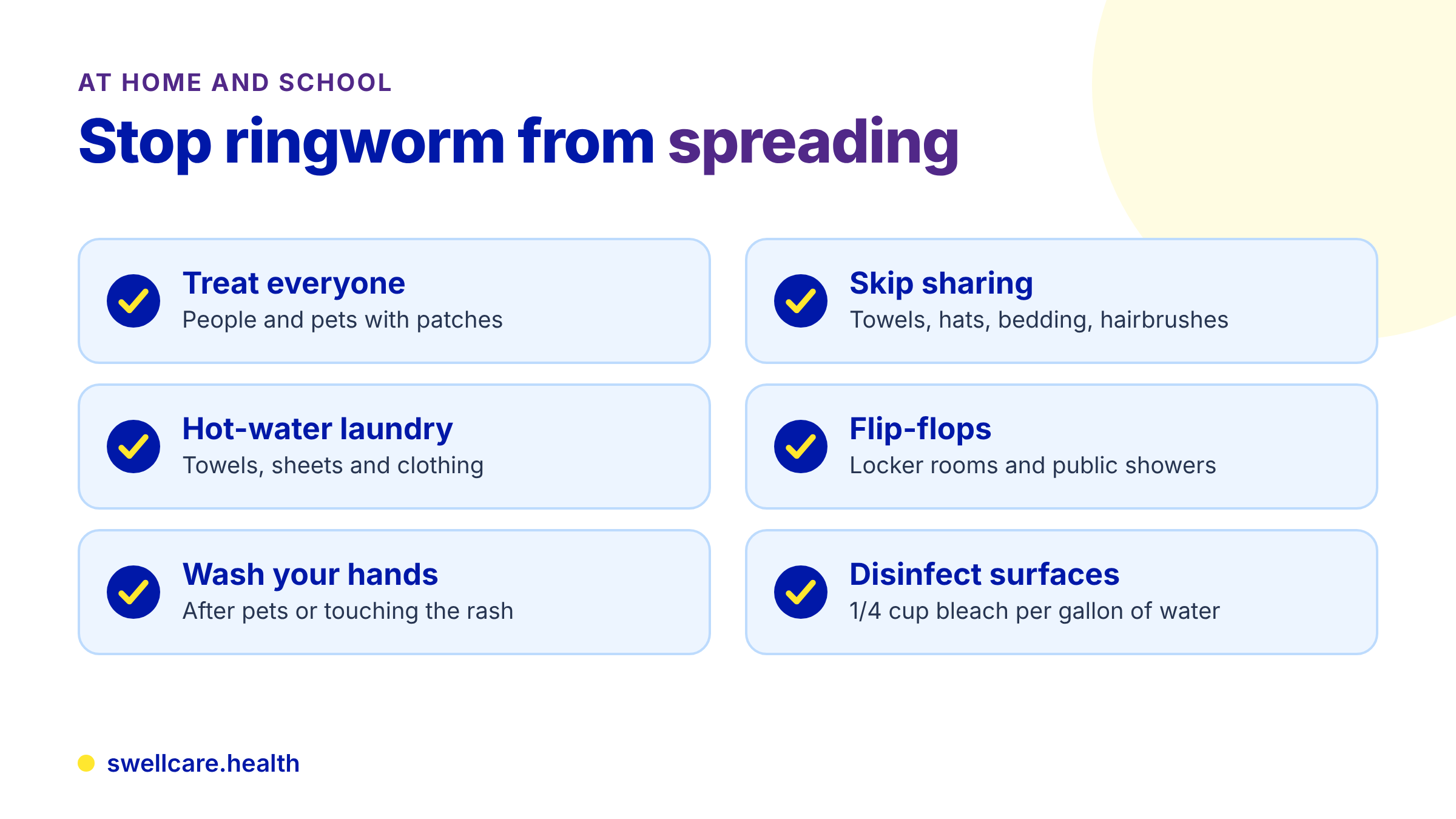
You can shut down most ringworm spread with habits you already have. These prevent a lot of repeat cases:
- Treat everyone who has ringworm, pets included. Check close household contacts and pets for patches too.
- Don’t share towels, clothing, bedding, hats or hairbrushes until the rash is gone.
- Wash towels, bedding and clothing in hot water, and change socks and underwear every day. Clean laundry helps prevent reinfection.
Now the shared spaces:
- Wear flip-flops in locker rooms and public showers to prevent barefoot contact with the floor.
- Wash your hands after touching a pet or scratching an itchy patch.
- Disinfect hard surfaces such as shower floors and gym benches. Colorado’s guidance is a quarter cup of chlorine bleach per gallon of water, which helps prevent spores from lingering.
School and sports have their own rules. Colorado’s guidance says a student with ringworm can return once treatment has begun. Wrestlers and swimmers may need to sit out until the infection is under control, since those sports mean constant skin contact. Showering right after practice helps prevent a second round, and athletes should disinfect mats and gear too.
What treatment ends the contagious window
Most body ringworm infections respond to an over-the-counter antifungal cream, lotion or powder, such as terbinafine or clotrimazole. The American Academy of Pediatrics says to use it for about two to three weeks, until it’s smooth, and a discolored patch can take a few more weeks to fade. Widespread cases may also get an oral prescription.
Scalp and nail infections are tougher. They usually need oral antifungal medication, such as terbinafine, taken for several weeks or months, because creams can’t reach the hair root. A prescription is required, and so is finishing the full course, which prevents the fungus from coming back.
One warning that most guides bury: skip steroid creams. They can soothe an itchy patch, but they aren’t antifungal, so the fungus keeps growing, and Colorado’s health department says to avoid them.
When to see a doctor
Book a visit with a healthcare provider if your ringworm rash gets bigger or the symptoms get worse while you’re on treatment, or if the infection hasn’t improved after over-the-counter treatment. An itchy, spreading rash deserves a closer look. Same goes for any scalp or nail infection, and for anyone with a weakened immune system, since the CDC notes those people may struggle to fight it off.
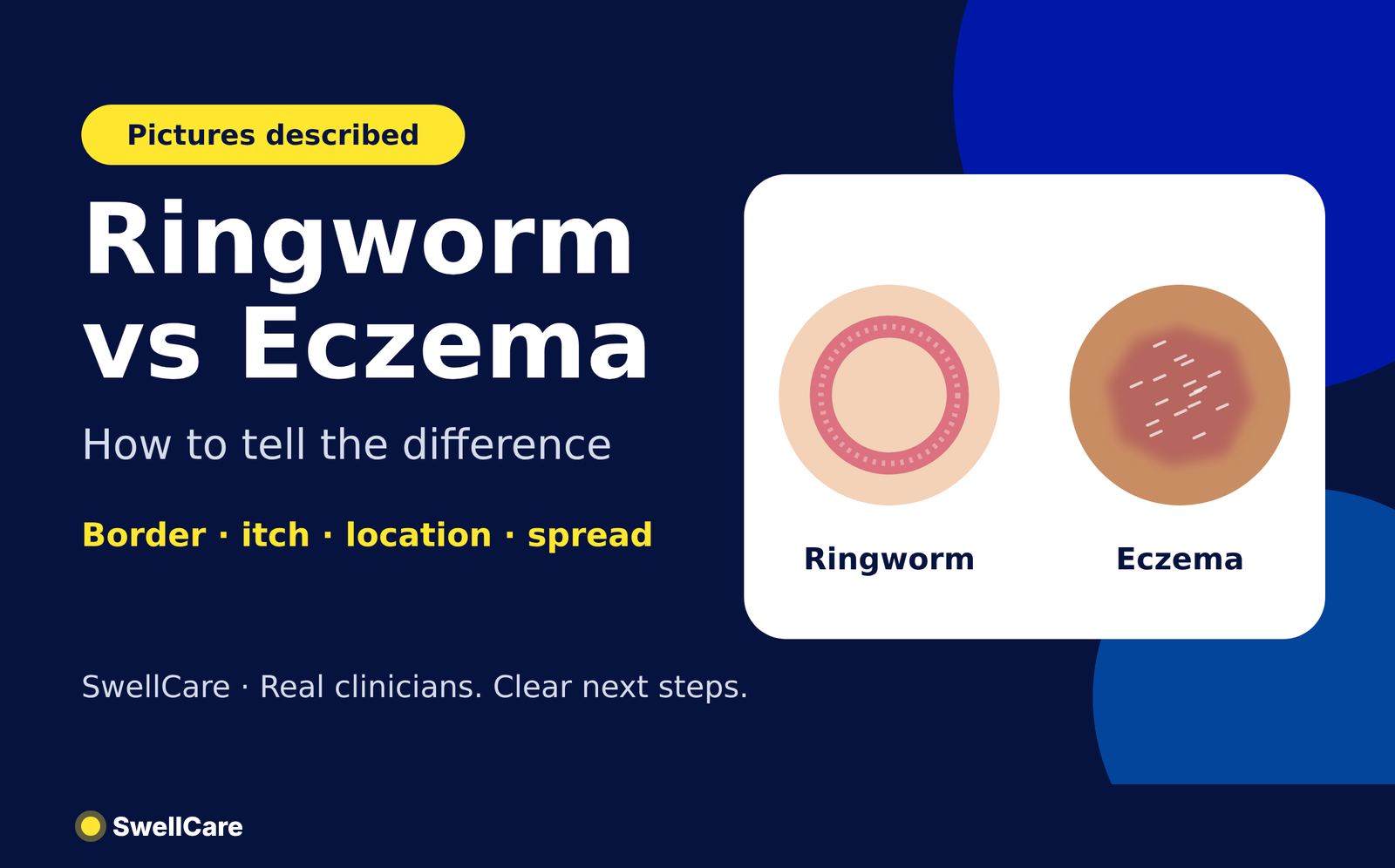
Also get it looked at if you’re not sure what it is. Eczema can look a lot like ringworm, but treating eczema with a steroid cream can make ringworm worse.
Not sure it’s ringworm? Get a clinician to look
You don’t have to sit with a spreading ringworm rash all weekend. Swell lists ringworm and other rashes among the concerns it can review by video or secure chat, so you can describe your symptoms and show the patch to a licensed clinician from home. They’ll also tell you whether a prescription makes sense. If it needs a skin scraping or an in-person look, they’ll tell you that too. Browse the conditions Swell treats or start an urgent care visit.
Questions people ask about ringworm
Should I stay away from people if I have ringworm?
You don’t need to isolate. Cover the patch, skip contact sports and shared gear, and keep close contact low until antifungal treatment has been going for at least two days. After that, normal life is fine for most people.
Is ringworm due to poor hygiene?
No. You get ringworm from contact with the fungus, and tidy, clean people get it as often as anyone. A weakened immune system, sweaty skin, tight shoes, shared gym gear and pet contact raise your odds far more than how often you shower.
What kills ringworm quickly?
Nothing kills ringworm instantly. A terbinafine or clotrimazole cream starts working within days, and you’ll usually see improvement in the first week. To disinfect surfaces, diluted bleach kills the spores, and hot-water laundry handles linens.
Is jock itch contagious?
Yes. Jock itch (tinea cruris) is a ringworm infection of the groin, so it spreads through skin contact and shared towels, and it can travel to your feet or thighs. Treat athlete’s foot (tinea pedis) at the same time, since the two often travel together.
Can I get ringworm more than once?
You can. Having it once doesn’t protect you, and reinfection from a pet, a gym floor or an untreated family member is common. Finish your treatment and clean the shared stuff.
Trusted references
Public-health, research, and medical-society resources related to this guide.