You’ve been using antifungal cream for a few days, and the rash still looks angry. Is it working? Here’s the short version. Ringworm is healing when the patch stops growing, the itching eases, the scale clears before the redness does, and the center of the ring starts to look like normal skin again.
Most skin infections take about two to four weeks of consistent treatment to get there. Below, you’ll learn how to tell if ringworm is healing at each of the five stages, see a week-by-week timeline, and spot the signs that mean it’s time to call a clinician. If you keep asking yourself “is ringworm healing?”, the checklists here should settle it.
How to tell if ringworm is healing in under a minute
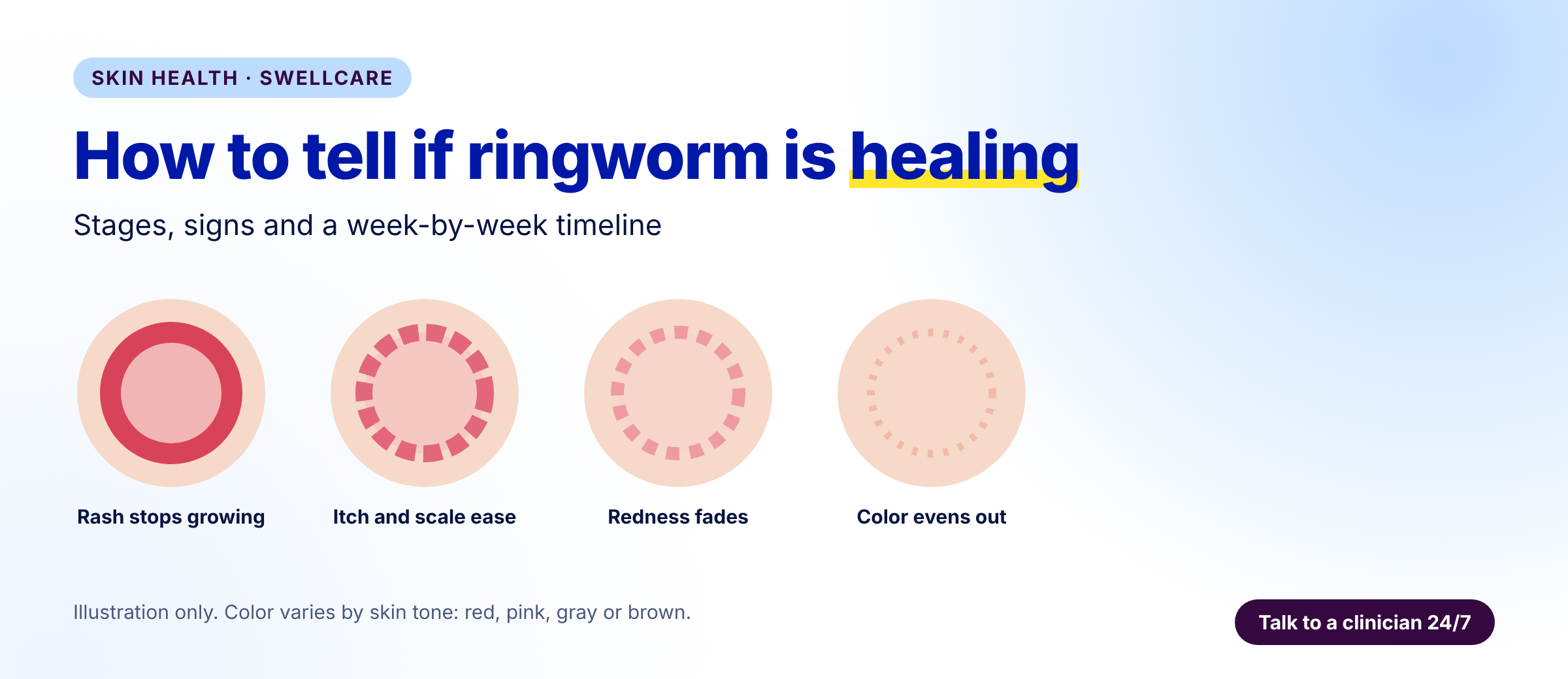
Four signs of healing tell you the infection is turning the corner. You don’t need all four on the same day, but you should see them show up over the first one to two weeks.
- The patch stops getting bigger. No new rings, no widening edge.
- The itching calms down. It’s often the first thing you notice.
- Scale and flaking clear before the redness. The American Academy of Dermatology notes that scale usually clears first, then the redness follows.
- The center looks like normal skin. Healing tends to start in the middle of the ring and move outward.
If you can tick two or three of those boxes, the infection is probably clearing and your treatment is doing its job. Keep going anyway. Stopping early is the single most common reason ringworm comes back.
What ringworm looks like before it starts to heal
Ringworm has nothing to do with worms. It’s a fungal infection of the skin, and the medical name for the version on your body is tinea corporis. Related fungal infections in the same family also carry the word tinea. The fungus feeds on keratin, the protein in your outer skin layer, which is why it loves skin, hair and nails.
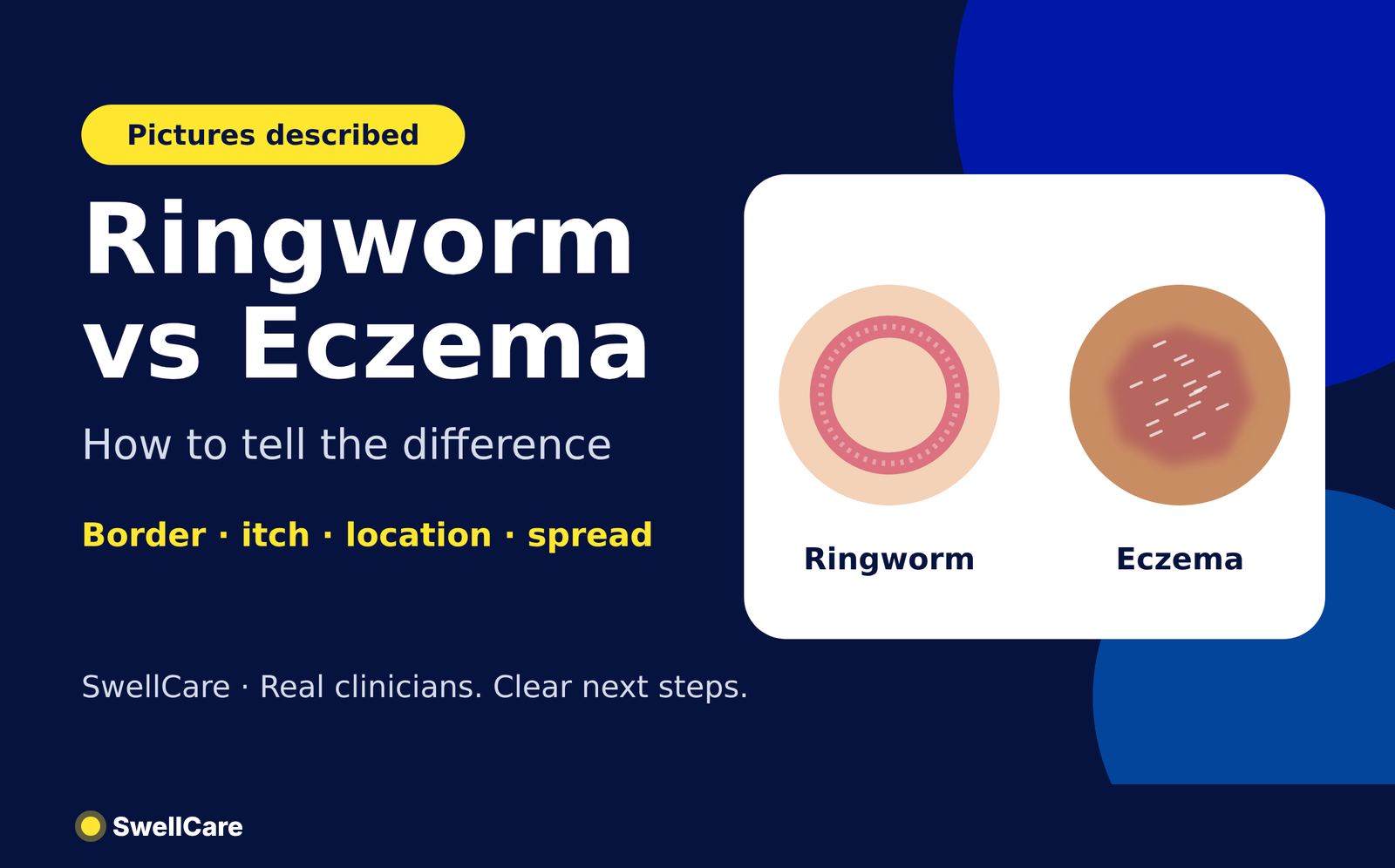
According to the CDC, the rash usually appears four to 14 days after you pick up the fungus. The classic symptoms are an itchy, slightly raised ring with a clearer or scaly center, and the rash is usually red. On darker skin the patch can look gray or brown instead of red, so don’t wait for “red” to decide it’s ringworm.
Other tinea infections look different, and the symptoms depend on the body site. Athlete’s foot (tinea pedis) peels and itches between the toes. Jock itch (tinea cruris) causes scaling, red spots in the groin folds. Scalp ringworm (tinea capitis) shows up as a round, flaky, itchy patch where hair has fallen out.
Before treatment, the edge of the rash is usually the busiest part. That active border is the spot you’ll watch most closely as healing begins.
The five stages of ringworm healing
Healing isn’t a single moment. The stages overlap, and your skin may skip back and forth between two stages for a few days. Think of the stages as a rough map, not a stopwatch.
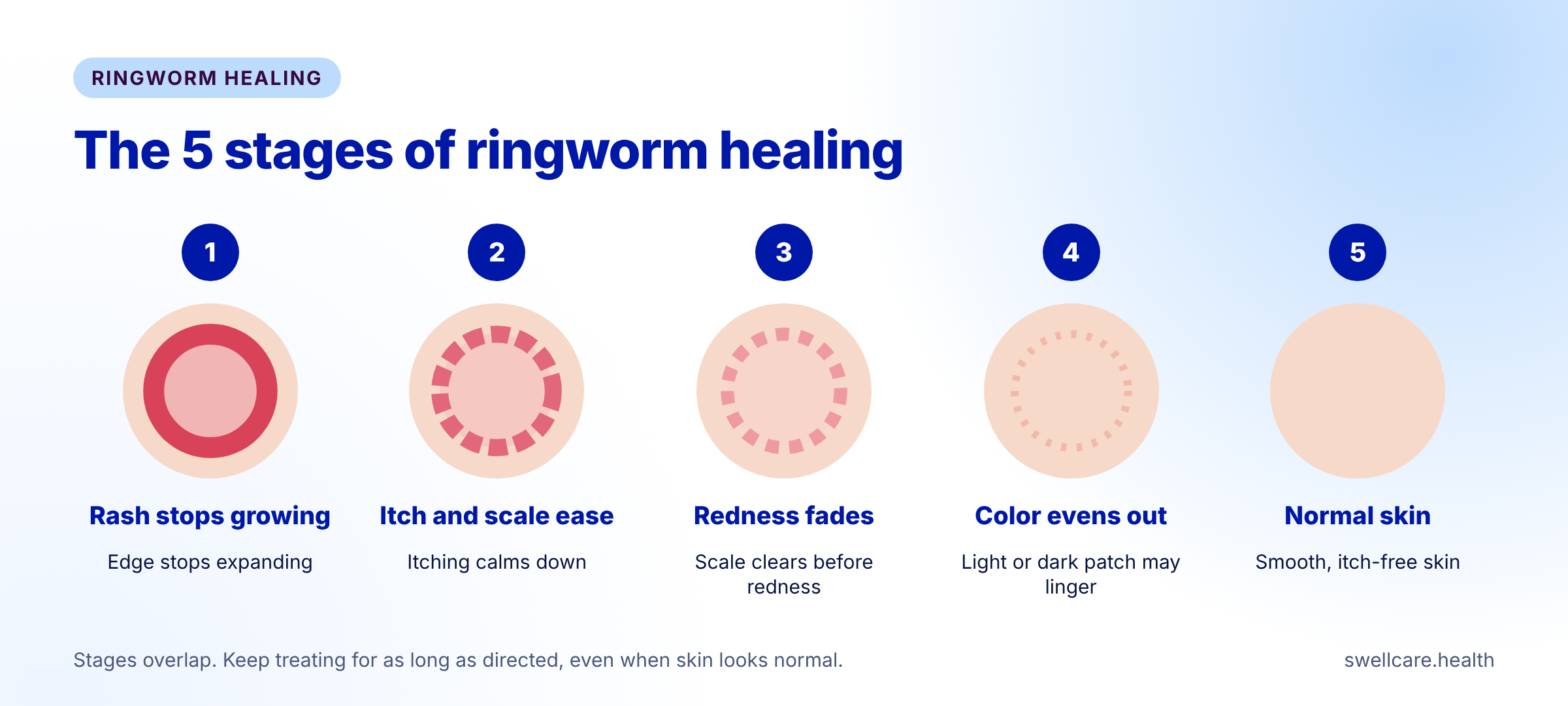
Stage 1 is when the rash stops growing
In the first several days of antifungal treatment, the goal is simple: the infection stops spreading. The patch may still look red and scaly. That’s normal. What matters is that the edge stops creeping outward and no new spots appear nearby.
Stage 2 brings less itching and scale
Itching usually fades before the rash does. It’s the symptom most people notice first, and it’s one of the clearest signs of healing. You’ll notice you’re scratching less, and flaking along the border starts to slow. Don’t scratch what’s left, even when the itching flares at night. Broken skin gives bacteria an easy way in, and a secondary bacterial infection can turn a simple rash into a bigger problem.
Stage 3 fades the redness and flattens the edge
The raised border softens and flattens. Inflammation settles, so the red color turns pink, then faint. This is the stage where many people think they’re done. They aren’t, quite. The fungal infection can still be alive in the upper skin even when the surface looks calmer, and the inflammation may be gone before the fungus is.
Stage 4 is when skin color catches up
Once the infection clears, the skin can look a little off for a while. Some people see a lighter or darker patch where the ring used to be. This is leftover color change from inflammation, and it’s not a sign the fungus is still active. It usually evens out over weeks to months, though it can take longer on deeper skin tones.
Stage 5 feels like normal skin
The last of the five stages looks boring, and that’s the point. The texture is smooth, the itch is gone, and there’s no scale left. Even now, keep applying treatment for as long as your label or clinician says. The CDC advises using antifungal medicine for as long as directed, even if symptoms start to improve.
Ringworm healing timeline, week by week
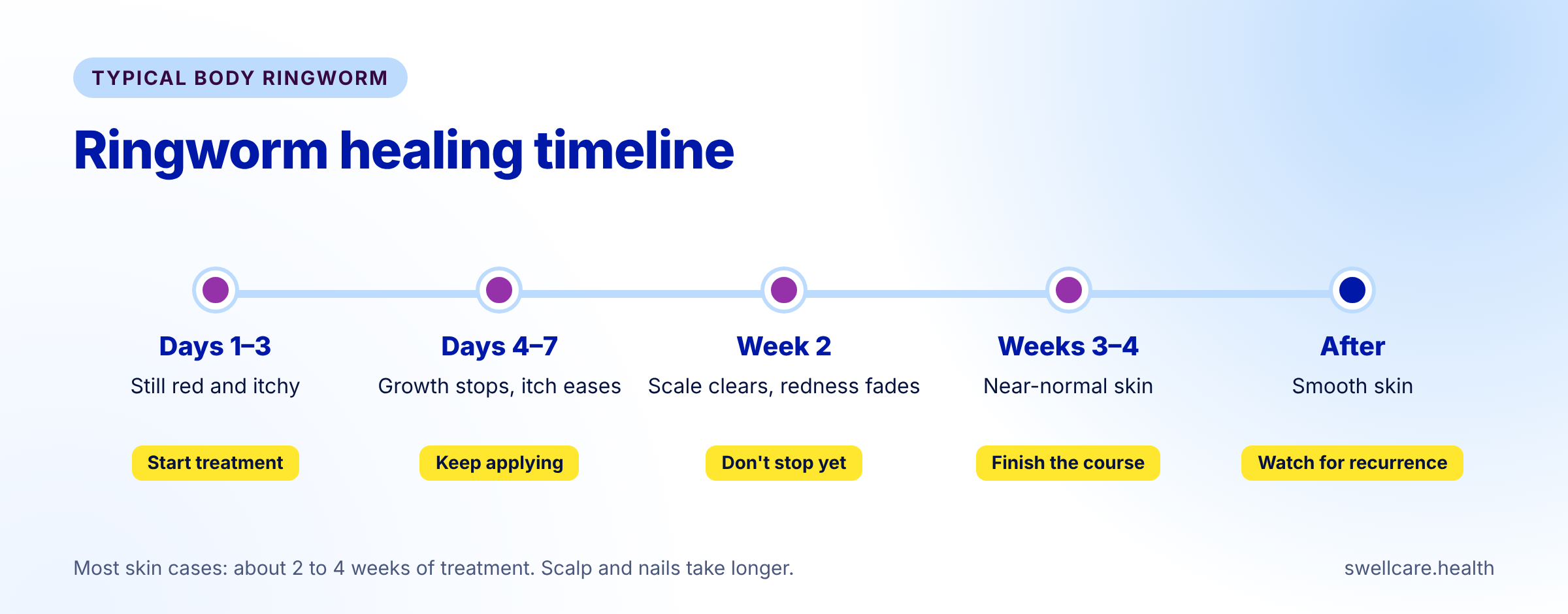
Every body heals at its own pace, but this timeline shows how to tell if ringworm is healing on a calendar. The pattern below fits most cases of ringworm on the body when treated with an over-the-counter antifungal. The AAD says most of these creams are applied twice a day for two to four weeks.
| When | What you’ll likely see | What to do |
|---|---|---|
| Days 1 to 3 | Still red and itchy | Start treatment; keep skin dry |
| Days 4 to 7 | Growth stops; itch eases | Keep applying |
| Week 2 | Scale clears; redness fades | Don’t stop yet |
| Weeks 3 to 4 | Near-normal skin | Finish the course |
| After treatment | Smooth skin | Watch for recurrence |
Some infections move through the stages of healing on a different clock. Jock itch typically clears in 10 to 14 days with twice-daily treatment, and a mild case of athlete’s foot often improves in about two weeks. Scalp ringworm needs a prescription antifungal taken by mouth, usually for one to three months. Nail infections are slower still, sometimes taking several months to a year.
Healing versus not healing, side by side
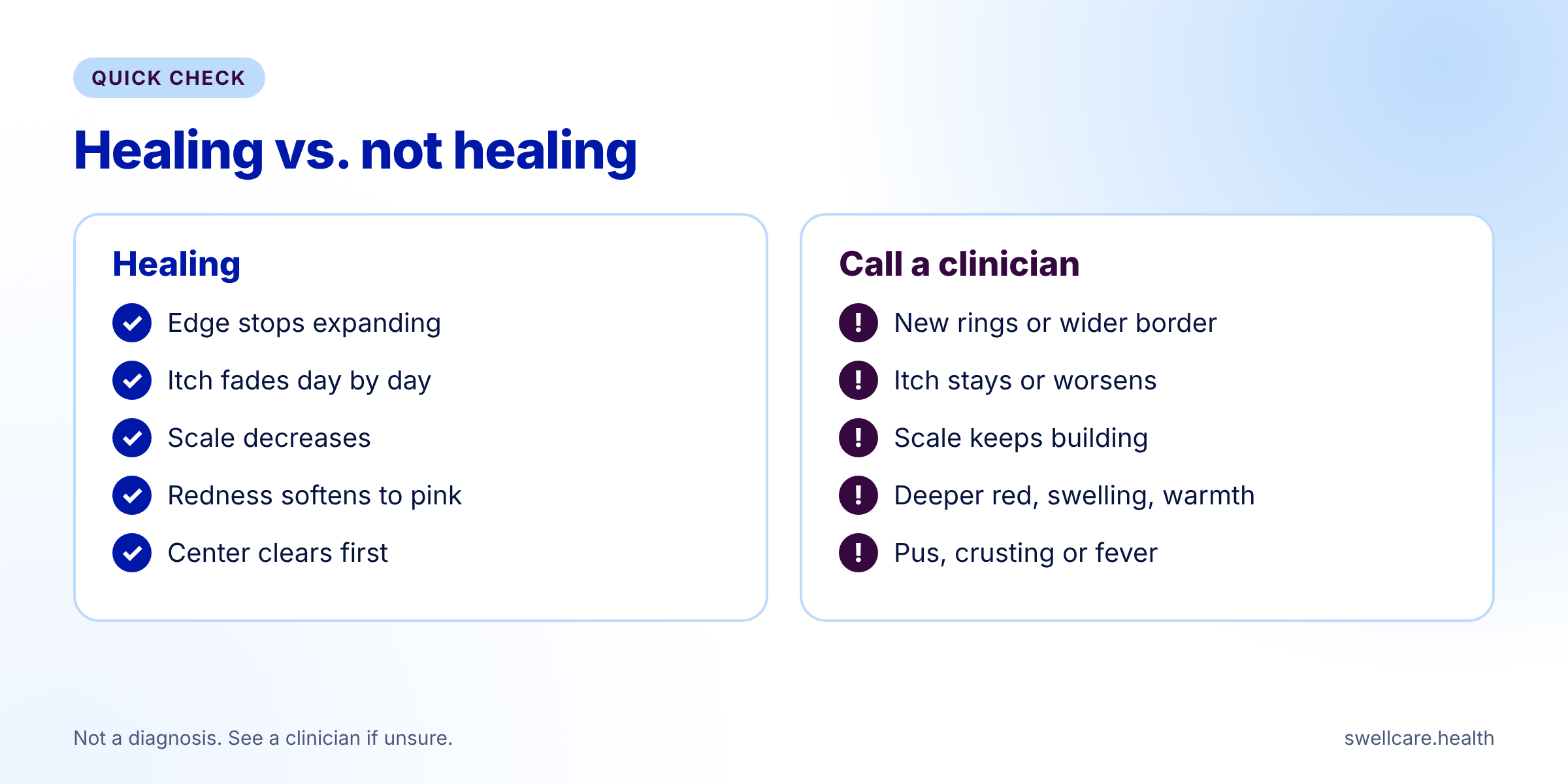
When you’re staring at a patch of skin every morning, it’s hard to judge progress. Use this table as a quick reality check on whether your ringworm is healing or stuck at one of the early stages.
| Healing | Not healing |
|---|---|
| Edge stops expanding | New rings or a widening border |
| Itch fades day by day | Itch stays the same or gets worse |
| Scale and flaking decrease | Scale keeps building |
| Redness softens to pink | Deeper red, swelling or warmth |
| Center clears first | Center stays raised or scaly |
| Skin feels comfortable | Skin is painful, oozing or crusted |
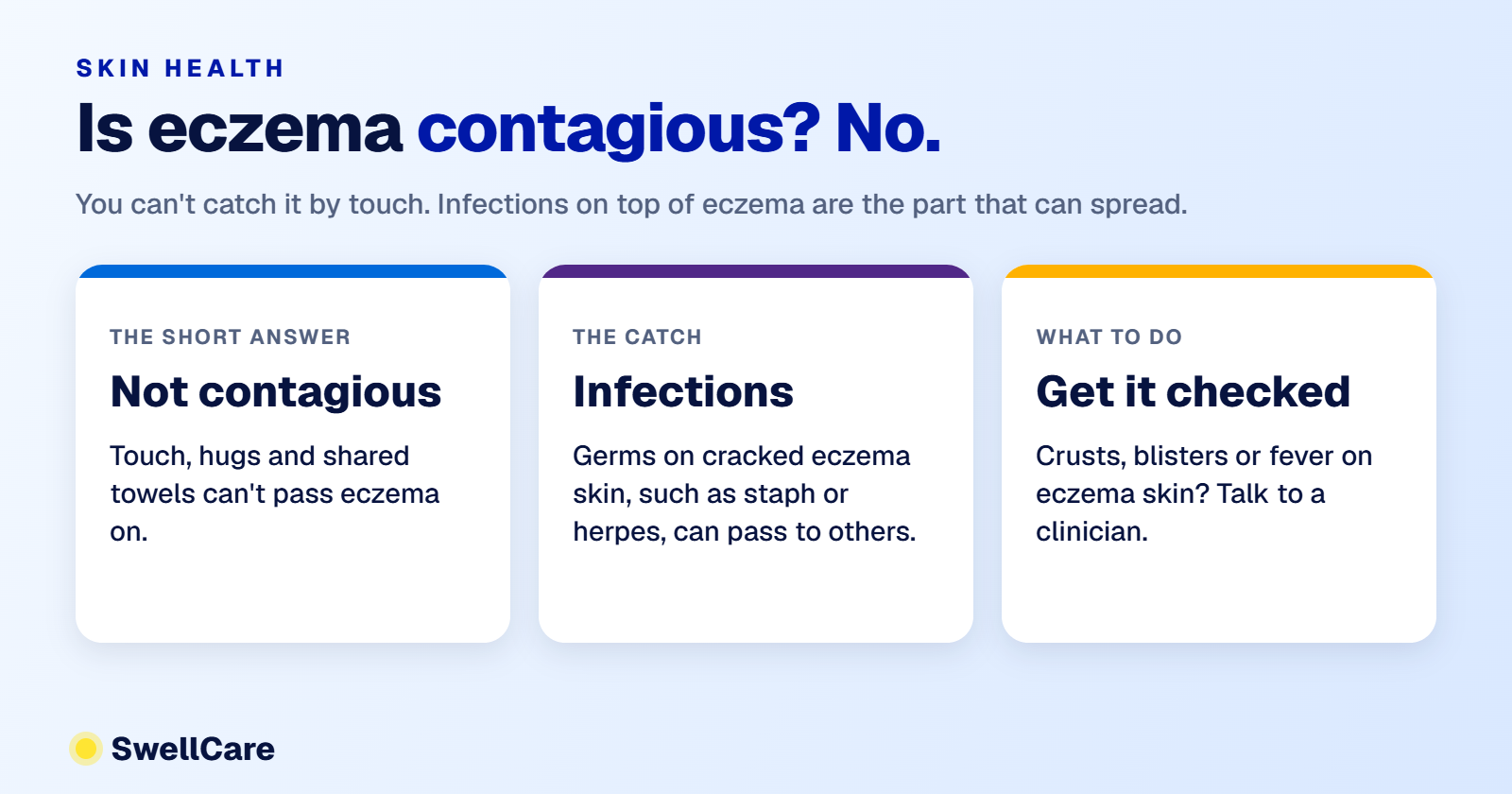
Pus, spreading warmth, red streaks or fever are not part of normal ringworm. They can point to a secondary bacterial infection, and any of these symptoms means you should get seen promptly.
One more thing to know: ringworm is contagious while it’s active. Wash towels and bedding in hot water, avoid sharing personal items, and cover the patch if it’s in a place that touches others.
What helps ringworm heal faster
You can’t rush fungus, but you can stop slowing it down. A few habits make a real difference.
Use the right medicine. Over-the-counter antifungal medication with clotrimazole, miconazole or terbinafine is the usual first choice for ringworm on the body. Clotrimazole and terbinafine creams are easy to find at any US pharmacy. Apply a thin layer to the rash and a little past its edge, because the fungus extends beyond what you can see.
Skip the steroid cream. It’s tempting to grab hydrocortisone for the itch. Don’t. The CDC warns that steroid creams can make ringworm worse and change how the rash looks, which makes it harder to diagnose.
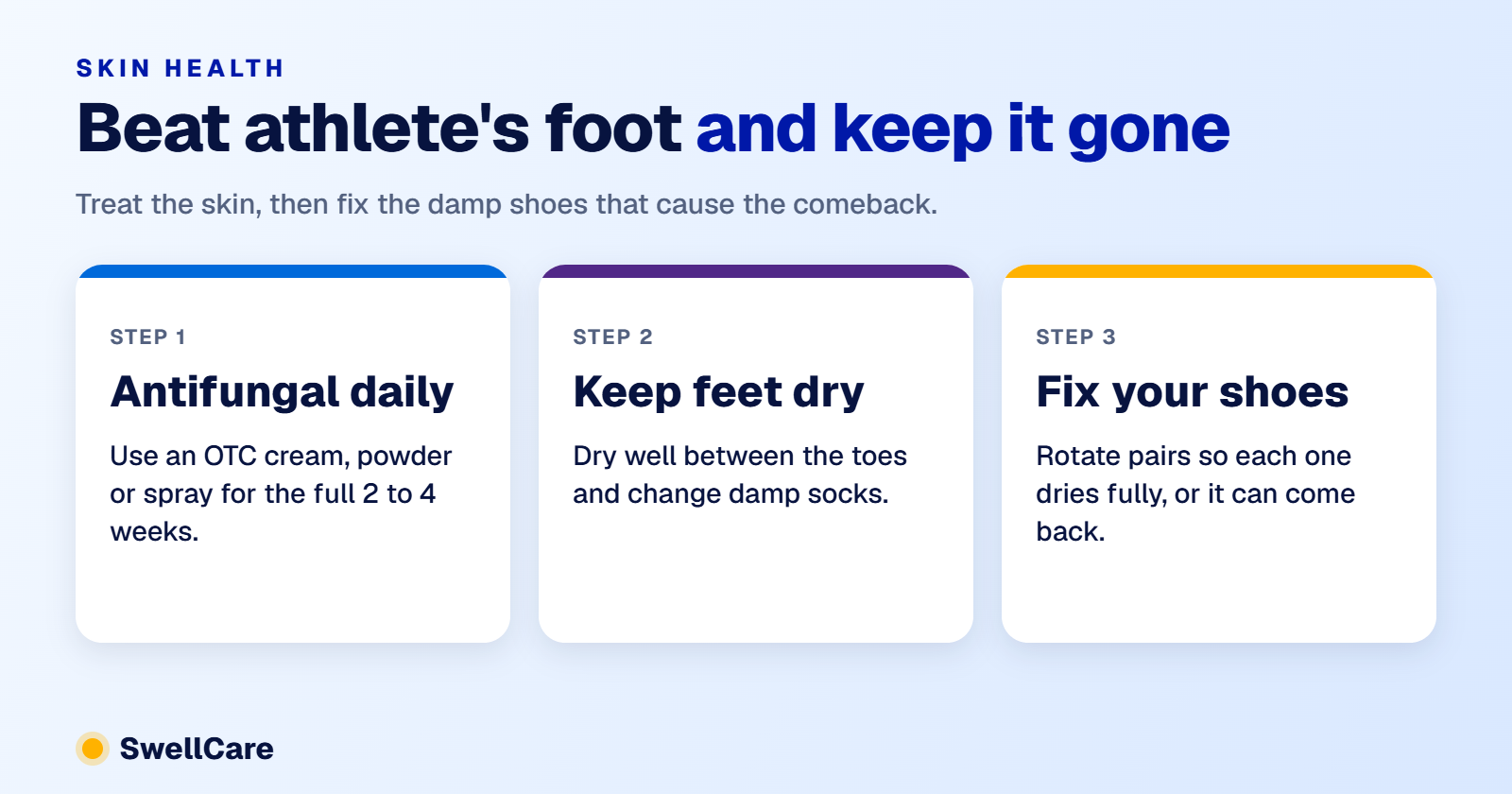
Keep the area dry. Fungus thrives in warm, damp places. Change out of sweaty clothes, dry thoroughly after showering, and wear breathable fabrics.
Practice good hygiene. Good hygiene matters as much as the cream. Wash your hands after touching the rash, use a separate towel for the area, and change socks and underwear daily. Washing clothes and sheets in hot, soapy water helps stop reinfection.
Treat every spot at once. If you also have athlete’s foot or a patch somewhere else, treat all of it together, or the fungus can reseed the area you just cleared.
Check your pets. Animals can carry the fungus. If your cat or dog has patchy hair loss, a vet visit can break the cycle.
Why ringworm may not be healing
Most stalled cases come down to a short list of causes, and they’re easy to spot once you know which of the stages you’re stuck in.
- Stopping too soon. The rash looks gone, so the tube goes back in the drawer. A few weeks later it’s back.
- The wrong spot. Scalp and nail infections don’t respond to creams. They need prescription medicine by mouth.
- A steroid cream. If you used hydrocortisone first, the fungus may be settled in deeper.
- It isn’t ringworm. Eczema, psoriasis and other rashes can form rings too. If antifungal cream does nothing after about two weeks, a different diagnosis is worth considering.
- Health factors. People with diabetes or a weakened immune system can heal more slowly and may need stronger treatment.
- Reinfection. Damp shoes, shared towels or an untreated pet can start the cycle again.
The AAD makes a reassuring point here: virtually every case of ringworm can be treated successfully. A stall usually means the plan needs a tweak, not that something is wrong with you.
When to see a doctor about ringworm
Contact a healthcare provider if you suspect ringworm on your scalp or nails, since those need prescription treatment. The CDC also recommends getting care when symptoms are more severe or widespread than usual, or when they don’t go away after treatment.
Make an appointment if you notice any of these:
- No improvement after about two weeks of correct treatment
- A rash that’s spreading, blistering or very painful
- Signs of bacterial infection such as pus, warmth or fever
- Ringworm in a child, in someone who is pregnant, or in anyone with diabetes or a weakened immune system
- Patches on your face, scalp or nails
You don’t have to wait for a clinic slot. A licensed clinician at Swell can review your symptoms online, any time of day, and tell you whether your rash looks like it’s healing or needs a different approach. A dermatologist can step in if the diagnosis is unclear or the rash keeps coming back. This article is general education, not a substitute for medical care.
Questions people ask about ringworm healing
How long does ringworm take to heal?
Most skin ringworm clears in two to four weeks of steady treatment. Jock itch and athlete’s foot can improve sooner, while scalp and nail infections can take months. Keep treating until your provider or the product label says to stop, even if the skin looks normal.
Is it normal for ringworm to look worse before it gets better?
A little extra redness or flaking in the first few days can happen as the skin reacts. But a rash that keeps spreading, swells, blisters or becomes very painful after the first week isn’t normal. That’s a good reason to have a clinician take a look.
When is ringworm no longer contagious?
There’s no single number of days that fits everyone. Ringworm is generally considered contagious until treatment has been working for a while and the rash is clearly improving. Keep the area covered, don’t share towels, and ask your clinician when it’s safe to return to sports or school.
How long should I keep using antifungal cream after it looks gone?
Use it for the full length of time on the label or in your prescription, which is usually two to four weeks for the body. Surface skin can look clear while fungus remains underneath. Stopping early is a common reason the infection returns a few weeks later.
Why is my ringworm turning dark or light after healing?
That color change is a leftover effect of inflammation in the skin, not active infection. It usually fades gradually over weeks to months. If it’s getting bigger, itchy or scaly again, the infection may not be fully gone, so check in with a clinician.
Does ringworm always leave a scar?
Typically no. Uncomplicated ringworm heals without scarring. Scratching, picking or a secondary bacterial infection raises the chance of marks, which is one more reason to leave the patch alone and keep it clean.
Trusted references
Public-health, research, and medical-society resources related to this guide.