You woke up with a band of burning skin on one side of your ribs, and now you’re typing one question into a search bar. How long does shingles last?
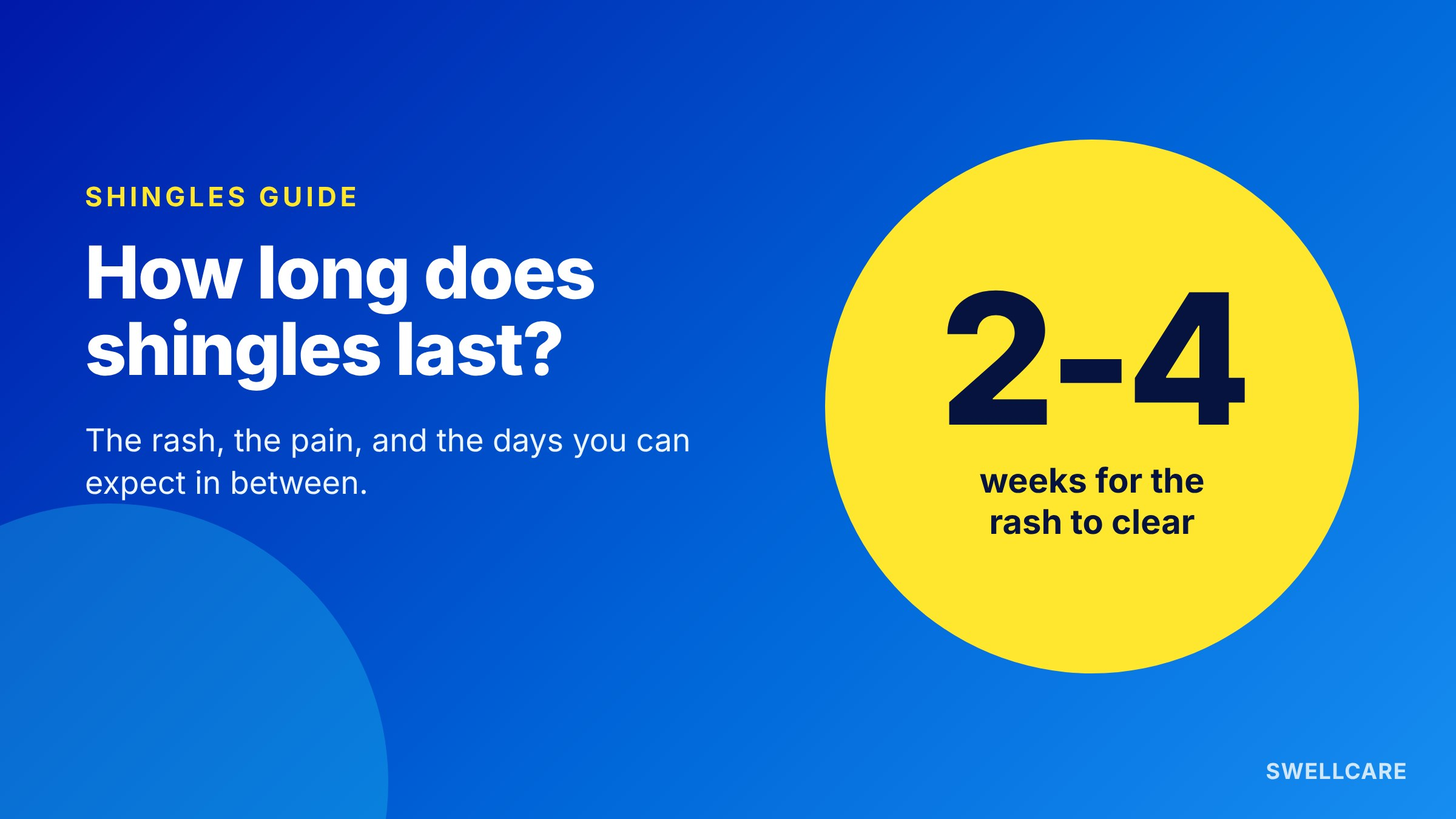
The short answer: the rash usually clears in two to four weeks, according to the CDC. The blisters crust over in about a week to ten days. The pain is the wild card. For most people it fades along with the rash. For some, it sticks around for months.
Below is the full timeline, what makes it shorter or longer, and one treatment window you really don’t want to miss.
How long does shingles last? The short answer
Plan on two to four weeks from the day it shows up to the day your skin looks normal again. That’s a typical range, not a promise.
Shingles, also called herpes zoster, starts when the varicella-zoster virus wakes up. It’s the same virus that causes chickenpox, and it has been lying dormant in your nerves since childhood. Once it’s active, it travels along a single nerve and breaks out as a rash on that side of your body. Often it’s a stripe across the torso. Sometimes it’s on the face.
Three things shape your own timeline: how soon treatment starts, your age, and how well your immune system is working. About 1 in 3 people in the U.S. will get shingles at some point, per CDC data, so you’re in very large company.
The shingles timeline, stage by stage
Shingles symptoms follow predictable stages. Most people only recognize the first set of symptoms in hindsight.
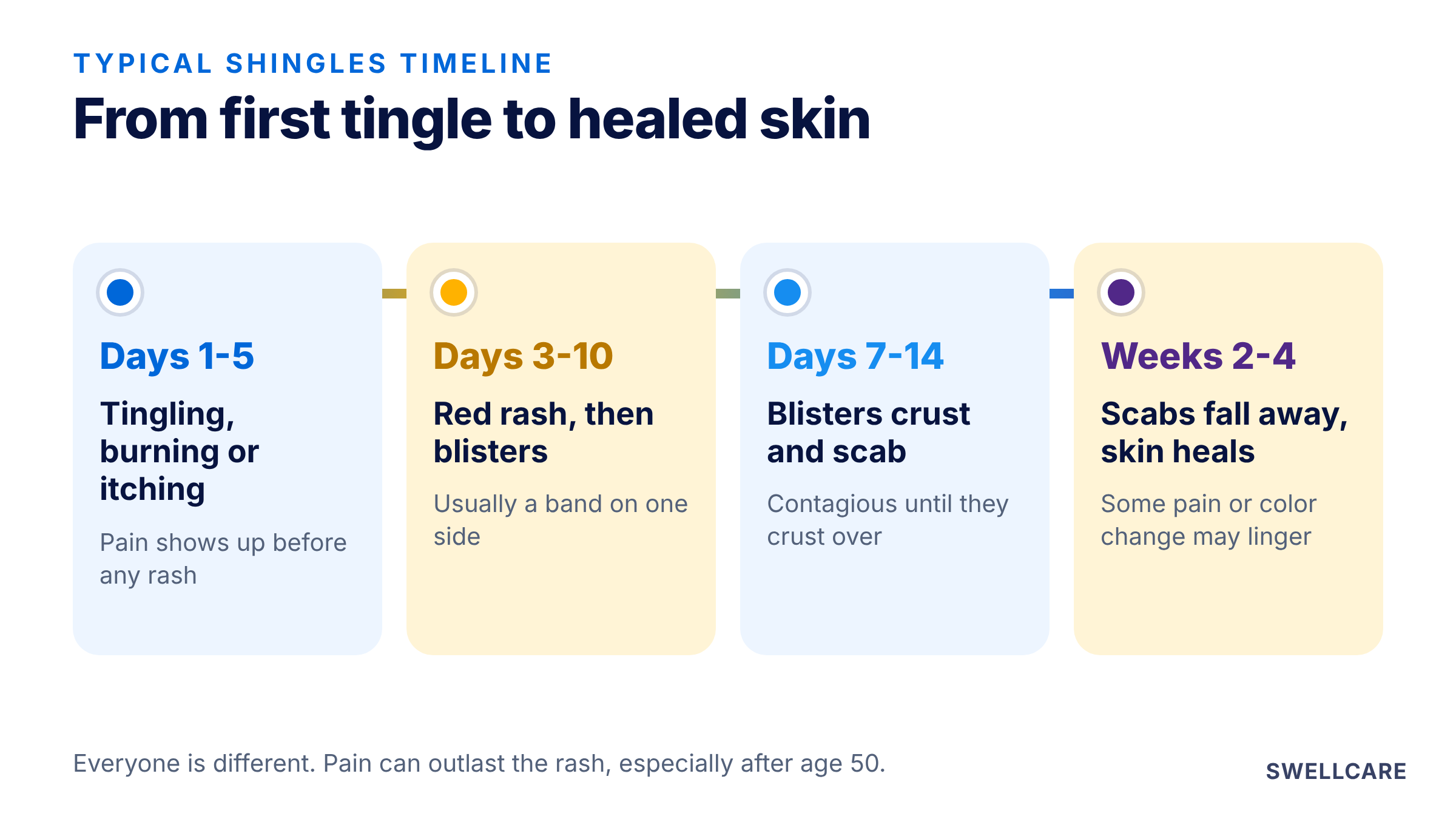
Counting from your first symptom, here’s roughly how the four stages go:
| Stage | Typical timing | What you’ll notice |
|---|---|---|
| Early warning | Days 1 to 5 | Tingling, burning or itching in one patch of skin |
| Blisters appear | Days 3 to 10 | Red patches turn into fluid-filled blisters |
| Crusting | Days 7 to 14 | The fluid dries out and forms scabs |
| Healing | Weeks 2 to 4 | Scabs fall away, skin settles down |
Days 1 to 5: tingling before the rash
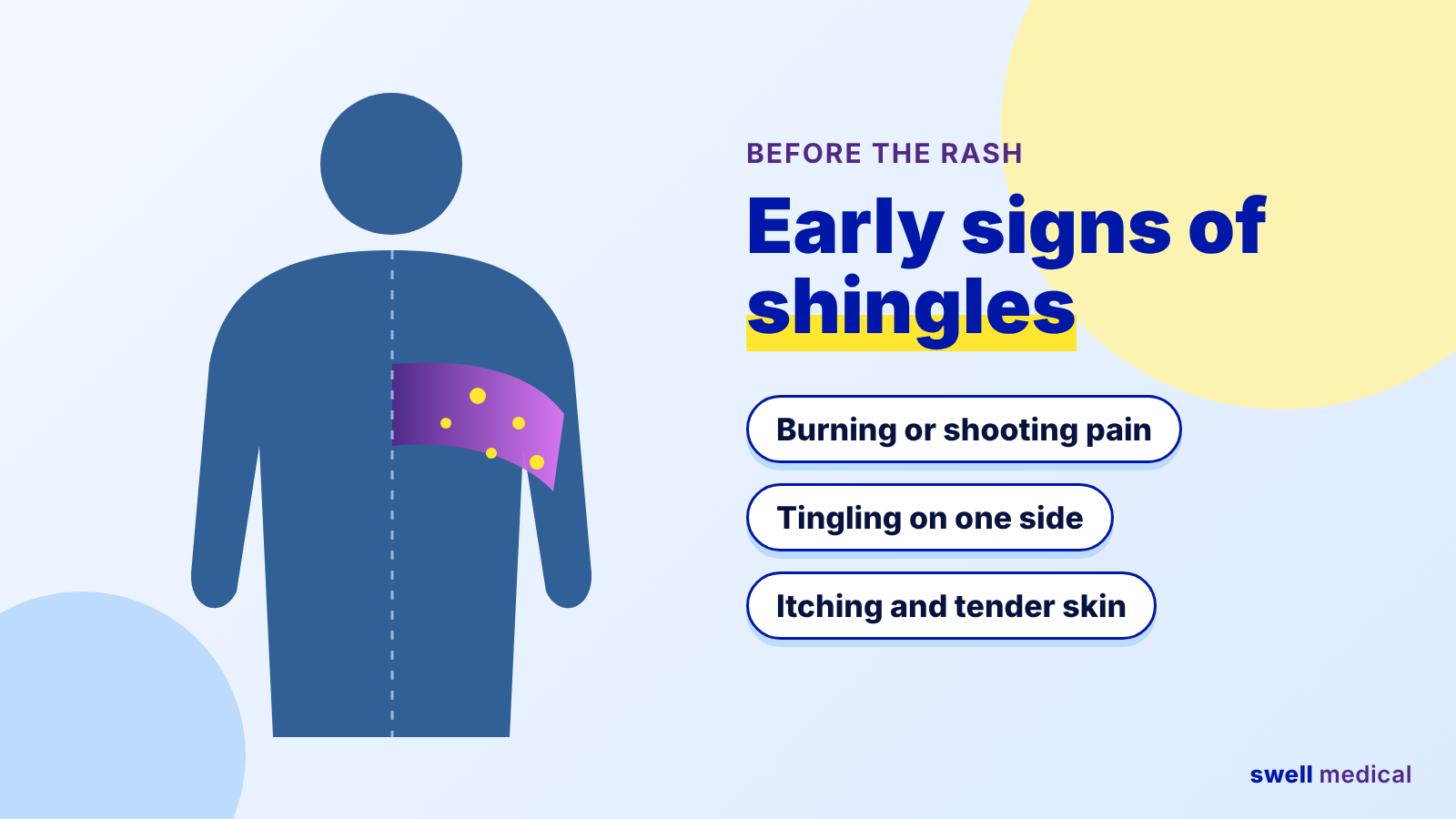
The skin talks first. Early symptoms can include tingling, itching, or a deep burn in one small area, sometimes with a fever or headache. Plenty of people assume they pulled a muscle.
This early phase is easy to miss, and that matters, because antiviral treatment works best when it starts early.
Days 3 to 10: blisters appear
Red patches show up, then turn into clusters of blisters. The outbreak typically wraps around one side of the torso or sits on one side of the face. Things often ramp up here. Even a T-shirt can feel unbearable.
Days 7 to 14: scabs form, then skin heals
About a week to ten days in, they dry out and form scabs. That’s the turning point. They fall off over the next couple of weeks, and your skin may stay pink, darker or lighter for a while. Scratching raises the odds of scarring, so keep your nails short and your hands off.
Why one person heals in two weeks and another takes six
Same virus, very different recoveries, and the symptoms can look different too. Here’s what moves the needle.
Age comes first. Older adults carry more risk: higher odds of complications, and pain that tends to hit longer and harder, the CDC notes. A weakened immune system is the second big factor. Cancer treatment, organ transplant medicines and long-term steroids can all make the rash harder to clear.
Location matters too. Shingles near the eye can damage vision, so it’s never a wait-and-see situation. And if you scratch them open, you invite a bacterial infection, which slows healing and raises the risk of scarring.
Then there’s timing. People who start treatment in the early stages generally have a shorter, milder illness. More on that in a moment.
When does shingles pain peak? The worst days
For most people, the pain is strongest in the first week or so after the outbreak starts, while the blisters are still forming. Burning, stabbing or electric-shock sensations are common. Other symptoms can join in. Some people run a fever, get a headache, or feel wiped out.
The good news: pain usually starts to ease as the skin crusts over. If yours doesn’t, that’s a reason to call a clinician, not a reason to tough it out.
How long is shingles contagious?
Here’s a fact that surprises people. Shingles itself isn’t something you catch. What can spread is the varicella-zoster virus, and only to a person who has never had chickenpox or the chickenpox vaccine. They’d come down with chickenpox, not shingles, per the CDC.
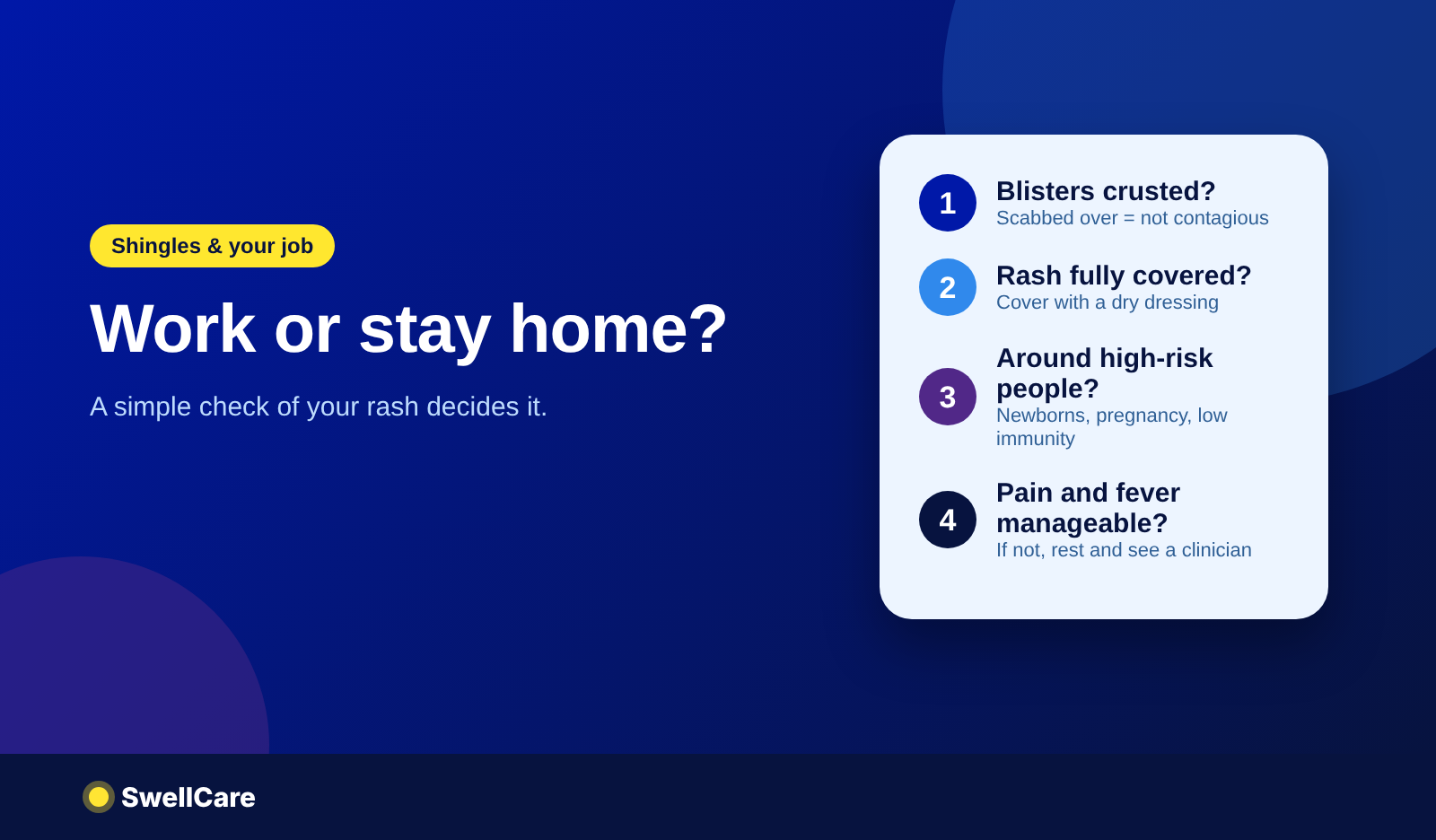
The contagious window runs from when the blisters appear until they’ve all crusted over. You can’t spread the virus before they show up or after it crusts over. Until then, keep the rash covered, wash your hands after touching it, and stay away from pregnant women who haven’t had chickenpox, newborns, and anyone with a weakened immune system.
What can shorten shingles? Treatment that works early
This is where you have real control. Antiviral medicines such as acyclovir and valacyclovir can shorten the illness and make it less severe, and the CDC says the sooner you start them after the rash appears, the better they work. The American Academy of Dermatology recommends seeing a doctor within 72 hours of the rash showing up.
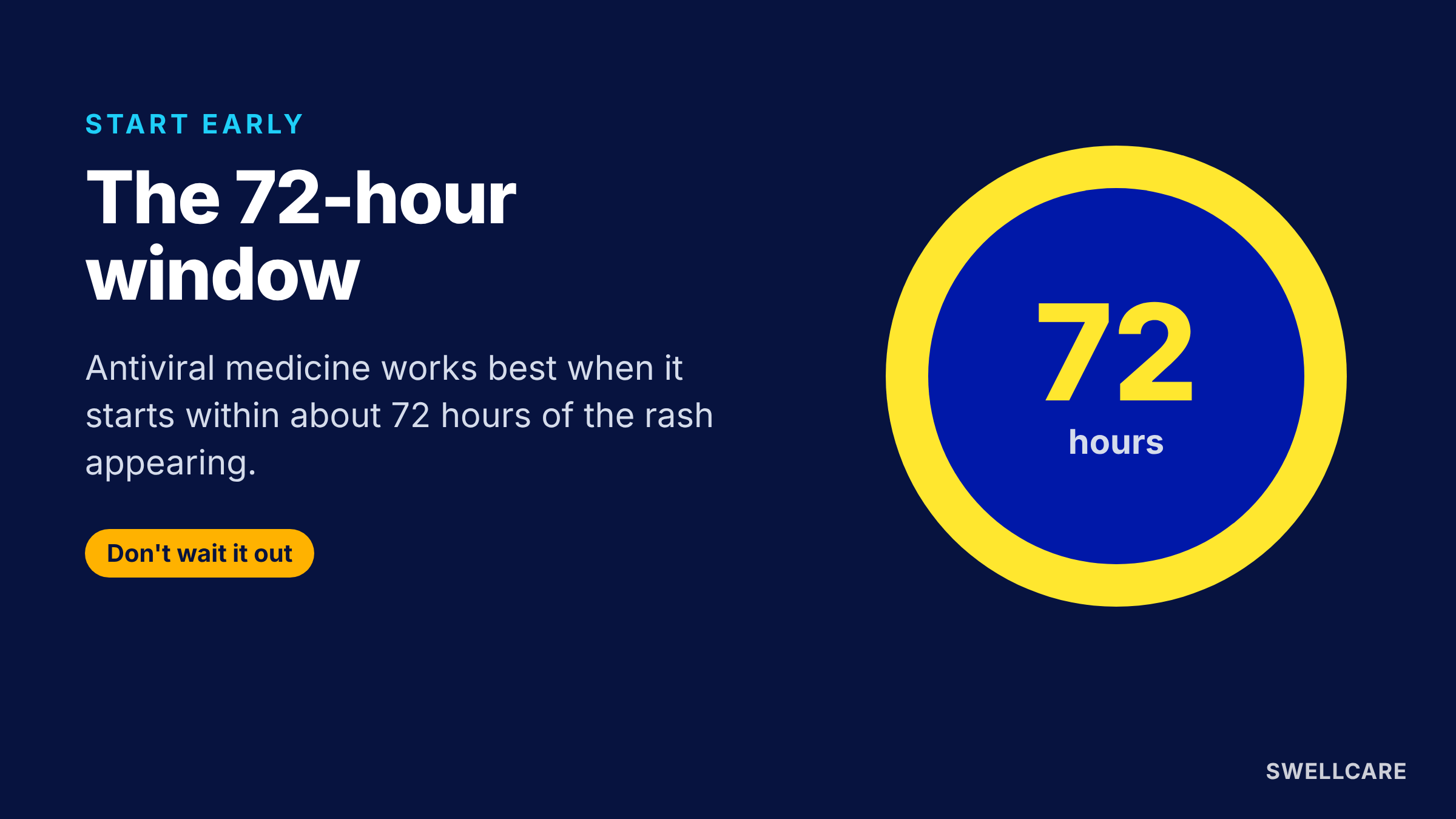
Why the rush? Starting early may ease the burning and stinging, shorten the illness, and lower the odds of pain that lingers after the skin clears.
Already past 72 hours? Call anyway. A clinician can still check for complications and help with pain control. Easing discomfort is part of treatment too, from over-the-counter options to prescription medicine when the pain is severe.
Home care that makes the weeks easier
Medicine does the heavy lifting, but small habits help ease symptoms through all of these stages. The AAD’s self-care advice is simple:
- Wash the area gently with a fragrance-free cleanser, pat it dry, and cover it with a clean, non-stick bandage to lower the chance of infection.
- Lay a cool, damp washcloth on the area for 5 to 10 minutes, several times a day.
- Try an oatmeal bath, and use calamine lotion on itchy skin once it’s scabbed over.
- Wear loose cotton clothing, and rest more than you think you need to.
Don’t pop anything. Don’t scratch. Both are the fastest route to a skin infection.
When shingles pain lasts after the rash heals
Sometimes the rash is gone and the pain isn’t. That’s postherpetic neuralgia, or PHN, the most common of the shingles complications. It’s a long-term nerve pain that can continue for months or even years after the skin heals.
About 10% to 18% of people with shingles develop PHN, and the risk climbs with age. Older adults are hit hardest. People under 40 rarely get it. It can feel like burning, stabbing or deep aching, and a light touch may hurt.
PHN is treatable, even when it’s stubborn. Nerve pain medicines and lidocaine patches are common starting points, and a clinician can build a plan. If it continues after your skin clears, say so. You don’t have to wait it out.
When to see a doctor
Don’t wait on new shingles symptoms, like a painful or blistering rash on one side of your body. Get it looked at within a day or two, ideally inside that 72-hour window.
Move faster if the outbreak is near your eye, forehead or nose, because shingles on the face can cause vision loss. Call early too if you take immune-suppressing medicine. Other signs worth a prompt call: swelling, pus or a rash that isn’t clearing, which can point to a bacterial infection, plus a fever or pain that continues after the rash is gone.
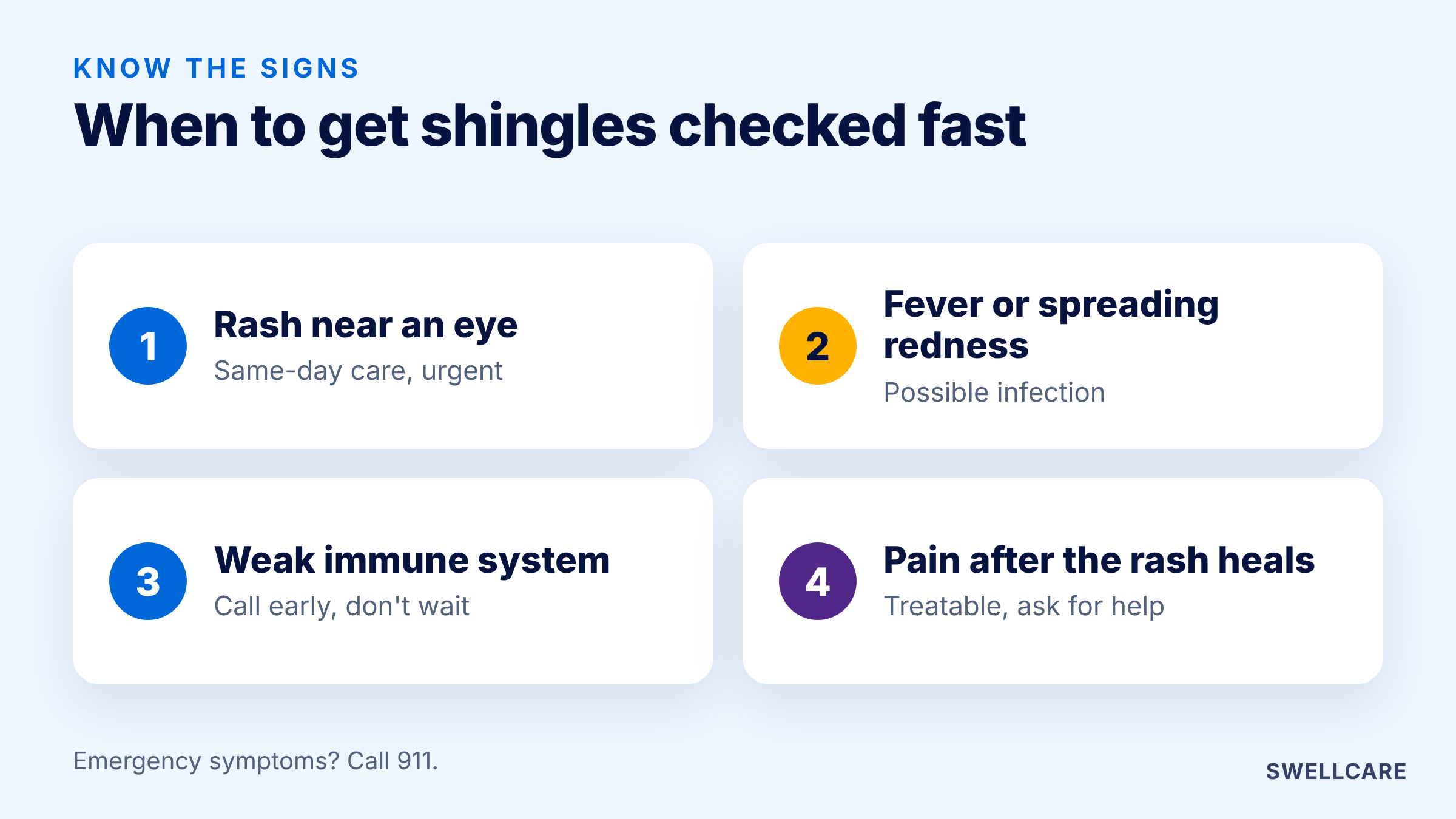
Eye pain, redness or blurry vision with a rash on the face needs same-day care. Rarely, shingles complications include pneumonia, hearing problems, brain inflammation and serious infection, which is why severe symptoms mean emergency care. Call 911 or go to the ER for sudden vision loss, confusion, trouble breathing or a severe headache. Not sure which door to use? This guide to urgent care versus the ER can help you decide.
Can you stop it from coming back? The shingles vaccine
Most people get shingles once, but a second round is possible. The best protection is the shingles vaccine, Shingrix.
The CDC recommends two doses of the vaccine, two to six months apart, for adults 50 and older, and for adults 19 and older with weakened immune systems. Shingrix is about 97% effective against shingles in healthy adults 50 to 69, and about 91% effective in those 70 and older. The shingles vaccine also cuts the risk of complications like PHN. Yes, you should still get vaccinated after you’ve had shingles, once the rash is gone.
Side effects of the vaccine, like a sore arm or tiredness, usually fade in two to three days. Ask a pharmacist or your doctor whether you’re due for the shingles vaccine.
Get a possible shingles rash checked from home
Speed is the whole game with shingles, and driving to a waiting room with a painful outbreak isn’t fun. Swell lists possible shingles as a condition you can bring to a clinician by telehealth, 24/7.
You start with a free screening, then a $45 consultation. Medication and lab costs are separate, and prescriptions are never guaranteed. This is non-emergency care, so call 911 for anything that feels like an emergency.
Questions people ask about how long shingles lasts
What are the worst days of shingles?
Most people say the first week after the outbreak starts, while the blisters form and burst. Symptoms like pain, itching and sensitivity tend to peak then. As they crust over, things usually calm down. Anything that gets worse after the first week, or shows signs of infection, deserves a call to your clinician.
Will shingles clear up by itself?
The rash usually clears on its own in two to four weeks. But treating shingles early can shorten the illness and lower the risk of lasting nerve pain, so waiting it out isn’t the best plan. Get it checked within 72 hours if you can.
How long is someone with shingles contagious?
From the time blisters appear until every blister has crusted over. You can only pass along the virus, which causes chickenpox in people who’ve never had it or the vaccine. Cover the area and avoid pregnant women, newborns and anyone who’s immunocompromised until it’s done.
What triggers shingles to flare up?
Doctors don’t know exactly why the dormant virus behind herpes zoster wakes up. Age and a weakened immune system are the biggest risk factors. Many people point to stress or illness as a trigger, and while that’s plausible, it isn’t proven. The vaccine is the proven way to lower your odds.
Can you get shingles more than once?
Yes, although most people only get it once. Having shingles doesn’t erase your risk of a second episode. That’s one reason the CDC recommends Shingrix even if you’ve already had it.
How long does shingles pain last after the rash is gone?
For most people, it fades within weeks. For roughly 10% to 18%, PHN keeps the pain going for months or longer. Tell your clinician if you’re still hurting after the skin has healed, because there are treatments that help.
Trusted references
Public-health, research, and medical-society resources related to this guide.