You’ve slept five hours a night all week. The deadline isn’t moving. And now there’s a red, tender bump on your eyelid that feels like a grain of sand with a grudge. So you ask the obvious question: are eye styes caused by stress?
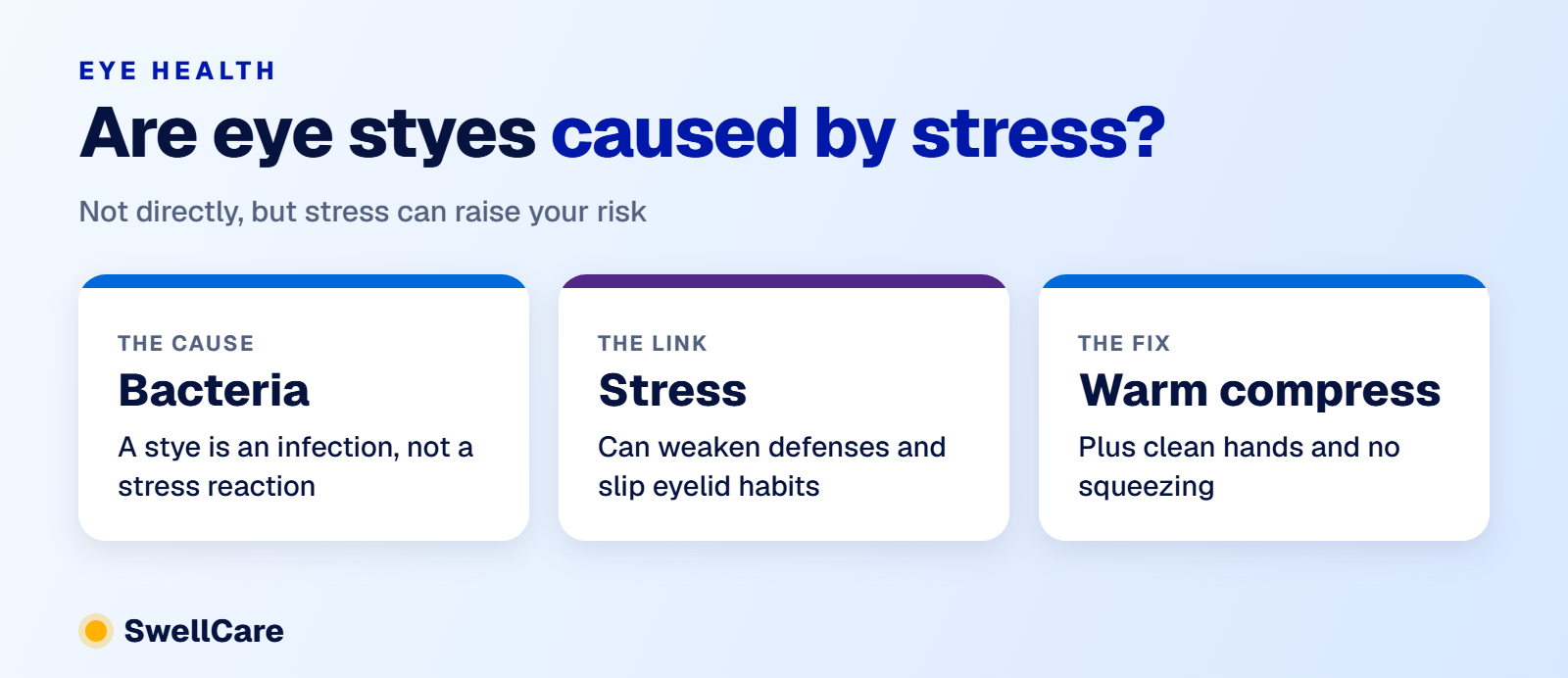
Here’s the blunt answer. Not directly. A stye is a bacterial infection, and the major eye organizations don’t list stress as a cause. But stress can tip the odds, and how it does that tells you what you can actually fix.
Are eye styes caused by stress? The short answer
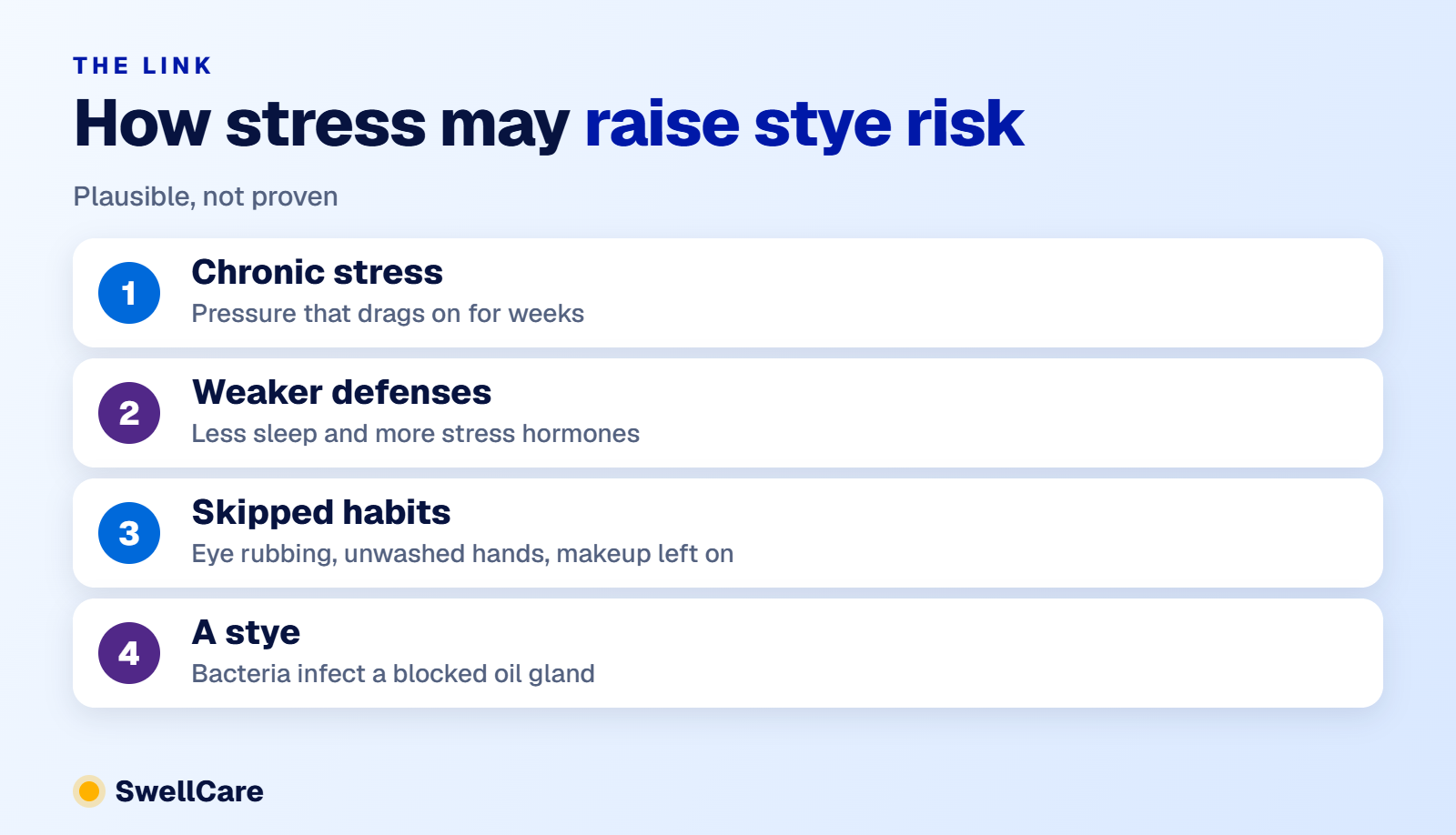
Stress doesn’t make the bacteria. Those are already on your skin, and the usual culprit is Staphylococcus aureus. What stress can change is how well your immune system holds them back, and how carefully you treat your eyelids while you’re frazzled.
The best-known research is a 2004 analysis that pooled 293 studies and roughly 19,000 people. Short bursts of stress seemed to rev up some immune defenses. Long, grinding stress did the opposite and dampened most of the immune measures tracked, especially in older adults and people who were already ill. The authors couldn’t yet prove that this explains why stressed people catch more infections.
So the link between stress and a stye is plausible, not proven. Think of stress as a risk multiplier, not a root cause.
What a stye actually is
A stye is a painful, red bump on the edge of the eyelid. It forms when an oil gland or an eyelash follicle gets blocked, and bacteria set up shop. Your eyelids hold dozens of those glands, about 20 to 25 along the lower lid and 40 to 50 along the upper, so there’s plenty of room for trouble.
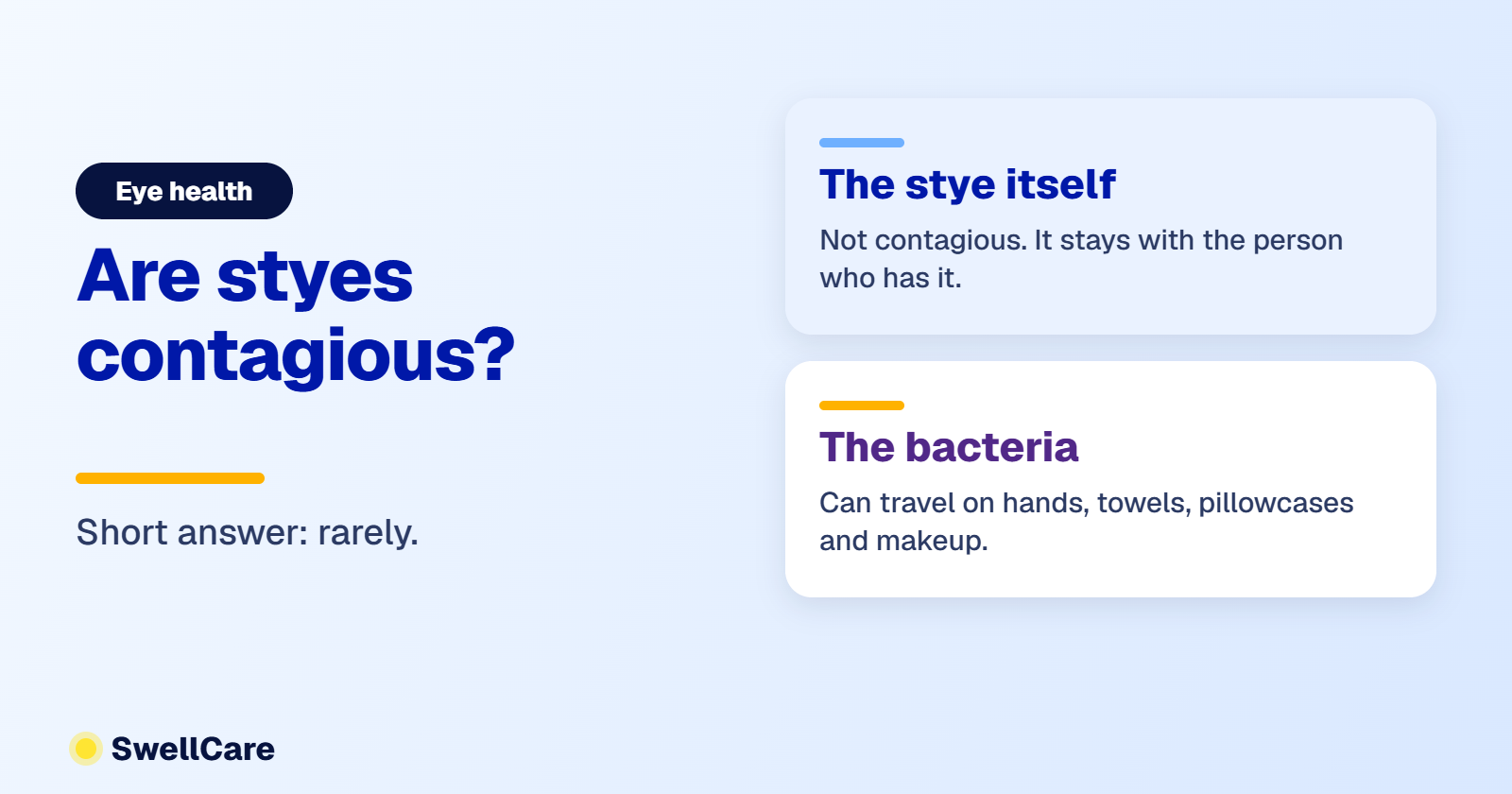
Most styes swell, hurt for a few days, then drain by themselves. Plan on one to two weeks from start to finish. Wondering whether it spreads? Read our guide on whether styes are contagious. Common symptoms include eyelid swelling, tenderness, watery eyes, and a gritty feeling, like something’s caught under the lid.
People often mix up a stye and a chalazion. They’re cousins, not twins.
| Stye | Chalazion | |
|---|---|---|
| What it is | Infected oil gland or lash follicle | Blocked oil gland, no active infection |
| Pain | Usually tender and sore | Usually painless |
| Where | Right at the lid edge | Often farther back in the lid |
| Timeline | About 1 to 2 weeks | Can linger longer |
How stress can make a stye more likely
Stress and your immune system
When the pressure drags on, your body keeps pumping out stress hormones, and your immune system pays for it. A weaker immune system gives ordinary skin bacteria an easier shot at a clogged gland. That’s the idea behind chronic stress and styes. It’s a reasonable chain of events, even if nobody has nailed it down in a stye-specific study.
Stress and the habits you drop
Here’s the part that’s easier to prove. Tense, tired people rub their eyes more, skip the face wash, sleep in their makeup and leave contact lenses in too long. Poor sleep makes all of it worse. Every one of those habits moves bacteria from your hands and your pillow to your lids.
Unwashed hands matter more than most people think. If you touch your eyes a dozen times during a tense workday, that’s a dozen chances. Good hygiene is boring, and it works.
Other causes that matter more than stress
If you get styes often, look past stress first. Eye specialists point to these:
- Blepharitis, a chronic inflammation of the eyelid edges, is the big one.
- Rosacea and seborrheic dermatitis make oil glands clog more easily.
- Diabetes and high blood lipids raise your risk of eyelid infection.
- Old or shared makeup and dirty contact lens habits seed the lid with bacteria.
Stress is a minor factor on that list. Fix the others and the question often fades.
What to do when a stye shows up
You can’t speed-run a stye, but you can make it more comfortable and avoid making it worse.
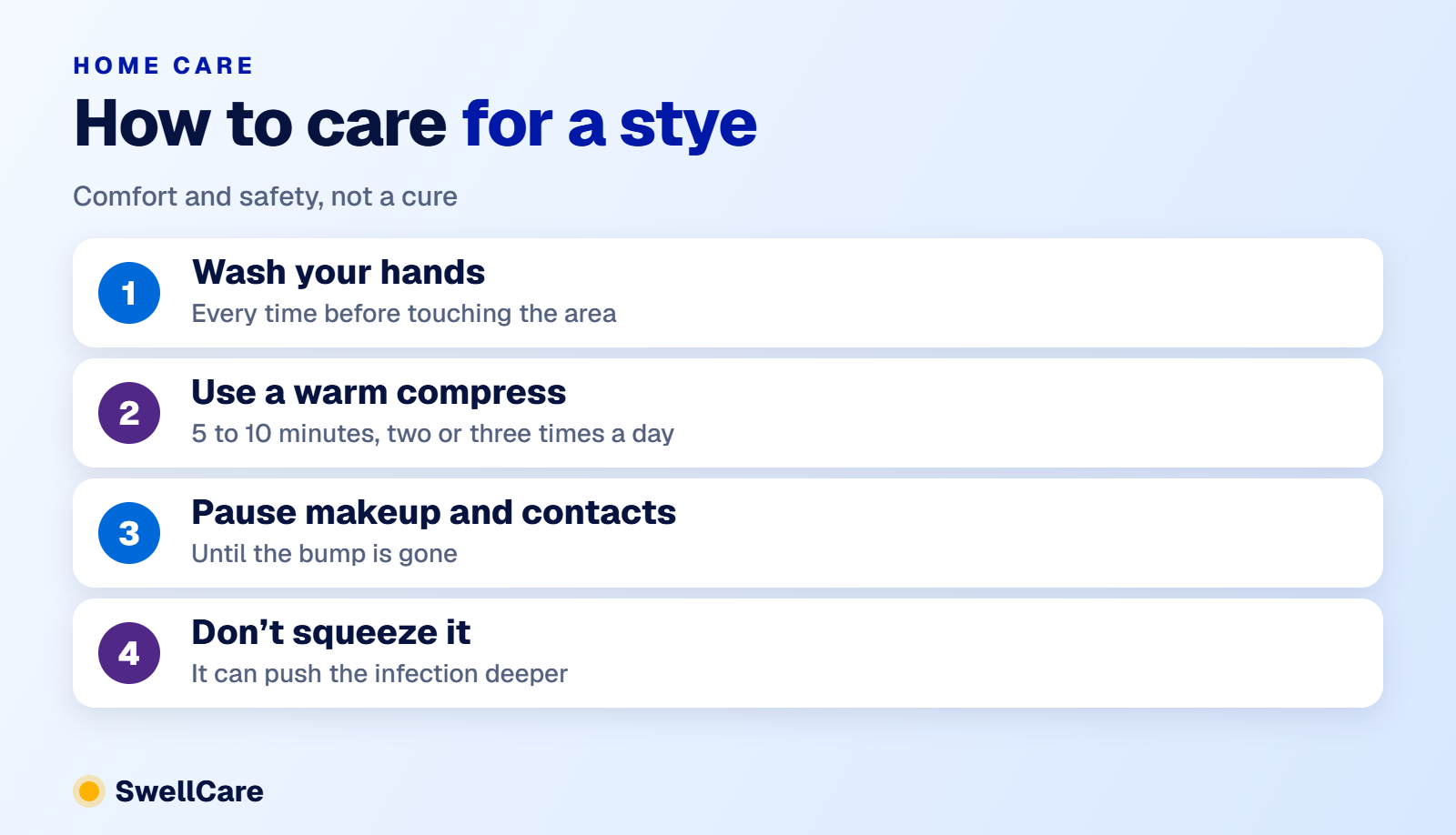
- Apply a warm compress. Hold a clean, warm washcloth on the closed eye for 5 to 10 minutes, two or three times a day. Warmth helps the blocked gland open and drain, and it calms the inflammation.
- Wash your hands first, every time you touch the area.
- Pause eye makeup and contact lenses until the bump is gone.
- Don’t squeeze it. Popping a stye can push the infection deeper into the lid.
- Ask about an antibiotic if it’s large, stubborn or getting worse. An eye doctor may prescribe an antibiotic ointment.
One honest note: warm compresses are the standard advice, yet the research doesn’t clearly show they shorten a stye. They’re cheap, safe and soothing, and they help a chalazion too, so they’re still worth doing.
How to lower your odds of the next one
Prevention is mostly hygiene and habit, not heroics.
Keep your hands off your eyes. Wash your face and remove makeup every night, even when you’re wiped out. Replace eye makeup about every three months, and never share it. Keep contact lenses clean, and take them out earlier than feels necessary. Swap your pillowcase more often than you think you should.
Then give stress and sleep a fair shot. A ten-minute walk, a fixed bedtime, and a phone that stays out of the bedroom all count. You’re not curing styes with yoga. You’re making it less likely that your body and your habits both slip in the same week.
When to see a doctor
Most styes don’t need medical care, and the symptoms fade on their own. Some do need it.
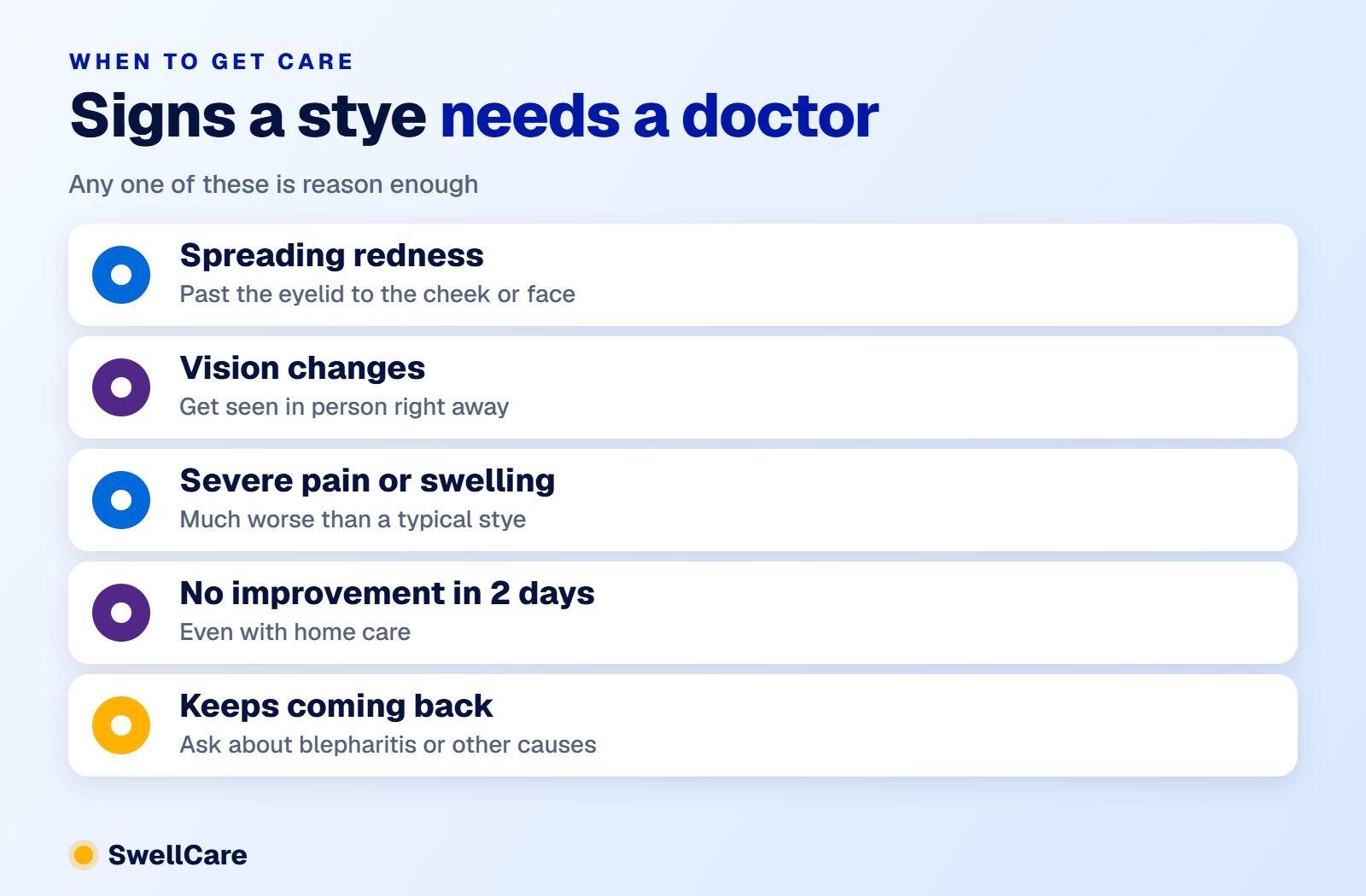
See a doctor if the stye is very painful, has heavy swelling, hasn’t started improving after two days, keeps coming back, or affects your vision. Get care right away if redness or swelling spreads beyond the eyelid to your cheek or face. That can mean the infection is moving into surrounding tissue, and it needs prompt treatment.
Not sure whether yours is a wait-and-compress stye or a see-someone-now stye? SwellCare online urgent care offers clinician-led, non-emergency care by video or chat, so you can talk through your symptoms and next steps, including whether you need an in-person eye exam. Prescriptions are never guaranteed, and SwellCare is not for emergencies.
If your vision changes suddenly or the pain is severe, go to an emergency room or an eye doctor in person.
Questions people ask about eye styes and stress
Can stress cause a stye overnight?
No. A stye is an infection that builds over a day or two, and stress alone doesn’t create one. A stressful week can make you more likely to get one, mostly through poor sleep, rubbing your eyes and skipped hygiene.
Can lack of sleep cause a stye?
Not directly. Poor sleep can weaken your defenses, and tired people rub their eyes with unwashed hands, which raises the odds of an eyelid infection. Sleep is a risk factor. It isn’t a cause.
Are styes contagious?
Not like a cold. Still, the bacteria can spread, so skip sharing towels, pillowcases or eye makeup while you have one. Wash your hands after touching the area.
How long does a stye last?
Most last one to two weeks and clear on their own. If the bump is getting worse, or hasn’t begun to improve within two days of home care, check in with a doctor, who may suggest an antibiotic ointment.
Can I pop a stye?
No. Squeezing can spread the infection deeper into the eyelid and make scarring more likely. Use warm compresses and let it drain naturally, or ask a specialist to drain it if it won’t resolve.
Why do I keep getting styes?
Repeat styes usually point to something underneath, like blepharitis, rosacea, diabetes, or old makeup and contact lens habits. Some repeat bumps turn out to be a chalazion, which needs different care. If you’ve had several in a year, ask an eye doctor to check your eyelid hygiene and health.
Trusted references
Public-health, research, and medical-society resources related to this guide.