Your burn blister popped. Maybe it caught on a sleeve, maybe you picked at it without thinking. Now there’s raw, wet skin and a sting that won’t quit, and you’re typing “burn blister popped what to do next” with one hand.
Here’s the short answer. Cool the burn with cool running water, wash it gently, put on a thin layer of petroleum jelly, and cover it with a sterile, nonstick dressing. Change that dressing daily and watch for infection. Most small popped burn blister injuries heal fine at home. Some don’t, so read the part on infection and when to get help before you decide the blister is no big deal.
First, work out how bad the burn is
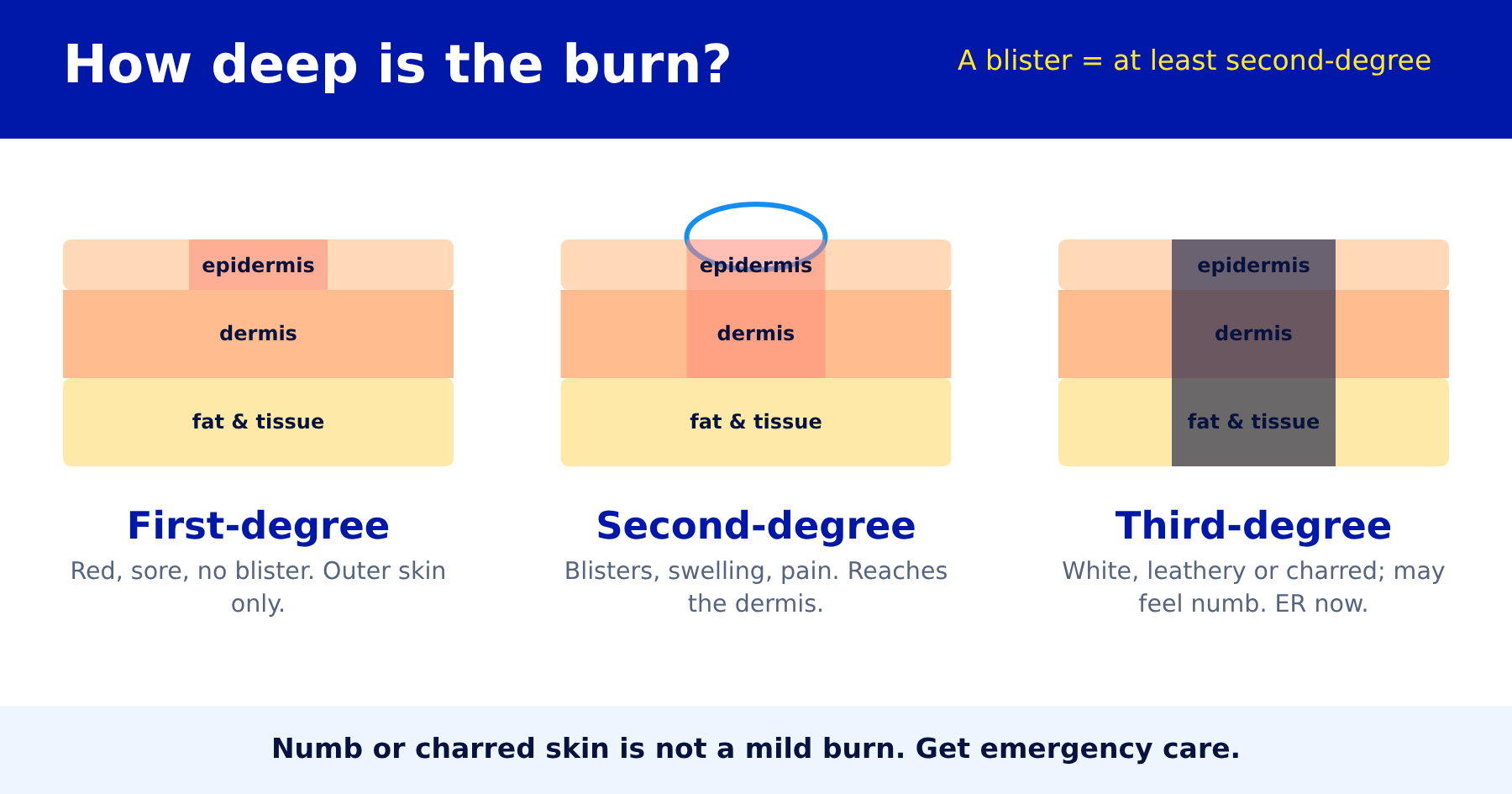
Before you fuss with the popped blister itself, look at the burn underneath it. A blister means the damage went past the top layer of skin, so you’re dealing with at least a second-degree burn. A blister is the body’s own bandage, and once it breaks that bandage is gone.
MedlinePlus describes it in three steps. A first-degree burn only hits the outer skin and looks red, swollen and sore, with no blister at all. A second-degree burn reaches the layer underneath and brings a blister. A third-degree burn goes deep, and the skin can look white or blackened and may feel numb. Think of it as three levels: a first-degree burn stings, a second-degree burn blisters, and a third-degree burn can look strangely painless.
That last point trips people up. A painless burn isn’t a mild burn, and a third-degree burn needs a hospital, not a bandage. If the area is numb, leathery or charred, skip the home care and get emergency help.
Size and place matter as much as depth. A minor burn is usually smaller than about 2 inches across and sits away from the hands, feet, face, groin and major joints. Anything bigger or in those spots needs a clinician, even if it looks tame.
What to do in the first hour after a burn blister pops
Do these in order. It takes about fifteen minutes.
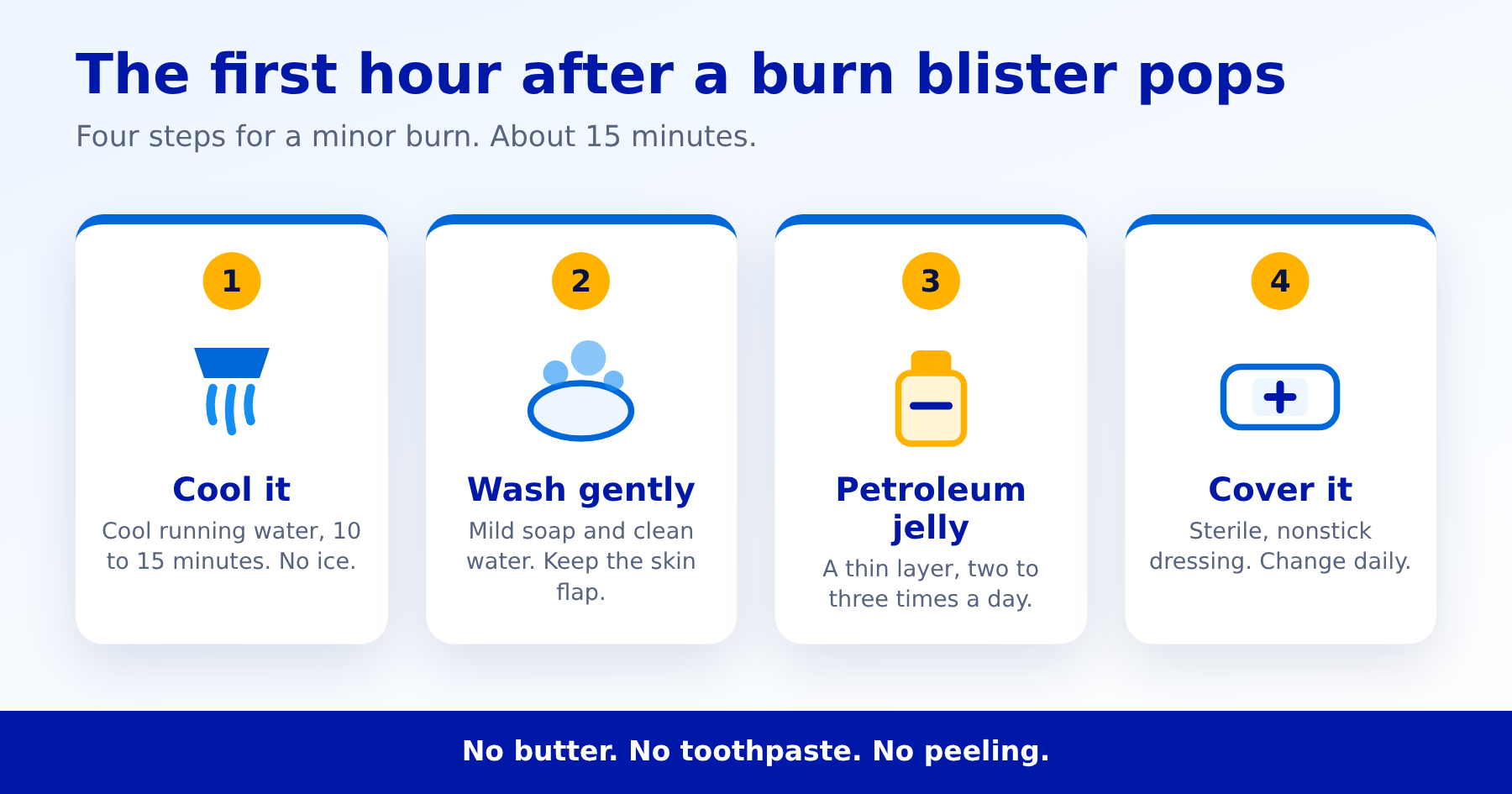
- Cool it. Hold the burn under cool running water for 10 to 15 minutes, per MedlinePlus. Cool, not cold. If you can’t get to a tap, a cool, wet cloth works. No ice, and no ice packs.
- Take off anything tight. Rings, watches and sleeves come off before swelling starts. If clothing is stuck to the wound, leave it and get help.
- Wash gently. Use mild soap and clean water. Pat the skin around the wound dry with a clean cloth. Don’t rub, and don’t scrub the raw blister floor.
- Leave the flap of skin. That loose skin is a natural cover for the blister. Smooth it back over the wound if it lies flat. Don’t peel or snip it off.
- Add a thin layer of ointment. The American Academy of Dermatology suggests petroleum jelly two to three times a day for minor burns.
- Cover it. Use a sterile, nonstick dressing such as gauze held on lightly with tape or a bandage. The dressing keeps the wound clean, protects the blister site and stops it sticking to your clothes.
What not to put on a popped burn blister
Kitchen-cabinet fixes cause more trouble than the burn does.
Skip ice. Ice on a burn can damage skin that’s already hurt, and it adds pain. Skip butter, oils, toothpaste and egg white too. Butter and toothpaste trap heat, hold bacteria and can turn a clean popped blister into an infection. Don’t blow on it either, since your breath carries germs.
You’ll hear that a popped blister needs antibiotic ointment. It’s not required. MedlinePlus says antibiotic ointment isn’t needed for a minor burn and that some brands cause allergic reactions. The AAD goes further and advises against topical antibiotics on first-degree burns. Petroleum jelly is the plain, safe pick.
How to change the dressing and keep the wound moist
A moist wound shows better healing than one that dries into a crust, and moist healing hurts less too. That’s why a nonstick dressing and a thin layer of ointment beat leaving a popped blister open to the air.
Change the dressing once a day, or sooner if it gets wet or dirty. Wash your hands first. If the gauze has stuck, soak it with cool water and ease it off. Don’t yank it. A stuck bandage can tear new skin right off the burn and set healing back.
Check the burn each time. Rinse it with clean water, pat it dry, add fresh ointment and put on a new sterile bandage or gauze pad. Ointment suits skin that has opened, because it stops the dressing gluing itself to the wound. Leave a little breathing room so the bandage isn’t tight.
Avoid fluffy cotton balls that shed fibers into the wound.
Pain, swelling and how long healing takes
Expect a few sore days. Pain is worst early on. Over-the-counter ibuprofen or acetaminophen helps with pain and swelling, and you should follow the label. Never give aspirin to a child or teenager. If pain gets worse after day two instead of easing, that’s a signal.
Raise the burned area when you can. Gravity helps with swelling, especially on a hand or foot, and it speeds healing by easing pressure.
Healing takes time. Healing of a minor burn can run up to three weeks, and the new skin often looks pink and shiny for a while. Itching during healing is normal. Scratching isn’t. Deeper burns are more likely to leave scarring, so protect healed skin from the sun with SPF 30 or higher.
Tetanus is the one people forget. Burns count as a higher-risk wound for tetanus. The CDC’s wound guidance lists burns among wounds that can need a booster if your last tetanus shot was five or more years ago, and everyone with an unknown or incomplete vaccine history should check in. Not sure when you last had a tetanus shot? Call a clinician, because tetanus is rare but serious.
Signs your popped blister is getting infected
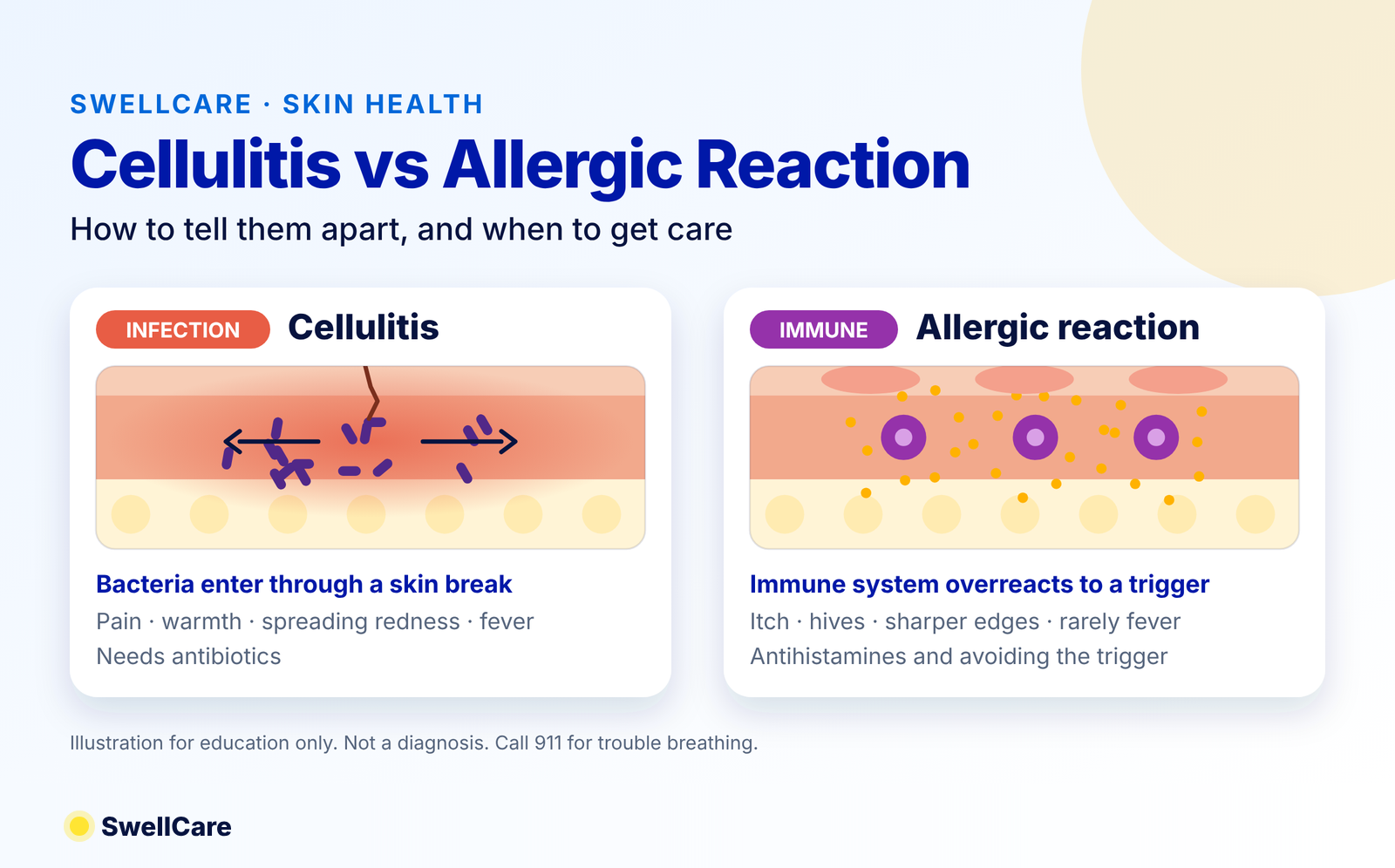
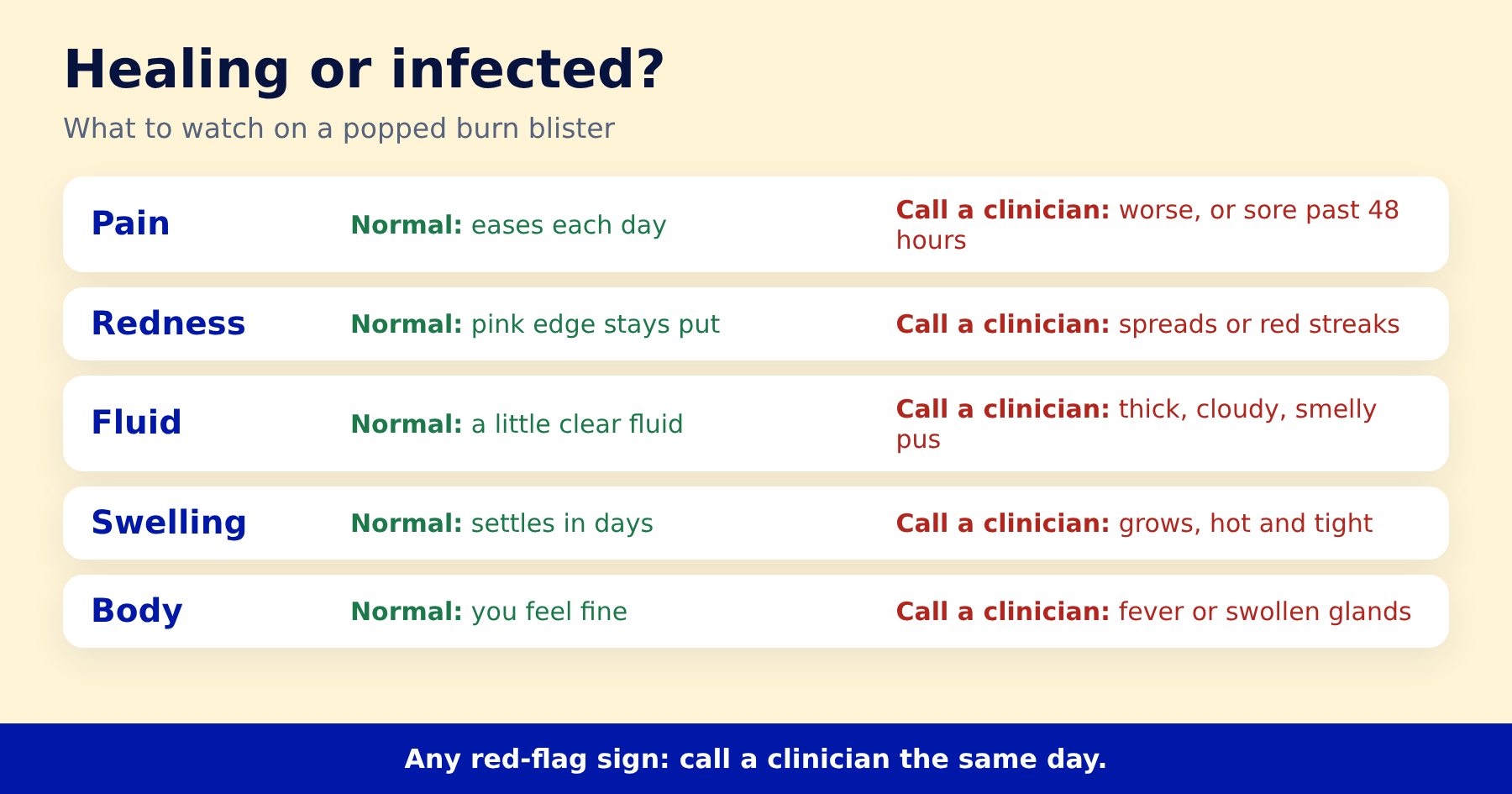
An open wound is an open door for bacteria, and a popped blister is exactly that. Infection isn’t the usual outcome, but it’s the complication to watch. Here’s how to tell normal healing from an infection.
| What you see | Normal healing | Possible infection |
|---|---|---|
| Pain | Eases day by day | Gets worse, or still strong after 48 hours |
| Redness | Pink edge that stays put | Redness spreads, or red streaks run away from the burn |
| Fluid | A little clear or pale yellow fluid at first | Thick, cloudy or smelly fluid (pus) |
| Swelling | Settles in a few days | Grows or feels hot and tight |
| Body | You feel fine | Fever, chills or swollen glands |
Any item in the right-hand column is a reason to call a clinician the same day. A fever with a burn is never something to wait out.
When to see a doctor or go to the ER
Some burns shouldn’t be handled at home. Get emergency care or call 911 if the burn:
- came from fire, electricity or a chemical
- is larger than about 2 inches, or about the size of your palm
- sits on the hands, feet, face, groin, buttocks or over a major joint
- looks white, leathery, charred or feels numb
- came with trouble breathing, a burned mouth or face, or signs of shock
Children under 5, adults over 55 and anyone with a weak immune system should be seen quickly, even for a burn that seems small. Anything that needs real medical treatment is better caught early, and a minor burn that turns nasty is still a medical problem.
If you’re simply unsure, treat that as your answer and get it looked at.
Getting a clinician to look at it from home
Searching burn blister popped what to do next at 2 a.m. and getting twelve different answers is stressful. Not every popped blister needs the ER, but plenty deserve a second opinion. That’s where virtual care fits. Swell connects you with a clinician 24/7. Sign-up and the screening chat are free, and a completed consultation is $45, with any medication or labs billed separately. There’s no membership.
You can describe the burn, share a photo and get clear next steps on dressings, infection signs and whether you need to be seen in person. Swell isn’t emergency care. For a large, deep or chemical burn, go to the emergency room first.
Questions people ask about a popped burn blister
Should I peel off the skin of a popped burn blister?
No. The loose skin protects the raw layer of the blister underneath while it heals. Wash gently with clean water, smooth the flap back down if it lies flat, and cover it with a sterile dressing. If the skin is dirty, torn badly or hanging off, a clinician can trim it safely. Don’t snip it yourself.
Can I put antibiotic ointment on a popped burn blister?
You don’t need to. Petroleum jelly under a sterile dressing does the job for a minor burn, and some antibiotic ointment brands trigger skin allergies. If your wound looks infected, you need to be seen, because an infection calls for a proper assessment, not another tube of cream.
How long does a popped burn blister take to heal?
A minor burn can take up to three weeks to heal. The raw spot usually closes over within a week or two, then the new skin keeps maturing. Healing that stalls, or pain that lingers past 48 hours, is worth a call.
Do I need a tetanus shot after a burn blister pops?
Possibly. CDC guidance treats burns as higher-risk wounds, so a booster is recommended if your last tetanus dose was five or more years ago, or if you don’t know. If you’re unsure, ask a clinician rather than guessing.
Is it okay to shower with a popped burn blister?
Yes, briefly. Use lukewarm water and mild soap, let it run over the wound without scrubbing, and pat dry. Then put on a fresh dressing. Skip long soaks and hot tubs until the skin has closed.
Medical disclaimer: This article is general first-aid information, not a diagnosis. If you’re worried about a burn, get it checked.
Trusted references
Public-health, research, and medical-society resources related to this guide.