It burns every time you pee. You took the test, or your clinic ran one, and it came back clean. So what now?
Burning when peeing but no UTI is far more common than most people expect, and it has a real explanation. Doctors call painful urination dysuria, and a bladder infection is only one of the things that cause it. Others range from sexually transmitted infections and skin irritation to hormone changes. Stones can do it, and so can inflammation of the bladder or prostate.
Here’s what’s likely going on, what you can do tonight to feel better, and which signs mean you shouldn’t wait.
What burning when peeing means when your urine test is clean
Dysuria is the medical word for pain, discomfort or burning during urination. The sting can sit right at the opening of the urethra, or it can feel deeper, behind the pubic bone or lower in the pelvis. Many people also feel a stronger urge to go, and frequent urination is common, which is exactly why it feels like a UTI. MedlinePlus lists both infectious and non-infectious causes for the same symptom.
Burning is a symptom. It isn’t a diagnosis.
A urinary tract infection is the usual first suspect, and for good reason, since it’s one of the most common causes of burning urination. Bacteria climb into the urethra and bladder to start a UTI. Plenty of burning has nothing to do with bacteria. The symptoms look the same from the inside, though: urgency, pelvic pressure, a sting on every trip to the bathroom. Symptoms alone can’t tell you which problem you have. The right tests can, along with a doctor who asks the right questions.
Infection is one cause. Inflammation and irritation are others, as are changes in the tissue around the urethra, and none of them will show up as a UTI on a urine test. So a clean result rules out one explanation. It doesn’t rule out the rest, and the pain is still real.
Can you have UTI symptoms and a negative urine test?
Yes. It happens in two very different ways.
The first is a test that misses a real infection. A review of urine dipstick testing in symptomatic women found that a negative result lowers the odds of a UTI but doesn’t erase them. In one study the dipstick decision rule missed about 23 percent of infections. A diluted sample, a low bacteria count or a sample taken too early can all hide a real infection. If your dipstick was negative and the burning keeps going, ask your doctor whether a urine culture makes sense.
A urinalysis checks the urine for white blood cells and for nitrite or blood, which are signs the body is reacting to bacteria. A urine culture goes further and tries to grow the bacteria in a lab. The same review notes that white blood cells show up in almost every woman with a true UTI, so a urine test with none makes infection less likely and sends doctors looking elsewhere. Both tests help. Neither is perfect alone. Think of a negative result as a data point, not a diagnosis.
The second is a test that’s right. Your urine really is free of infection, so the urinary tract infection label doesn’t fit, and something else is irritating the urethra, the bladder or the skin nearby. That’s the situation most people searching for burning when peeing but no UTI are actually in: no infection, and still a lot of pain.
Causes of burning when peeing but no UTI
Here are the main groups of causes behind these symptoms. They overlap, and more than one can be at work at the same time.
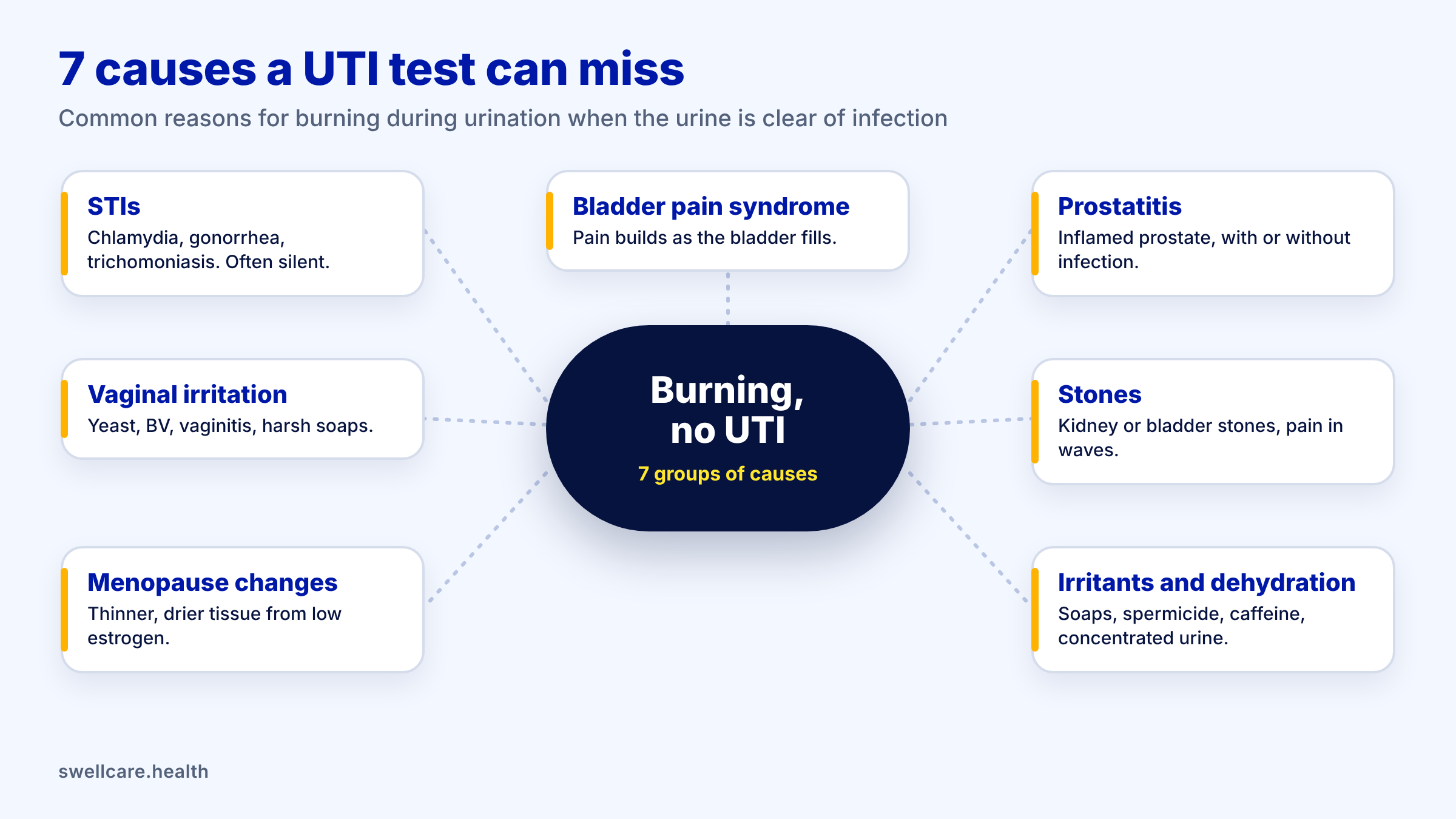
Sexually transmitted infections
A sexually transmitted infection is easy to overlook as a reason for burning during urination. Chlamydia, gonorrhea and trichomoniasis can all cause it, and a standard UTI test won’t catch them. Each needs its own STI test, usually on a urine sample or a swab.
Here’s the catch. Many people with an STI have no symptoms at all. The CDC says about 70 percent of people with trichomoniasis have no symptoms, and it notes that chlamydia often causes none either. When symptoms do show up, burning during urination usually travels with discharge from the vagina or penis. A new partner, or a partner with symptoms, makes this worth testing for.
Left alone, a chlamydia infection can cause pelvic inflammatory disease in women, which can scar the fallopian tubes and affect fertility. An STI is also the one cause on this list that can pass to a partner, so test before you assume it’s something minor.
Vaginal infections and irritation
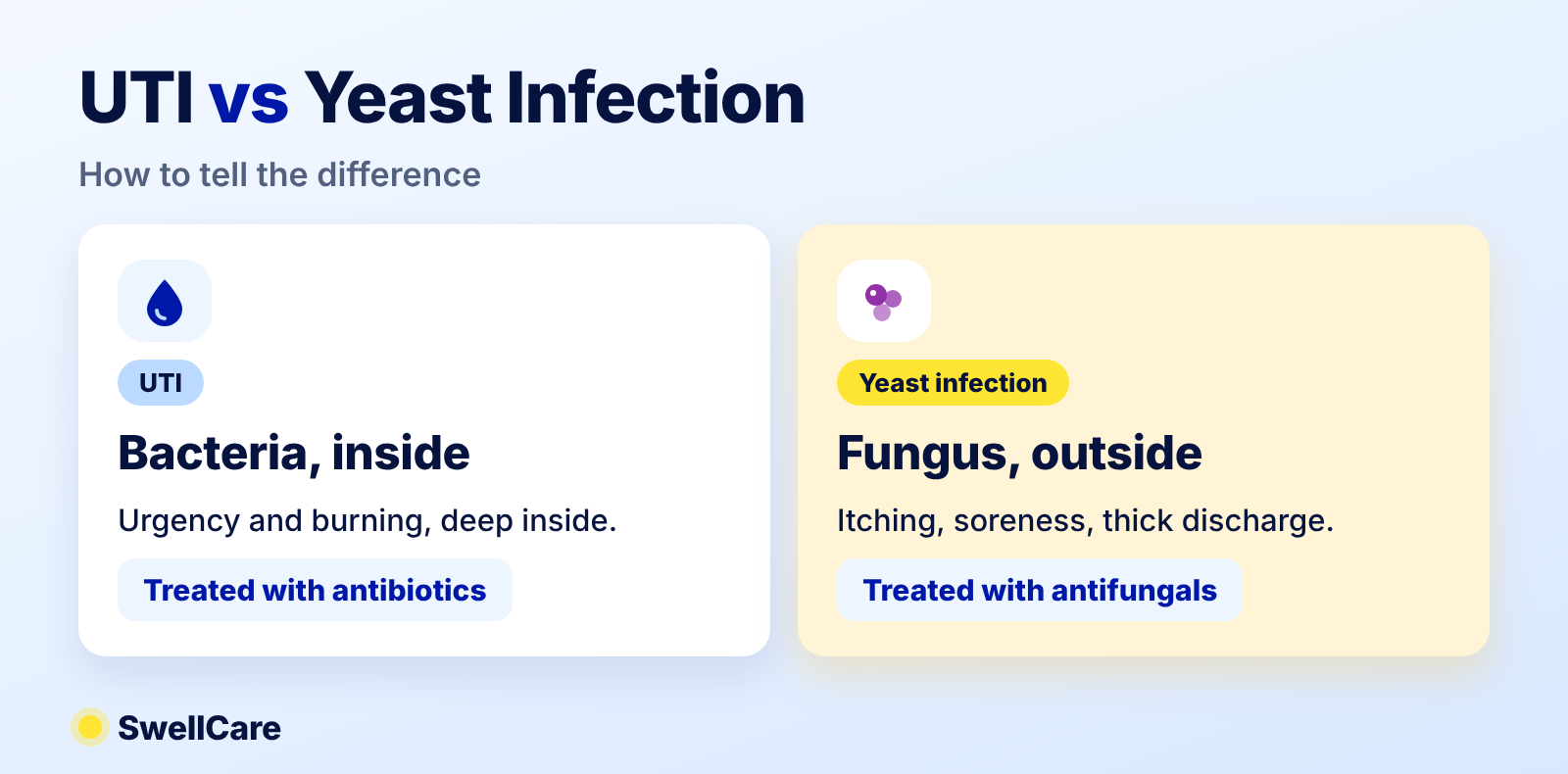
A yeast infection, bacterial vaginosis (an overgrowth of bacteria in the vagina) or vaginitis, which is inflammation of the vagina often set off by a harsh soap, can make urine sting as it crosses irritated skin on the outside. It feels like a bladder problem. It isn’t one.
The clues are itching, unusual vaginal discharge, an odor, or burning that’s mostly external. Yeast and BV infections need different medicines, so guessing with a store-bought cream can waste a week.
Urethritis is another possibility. That’s inflammation of the urethra itself, and it often comes with an STI or with irritation from products.
Menopause and hormone changes
After menopause, estrogen drops and the tissue around the vagina and urethra, along with the bladder lining, gets thinner and drier. Clinicians call this genitourinary syndrome of menopause. It can cause burning and urgency, plus repeat “UTI-like” episodes with clear results. MedlinePlus counts vaginal thinning after menopause among the non-infectious causes. Urology and gynecology groups have also published a joint guideline on the condition. Moisturizers and low-dose vaginal estrogen are common options, so it’s worth raising with your doctor.
Interstitial cystitis (painful bladder syndrome)
Interstitial cystitis, also called bladder pain syndrome or painful bladder syndrome, is a long-lasting condition, often described as chronic bladder inflammation. It isn’t a urinary tract infection, even though it feels like one. The NIDDK estimates that 4 to 12 million people in the US may have it, more of them women, and says it’s often mistaken for something else.
The pattern to watch is pain that builds as the bladder fills and eases after you pee. It can reach the groin, and tight pelvic floor muscles often add to the pelvic pain. Urgency and frequent urination are common, and so is painful sex.
Prostatitis in men
Prostatitis means inflammation of the prostate. The NHS lists burning during urination, trouble starting the stream, a need to go often, pain in the penis, scrotum or bottom, and pain with ejaculation. It’s usually caused by infection, but long-term cases don’t always have a clear cause.
A man with burning and a fever, or one who can’t pee at all, needs same-day care.
Kidney stones and bladder stones
Stones announce themselves with sharp pain in the back, side, lower belly or groin that comes in waves. The NIDDK also lists pink, red or brown urine, pain during urination, and nausea with fever or chills.
Most kidney stones pass on their own, but a small stone low in the urinary tract can mimic bladder irritation, and a stone in the bladder itself can do the same. Blood in the urine alongside a stone is worth a look. Add a fever and it’s worth a visit today, because infection can sit behind the blockage.
Soaps, products, dehydration and medicines
Bubble bath, scented soap, lotion and perfume can irritate the urethra and the skin around it, and so can spermicide or latex. Concentrated urine from not drinking enough can sting too. Caffeine and alcohol irritate the bladder in some people.
Radiation to the pelvis can damage the bladder lining, and some cancer treatments list urinary burning as a side effect. If your symptoms began right after a new product or a new medicine, say so. Even a medicine you take for something else can irritate the bladder, so bring the full list to your doctor. Irritation like this, and the inflammation it causes, is often the easiest problem to fix, because you just stop the trigger.
How to tell the causes apart
Think of this table as a rough map of symptoms and causes. It isn’t a diagnosis.
| What you notice | What it can point to |
|---|---|
| Discharge, a new partner, or a partner with symptoms | STI or vaginal infection |
| Itching, an odor, or burning on the outside of the body as urine passes | Yeast, BV or product irritation |
| Pain that builds as the bladder fills and eases after urination | Painful bladder syndrome |
| Pelvic pain and a weak stream during urination, in a man | Prostatitis |
| Side or back pain in waves, with pink or red urine | Kidney stones |
| Dryness and recurring “UTI-like” episodes after menopause | Menopause-related changes |
| Started after a new soap or after drinking too little | Irritation or concentrated urine |
What helps at home while you wait for answers
You can’t start the right treatment until you know the cause. You can make the burning and other symptoms easier to live with.
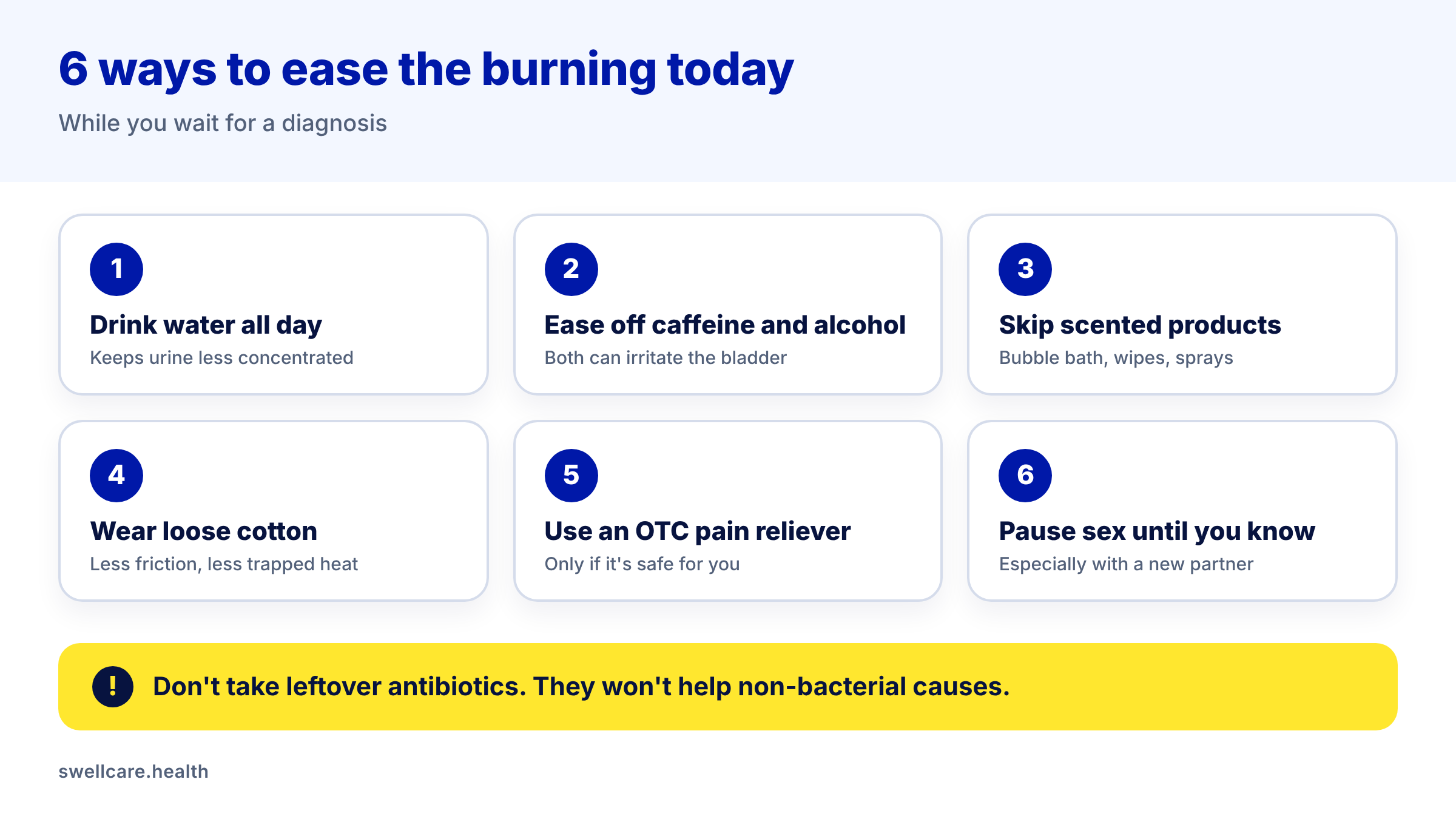
- Drink water through the day so your urine is less concentrated.
- Ease off caffeine and alcohol.
- Stop using scented products near the genitals, from bubble bath to wipes.
- Wear loose cotton underwear and skip the tight workout gear.
- Take an over-the-counter pain reliever such as ibuprofen or acetaminophen if it’s safe for you, and follow the label.
- Hold off on sex until you know the cause, and until an STI has been ruled out or treated if you have a new partner.
Write down your symptoms as you go: when the burning peaks, what you drank or used beforehand, and how urination feels at night. Patterns help a doctor more than you’d expect.
Two things to avoid. Don’t take leftover antibiotics. They won’t treat non-bacterial causes, they can cause side effects, and they can muddy your results when someone is trying to work out what’s going on. And if you use an over-the-counter urinary pain reliever, tell your clinician, because it can change the color of your urine and complicate testing.
How clinicians find the cause
A good doctor starts with questions about your symptoms. When did it begin? Is there discharge? Any new partners, new products, new medicines, or menopause? Those answers often narrow things faster than a lab does.
Next comes a urinalysis and, when it makes sense, a urine culture to check for bacteria. A clinician may order an STI test on a urine sample or a swab, add blood work in some cases, and do a pelvic exam or a prostate exam. If a first urine culture was clean but your symptoms weren’t, a second look is reasonable.
Where the pain sits during urination helps too. Stinging at the opening, or on skin outside, leans toward the urethra or vaginal irritation. Deeper pain behind the pubic bone leans toward the bladder. Get tested for an STI even if you feel sure it’s not that. Pain in waves can lead to imaging for stones. If the pain keeps going with clear results, a urologist may use a thin scope to look inside the bladder, a test called cystoscopy.
Persistent cases often end up with a urologist, or with a gynecologist when the cause looks vaginal or hormonal. A firm diagnosis often takes steps, not one test. That’s normal, and it doesn’t mean you’ve been missed.
How treatment changes with the cause
Treatment follows the diagnosis. A true urinary tract infection gets antibiotics, but that’s the one cause this guide has set aside. Antibiotics help only when bacteria are the problem, such as chlamydia, gonorrhea, BV or bacterial prostatitis, and each uses a different drug. Trichomoniasis is treated with an oral medicine, and the CDC says about 1 in 5 people get it again within three months if they have sex with a partner who wasn’t treated.
Treatment for a yeast infection is an antifungal. For menopause-related thinning, treatment often means a vaginal moisturizer or low-dose vaginal estrogen. Treatment for the bladder condition is usually layered: diet changes, pelvic floor physical therapy and medicines from a urologist. Stones depend on size. Irritation clears once you remove the cause.
That’s why the wrong treatment costs you time. Antibiotics do nothing for bladder pain or soap irritation, and they carry side effects.
Partners matter too. If an STI is the cause, your partner needs treatment at the same time, or the infection can pass back and forth. And treatment isn’t always a prescription. For irritation, the treatment is stopping the product that caused it. For gonorrhea or chlamydia, it’s a course of antibiotics from a clinician and a retest a few months later, since reinfection is common.
Getting answers from a Swell clinician
Swell runs online urgent care around the clock, including nights and weekends. A licensed clinician reviews your symptoms and timing, along with your medications and history, by chat or video. They check for warning signs and tell you what can be handled online and what needs an in-person exam with a doctor.
You start with a free screening. A completed consultation is currently $45 with no subscription, and medicine and lab costs are separate (see pricing). The conditions list includes UTI symptoms and yeast infection. It also covers bacterial vaginosis and a possible kidney stone.
Be clear about the limits. Prescriptions aren’t guaranteed, and antibiotics are prescribed only when they’re medically appropriate. STI testing and pelvic or prostate exams usually need an in-person visit, and your clinician will say so rather than guess.
When to see a doctor or go to the ER
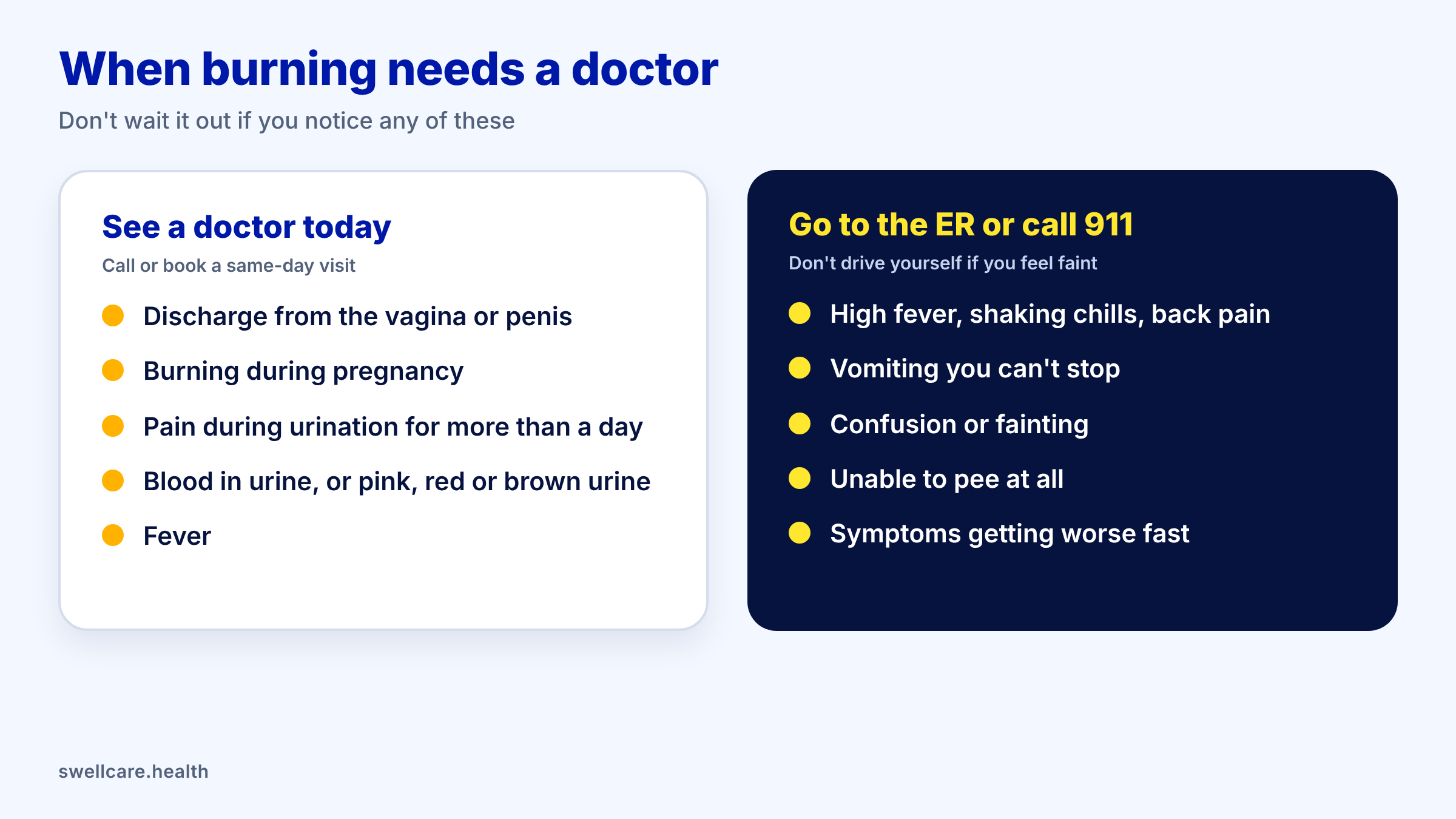
Don’t wait it out and hope. See a doctor if you notice any of these, all of which MedlinePlus flags as reasons to contact a provider: discharge from the penis or vagina, burning during pregnancy, pain during urination for more than a day, blood in the urine, or a fever.
If you’re pregnant, call your doctor or midwife the same day. Pink, red or brown urine means blood, and that always deserves a call. Back or side pain with a fever and chills can signal a kidney infection, where bacteria have travelled up from the bladder, or kidney stones that need care today.
Go to the ER or call 911 for a high fever with shaking chills and back pain, vomiting you can’t stop, confusion, fainting, or symptoms that are getting worse fast. Any man who can’t pee at all needs urgent care too.
Not sure how serious your symptoms are, or whether the burning during urination needs a visit? Answer a few questions in the free Swell screening and a clinician will tell you what to do next.
Questions people ask about burning when peeing but no UTI
Why does it burn down there when I don’t have a UTI?
Usually because something other than a bladder infection is irritating the urethra or nearby skin. Common culprits include an STI, a yeast infection or BV, hormone changes or concentrated urine, as well as irritation from soaps or wipes. A doctor can sort through those with a few questions and the right tests, so you aren’t guessing. If your symptoms started after a new product, start there.
Why does my bladder hurt but I don’t have a UTI?
Bladder pain without infection often points to interstitial cystitis, pelvic floor tension, kidney stones or irritation from food and drink. If the pain builds as your bladder fills and eases after you pee, mention that pattern. It’s one of the clearest clues clinicians use.
Can dehydration cause burning when you pee?
Yes. When you don’t drink enough, urine becomes concentrated and can sting the urethra and bladder lining, and burning during urination can follow. Drinking water through the day often takes the edge off within a day. If the burning stays, don’t assume it’s only dehydration.
How long does burning urination last without an infection?
It depends on the cause. Painful urination from a product can settle in a day or two once you stop it. Stones and prostatitis don’t clear without treatment, and bladder conditions and hormone changes rarely do. Longer than a day? Get seen.
Can burning urination go away on its own?
Sometimes. Painful urination often fades on its own when the cause is mild irritation or dehydration. It won’t when the cause is an STI, a stone, menopause-related thinning or a bladder condition, and waiting only gives the problem more time. Those get better with the right care, and an untreated STI can cause harm even after the burning fades.
Trusted references
Public-health, research, and medical-society resources related to this guide.