It’s 2 a.m. and your chest sounds like a wet paper bag. Every breath rattles, every cough brings up almost nothing, and sleep isn’t happening. Good chest congestion relief starts with one blunt fact: the mucus is doing a job, so your goal is to thin it and move it out, not dry it up. Most cases clear in under three weeks, and a few simple moves make those days far easier. Here’s what holds up, what doesn’t, and when to stop treating this at home.
What’s actually going on in your chest
Chest congestion means mucus has collected in your lungs and airways. A virus is the usual cause, the same kind of infection behind a cold, the flu or COVID-19. While your immune system fights that infection, irritated airways make extra mucus, and it turns thick and sticky. That’s why the rattle feels deep and heavy.
Often it’s a chest cold, the everyday name for acute bronchitis. That’s an infection that inflames the main breathing tubes. Allergies, asthma, COPD, acid reflux and tobacco or vaping can all do it too, and Cleveland Clinic notes that heart failure can cause fluid in the lungs that feels similar.
Typical symptoms include a wet cough that brings up phlegm, a tight or rattling chest, a mild fever and a sore throat from all that coughing. Symptoms build over a few days, and the cough is usually the last to leave. Children get chest colds often, and most bounce back the same way adults do.
Nasal congestion is a different animal. That one sits behind your nose and sinuses, not down in your chest.
Chest congestion relief you can start at home today
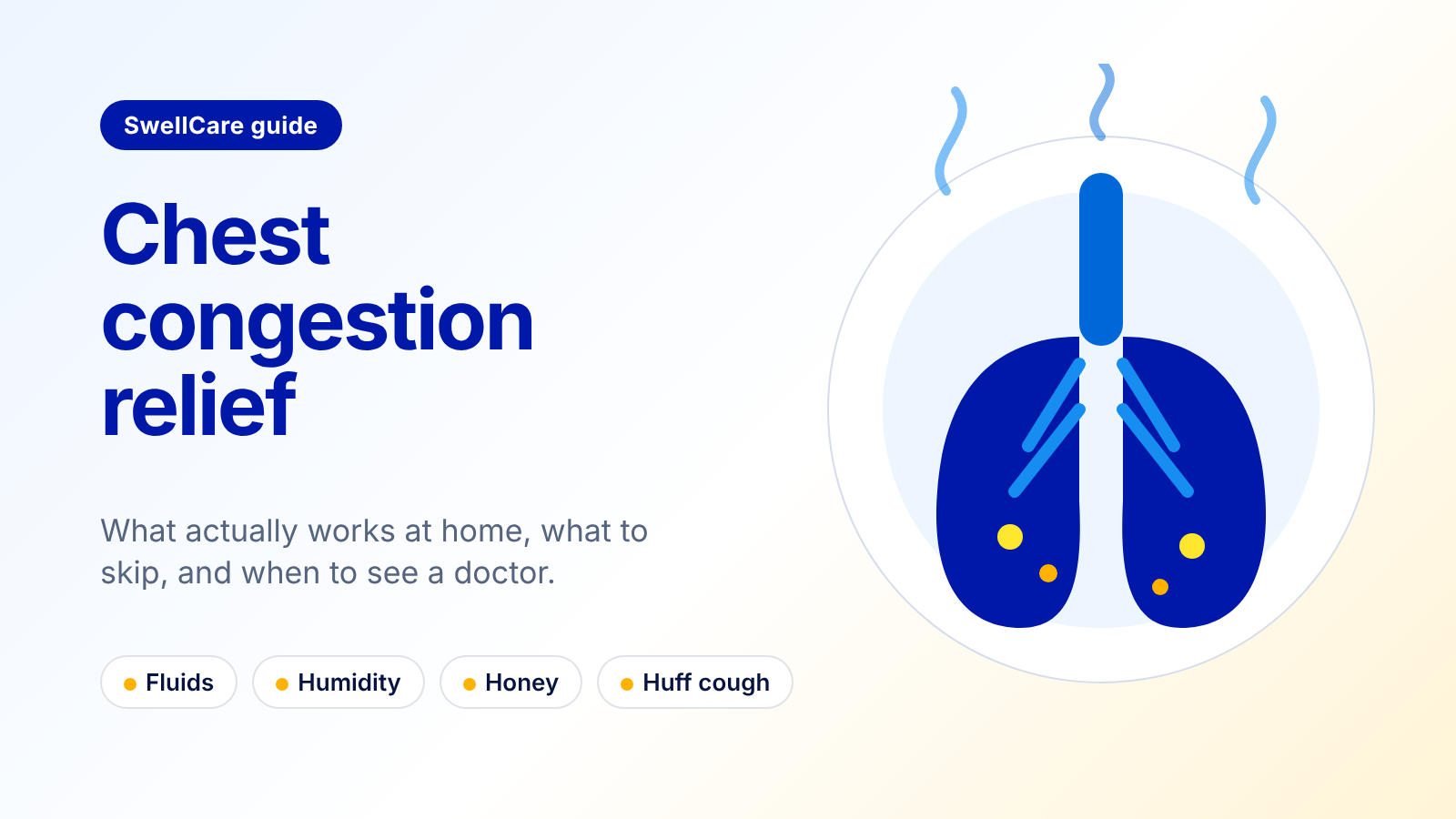
These chest congestion remedies have the best support. They’re ordered by how well the evidence supports them.
Drink more than you think you need
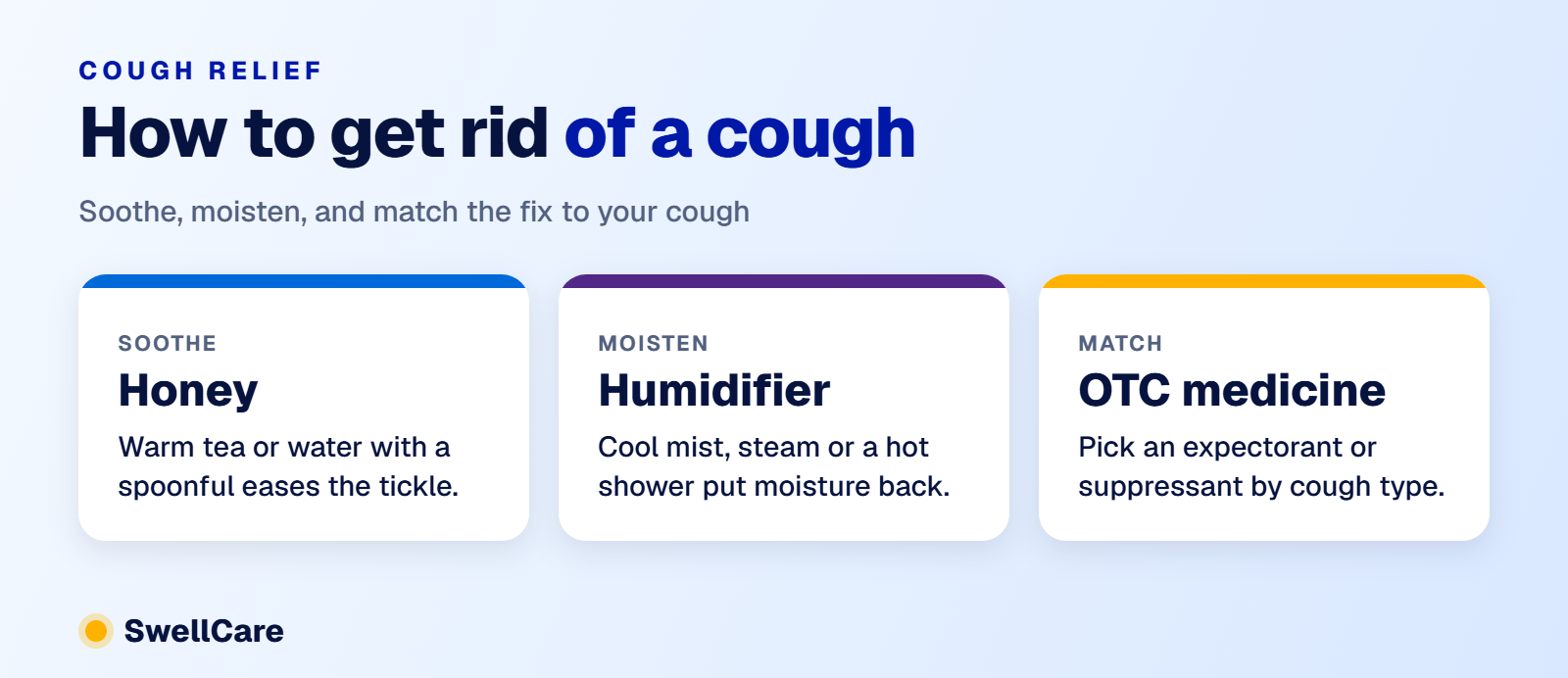
Dehydration makes mucus stickier. Water, broth and warm tea all count as fluids. Pale yellow urine is a decent check that you’re keeping up. Warm drinks also soothe the sore throat that comes with a cold, and thinner phlegm is easier to cough up.
Add moisture to the air
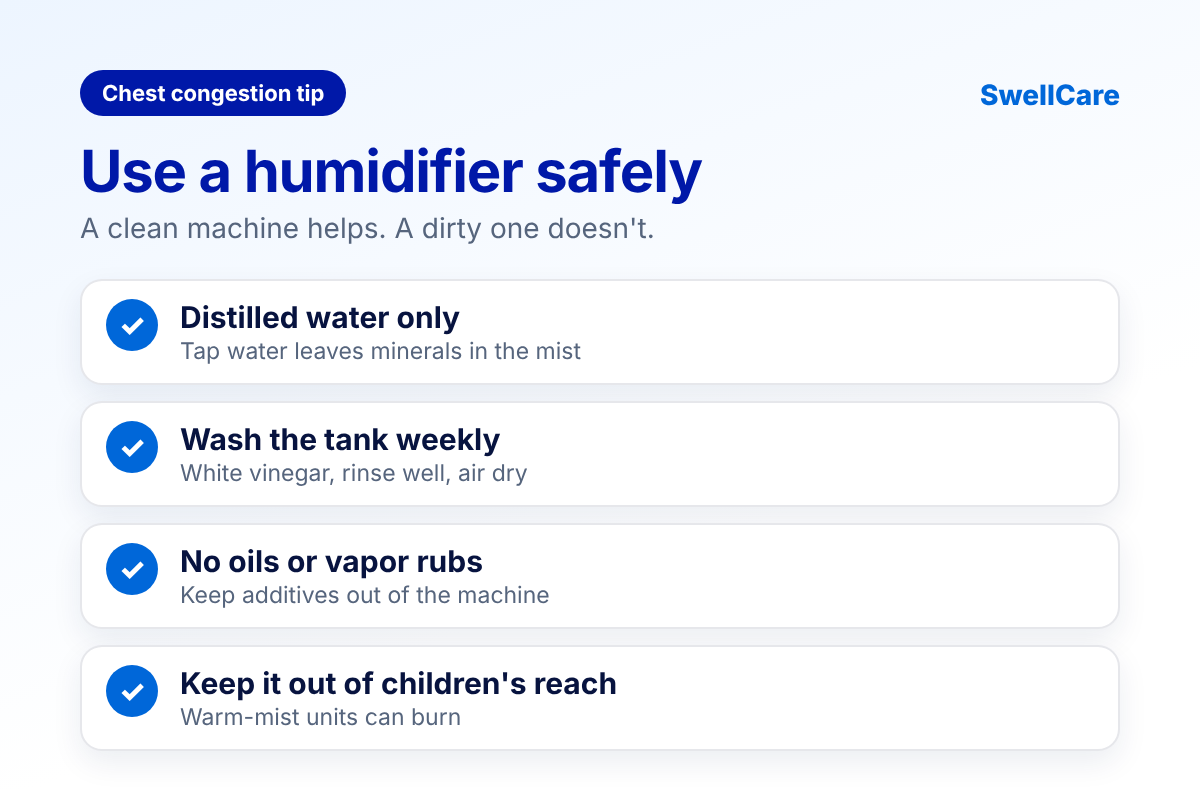
A clean humidifier or cool-mist vaporizer can loosen mucus overnight. The word that matters is clean. Children’s Hospital Colorado warns that dirty cool-mist units can spray bacteria and minerals into your room, and warm-mist units can burn. Use distilled water, wash the tank weekly with white vinegar, and keep it well out of children’s reach. Leave the essential oils out of the machine.
Try honey, steam and a hot shower
Sit in a steamy bathroom for ten minutes with the door shut. Steam warms and moistens the air you breathe, and the CDC lists it among ways to feel better with a chest cold. Skip the bowl of boiling water, especially around children, because steam burns are easy to get.
Honey is the surprise performer. Mayo Clinic says it may ease a cough about as well as over-the-counter cough medicine, though the studies are small. Stir a spoonful into warm tea. For children over age 1, use half to one teaspoon. Never give it to a baby under 1, because of the risk of infant botulism.
Cough smarter, not harder
Don’t fight a cough that brings up phlegm. It’s how your body clears the mess. Try the huff cough instead: take a slow breath in, then push the air out in two or three short, sharp “huffs,” like fogging a mirror. It loosens phlegm and moves it up with less strain than hacking.
At night, prop yourself up on extra pillows. Lying flat lets mucus pool.
| Option | What it does | Strength of evidence |
|---|---|---|
| Fluids | Keeps mucus thin so it can move | Sensible, widely recommended |
| Humidifier | Moistens airways | Comfort benefit; clean it often |
| Steam | Loosens mucus briefly | Comforting; stick to a hot shower, not a boiling bowl |
| Honey | Calms cough | Modest |
| Huff cough | Moves mucus | Practical, low risk |
| Antibiotics | Treats a bacterial infection only | None for a viral chest cold |
What about the medicine aisle?
Over-the-counter products can take the edge off, but none of them cure the illness. Skip over-the-counter combination formulas that stack several drugs, since you rarely need them all. Your doctor or pharmacist can help you pick one that fits your symptoms.
Guaifenesin is the expectorant in Mucinex and similar over-the-counter products. Does it work? The evidence for short-term illness is mixed. A 2017 review found some people reported easier coughing while objective tests in other studies showed no benefit, and the authors were linked to the manufacturer. It’s fine to try for a few days. Just don’t expect miracles.
Over-the-counter acetaminophen or ibuprofen can handle fever and body aches. Read the label and check doses.
Antibiotics are the one to skip. A virus causes most chest colds, and antibiotics fight bacteria, not a virus. The CDC is clear they won’t help you feel better. Pushing your doctor for them just adds side effects and fuels resistance.
Children need extra care. The CDC doesn’t recommend over-the-counter cough and cold medicines for children under 6, and pain relievers depend on age: acetaminophen from 3 months, ibuprofen from 6 months. Ask your pediatrician before giving children anything.
When chest congestion needs a doctor
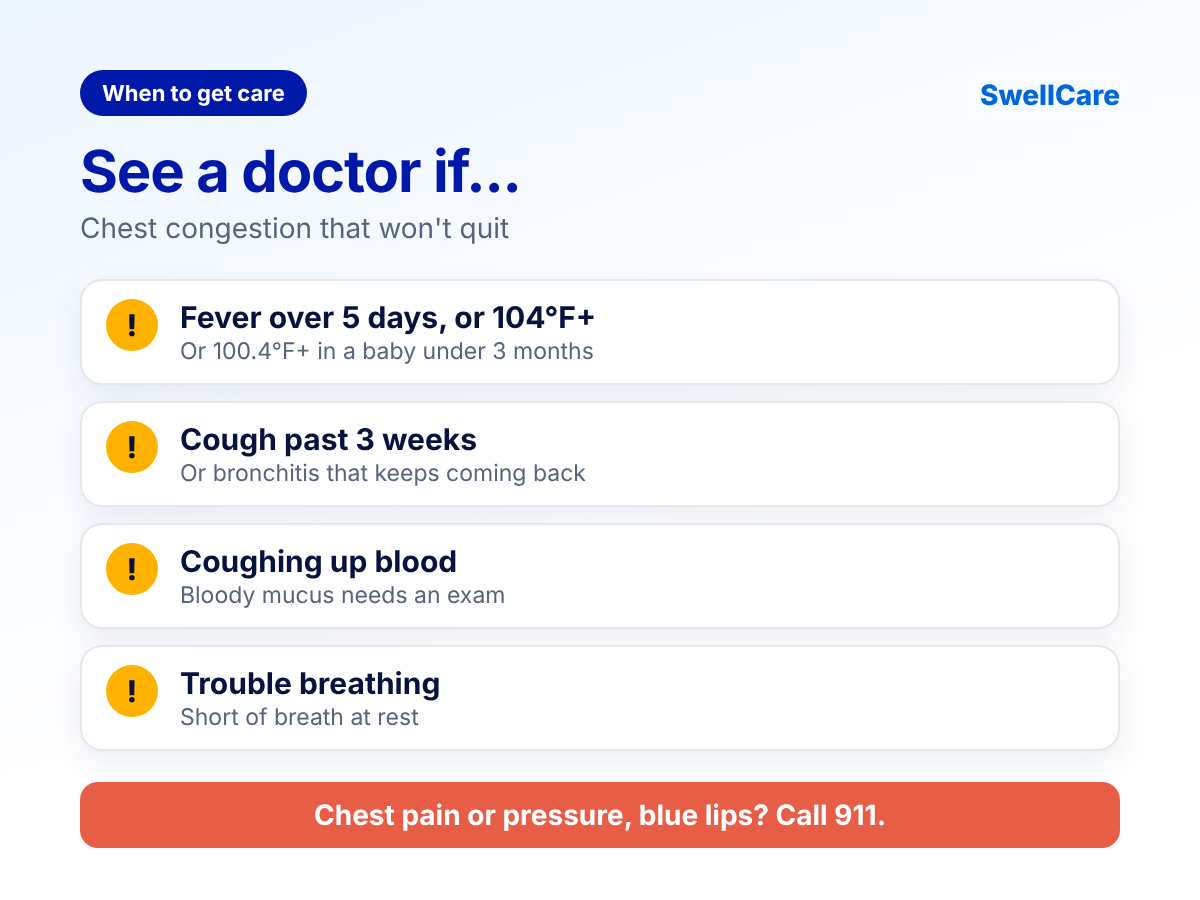
Most chest infections fade on their own. Some don’t, and you shouldn’t wait those out. See a doctor if you have:
- A fever that lasts more than 5 days, or a fever of 104°F or higher
- A cough that drags past 3 weeks
- Coughing up bloody mucus
- Shortness of breath or trouble breathing
- Bronchitis that keeps coming back
Call 911 for chest pain or pressure, or blue lips or fingertips. Any baby under 3 months with a fever of 100.4°F or higher needs care right away.
Pneumonia is the worry behind most of these. It’s an infection in the lungs, and the classic warning is this: you start to improve, then suddenly get worse, with a spiking temperature, fast breathing or sharp pain when you breathe in. That pattern deserves a prompt exam.
Get care without the waiting room
You don’t have to guess. Swell’s urgent care visits happen online, any time of day, so you can describe your symptoms and find out whether home care is enough or you need an in-person exam. Browse the conditions Swell sees, or see how it works before you start.
Questions people ask about chest congestion relief
How can I decongest my chest fast?
There’s no instant fix, but the quickest combination is fluids, a steamy shower, a clean humidifier and huff coughing. Many people feel looser within a day or two. If symptoms haven’t improved after several days, or you feel worse, check in with a doctor.
What drink breaks up mucus in your chest?
Plain water, broth and warm tea all thin mucus by keeping you hydrated. Stirring honey into tea may calm the cough, if you’re over 1 year old. No single drink dissolves mucus, so the amount you drink matters more than the type.
How do you know if chest congestion is turning into pneumonia?
Watch for symptoms like a high fever, fast or painful breathing, shortness of breath, or getting worse after you’d started to improve. Any of those means calling a doctor. It takes a proper exam, and sometimes a chest X-ray, to confirm.
Does Mucinex really break up chest congestion?
Maybe a little. As an expectorant, the active ingredient is meant to thin mucus, but studies on short-term illness are mixed. Some people say it helps, and it’s generally safe to try for a few days. Fluids and humidity are cheaper, and they work alongside it.
How long does chest congestion last?
A chest cold usually clears in under three weeks, once the virus runs its course. The cough often lingers longest. If it goes past three weeks, or keeps returning as bronchitis, it’s time to see a doctor and find out why.
Trusted references
Public-health, research, and medical-society resources related to this guide.