You push up off the couch and the room tips. Your vision speckles. One hand shoots out for the wall.
So, why do I feel dizzy when I stand up? Most often, your blood pressure dipped for a few seconds because gravity pulled blood toward your legs faster than your body could adjust. The medical name is orthostatic hypotension. It’s common, usually harmless, and often fixable.
Sometimes it’s a clue that something needs attention, though. Below you’ll find what’s happening inside your body, the causes worth knowing, fixes you can try today, and the signs that mean it’s time to get checked.
What happens in your body when you stand up
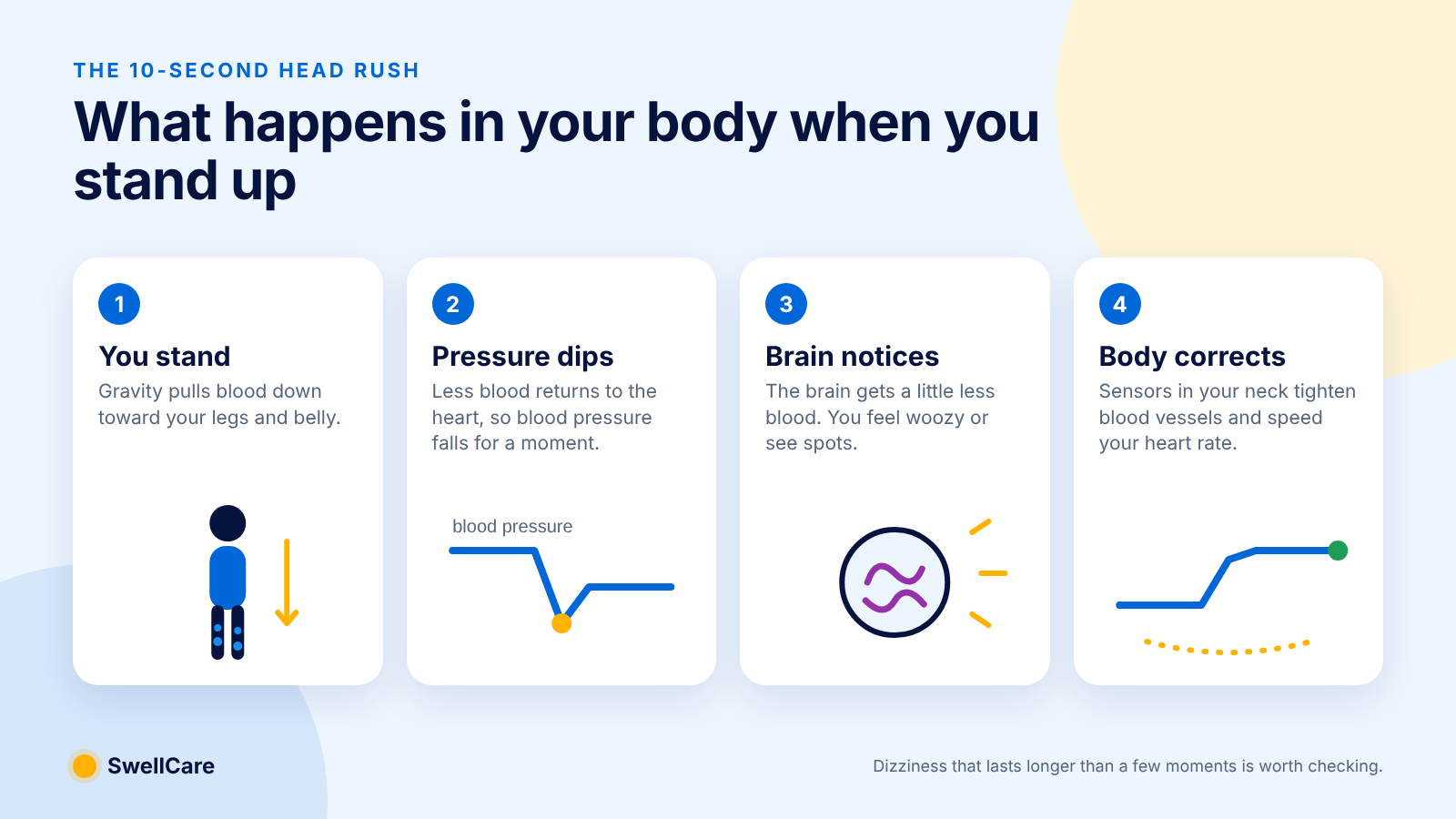
Lying down, your blood spreads evenly. Stand, and gravity drags a good share of it toward your legs and belly. Less blood returns to the heart, so blood pressure drops for a moment. Your brain sits at the top of the column, and it briefly gets less blood flow than it likes.
Your body has a built-in fix. Pressure sensors in your neck and chest notice the dip in blood pressure and tighten your blood vessels. Your heart rate climbs too. In a healthy person, those two moves restore blood flow within seconds, and you never notice.
When the fix runs late, you feel lightheaded, and that lightheadedness is the head rush. Doctors call it orthostatic hypotension when systolic pressure falls by 20 mmHg or diastolic by 10 within about three minutes of standing, as StatPearls describes it.
How common is it? Roughly 1 in 5 adults over 60 has orthostatic hypotension, and about a third of people who meet the definition feel nothing at all. A quick wobble now and then isn’t a reason to panic.
Common causes of dizziness when you stand up
The mechanism is the same every time, but the trigger varies. Typical symptoms include lightheadedness, blurred vision, weakness and a sense that you might faint. They last under a minute and ease once you sit or lie down.
Three groups account for most of the dizziness when standing up that people bring to a clinician.
Dehydration and low blood volume
Less fluid in your system means less blood to send up to your brain, so your blood pressure falls further the moment you’re standing. A hot day, a stomach bug with vomiting or diarrhea, or a night of drinking can all do it. Alcohol is a double hit, since it relaxes blood vessels and makes you lose water.
If your symptoms show up after sweating or a rough night, start here.
Fluids are cheap to test.
Medications that lower blood pressure
Many medications lower blood pressure on purpose, and sometimes they overshoot. Diuretics, alpha-blockers, nitrates and several antidepressants are well-known culprits, according to Mayo Clinic. So are some medications for Parkinson’s disease and prostate problems.
Don’t stop a prescribed medicine on your own. Tell your prescriber about the dizziness and ask for a review of your medications, because a dose change or a different drug often solves it.
Medical conditions behind the dizziness
Heart failure and arrhythmias can leave the heart unable to keep up with a sudden change in position. Diabetes can damage the nerves that control blood pressure and tell blood vessels to tighten. Parkinson’s disease and other nervous system disorders do something similar. Anemia and adrenal problems round out the list.
Another pattern is postprandial hypotension, where blood pressure sags within a couple of hours of a large meal, as UCLA Health notes. If you’re only dizzy after lunch, that’s a strong hint.
Fixes that help you stop feeling dizzy when you stand
Most of these cost nothing, and you can start today. They target the moment of standing up. The evidence behind them is modest, but they’re low-risk, and many people notice their symptoms ease within days.
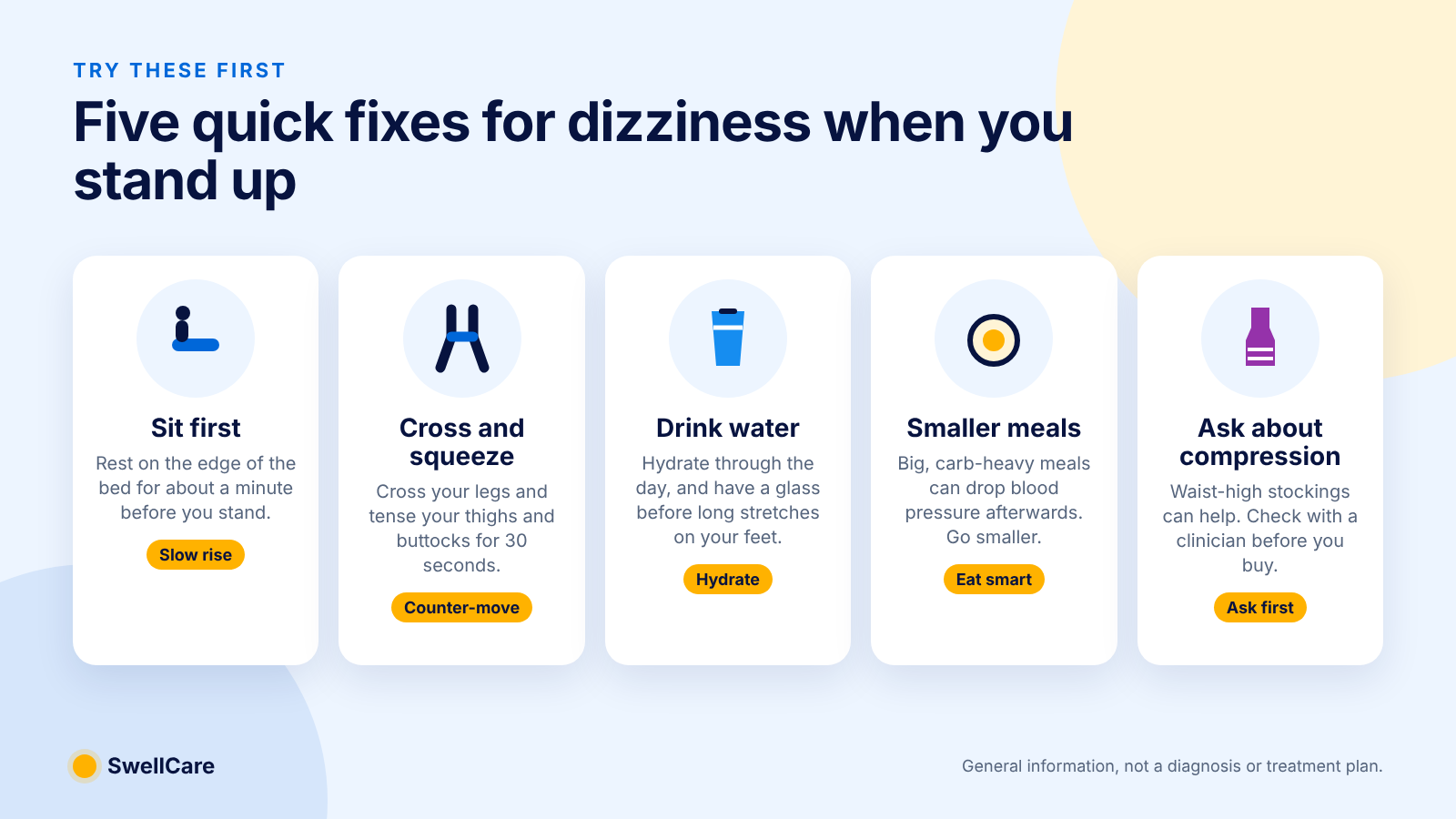
- Stand up slowly. Move from lying to sitting, wait a minute, then stand. Sitting on the edge of the bed is the classic trick.
- Pump your calves first. Flex your ankles and calves before you rise. It pushes blood back toward your heart and, from there, your brain.
- Use counter-moves. If you feel lightheaded, cross your legs and squeeze your thighs and buttocks, or rise onto your toes. Stop and sit if it doesn’t pass.
- Drink water through the day. A quick drink of about two cups of plain water can give blood pressure a short lift, StatPearls reports. Keep alcohol low.
- Shrink your meals. Smaller, lower-carb meals soften postprandial hypotension, the post-meal drop.
- Ask about compression stockings. Waist-high versions can help by keeping blood from pooling, but they’re uncomfortable for many people. Talk to a clinician first.
Salt is a trap. Some doctors do advise more of it, but too much can push blood pressure too high or strain the heart, so only change your intake with medical guidance.
Skip very hot showers and long spells of standing still, too. Heat widens blood vessels, which lowers blood pressure further. Standing still is harder on you than walking, because walking squeezes your leg muscles and pushes blood back up toward the heart.
When dizziness on standing needs a doctor
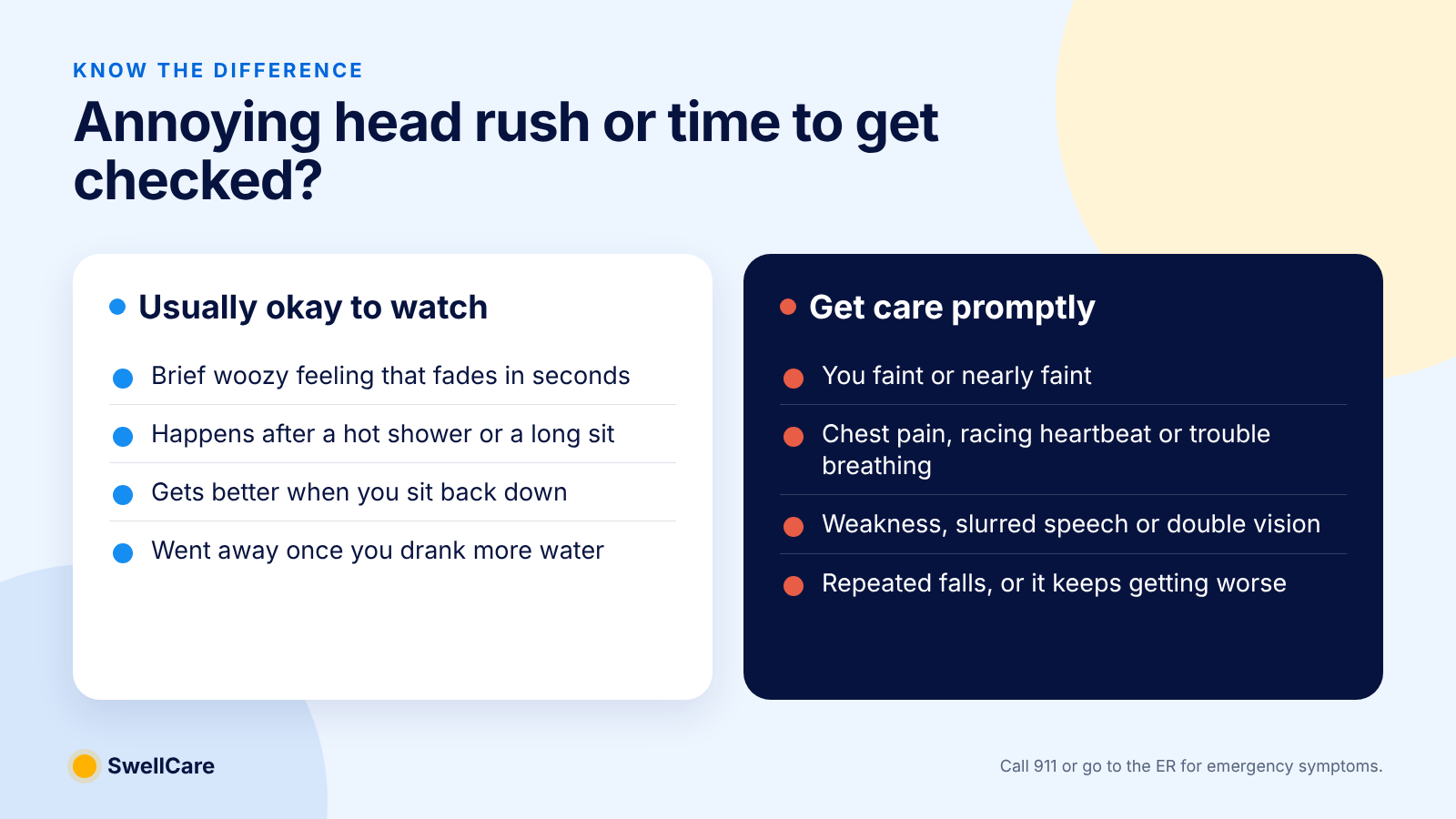
Occasional lightheadedness that fades in seconds is rarely urgent. A pattern of symptoms is different. If dizziness when standing up happens most days, keeps getting worse, or you’ve had falls, book a visit. Injury is the real risk here, since one bad tumble can sideline an older adult for months, and a clinician can look for the cause before that happens.
Get care promptly if you notice any of these symptoms:
- Fainting or nearly fainting
- Chest pain, a racing heart rate or shortness of breath
- Weakness on one side, slurred speech, double vision or sudden severe headache, which can signal a stroke
- Lightheadedness that comes with confusion
Call 911 or go to the ER for chest pain or stroke symptoms. Don’t wait for a screen or an appointment.
You can gather useful evidence at home. Check your blood pressure lying down, wait a minute after you stand, then check again. Write down both readings plus any symptoms, and bring them along, as Mayo Clinic suggests.
Talk to a Swell clinician about your dizziness
You don’t need a diagnosis to start. Tell us about your symptoms, how often they hit after standing up, and your home blood pressure readings, and a licensed clinician at Swell will review them, explain what can be handled online and say what to do next. If you need an in-person exam, we’ll tell you plainly.
The screening chat is free. If you go ahead with a visit by secure chat or video, the consultation is $45, and we’re available any hour. Swell isn’t emergency care, so call 911 if you faint or have signs of a stroke.
Questions people ask about feeling dizzy when you stand up
What are the top causes of dizziness when you stand up?
Dehydration, blood pressure medicines and underlying conditions lead the list. Dehydration and water pills are the easiest to spot and fix. Heart rhythm problems, heart failure, diabetes-related nerve damage and Parkinson’s disease take more investigation, which is why frequent symptoms deserve a medical look.
What is the red flag for dizziness?
Fainting, chest pain, trouble breathing, weakness on one side, slurred speech or double vision. Any of these symptoms needs urgent care, not a wait-and-see approach. Repeated falls and dizziness that steadily worsens also warrant a prompt visit.
How do I stop going dizzy when I stand up?
Rise in stages, pump your calves, stay hydrated, eat smaller meals and cut back on alcohol. If you still feel lightheaded when standing up, cross your legs and squeeze your thighs until it passes, which helps keep blood pressure up. Still no luck? Ask whether a medication or a medical condition is behind it.
What drink stops dizziness?
Plain water is the best first choice, since dehydration is such a frequent trigger, and a big drink can lift blood pressure briefly. After vomiting or diarrhea, an oral rehydration solution replaces salts too. Alcohol makes things worse. Dizziness that doesn’t ease with fluids needs a clinician’s input.
Trusted references
Public-health, research, and medical-society resources related to this guide.