You’ve been shifting in your chair for three days now, and one question keeps looping: do hemorrhoids go away, or is this your life from here on?
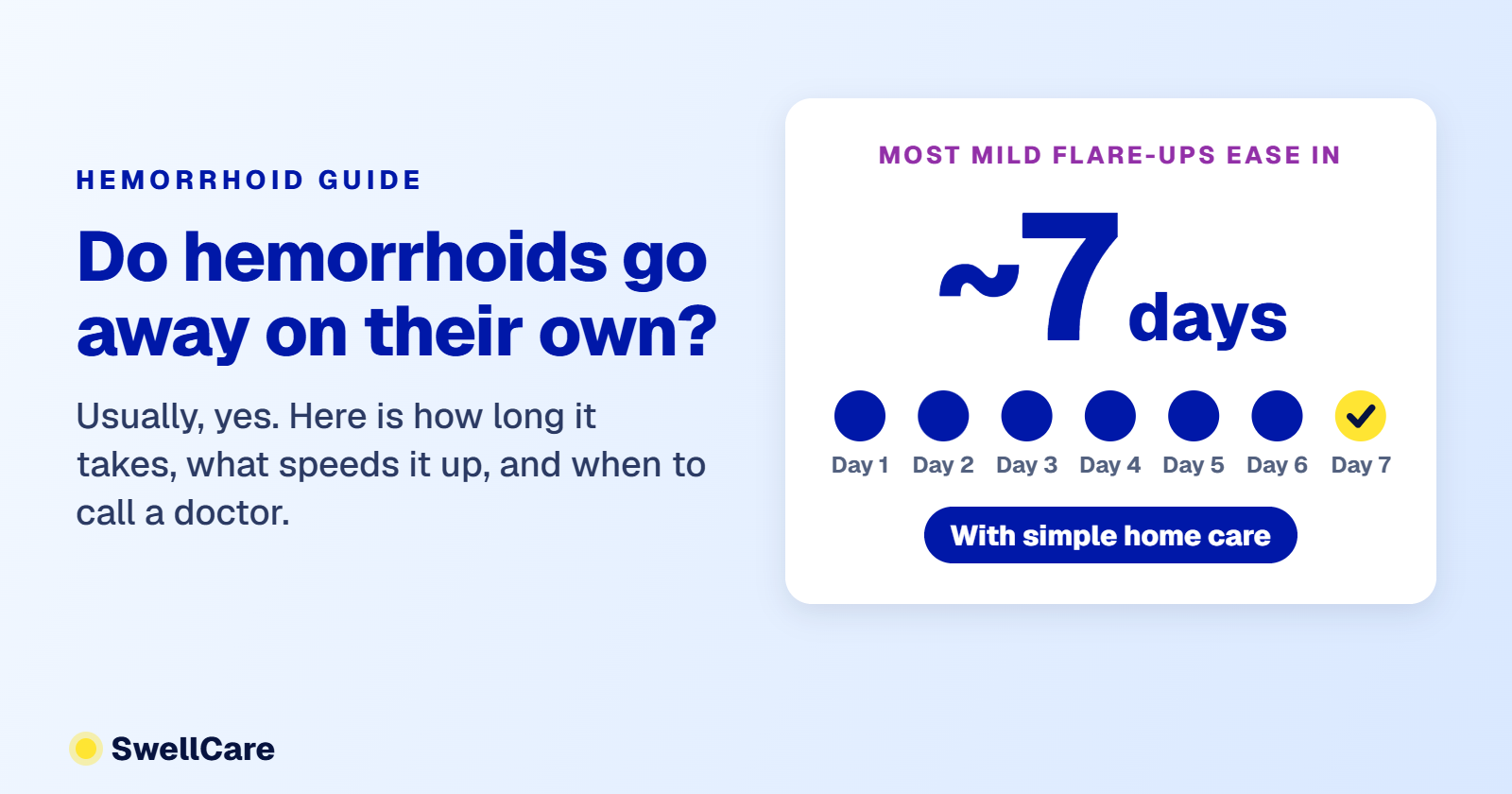
Usually, yes, they do. Most mild flare-ups settle on their own within about a week, and many external hemorrhoids calm down in just a few days. But “usually” has fine print. Blood, a lump that won’t shrink, or severe symptoms can mean something that needs a doctor, and the right habits can speed up your recovery.
How long hemorrhoids last, by type
Everyone is born with hemorrhoid tissue. These small cushions of veins around the anus and lower rectum help you hold stool in. They only become a problem when pressure makes one swell, and how fast it settles depends on which kind you have.
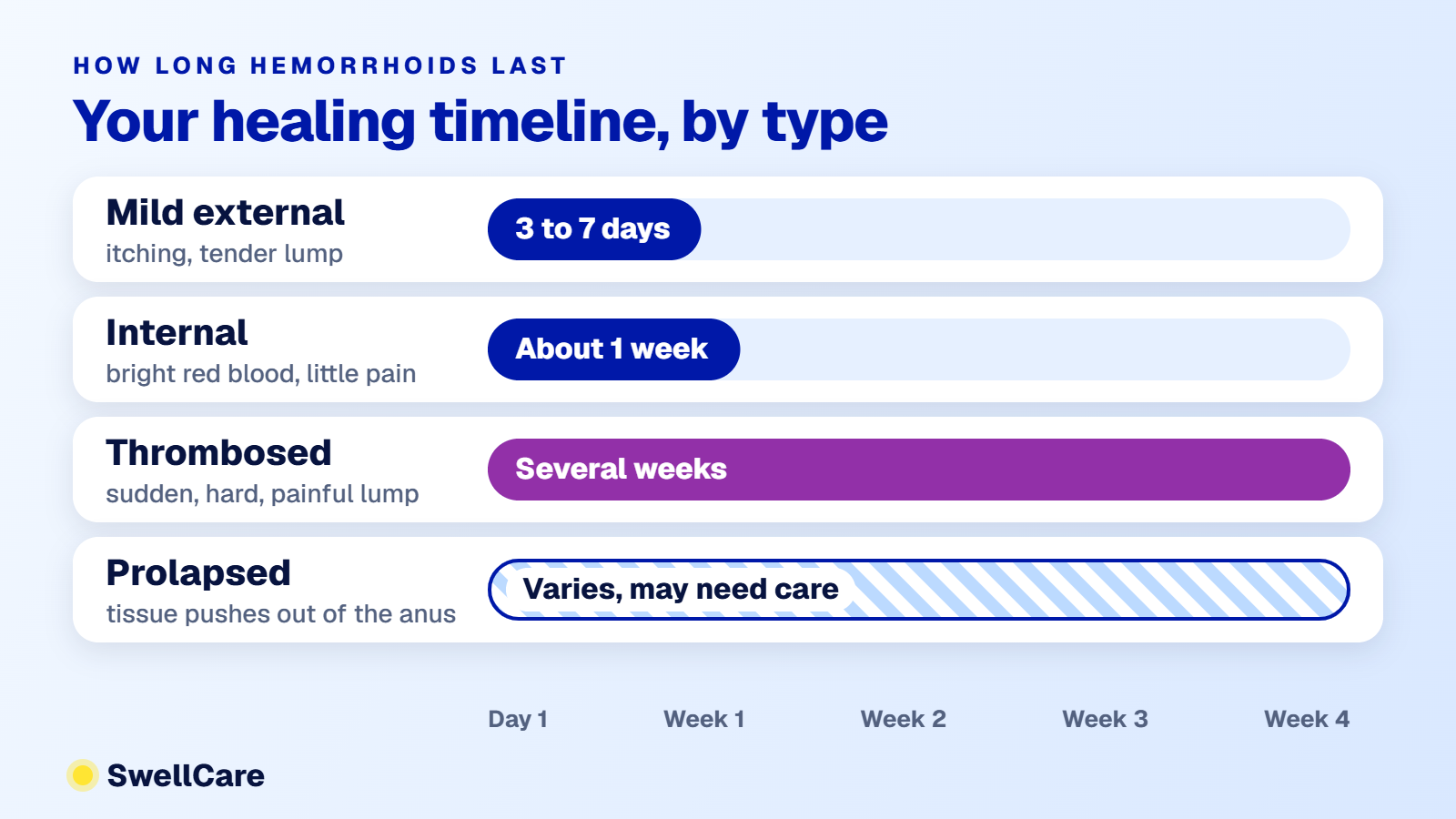
| Type | What it feels like | Typical timeline |
|---|---|---|
| Mild external hemorrhoids | Itching, a tender lump near the anal opening | A few days to a week |
| Internal hemorrhoids | Bright red blood after a bowel movement, often no pain | About a week with care |
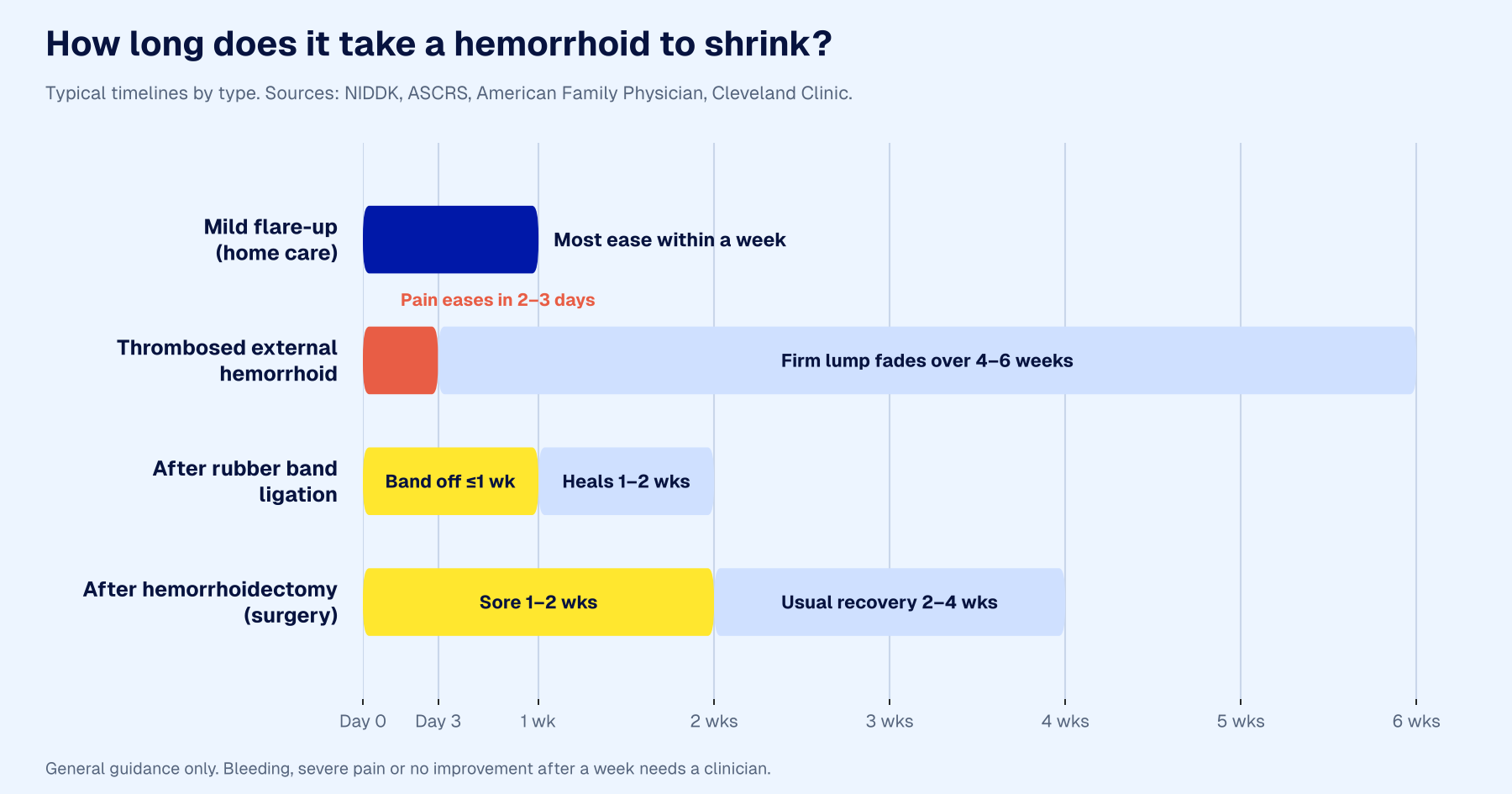
| Thrombosed hemorrhoid | A sudden, hard, painful lump from a clot | Hurts most in the first 48 hours; the clot fades over a few weeks |
| Prolapsed hemorrhoid | Tissue pushes out through the anus | Varies; large or stuck ones often need treatment |
A thrombosed hemorrhoid is the one that scares people, and the discomfort can be intense. It can look dark purple and hurt badly at first. Your body slowly reabsorbs the clot, though, and most of these ease within a few weeks.
Do external hemorrhoids go away on their own?
Often, yes. External hemorrhoids sit under the skin near the anus, so they hurt more but also respond fast to warmth and softer stool. Itching and discomfort usually fade as the healing starts.
Do internal hemorrhoids go away on their own?
Many do. Internal hemorrhoids sit inside the rectum, where there are few pain nerves, so the first sign is often blood on the toilet paper rather than pain. If one slips out (prolapse), it may slide back in by itself or with a gentle nudge.
Why some hemorrhoids stick around
Hemorrhoids that go away on their own usually had a clear trigger that stopped. The ones that linger usually didn’t. Pressure keeps feeding the swelling when you keep straining during bowel movements, sit on the toilet with your phone for 20 minutes, or live with constipation or diarrhea. Each push squeezes the veins in the lower rectum, and a swollen vein doesn’t get a break. A low-fiber diet, heavy lifting, pregnancy and age all push in the same direction. After 50, hemorrhoids are common enough that more than half of people have dealt with them.
Think of it like a sprained ankle you keep walking on. The tissue wants to heal. Daily habits decide whether it gets the chance.
What actually speeds up relief at home
Most home care works on one goal: soft stool, less pressure and calmer tissue. These steps are backed by Harvard Health, Mayo Clinic and Cleveland Clinic, and you can start all of them today.
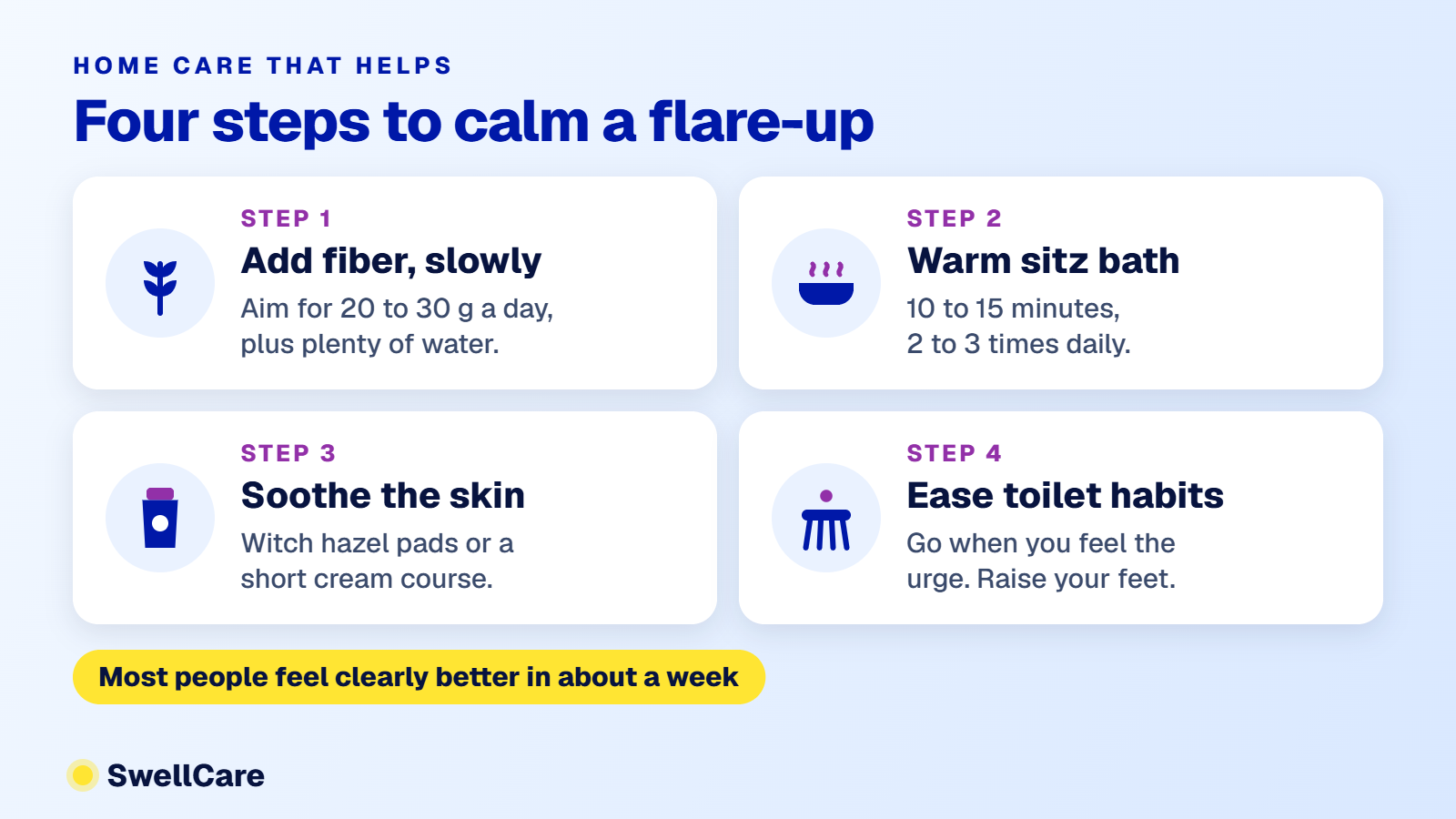
- Add fiber, slowly. Aim for roughly 20 to 30 grams a day from food, with a psyllium supplement if you need a boost. Go gradually so you don’t swap one discomfort for gas.
- Drink water. Soft stool needs fluid. Six to eight glasses a day is the usual guide.
- Take a warm sitz bath. Sit in a few inches of warm water for 10 to 15 minutes, two or three times a day. It calms the ache and relaxes the muscle around the anus.
- Use an over-the-counter cream or pad. Witch hazel pads, hydrocortisone or lidocaine can take the edge off. Hydrocortisone can thin the skin if you use it longer than a week.
- Don’t wait to go. Holding it in makes bowel movements harder and stool drier, which means more straining later. Resting your feet on a small step stool can make passing it easier.
- Clean gently. Dry toilet paper can scrub already inflamed skin, so use a damp cloth or fragrance-free wipe and pat dry.
Most people feel clearly better within about a week. That’s the benchmark to watch.
When hemorrhoids need a doctor
Here’s where to push back on a common habit: assuming every drop of blood is “just hemorrhoids.” Bright red blood after a bowel movement often is. But rectal bleeding can also come from anal fissures, inflammatory bowel disease, or colorectal cancer, and you can’t tell the difference by looking. Any blood you can’t explain deserves a clinician’s eyes at least once.
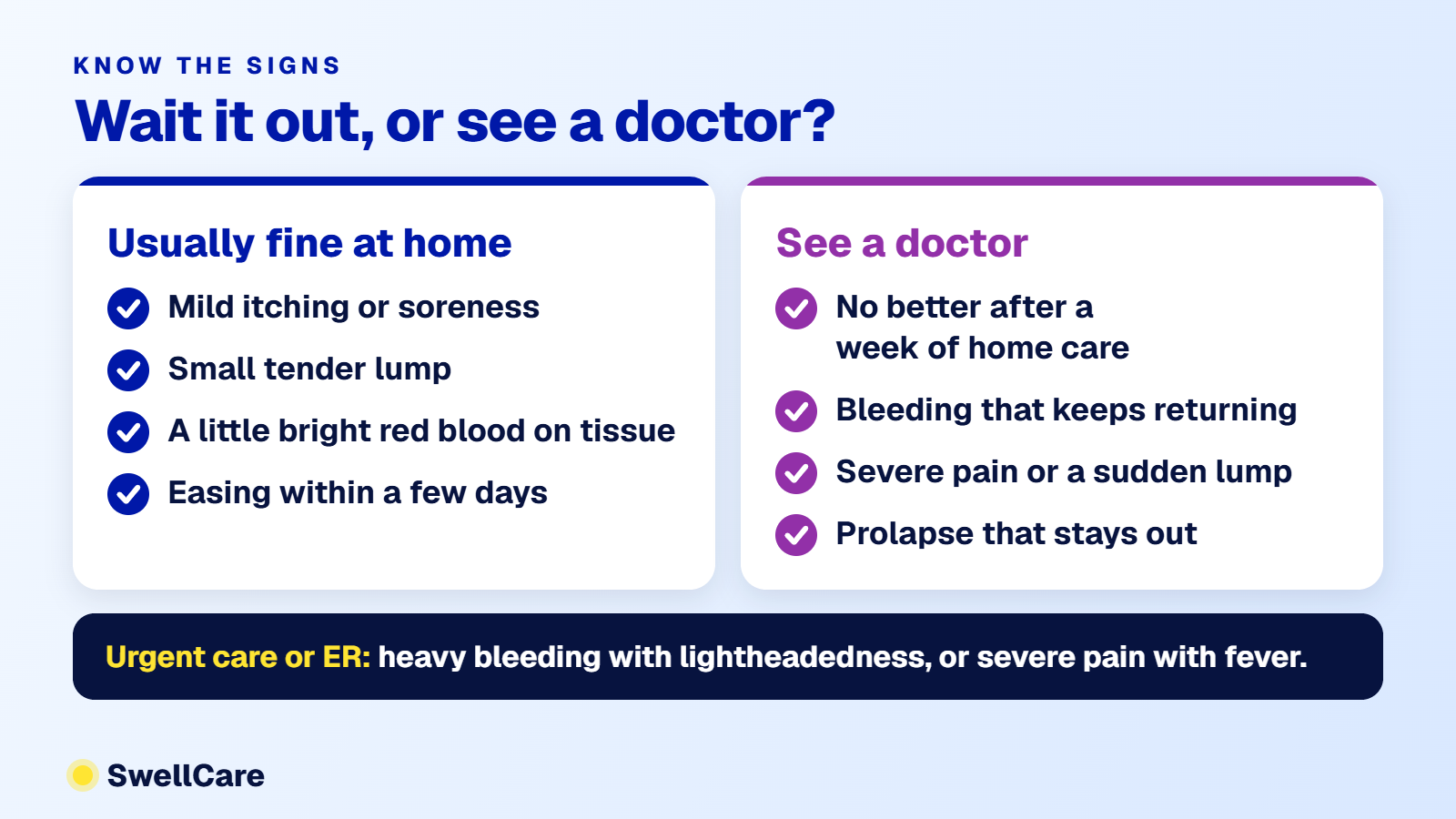
See a doctor if:
- Symptoms haven’t improved after a week of home care.
- You have heavy bleeding, bleeding that keeps coming back, or dark, tarry stool.
- The pain is severe, or a painful lump appears suddenly.
- A prolapsed hemorrhoid won’t go back in, or it turns dark and very painful.
- You have fever, chills, dizziness or unusual tiredness. Slow, ongoing blood loss can lead to anemia.
Go to urgent care or the ER for heavy bleeding with lightheadedness, or severe pain with fever. Those are complications, not “wait and see” problems, and complications of untreated bleeding like anemia can build quietly.
If you’d rather not sit in a waiting room, SwellCare clinicians can review your symptoms by chat or video, any time of day, and tell you whether home care is enough or you need an in-person exam. Start with SwellCare urgent care.
What treatment looks like if home care isn’t enough
For hemorrhoids that keep coming back, a specialist can offer treatment beyond home care. The right treatment depends on the type, and a short office procedure often does the job. For small internal hemorrhoids, a procedure such as rubber band ligation cuts off the blood supply so the hemorrhoid shrinks and falls away within about a week. Sclerotherapy injects a solution to shrink the tissue, and a painful clot in an external hemorrhoid can sometimes be drained in the office. Hemorrhoidectomy is saved for large or stubborn cases, and each treatment trades recovery time against how well it prevents a repeat.
Most people never need any of this treatment. But it helps to know there’s a way out if your hemorrhoids won’t quit.
Questions people ask about hemorrhoids going away
How long do hemorrhoids last?
Mild ones last a few days to a week with home care. A thrombosed hemorrhoid can take a few weeks to fade fully. If you’ve had no relief after a week, see a doctor.
Can hemorrhoids make you feel sick?
Hemorrhoids themselves shouldn’t cause nausea or fever. If you feel sick, run a fever, or have belly cramps along with rectal symptoms, something else may be going on, so get checked.
How do you push a hemorrhoid back in?
Wash your hands, lie down or kneel, and use a little lubricant or petroleum jelly with gentle, steady pressure. Don’t force it. If it won’t go in, hurts sharply or turns dark, call a clinician.
What over-the-counter creams help hemorrhoids?
Witch hazel pads, hydrocortisone cream and lidocaine ointment ease itching and soreness for a short time. Treat them as short-term relief, not a cure.
Do pregnancy hemorrhoids go away?
Often, yes. Many improve after delivery as pressure drops, and fiber, fluids and sitz baths help meanwhile. Tell your OB if you have bleeding or severe pain.
Trusted references
Public-health, research, and medical-society resources related to this guide.