You wake up with a pounding headache, a scratchy throat and legs that feel like wet cement. Flu or COVID-19?
Here’s the blunt answer. Flu vs COVID symptoms overlap so heavily that adults usually can’t tell the two apart by how they feel. A test settles it, and the timing of that test matters more than most people realize. This guide shows you which symptoms lean toward the flu virus and which toward the COVID-19 virus. It covers how fast they start and who should worry, then walks through what to do in the first 48 hours.
Flu vs COVID symptoms side by side
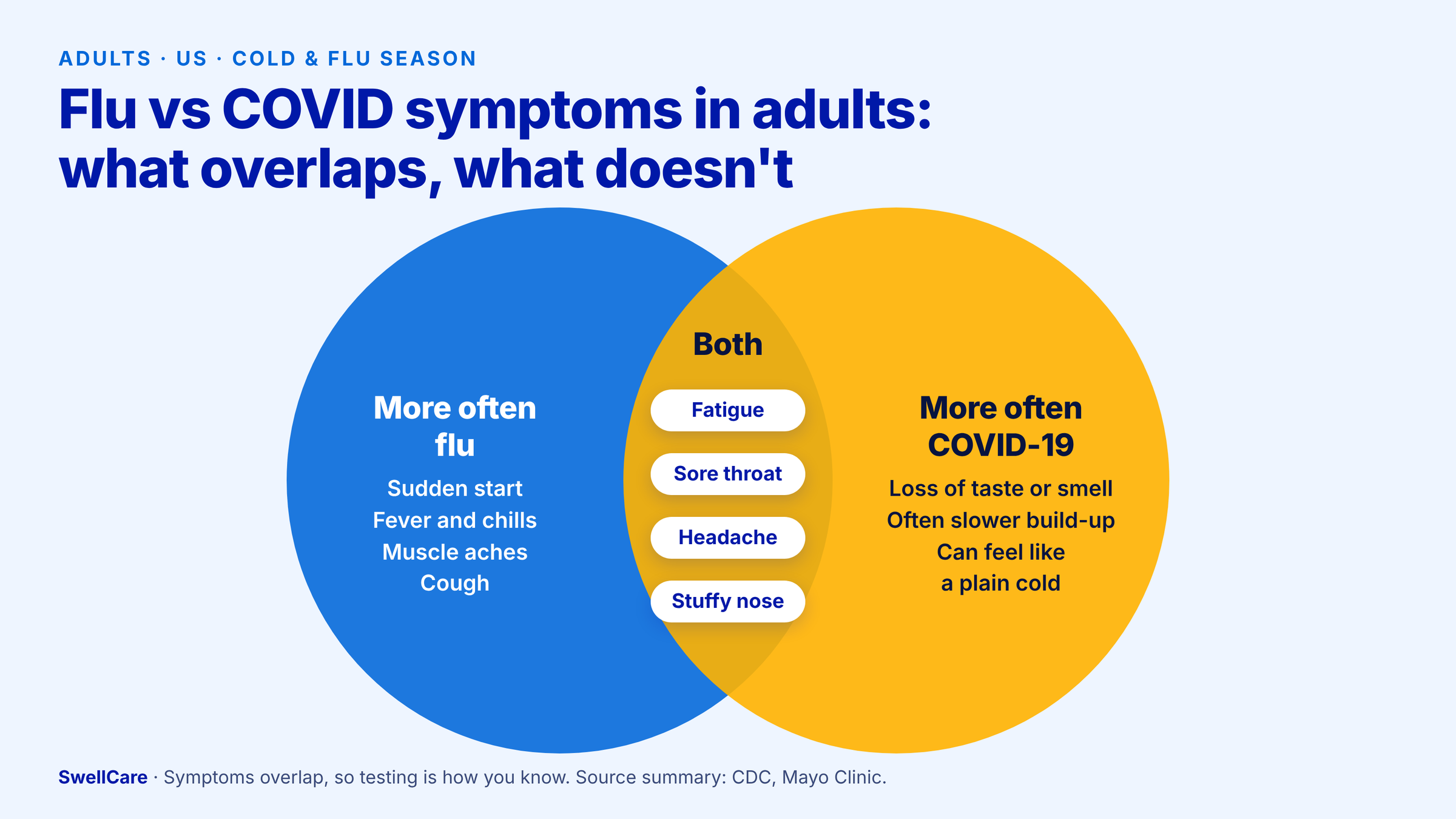
Think of the chart below as a lean, not a verdict. A symptom that shows up more often in one illness can still show up in the other. Clinicians sort influenza from COVID-19 the same way, because both are respiratory viruses that crowd the same symptom list.
| Symptom | Flu | COVID-19 |
|---|---|---|
| Fever or chills | Common, though not everyone gets a fever | Can occur, but less reliably |
| Cough | Usually present | Sometimes present |
| Muscle or body aches | Usually present | Sometimes present |
| Headache | Common | Common, and can be the first sign you notice |
| Fatigue | Common | Common |
| Sore throat | Common, often alongside a cough | Common |
| Runny or stuffy nose | Common | Common |
| Loss of taste or smell | Rare | More frequent |
| Shortness of breath | Can occur in more severe cases | Can occur in either illness |
| Vomiting or diarrhea | Sometimes | Sometimes |
Symptoms the two share
Both can run from no symptoms at all to severe disease. The CDC’s comparison lists the shared ones: fever or chills, cough, shortness of breath, fatigue, sore throat, a runny or stuffy nose, body aches, headache, vomiting and diarrhea.
That’s nearly the whole menu. If you’re sitting there with a headache and a cough, you’ve matched both. Fatigue and a sore throat sit in both columns too, and so does shortness of breath, which deserves attention in either case.
What points more toward the flu
Mayo Clinic notes that cough, muscle aches and fever are usually present with the flu, but only sometimes with COVID-19. When the aches hit hard and you also have chills, think influenza first.
One caution. Not everyone with the flu runs a fever, so a normal thermometer reading doesn’t rule it out.
What points more toward COVID-19
Loss of taste or smell is the standout. The CDC says a change in or loss of taste or smell is more frequent with COVID-19, and Mayo Clinic adds that it often appears early, sometimes without a stuffy nose. The flu rarely causes it.
COVID-19 can also feel like a common cold. Some adults get a sore throat, a stuffy nose and a headache, and little else. That’s why a cold-like illness during respiratory virus season is worth testing instead of dismissing.
How fast symptoms start and how long they last
Onset: sudden or gradual?
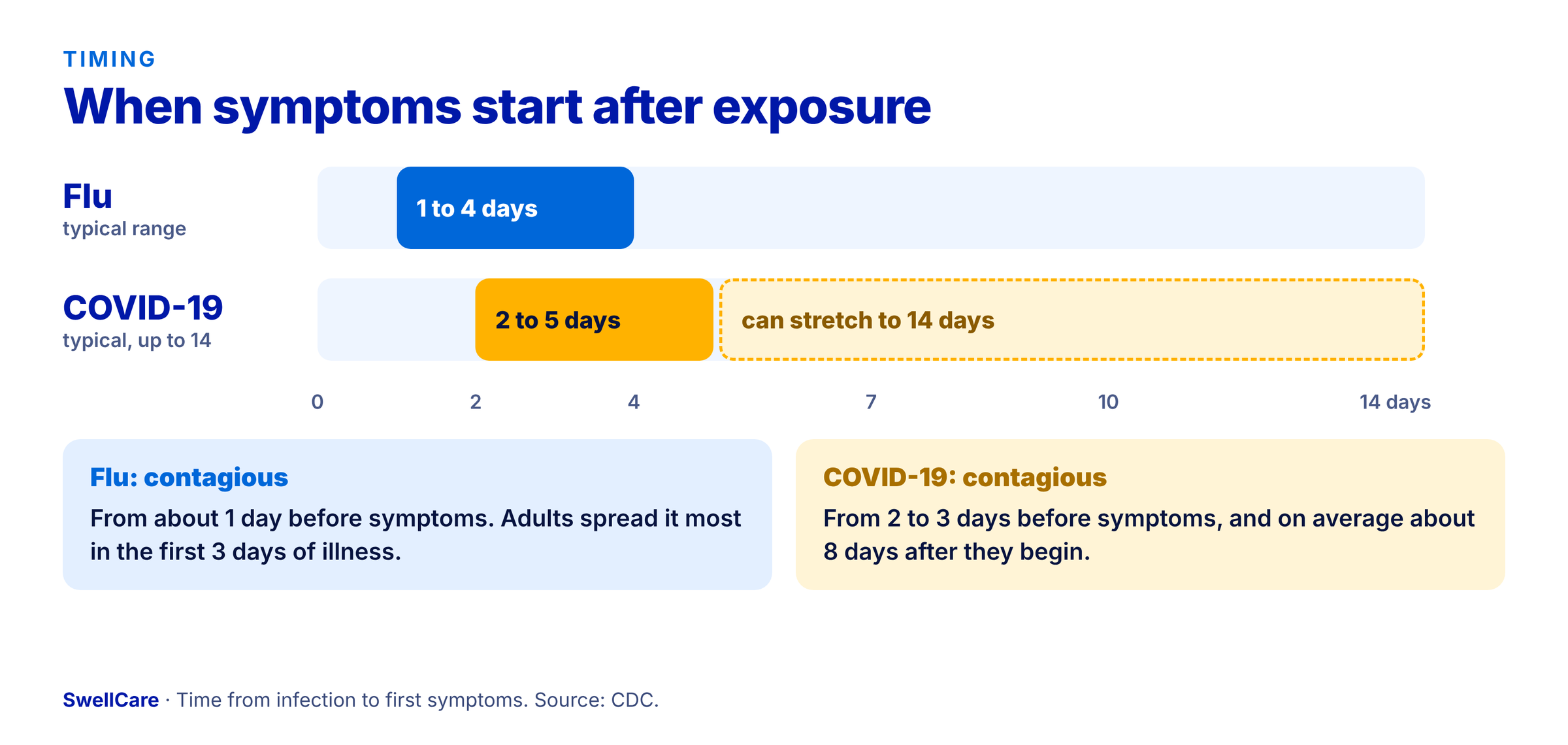
Flu symptoms typically appear 1 to 4 days after exposure. For COVID-19 the usual window is 2 to 5 days, and it can stretch to 14 days.
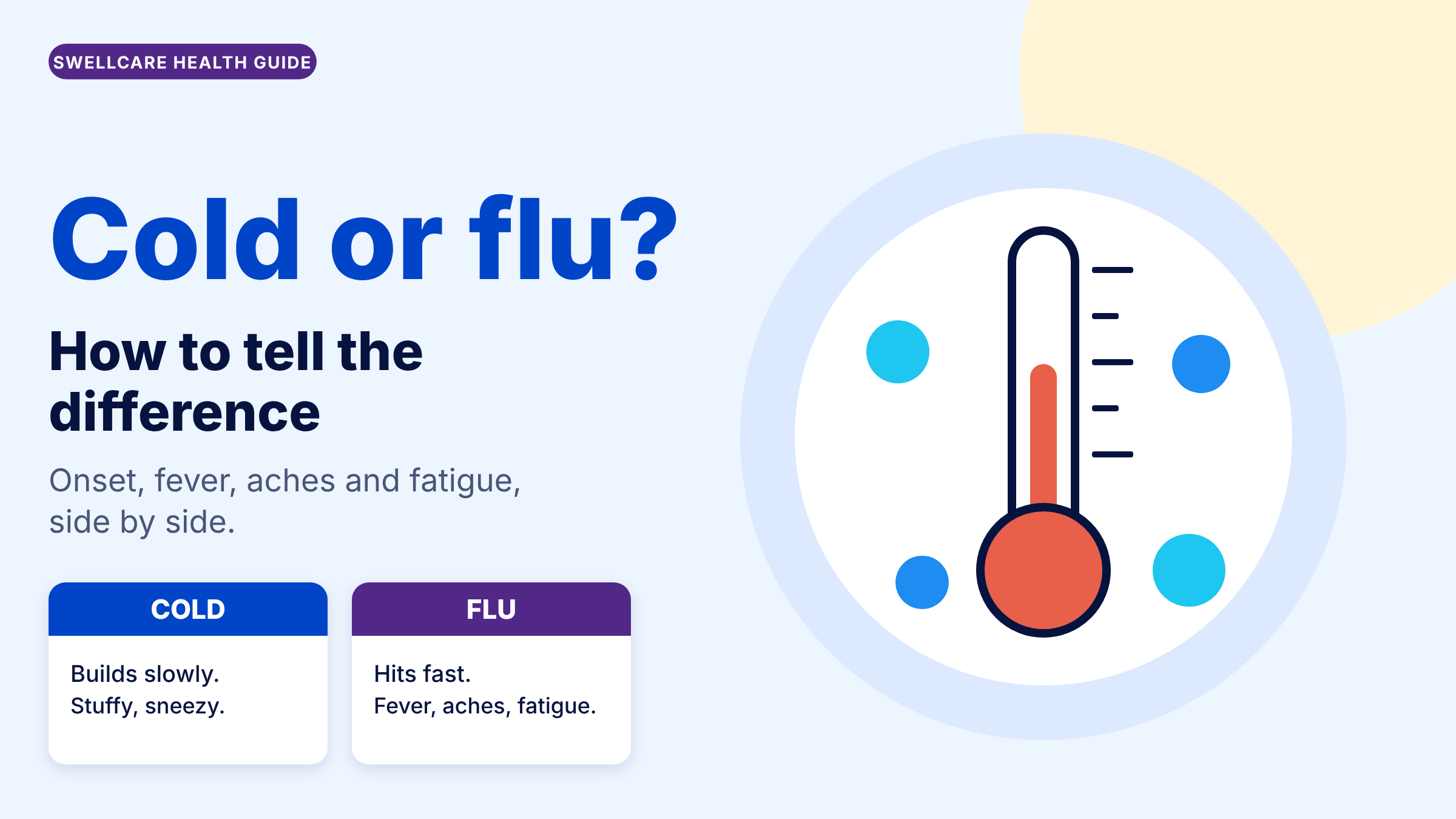
Many clinical charts describe the flu as hitting fast and COVID-19 as building more gradually, as in this HealthPartners symptom guide. Treat that as a tendency. Plenty of people with COVID-19 get knocked flat in a few hours, too. Either way, the first day or two is the best time to act, because both viruses respond best to early care.
How long you can spread it
This is where the two differ in a way that affects your coworkers. With the flu you may be contagious about a day before symptoms start, and adults are most contagious during the first three days of illness.
COVID-19 spreads earlier and longer. People can pass it on two to three days before symptoms, and on average they stay contagious for about eight days after symptoms begin. You can also spread it with no symptoms at all. Because the COVID-19 virus can travel before you feel sick, staying home at the first symptom protects people you haven’t even thought about.
Why symptoms alone can’t settle it
Influenza and COVID-19 are caused by different viruses, yet they produce the same cluster of complaints. Even clinicians can’t sort these two reliably from a symptom list. The CDC says symptoms alone can’t distinguish flu from COVID-19, and Mayo Clinic says the same: the only way to know is testing.
Can you have flu and COVID-19 at the same time?
Yes. It’s uncommon, but it happens, and the combination can cause more severe illness. That’s one reason a test that detects both virus types is useful: it lets your clinician aim treatment at what you actually have.
When to test
Test as soon as symptoms start. A home antigen test is the fastest first step, and combination tests exist that check for flu and COVID-19 at once. Mayo Clinic suggests testing when you have symptoms, or five days after contact with someone who has the virus.
A negative antigen test early in an illness isn’t always the last word. If you feel worse tomorrow, test again or ask a clinician about other testing options. Quick testing also opens the door to treatment, which has a clock on it.
Who gets seriously sick (and why it matters)
The symptom list tells you little about who will end up in the hospital. Risk depends on the person, and complications, including long COVID, are the reason doctors care so much about early treatment of both infections.
Higher-risk adults
Both flu and COVID-19 hit some adults harder. Older adults, especially those 65 and older, are at higher risk of severe illness and complications. So are pregnant women and people with certain underlying conditions, including a weakened immune system. If you live with or care for older adults, your own symptoms matter more than you’d think, since you can pass the virus to them before you feel sick.
If you’re in one of those groups, don’t wait to see how it goes. Call a clinician on day one.
Complications to know
Both viruses can lead to pneumonia, respiratory failure, sepsis, heart inflammation, and a flare-up of chronic conditions like asthma or diabetes. Secondary bacterial infections are more common after the flu, per the CDC. COVID-19 adds blood clots and, rarely in adults, a multisystem inflammatory syndrome. These complications are the exception, but they’re the reason treatment timing matters.
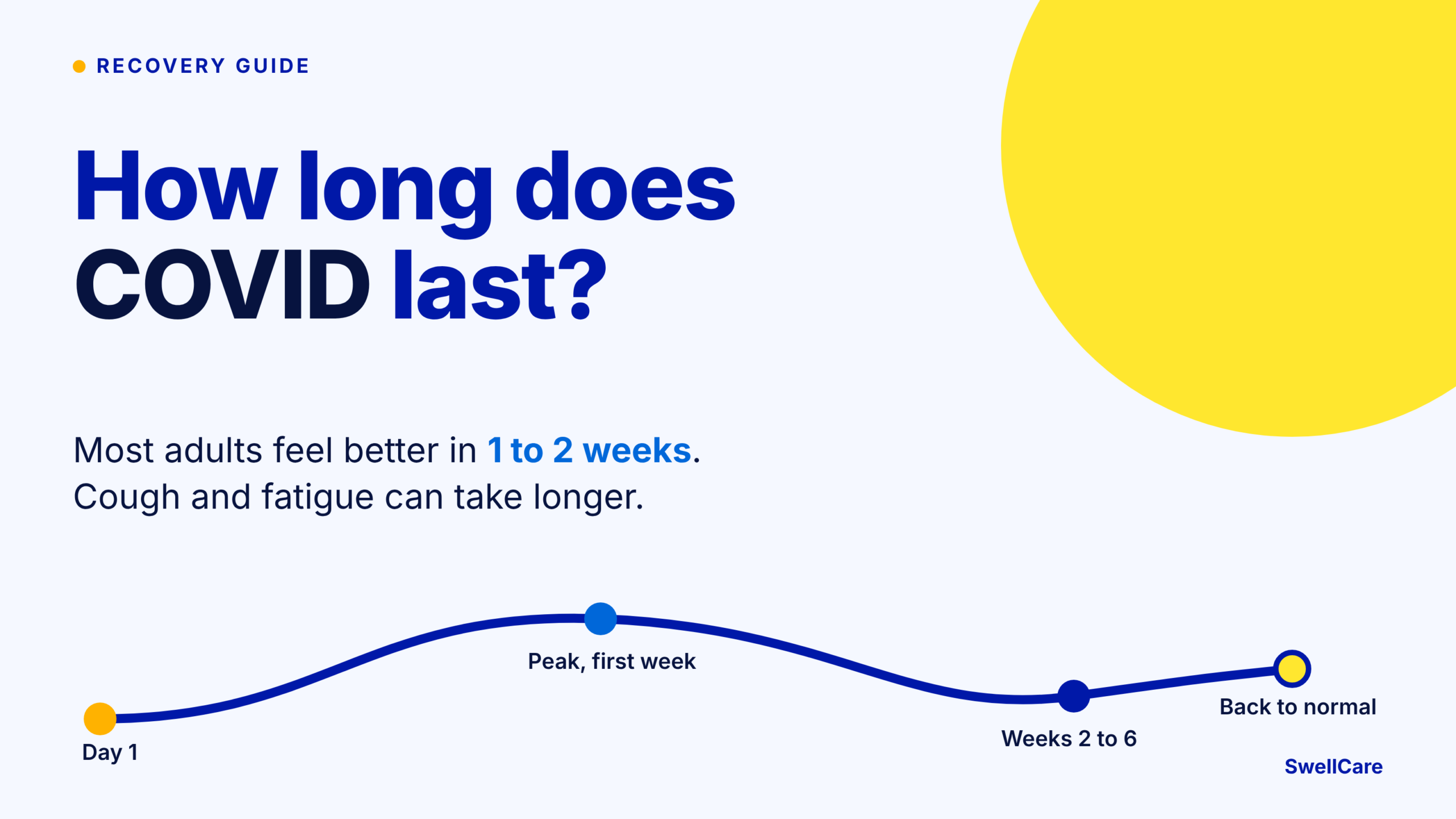
Then there’s long COVID, one of the longer-term complications of COVID-19. It can follow even a mild or symptom-free infection and may last weeks, months or longer. The flu has no equivalent label. Most people recover from influenza within a few days to two weeks.
What to do the day you feel sick
Start with three moves: stay home, test, and make a call if you’re high risk, which includes older adults. Each one gets easier when you do it early. Treatment works best when it starts early, and the first step is to keep your distance from others while you wait for results.
Antiviral timing
Prescription antiviral drugs are the main medical treatment for both illnesses, and each has a window. Antiviral medicine isn’t a cure-all, but it can shorten the illness and may prevent complications. For the flu, benefit is greatest when treatment starts within two days (48 hours) of the first symptom, according to the CDC’s flu care guidance. For COVID-19, the CDC says antiviral treatment has to begin within 5 to 7 days of symptom onset, and it’s meant for people more likely to get very sick.
Notice how that window collides with the question you started with. If you spend three days guessing at symptoms, you may miss the flu antiviral window entirely.
Home care and when you’re safe around others
Rest, fluids and over-the-counter fever relievers are the usual treatment for mild cases of flu or COVID-19. Wash your hands, clean high-touch surfaces and cover coughs so the virus doesn’t travel.
When can you go back? The CDC’s respiratory virus guidance says stay home until your symptoms are clearly improving and you’ve been fever-free for at least 24 hours without fever-reducing medicine. Then take extra precautions for five more days.
Prevention matters too. A yearly flu shot and an up-to-date COVID-19 vaccine lower your odds of serious illness, and your clinician can tell you which vaccine recommendations fit your age and health. Neither vaccine guarantees you won’t get sick. They make severe disease and flu complications less likely. If you skipped your flu shot this season, ask whether it still makes sense.
Warning signs that mean get care now
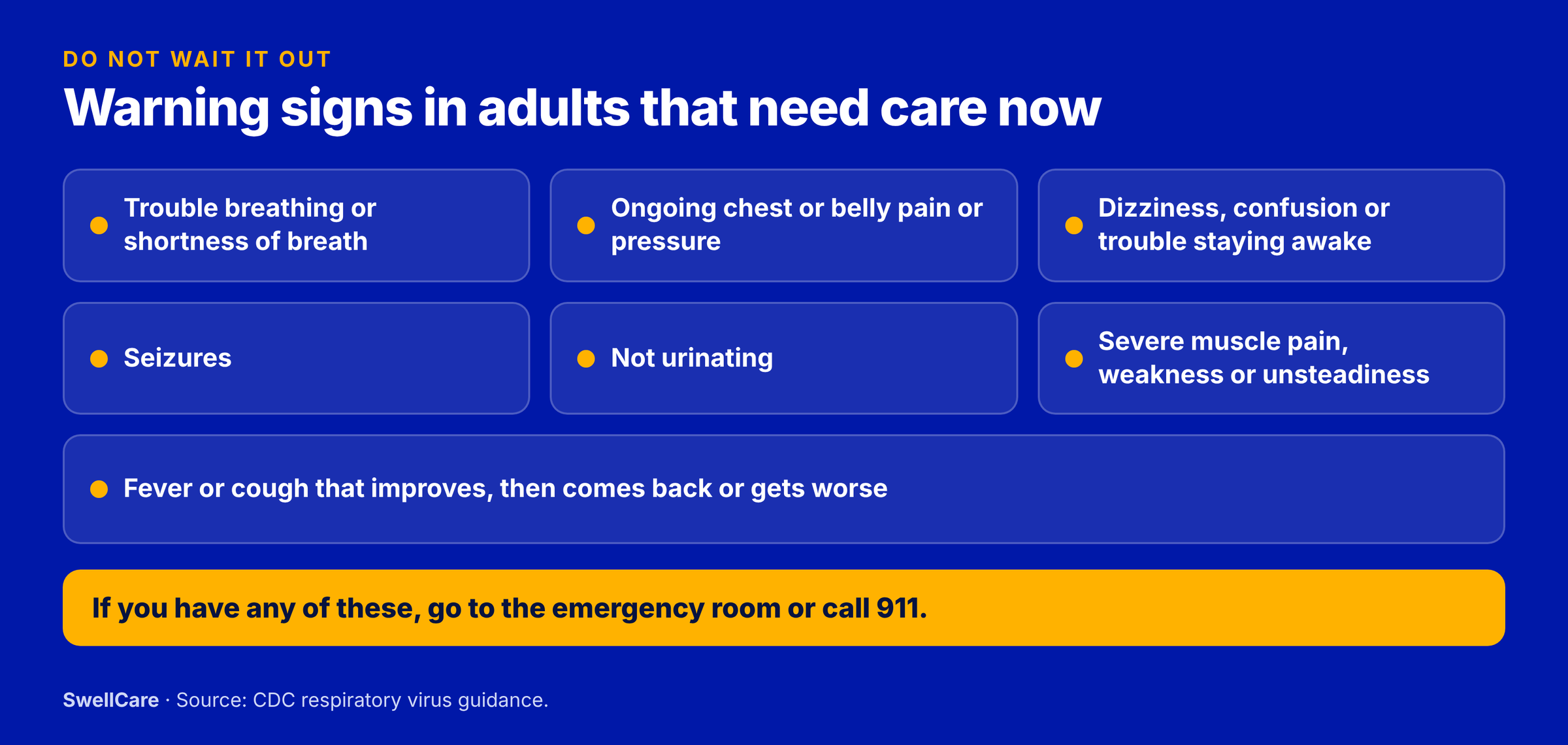
Most adults with flu or COVID-19 recover at home. Some don’t, and the line can move fast. The CDC lists these adult emergency warning signs: trouble breathing, ongoing chest pain or pressure, lasting dizziness or confusion, seizures, not urinating, severe muscle pain or weakness, and a fever or cough that gets better and then returns or worsens.
Any one of these means the emergency room, not a wait-and-see night. Call 911 if you’re alone or can’t get there safely.
Get checked from home with Swell
Sick days stack up fast: a day of guessing, a day of calling around, and the antiviral window is closing. Swell offers online urgent care with real clinicians, so you can describe what you feel, talk through whether it sounds like flu or COVID-19, and get clear next steps without sitting in a waiting room.
If your symptoms started in the last two days, don’t wait for them to sort themselves out. Book a visit today.
Questions people ask about flu vs COVID symptoms
Which comes on faster, COVID-19 or the flu?
Flu symptoms typically start 1 to 4 days after exposure, and COVID-19 symptoms usually start 2 to 5 days after, sometimes up to 14. The flu often feels abrupt, while COVID-19 may build more slowly. Speed alone can’t identify either illness, so test instead of guessing.
Is the flu or COVID-19 worse?
It depends on you. Both range from no symptoms to severe illness. COVID-19 adds risks such as blood clots and long COVID, while secondary bacterial infections are more common after the flu. Age, health conditions and vaccine status shape how sick you get more than the virus name does.
Can the flu turn into COVID-19?
No. They’re two different viruses, and one can’t change into the other. You can catch both close together or at the same time, though that’s uncommon. If you feel worse after a few days of improvement, get checked.
What are the stages of the flu?
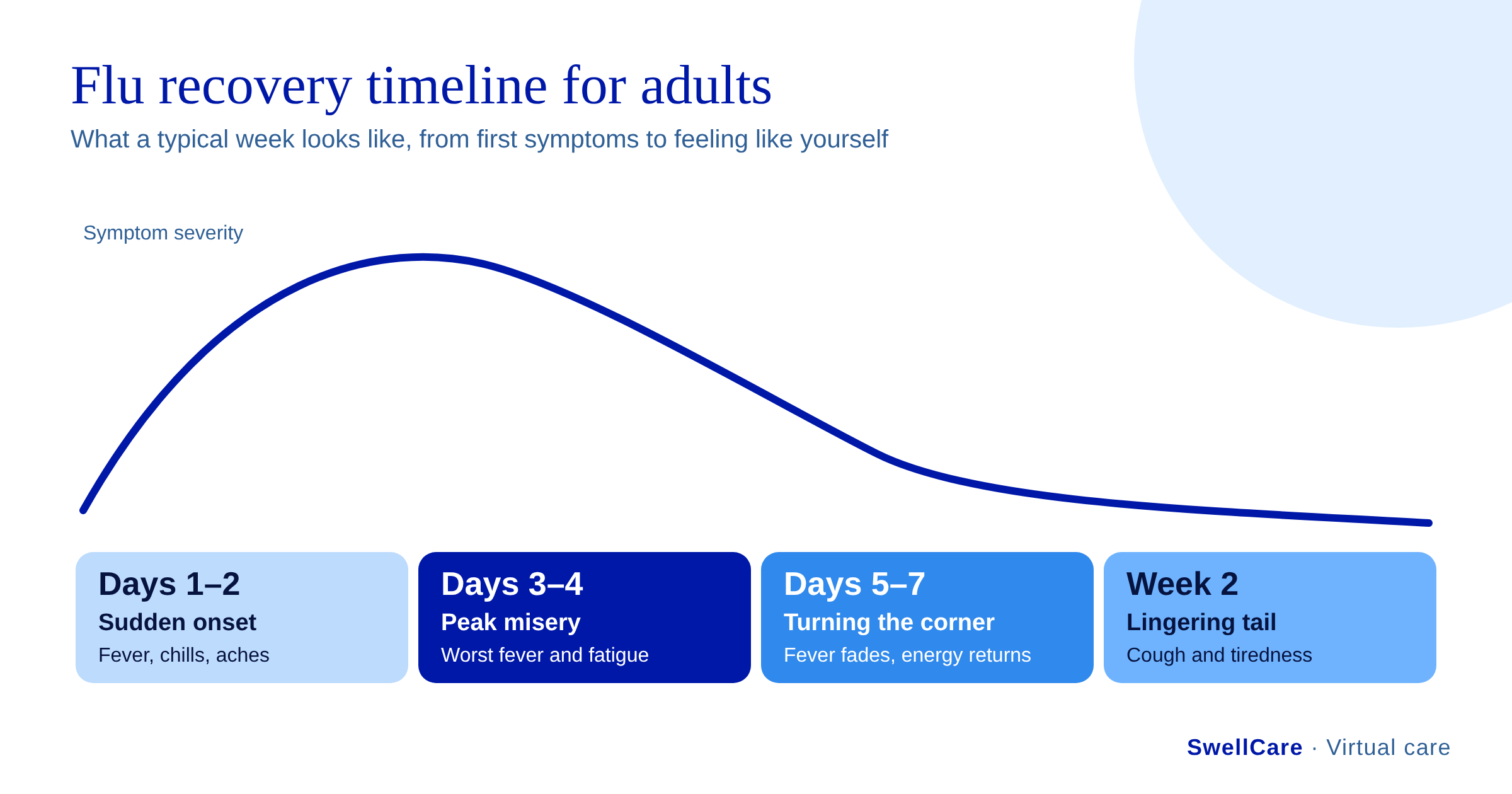
Doctors don’t use official stages, but the course is predictable. You’re exposed, symptoms begin 1 to 4 days later, they peak over the first few days, then ease. Most people recover within a few days to two weeks, though fatigue can hang on.
Do flu and COVID-19 symptoms differ in adults and children?
Mostly the same list applies, with a few shifts. The CDC says diarrhea is more frequent in children with flu, and the flu appears to cause more severe illness in young children than COVID-19 does. In adults, age matters most: older adults and people with a weakened immune system face the greatest risk from both viruses.
Trusted references
Public-health, research, and medical-society resources related to this guide.