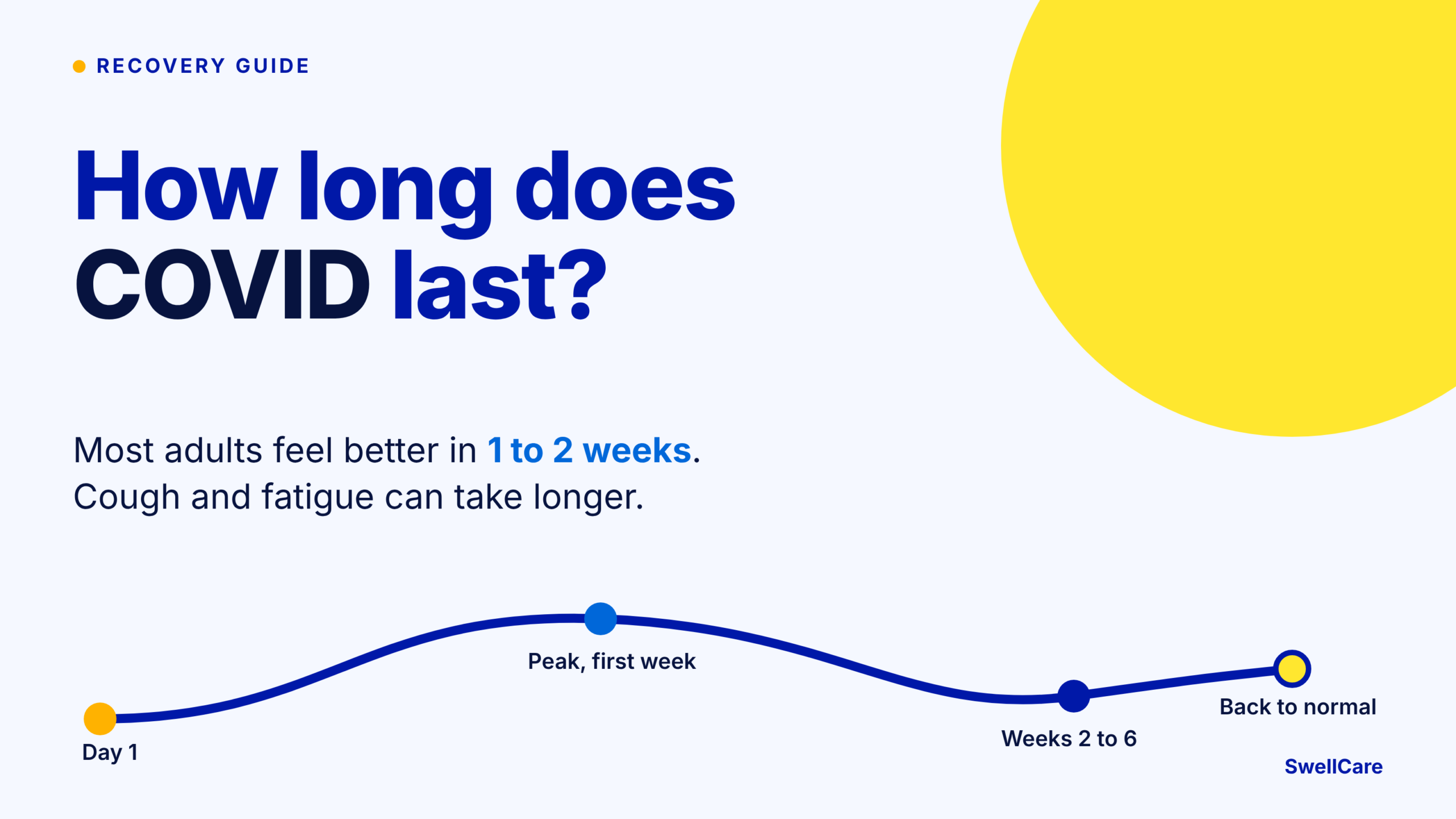
Most healthy adults feel clearly better within one to two weeks. That’s the blunt answer to how long does COVID last, and it holds for a typical mild or moderate case of COVID-19. In one outpatient study from the Omicron period, symptoms took a median of 9 days to clear.
But “better” and “back to normal” aren’t the same finish line. A cough can hang on for weeks. Fatigue can too. And for a smaller group, COVID symptoms stretch past three months and earn a different name: long COVID.
So you’re really tracking three clocks. How long you feel sick. How long you can pass the virus on. How long the COVID leftovers stick around. This guide takes each one in turn, then tells you what to do today if COVID has you flat on the couch right now.
The short answer: how long does COVID last?
For most adults, active COVID-19 runs about one to two weeks. Johns Hopkins Medicine puts mild and moderate COVID in that same window, while severe cases can last months.
Your first COVID symptoms usually appear 2 to 14 days after you’re exposed to the virus, according to the CDC. Early in the infection, some people feel a scratchy throat on day one and a full-blown flu-like crash by day three. Others never get much beyond a stuffy nose.
That range covers the respiratory symptoms people picture first, like a sore throat, nasal congestion and a dry tickle, plus the body-wide ones: aches, chills and exhaustion. COVID-19 doesn’t read the script the same way twice. Other respiratory viruses, flu included, can look identical, which is why a test matters.
The honest range, then, looks like this. A few days of mild COVID for some. Two weeks of misery for many. A slow tail of tiredness for the rest.
A day-by-day COVID recovery timeline for adults
Every COVID-19 infection runs its own course, so read this as a typical pattern, not a promise. Here’s how the weeks tend to unfold for an adult with a mild or moderate case.
| Stage | Typical timing | What you may feel |
|---|---|---|
| Early COVID symptoms | Days 1 to 3 | Sore throat, congestion, headache, tiredness, a low temperature |
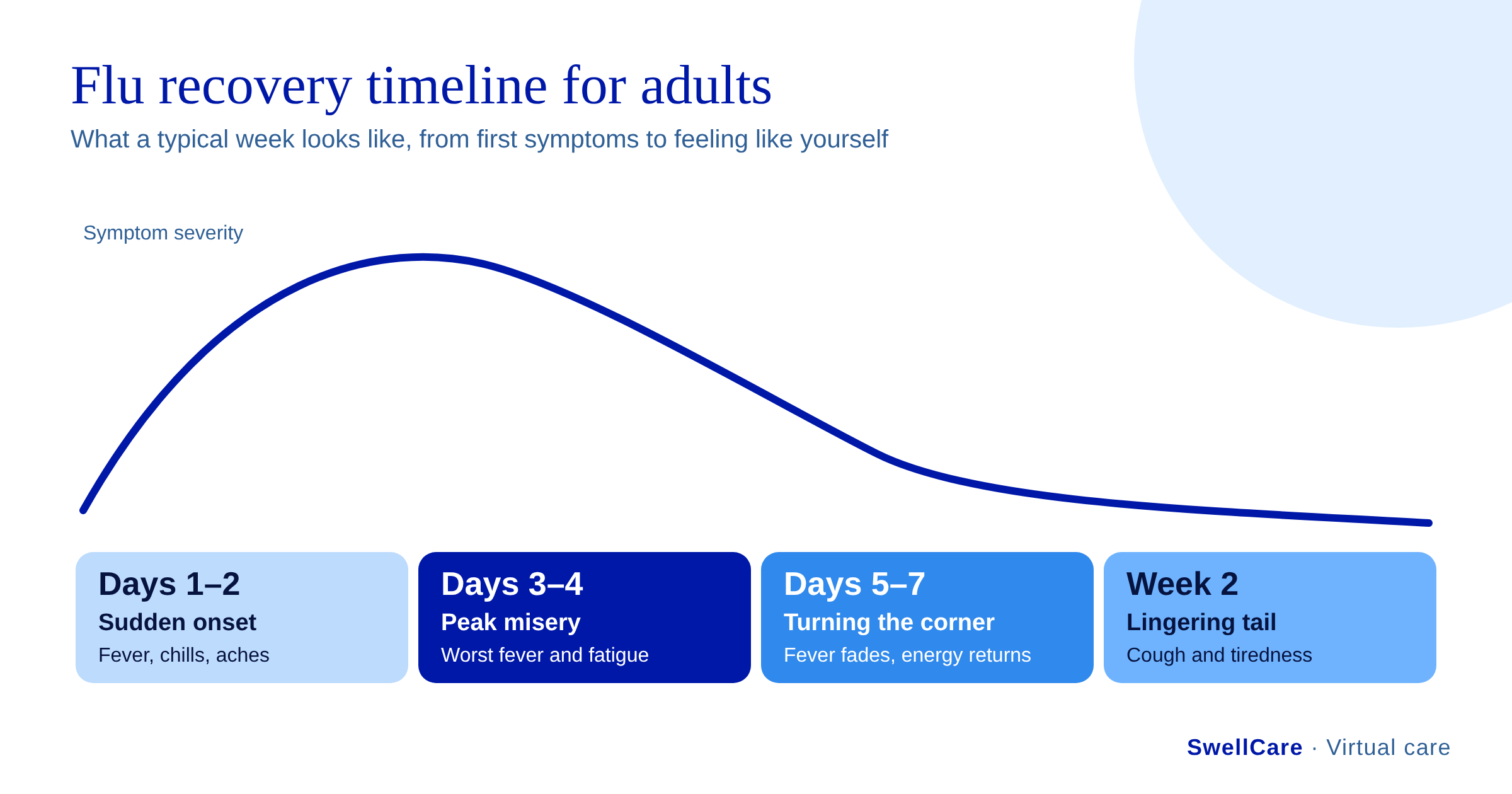
| Peak illness | Days 3 to 7 | High temperature, body aches, a dry tickle, heavy fatigue. Often the roughest stretch |
| Turning point | Days 7 to 14 | Fever fades first. Congestion and energy improve more slowly |
| Lingering symptoms | Weeks 2 to 6 | A nagging cough, low stamina, changes in taste or smell |
| Long COVID | 3 months or more | COVID-19 symptoms that persist or return after the acute illness |
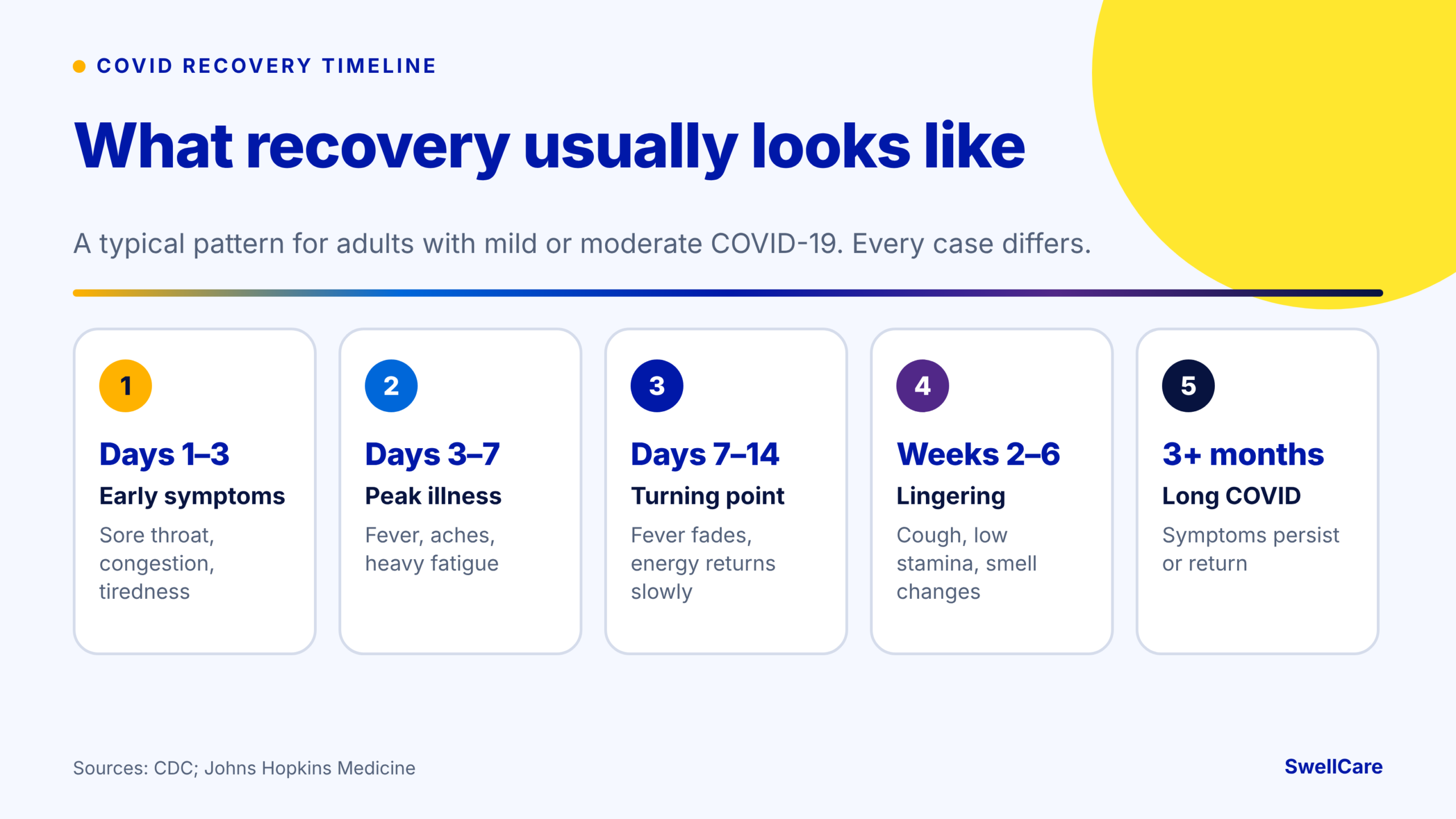
The temperature usually settles first. Coughing and fatigue are the stragglers. If you’re on day 10 and still wiped out, that’s common, and it doesn’t mean you’re doing COVID recovery wrong.
Why your COVID recovery may run longer than a friend’s
Two people can catch the same COVID infection and have wildly different weeks. Several things shift the clock.
How sick you get. Mild COVID-19 resolves fastest. Anyone who needs hospital care, oxygen or intensive care should expect a slower road back, sometimes months.
Your health going in. Older age, chronic lung disease, heart disease and a weakened immune system all raise the odds of a rougher, longer illness. The CDC also lists being unvaccinated, or not up to date on the COVID vaccine, as a risk factor for severe disease. A COVID vaccine lowers your odds of severe disease, though it doesn’t guarantee a short one. Staying current on your COVID vaccine is one of the few things you can do ahead of time.
Rest, or the lack of it. Pushing through day four with a full workload is a reliable way to extend day fourteen.
Reinfection. You can catch COVID-19 again, and a second infection with the virus restarts the clock.
How long are you contagious with COVID?
With COVID, being contagious and being sick are different clocks. Think of it as an infection with a quiet start and a quiet finish. You can spread SARS-CoV-2 before you feel anything and after you start to feel better.
The CDC’s current respiratory virus guidance is simple. Stay home until, for at least 24 hours, your symptoms are improving overall and you’ve had no fever without fever-reducing medicine. Then, for the next five days, add precautions around other people: a well-fitted mask, better airflow, good hygiene, and testing if you’re visiting someone vulnerable. Wearing a mask in shared spaces is the easiest of those steps. The CDC’s precautions page also notes you can still spread COVID after you feel better, and people with weakened immune systems may shed the virus for longer.
If the fever comes roaring back, the clock resets. Stay home again.
What lingers after COVID’s fever is gone
This is the part nobody warns you about. The symptoms that remain are rarely dramatic. The temperature drops, you feel human for a day, and then the leftovers show up.
- Coughing. A dry, tickly cough can last several weeks as your respiratory tract settles.
- Fatigue. Stairs feel steeper. A short walk wipes you out.
- Loss of smell and taste changes. These often fade within weeks, though a few people take longer.
- Brain fog. Trouble concentrating is common after a hard COVID-19 infection.
Go gently. Short walks beat bed rest and gym sessions alike. Add activity in small steps, and back off if you feel worse the next day. Ongoing shortness of breath deserves a call to a clinician, not a wait-and-see week.
When does COVID become long COVID?
The CDC describes long COVID as a chronic condition that begins after infection and lasts at least three months. Symptoms can come and go, and may last months to years. Fatigue, brain fog and a crash after exertion are among the most commonly reported.
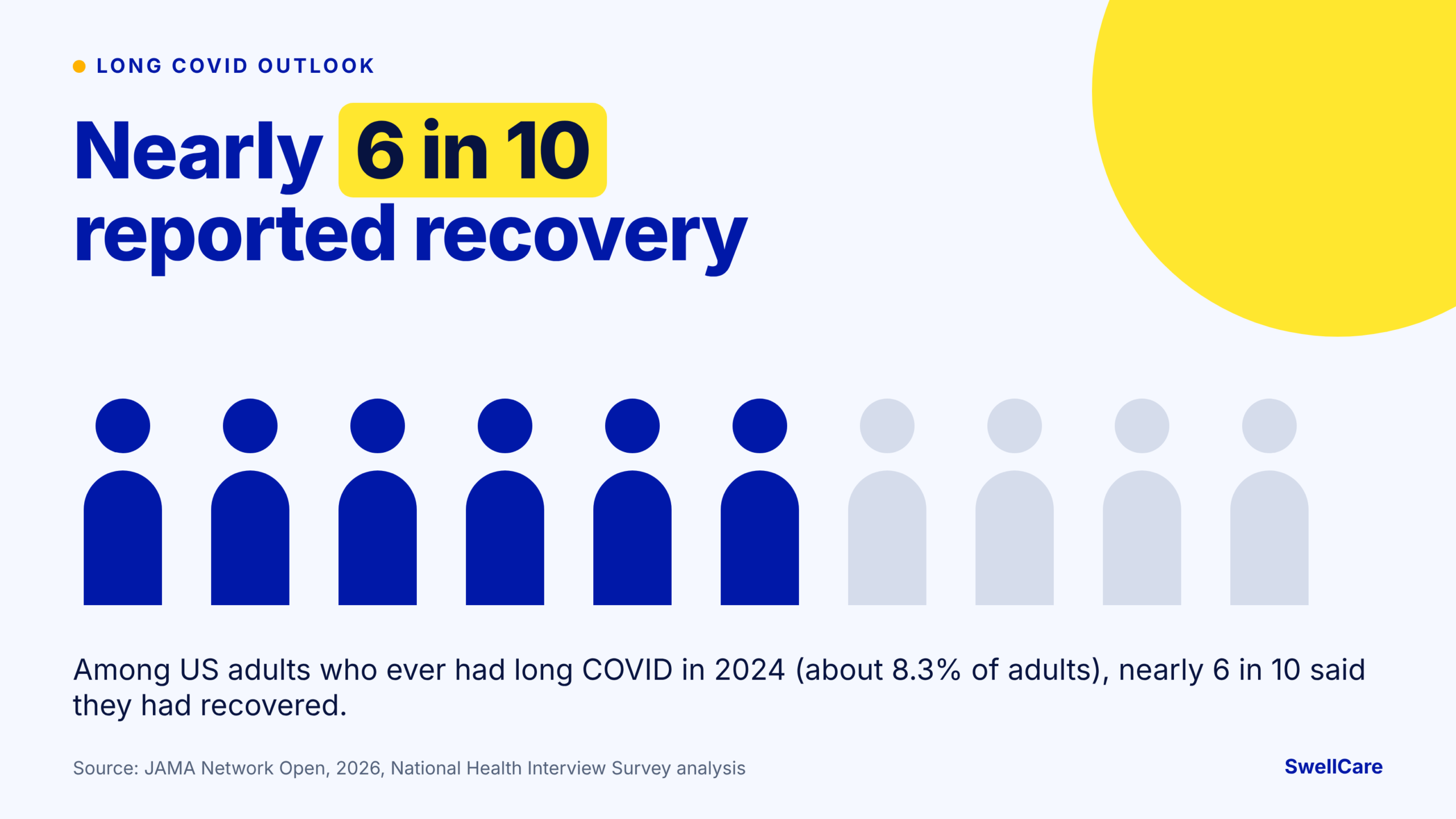
Here’s the reassuring part. A 2026 analysis of US adults in JAMA Network Open found that about 8.3% reported ever having long COVID in 2024, and nearly 6 in 10 of those people reported recovery. It’s real and disruptive, but it isn’t a life sentence for most.
Still sick at the three-month mark? Book time with a clinician. There’s no single test for it, so care focuses on managing symptoms and protecting your energy.
How to feel better faster
You can’t skip a COVID infection, but you can make the week easier.
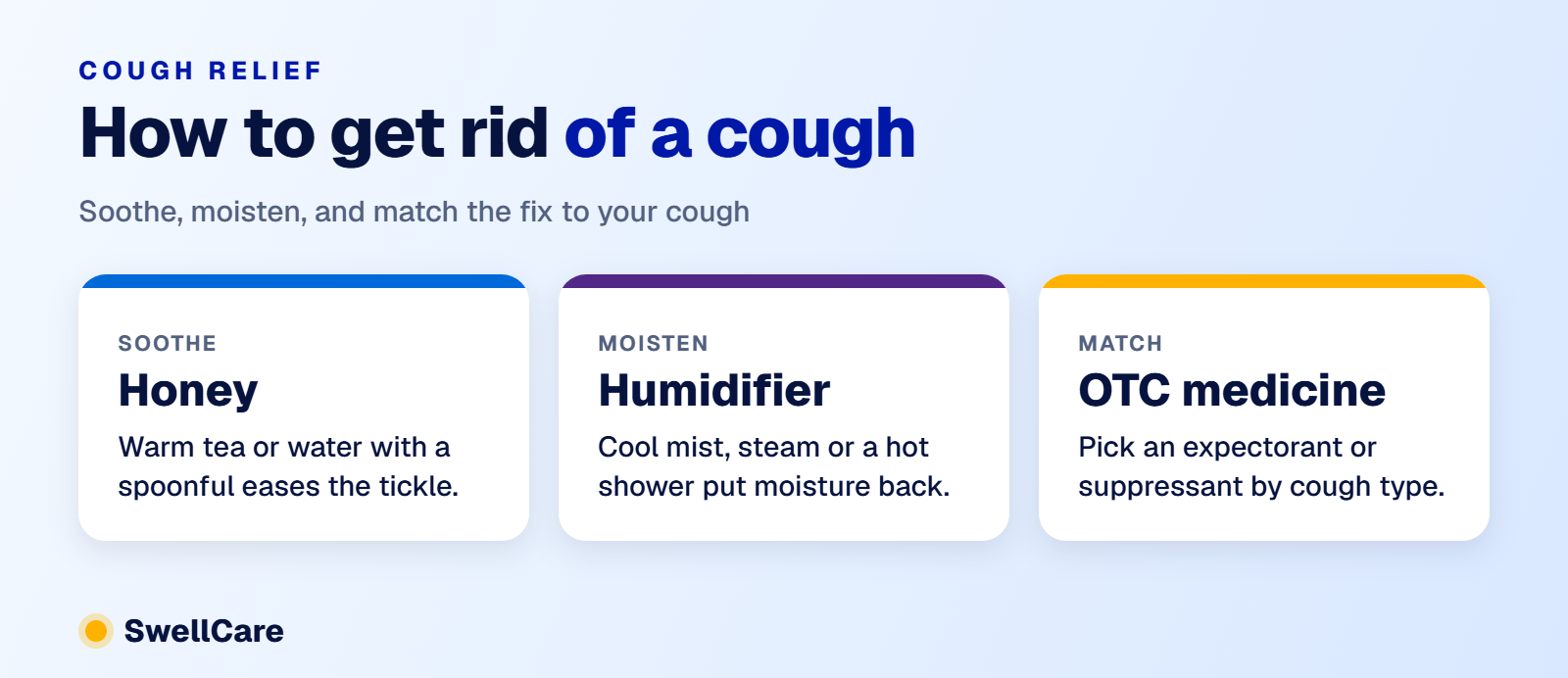
Rest more than feels necessary while COVID runs its course, because your body is doing real work even when you’re lying still. Keep fluids coming, especially with a high temperature. Any fluids work: water, broth, tea. Acetaminophen can ease aches. A humidifier or warm shower can loosen congestion and help your breathing at night. Good home treatment for COVID is mostly boring, and it works.
The biggest lever is timing. For adults at higher risk of severe illness, the CDC says antiviral treatment must start within 5 to 7 days of symptom onset, and Paxlovid (nirmatrelvir with ritonavir) should begin within 5 days. CDC treatment guidance names older age, weak immunity and certain medical conditions as reasons to act fast. Paxlovid can interact with other medicines, so a clinician has to review your list first. And a positive test isn’t required to start.
Waiting to see if it gets worse is the most common way people miss that window for treatment. If you must be around others, mask up.
Signs you should not wait it out
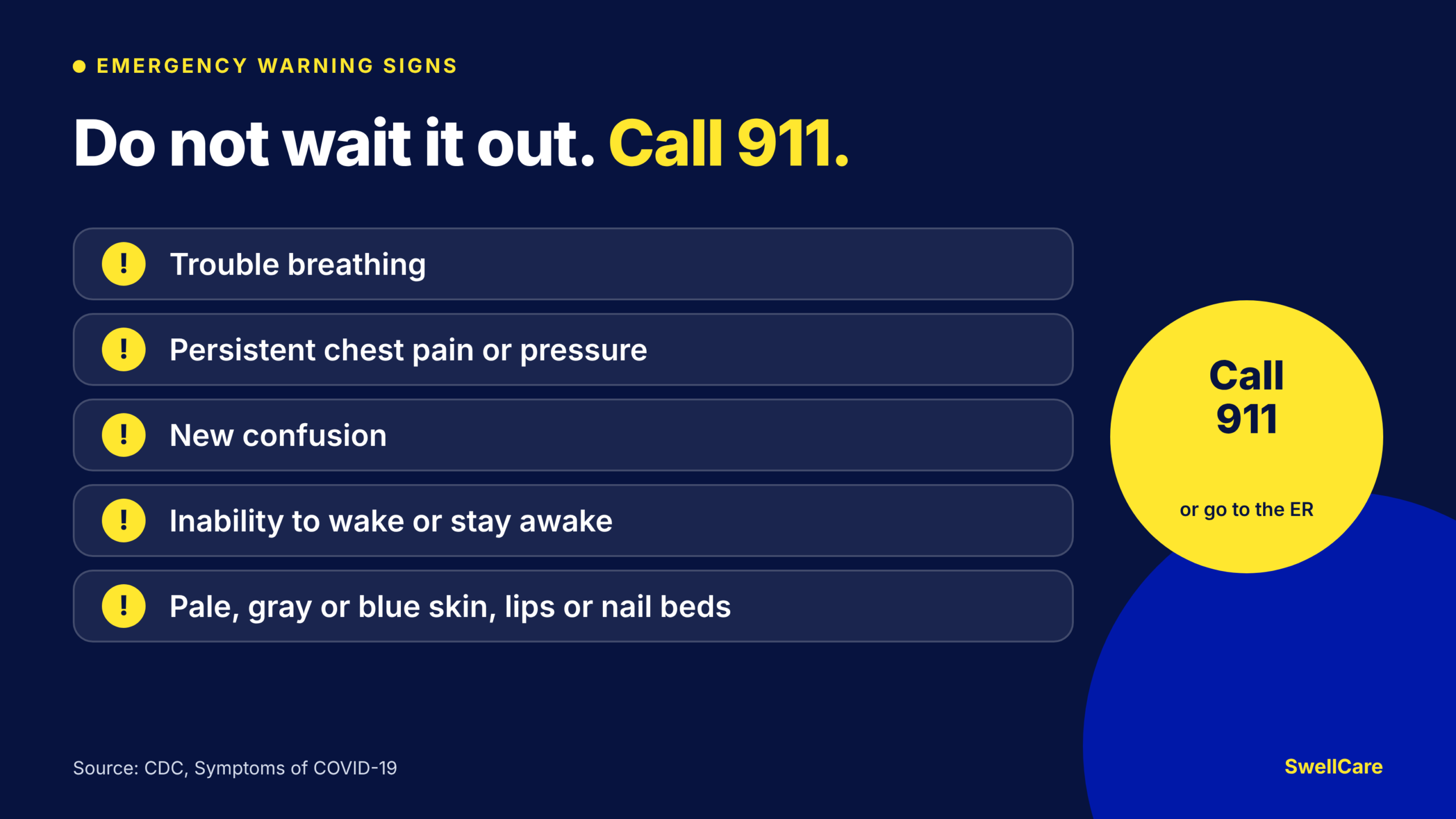
Most COVID-19 symptoms resolve at home. Some don’t. Some COVID-19 patients need hospital care for oxygen support or monitoring, and arriving early beats arriving late. Call 911 or go to the nearest emergency department or hospital if you have any of these CDC emergency warning signs:
- Trouble breathing
- Persistent chest pain or pressure that doesn’t go away
- New confusion
- Inability to wake or stay awake
- Pale, gray or blue skin, lips or nail beds
Not sure you’re in that group? Here’s when to see a doctor sooner rather than later: you’re improving and then suddenly get worse, you’re at higher risk, or you’re simply worried. Trust that instinct. Chest pain or labored breathing never counts as a bad day.
Get care today, from home
If you’re sick and want a licensed clinician to look at your COVID symptoms, you don’t have to sit in a waiting room. Swell offers virtual urgent care with a real clinician, day or night, and a clear next step at the end of the visit. That might be a COVID test, an antiviral prescription, a treatment plan for your cough, or advice on whether you need in-person care. Once you’ve recovered, ask your clinician whether you’re due for an updated COVID vaccine.
Start a visit at swellcare.health when you feel sick today. Swell isn’t emergency care, so in an emergency, or with severe symptoms, call 911.
Questions people ask about how long COVID lasts
How many days will I feel ill with COVID?
Most adults have COVID symptoms for one to two weeks. In an Omicron-era outpatient study, the median time to symptom resolution was about 9 days. Fatigue and a lingering cough often outlast the worst of it by days or weeks. Severe COVID and being immunocompromised can both stretch the timeline well past two weeks.
Is COVID still contagious after 5 days?
Yes, COVID-19 can still spread on day 5 or later. The CDC says you can still spread the virus after you feel better. Stay home until symptoms are improving and you’ve been fever-free for 24 hours without medicine, then use extra precautions for five more days. People who are immunocompromised may stay contagious longer and should ask their clinician for guidance.
What are the worst days of COVID?
For many adults, the roughest stretch falls somewhere in the first week, often around days 3 to 7, when COVID fever, aches and fatigue peak together. Severity varies a lot. If breathing gets harder or chest pain appears at any point, treat that as an emergency, not a bad day.
How long does a COVID cough last?
A cough commonly lingers for several weeks after other symptoms fade, as your airways heal. That’s usually fine. Get it checked if the cough is getting worse, you have shortness of breath or noisy breathing, you cough up blood, or you’re still coughing hard after several weeks.
Can you get COVID twice in a month?
Yes, COVID-19 reinfection is possible. If symptoms return after you felt better, the CDC advises staying home again until you’re improving and fever-free for 24 hours without medicine, then repeating the five days of added precautions. A clinician can help you sort out a relapse from a new infection.
Trusted references
Public-health, research, and medical-society resources related to this guide.
- PubMed Central: Outpatient study of symptom duration in the Omicron period
- Johns Hopkins Medicine: Coronavirus
- CDC: COVID-19 signs and symptoms
- CDC: Precautions when sick
- CDC: About long COVID
- EurekAlert: Long COVID recovery, JAMA Network Open analysis (news release)
- CDC: Outpatient COVID-19 treatment guidance