You’re lying awake at 2 a.m., scratching, and a thought lands: pinworms? At my age? Take a breath. This is common, it isn’t a sign of being dirty, and a pinworm infection is very treatable.
So, how did I get pinworms as an adult? You swallowed microscopic eggs, usually after touching a surface or a person that carried them and then touching your mouth. That’s it. The eggs hatch in your gut, the worms mature, and the females crawl out through the anus at night to lay more eggs, which is what makes you itch.
How did I get pinworms as an adult? The short answer
A pinworm infection comes from Enterobius vermicularis, a tiny, thread-like parasite that lives in the human intestine. The CDC calls them the most common worm infection in the United States. Most adults with a pinworm infection picked up eggs from children, a partner or a shared space.
The route is simple and a little unglamorous. A female worm leaves the anus at night and lays eggs on the skin around it. The eggs are sticky. They end up under fingernails, on underwear, on bedding, on towels. Eggs can infect another person within two to three hours of being laid. Your hands do most of the work, and a quick touch followed by a sandwich is enough.
Nobody tracks the moment a pinworm infection starts. You didn’t do anything wrong.
How pinworm eggs actually get from a surface to your mouth
Think of it as a chain with a few common links.
- Hands and fingernails. Scratch, then touch your mouth, food or a doorknob. Eggs collect under fingernails, which is why short fingernails help.
- Bedding, clothing and towels. Eggs shed onto sheets and pajamas overnight. Shaking out a duvet can send them into the air and onto your hands. Clean bedding matters for that reason.
- Close contact. Touching the affected area of an infected person, including during intimate contact, can pass eggs along.
- Shared surfaces. Toilet seats and bathroom taps can hold eggs for a while if nobody cleans them, and so can toys.
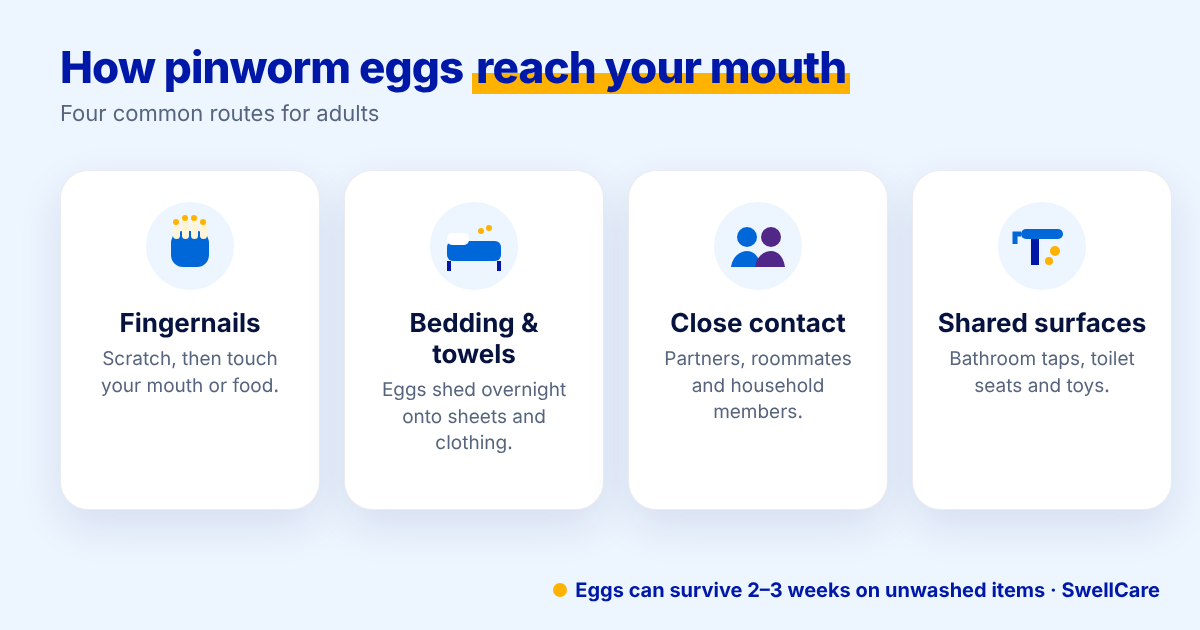
Eggs can survive roughly two to three weeks on clothing and objects that haven’t been washed, according to the CDC and the Maryland Department of Health. That’s long enough for a lot of accidental handoffs.
Can adults get pinworms without kids?
Yes. Children get them more often. The Maryland health department says about 20% of children will get pinworms. Those children bring eggs home, and adults catch them from the children. Adults aren’t immune. Parents and grandparents are the usual cases, along with teachers, daycare staff and anyone sharing a home with an infected person.
Here’s the part most guides skip. You don’t need to live with a child at all. A partner, a roommate or a flatmate can carry pinworms quietly, since many people have no symptoms. Dorms, shared apartments and care facilities can all do the job. And if you’re infected, you can re-infect yourself by scratching and touching your mouth.
Pets are a common worry, so here’s the good news. Dogs and cats don’t pass human pinworms to people, so there’s no reason to rehome the cat.
When did you catch it? The 2-to-6-week timeline
This is why the “who gave it to me?” question rarely has an answer. According to the Merck Manual, adult worms appear about two to six weeks after eggs are swallowed. By the time you notice the itching, the original exposure is weeks behind you.
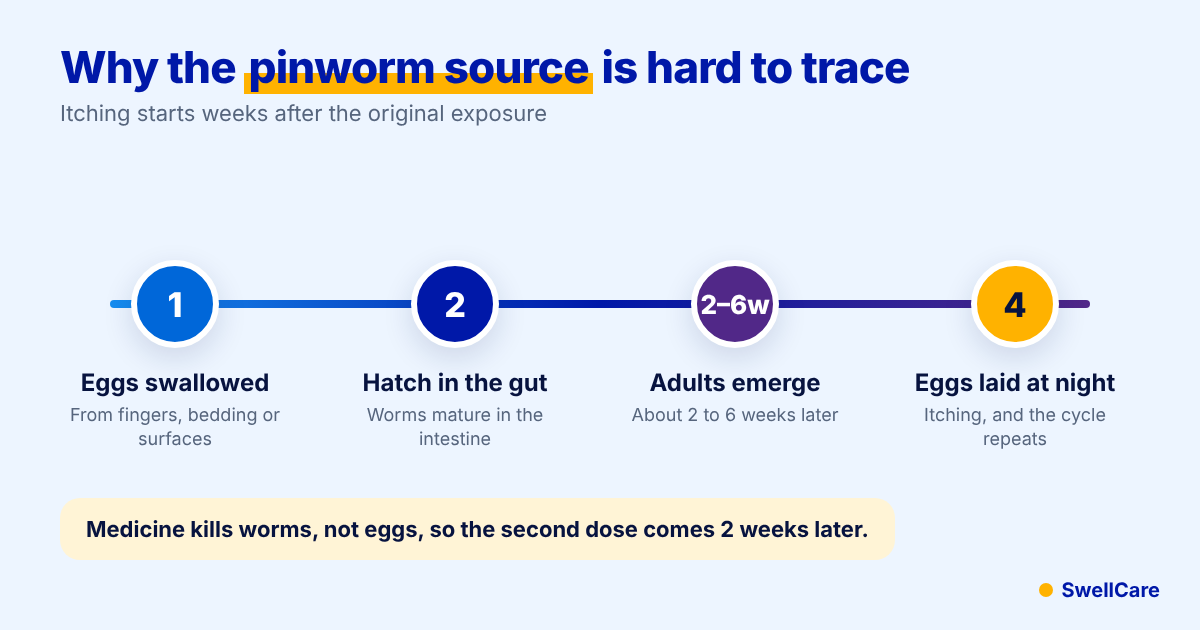
It’s an intestinal parasite, nothing more mysterious than that. The cycle repeats if nothing interrupts it. Eggs get swallowed, hatch, grow, and the females lay a new batch. That loop is why reinfection is so common, and why treating only one person in a household often fails.
Pinworm symptoms in adults
Adult symptoms are usually mild, and many people feel nothing at all. When symptoms do show up, they tend to look like this:
- Itching around the anus, worst at night
- Scratching in your sleep, and restless, broken sleep
- Irritability and daytime tiredness after a few nights of broken rest
- Mild belly pain in some people
- Irritation around the vagina when worms wander there
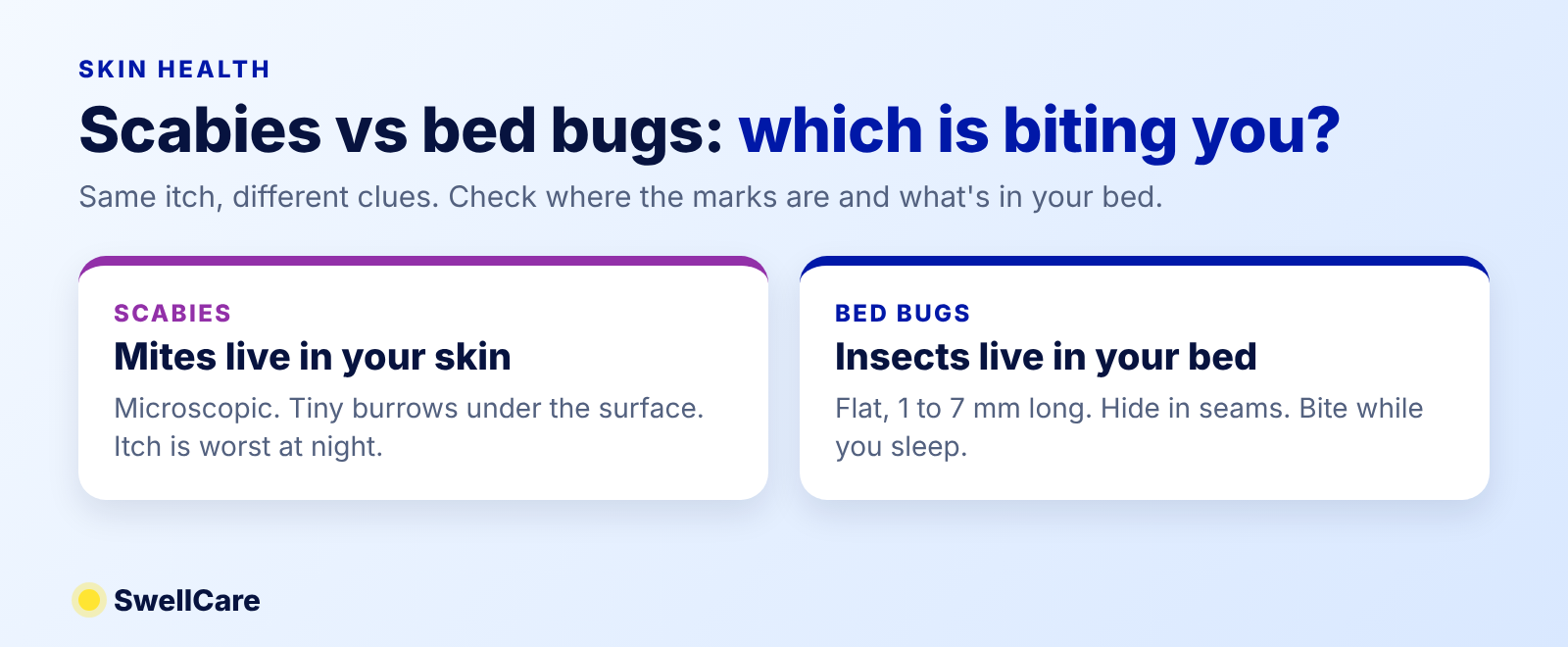
Constant itching can leave skin red and sore (similar night itching is also a sign of scabies), and sometimes a bacterial skin infection follows. These symptoms overlap with other causes of anal itching, which is another reason to get a proper diagnosis. If you spot a thin, white worm about the length of a staple near the anus or in the toilet, that’s likely a pinworm.
How doctors confirm pinworms
Pinworms aren’t a stomach virus, so expect itching rather than vomiting or diarrhea. Many people guess by sight, but a doctor can confirm the diagnosis. A pinworm infection is easy to test for. The classic is the tape test. First thing in the morning, before you use the toilet or bathe, press clear tape against the skin around the anus. Press the tape flat, seal it in a clean bag, and the clinic examines the tape for eggs under a microscope. A tape test costs little and takes a minute.
If the first one looks clean, repeat it on a few more mornings. A single tape test can miss eggs, and the Maryland health department notes it often needs repeating three or more times.
Another trick: check the skin around the anus with a flashlight two to three hours after you fall asleep, when females are most active. Quick diagnosis matters because it points you to the right treatment instead of guesswork. Without it, a pinworm infection can keep cycling through the household.
Pinworm treatment for adults
Treatment is simple, and it’s usually just medication. Ask your doctor which option fits you. Depending on your health history, a clinician may suggest one of these:
- Pyrantel pamoate, available over the counter in the US
- Mebendazole, by prescription
- Albendazole, by prescription
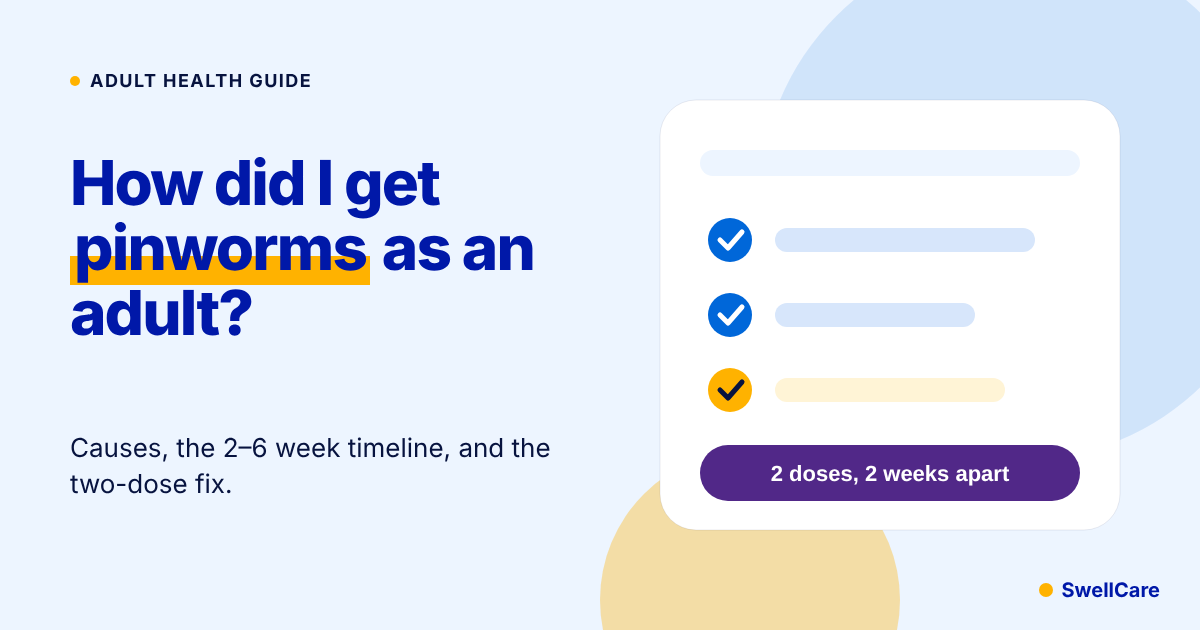
Here’s the detail that trips people up. The medicine kills worms but not eggs. That’s why you take two doses of the medication, with the second dose two weeks after the first, so it catches worms that hatched from eggs that survived the first round. The CDC also advises treating everyone in the household at the same time.
Take the medication exactly as directed, and don’t skip the second dose because you feel fine. If you’re pregnant or nursing, talk to a clinician before taking anything. Anti-itch cream can soothe the skin around the anus while the medicine works.
How to clean your home so they don’t come back
Medicine handles the worms inside you. Cleaning the bedding and the bathroom handles the eggs outside you.
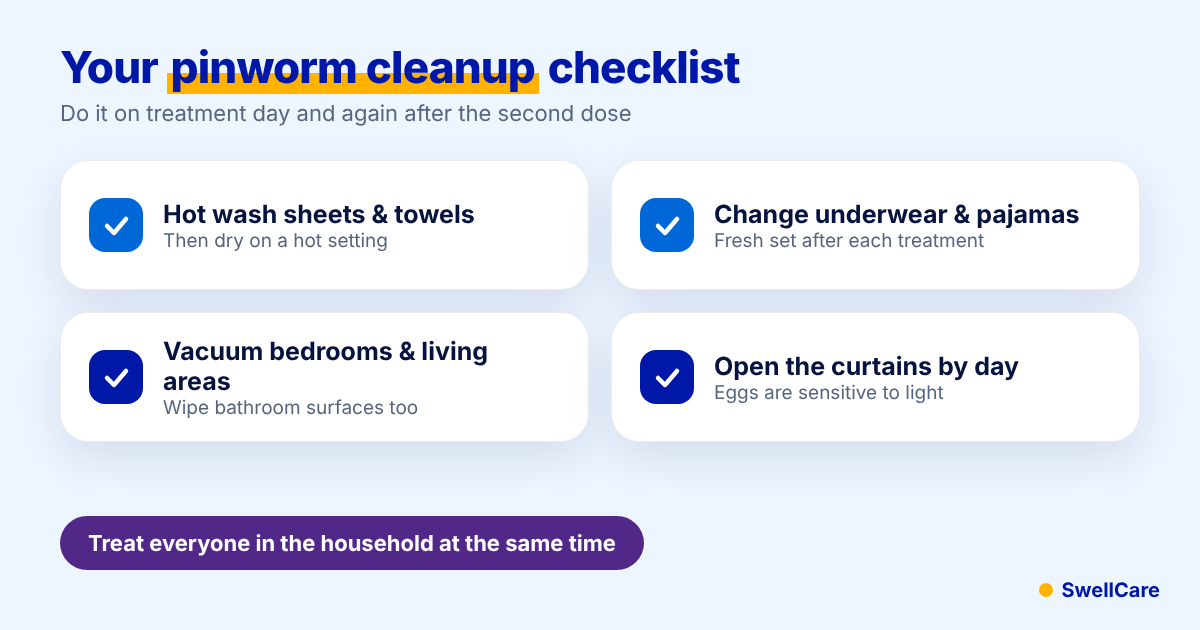
On the day you start treatment, change your underwear, pajamas and sheets. Machine wash sheets and towels on hot and dry them on a hot setting. Vacuum bedrooms and living areas, and wipe the bathroom. Eggs are sensitive to light, so open the curtains during the day. Repeat the sheet change after the second dose.
If pinworms return, the Maryland health department’s advice is to treat the infected person and close family members with the same two-dose course again.
How to prevent pinworms
Good hygiene is the best prevention, and it beats any gadget or spray. Handwashing is the big one, because it also stops reinfection.
Use soap and warm water on your hands after using the toilet, after changing a diaper, and always before you eat or handle food. Keep fingernails short, don’t bite them, and try not to scratch the bare skin. Shower in the morning. It rinses off eggs laid overnight around the anus. Change underwear and clothing daily during an outbreak, and don’t shake out used sheets. Teach children to wash up too. Children are the usual source at home, so it pays off.
Pinworms are contagious, but they don’t travel far through the air, and good hygiene breaks the cycle.
When to see a doctor
A pinworm infection usually clears with treatment, but get checked if you aren’t sure it’s pinworms, if itching continues after both doses, or if you keep getting reinfected. See a doctor soon if you have a fever, strong belly pain, painful urination, vaginal discharge or a skin infection from scratching, since pinworms can occasionally contribute to urinary infection or irritation.
If you’d rather not sit in a waiting room, Swell offers 24/7 virtual care. Tell a licensed clinician what’s going on, get a review and a clear next step, and find out whether it can be handled online or needs an in-person visit. You can also browse the conditions Swell handles. This isn’t emergency care, so call 911 for severe symptoms.
Questions people ask about pinworms in adults
Can adults get pinworms without kids?
Yes. A partner or roommate can pass eggs along through shared towels and sheets, and some carriers never feel a thing. Crowded settings like dorms raise the odds, and so does rubbing your skin and then touching your mouth.
Are pinworms contagious between adults?
They are. Eggs spread through touch, shared towels and clothing, and through close contact. Everyone in the household should be treated at the same time to stop them passing back and forth.
Do pinworms go away without treatment?
Rarely. A pinworm lives only a few weeks, but without treatment and cleaning you can keep swallowing new eggs from your own hands, bedding and surfaces. Medicine is the reliable fix.
How long do pinworm eggs live on bedding?
Roughly two to three weeks if the linens aren’t washed. Hot washing and a hot dryer cycle break that chain, which is why a bedding change on treatment day matters.
Can pinworms cause serious problems?
Seldom. Most people have itching and bad sleep. Broken skin can get infected, and occasionally worms reach the vagina or urinary tract. See a doctor if symptoms get worse or don’t improve after treatment.
Trusted references
Public-health, research, and medical-society resources related to this guide.