You’ve finished the antibiotics. The fever is gone. So why are you still wiped out after a flight of stairs?
Here’s the short answer to how long pneumonia lasts. Some people feel back to normal within a week or two. Others need a month or more. The infection often turns a corner in a few days of treatment, but your lungs take much longer to clear out and heal. That gap is where most of the worry comes from, and it’s usually normal.
So, how long does pneumonia last?
Plan on 1 to 2 weeks for the worst of it to pass, and a month for full energy.
The National Heart, Lung, and Blood Institute says some people return to normal routines within 1 to 2 weeks, while for others recovery takes a month or longer. It also notes that most people still feel tired for about a month. The American Lung Association gives a similar range: a week for some, a month or more for others.
So no single number fits everyone. Your pneumonia recovery time depends on the germ behind it, your age, your other health conditions and how early you got treated. We’ll walk through each of those below.
Think of it as two clocks. The first is the infection, which treatment shortens. The second is healing, which you can support but can’t rush. Most people only notice the second one, and it sets the real pneumonia recovery time.
Pneumonia recovery timeline: what to expect and when
Every case is different, but this is a realistic path for a healthy adult treated at home. Use it as a rough map, not a deadline.
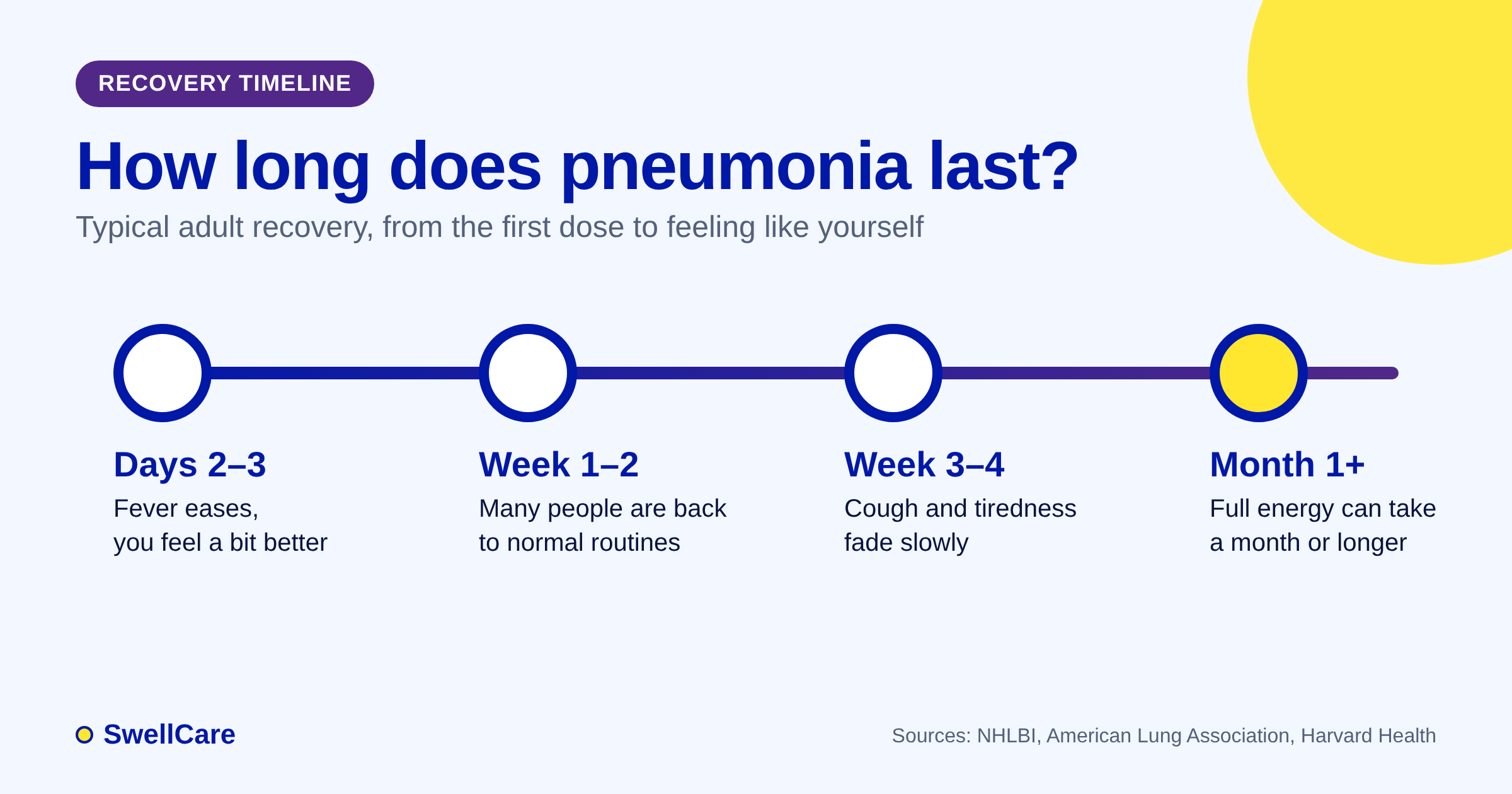
Days 1 to 3: the turning point
Symptoms often start to ease within a couple of days of starting antibiotics, if your pneumonia is bacterial. The temperature usually drops first. Harvard Health describes most people feeling noticeably better after about 2 to 3 days of treatment. You’ll still be tired, though.
Week 1 to 2: getting your routine back
Appetite returns. The fever stays away. Many people go back to light work or school, though you may need to cut your hours or skip the gym. If you’re not clearly better after about a week, call your doctor. That’s the point where a change in plan, or an X-ray, can make sense.
Weeks 3 to 4: the lingering stretch
This is the part nobody warns you about. The cough often turns dry and stubborn, and fatigue hangs on. Harvard Health says a walking pneumonia cough can last for weeks and that full recovery can take roughly 4 to 6 weeks. It’s irritating, not alarming, as long as it’s slowly fading.
Month 1 and beyond
Plenty of adults feel like themselves again around the one-month mark. For others the curve is longer: Asthma + Lung UK says cough and breathing should be much better by about six weeks, most symptoms gone by three months, and full recovery expected by about six months. If you were in the hospital, had severe pneumonia, or have a long-term lung or heart condition, it can take longer. That doesn’t mean something’s wrong. It does mean you should keep every follow-up visit, because your doctor is watching for complications like fluid around the lungs.
Bacterial, viral and walking pneumonia: how the timelines differ
The cause matters more than most people realize. Bacterial pneumonia usually responds to antibiotics. Viral pneumonia doesn’t, so treatment leans on rest, fluids and symptom care, and some viral cases get antiviral medicine. Walking pneumonia is a milder form that lets you keep functioning, which is exactly why people ignore the infection for weeks.
| Type | Early improvement | Full recovery |
|---|---|---|
| Bacterial pneumonia | Often a few days on antibiotics | Cough and fatigue can last weeks |
| Viral pneumonia | Depends on the virus and your health | Can feel slow, with weeks of tiredness |
| Walking pneumonia | Milder symptoms from the start | Roughly 4 to 6 weeks to feel completely normal |
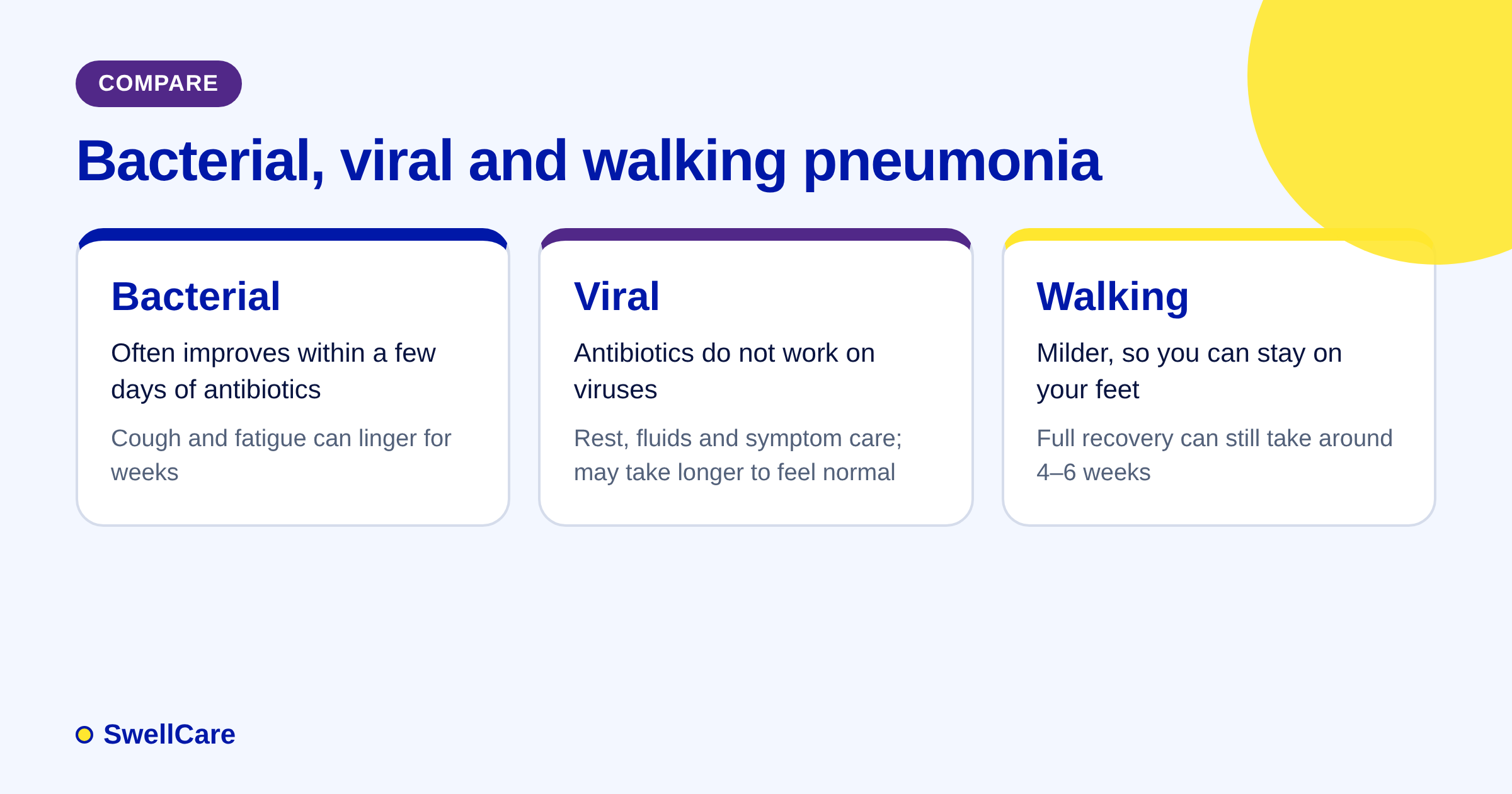
Here’s the catch. You can’t tell the type by how you feel. A chest X-ray and an exam are what sort it out, and that’s why guessing at home can cost you days.
Why recovery takes so long
Pneumonia is an infection that inflames the tiny air sacs in your lungs. They fill with fluid and cell debris. Even after the germ is gone, your body has to clear that out, mostly by coughing. The American Lung Association explains that this is why a cough, fatigue and shortness of breath can hang around during healing.
That’s also why it’s smart to skip cough suppressants unless your doctor okays them. Coughing is how your lungs clean house.
Your immune system has also just fought a lung infection, and it isn’t free. Fatigue is the bill. Sleep is how you pay it, and it’s rarely paid in a single weekend.
What can slow your recovery
A few things stretch the timeline, and knowing them helps you set honest expectations.
- Age. Older adults tend to recover more slowly, and pneumonia in people over 65 can show up as confusion instead of a cough.
- Other conditions. Chronic lung disease like COPD, heart disease and diabetes make healing harder.
- Severity. Pneumonia that puts you in the hospital, especially with low oxygen, takes longer to bounce back from. So does an infection that spreads beyond the lungs.
- Smoking. Smoking damages the lining your lungs use to clear mucus, and secondhand smoke counts too. Quitting smoking during recovery helps more than almost anything else, and cutting back beats nothing.
- Starting treatment late. The sooner you’re seen, the less ground the infection gains.
On the flip side, the 2025 American Thoracic Society guideline suggests that many outpatients with community-acquired pneumonia may need only a short antibiotic course, as little as 3 to under 5 days once they’re clinically stable. Your clinician decides the length based on how you respond, so don’t shorten or stretch it on your own.
How to recover faster: a practical plan
You can’t force the second clock, but you can stop slowing it down. This is what we’d tell you across the table.
Finish the medicine you’re given
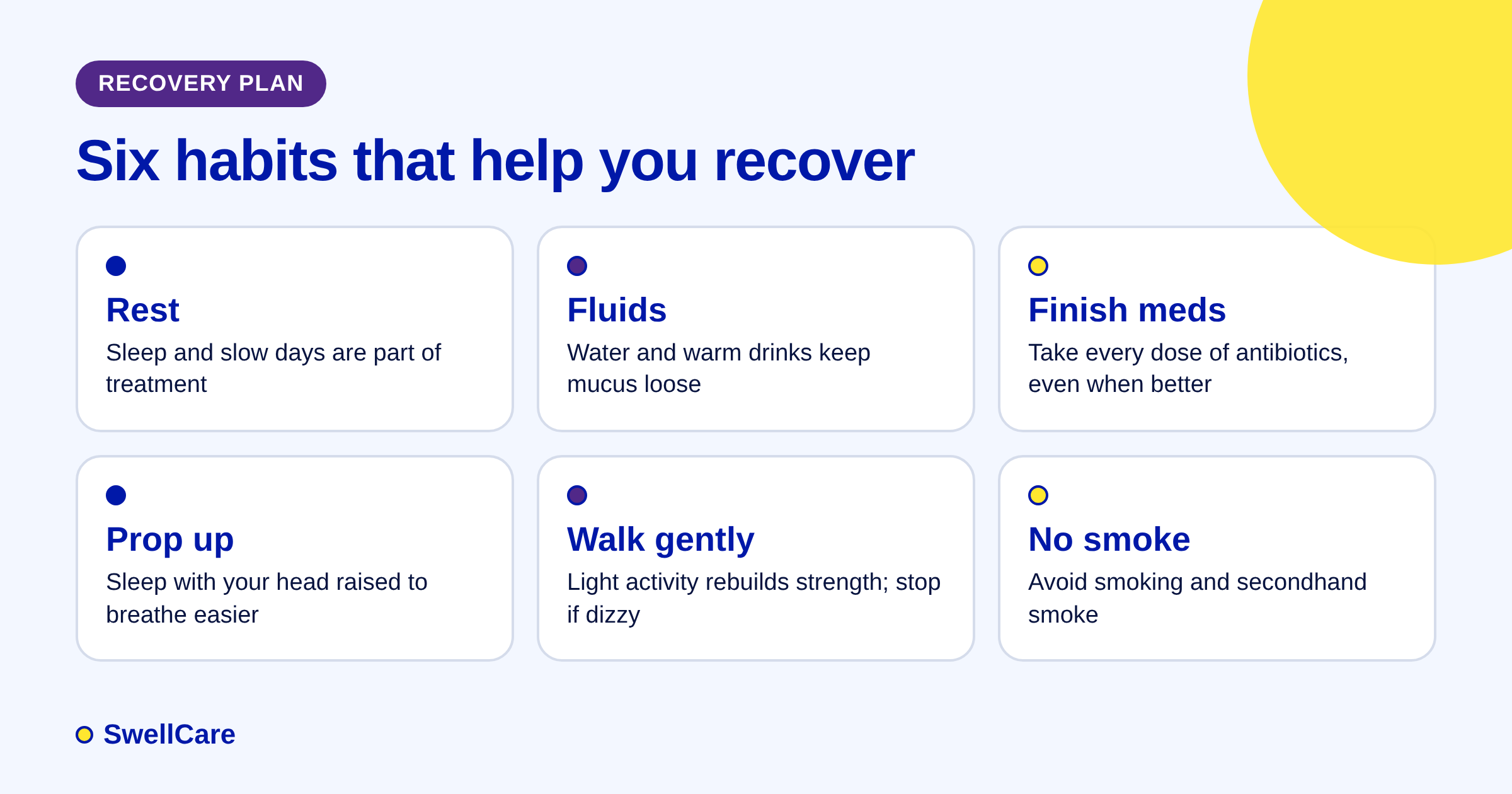
Take every dose as prescribed. Stopping early can let the infection come back and can contribute to antibiotic resistance, according to both the NHLBI and the American Lung Association. Ask your doctor before taking anything else for the cough.
Rest more than feels necessary
Sleep is when you heal. Cancel what you can for the first week. Going back too fast is the most common reason people feel like they’re relapsing.
Drink fluids and sleep propped up
Water and warm drinks keep mucus thinner and easier to cough up. Sleeping with your head raised on an extra pillow or two makes breathing easier at night. Skip alcohol while you recover, and avoid smoking.
Add movement slowly
Start with short, easy walks and build up. The NHLBI suggests light exercise to rebuild strength, and says to stop if you feel dizzy. Hard exercise can wait. A few deep breaths several times a day also helps your lungs re-expand.
When to see a doctor (and when to call 911)
Most recoveries are bumpy but steady. These are the ones that aren’t.
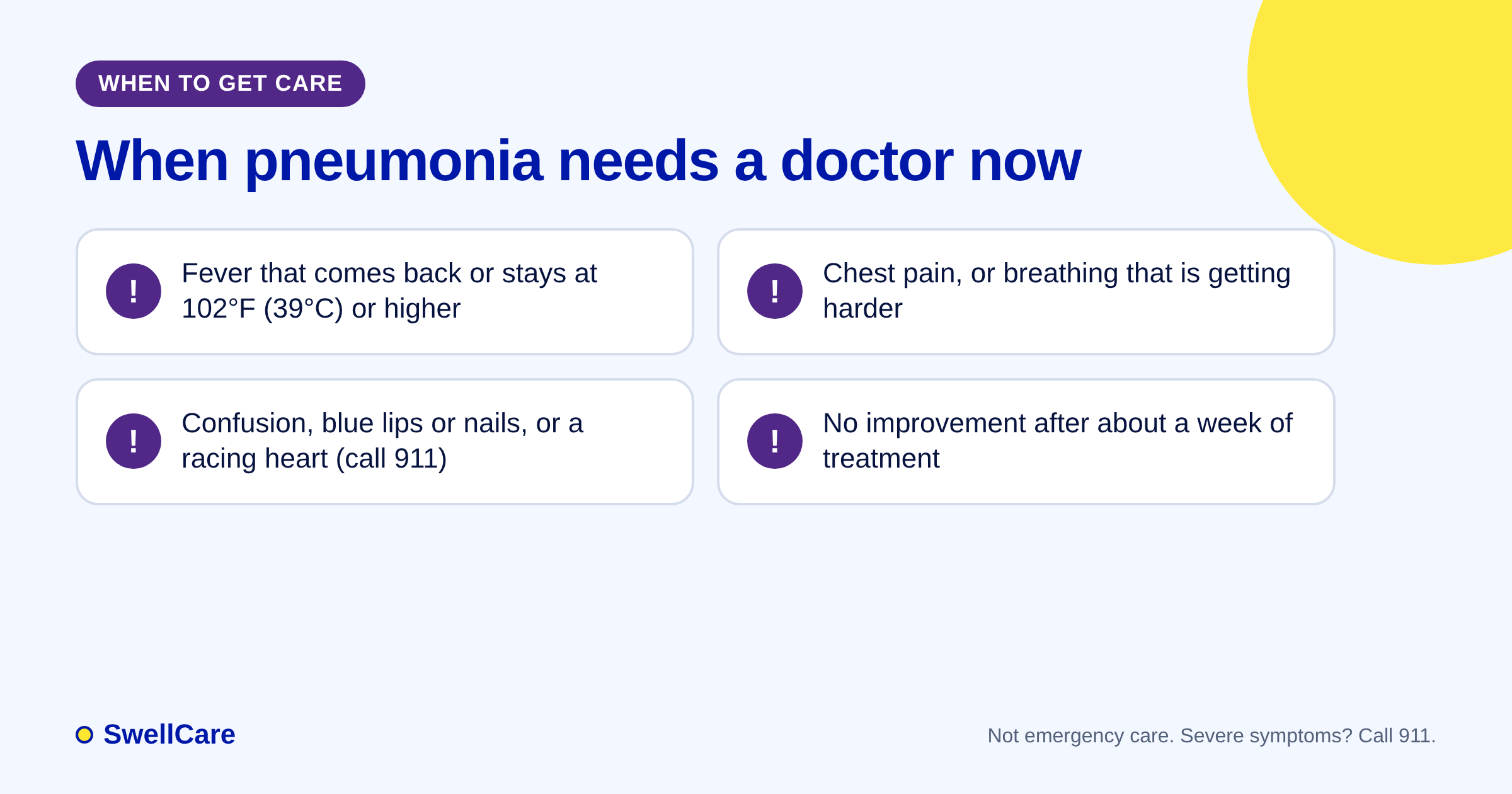
Call your doctor if you aren’t improving after about a week of treatment, your temperature climbs again, or your symptoms get worse instead of better. The Mayo Clinic lists a persistent fever of 102 F (39 C) or higher, trouble breathing, chest pain, and a cough that keeps producing pus as reasons to see a doctor. Older adults, young children, and anyone with a weakened immune system or a chronic condition should see a doctor sooner rather than later, since complications are likelier in those groups.
Hospital care becomes the right call when your oxygen drops or you can’t keep fluids down. Ask about a hospital visit sooner if you’re older or have a chronic condition, since a hospital can monitor you closely.
Call 911 for severe chest pain, blue lips or fingernails, confusion, or serious trouble breathing. Those aren’t wait-and-see symptoms.
Get answers from a clinician today
Maybe you’re coughing and not sure if it’s a cold, or you’re a week into treatment and not improving. Either way, waiting rarely helps.
Swell’s urgent care connects you with a licensed clinician, day or night, who can look at your symptoms, tell you what’s next and help you plan follow-up. You can also see how it works and what it costs first. If you’re having severe symptoms, skip the online visit and call 911.
Questions people ask about how long pneumonia lasts
Can pneumonia go away on its own?
Mild viral infection sometimes does, but you shouldn’t count on it. You can’t tell the cause at home, and untreated bacterial pneumonia can turn serious. Get checked, especially if you have a high temperature, trouble breathing or you’re over 65. A doctor can tell you whether rest alone is enough.
Is it normal to keep coughing after pneumonia?
Yes. A cough that lingers for weeks is common because your airways are still clearing fluid and debris. What matters is direction. If it’s slowly fading, that’s expected. If it’s getting worse, or you have a fever, pain or shortness of breath, call your doctor.
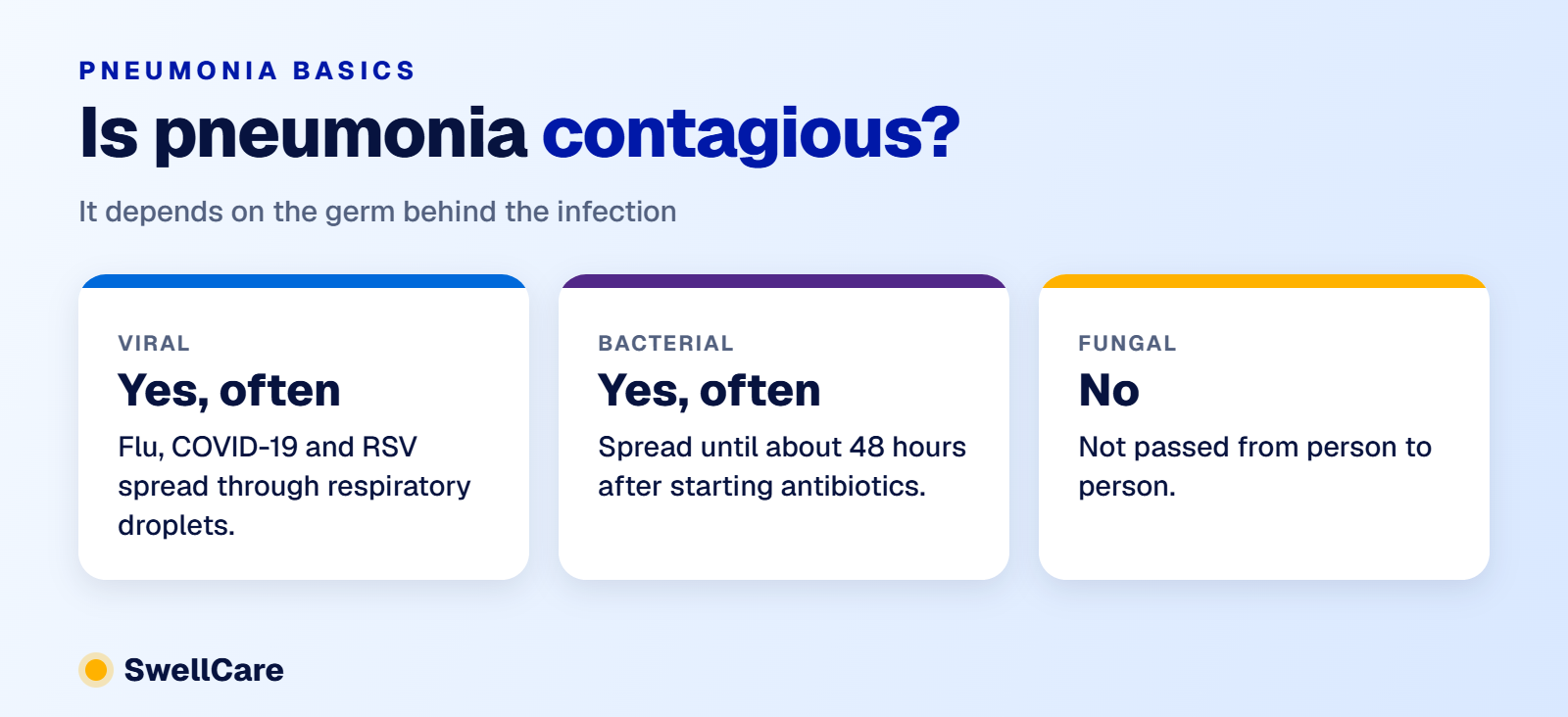
When are you no longer contagious with pneumonia?
It depends on the cause, so ask your doctor for a date rather than guessing. Pneumonia germs can spread through coughs and sneezes, and viral types may spread longer. Until you’re cleared, cover your coughs, wash your hands often and limit contact with others, as the NHLBI advises.
Do your lungs fully recover from pneumonia?
For most healthy people, yes. Some develop scarring or lasting breathlessness, especially after severe pneumonia or with an existing lung condition. If breathing doesn’t return to normal after a couple of months, ask about a follow-up, which may include a chest X-ray or pulmonary rehabilitation.
Can you get pneumonia more than once?
You can. Having it once doesn’t protect you, and different germs cause it. Vaccines help: the American Lung Association recommends the pneumococcal vaccine for adults 50 and older, and for adults 19 to 49 with certain chronic conditions. If you keep getting pneumonia, tell your doctor.
Can you exercise while recovering from pneumonia?
Light exercise is fine and helpful once your temperature is normal and your clinician says it’s okay. Walk first, and add intensity over weeks. Stop if you’re dizzy, short of breath or in pain. Hard workouts too early are a common reason recoveries stall.
Trusted references
Public-health, research, and medical-society resources related to this guide.