You came in from the yard, and now your forearm itches like crazy. Mosquito bite? Probably not.
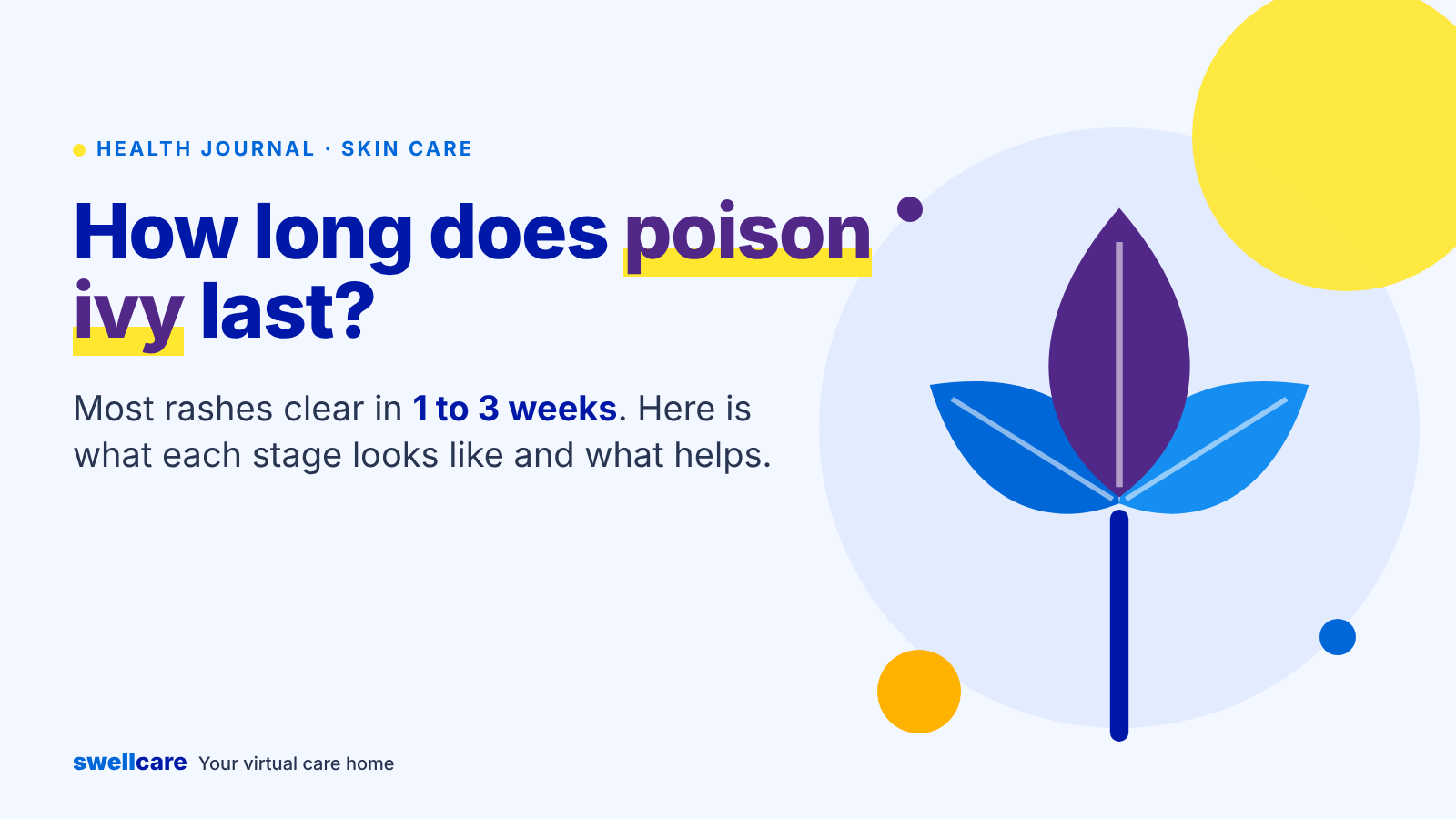
So, how long does poison ivy last? For most people, the rash clears in one to three weeks. If you’ve had it before, it often fades in under two. A first-time reaction can drag on for three weeks or more. The itch is the worst part, and it’s what keeps people up at night.
Here’s the full poison ivy rash timeline, day by day, plus what speeds up healing and which signs mean it’s time to call a clinician.
How long does poison ivy last?
One to three weeks is the honest answer, and where you land depends on your history with the plant. The American Academy of Dermatology says a repeat rash usually lasts 1 to 14 days, while a first-time rash can last 21 days or longer. Either way, it clears without treatment. It just stays itchy until it does.
| Your situation | Typical duration | What to expect |
|---|---|---|
| Repeat exposure, small patch | 1 to 2 weeks | Rash can appear within hours to two days |
| First-time exposure | Up to 3 weeks or more | Rash may take two to three weeks to show up |
| Severe or widespread rash | 3 weeks or more | Often needs prescription treatment |
Severity matters too. The more urushiol oil that reaches your skin, the angrier the reaction, and the longer the rash hangs around. A light brush against a leaf is a different story from kneeling in a patch while weeding.
What you’re dealing with is a type of contact dermatitis, an allergic reaction to urushiol, the sticky oil in poison ivy. The plant is easy to miss. Look for clusters of three glossy leaves, often with a reddish stem, and sometimes pale berries in late summer. Touch any part of it, and the oil transfers to your skin in seconds. Your immune system does the rest, which is why the rash and its symptoms show up later, not on contact.
The poison ivy rash timeline, stage by stage
Every poison ivy rash is a bit different, but the symptoms tend to follow the same three-step pattern. Use this as a map, not a stopwatch.
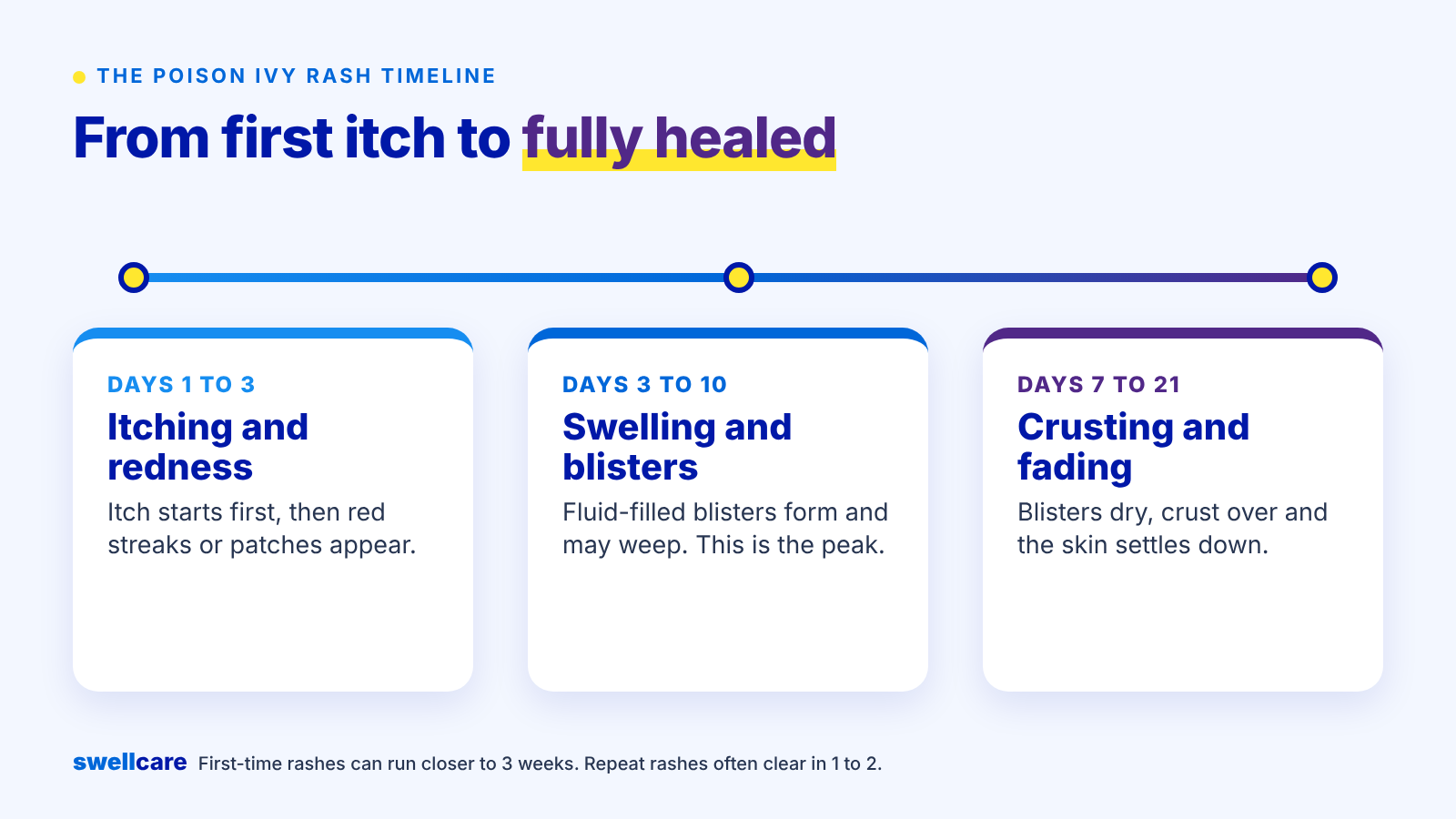
Days 1 to 3: itching and redness
Itching usually comes first, sometimes strong enough to wake you at night. Itchy skin is the first of the poison ivy symptoms most people notice. Then the skin turns red in streaks or patches. On darker skin, the redness can look brown or violet instead. If you’ve reacted to poison ivy before, this stage can start within hours. If not, it can take weeks to show up.
Days 3 to 10: swelling and blisters
This is the peak. Inflammation builds, the skin swells and fluid-filled blisters form. Some break open and weep. New blisters can keep appearing for a week or more, which is why people think the rash is spreading.
Days 7 to 21: crusting and fading
Blisters dry out and crust over, and healing is well underway. The skin underneath looks pink or darker for a while, then settles. The itch tapers off before the marks do. Plan on a few more days of recovery after the last crust falls away, because the area stays tender and a little dry.
Why your rash seems to spread (it isn’t contagious)
Here’s a myth worth retiring. According to Mayo Clinic, the fluid inside your blisters doesn’t contain urushiol, so it can’t give the rash to anyone else, or to other parts of your own body.
So why do new patches keep popping up? Two reasons. Skin that got less oil reacts later than skin that got a lot, so patches appear on different days. And leftover oil on clothing, shoes, garden gloves or a dog’s coat can re-expose you without you noticing. Each fresh exposure restarts the clock for that patch of skin.
Poison oak and poison sumac work the same way, since they carry the same oil. The timeline above fits all three, and so do the treatment tips below. Think of it as one poison ivy rash story with three possible plants.
What makes poison ivy last longer
Most poison ivy rashes drag on because of a short list of habits and accidents:
- Scratching. It won’t spread the rash, but broken skin invites a bacterial infection, and that can add days or weeks. If you scratch in your sleep, wear light gloves to bed.
- Re-exposure. Oil lingers on tools, boots and pet fur. It can stay active for a very long time, so one missed jacket can restart the clock.
- A first-time reaction. Your immune system hasn’t seen urushiol before, so the response tends to run longer.
- Stopping prescription steroids too early. A rash can bounce back, sometimes harder than before. Harvard Health reports that shorter oral steroid courses were linked to about 30% more follow-up visits than courses of 14 days or longer.
What actually helps poison ivy heal
You can’t make a poison ivy rash vanish overnight. You can shorten the misery, though, and the first hour of treatment does the most work.
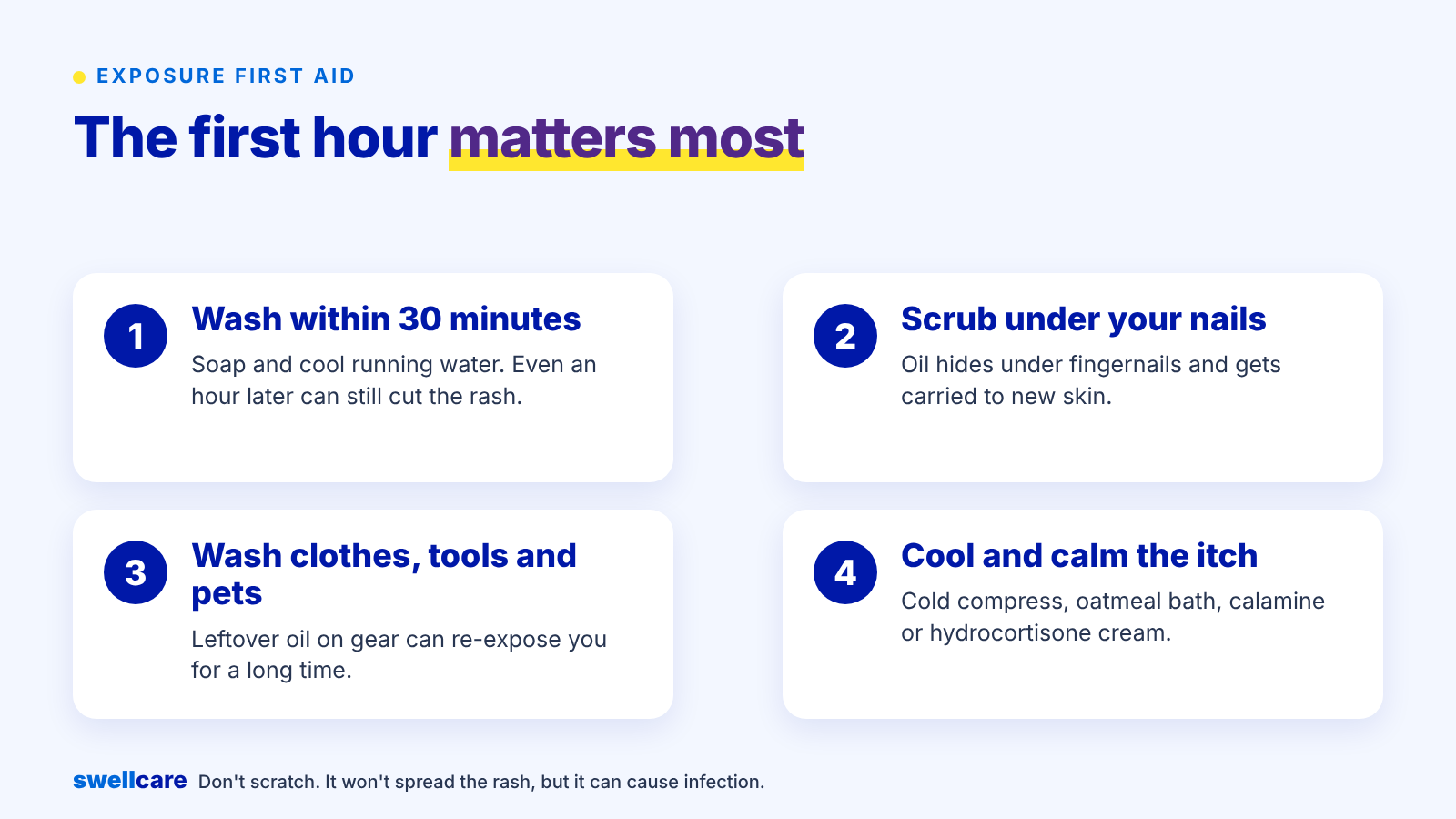
Wash fast. Use soap and cool water within 30 minutes of exposure. Mayo Clinic notes that washing even an hour later may still lessen the reaction. Scrub under your nails, then wash the clothes and gear you wore, because that oil can stay active on fabric. Wipe down tools and wash your dog if it ran through the patch.
Calm the itch. A cold compress, a lukewarm oatmeal bath, calamine lotion or hydrocortisone cream can all take the edge off. Cool compresses work well on weeping blisters, and a second oatmeal bath before bed often helps. Skip hot showers. They feel good for a minute, then the itchy skin flares again.
Add antihistamines if sleep is suffering. Over-the-counter antihistamines at bedtime can make the night easier. They won’t clear the poison ivy rash faster, but a rested body copes better, and the itch loses some of its grip.
Ask about prescriptions for severe cases. Stronger steroid creams or oral steroids can calm heavy inflammation. If you get a course, finish it. Treatment that’s cut short is a common reason for a poison ivy rash that returns.
Prevent the sequel. Learn the leaves of three before your next hike. Long sleeves, gloves and a barrier cream give poison ivy less skin to reach, and a quick wash after yard work removes oil you can’t see. Poison oak and poison sumac grow in other regions but cause the same rash, so they deserve the same respect. Never burn any of these plants, because the smoke carries the oil into your lungs.
When to see a clinician for poison ivy
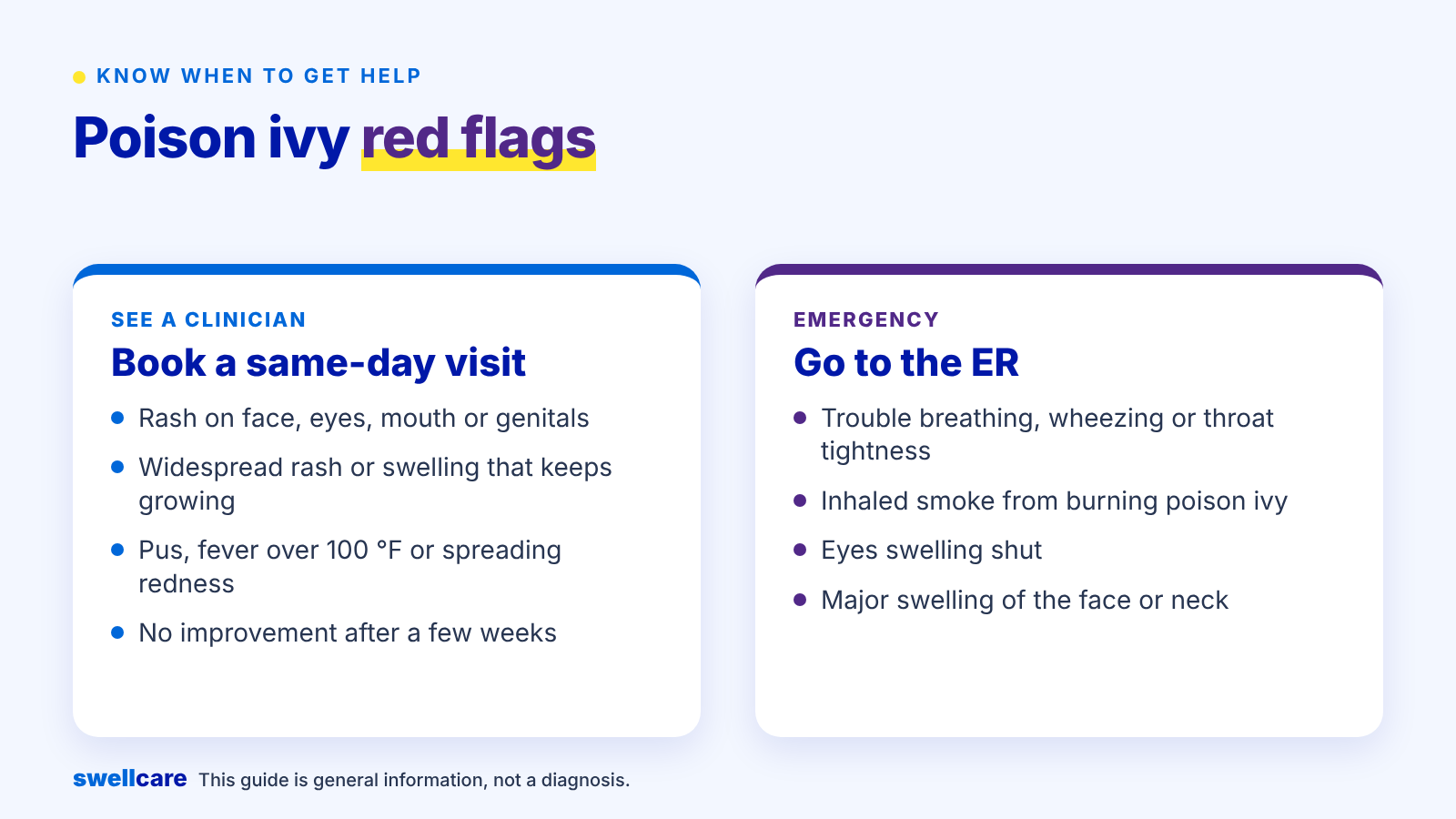
Most rashes are a nuisance, not an emergency. Some aren’t. Get care the same day if:
- the rash is on your face, eyes, mouth or genitals
- it’s widespread, or swelling keeps growing
- you see signs of infection, like oozing pus or a fever above 100 °F
- you aren’t improving after a few weeks
Go to an emergency room if you have trouble breathing, wheezing or throat tightness. That can happen after inhaling smoke from burning poison ivy. Swelling that closes an eye or puffs up the face or neck also needs the ER.
Get poison ivy care from SwellCare
Not sure whether your rash needs more than calamine? You don’t have to sit in a waiting room to find out. A telehealth visit with a licensed SwellCare clinician lets them review your symptoms and photos, tell you what can be handled online, and prescribe treatment when it makes sense. Start at our urgent care page or browse the conditions we treat.
If you’re still asking how long does poison ivy last, and your answer is “longer than it should,” that’s reason enough to book a visit.
Questions people ask about how long poison ivy lasts
Can you get rid of poison ivy in one day?
No. Washing quickly can reduce the reaction, and itch relief can make a day feel easier, but the rash itself needs time. Most people wait one to three weeks, and treatment mainly improves comfort and lowers the risk of complications.
Will poison ivy go away on its own?
Yes. A mild rash usually heals without prescription medicine. Expect itching until the crusting stage. If the rash is severe, covers a large area or sits on your face or genitals, a clinician can prescribe something stronger.
What day is poison ivy the worst?
Many people feel the worst around days three to ten, when swelling peaks. The itch may feel strongest at night. After blisters crust over, things usually improve steadily.
Does scratching poison ivy make it spread?
Scratching doesn’t move the rash around, since blister fluid has no urushiol. But it can break the skin and cause infection, and it can drag leftover oil across your skin. Keep nails short and use a cold compress when the urge hits.
Is poison ivy contagious?
Not from person to person through the rash. The allergic reaction is yours alone. You can only pick up the oil from the plant itself, or from something it touched, like clothing, pet fur or tools, if it hasn’t been washed off.
How long does the itching last?
Itching is usually strongest while blisters are forming and fades as they dry. For many people that means a week or two, though a first-time reaction can stay itchy closer to three weeks.
Trusted references
Public-health, research, and medical-society resources related to this guide.