Most people paying cash for a telehealth visit spend between $35 and $120. That’s the short answer to how much does telehealth cost without insurance, and it’s a fraction of what a walk-in urgent care clinic charges for the same sore throat or UTI.
The longer answer has catches. Telehealth cost depends on the provider, the type of visit and whether you need a prescription or lab tests afterward. A $49 video visit can quietly turn into a $150 afternoon if nobody tells you where the extra charges live. Insurance usually hides those charges from you, which is why paying cash feels so confusing at first.
So here’s the full answer to how much does telehealth cost without insurance in 2026: real prices with dates, the costs that hide outside the visit fee, and the cheapest ways to see a clinician today.
What a telehealth visit costs without insurance
Self-pay telehealth prices cluster in three bands. Message-only or budget video visits start around $29 to $49. A standard video or phone visit with a clinician usually lands between $50 and $100. Mental health and specialist visits run higher, often $100 or more.
Self-pay (some sites call it cash-pay) simply means no claim goes to an insurer. You pay at booking, and the price you see is the price you owe. That’s the good news about paying cash without insurance: the telehealth price is usually posted up front, which is more than most in-person offices can say. A telehealth visit also skips the facility fees that pad a clinic bill.
Here’s what each telehealth provider lists right now.
| Platform | Self-pay price | Visit type | Where the price comes from |
|---|---|---|---|
| Amazon One Medical (pay-per-visit) | $49 video, $29 message | Common conditions | Company page, Nov 2026 |
| Teladoc Health | $89 | 24/7 urgent care visit | Company no-insurance page, Nov 2026 |
| Teladoc Health | $119 | Mental health visit | Company no-insurance page, Nov 2026 |
| K Health | $35 per visit, or $29 a month | Primary care questions | Momentary roundup, Mar 2026 |
| Sesame Care | From $34 | Online doctor visit | Momentary roundup, Mar 2026 |
| Doctor On Demand | From $99 | Video visit | Momentary roundup, Mar 2026 |
| Swell | Free screening, $45 completed consultation | Urgent care and refills | swellcare.health, Nov 2026 |
Treat the table as a snapshot. Several of these are “from” prices, and every telehealth platform changes them often, so confirm the total cost at checkout. Sources: Amazon One Medical, Teladoc Health and a 2026 price roundup.
Telehealth vs urgent care vs the ER: the cost gap
Now the comparison that matters. If you’re sick but not in danger, you have three places to go, and the cost looks nothing alike when insurance isn’t there to soften it.
| Where you go | Typical cash price |
|---|---|
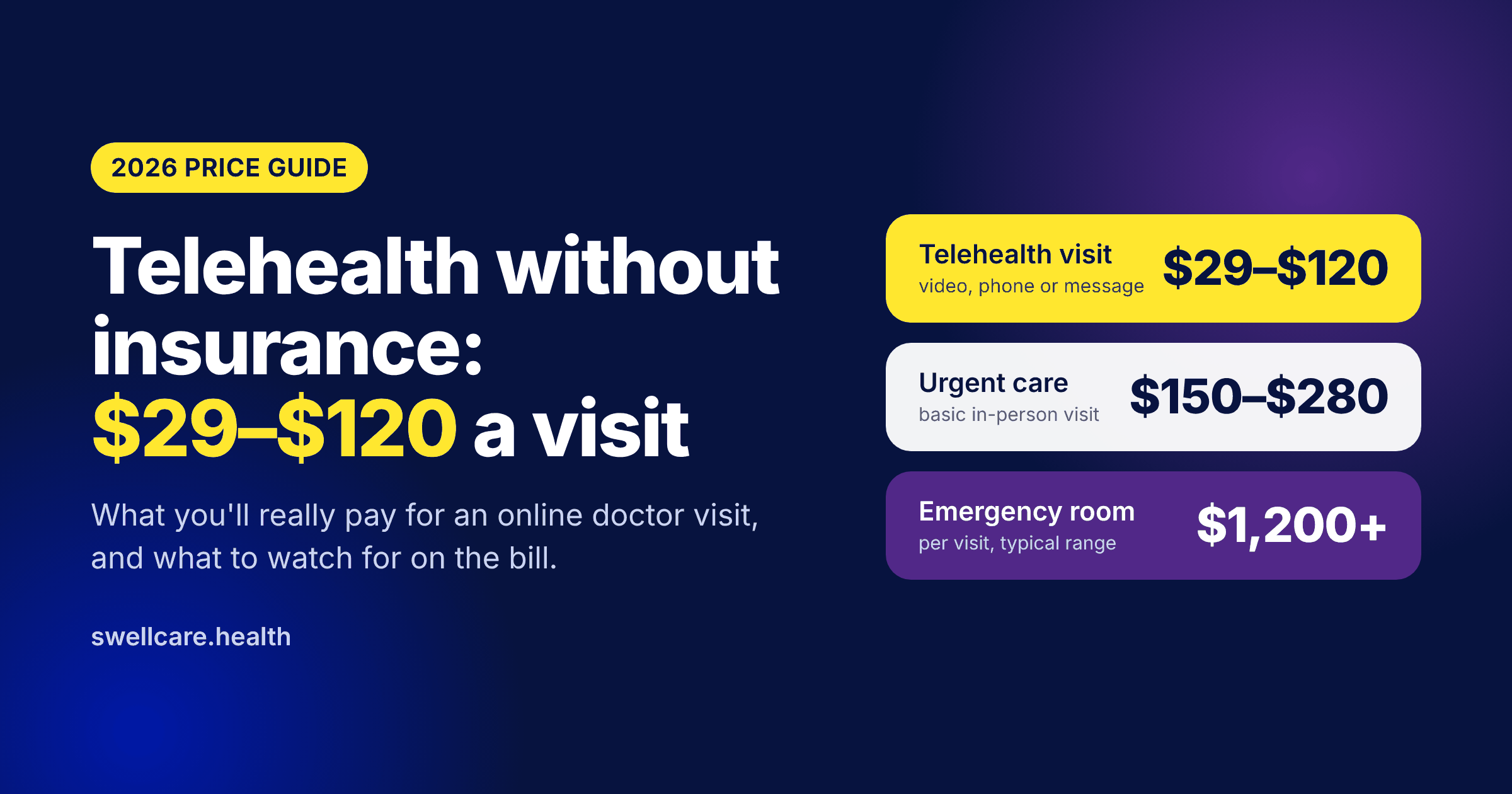
| Telehealth visit | $29 to $120 |
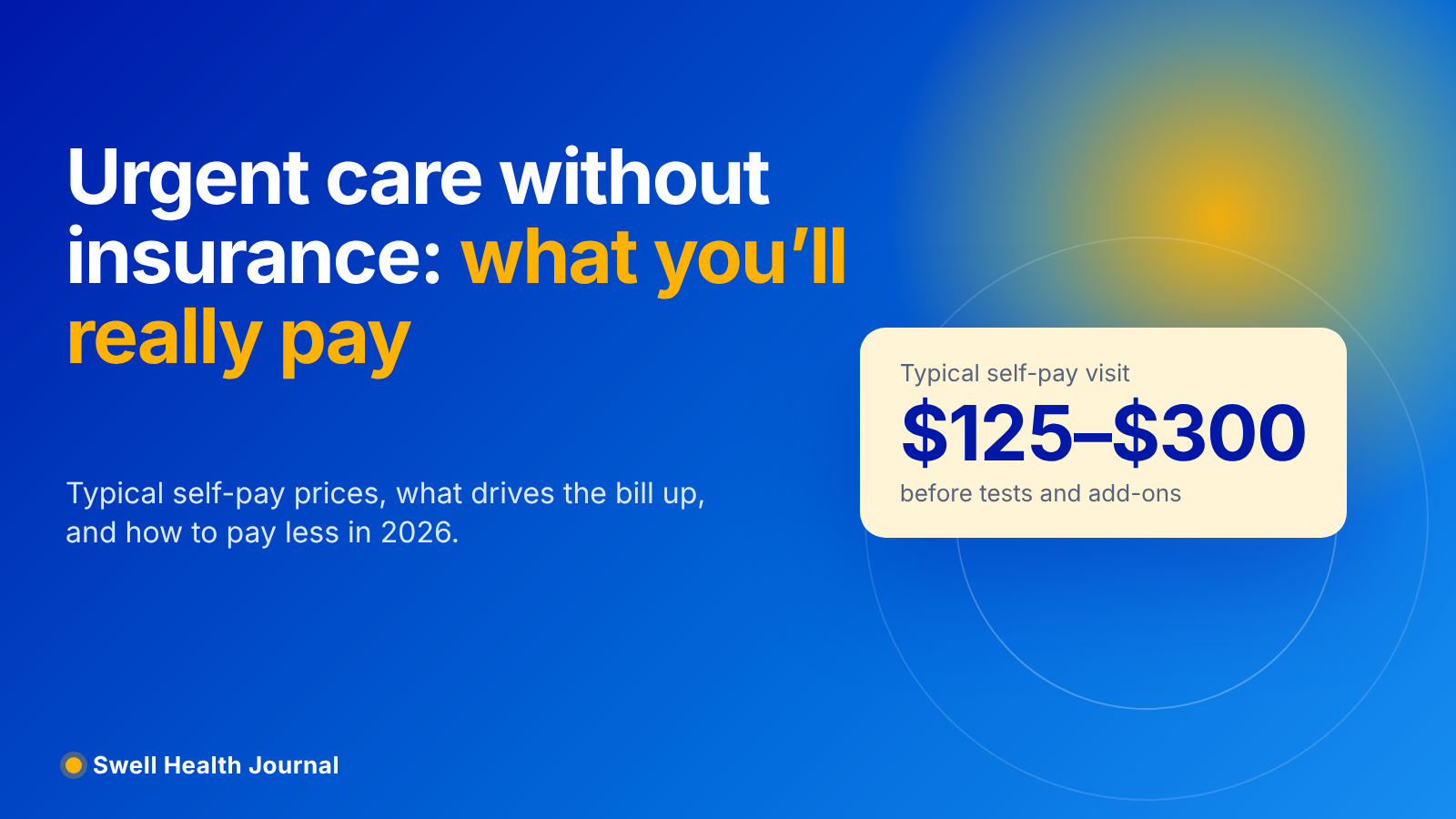
| Urgent care, basic visit | $150 to $280 (national average about $180 to $220) |
| Urgent care with an X-ray | $250 to $500 |
| In-person primary care | $150 to $300 or more |
| Emergency room | $1,200 to $3,000 or more |
Urgent care numbers come from a June 2026 Solv Health update. The primary care and emergency room ranges come from the same price roundup as above.
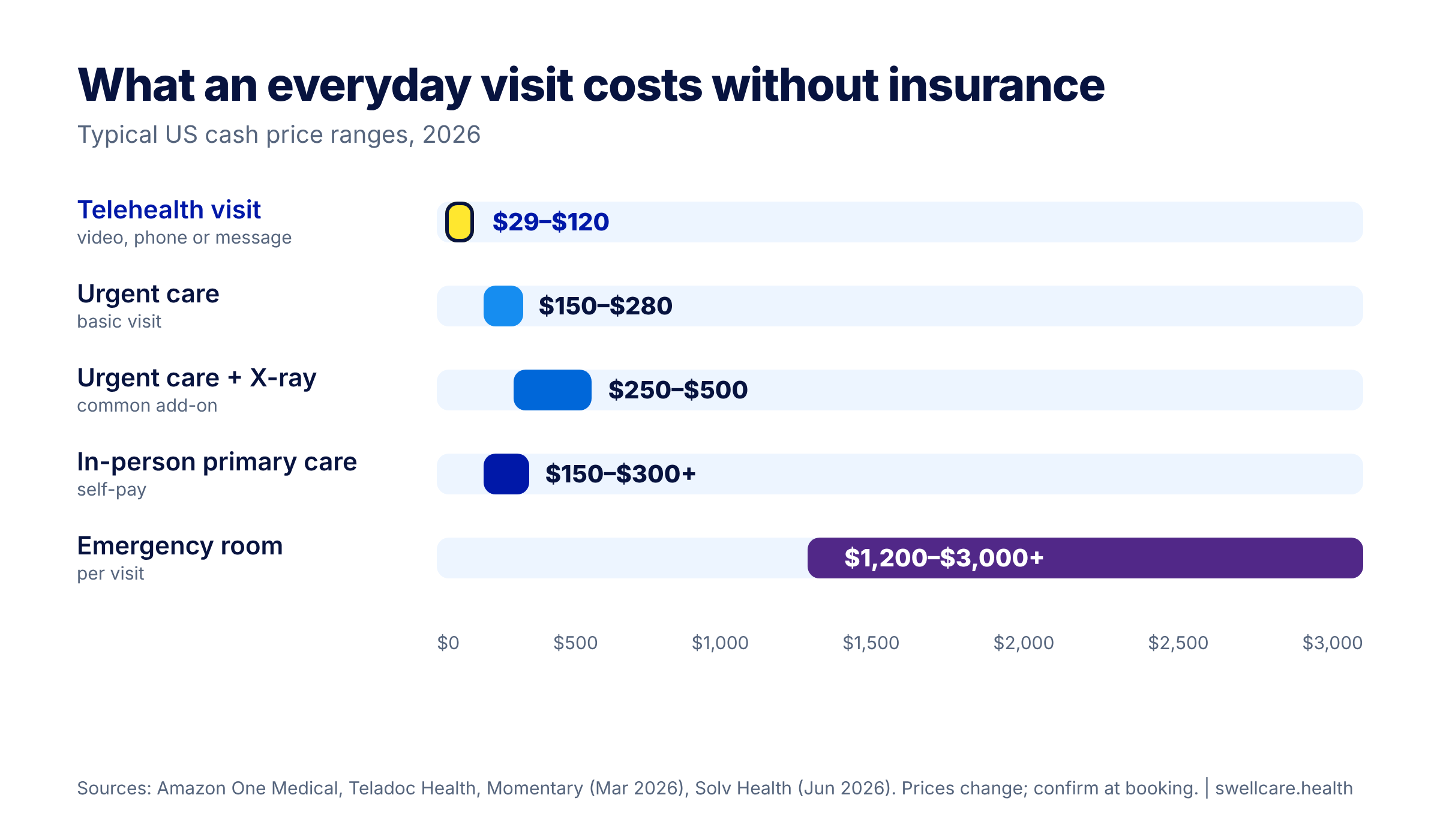
Our take: if it isn’t an emergency, start with a telehealth visit. You’ll save at least $100 on most everyday problems, and you won’t sit in a waiting room to do it. Telehealth can’t replace an emergency room, but it can keep you out of one when a problem is small. The exception is anything that needs hands, imaging or a procedure, which I’ll cover near the end.
What changes the price of a telehealth visit
Three things move the cost of a telehealth visit more than anything else: who the provider is, what the visit is for, and how the platform charges.
A nurse practitioner on a message-based service costs less to run than a psychiatrist on a 45-minute video visit, and the price follows. A mental health visit, a dermatology review or any specialist appointment sits at the top of the range. Simple infections, rashes, refills and cold symptoms sit at the bottom. Provider type matters too. Some platforms staff physicians, others staff nurse practitioners, and each provider group sets its own pricing. A good provider states the full price before you start.
Per-visit fee or membership
Most platforms charge one of two ways. You pay per visit, or you pay a monthly membership or subscription that lowers the price of each telehealth visit.
Per-visit pricing wins if you see a clinician once or twice a year. A membership only pays off when you’d use it at least every month, and a subscription you forget about is pure waste. Do the math before you sign up, and check whether the plan auto-renews. A $29 monthly membership costs $348 a year. Compare that with paying per visit for the two or three telehealth visits most healthy adults actually use.
The costs outside the visit fee
This is where people get surprised. The telehealth visit fee covers the conversation. It usually doesn’t cover:
- Prescription costs. The clinician writes the prescription, and the pharmacy charges you for it. Generics are often a few dollars to $20, while brand-name drugs can cost far more.
- Lab tests. Rapid strep, urine tests and blood work are billed separately, often $25 to $150 depending on the test.
- Follow-up visits. Some platforms bill each follow-up as a new visit, and follow-up visits that need lab tests add a second charge. Others include a short window for free.
Ask three questions before you book. Is the follow-up included? Who sends the prescription, and to which pharmacy? What happens if the clinician says I need to be seen in person?
Is telehealth worth it if you’re paying cash?
Usually, yes, and the reason isn’t just price. Virtual care works well for a defined list of problems: colds and flu symptoms, sinus infections, urinary symptoms, pink eye, rashes, allergy flare-ups, and refills for stable medications. Those are the visits where the clinician mostly needs to listen, ask good questions and look at a camera.
Telehealth works badly when the answer depends on a physical exam. Belly pain that’s getting worse, a swollen joint after a fall, an ear that needs a scope. For those, a $49 telehealth call just delays the right visit.
The honest comparison isn’t telehealth against nothing. It’s telehealth against a $200 urgent care bill or a day of work lost to a waiting room. Measured that way, virtual care is the better deal for most everyday out-of-pocket needs.
Paying out-of-pocket also makes the cost of care visible. You see the number first, you decide, and nobody mails a surprise bill six weeks later. Virtual appointments with a cash-only provider are about as predictable as healthcare gets. Specialist care is the exception. A dermatology review or a psychiatry follow-up may be offered virtually, but a specialist visit costs more, and many specialist questions still end with an in-person exam.
How to pay less for telehealth without insurance
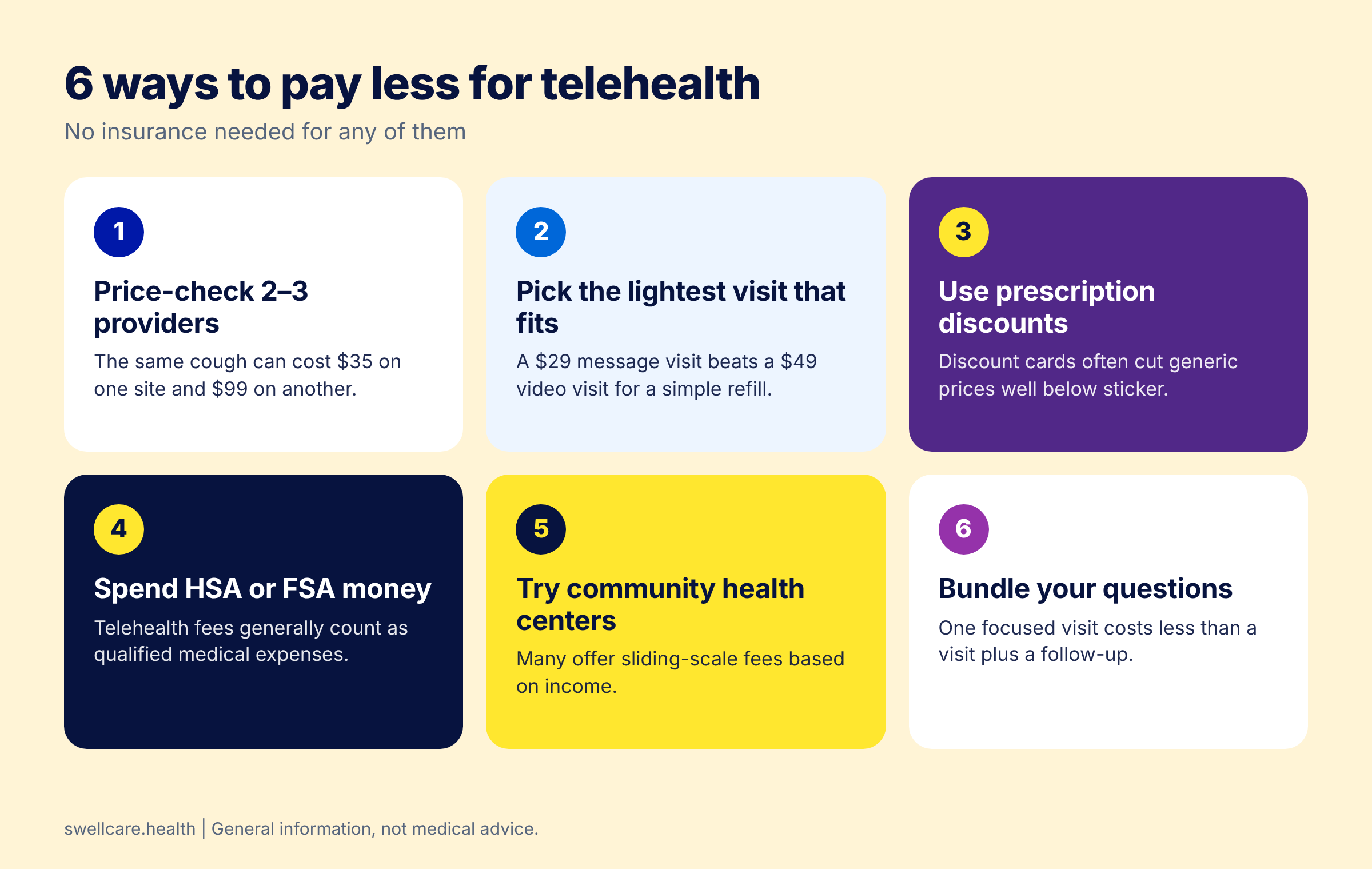
You have more control over the final telehealth cost than it feels like you do. These six steps work on any platform.
- Price-check two or three providers. The same cough can cost $35 on one site and $99 on another. Ask about discounts for paying at booking, too, since some providers offer them.
- Pick the lightest visit that fits. A message visit at $29 beats a video visit at $49 when you only need a refill or a quick answer.
- Use prescription discounts. A pharmacy discount card often cuts generic prices well below the sticker price, and these discounts work without insurance.
- Spend HSA or FSA money if you have it. Telehealth fees generally count as qualified medical expenses, so a balance you already hold can pay the bill. Check with your plan administrator first, since coverage rules for each account differ. Congress also made permanent the rule that lets high-deductible plans cover telehealth before the deductible, which matters if you’re between plans. See IRS Notice 2026-5.
- Look at community health centers. Many offer sliding-scale fees and other discounts based on income, including virtual appointments.
- Bundle your questions. Write them down first. One focused visit is cheaper than a visit plus a follow-up.
What if you have Medicare or Medicaid?
Then you may not be paying cash at all, because your coverage might already include telehealth. Check before you do.
Medicare’s telehealth flexibilities now run through December 31, 2027 under the Consolidated Appropriations Act, 2026. That means beneficiaries can generally take a telehealth visit from home, without the old geographic limits. You may still owe a copay, a deductible or coinsurance under Part B, so ask the provider what your share will be before the visit starts. Medicare Advantage plans can add their own telehealth benefits, including mental health visits. Source: Greenbaum Rowe Smith & Davis.
If you qualify for Medicaid, you could pay little or nothing for a telehealth visit. Medicaid coverage varies by state, and so do copays, which can be a few dollars or zero. Some members pay nothing, and many plans cover a mental health visit by video. Call the number on your card to confirm what your coverage includes, and ask whether the provider is in-network before you book, because an out-of-network visit can leave you with the whole bill.
Private insurance is a separate puzzle. With a high deductible, a telehealth visit may cost less as a cash payment than it would through the plan. Ask whether the in-network rate beats the self-pay price, and whether the coverage applies before you’ve met the deductible. Some plans charge a flat copay of $0 to $50. Others make you pay the full allowed amount first, and that difference can decide which route is cheaper.
How Swell prices online care
Swell was built for people paying out of pocket, so the pricing is blunt. The initial screening is free. A completed consultation is $45 total, with no monthly membership and no subscription to cancel. Medication and lab costs are separate, and you’ll see them before you agree to anything.
Telehealth care is available around the clock. Clinicians handle everyday illness and urgent non-emergency questions, medication refill review for many stable, non-controlled medications, weight care, and labs with follow-up.
If you’re staring at a symptom and a price list right now, start a free screening and see exactly what your visit would cost before you pay. Prices can change, so confirm the current rate on the site.
When telehealth isn’t enough
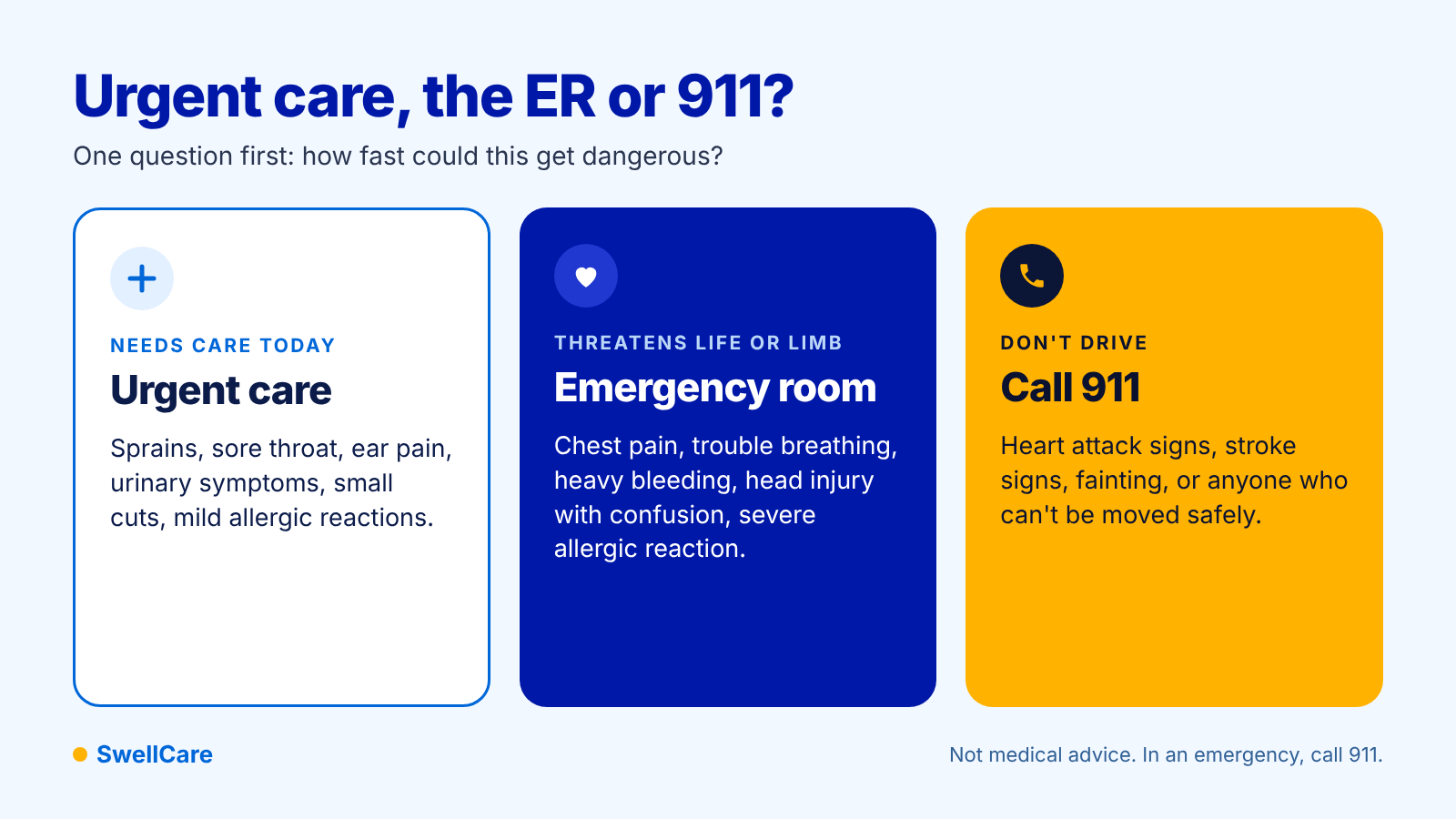
Skip the app and call 911 or go to the nearest emergency room for chest pain, trouble breathing, signs of a stroke, severe bleeding, a head injury with confusion, or thoughts of harming yourself. In the US you can also call or text 988 for the Suicide & Crisis Lifeline.
See someone in person when you need a physical exam, imaging, stitches or a procedure. A good telehealth provider will tell you that quickly and won’t keep you on the call to run up a charge. If you’ve been told to go in and the price is the only thing stopping you, say so. A community health center or a cash-price urgent care is still far cheaper than the ER later.
This article is general information, not medical advice.
Questions people ask about telehealth costs
How much does telehealth cost without insurance?
Most self-pay telehealth visits cost between $29 and $120. Message visits start near $29, video visits with a clinician run about $35 to $100, and a mental health visit can reach $119 or more. Prescriptions, lab tests and follow-up visits are usually billed separately, so your total telehealth cost can run higher than the visit fee.
Is telehealth free without insurance?
Rarely. Some services offer a free screening or a first question at no charge, and community programs may waive fees based on income. But most clinicians get paid per visit, so expect to pay something. Prices start around $29 for a message visit and $35 to $49 for budget video visits.
What is the cheapest telehealth option without insurance?
Message-based telehealth visits are usually the cheapest, starting near $29. Budget telehealth platforms start around $34 to $49. The cheapest option still has to fit your problem, though. If it can’t treat what you have, you’ll pay twice. Compare the visit type, not just the headline price. Mental health visits cost more, so budget closer to $100 to $120 for those.
Is telehealth cheaper than going to the doctor in person?
For everyday problems, yes. A virtual visit typically costs $29 to $120, while basic urgent care runs $150 to $280 and in-person primary care can reach $300. You also skip travel and time off work. For anything needing imaging or a hands-on exam, in-person care is the right call.
Can I get a prescription through telehealth without insurance?
Yes, for many conditions. A licensed clinician can send a prescription to your pharmacy after the visit. You pay the pharmacy separately, and generics are usually cheapest. Controlled substances face tighter rules, and some clinicians won’t prescribe them online, so ask before you book.
Trusted references
Public-health, research, and medical-society resources related to this guide.