Your head is pounding, the screen is too bright, and you just want it gone. Here’s the short version of how to get rid of a headache fast: drink a glass of water, put a cold pack on your forehead, dim the lights, and take an over-the-counter pain reliever exactly as the label says. Most everyday headaches find some relief with that combination.
The rest of this guide covers why each step helps, which ones have real evidence behind them, and the warning signs that mean you should skip home care and get help. You’re far from alone. In a CDC survey, about 20% of women and 11% of men reported a severe headache or migraine in the past three months.
What kind of headache do you have?
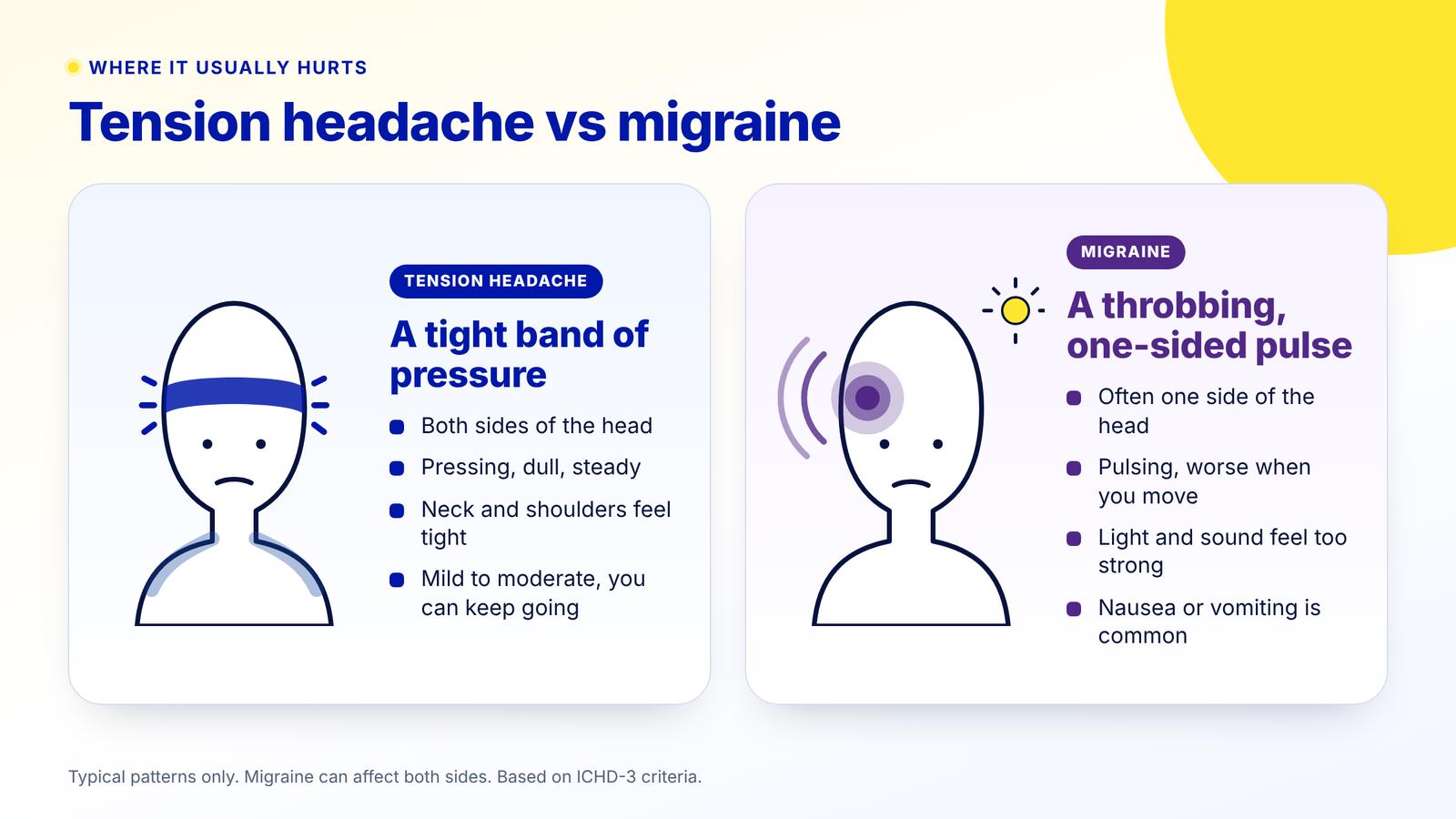
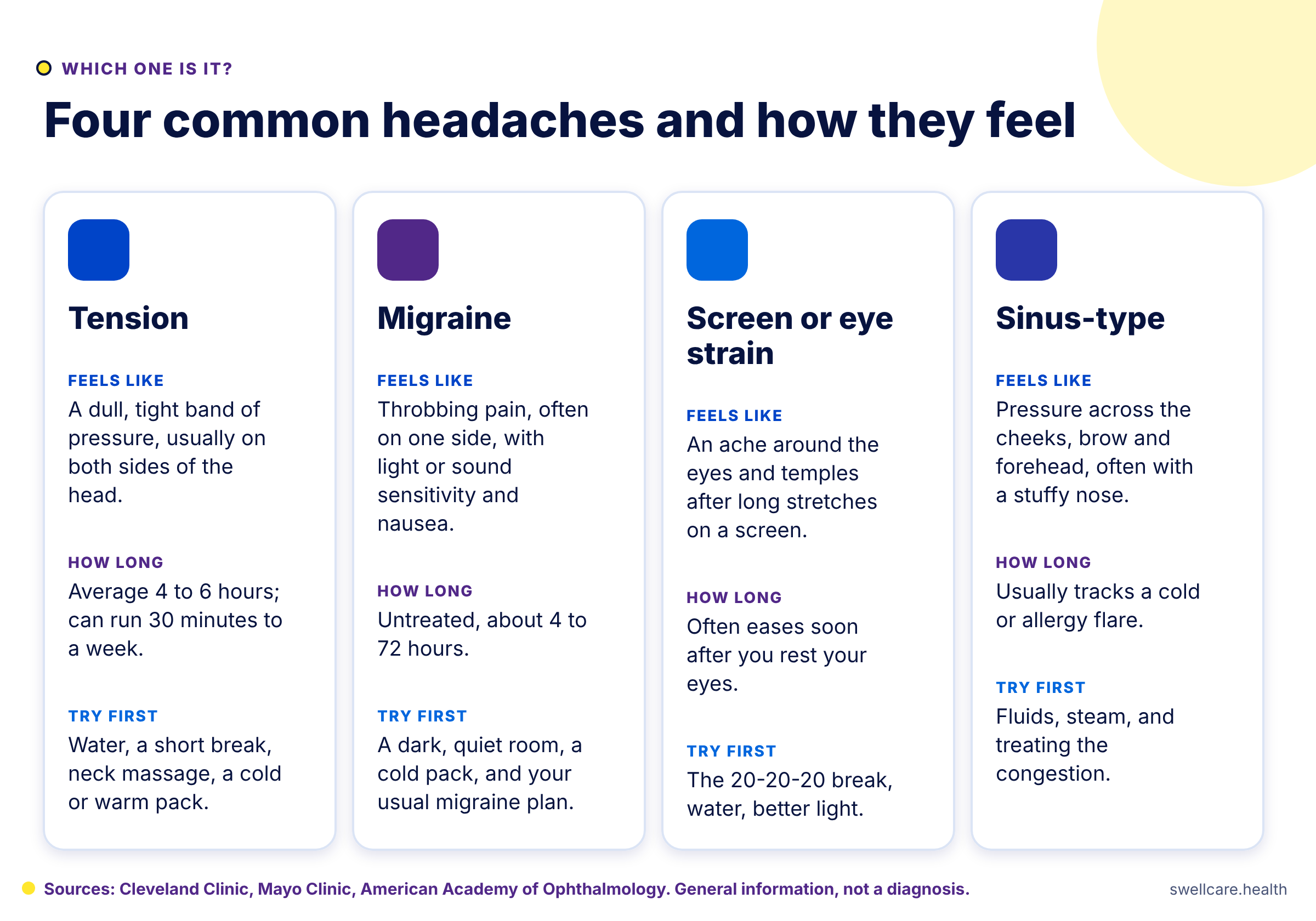
The fix works better when it matches the headache. Tension headaches are the most common kind. The Cleveland Clinic says they average four to six hours, though some stretch from 30 minutes to a week. Picture a dull, tight band across both sides of your head after a stressful day.
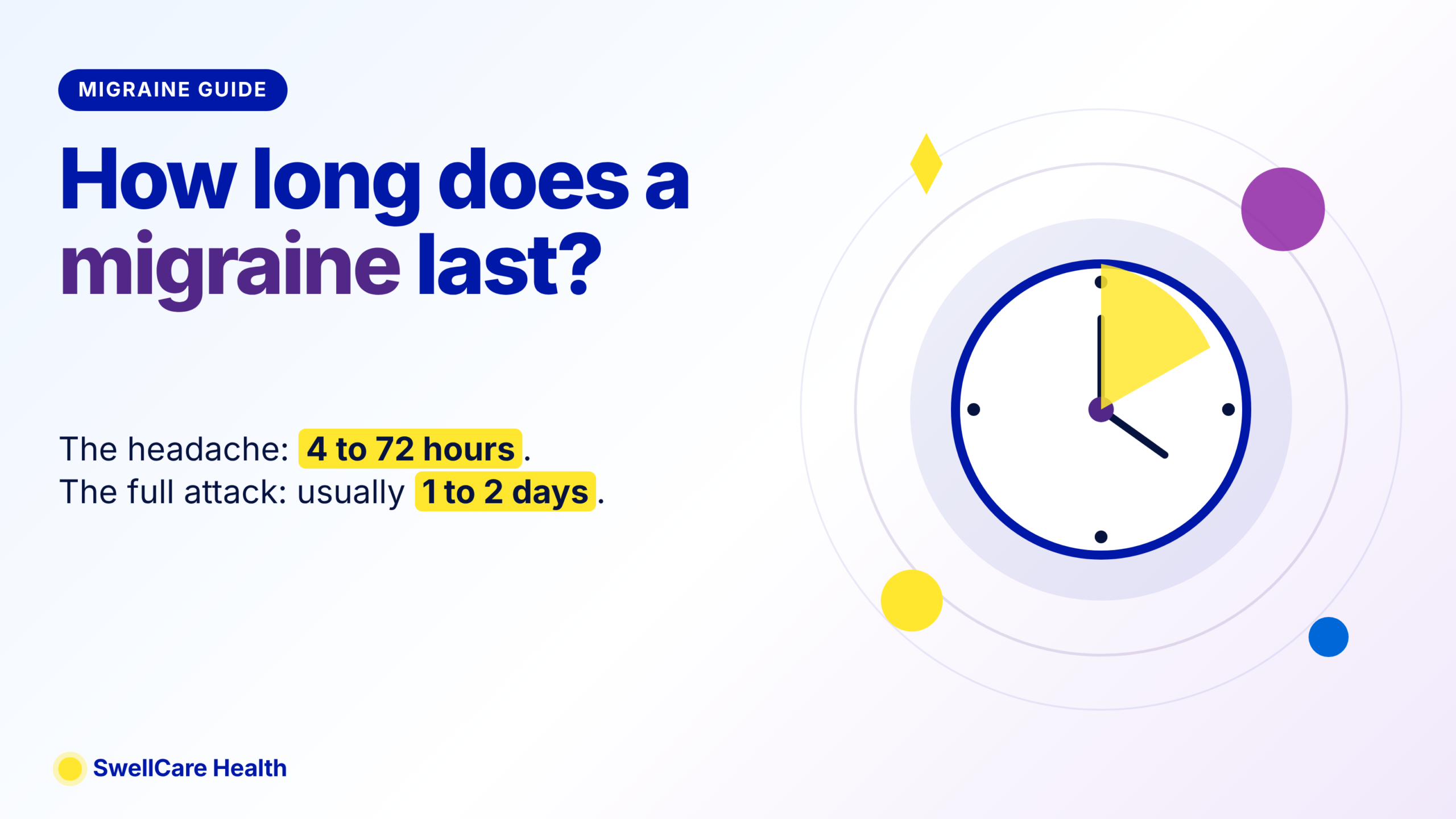
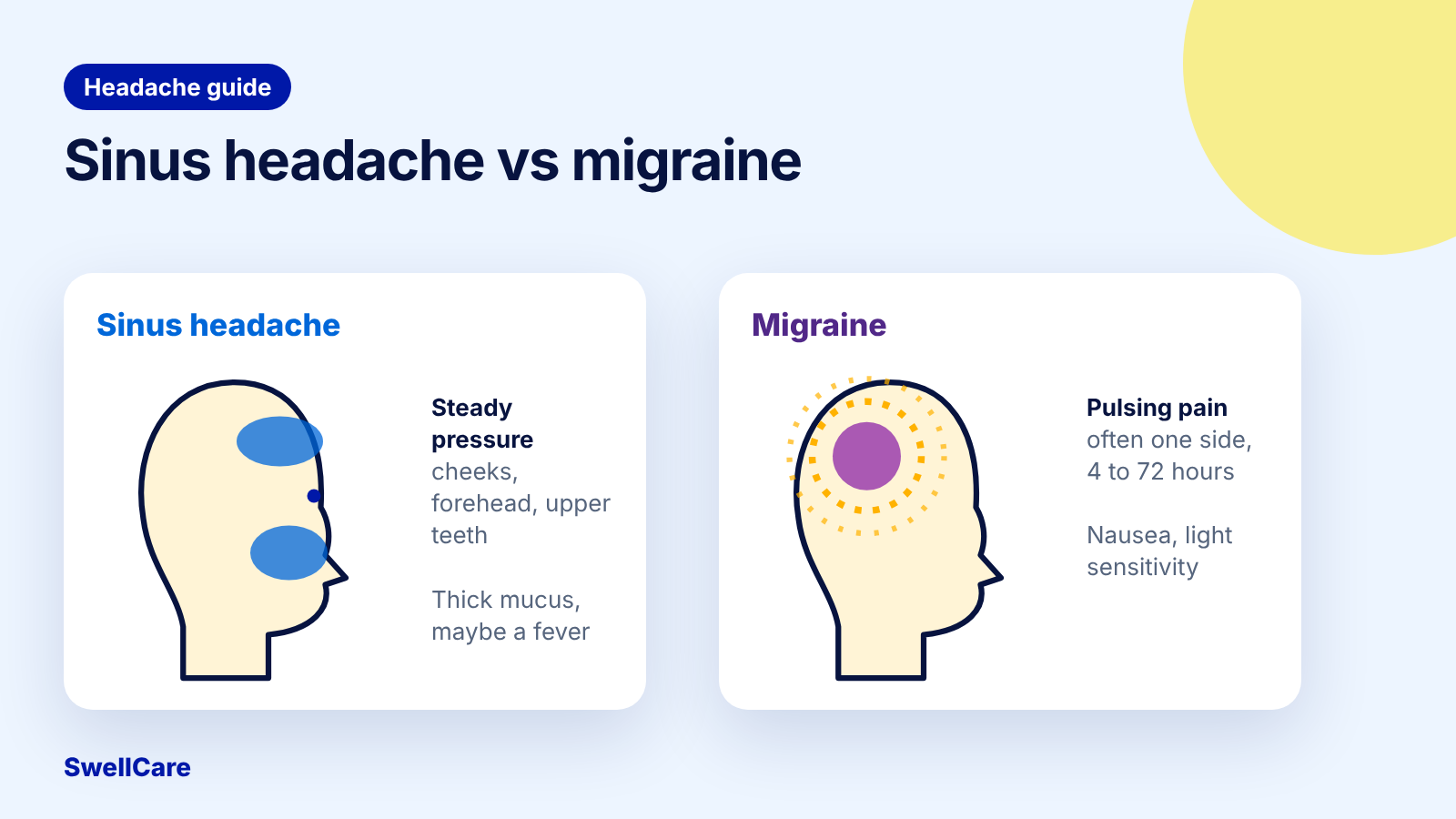
A migraine is a different animal. It throbs, often on one side, and light, sound and nausea tag along. Left untreated, Mayo Clinic says an attack usually lasts 4 to 72 hours. A sinus headache brings pressure across the cheeks and brow, usually with a stuffy nose. Cluster headaches, with severe pain around one eye, are rarer and need a clinician’s help.
| Headache | Feels like | Clue | Start with |
|---|---|---|---|
| Tension | Dull, tight band | Both sides, after stress | Fluids, a break, a shoulder rub |
| Migraine | Throbbing, often one side | Light and sound sensitivity | Dark, quiet room, cold pack |
| Eye strain | Ache around the eyes | Builds through the workday | A 20-20-20 break |
| Sinus headache | Pressure in cheeks and brow | Stuffy nose | Fluids, treating the congestion |
How to get rid of a headache fast: 9 steps to try right now
Work down the list in order. You won’t need all nine.
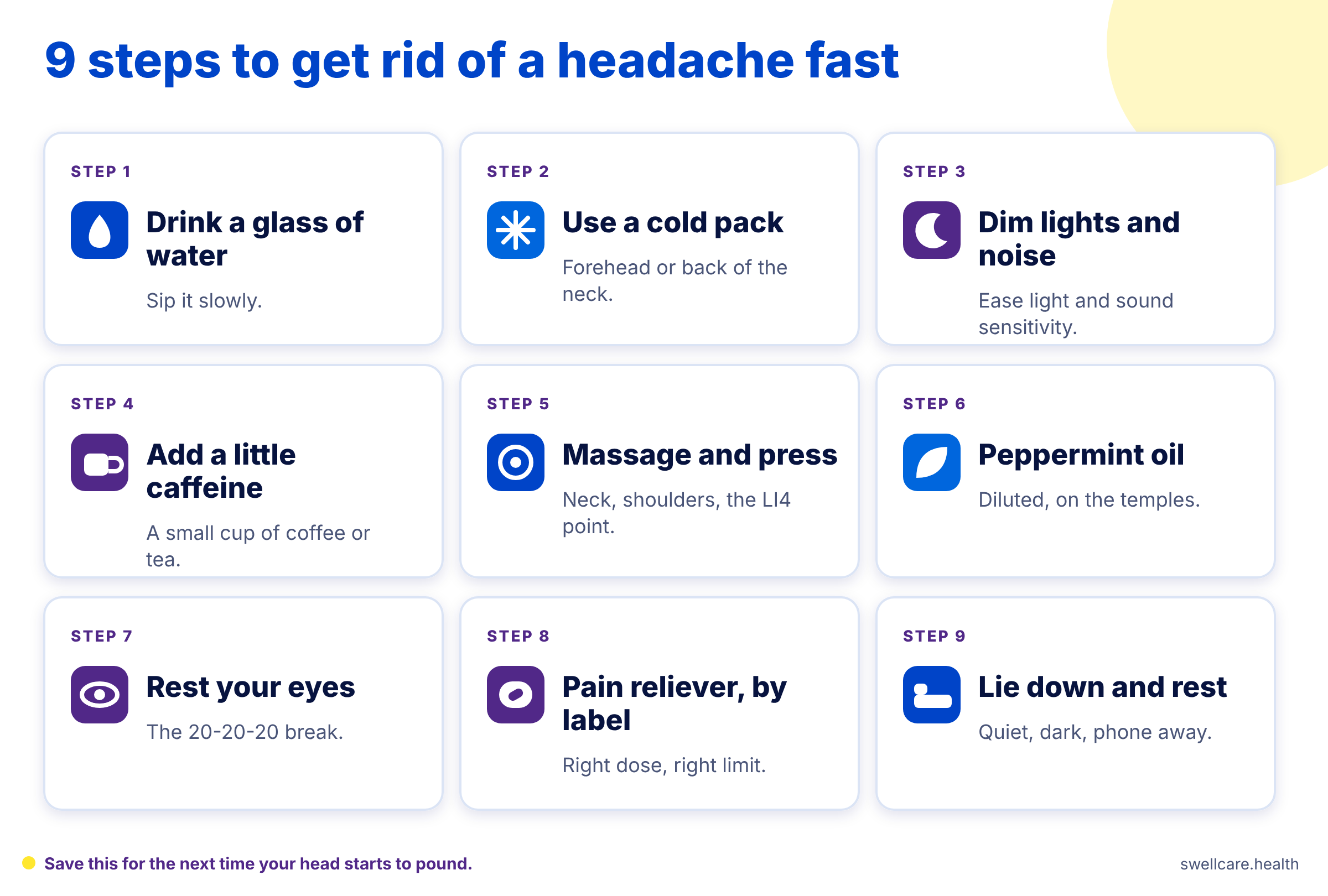
1. Drink a glass of water
Dehydration headache is real, and it’s the cheapest fix on this list. Sip a full glass over a few minutes. Be realistic about the evidence, though. A small trial found that drinking more water improved headache-related quality of life but didn’t cut the number of headache days, and a critical review called the evidence weak. Hydration is a safe first move, not a cure.
2. Put a cold pack on your forehead or neck
Wrap a cold compress in a thin towel and rest it on your forehead, temples or the back of your neck for about 15 minutes. In a Chicago clinic study of 90 people with migraine, cluster headaches or mixed headaches, about 71% rated a chilled gel pack as effective alongside their usual treatment. If your pain lives in tight muscles, a warm pack may feel better.
3. Dim the lights and quiet the room
Light sensitivity and sound sensitivity are classic migraine features, along with nausea. Close the blinds, mute the TV and step away from the glare. Even with a tension headache, a few quiet minutes lowers the stress that keeps muscles clenched, and stress is a common trigger.
4. Have a little caffeine
A Cochrane review found that adding at least 100 mg of caffeine to a standard painkiller helped roughly 5% to 10% more people reach good relief. That’s a modest bump, and the review pooled several kinds of pain, headache among them. A small cup of coffee or tea alongside your painkiller is a reasonable amount. Too much caffeine, or skipping your usual cup, can cause a headache of its own.
5. Massage your neck and try a pressure point
Tight shoulders feed tension headaches. Knead the base of your skull, the tops of your shoulders and your temples for a couple of minutes. For the pressure point everyone asks about, find the web between your thumb and index finger (LI4). Memorial Sloan Kettering suggests pressing it firmly in small circles for two to three minutes, firm but never painful, then switching hands. Skip it if you’re pregnant, because that page warns it can bring on labor. Research on pressure points is thin, so call it a comfort measure.
6. Try a little peppermint oil
In a small trial summarized by American Family Physician, a 10% peppermint oil preparation applied to the skin brought relief within 15 minutes, about as well as acetaminophen. It involved just 41 patients, so treat it as early evidence. Dilute the oil, patch-test it on your forearm first, and keep it away from your eyes. Then smooth a thin layer along your temples.
7. Rest your eyes from the screen
Every 20 minutes, look at something about 20 feet away for about 20 seconds, and blink on purpose. That’s the 20-20-20 rule from the American Academy of Ophthalmology. If your temples ache late in the workday, eye strain deserves a look.
8. Take an over-the-counter pain reliever the right way
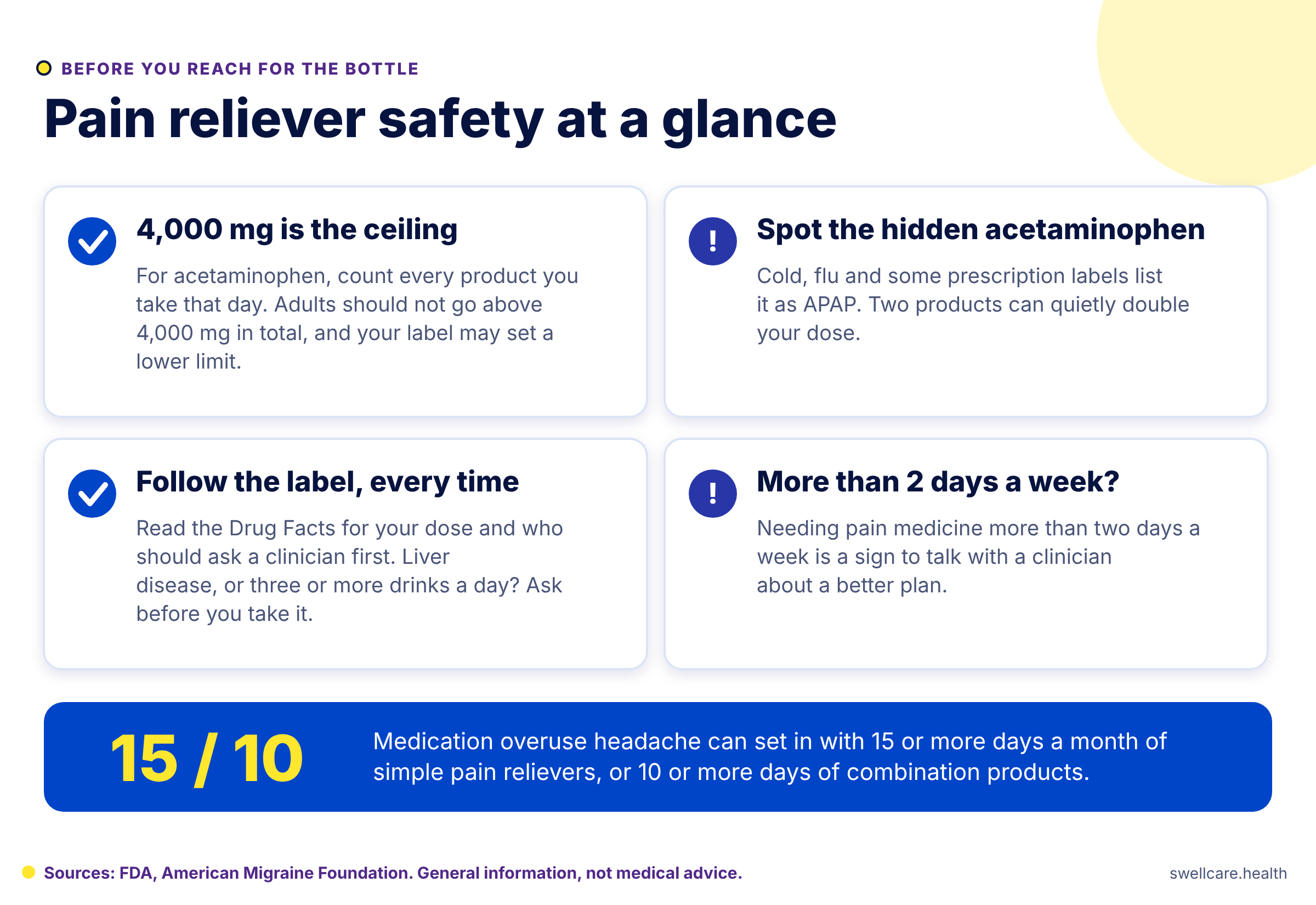
The usual over-the-counter medications are acetaminophen, ibuprofen, naproxen and aspirin. Read the Drug Facts label every time, and if you have stomach, kidney or heart problems or take blood thinners, ask a pharmacist before using ibuprofen, naproxen or aspirin. For acetaminophen, the FDA says adults shouldn’t go above 4,000 mg a day from all products combined, and cold-and-flu or prescription medications can hide it under the abbreviation APAP. Ask a clinician first if you have liver disease or drink three or more alcoholic drinks a day.
How often is too often? If you need pain relievers more than two days a week, that’s a pattern worth discussing, not a dose problem.
9. Lie down and try to sleep
Give it 20 or 30 minutes in a dark room with your phone in another room. Poor sleep is one of the headache triggers the Cleveland Clinic lists for tension headaches.
Your first 30 minutes: a simple relief routine
Here’s a sensible order for how to get rid of a headache fast when you only have half an hour. It’s a practical sequence, not a clinical protocol.
- Minutes 0 to 5: Hydrate, step away from the screen, dim the lights.
- Minutes 5 to 10: Cold pack on your forehead, then a gentle shoulder massage.
- Minutes 10 to 15: Take a pain reliever by the label if you need one, with a small cup of coffee or tea if caffeine is part of your routine.
- Minutes 15 to 30: Lie down somewhere quiet and check in with yourself.
Nothing has budged, or the pain is climbing? Stop home care and call a clinician.
Mistakes that keep a headache going
Taking pain medications too often is the big one. Medication overuse headache, also called rebound headache, can set in with 15 or more days a month of simple pain relievers, or 10 or more days of combination products, according to the American Migraine Foundation. More pain leads to more medications, which leads to more headaches.
Stacking products that contain acetaminophen is the second mistake. Letting caffeine creep up is the third, because the headache when you skip it can feel just like the original.
How to keep headaches from coming back
Start a headache diary. For two weeks, jot down when each headache begins, what you ate and drank, how you slept and how many hours you spent on devices. Patterns and triggers show up fast. The Cleveland Clinic lists stress, poor posture, neck strain, eye strain and sleep problems among the common triggers, so fix the cheap ones first: a better chair and better posture, steady bedtimes and screen breaks. The same page suggests relaxation, exercise and good sleep as part of managing them.
Headaches on 15 or more days a month are a different conversation. A headache specialist quoted by Michigan Medicine suggests some people try magnesium for prevention, with loose stool as the main side effect. The reasoning is that people with migraine may run low on brain magnesium. It’s a slow-burn option, not fast relief, so check with your clinician before starting magnesium.
When to see a doctor or go to the ER
Some headaches aren’t a home-care problem. Mayo Clinic’s list of red flags says to call 911 or go to the ER for the worst headache of your life or any sudden, severe one, plus confusion, fainting, a high fever with a stiff neck, numbness or weakness on one side, vision problems, or trouble speaking or walking.
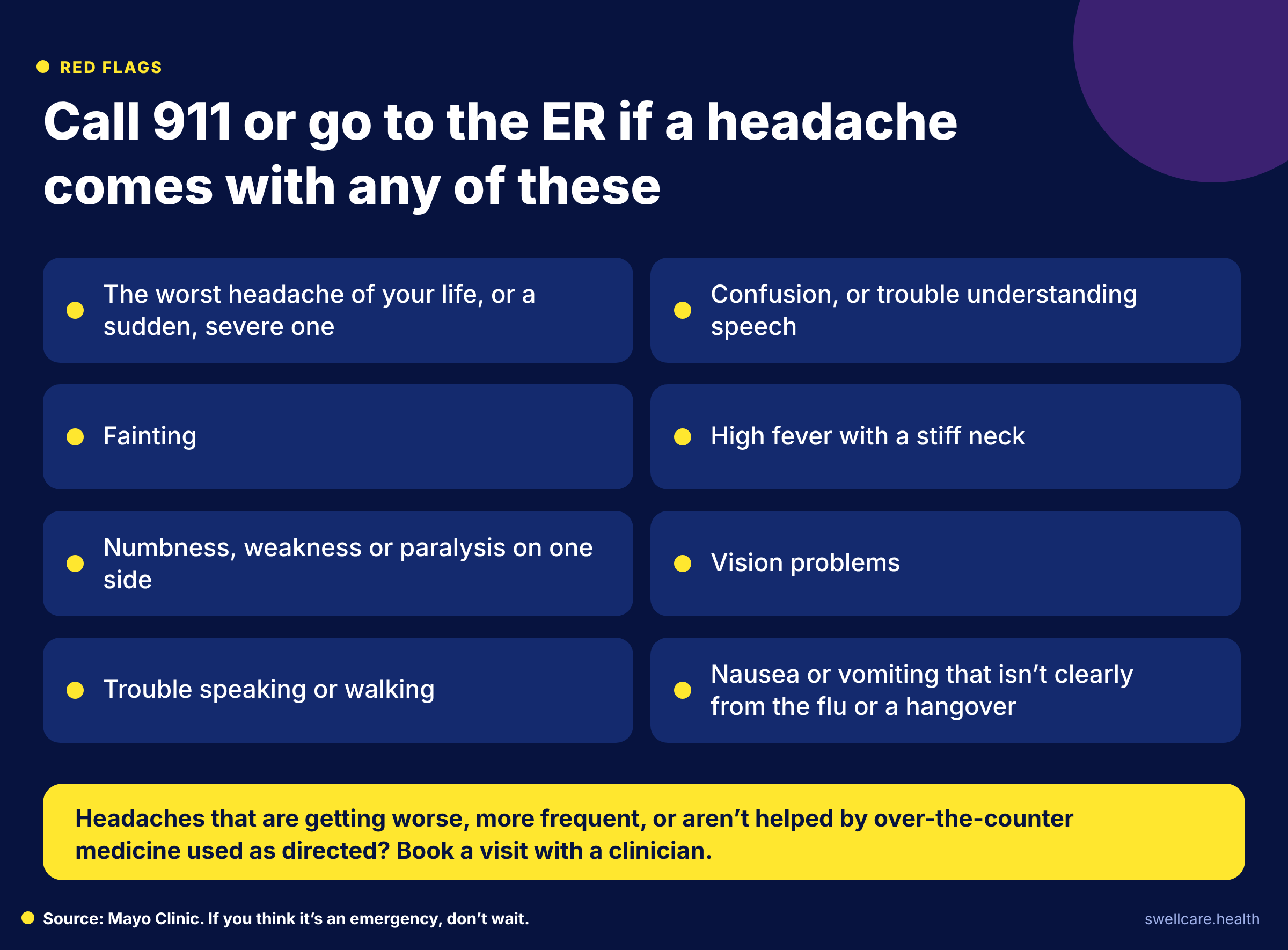
See a doctor if your headaches come more often than usual, hit harder, don’t improve with over-the-counter medications used as directed, or get in the way of work and sleep.
If your pattern looks like a familiar migraine, or sinus symptoms are the culprit, a Swell clinician can review it by secure chat or video at any hour. Online care isn’t the place for emergencies or for migraines with sudden, severe or neurologic warning signs. Start at Swell urgent care or see which conditions we treat.
Questions people ask about getting rid of a headache fast
What pressure points relieve headaches?
The web between your thumb and index finger (LI4) is the most common one. Press firmly in small circles for two to three minutes, then switch hands. Research is limited, so treat it as a comfort step, and skip it during pregnancy.
What drink stops a headache?
No drink stops a headache outright, but plain water is the safest start, especially if you might be dehydrated. A small cup of coffee or tea may give a painkiller a modest boost. Go easy, since too much caffeine can cause a headache.
What naturally gets rid of a headache?
A cold pack, a quiet dark room, neck massage, sleep and a little caffeine are the natural options with some support. Diluted peppermint oil has early trial data. None of them replaces care for a headache that’s severe, sudden or getting worse.
How long does a headache last?
It depends on the type. Tension headaches average about four to six hours but can run from 30 minutes to a week, and an untreated migraine usually lasts 4 to 72 hours. If yours outlasts what’s normal for you, call a doctor.
What should I do when a headache won’t go away?
Check the red flags above first. If none apply, try the 30-minute routine once, stay within the label’s limits for pain relievers, and book a visit with a doctor if the headache continues, keeps returning, or needs medications more than two days a week.
Can drinking water cure a headache instantly?
Water won’t cure a headache instantly. It helps most when dehydration is part of the story, and the research on it for headaches is small and weak. It’s cheap and low risk, so drink a glass, then pair it with the other steps.
Trusted references
Public-health, research, and medical-society resources related to this guide.
- Mayo Clinic: Headache, when to see a doctor
- Mayo Clinic: Migraine, symptoms and causes
- Cleveland Clinic: Tension headaches
- FDA: Don’t overuse acetaminophen
- American Migraine Foundation: Medication overuse headache
- American Academy of Ophthalmology: Protect your eyes from too much screen time
- American Family Physician: Headache
- Michigan Medicine: Best OTC medicines for headache