It’s 2 p.m. The zigzag lines at the edge of your vision showed up an hour ago, and now a dull pressure is building behind one eye. You know what’s coming. What you want to know is how long it will stay.
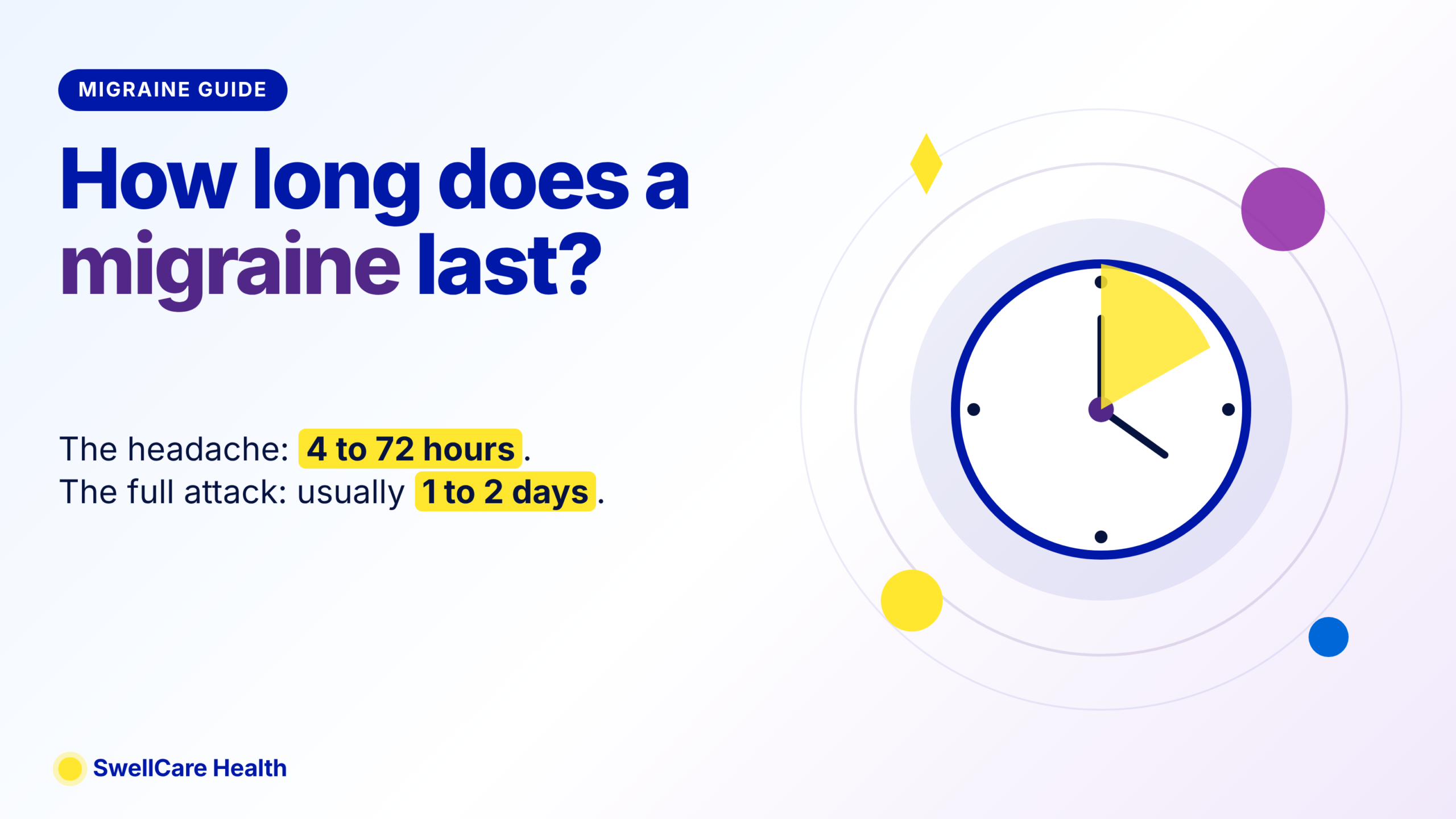
So, how long does a migraine last? The headache itself usually runs 4 to 72 hours if you don’t treat it. The whole migraine attack, from the first warning signs to the last foggy morning after, often stretches across one to two days. Some end by dinner. A few drag on. Below, you’ll see how long each phase lasts, what shortens an attack, and the point where a long migraine needs a doctor.
How long does a migraine last? The short answer
Most people feel the headache phase for somewhere between four hours and three days, according to the American Migraine Foundation. Add the warning hours before it and the drained day after, and a full migraine attack commonly fills one to two days. Rarely, it runs closer to a week.
Roughly 39 million Americans live with migraine, so if yours feels endless, you’re in very large company. The symptoms you notice first usually hint at where you are in the attack.
Your own pattern matters more than any average. Duration changes from person to person, and it changes from one attack to the next in the same person. One migraine attack might fade by bedtime. The next, in a bad week of stress and poor sleep, might hang on for two days.
Doctors also sort migraine by how often it strikes. Episodic migraine means fewer than 15 headache days a month. Chronic migraine means 15 or more headache days a month for over three months, and about 3 to 5 percent of Americans have it. Episodic migraine attacks tend to be shorter and spaced out, while chronic migraine can feel like one long, rolling episode. Episodic migraine is the more common pattern, and it usually comes with clear gaps between episodes. The treatment plan differs too, because chronic migraine usually needs daily prevention on top of medication for each attack.
The four phases of a migraine and how long each one lasts
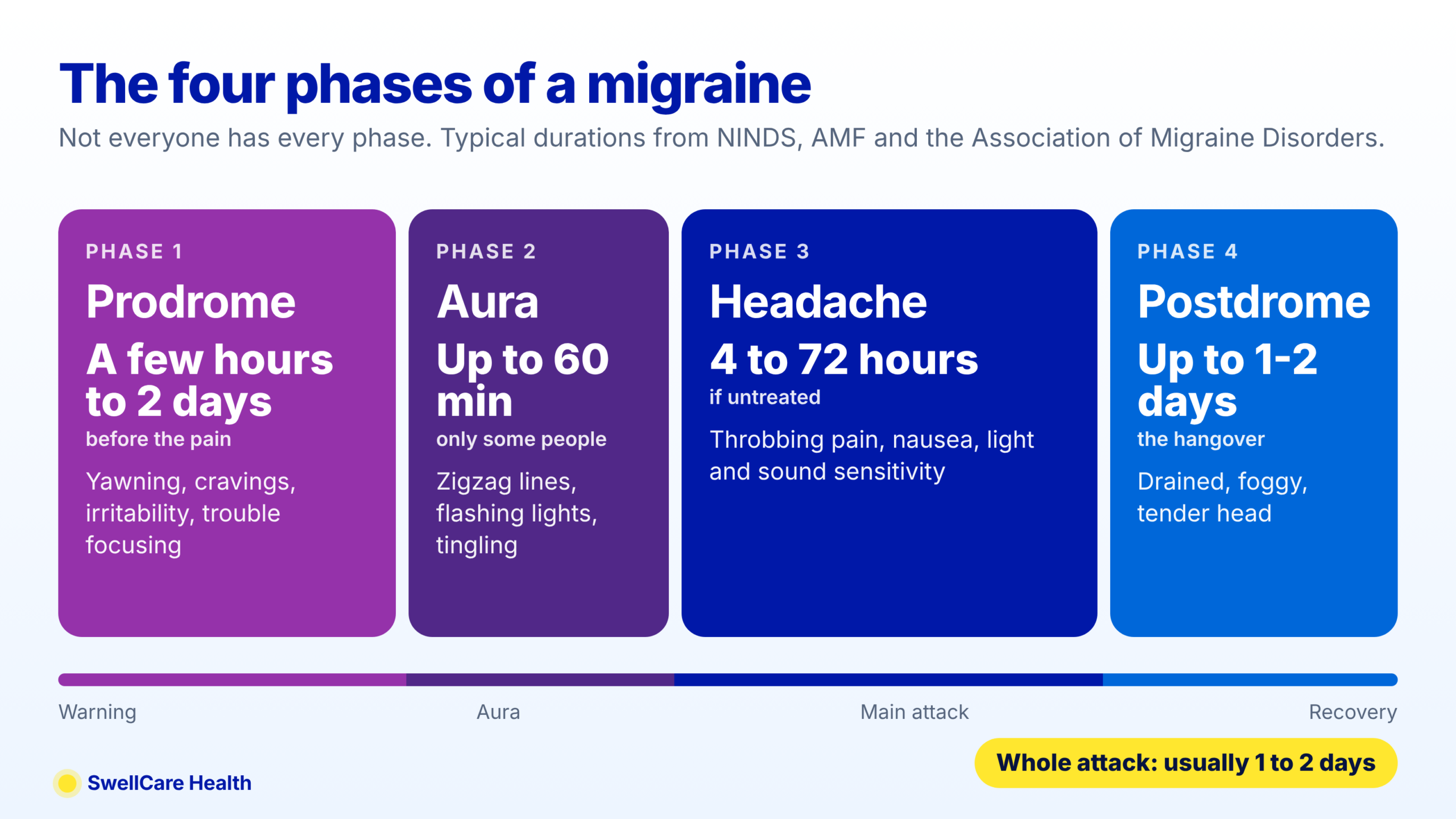
A migraine isn’t one event. It moves through phases, and the symptoms change at each one. You may not get all four. Plenty of people never have an aura. Others get the aura with no head pain at all, sometimes called a silent migraine.
| Phase | Typical duration | What it feels like |
|---|---|---|
| Prodrome | A few hours to about 2 days before the pain | Yawning, cravings, irritability, tiredness |
| Aura | Up to 60 minutes | Flashing lights, zigzag lines, tingling |
| Headache | 4 to 72 hours | Throbbing pain, nausea, light and sound sensitivity |
| Postdrome | Up to 24 to 48 hours | Wiped out, foggy, a dull ache |
The prodrome, or warning hours
The prodrome can start a few hours to a couple of days before the pain, per the National Institute of Neurological Disorders and Stroke. Prodrome symptoms are easy to blame on the wrong thing. You yawn nonstop, crave sugar, snap at a coworker, or can’t concentrate, and you chalk it up to stress or plain fatigue. Looking back, it was the migraine knocking.
Aura usually lasts under an hour
Aura is a short burst of neurological symptoms, most often visual disturbances such as shimmering spots or zigzag lines. Aura symptoms build over several minutes and usually resolve within 60 minutes. Some people also feel tingling or have trouble finding words.
An aura that lasts longer than an hour, or a first-ever aura, is worth a call to a healthcare provider.
The headache phase everyone remembers
This is the long stretch, 4 to 72 hours without treatment. The pain is often throbbing, often on one side, and it gets worse when you move. Nausea is common, and vomiting happens. Light sensitivity and sound sensitivity can send you to a dark room, and these symptoms tend to travel together with the pain. Many people can’t work through a migraine attack like this.
The postdrome, or migraine hangover
When the pain lifts, the attack isn’t over. The postdrome can leave you exhausted, foggy and a little low for up to two days, with a tender head and lingering light sensitivity. Postdrome symptoms like these are part of the migraine, and so is the fatigue. It isn’t a sign you’re recovering badly. Go easy on yourself.
Why one migraine ends in hours and another drags on
Length isn’t random. A few things stretch an attack, and most of them are things you can work on.
Triggers come first. Common migraine triggers include stress, missed meals, short sleep, hormonal changes and a change to your usual medicines, and the Cleveland Clinic links them to attacks that outstay their welcome. Hormonal changes around a period are another trigger for many women, which is one reason migraine is about three times as common in women as in men. Dehydration makes things worse, and so does a night of broken sleep. Keep a log of your triggers and you’ll start to see which ones lengthen your attacks.
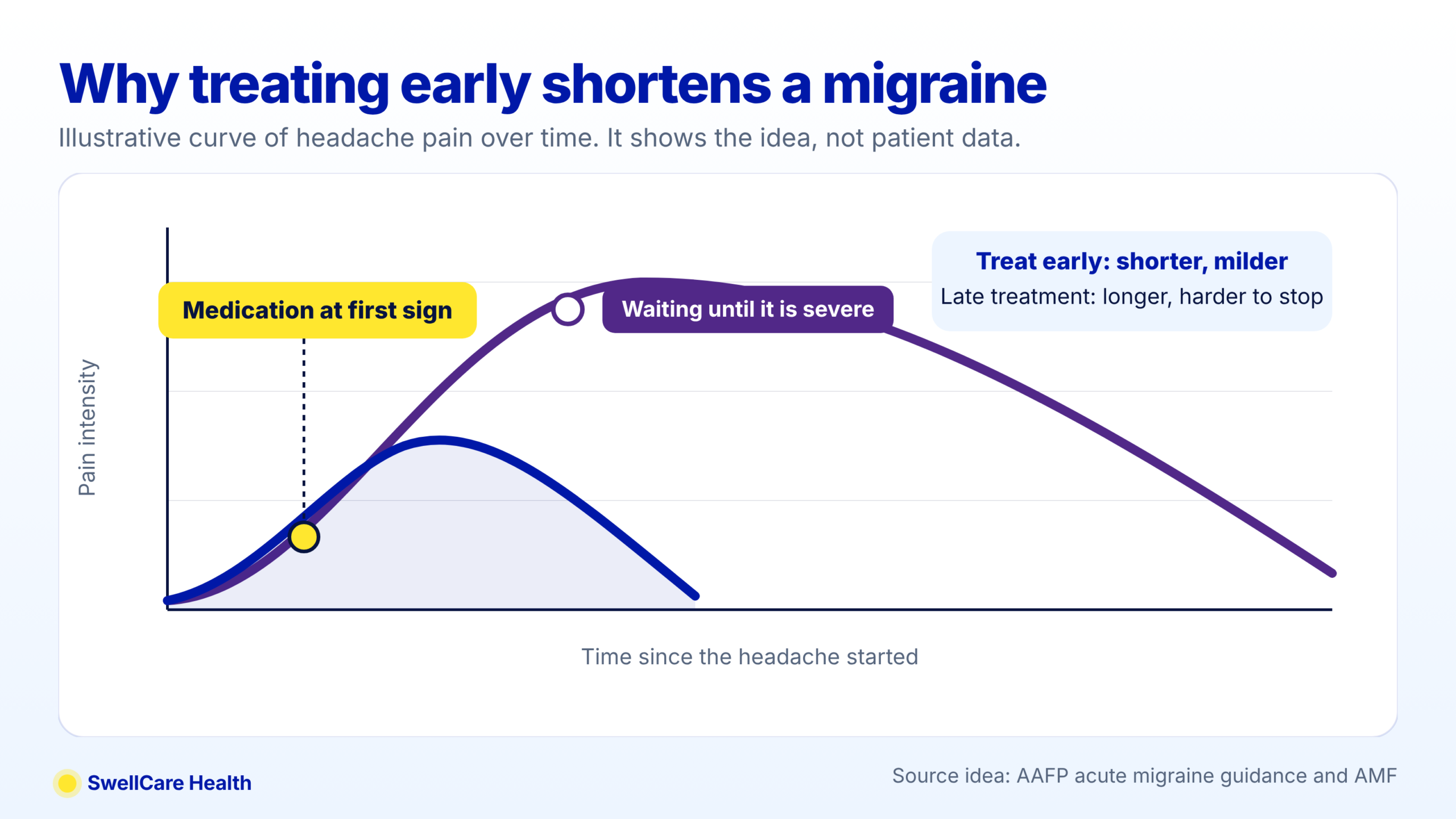
Then there’s treatment. A medication taken late, at the wrong dose, or that no longer suits you is a big reason attacks run long. Waiting until the pain is severe is the most common treatment mistake.
If you have chronic migraine, attacks can blur together. An episodic pattern can slide toward chronic when painkillers are taken too often, so that’s worth watching.
Finally, there’s the 72-hour line. A migraine that lasts longer than 72 hours without a pain-free break has a name: status migrainosus. Its symptoms match a regular migraine but hit harder. Ordinary migraine medication often won’t touch it, and it can bring dehydration, exhaustion and low mood. It deserves a doctor, not another week of waiting.
How to shorten a migraine with relief that fits each phase
The rule that matters most is to treat early. Acute migraine medications work best at the start of the headache phase, and the American Family Physician guideline summary notes that they work poorly if you wait. As the headache builds, treatment gets less likely to work. So don’t tough it out to see whether it passes.
Here’s a simple plan:
- Act at the first sign of pain or other symptoms. Take the medication your provider recommended as the headache begins, not after it peaks. A triptan, for example, is meant for the headache phase, so taking one during the aura won’t help.
- Pick the right form. If nausea hits and you vomit early, ask about a nasal spray, an injection or a dissolving tablet, since a pill may not stay down long enough.
- Set up a quiet room. Dim lights, a cool cloth, and water within reach. MedlinePlus lists these basics for good reason.
- Protect your sleep. A regular schedule is one of the best defenses against the next attack.
Know the limits, too. Taking pain medication too often can create its own headaches. Guidance cited by the AAFP says to keep simple painkillers to no more than 3 days a week and 10 days a month, and to keep a triptan to no more than 2 days a week and 8 days a month. If you’re reaching for treatment more often than that, tell your healthcare provider. It’s a sign your plan needs changing.
Keep a simple diary. Write down when the attack started, which phase you noticed first, what you took and when, and when it ended. Add any triggers you spotted, like a skipped lunch or a bad night. After a month, you’ll see your own pattern, and so will your healthcare provider, or the neurologist or headache specialist you may eventually see when you talk treatment.
When a long migraine is a warning sign
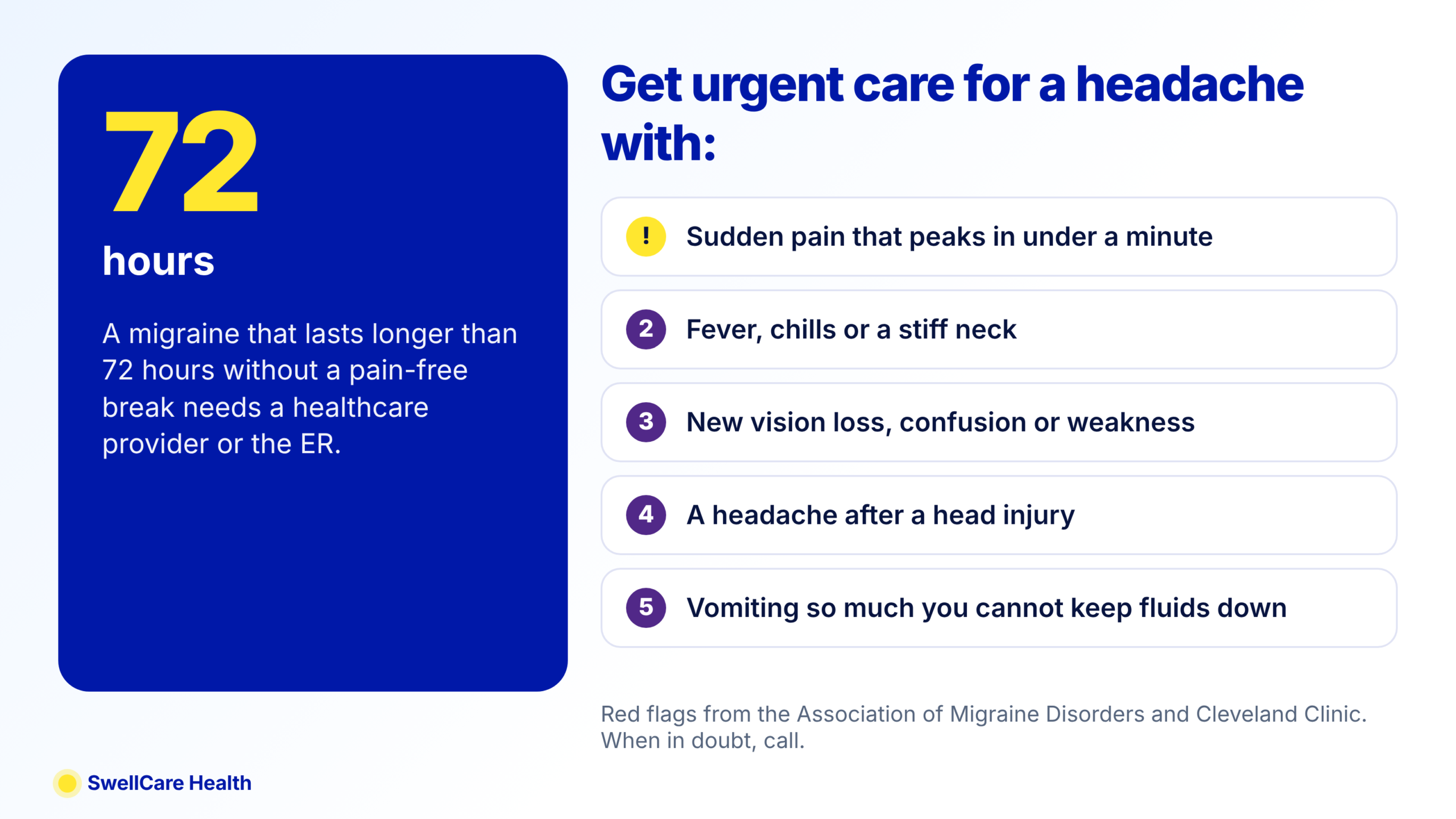
Call a healthcare provider or go to the emergency room if a migraine lasts longer than 72 hours, or sooner if you can’t keep fluids down because of vomiting.
Some headaches aren’t migraines at all, and their symptoms look different. Get emergency help right away for these symptoms:
- a sudden headache that reaches full strength in under a minute (a thunderclap headache)
- headache with fever, a stiff neck or chills
- new vision loss, confusion, weakness or trouble speaking
- a headache after a head injury
- a new kind of headache that starts after age 65
Those red-flag symptoms come from the Association of Migraine Disorders. When in doubt, call. If attacks come about once a week or more, ask about preventive treatment too, since that’s usually when preventive medicine is offered.
What to do next if your migraines keep running long
You don’t have to sort this out alone at 2 a.m. Swell offers 24/7 online care, so you can describe your symptoms to a clinician, share your diary and get guidance on treatment and your next step, whatever the hour.
Before you go, write down your last three attacks: start time, how long each phase seemed to last, what helped and what didn’t. That single page can save a lot of guesswork. And next time someone asks how long does a migraine last for you, you’ll have a real answer.
Questions people ask about migraine length
How long is too long for a migraine?
Past 72 hours is too long. A migraine that lasts more than three days without a pain-free break is status migrainosus, and you should contact a healthcare provider or visit the emergency room. Go sooner if vomiting keeps you from drinking, if the pain is far worse than your usual attack, or if any warning sign from the list above shows up.
Can a migraine last a week?
It can, but it isn’t typical. Most migraine attacks end within one to two days, and the headache phase lasts up to 72 hours. A migraine that goes on for a week, or comes back day after day, needs a medical evaluation. Long migraine attacks often respond to a different treatment than your usual one, and frequent ones may point to chronic migraine rather than an episodic pattern.
Can you sleep off a migraine?
Sometimes. Resting in a dark, quiet room helps many people, and a good nap can cut an episode short. But it isn’t a sure thing, and sleeping through the early pain means you miss the treat-early window. Take your medication first, then rest.
How long does the migraine hangover last?
The postdrome typically lasts up to a day or two after the pain fades. Expect tiredness, brain fog and a sore, tender head, plus the odd wave of nausea. Drink water, eat regular meals, and keep the next day light if you can.
Trusted references
Public-health, research, and medical-society resources related to this guide.