Your forehead throbs. Your cheeks feel packed with wet sand. You take a decongestant and wait for relief that never comes.
Here’s the blunt answer to the sinus headache vs migraine question: if this pain keeps coming back, it’s probably migraine. Mayo Clinic Health System notes that studies suggest about 90% of people who think they have sinus headaches actually have migraine. That matters, because the treatment for one won’t fix the other, and the wrong fix means more days of pain.
Why so many migraines get mislabeled as sinus headaches
“Sinus headache” isn’t a formal medical diagnosis. It’s what most of us call any pain that sits behind the eyes, across the cheeks or over the forehead. Those are exactly the spots where migraine pain loves to land too.
The numbers are striking. In a study of 2,991 primary care patients who reported frequent sinus headaches, 88% turned out to have migraine. A second, smaller study found 86% of self-diagnosed sinus headache sufferers met migraine criteria once a neurologist looked at their symptoms.
What a true sinus headache feels like
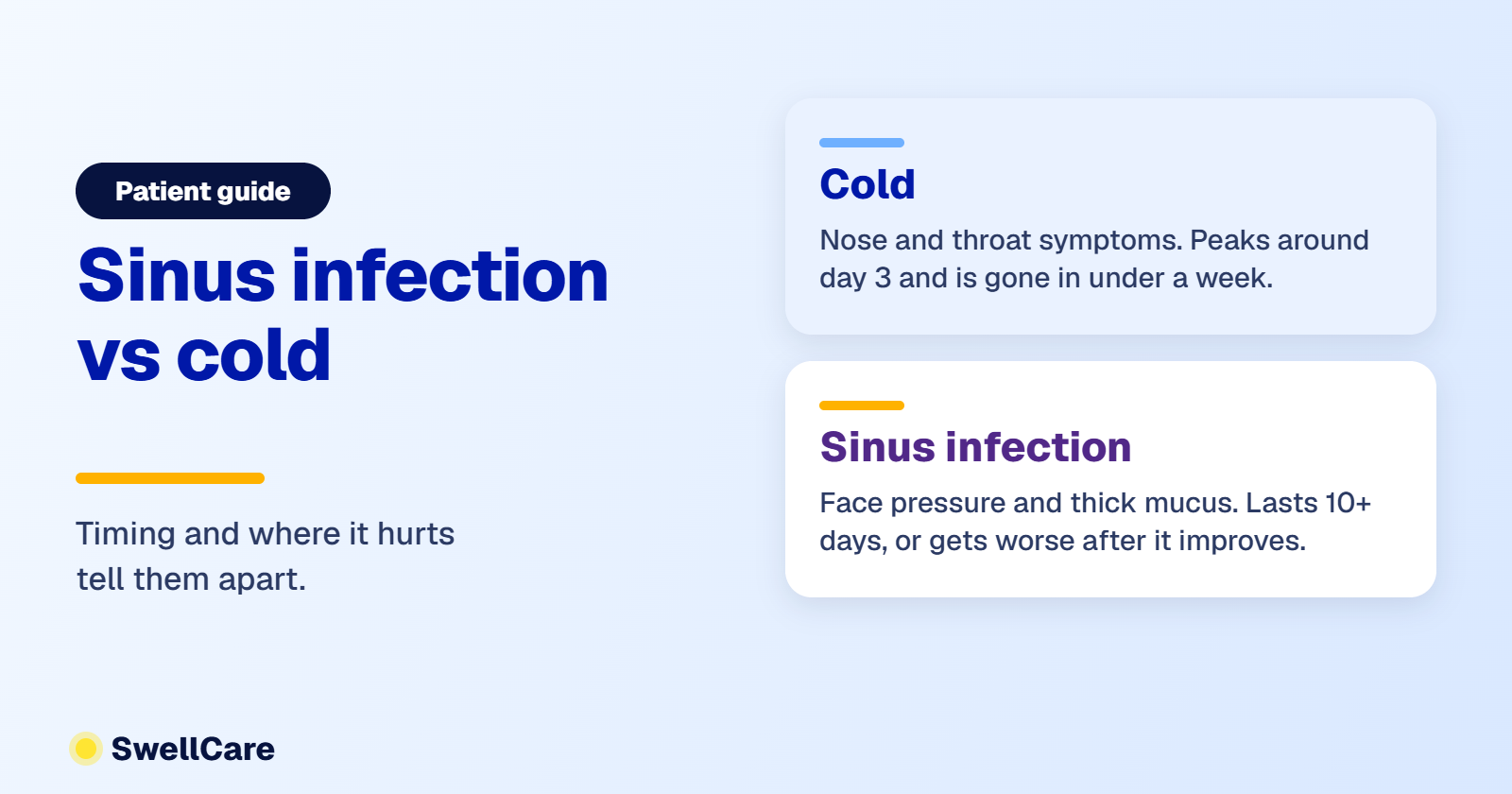
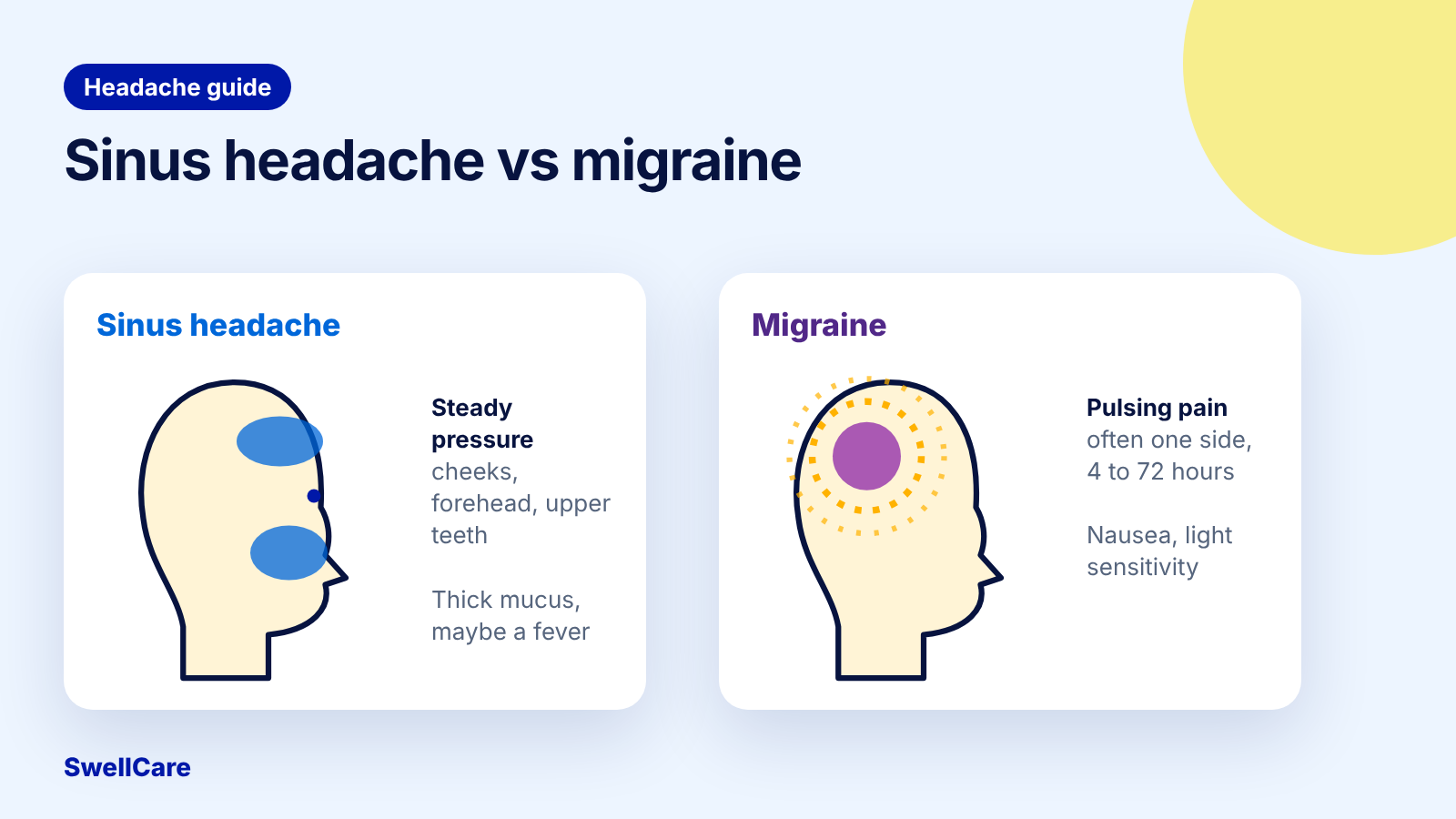
A real sinus headache comes from sinusitis, which is inflammation or infection of the sinuses. It usually follows a cold. The pain is a steady pressure over the cheeks, forehead or upper teeth, and it often gets worse when you bend forward. Other symptoms include a stuffy nose and a sore throat.
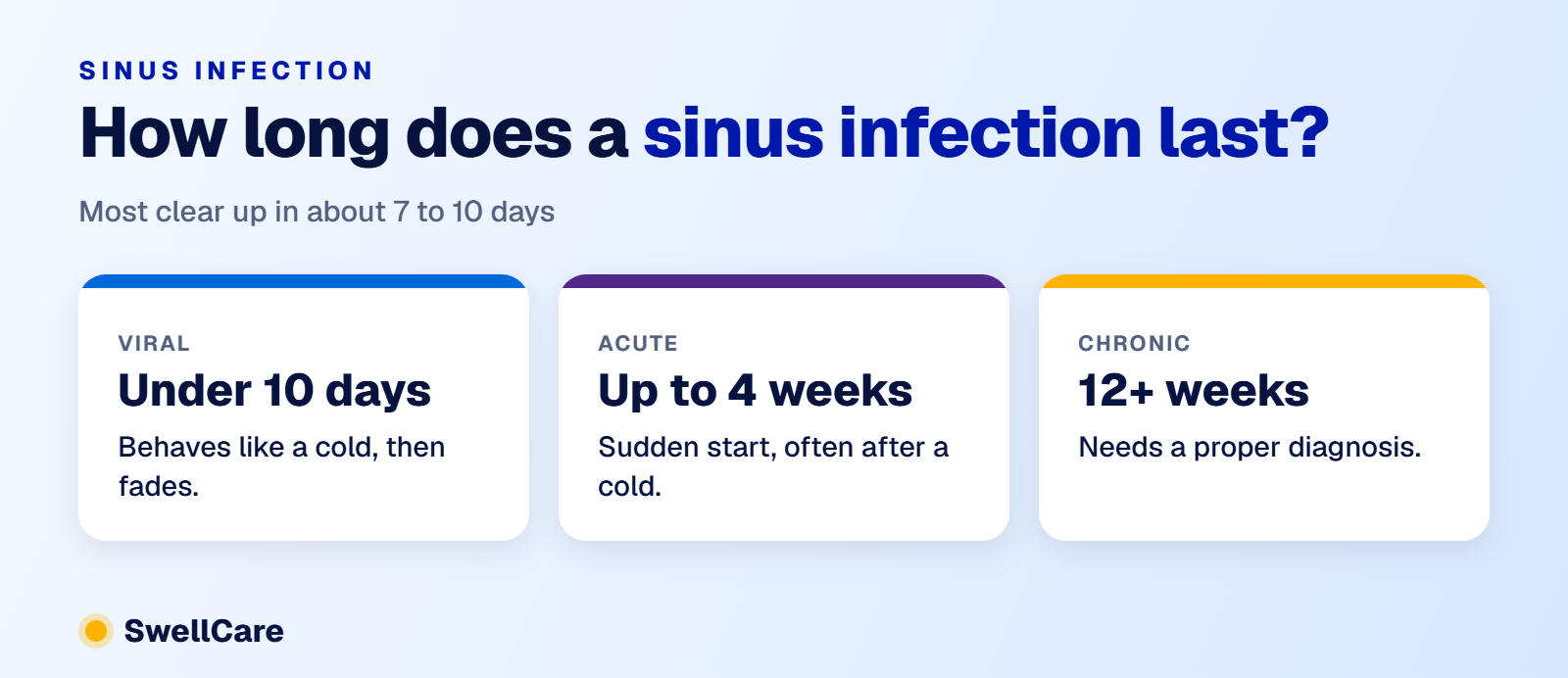
The clue is what’s happening in your nose. With a true sinus infection you’ll notice thick yellow or green mucus, reduced smell, and sometimes a fever. MedlinePlus says acute sinusitis can last up to four weeks, though most cases settle sooner. You feel lousy, but you can usually keep functioning. Allergies can cause the same kind of nasal pressure, which muddies the picture.
What a migraine feels like
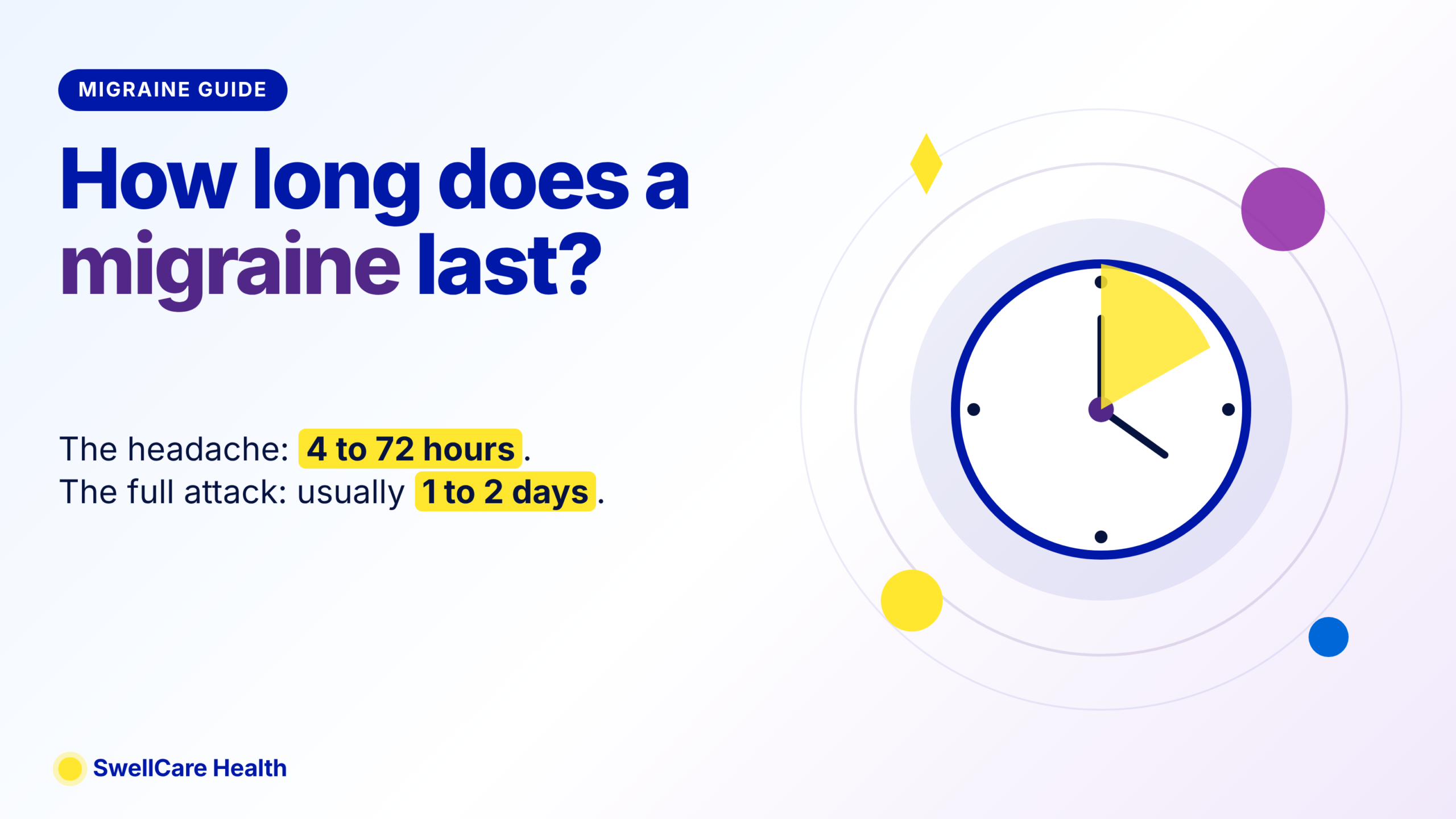
Migraine is a neurological condition, not a plumbing problem. The pain tends to pulse or throb, often on one side of the head. It can last anywhere from four hours to three days.
Then come the extras. Nausea is common. Light sensitivity is too, along with a dislike of loud noise. About one in three people get an aura, such as zigzag lines or blind spots, before the pain starts. A migraine attack often follows an aura by under an hour. Moving around makes it worse, so most people want to lie down in a dark room.
Triggers matter here. Stress, poor sleep, skipped meals, hormonal shifts and alcohol can all set off a migraine attack, and so can a weather swing. Each trigger works differently for each person. Allergies can be a trigger too, which is one reason the two get tangled together.
Sinus headache vs migraine: the side-by-side comparison
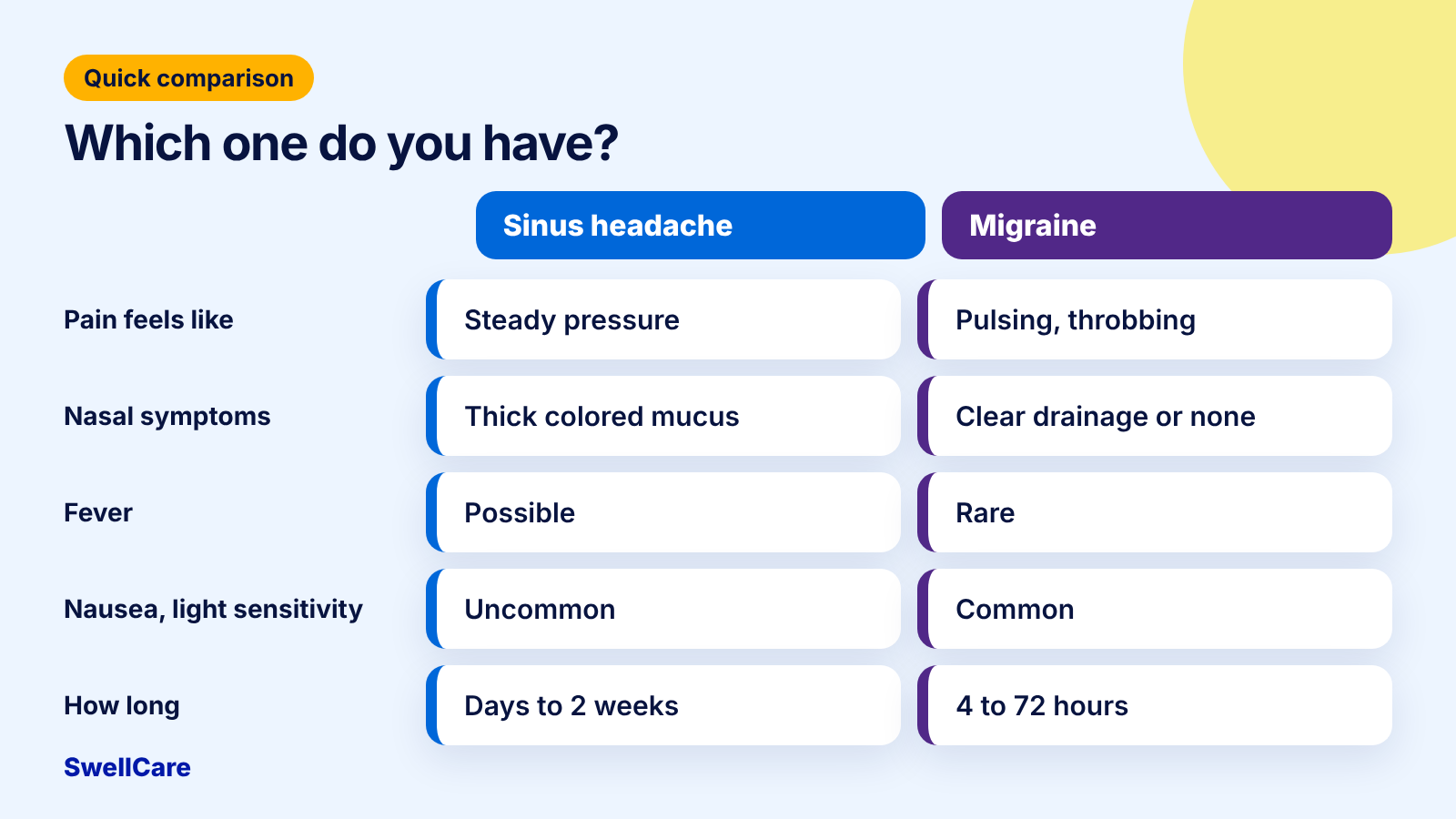
Use this table as a quick filter. Most people will see their pattern in one column.
| Clue | Sinus headache (sinusitis) | Migraine |
|---|---|---|
| Pain feels like | Steady pressure, fullness | Pulsing or throbbing |
| Where | Cheeks, forehead, around the eyes, upper teeth | Often one side, sometimes both |
| Nasal symptoms | Thick colored mucus, reduced smell | Clear drainage or none |
| Fever | Possible | Rare |
| Nausea and aura | Uncommon | Common |
| Light or sound sensitivity | Uncommon | Common |
| How long | Days to a couple of weeks | 4 to 72 hours |
| Starts after | A cold or respiratory infection | A trigger like stress or poor sleep |
Why migraine can make your nose run
Here’s the twist that fools almost everyone. Migraine can cause a runny nose, nasal stuffiness and watery eyes. Consultant360 reports that nasal congestion, tearing and red eyes show up in nearly half of people with migraine. The same nerve pathways that carry head pain also trigger these symptoms. It’s one more reason the list of symptoms overlaps so much.
So a stuffy nose doesn’t prove you have a sinus infection. Scans can mislead too. Headache Australia points out that sinus abnormalities turn up on CT or MRI in 15% to 40% of healthy people who have no symptoms at all.
A 60-second self-check
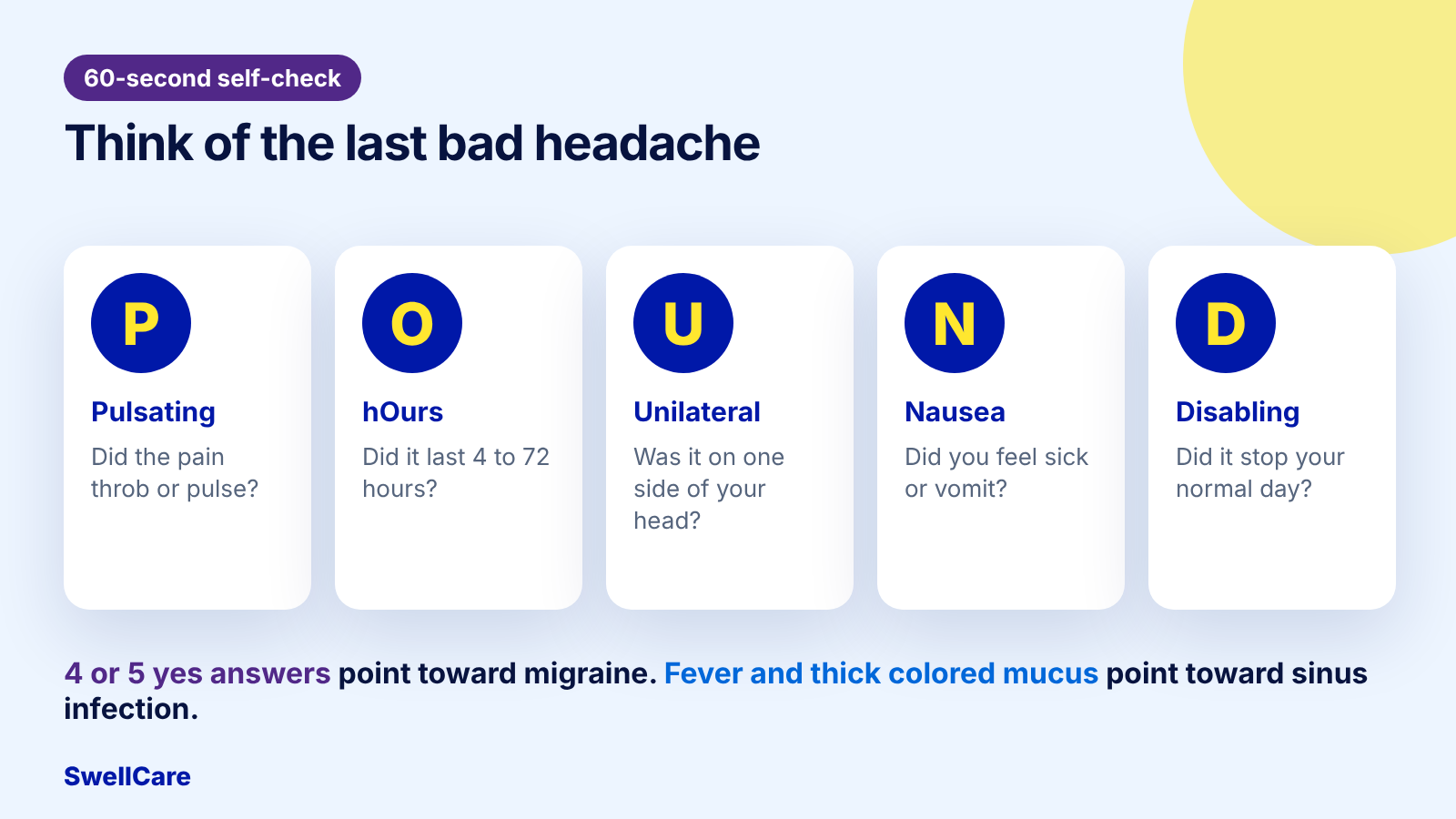
Ask yourself five questions about your last bad headache. Researchers built a simple version of this, called POUND, from migraine features that predicted the diagnosis in the studies above.
- Pulsating: Did the pain throb or pulse?
- Hours: Did it last 4 to 72 hours?
- One side: Was it on one side of your head?
- Nausea: Did you feel sick to your stomach or vomit?
- Disabling: Did it stop you from doing your normal day?
Four or five yeses point strongly toward migraine. Two or fewer makes it much less likely. Now flip it around: fever, thick colored mucus and a recent cold point toward a sinus infection. Notice any pressure that eases when you lie down? That leans migraine, and sleep often helps.
This is a screening tool, not a diagnosis. If you aren’t sure, a doctor can sort it out in one visit.
How each one is treated
Treatment depends on the cause, which is why guessing wrong costs you time. Here’s how treatment differs.
For sinus pressure, saline rinses, rest, fluids and an over-the-counter pain reliever can help, and a decongestant may ease the nasal side. Most sinus problems are viral, so the CDC says many don’t need antibiotics at all. Antibiotics are for bacterial cases your provider confirms, and that call is part of treatment.
Migraine treatment looks different. Early pain relief, anti-nausea medication and prescription migraine drugs can stop an attack. Preventive medication helps if attacks are frequent, and good sleep and stress control add to it. Antibiotics and decongestants won’t touch a migraine.
One warning on medication: taking pain relievers too often can backfire. Headache Australia suggests keeping painkiller use under 10 days a month, so track every dose. A headache diary showing dates, triggers and what helped makes your doctor’s job much easier, and it speeds up treatment.
When to see a doctor
Talk to a doctor if any of these fit:
- Headaches on more than 15 days a month
- Pain relievers that no longer work
- Missing work or school because of the pain
- Symptoms lasting more than 10 days without improvement, or getting worse after they got better
- A fever lasting longer than three to four days
Call 911 for the worst headache of your life, or a sudden severe headache with confusion, fainting, high fever, numbness or weakness, or trouble seeing, speaking or walking.
Get a clear answer from Swell
You shouldn’t have to spend a week guessing between a sinus infection and migraine. Swell offers 24/7 online care, so you can describe your symptoms to a doctor when the pain is happening, not three weeks later. A clinician will ask about timing, triggers and stress, then talk through treatment.
Ready to find out what’s behind your head pain? See your care options at Swell and start with a visit today.
Questions people ask about sinus headache vs migraine
How long does a sinus headache last compared with a migraine?
A migraine usually lasts 4 to 72 hours. A sinus headache tends to last several days and can linger for up to two weeks, since it follows the illness itself. If your headaches vanish within a day or two and return every few weeks, think migraine.
Can a sinus infection cause dizziness?
It can, mostly from congestion and pressure changes in the ears. But dizziness is also a common migraine symptom, so don’t use it alone to decide. If the dizziness is severe or comes with vision changes, see a doctor right away.
Can migraine cause a runny nose?
Yes. Nasal stuffiness, a runny nose and watery eyes occur in a large share of migraine attacks. The difference is the mucus: migraine tends to bring clear drainage, while a sinus infection brings thick yellow or green mucus.
Do I need antibiotics for a sinus headache?
Usually not. Most sinus problems are viral and clear up on their own. Antibiotics only help bacterial cases, and they don’t treat migraine at all, so ask your provider before taking them.
When should I see a doctor for a headache?
See someone if headaches come often, pain relievers stop working, or the pain disrupts your life. Seek emergency care for a sudden, severe headache or one that comes with confusion, weakness or trouble speaking.
Trusted references
Public-health, research, and medical-society resources related to this guide.
- MedlinePlus: Sinusitis
- CDC: About sinus infection
- MDedge: What clinical clues differentiate migraine from sinus headaches
- Consultant360: Migraine or sinus headache, avoiding misdiagnosis
- Headache Australia: Sinus headache or migraine
- Mayo Clinic Health System: Your sinus headache may not be what you think