It’s 11 p.m. Every trip to the bathroom burns, and you’ve just gone again for almost nothing. You want to know how to treat a UTI at home, and you want to know tonight.
Here’s the blunt version. You can ease the pain at home, starting right now. You usually can’t clear the infection itself without antibiotics. Home care buys comfort and time. It doesn’t replace treatment.
That gap matters, because a bladder infection that’s ignored can climb to the kidneys. Below you’ll find what actually helps, what’s a myth, and the signs that mean you shouldn’t wait.
Is it really a UTI? Check the symptoms first
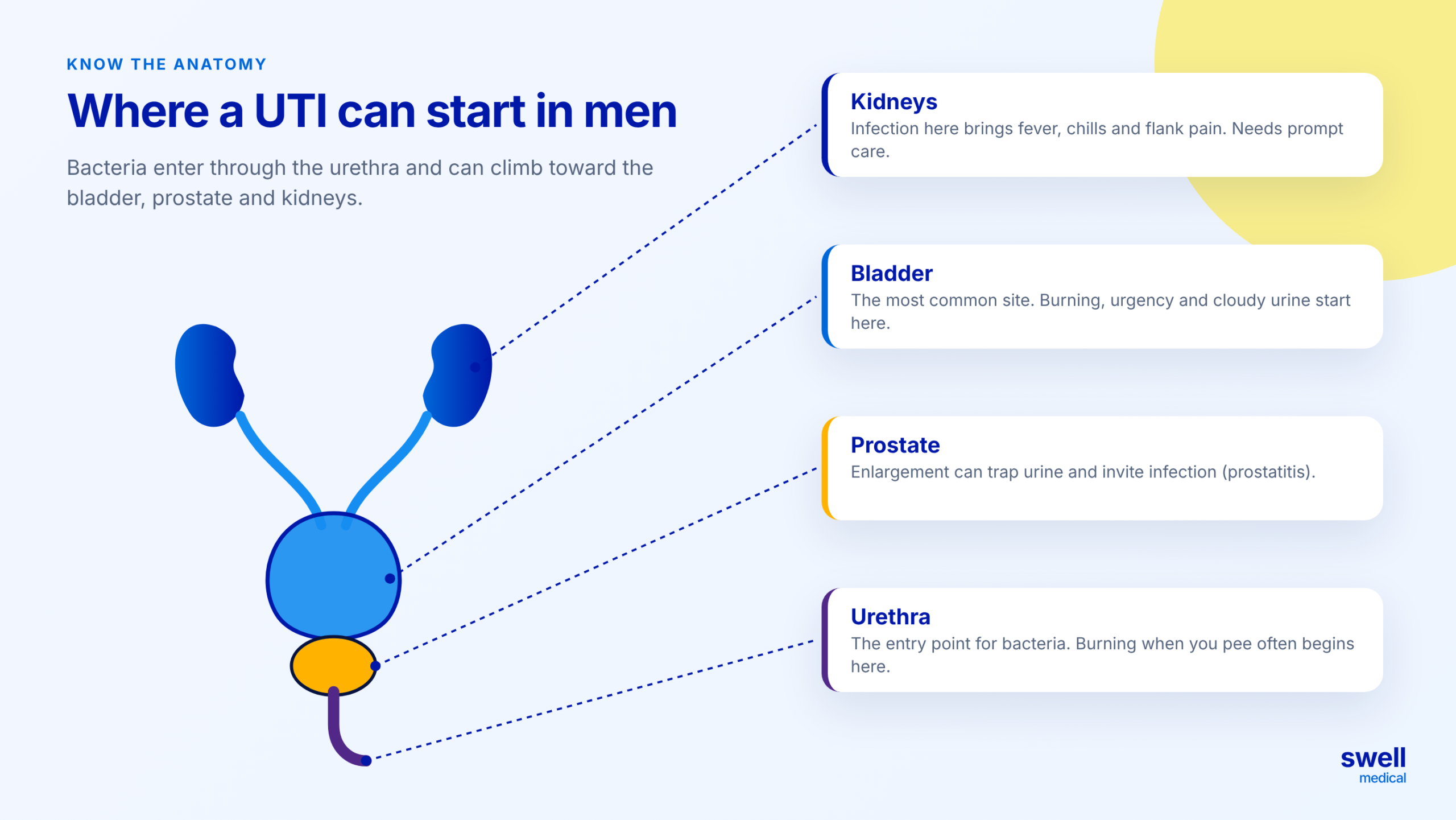
A urinary tract infection happens when bacteria get into the urethra and bladder and multiply. Anywhere along the urinary tract can be affected, but the bladder is the usual spot. It’s common. The CDC estimates that 50 to 80 percent of women will have at least one UTI in their lifetime.
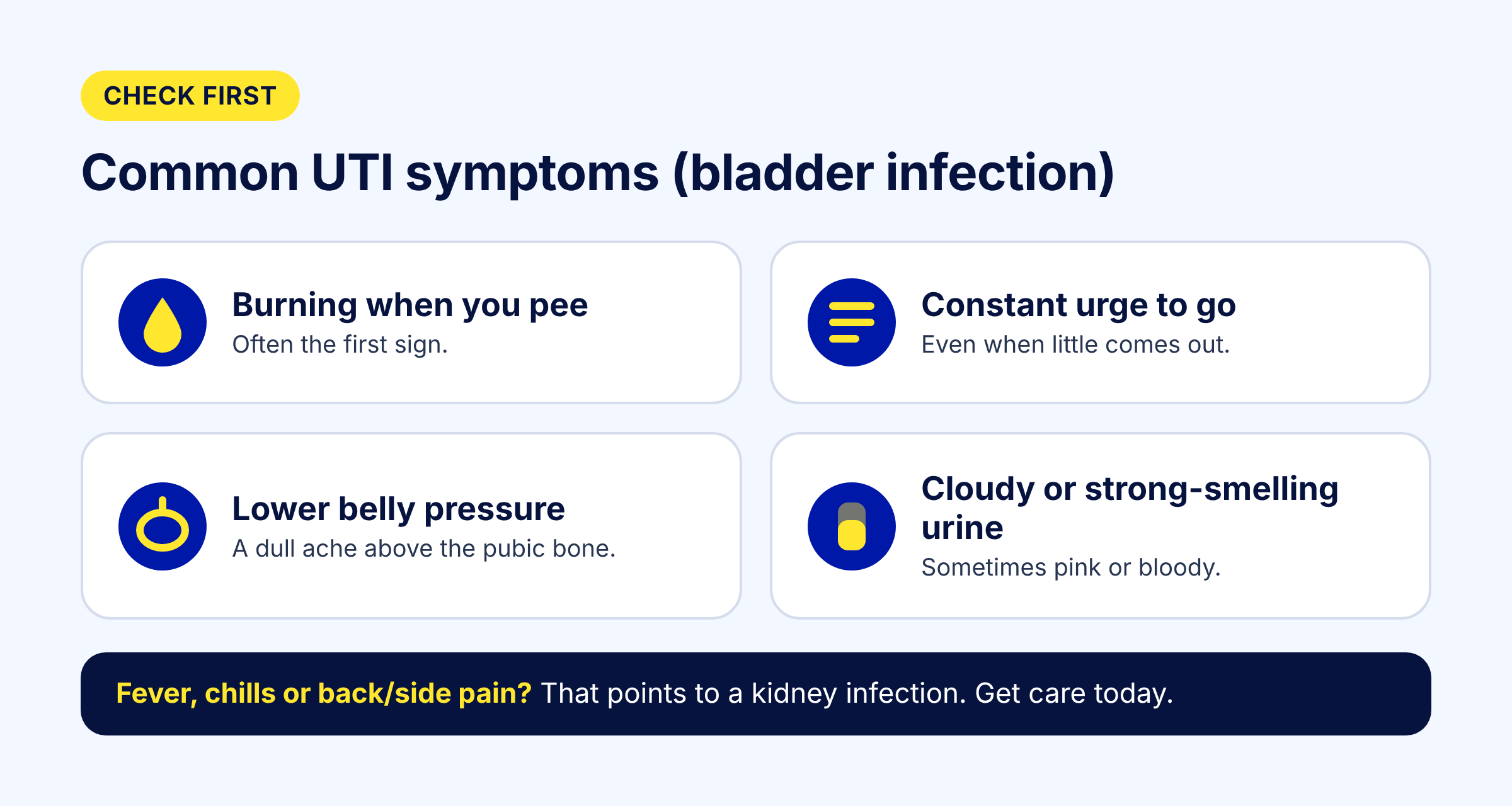
The classic bladder infection symptoms, according to the NIDDK, are a burning feeling when you pee, a strong urge to go even when little comes out, and aching in the lower abdomen. Your urine may look cloudy or bloody, or smell strong.
Other problems can feel a lot like this. Vaginal infections, STIs, stones and interstitial cystitis all overlap with UTI symptoms, which is one reason a quick test beats guessing.
Now the warning sign. Fever, chills, nausea, or pain in your back or side point to a kidney infection, not a simple bladder problem. Skip the home plan and get care today.
Can a UTI go away on its own?
Sometimes, yes. A mild one can fade with fluids and time. But you can’t tell in advance which kind you have.
Patient.info describes a study in which 4 to 5 percent of women who weren’t given antibiotics went on to develop a kidney infection, a serious problem that can need hospital care. Those who skipped antibiotics also had more symptoms overall. UK guidance does let some patients hold a back-up prescription, to start if things haven’t improved after 48 hours. That’s a plan made with a clinician, not a gamble made alone.
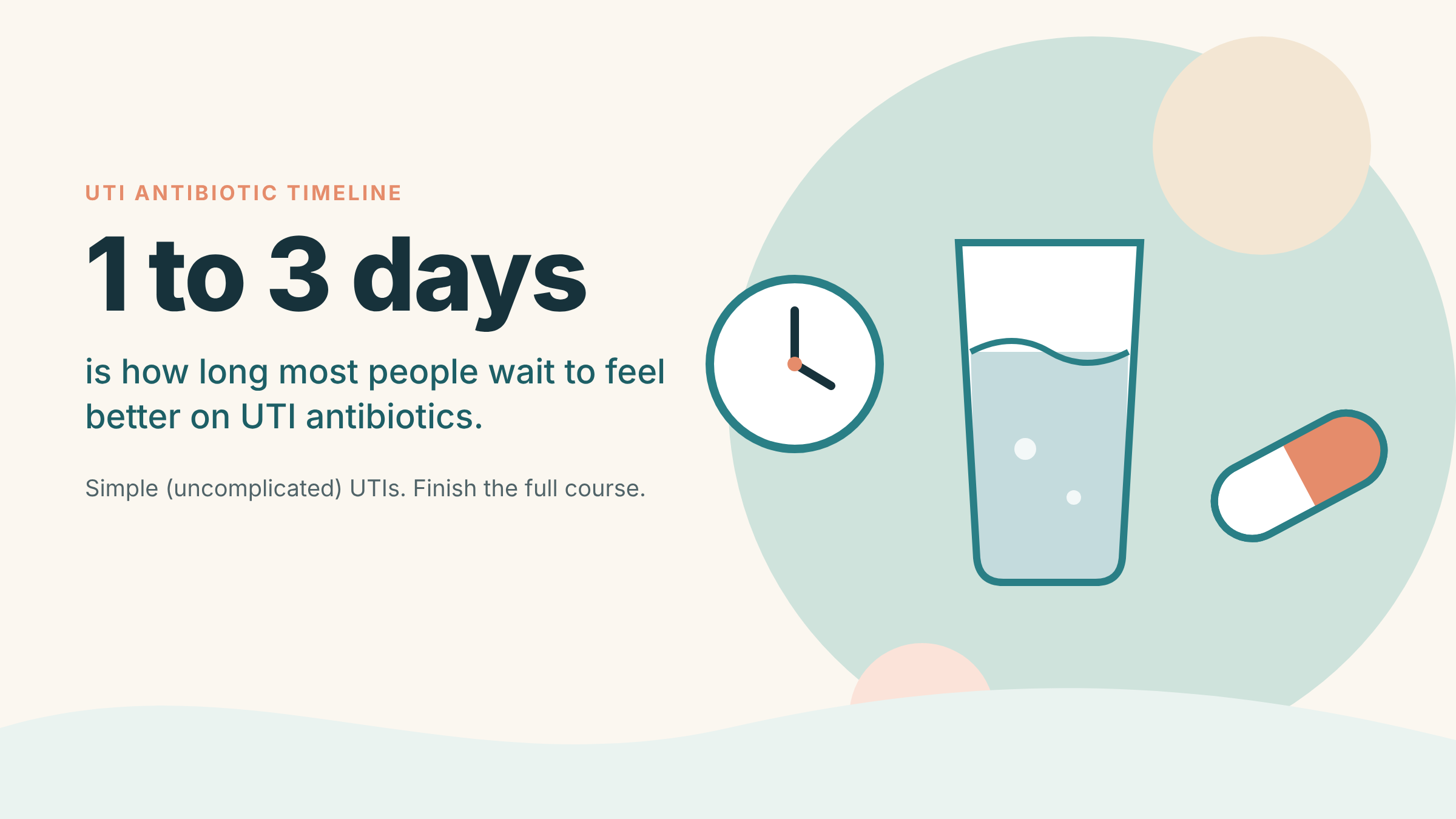
Our position is simple. Treat the pain at home, and treat the bacteria with the medicine that kills them. Antibiotics are what clear a bacterial UTI, and the NIDDK says to finish the full course even once you feel better, because stopping early can feed antibiotic resistance.
How to treat a UTI at home: what actually helps
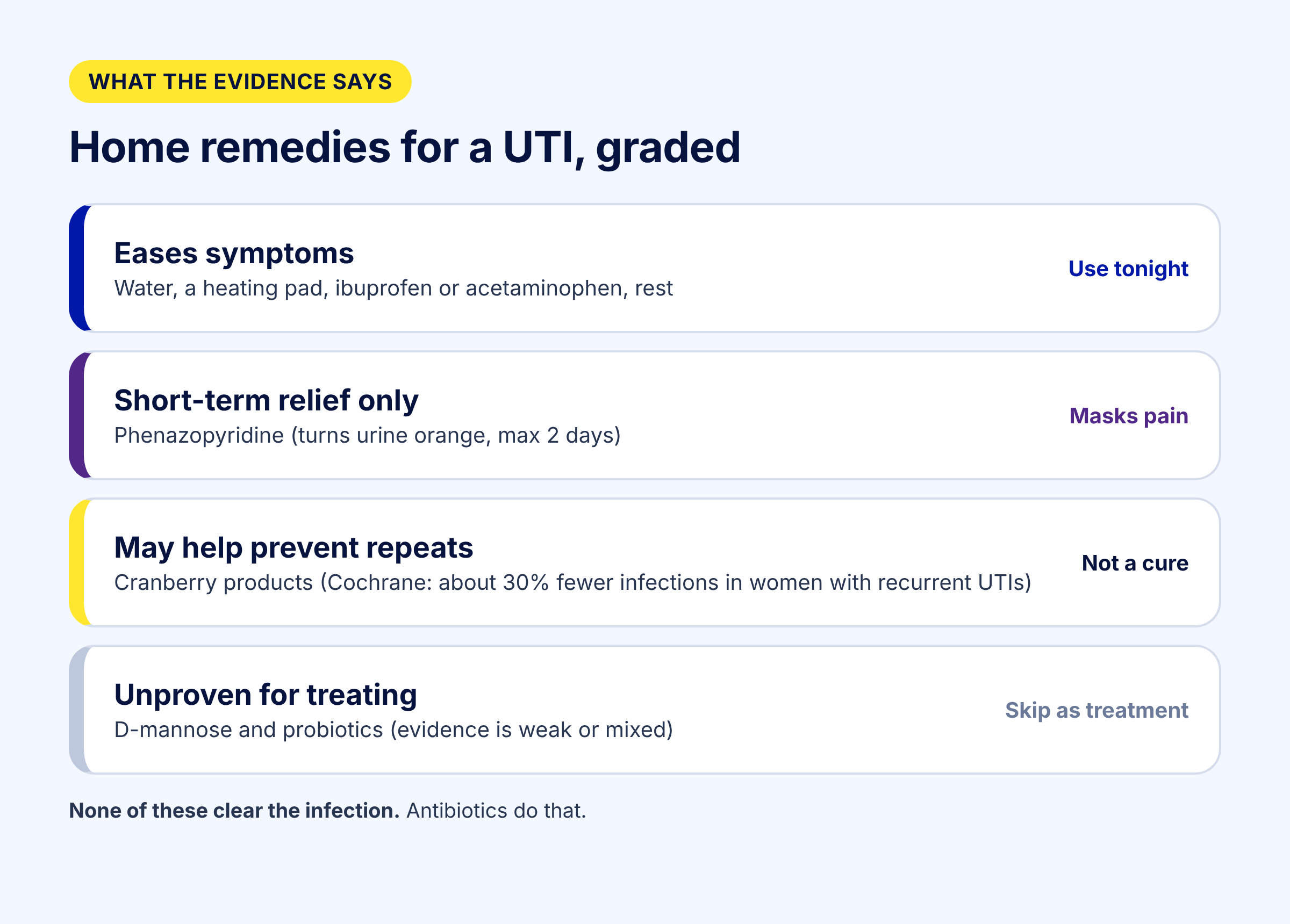
Think of this as comfort care while you arrange real treatment. None of it kills the infection.
Drink water, and don’t hold it in
The NIDDK recommends plenty of fluids, with water the best choice. Many people find it takes the edge off the burning. Go when you feel the urge, and empty your bladder fully each time.
One caution. If you have kidney failure, heart disease or urinary incontinence, ask your clinician how much fluid is right for you before you start chugging.
Use heat and over-the-counter pain relief
A heating pad on your lower belly or back can ease the ache. Ibuprofen or acetaminophen can take the edge off the pain, as the NIDDK notes. Follow the label, and check with a pharmacist if you have stomach, liver or kidney problems.
Phenazopyridine: relief, not a cure
Phenazopyridine is the orange pill sold for urinary pain. It numbs the burning, which feels wonderful at 2 a.m. It does not cure infection, and University of Michigan Health says to stop after 2 days unless a doctor says otherwise. It turns your urine orange or red, can stain underwear, and shouldn’t be used with kidney disease.
Cranberry, D-mannose and probiotics: what the evidence says
Cranberry has real data behind it, just not for treating an active infection. A Cochrane review of 50 trials and 8,857 people found cranberry products cut the risk of symptomatic UTIs by about 30 percent, mainly in women who get recurrent infections. That’s prevention.
D-mannose is more doubtful. A urologist quoted by Michigan Medicine calls it costly and not really effective. Probiotics are still waiting for strong proof as a UTI treatment, though a bowl of yogurt won’t hurt you. Of all the home remedies here, they’re the least harmful and the least proven.
Home remedies that don’t work
Plenty of popular home remedies deserve a polite goodbye.
Cranberry juice as a cure is one. The Michigan urologist notes you’d need roughly 600 to 700 calories a day of juice to match the dose in a good supplement. Douching or scrubbing inside with soap is another; it doesn’t help and she advises against it. And leftover antibiotics from an old prescription are a bad idea. The CDC warns that inappropriate antibiotic use can lead to treatment failure, and the wrong drug leaves the bacteria alive.
When you can’t treat a UTI at home
Home care has limits. Use this table as a quick filter.
| If you have | Why home care isn’t enough | What to do |
|---|---|---|
| Fever, chills, nausea or vomiting | Possible upper-tract involvement | Get care today; go to the ER if you feel very ill |
| Pain in your back or side | The infection may have spread upward | Get care today |
| Blood in your urine | Needs evaluation | Get tested the same day |
| Pregnancy | Pregnant women are a higher-risk group, per the CDC | Call a clinician right away |
| You’re a man | Older men tend to have more severe UTIs; men may need longer antibiotics | See a clinician |
| Diabetes, a weak immune system, a catheter or kidney stones | Higher chance of complications | See a clinician |
| Symptoms past 2 days, or UTIs that keep returning | May need a urine culture | See a clinician |
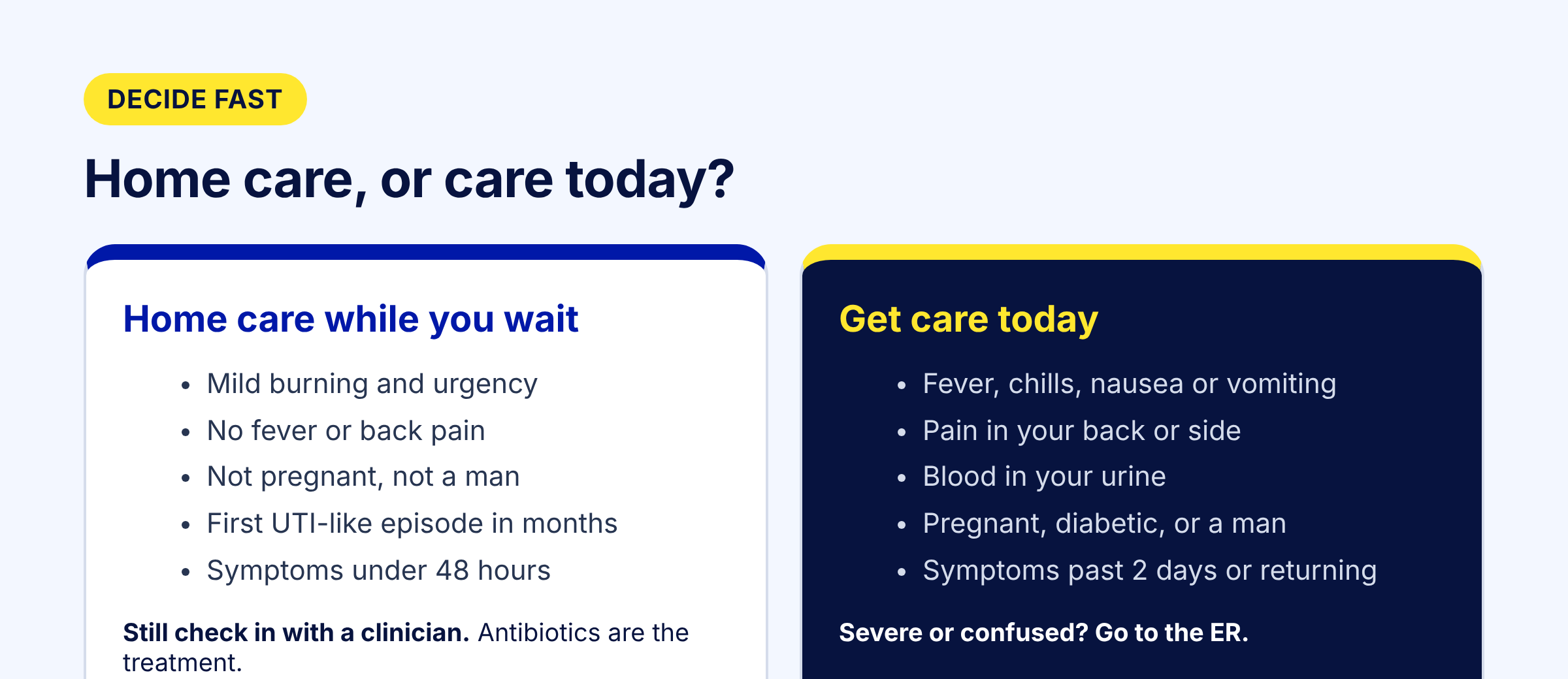
Children with UTI symptoms always need a clinician. And if you feel confused, shaky, or have a racing heart along with chills, that could be sepsis. Go to the ER.
Getting a UTI treated fast without waiting for an office slot
The UTI that starts on a Friday night is the cruel one. Clinics are closed, and urgent care has a three-hour line.
Swell Medical is open 24/7. You start with a free screening chat, then a clinician reviews your concern and decides whether it can be handled safely online. The visit happens by secure chat or video. Depending on what they find, you may get treatment, home-care advice, testing, or a referral to be seen in person. A completed consultation is $45, with medication and lab costs separate, per how Swell visits work.
Be realistic about it. Some situations, like the red flags above, need an in-person exam or a urine culture. A good clinician will tell you that rather than guess. If your symptoms fit a simple urinary tract infection, you can start with an urgent care visit tonight rather than lying awake.
How to prevent a UTI from coming back
Most people who’ve had one want to avoid a second. Basic habits come first: stay hydrated, wipe front to back, urinate when you feel the urge, and wear breathable cotton underwear and loose clothing.
The urologist at Michigan Medicine also recommends urinating after sex. She’s clear that recurrent infections are usually bad luck, not poor hygiene.
If UTIs keep returning, ask your clinician about a few specific things. The NIDDK notes that diaphragms, unlubricated condoms and spermicide may raise your risk, so switching birth control methods might help. If you’re in perimenopause or menopause, low-dose vaginal estrogen can help prevent repeat infections, since lower estrogen changes the urinary tract’s defenses. Chronic dehydration is also a recognized risk factor, so drink steadily through the day. Ask about a urine culture too, since recurrent infections are often resistant to the first antibiotic.
Questions people ask about treating a UTI at home
What will flush out a UTI fast?
Nothing flushes it out quickly. Water helps dilute your urine and may ease the burning, and you should drink steadily. But bacteria stuck to the bladder wall won’t simply wash away. Antibiotics from a clinician are what clear the infection, so keep sipping for comfort and get tested.
Is there a way to get rid of a UTI without a doctor?
Home remedies can manage the pain without a doctor, using fluids, heat, and over-the-counter pain relievers. To get rid of a UTI, though, you need a prescription for antibiotics in most cases. That doesn’t have to mean an office visit. Online care can handle a simple case the same day.
Does cranberry juice cure a UTI?
No. Cranberry products may help prevent repeat infections in women who get them often, according to Cochrane, but there’s no good evidence they cure an active infection. Juice is also a weak dose. Treat it as a prevention extra, not a treatment.
How long does a UTI last without treatment?
There’s no reliable number. Some mild infections fade within days, while others worsen or spread upward. A sensible rule is to see a clinician if symptoms last longer than 2 days, or sooner if you develop a fever, back pain or vomiting.
Can men treat a UTI at home?
Men shouldn’t rely on home care. UTIs are less common in men and often point to something else going on, like a prostate problem. The NIDDK notes men may need longer antibiotic treatment because bacteria can reach the prostate. Get evaluated.
Trusted references
Public-health, research, and medical-society resources related to this guide.