
Is BV an STD? The short answer
Not by the textbook definition. Bacterial vaginosis (BV) isn’t classed as a sexually transmitted infection, and the CDC doesn’t list it as a sexually transmitted disease. But sex clearly plays a part.
So if you typed “is BV an STD” into a search bar after a diagnosis, an awkward conversation or a rough night of scrolling, here’s the plain version. BV is an imbalance of vaginal bacteria, a kind of overgrowth in the vagina. It’s most common in people who are sexually active. And new research says it can pass between a sexual partner and the person they sleep with.
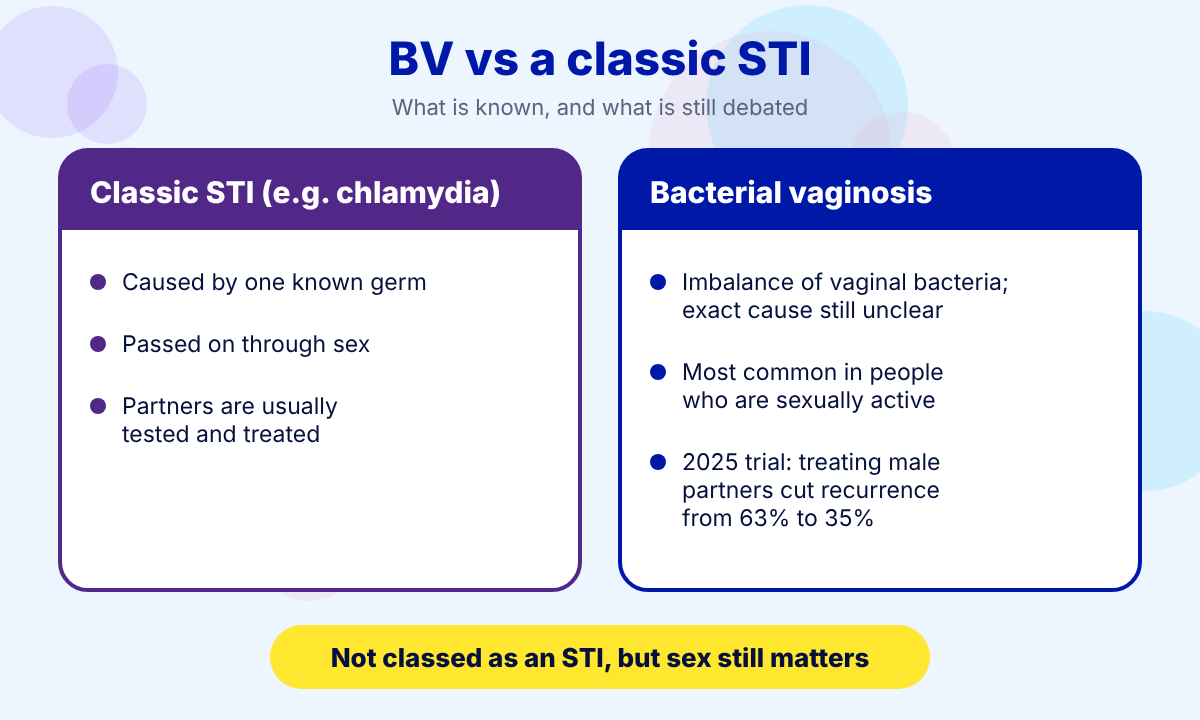
You didn’t catch something dirty. BV is common, it’s treatable, and it isn’t a verdict on your sex life or your partner’s. It also isn’t a classic STI like chlamydia, which is caused by one known germ.
Why doctors still disagree about BV and sex
For decades BV has sat in an awkward middle. It turns up far more often in people with a history of sexual activity, and rarely in people who never have. Yet no single germ has been named as the cause, and that’s usually what earns an infection the sexually transmitted disease label.
What the CDC says
The CDC calls BV the most common vaginal condition in women ages 15 to 44. It says the cause is unknown and that experts don’t fully understand how it spreads. The agency also notes that BV mostly happens in sexually active people, and that having it can raise your chance of catching other STDs. You can read the CDC’s BV overview yourself.
What the 2025 partner-treatment trial found
Then came a trial that shook the old view. Researchers at the Melbourne Sexual Health Centre followed 164 couples and published the results in the New England Journal of Medicine. When male partners were treated alongside the women, BV came back within 12 weeks in 35% of women. When only the woman was treated, it came back in 63%.
Editorial writers said the findings support sexual transmission of BV-associated bacteria. Federal treatment guidelines, as we write this, still don’t recommend routine treatment of male partners. A lower recurrence rate in one trial doesn’t rewrite them overnight, so expect advice to keep shifting.
What causes bacterial vaginosis?
A healthy vagina is dominated by lactobacilli, so BV is really a story about the vagina’s own bacteria. These helpful bacteria keep the vaginal environment acidic and crowd out troublemakers. BV starts when that balance tips into an imbalance and other bacteria, including Gardnerella vaginalis, take over. Doctors sometimes call it vaginal dysbiosis.
Douching, a new sexual partner, several partners and skipping condoms can all tip the scale. The CDC adds that BV can spread between female partners too.
What doesn’t cause it? Toilet seats, bedding and swimming pools. Poor hygiene isn’t the culprit either, and over-washing the vaginal area can make things worse.
BV symptoms, and how they differ from a yeast infection
Plenty of people have no symptoms at all, because the bacteria involved don’t always irritate the vagina. When symptoms do show up, they usually include:
- thin white or gray discharge
- a strong fish-like odor, often stronger after sex
- itching, burning or pain in or around the vagina
- more vaginal discharge than usual after sex or your period
- burning when you pee
A yeast infection looks different. Think thick, clumpy vaginal discharge and fierce itching, usually without a strong smell.
| Feature | BV | Yeast infection |
|---|---|---|
| Discharge | Thin, white or gray | Thick, clumpy |
| Odor | Often fishy | Usually none |
| Main complaint | Smell and discharge | Itching |
Here’s the catch. A UTI, trichomoniasis and BV can all feel alike, so guessing is risky. Yeast creams won’t touch BV, and they won’t clear any of the bacteria behind it.
How BV is treated
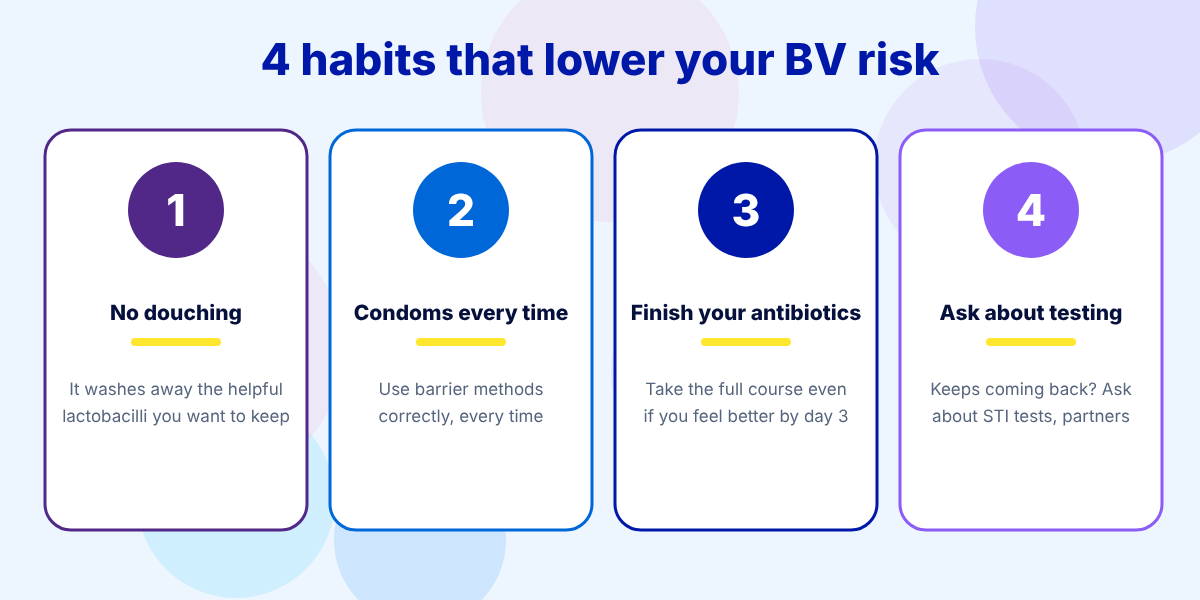
BV treatment means prescription antibiotics. The usual first choices are metronidazole tablets twice a day for seven days, metronidazole gel for five days, or clindamycin cream for seven days. Finish the whole course even if you feel fine by day three.
Sometimes BV returns, and recurrence is common. If it does, a clinician may repeat the treatment or suggest a longer maintenance plan, such as vaginal gel twice a week for several months. That keeps a second recurrence at bay for as long as you use it, not afterward.
Pregnancy changes the picture. BV is linked to preterm birth and low birth weight, so symptomatic pregnant women should be treated, and your clinician will pick a safe option.
How to lower your risk of BV coming back
Prevention is less about perfect habits and more about a few good ones. You can’t fully prevent BV, but you can stack the odds.
Skip douching. It washes away the lactobacilli you want to keep. Use condoms correctly every time, especially with a new sexual partner. Dental dams and other barrier methods count too, and good prevention starts there. Limiting partners also helps, and so does treating any STI promptly. If your partner is female, tell her, because BV can pass between female partners. Probiotics are popular, but there’s no strong proof they prevent BV, so don’t lean on them alone.
If BV keeps returning, ask your clinician about partner treatment in light of the newer research. It’s a conversation, not a guarantee. Prevent what you can and treat early.
When to see a doctor
See a clinician if this is your first time with these symptoms, if symptoms haven’t cleared after treatment, or if you’re pregnant. Don’t wait if you also have pelvic pain, fever or a rash, since those can point to an STI rather than BV.
Ask about STI testing too. BV is linked to a higher chance of getting or passing on HIV, and to chlamydia and gonorrhea, which can lead to pelvic inflammatory disease. Guidelines say women diagnosed with BV should be offered HIV and other STI testing, because a sexually transmitted infection can hide behind the same symptoms.
At SwellCare, a licensed clinician reviews your symptoms any time, day or night. Screening is free, and a completed consultation is $45. Medication and lab costs are separate, and prescriptions are never guaranteed. Start with our bacterial vaginosis page, or see how a SwellCare visit works. Not sure it’s BV? Check the yeast infection page too. For severe pain or sudden symptoms, call 911.

Questions people ask about BV and STDs
Is BV an STD?
No. BV isn’t classified as an STD or STI, and no single germ is blamed for it. It is linked to sexual activity, though, and a 2025 trial suggests a sexual partner can pass BV-related bacteria back and forth.
Can a man give a woman BV?
Possibly. Men don’t get a BV diagnosis, but the 2025 trial found fewer repeat cases when male partners were treated. Guidelines still don’t recommend routine partner treatment, so ask your clinician what fits your situation.
Can BV go away on its own?
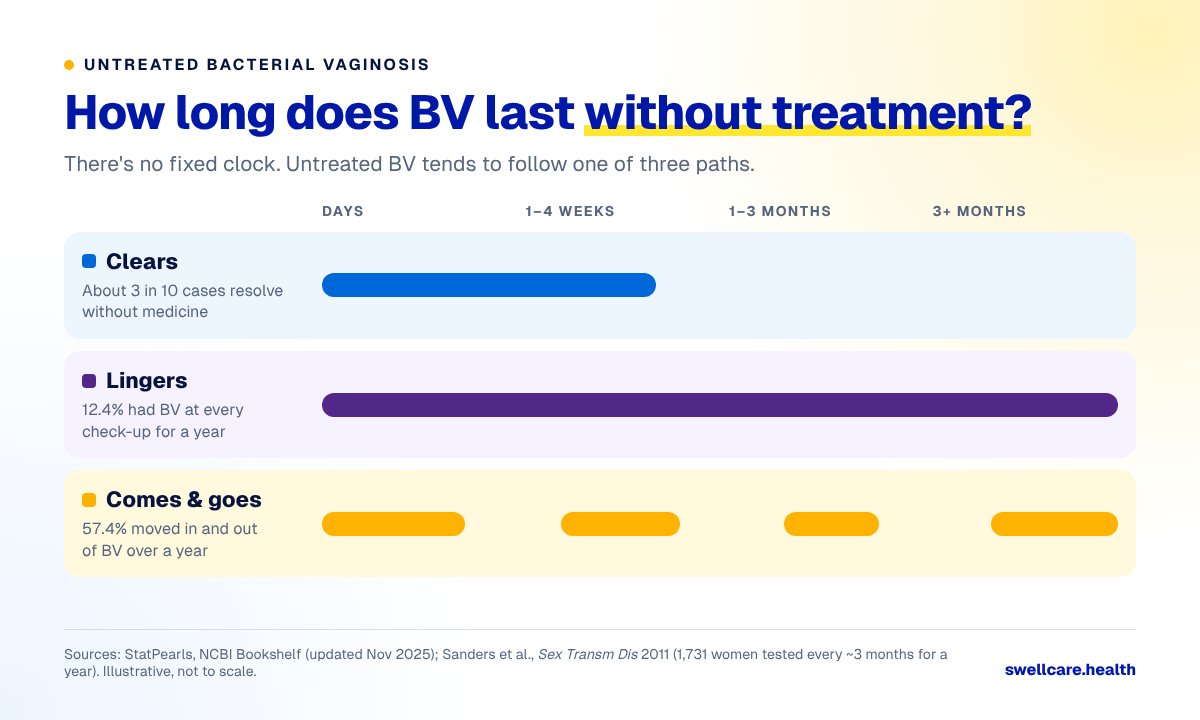
Sometimes, but don’t count on it. Untreated BV can raise your risk of other infections and complications in pregnancy, so it’s worth getting antibiotics and clear answers.
Can you get BV without having sex?
It’s uncommon, but yes. The agency says BV rarely affects people who have never had sex. Douching and other changes to the vaginal bacteria can also trigger it.
Does BV turn into chlamydia?
No. BV can’t turn into chlamydia or any STD. Having BV can make catching one easier, which is why an STI test is smart.
Trusted references
Public-health, research, and medical-society resources related to this guide.