It’s mid-afternoon, your head is pounding, and you can’t remember your last glass of water. That flat, foggy feeling is one of the most common signs of dehydration in adults, and it’s easy to blame on stress or a bad night’s sleep.
Dehydration simply means you’re losing more fluids than you’re taking in. The usual early signs are strong thirst, a dry mouth, dark urine, tiredness and dizziness. Confusion, fainting or no urination at all point to severe dehydration, and that needs urgent care. Below, you’ll learn how to tell the difference, check yourself at home, and know when more fluids at home aren’t enough.
Early signs of dehydration in adults
Your body sends signals long before you’re in real trouble. Most of these symptoms are quiet and easy to dismiss, which is exactly why they’re worth learning. Dehydration rarely announces itself with one dramatic symptom. Think of the early signs as a low-fluids warning light: the sooner you spot them, the easier the fix.
Thirst and a dry mouth
Feeling thirsty is the obvious one, and it’s late. By the time you feel properly thirsty, you’re already a little behind on fluids. A dry mouth and sticky saliva usually tag along, and lips can crack. Older adults notice thirst less sharply, so for them it may be the only clue.
Dark urine, or barely any
Check the toilet bowl. Pale straw yellow is what you want. Dark yellow or amber urine means your kidneys are holding on to water. Peeing much less than usual is the sign that moves things from “drink more” toward “call someone,” according to the Mayo Clinic’s list of adult symptoms.
Tiredness, headache and dizziness
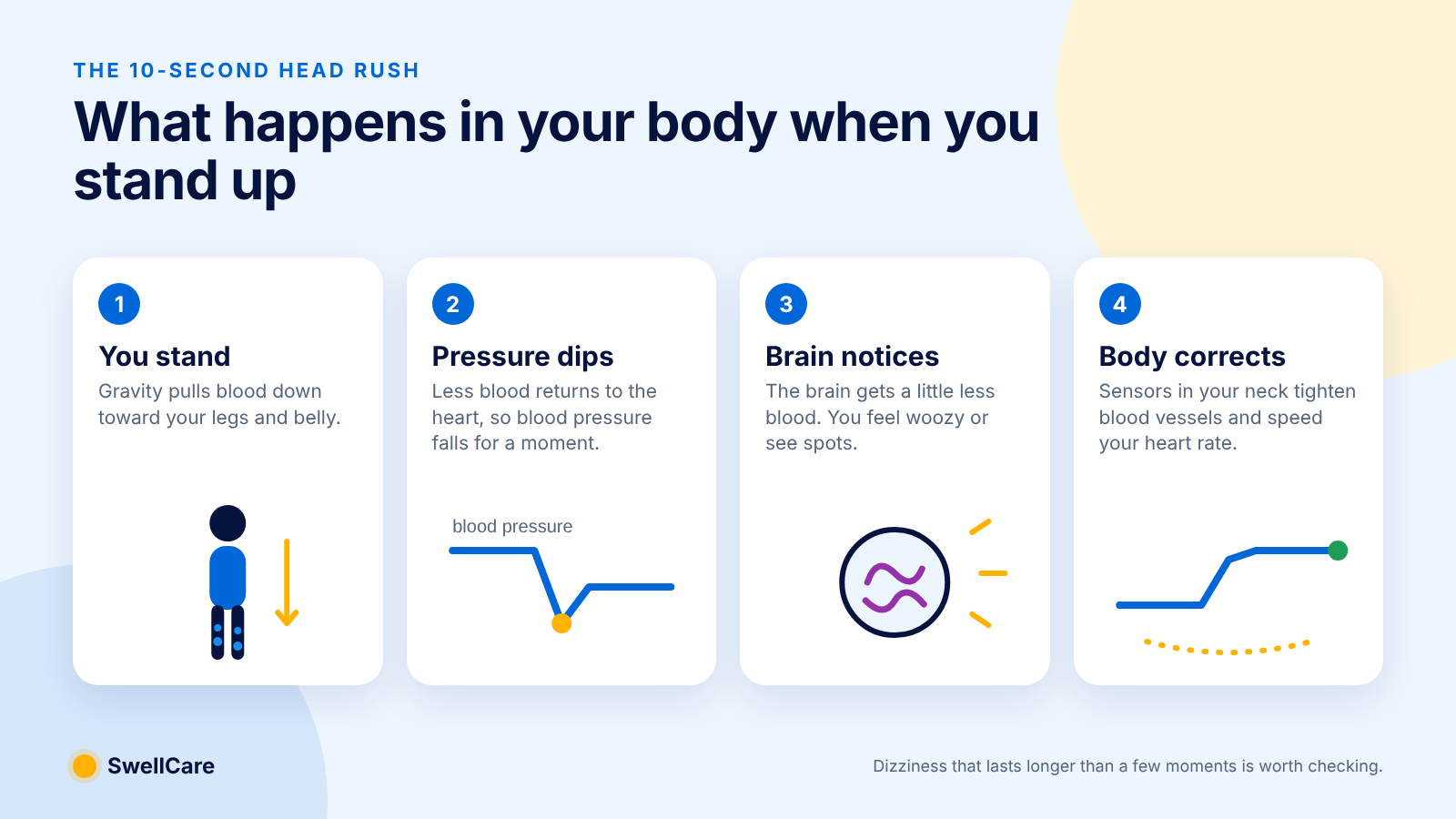
Fatigue, a dull headache and a swimmy feeling when you stand up are classic, and that last one can mean your blood pressure is dipping. Muscle cramps and general weakness are common too, as is dry skin, especially after a day of heavy sweating. Sweat is mostly water and salt, so a sticky day can drain you fast. These symptoms show up with everything from poor sleep to a cold, so people rarely connect them to fluids.
Moderate to severe dehydration: the red flags
Mild dehydration usually clears up at home. Severe dehydration doesn’t, and it can sneak up on you.
If the early symptoms are joined by confusion, fainting, a racing heartbeat, fast breathing, sunken eyes or cheeks, or skin that’s slow to bounce back when pinched, treat it as severe. MedlinePlus says confusion, fainting, no urination, and rapid heartbeat or breathing need medical help right away. Moderate dehydration sits in between, with dizziness and weakness plus very little urine.
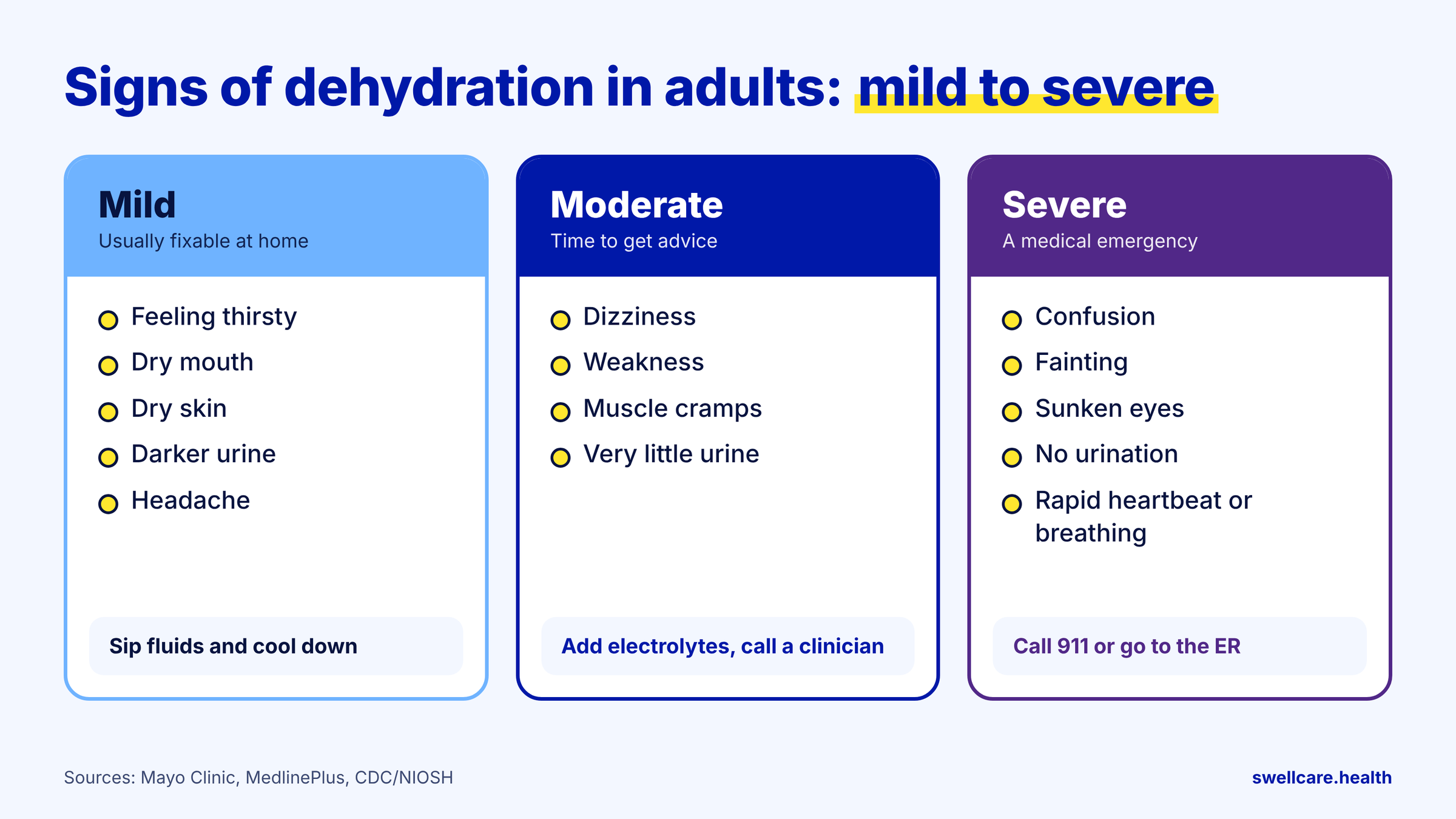
Why the urgency? Losing too many fluids can drag your blood pressure down, which is why the heart races to keep up. Left alone, the Mayo Clinic notes, severe dehydration can lead to kidney problems including kidney failure, seizures from an electrolyte imbalance, and hypovolemic shock. Those complications are why the red flags matter, and why they shouldn’t be waited out.
Why adults miss the signs (and who gets dehydrated faster)
Most of us picture dehydration as a hot-day problem. It’s often quieter than that.
Older adults carry smaller reserves of fluids and feel thirst less, so dehydration can build with no obvious warning. The Cleveland Clinic adds that a dehydrated person’s symptoms get mistaken for aging or medication side effects. Conditions like diabetes and dementia raise the risk further. Plenty of older adults also take pills that make them urinate more, which pulls fluids out faster.
Other common causes:
- Illness with a fever, vomiting or diarrhea that drains fluids fast
- Diuretics and some blood pressure drugs (tell your clinician if you take them)
- Diabetes that’s undiagnosed or poorly controlled, since high blood sugar makes you urinate more
- Hard exercise or outdoor work in hot weather
Even a minor illness, like a cold that makes swallowing miserable, can quietly cut how much you drink. And hot weather raises the stakes for everyone, because you sweat out more than you realize, and if you sweat heavily for an hour, you’ll want to replace it.
How to check for dehydration at home
You don’t need equipment. Look at your urine color first, and compare it with the chart below. If it’s pale yellow, you’re probably well hydrated. If it’s dark, you’re likely dehydrated, so drink water and look again in a couple of hours.
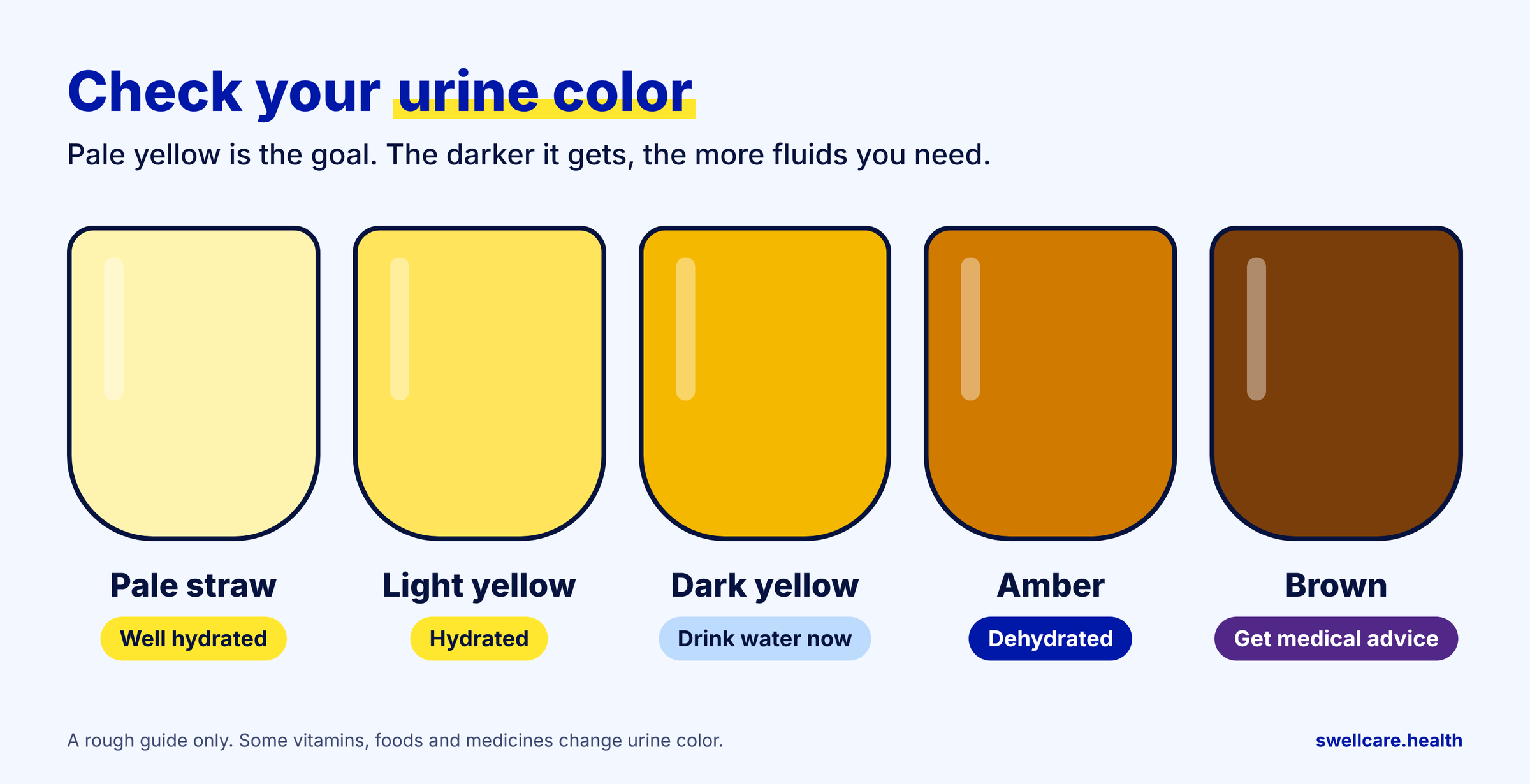
Next, try a skin pinch on the back of your hand. If the skin stays tented instead of snapping back, that’s another sign, though it’s a rough check and not a diagnosis. Put the signs together with how you feel:
| Level | What you may notice | What to do |
|---|---|---|
| Mild | Feeling thirsty, dry skin, darker urine | Sip fluids and cool down |
| Moderate | Dizziness, weakness, muscle cramps, very little urine | Rehydrate with electrolytes and call a clinician |
| Severe | Confusion, fainting, sunken eyes, no urination | Call 911 or go to the emergency room |
What to do if you think you’re dehydrated
Sip, don’t chug. Big gulps can leave you bloated and queasy, so small, steady sips of water work better, especially if you’ve been vomiting. If you can’t keep fluids down, try ice chips. Keep fluids coming through the day, not all at once, and don’t wait until you’re thirsty to start.
If you’ve been sweating heavily or had diarrhea, you’ve lost electrolytes too (mostly sodium, with some potassium). A rehydration drink from the pharmacy can help, and so can sports drinks, though many are loaded with sugar, so don’t overdo them. Water-rich foods like cucumber and watermelon count as fluids as well, and so do milk and diluted juice. Drink extra fluids during any illness too.
Go easy on alcohol and sugary drinks while you recover, and on caffeine too. Then rest somewhere cool.
Treating dehydration early is mostly about getting fluids back in, steadily. Most mild cases improve within hours, and once your urine is pale again you’re hydrated enough. If you work out, start hydrating the day before hard exercise and keep sipping to replace what you sweat.
How much water do adults need each day?
Forget the rigid “eight glasses” rule. The National Academies set adequate intakes of about 2.7 liters (91 ounces) of total water a day for women and 3.7 liters (125 ounces) for men, and that figure includes food. Roughly 80% comes from drinks and 20% from what you eat, so food gives you about a fifth of your fluids.
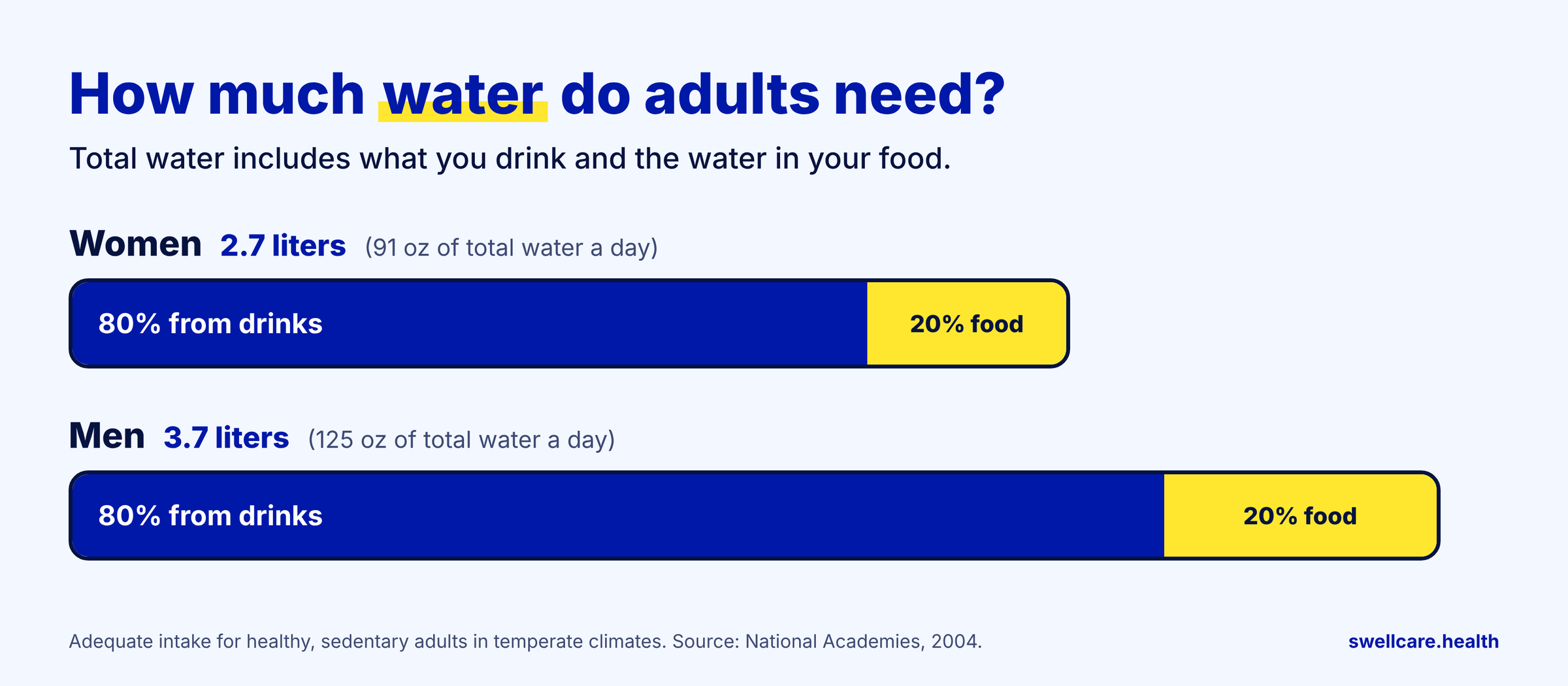
Those numbers assume a healthy, sedentary person in a temperate climate. Exercise and heat push the need up, so you’ll drink more water on a hot workday.
In CDC survey data, men 60 and older averaged about 2.9 liters of total water a day, against roughly 3.6 liters for younger men. Lower intake and weaker thirst make dehydration easier to miss in later life. To stay hydrated, keep a cup or bottle within reach, especially in hot weather, and drink a little all day. If you have heart or kidney disease, ask your provider how much is right for you.
When to see a doctor or go to the ER
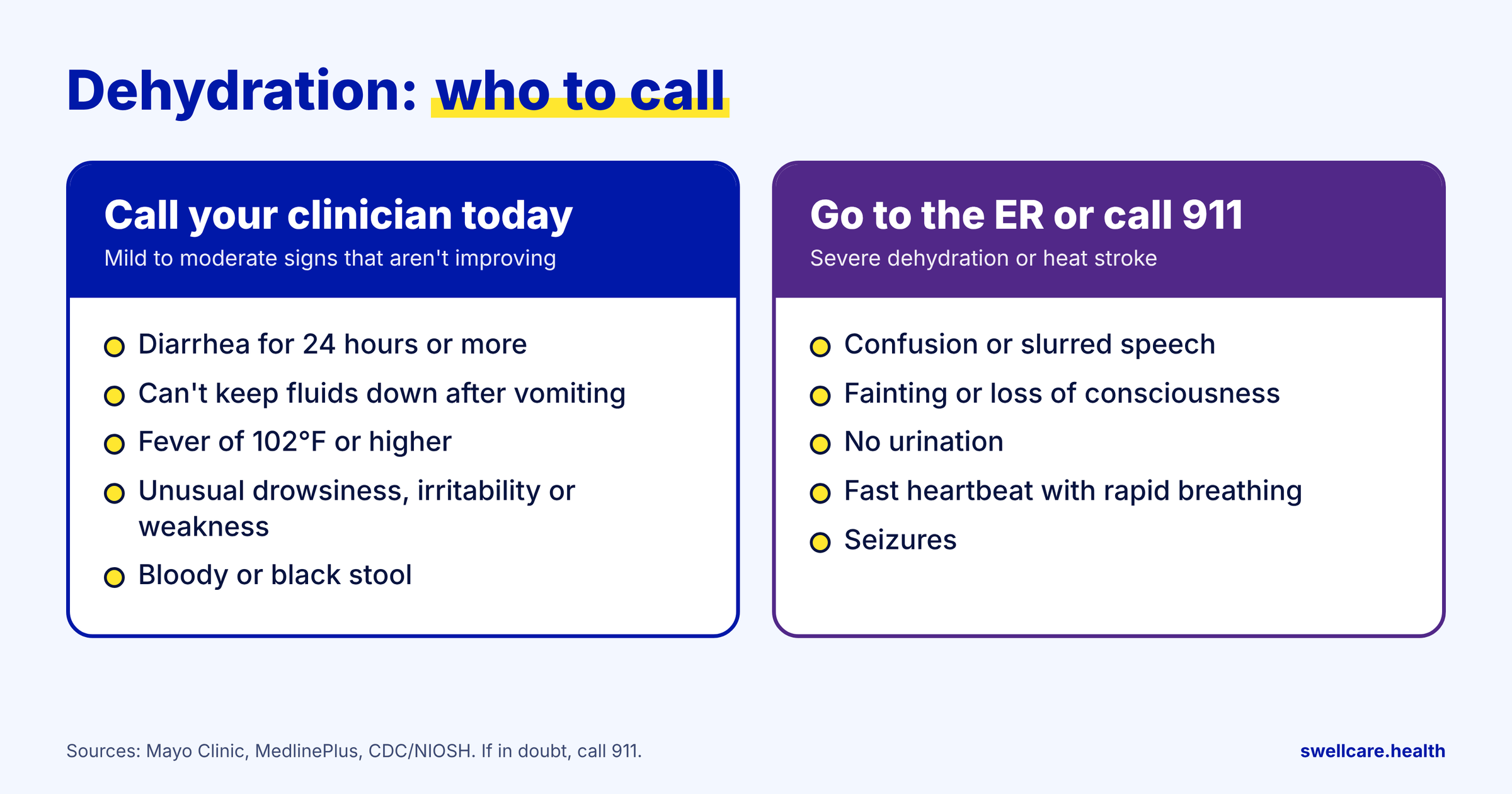
Call a clinician the same day if you have diarrhea for 24 hours or longer, can’t keep fluids down after vomiting, have a fever of 102°F or higher, or notice unusual drowsiness, irritability or weakness, per the Mayo Clinic. Mild dehydration usually doesn’t need a call at all. Severe dehydration can’t wait, and symptoms that keep getting worse deserve a faster response.
Head to the emergency room, or call 911, for confusion, fainting, no urination, or a fast heartbeat with rapid breathing. Heat adds a second set of warning signs. The CDC says heat exhaustion brings headache and nausea along with heavy sweating, while confusion, slurred speech or seizures signal heat stroke, a 911 emergency. The CDC’s heat illness guide lists first aid for both.
Not sure which side you’re on? A Swell clinician can review your symptoms, tell you what can be handled online, and say plainly when you need to be seen in person. Talk to a Swell clinician any time, day or night. And if it looks severe, don’t wait for an appointment. Call 911.
Questions people ask about dehydration
What are the first signs of dehydration?
Feeling thirsty, a dry mouth and darker urine usually come first. You might also feel tired or lightheaded. If you’re peeing less than normal, that’s a stronger hint. Take small sips of fluids and watch whether the signs ease within a few hours.
What are the 5 warning signs of dehydration?
The five most common are intense thirst, dark urine or less urination, fatigue, dizziness, and confusion. The first three are usually mild. Dizziness suggests it’s getting worse, and confusion is a red flag that needs prompt medical attention, so don’t try to sleep it off.
How do you test for dehydration at home?
Check your urine color, since pale yellow is good and dark yellow or amber isn’t. Pinch the skin on the back of your hand and see how fast it flattens. Then note how you feel. These checks are rough guides, so call a clinician if you’re unsure.
How do you fix dehydration fast?
Take small sips of fluids, such as water or an oral rehydration solution, and rest in a cool spot. Add electrolytes if you’ve had heavy sweating, exercise in the heat, vomiting or diarrhea. Mild cases often improve within hours. Severe dehydration needs IV fluids in a hospital, so go to the ER if you’re confused, faint or not urinating.
What is the best thing to drink when you’re dehydrated?
Plain water works for mild dehydration, and any fluids that aren’t sugary help. After vomiting, diarrhea or heavy sweating, an oral rehydration solution replaces the electrolytes you lost. Sports drinks can help in a pinch, but watch the sugar. Limit alcohol and heavy caffeine until you feel better.
Trusted references
Public-health, research, and medical-society resources related to this guide.