You finally lie down. Lights off, house quiet. Then the tickle starts, and a minute later you’re coughing hard enough to sit straight up. By 2 a.m. you’ve stopped pretending you’ll sleep.
So why does my cough get worse at night? Mostly because lying flat changes what happens in your nose, throat, airways and stomach, and because your body’s own clock shifts after dark. A cough at night is rarely random. It usually has a cause you can find and calm.
This guide walks through the common triggers, what actually helps tonight, and the signs that mean it’s time for a clinician to take a look.
Why does my cough get worse at night?
Short answer: gravity, mucus and timing.
During the day you’re upright, so mucus drains and you swallow it without noticing. Once you’re lying down, that drainage slows and pools at the back of the throat. Your airways react. Meanwhile your body’s own rhythms are changing, and your sleep surroundings (dust, dry air, a pet on the pillow) are right under your nose for eight hours straight.
That mix is why a cough that barely bothered you at 4 p.m. can take over the night. Four triggers account for most of it.
Postnasal drip and mucus that pools when you lie flat
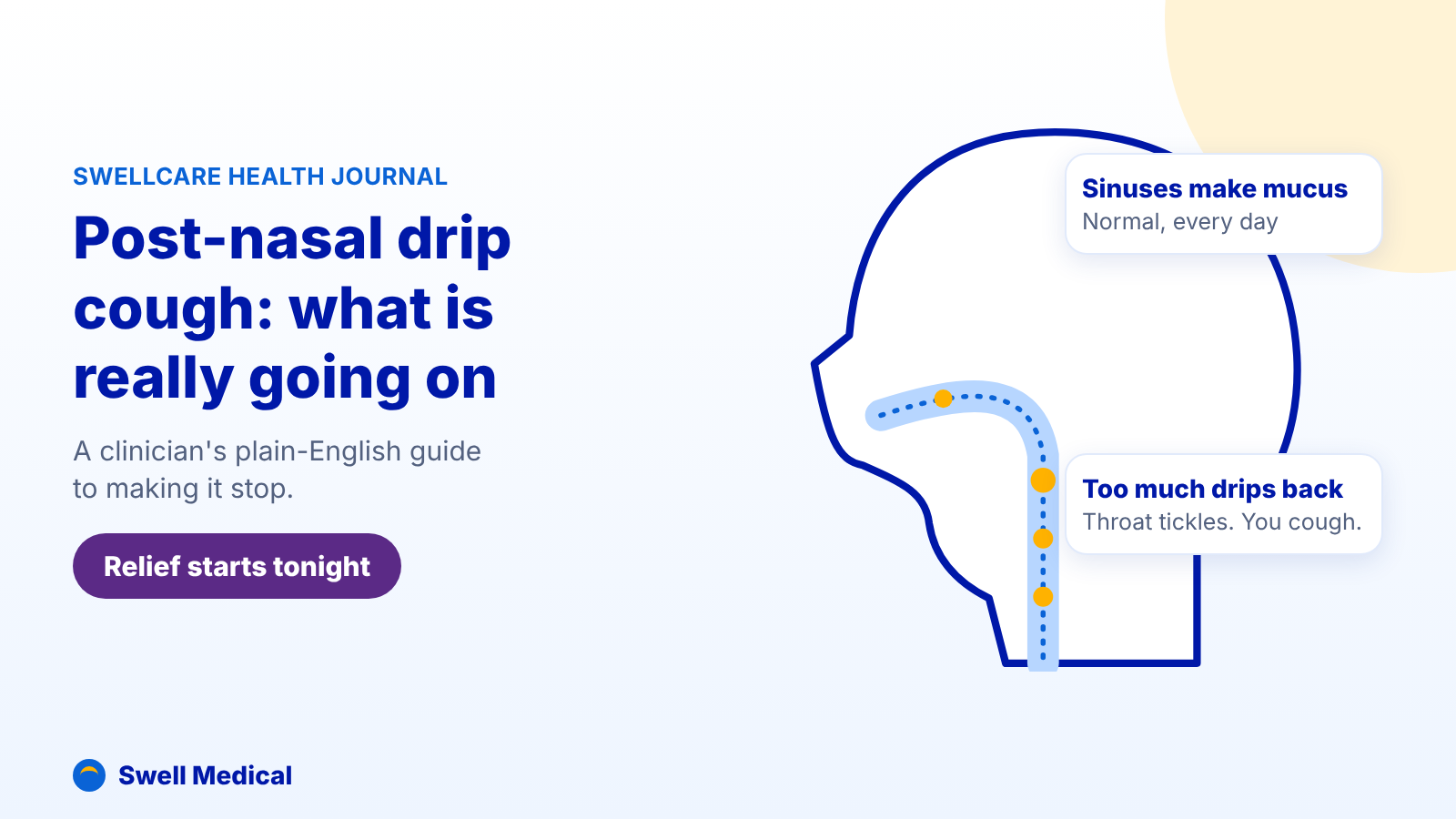
Postnasal drip is mucus running from your nose and sinuses down the back of your throat. Upright, gravity helps clear it. Lying down, the mucus sits there and tickles the throat, and you cough to clear it. It’s one of the most common reasons a cough flares after bedtime. Mucus that reaches the vocal cords or airways sets off a wet cough, as Harvard Health describes.
A cold, sinus trouble or seasonal allergy can all feed it.
Acid reflux (GERD) comes up when you’re horizontal
Stomach acid stays put more easily when you’re upright. Flat in bed, acid reflux can creep up the esophagus and irritate the throat and voice box. The usual result is a dry cough at night, sometimes with heartburn or a sour taste. If it shows up after late dinners or spicy meals, GERD deserves a look.
Here’s the sneaky part. Acid reflux can be silent, with no heartburn at all, so people rule it out too fast. A clinician may suggest a trial of reflux treatment when a dry cough has no other clear cause, and GERD is one of the most overlooked reasons for a stubborn night cough.
Asthma and your body clock
Asthma flares often start after dark. The Allergy & Asthma Network explains that the exact reason isn’t fully settled, but the body’s daily rhythm seems to play a part: lung function dips in the early morning hours in people with the condition, and hormones such as cortisol and adrenaline fall at night while melatonin rises, which can narrow the airways. Chest tightness, wheezing or waking up short of breath along with the cough points that way. The same group says symptoms more than twice a month may mean it isn’t well controlled, which is worth a conversation with a clinician (Allergy & Asthma Network).
Allergens and dry air in the bedroom
Your bedroom might be the most allergen-heavy room in the house. Dust mites live in bedding, pet dander settles on pillows, and mold can hide in damp corners. If you have an allergy, you inhale those allergens for hours while you sleep. Breathing in mites, pet dander and mold spores night after night keeps the airways irritated and sets off inflammation, and the allergens never get a day off. An antihistamine taken before bed may calm an allergy-driven cough, but it’s no substitute for cleaning up the room.
Add dry air from winter heating, and the lining of your throat gets irritated and reactive. A cough that eases when you travel or sleep somewhere else is a clue. So is a nighttime cough that fades by midmorning.
Other causes people miss
Not every nighttime cough starts in the nose or stomach. A few less obvious ones are worth knowing, because they change what you should do next.
Heart failure. When you lie down, fluid can shift toward the lungs. A new dry cough at night, especially with swollen ankles or breathlessness, needs prompt medical attention. Harvard Health flags it as one reason a new night cough that lingers should be checked.
Medication side effects. ACE inhibitors, a common type of blood pressure drug, can cause a persistent dry cough that’s often worse at night. If you started one recently, tell your prescriber. Don’t stop it on your own.
Infections and your immune system. A cold, flu or bronchitis leaves the airways swollen with inflammation, and your immune system does much of its work while you sleep. That’s one reason an infection feels worst once the house goes quiet. A fever, body aches or green-yellow phlegm points toward infection.
COPD and sleep apnea. Long-term lung disease keeps airway inflammation going, and disrupted breathing during sleep adds to it. Both can bring on coughing at night, often with morning headaches or loud snoring.
Dry cough or wet cough? What yours may be telling you
How your cough sounds helps narrow things down. It’s not a diagnosis, but it points you in the right direction.
| What you notice | Often points to | A good first step |
|---|---|---|
| Dry, tickly, no phlegm | GERD or acid reflux, allergy, ACE inhibitor, sensitive airways | Raise your head, avoid late meals, ask about GERD, review medications |
| Wet, rattly, clearing the throat | Postnasal drip, infection, bronchitis | Fluids, humidifier, saline rinse |
| Wheezing or tight chest | Asthma | Use your prescribed inhaler and call a clinician |
| Cough with ankle swelling or breathlessness | Heart or lung problem | Get medical care promptly |
Duration matters too, and so does how well you sleep. Mayo Clinic describes a cough under three weeks as acute and one lasting more than eight weeks in adults as chronic (Mayo Clinic). The long ones deserve an actual workup, not another bottle of syrup.
How to stop coughing at night
Here’s what we’d try tonight, in the order that tends to pay off fastest.
Change your sleep setup
Small shifts in the bedroom do a lot.
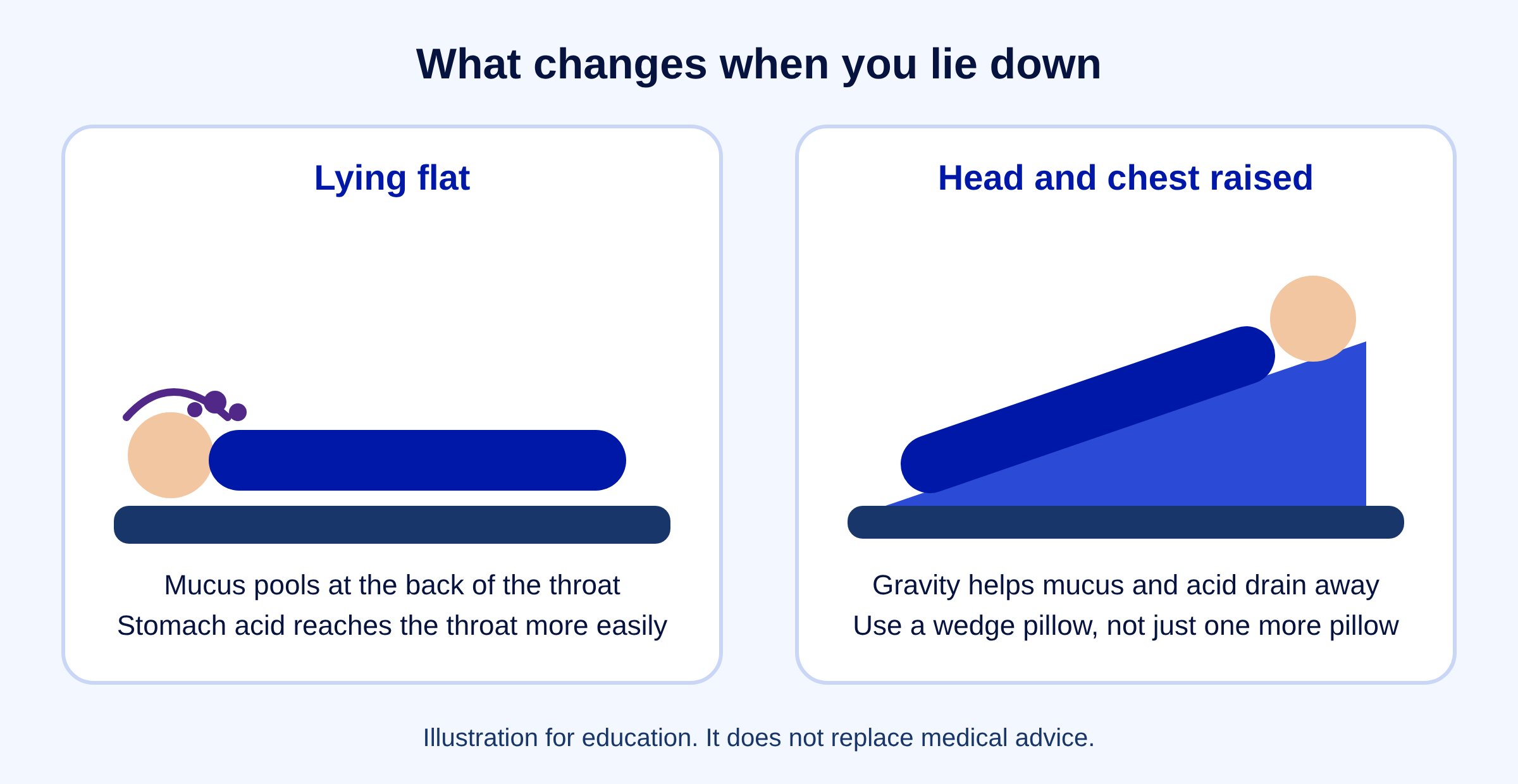
Raise your head. A wedge pillow, or a couple of firm pillows stacked so your chest is angled too, keeps mucus and acid from pooling. One pillow under your neck just bends it and rarely works.
Run a cool-mist humidifier if the air is dry, and clean it often so it doesn’t grow mold. Wash bedding in hot water weekly, keep pets off the bed, and use dust-mite covers if allergens set you off. Stop eating two or three hours before lying down; Harvard Health suggests staying upright for an hour or two after meals.
Soothe your throat
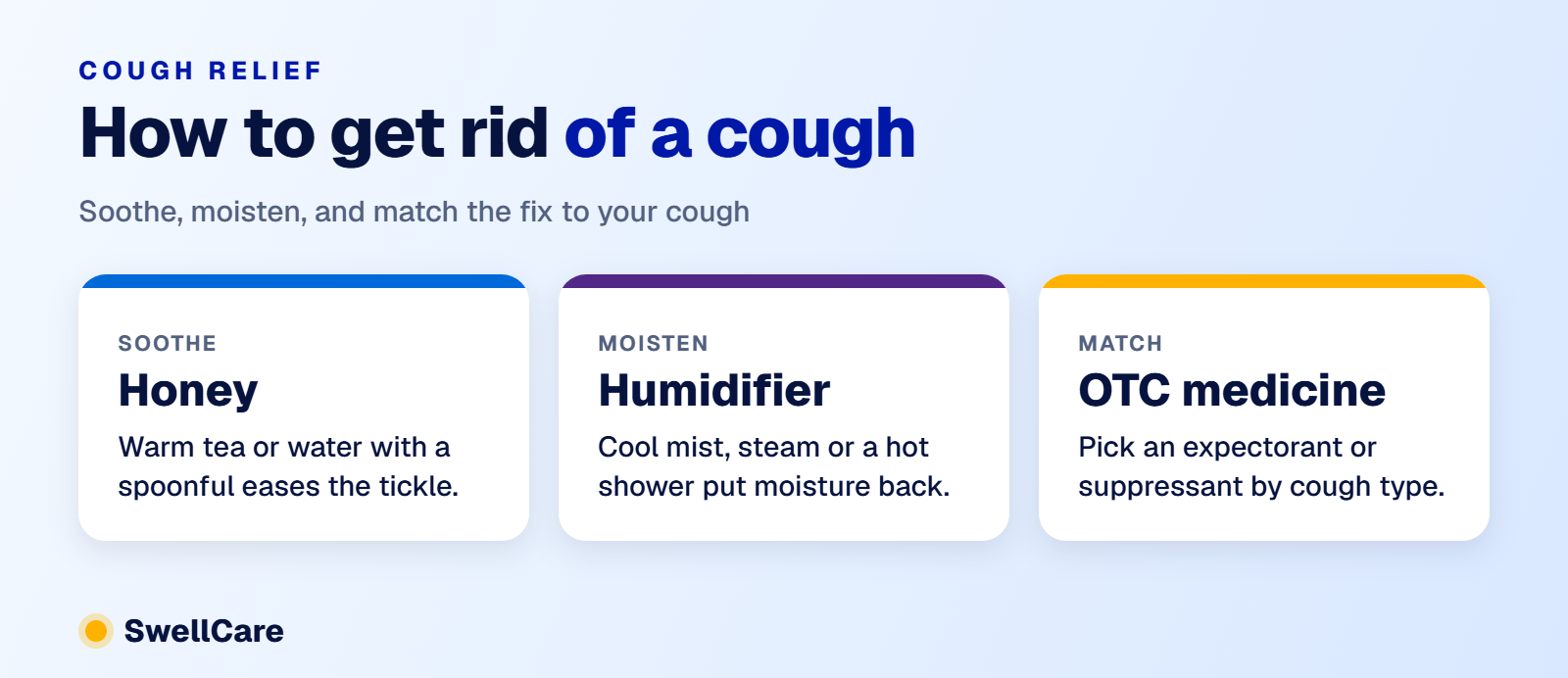
Honey is the old standby, and Mayo Clinic notes a teaspoon may loosen a cough. Stir it into warm herbal tea with a squeeze of lemon. A cup of herbal tea about an hour before bed is a cheap, comforting habit. Never give honey to a child under one year old, because it can carry bacteria that harm babies.
A steamy shower before bed loosens mucus, and a second steamy shower the next evening can help if the cough is wet. Steam is soothing, though it won’t cure anything. Warm drinks calm a scratchy throat. Cough drops help a dry cough, though they’re a choking risk for children under six. And skip smoke of any kind, including secondhand.
What about cough medicine?
Over-the-counter options can help, but match the medicine to the cough. Know that cough suppressants only quiet the reflex. They don’t fix the cause.
Cough suppressants belong to dry, hacking coughs, not wet ones, because you want a wet cough to clear mucus. One such ingredient, dextromethorphan, quiets a dry, hacking cough so you can sleep. An expectorant thins mucus for a wet cough. If allergies drive things, an antihistamine may help, though some make you drowsy and dry you out. A sedating antihistamine can ease postnasal drip but won’t suit everyone, and a non-drowsy antihistamine is gentler if you need to function tomorrow. Read the label, check for interactions with your other medicines, and ask a pharmacist if you’re unsure.
Don’t give adult cough and cold medicines to young children. Mayo Clinic advises against over-the-counter cough and cold medicine for children under six, and urges care at any age.
A simple bedtime routine for a nighttime cough
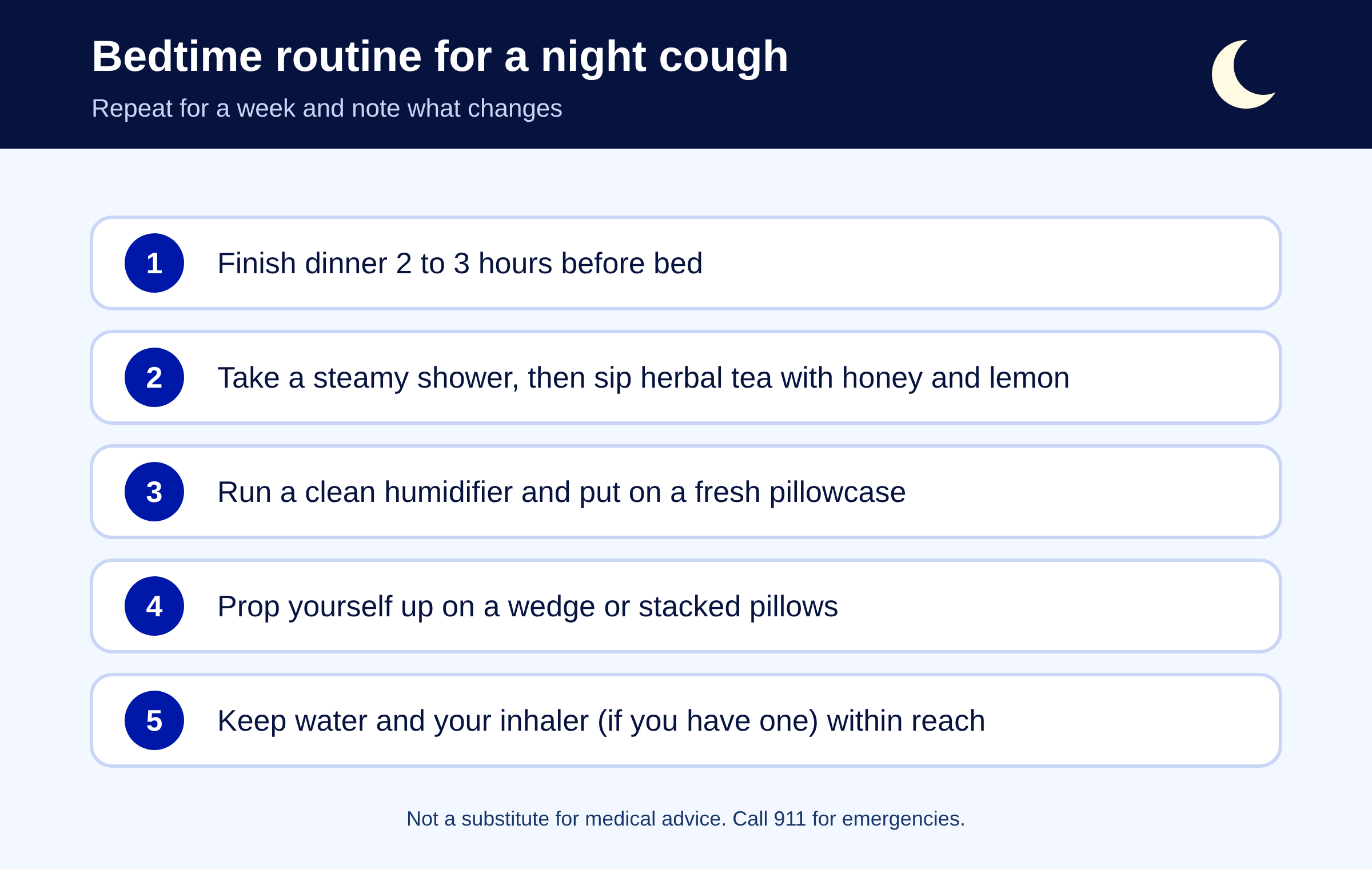
Pull the pieces together into one bedtime routine you can repeat for a week. Consistency beats a one-off fix. Good sleep also helps your immune system recover, and your immune system needs the rest:
- Finish dinner at least two to three hours before bedtime.
- Take a steamy shower, then sip herbal tea with honey and lemon.
- Turn on a clean humidifier and wash your pillowcase.
- Prop yourself up on a wedge or stacked pillows.
- Keep water and your inhaler (if you have one) within reach.
When to see a doctor about a night cough
Most nighttime coughs from a cold settle on their own, but a weakened immune system makes waiting riskier. Plan on when to see a doctor if any of these show up:
- Your cough lasts several weeks, or keeps coming back
- You have a fever, thick green-yellow phlegm or a wheeze
- You’re short of breath, or your ankles are swelling
- You’re losing weight without trying
- You wake up gasping or your partner notices pauses in your breathing
Get emergency care right away for trouble breathing or swallowing, chest pain, or coughing up blood or pink-tinged phlegm. Mayo Clinic lists these as signs to act on. Call 911 for emergencies. A virtual visit isn’t the right place for them.
Get care tonight from a Swell clinician
Still asking yourself, “why does my cough get worse at night?” Can’t sleep and not sure what’s behind it? Swell’s urgent care connects you with a licensed clinician around the clock, so you don’t have to wait for morning or sit in a waiting room. A clinician can ask the right questions, tell you whether it looks like reflux, allergy, asthma or infection, and give you clear next steps. See how it works or browse conditions we treat. Swell isn’t emergency care.
Questions people ask about night coughs
Why do I cough only at night?
Because lying down lets mucus pool and acid rise, while dust, dry air and your body’s nighttime rhythm add to the load. During the day, you’re upright and busy, so you barely notice the same triggers. If it happens every night, track what you ate and when you start coughing. A week of notes helps a clinician sort night after night of symptoms into a pattern.
What position should I sleep in to stop coughing?
Slightly propped up. Raise your head and chest with a wedge pillow or firm stacked pillows so mucus and stomach acid drain away from your throat. Sleeping on your side can help too. Lying flat on your back tends to make a night cough worse.
Why do I get a tickle in my throat at night?
A tickle usually means irritation: postnasal drip, reflux, an allergy trigger in your bedroom. Sip warm water, try honey in tea, and run a humidifier to ease parched bedroom air. If the tickle comes with a whistling chest or tightness, mention it to a clinician.
Is a night cough a sign of asthma or heart failure?
It can be, though most aren’t. It often brings a wheeze and tightness, and heart failure may bring a new dry cough with swollen ankles or breathlessness. Either one is a reason to get checked promptly rather than waiting it out.
How long is too long for a cough?
Past three weeks, it’s time to call a clinician. Past eight weeks, it counts as chronic in adults and needs a proper workup. Sooner is better if you have a fever, a wheeze, shortness of breath or weight loss.
Trusted references
Public-health, research, and medical-society resources related to this guide.