Most upper back pain is not serious, but some is
That tight, nagging ache between your shoulder blades makes you stop mid-task and wonder: is this just a bad night’s sleep, or is something wrong? If you are asking when should I worry about upper back pain, you are in good company. Upper back pain is common, and most of the time it comes from tired muscles, poor posture, or a stiff joint that settles within days or weeks.
But a small share of upper back pain is a warning sign from your heart, lungs, spine, or another organ. Knowing the difference can save you a needless panic, or save your life. This guide gives you a clear ladder: what needs a 911 call, what needs a doctor in the next day or two, and what you can safely handle at home. Keep reading, because the right next step is simpler than it feels right now.
What upper back pain usually means
The upper back is built around the thoracic spine, twelve vertebrae that anchor your rib cage and carry the weight of your head, neck, and arms. Because it moves less than your neck or low back, pain here often feels like stiffness, burning, or a deep ache near the shoulder blades.
Muscle strain and poor posture
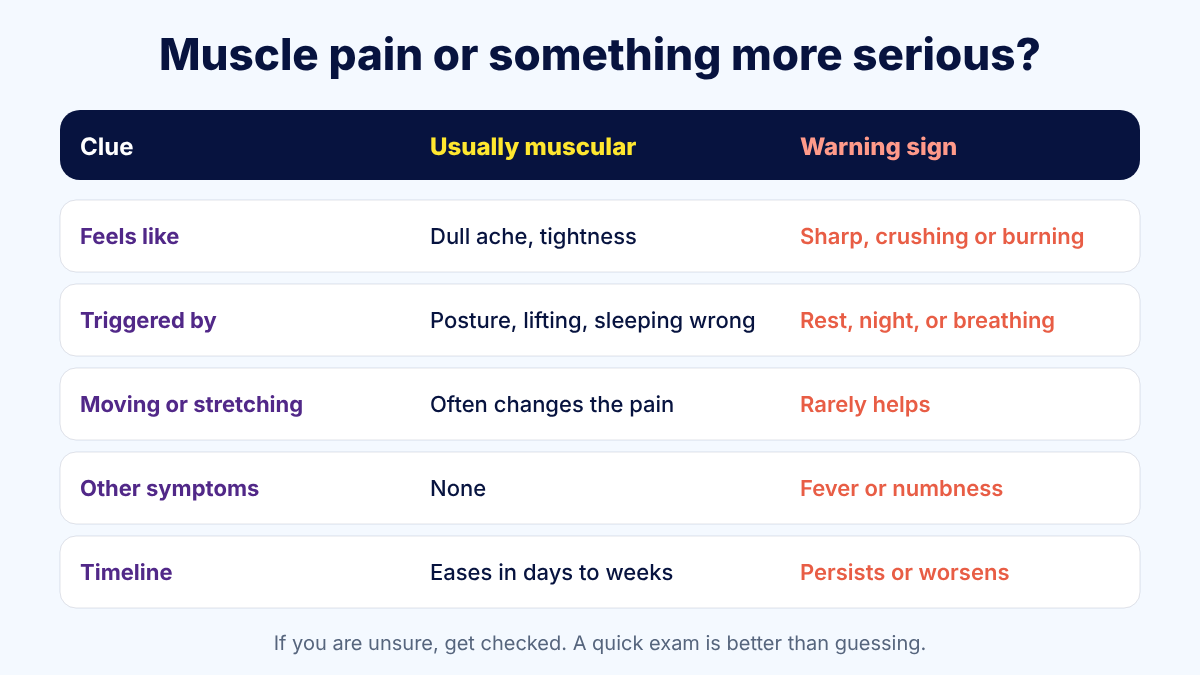
The most common cause by far is muscle strain. Hours at a desk, looking down at a phone, carrying a heavy bag, or lifting something awkwardly can overload the muscles that hold your shoulders back. Poor posture keeps those muscles working all day, so they tighten and ache by evening. This kind of pain usually eases when you move, stretch, or apply heat.
Joint and rib problems
The small joints where your ribs meet your thoracic spine can become irritated or “stuck.” You may feel a sharp catch when you twist, take a deep breath, or reach overhead. It is uncomfortable, but it is usually not dangerous and often settles with time and gentle movement.
Spine conditions
Less often, upper back pain comes from a herniated disc, degenerative disc disease, scoliosis, or spinal stenosis. These tend to cause pain that lingers for weeks, or comes with tingling or numbness. They are treatable, and an exam helps you rule them in or out.
When should you worry about upper back pain? Warning signs
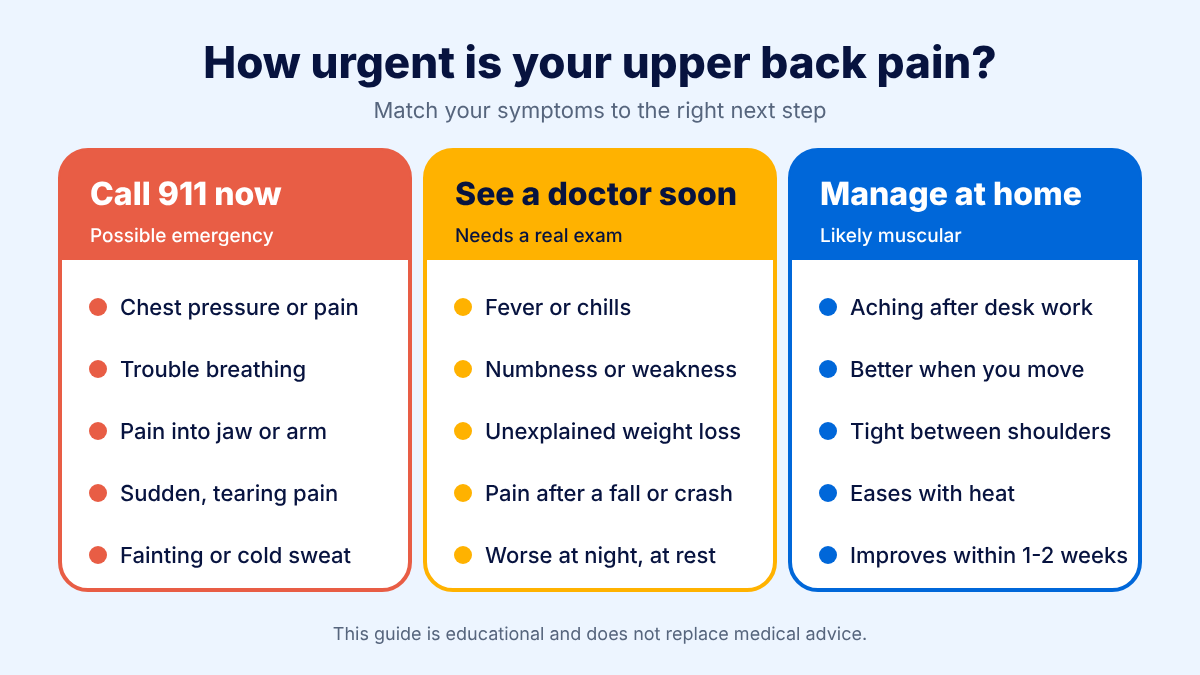
So, when should I worry about upper back pain? Here is the part most people are looking for. Doctors call these red flags: symptoms that suggest upper back pain is not just a strained muscle. The ladder below sorts them by urgency, so you know how fast to act.
Call 911 right away
Treat these as an emergency, and do not drive yourself:
- Chest pain or pressure with upper back pain, especially if it spreads to your jaw, neck, or left arm
- Trouble breathing, shortness of breath, or pain that stabs with every breath
- Sudden, severe, tearing pain in your back or chest
- Fainting, a cold sweat, nausea, or lightheadedness along with the pain
- Loss of bladder or bowel control, or numbness in your groin or inner thighs
A heart attack, a blood clot in the lung, and a tear in the aorta can all show up first as back pain. Emergency teams would much rather check a false alarm than miss one of these.
See a doctor within a day or two
Book an appointment promptly if your upper back pain comes with any of these:
- Fever, chills, or a recent infection
- Numbness, tingling, or weakness in your arms or legs
- Unexplained weight loss, or a history of cancer
- Pain after a fall, car accident, or other injury
- Pain that is worse at night or while resting, and does not change when you move
These signs can point to a spinal infection, a fracture, nerve compression, or, rarely, cancer. Most of the time the cause is treatable, and earlier is better.
Book a visit if it lingers
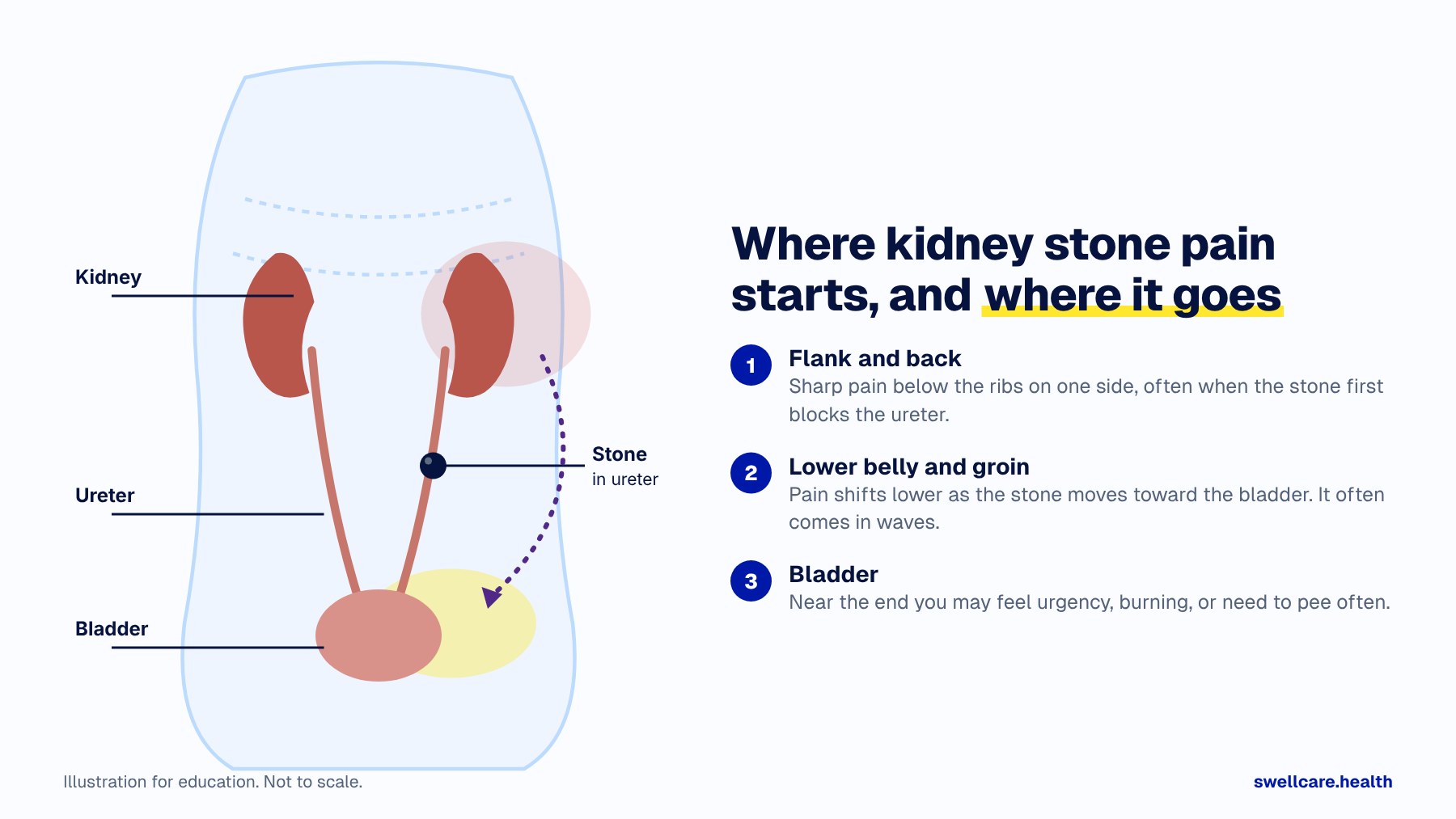
If your upper back pain is mild but has not improved after one to two weeks of self-care, get it checked. Pain that keeps returning, wakes you at night, or limits work and sleep deserves a real evaluation. A clinician can also screen for causes outside the spine, such as kidney stones or gallbladder problems, and build a treatment plan so you are not guessing.
Is it your heart, lungs, or back?
Upper left back pain, in particular, makes people worry about a heart attack, and that instinct is worth respecting. Back pain that changes when you twist, stretch, or press on a spot is more likely muscular. Pain that arrives with chest pressure, sweating, or breathlessness, or that builds when you walk and eases at rest, needs urgent care. Chest pain with back pain should never be ignored. Lung problems such as pneumonia or pleurisy tend to cause sharp pain that gets worse with a deep breath and often come with fever or cough. Kidney trouble usually hurts lower, below the ribs, and may bring pain with urination. When symptoms overlap and you are not sure, call 911 or go to the emergency room.
What to do right now for upper back pain
If you have ruled out red flags and your pain feels like muscle strain, a few simple steps help most people feel better within days:
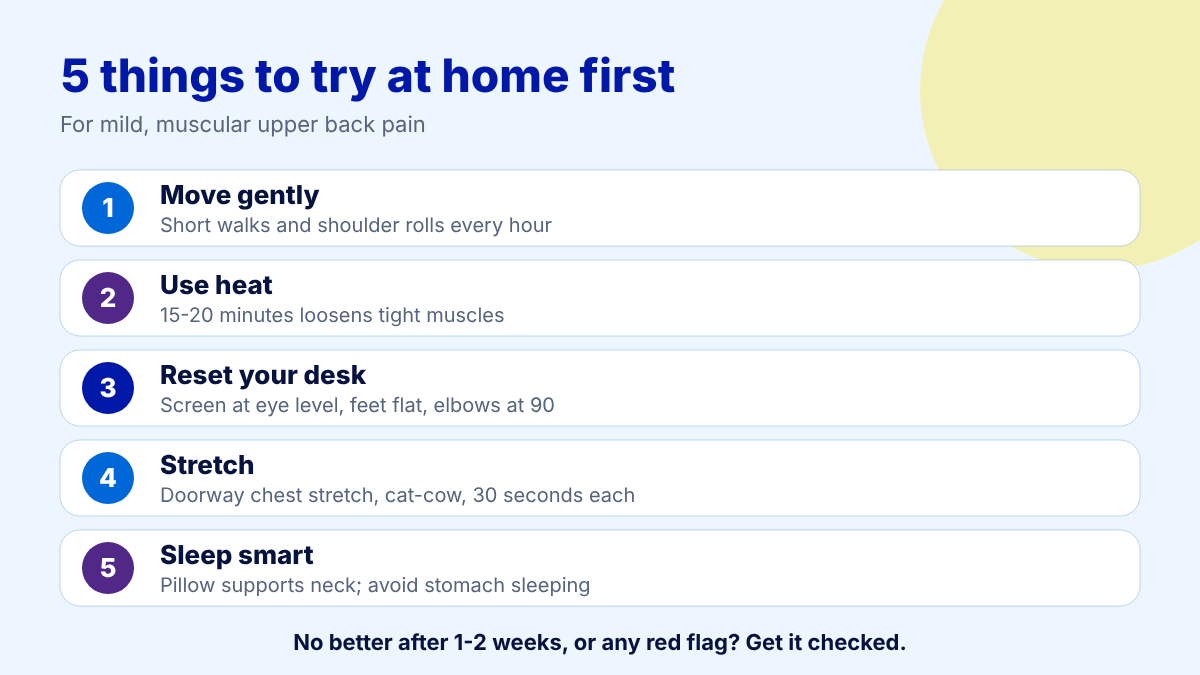
- Keep moving. Gentle walks and shoulder rolls beat bed rest. Prolonged rest makes stiffness worse.
- Use heat. A warm pack for 15 to 20 minutes relaxes tight muscles.
- Fix your setup. Raise your screen to eye level, keep your feet flat, and take a break every 30 to 45 minutes.
- Stretch gently. Try a doorway chest stretch and slow cat-cow stretches, holding each for about 30 seconds.
- Avoid heavy lifting for a few days, and sleep on your back or side with a supportive pillow.
Over-the-counter pain relievers can help if they are safe for you. Check with a clinician or pharmacist if you have kidney, stomach, or heart conditions or take other medicines. If your pain is not clearly better in one to two weeks, physical therapy and a professional exam are the next step.
How doctors find the cause
Your clinician will ask where the pain sits, what makes it better or worse, and whether you have other symptoms. A hands-on exam checks your posture, movement, reflexes, and nerve function. Many people need nothing more. If red flags are present, you may be sent for blood tests, an X-ray, or an MRI to look at the bones, discs, and spinal cord.
Get answers today with Swell Care
Waiting and wondering is stressful, especially when the pain hits at 11 p.m. Swell Care’s RapidResponse urgent care connects you with a licensed clinician online, 24/7 in all 50 states and DC. You start with a free screening, followed by a $45 consultation, with no membership. A clinician can listen to your symptoms, sort out whether this sounds muscular or needs in-person care, and send you to the right place fast.
A virtual visit is not a replacement for the emergency room. If you have chest pain, trouble breathing, or any of the 911 signs above, call 911 first.
Start a free screening with Swell Care and get a clear next step today.
Upper back pain FAQs
What is the most common cause of upper back pain?
Muscle strain from poor posture, long hours at a desk, or lifting is the most common cause. Joint stiffness around the ribs and thoracic spine is the next most common.
How can you tell if upper back pain is muscular?
Muscular pain usually feels like a dull ache or tightness, changes with movement or position, and eases with heat, stretching, or rest. It does not come with fever, numbness, weakness, or trouble breathing.
When should I worry about upper back pain?
Worry, and get care fast, if the pain comes with chest pain, trouble breathing, fever, numbness, weakness, or follows an injury. Otherwise, mild pain that eases with movement usually settles at home within a couple of weeks.
What illness can cause upper back pain?
Several conditions can, including pneumonia, kidney stones, gallbladder disease, spinal infection, and in rare cases cancer. These usually come with other symptoms such as fever, painful urination, or unexplained weight loss.
Is upper back pain a sign of cancer?
Rarely. Most upper back pain is not cancer. The concern rises if you have unexplained weight loss, pain that is worse at night or at rest, or a prior cancer history, so tell your clinician about those details.
Trusted references
Public-health, research, and medical-society resources related to this guide.